
Politics
Mass Defection rocks APC over President Buhari’s second term declaration


As reactions continue to trail Monday’s declaration by President Muhammadu Buhari that he would seek re-election in the 2019 general elections, there are indications that some chieftains of the All Progressives Congress (APC) would dump the ruling party ahead of the polls.
The looming defection, New Telegraph learnt, is because the President’s confirmation of his second term bid has foreclosed the ambitions of some APC chieftains also eyeing the party’s presidential ticket.
A party source, who disclosed this to our correspondent, said the presidential hopefuls, mostly outgoing governors of northern extraction and top ranking federal lawmakers, have to look elsewhere to realise their respective ambitions.
According to him, there is no doubt that presidential ambitions of these younger northern politicians in the APC have been buried because Buhari would have little or no opposition in picking the party’s ticket.
His words: “There is no doubt that the jostle for the APC presidential ticket is over because President Buhari will have had little or no opposition in picking the party’s ticket as it is certain that he will have had the right of first refusal as an incumbent.
“At the moment, he is the only person to have officially declared for the party’s ticket and it is unlikely that anyone else will do. And with the way the President had his way in the recent impasse over tenure elongation for members of the party’s National Working Committee (NWC), it is clear that he is now fully in control of the party structure.
“So, it is expected that anyone who has a presidential ambition within the party should look elsewhere as it will be foolhardy for anyone to face him at the primaries.”
The belief in some political quarters before now was that the President will not seek for re-election, given his health and age. He is 75 years and would be 76 by May 2019, when his first tenure elapses.
There was also an alleged agreement that the President would serve only one term to pave way for other interests in the party to have a shot at the presidency given that the APC is an amalgam of three major opposition parties – Congress for Progressives Change (CPC), Action Congress of Nigeria (ACN), All Nigeria Peoples Party (ANPP) and a faction of the All Progressives Grand Alliance (APGA).
It was against this backdrop that some northern political leaders within the ruling party, at a time, started shopping for his replacement ahead of 2019, to avoid being caught napping.
Among those touted then were former Vice President Atiku Abubakar; Senate President Bukola Saraki; former Kano State governor, Rabiu Kwankwaso and Governors Kashim Shettima (Borno), Aminu Tambuwal (Sokoto), Abdulaziz Yari (Zamfara) and Nasri el-Rufai (Kaduna).
But Atiku left the ruling party for the Peoples Democratic Party (PDP) in November last year, when it became clear, as some of the President’s supporters predicted, that he (Buhari) would be fit to re-contest in 2019.
The source, who confirmed that some of the APC presidential hopefuls will toe Atiku’s path, said: “There will be movements out of the APC in the days ahead. And the likely destination for those who would be leaving is the PDP. But the challenge some of them will face is whether the former ruling party will open its door to them given the way they dumped the party ahead of the 2015 elections, which contributed to the party’s loss of the presidency to the APC.”
He ruled out the option of the would-be defectors joining the third force being championed by for President Olusegun Obasanjo, saying the PDP provided a more veritable platform for anyone who intends to unseat the APC.
“Yes, those behind the third force have been mobilizing Nigerians ahead of the 2019 elections, but it is likely that it won’t make any impact because you need a platform with structures across the country to defeat an incumbent government. This is where the PDP comes in. So, expect movements into the party any moment from now because no one can stop a sitting president like Buhari from picking the APC ticket.
“And one thing that the APC members are likely to cash in on is the PDP’s resolve to field a younger candidate in the 2019 presidential election. Some of them are young and fit into the calculation of the opposition party,” he said.
The source added that though some people in the presidency have dismissed the one-term deal allegedly entered into by Buhari, the PDP and ACN camps of the APC feel betrayed as they have to wait till 2023 before they can take a shot at the number one position as the CPC camp, which produced the president in 2015, is insisting on going for a second term.
His words: “There was a mutual agreement in 2015 that the various camps that formed the APC will take turns at the presidency, which informed the one term deal, but now that the CPC camp is insisting on Buhari’s second term, what do you expect the PDP and ACN camps to do because they have to wait till 2023, and that is for those from the southern part of the country.
“For those from the North, they have to wait till 2031, given that after Buhari’s second term in 2023, if he wins in 2019, power will shift to the South for another eight years. The question is: Where will the northern elements who are also interested in the presidency now be in the next eight to nine years?
“Kwankwaso is 61 years old now, by 2032, he will be 70; Saraki is 55 years old now. By 2031, he will be 64; Tambuwal is 52; he will be 62 then; Shettima is 51 and by 2031, he will be 60, while El-Rufai, who is 58 years old now, would be 67 by then.
“This was the main reason why Atiku, who is 72, left the APC. If he had remained in the party and opted out of the 2019 race because Buhari is contesting, he would be 77 by 2023, when power is expected to return to the South. Can the former vice president afford to wait for another eight years after 2023 to actualise his dream?
“Would he be disposed to run for the presidency again at 85 in 2031, when power will return to the North, if the power shift arrangement still subsists? Would he still have the financial strength to fund the project, and what happens if a new power bloc emerges in the North by then?”
Last night, efforts to speak to the Publicity Secretary of the APC, Mallam Bolaji Abdullahi, proved abortive. He did not pick his calls nor replied to text message sent to him.




Politics
APC Group Endorses Fubara for 2027, Calls on Tinubu and APC to Prioritise Performance Over Politics in Backing Governor’s Second Term Ambition
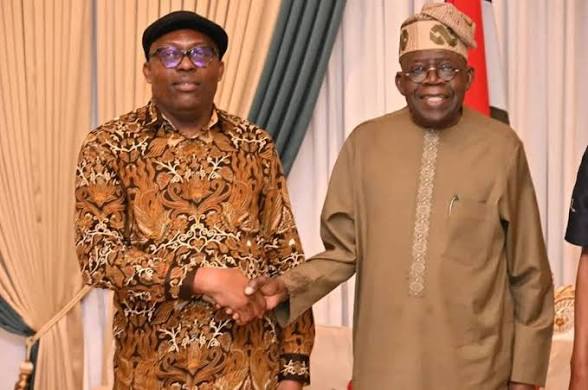
*APC Group Endorses Fubara for 2027, Calls on Tinubu and APC to Prioritise Performance Over Politics in Backing Governor’s Second Term Ambition*
The APC National Vanguard has appealed to President Bola Ahmed Tinubu and the leadership of the All Progressives Congress (APC) to support a second term in office for Siminalayi Fubara, citing what it described as “impressive and verifiable developmental strides” across Rivers State.
In a statement issued on Thursday by its National President, Dr Gbenga Salam (JP), the group said its position followed an extensive assessment tour of key infrastructure and public service projects executed under the Fubara administration.
The APC National Vanguard said the appeal was based strictly on performance, arguing that governance outcomes should outweigh partisan considerations, particularly in a state as economically significant as Rivers.
“We respectfully urge President Bola Ahmed Tinubu and the leadership of the All Progressives Congress to support the continuity of Governor Siminalayi Fubara beyond his current tenure, in recognition of his commitment to development, prudent resource management, and people-focused governance,” the statement read.
According to the group, its delegation visited multiple project sites across the state, observing ongoing and completed works spanning road construction, urban renewal, and public infrastructure upgrades.
It noted that the scale and distribution of these projects reflect a deliberate effort by the state government to extend development beyond traditional urban centres and into underserved communities.
“Our findings from the tour reveal a government that is not only active but intentional in its development agenda. The execution of capital projects across various parts of Rivers State demonstrates a clear understanding of the needs of the people and a commitment to addressing them,” Dr Salam said.
The group particularly commended what it described as prudent financial management by the administration, noting that the projects reviewed showed evidence of careful planning and efficient allocation of resources.
“At a time when economic pressures are evident across the country, it is commendable that the Rivers State government has managed its resources in a way that delivers visible and impactful development without signs of fiscal recklessness,” the statement added.
The APC National Vanguard further observed that despite political tensions in the state, the Fubara administration has maintained focus on governance, ensuring continuity in project execution and service delivery.
The group argued that such stability is critical for sustained development and should be encouraged rather than disrupted.
“Leadership must ultimately be judged by results. In Rivers State, there is clear evidence of progress—projects that are not only announced but executed, and policies that translate into real benefits for citizens,” Dr Salam noted.
The group warned that discontinuity in leadership could stall ongoing projects and reverse gains already recorded, stressing the importance of allowing a performing administration to consolidate its achievements.
“Rivers State is at a pivotal stage where continuity will allow for the completion of ongoing initiatives and the deepening of development gains. Supporting Governor Fubara for a second term is, therefore, a decision in the best interest of the people,” the statement said.
In addition to its call on the APC leadership, the group reaffirmed its support for President Tinubu, expressing confidence in his administration’s broader economic and governance reforms.
The APC group urged Nigerians to remain supportive of efforts aimed at stabilising the economy and strengthening public institutions.
“We reiterate our endorsement of President Bola Ahmed Tinubu for a second term in office, in recognition of his leadership and commitment to national development. With sustained support, the administration can consolidate its reform agenda for the benefit of all Nigerians,” Dr Salam added.
The APC National Vanguard concluded by calling on political actors to prioritise development and public interest over partisan divides, insisting that governance should always be guided by performance and accountability.
“Where leadership demonstrates prudence, delivers development, and remains focused on the welfare of the people, it deserves continuity. This is the position we have reached after a careful and independent assessment of Rivers State,” the statement added.
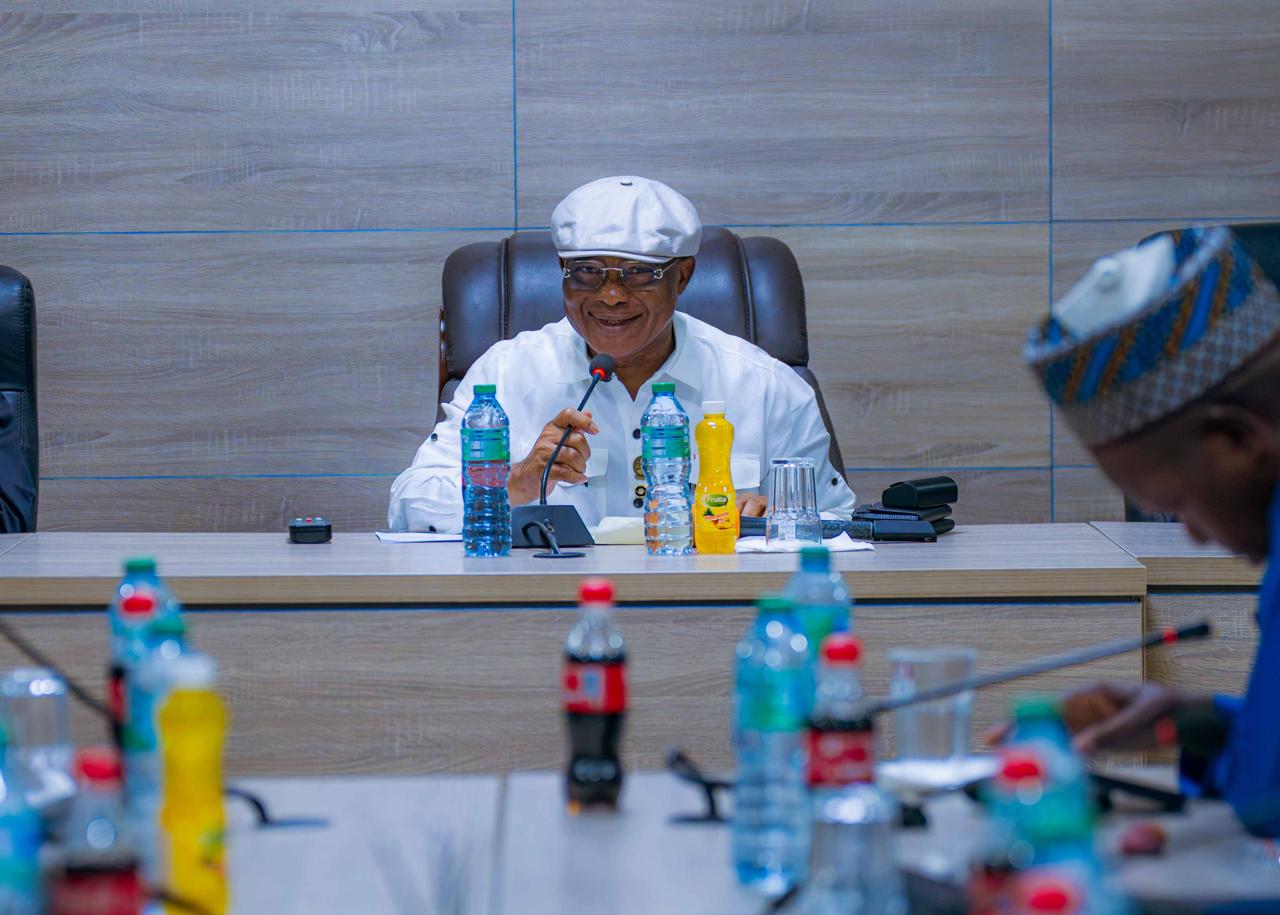
*Renewed Hope Ambassadors Step Into the Next Phase
Fresh from the successful APC 2026 National Convention, the Renewed Hope Ambassadors National, Zonal, and State leadership gathered in Abuja over the weekend, for its fourth strategic meeting, setting the tone for nationwide grassroots activation ahead of 2027.
Chaired by Governor Hope Uzodinma (Imo State) the Director General and National Coordinator of the Renewed Hope Ambassadors, alongside Deputy Director-General, Governor Uba Sani of Kaduna State, and Governor Inuwa Yahaya of Gombe State as Secretary, the session reinforced one clear direction: One Party. One Message. One Mobilization whilst also laying out a strategic roadmap for the activation of the network across all communities in Nigeria.
Backed by the strength of 31 APC-led states, the Renewed Hope Agenda is taking Bola Ahmed Tinubu’s message of progress and reform to every corner of Nigeria.
From bold economic restructuring to initiatives like NELFUND, the increase in the national minimum wage from ₦30,000 to ₦70,000, and strategic investments in critical sectors, including PNiCGI, the mission remains clear: helping Nigerians understand both the purpose and the progress of the Renewed Hope vision.
This is coordination at scale. This is grassroots engagement with purpose. This is the next phase of Renewed Hope with One Party, One Message, and One Mobilisation framework
#RenewedHopeAmbassadors #APC #WeAreAPC


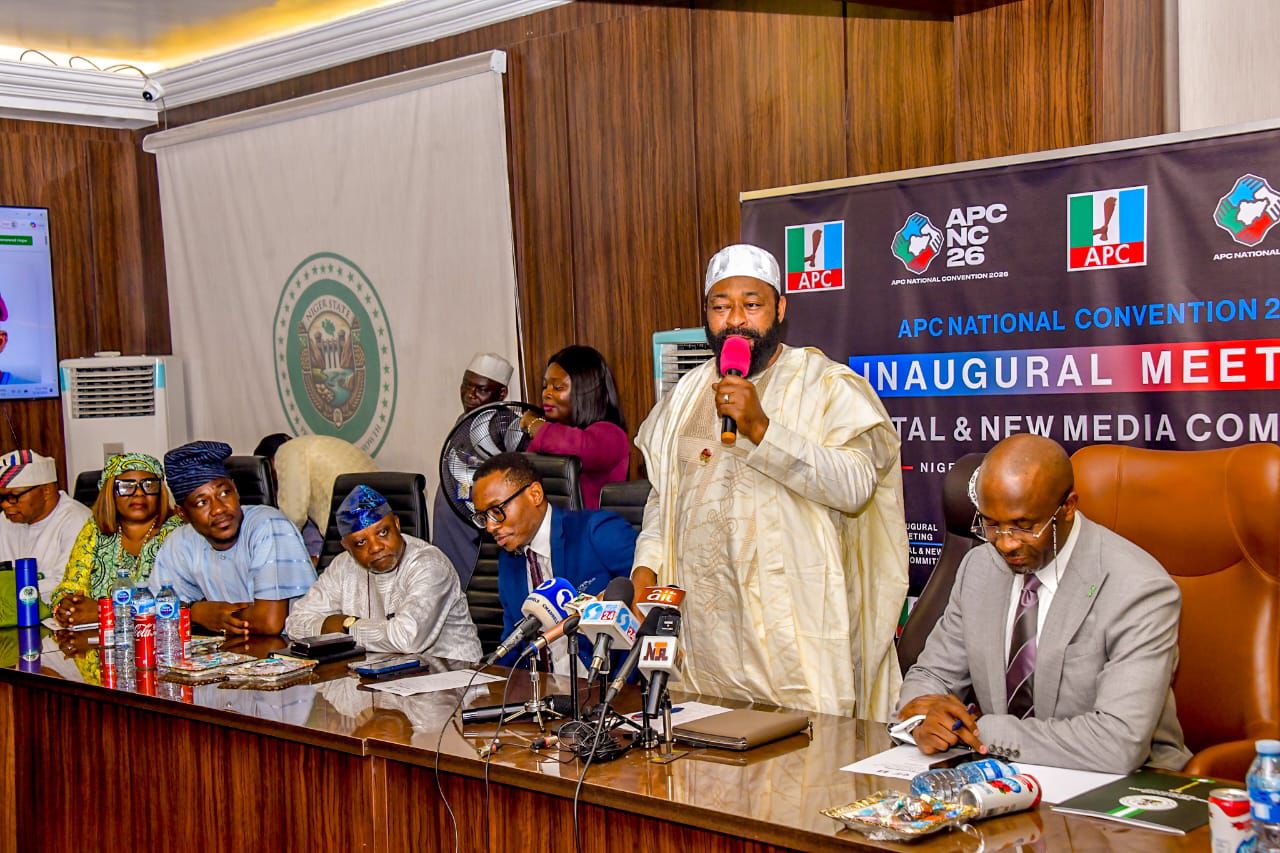
Governor Bago Inaugurates APC Digital Media Sub-Committee Ahead of National Convention.
Governor Umaru Bago has inaugurated the Digital Media Sub-Committee for the forthcoming National Convention of the All Progressives Congress (APC), scheduled to hold on March 27 and 28, 2026 in Abuja.
Chairing the sub-committee, Governor Bago tasked members with the responsibility of effectively communicating the party’s manifesto to the public.
He emphasized the need to leverage social media platforms to highlight the achievements and ongoing efforts of President Bola Ahmed Tinubu, noting that communication gaps have posed challenges that must now be decisively addressed.
The Co-Chair of the sub-committee, Hon. Benjamin Kalu, Deputy Speaker of the House of Representatives, echoed the Governor’s position, urging members to project the activities of both the party and the government to a broader audience.
He called for a deliberate and coordinated effort to showcase the party’s achievements and policy direction, stressing the importance of shaping a compelling and consistent narrative across all digital platforms.
Delivering a presentation to the committee, Otega Ogra, SSA to the President on New Media, who serves as Secretary of the sub-committee, outlined strategic focus areas to guide the team’s operations.
His presentation highlighted communication priorities and actionable steps to achieve the committee’s mandate and strengthen the party’s digital engagement.


-

 society6 months ago
Religion: Africa’s Oldest Weapon of Enslavement and the Forgotten Truth
-

 news4 months ago
WHO REALLY OWNS MONIEPOINT? The $290 Million Deal That Sold Nigeria’s Top Fintech to Foreign Interests
-

 society6 months ago
“You Are Never Without Help” – Pastor Gebhardt Berndt Inspires Hope Through Empower Church (Video)
-

 celebrity radar - gossips2 months ago
Dr. Chris Okafor Returns with Power and Fire of the Spirit -Mounts Grace Nation Altar with Fresh Anointing and Restoration Grace on February 1, 2026
You must be logged in to post a comment Login
You must log in to post a comment.