
society
Mastering Your Peace: Why Emotional Self-Control Is the Highest Form of Power


Mastering Your Peace: Why Emotional Self-Control Is the Highest Form of Power.
By George Omagbemi Sylvester | Published by SaharaWeeklyNG.com
“Understanding Why You Do not Need to Respond to Everything to Win in Life.”
PEOPLE WILL ONLY DRIVE YOU CRAZY IF YOU ALLOW THEM. This statement, simple as it sounds, carries a depth of wisdom that many ignore until emotional damage has already been done. In a world where provocation has become casual, arguments are instant and reactions are often public and permanent, the ability to regulate one’s emotions has become not just a virtue, but a survival skill. Emotional self-control is no longer optional; it is essential for mental health, personal dignity and long-term success.

Anger, irritation and frustration are natural human emotions. What is unnatural (and destructive) is allowing those emotions to dictate behavior. Modern psychology is clear on this point: external events do not directly cause emotional reactions. Rather, it is the interpretation of those events that determines how we feel and how we respond. Renowned psychologist Albert Ellis, the founder of Rational Emotive Behavior Therapy, emphasized that people are disturbed not by what happens to them, but by the beliefs they hold about what happens to them. This insight alone dismantles the myth that other people “MAKE” us angry.
When someone irritates you, interrupts you, insults you, or challenges you unfairly, the initial emotional surge is automatic. However, what follows is a choice. You can fuel the emotion with reaction, or you can acknowledge it and let it pass. Neuroscience supports this distinction. Emotional impulses originate in the amygdala, the brain’s threat-detection center, while rational decision-making occurs in the prefrontal cortex. When individuals react impulsively, they allow the emotional brain to overpower the rational mind. Emotional maturity, therefore, lies in creating a pause between feeling and action.

Daniel Goleman, whose work on emotional intelligence reshaped modern psychology, argues that self-awareness and self-regulation are the foundations of emotional mastery. According to Goleman, people who can identify what they are feeling in real time are far more capable of managing those emotions constructively. Recognizing irritation does not mean indulging it; it means naming it, understanding it and refusing to be controlled by it. This is why the advice to “recognise those feelings and then let them go” is not passive, but it is profoundly active.
One of the greatest misconceptions in human interaction is the belief that silence equals weakness. In truth, silence often reflects discipline, confidence and emotional authority. The need to respond to every provocation usually stems from insecurity or ego, not strength. Philosopher Friedrich Nietzsche warned that reacting to every offense places one under the control of others. When someone can manipulate your emotions at will, they effectively govern you.
Conflict studies consistently show that most arguments escalate not because of the initial issue, but because of reactive responses. Words spoken in anger rarely resolve problems; they multiply them. Communication expert Marshall Rosenberg observed that anger is often the expression of unmet needs rather than deliberate hostility. Responding with restraint creates space for clarity, while reacting with hostility ensures misunderstanding.
Research published in medical and psychological journals has repeatedly linked chronic anger to serious health risks, including hypertension, cardiovascular disease, weakened immune response and increased anxiety. Emotional dysregulation is not just socially damaging; it is physically costly. Conversely, individuals who practice emotional regulation experience better mental health, stronger relationships and greater professional success. This is not speculation; it is evidence-based reality.
Ancient wisdom echoes these modern findings. The Stoic philosophers, particularly EPICTETUS and MARCUS AURELIUS, taught that freedom begins with control over one’s inner life. Epictetus famously stated that it is not events that disturb people, but their judgments about those events. This philosophy does not deny emotion; it elevates reason above impulse. Marcus Aurelius, a Roman emperor who ruled during immense pressure and conflict, wrote that the best revenge is not to be like the one who wronged you. This perspective reframes restraint as victory rather than loss.
Choosing not to respond does not mean tolerating abuse or injustice. It means discerning when engagement is productive and when it is pointless. Not every irritation deserves your energy. Not every insult warrants a reply. Emotional intelligence includes the wisdom to choose your battles carefully. Energy spent on trivial disputes is energy stolen from meaningful pursuits with growth, purpose and peace.
Silence, when chosen consciously, is a strategic act. It allows emotions to settle, perspectives to shift and rational thought to emerge. It prevents regret, preserves dignity and protects reputation. Many lives have been damaged not by what was done to people, but by how they reacted in moments of anger. Words, once spoken, cannot be recalled. Actions, once taken, cannot always be undone.

Practical emotional mastery begins with awareness. The moment irritation arises, pause and acknowledge it. Simple internal recognition (“I feel angry right now”) can significantly reduce emotional intensity. Deep, controlled breathing calms the nervous system and interrupts emotional escalation. Stepping away from the source of irritation, even briefly, creates psychological distance that supports rational thinking. Reflection, whether through journaling or quiet thought, transforms raw emotion into insight.
Another crucial element is reframing. Ask not, “WHY ARE THEY DOING THIS TO ME?” but “WHY AM I ALLOWING THIS TO AFFECT ME?” This shift restores agency. Emotional freedom is reclaimed when individuals realize that they control their responses, regardless of external behavior. As Mahatma Gandhi wisely noted, the weak can never forgive; forgiveness and restraint are attributes of the strong.
In social, professional and political life, emotional self-control distinguishes leaders from followers. Leaders are not those who react the loudest, but those who remain composed under pressure. History remembers individuals who governed themselves before attempting to govern others. Emotional discipline commands respect even from adversaries.
Ultimately, choosing not to respond to everything is an act of self-respect. It is the recognition that your peace is too valuable to be traded for momentary satisfaction. When you stop allowing others to provoke you into anger, you reclaim ownership of your inner world. This is not withdrawal from life; it is engagement on your own terms.
In an age where outrage is encouraged and reaction is rewarded, restraint has become revolutionary. To master your emotions is to rise above manipulation, chaos and unnecessary conflict. True strength is quiet, deliberate and unshaken. It does not announce itself with anger; it reveals itself through control.
People will only drive you crazy if you allow them. When you refuse that permission, you step into a higher form of power, the one rooted in clarity, discipline and peace. In that space, you do not merely survive provocation; you transcend it.





FOPCHEN Seeks Wider Engagement As Court Defers Hearing
OTA, OGUN STATE — The High Court of Ogun State, Ota Division, on Thursday resumed hearing in the ongoing matter involving cultural and societal concerns, before adjourning proceedings till Thursday, July 2, 2026, for continuation of hearing.
At the resumed sitting on May 28, 2026, counsel representing the various parties revisited key issues in the case and made further submissions before the court.
The matter, which has continued to generate public interest across different sectors, again drew attention from legal observers and stakeholders who described the case as one with significant implications for societal values, cultural identity and constitutional interpretation.
Speaking after the proceedings, the Foundation for the Protection of Cultural Heritage in Nigeria, popularly known as FOPCHEN, renewed its appeal for dialogue and constructive engagement among Nigerians, stressing that sensitive cultural and moral issues should not be left entirely within the confines of the courtroom.
According to the group, broader conversations involving traditional institutions, civil society organisations, religious leaders and policy stakeholders remain necessary in addressing issues relating to national values and social responsibility.
Legal analysts at the court premises noted that arguments being canvassed by parties in the suit could shape future legal interpretations surrounding cultural and moral questions in the country.
Following submissions by counsel, the presiding judge adjourned the matter till Thursday, July 2, 2026, to enable parties further prepare and respond to issues raised during the hearing.
The development has continued to spark reactions among observers, with many Nigerians closely monitoring the proceedings ahead of the next hearing date.

US-Based Society Lady, Fehintola-Brat Extends Eid-El-Kabir Greetings To Muslims
United States based fahionista of class, Chief (Mrs) Ayoola Fehintola-Brat has extended a warm greetings to Muslim faithful all over the world on the occasion of the 2026 Eid-El-Kabir celebration.
Fehintola-Brat who is the Balogun Egbe Obaneye Obinrin Akile Ijebu, and the Yeye Asofin of Idenaland in her message to Journalists urged Muslim to continually uphold the enduring values of sacrifice, obedience, faith, and compassion, which are central to the significance of Eid-El-Kabir festival.
A quiet philantropist whose humanitarian services has won her several laurels urged Muslims to use the spiritual occasion to pray for the peace co-existence of Nigerians regardless of religious, social and political leanings stressing that the oneness of the country should not be underplay.
In a related development, she expressed her felicitations to all sons and daughters of Ijebuland on the forthcoming Ojude Oba 2026 celebration, tasking age-groups otherwise known as Regbregbe to be more proactive in giving back to their immediate communities.
According to her, the beauty of the age-groups in Ijebuland is the need to contribute immensely to the development of the land in no small means. “This we will continue to achieve with God on our side”, she concluded.
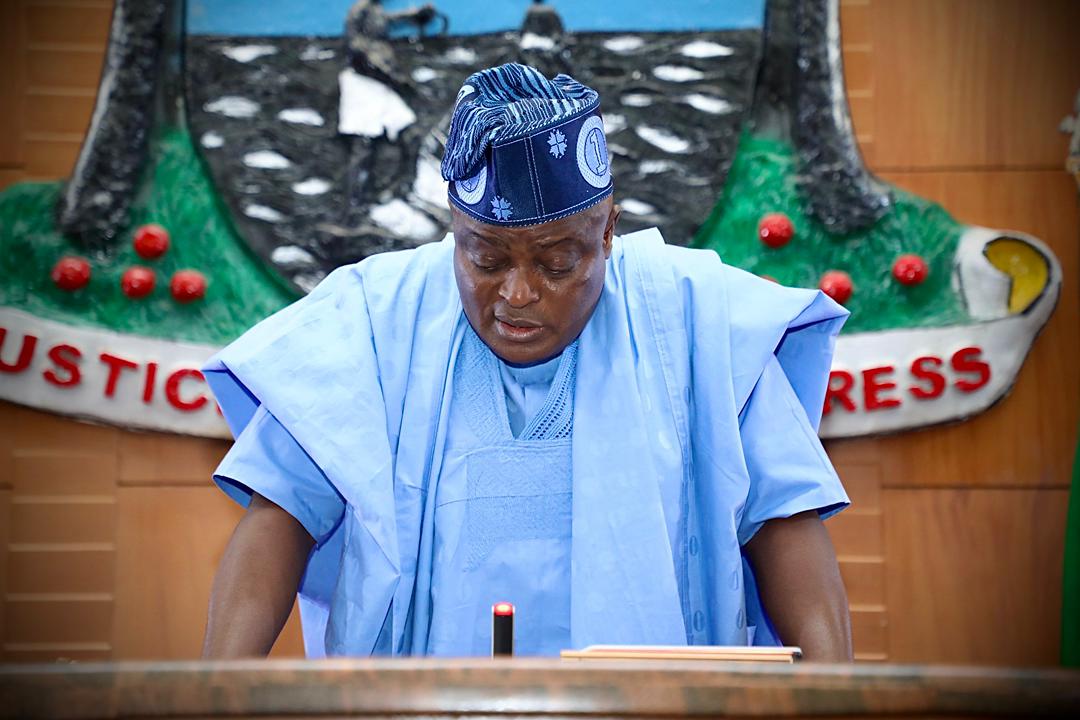
Sallah: Obasa Felicitates Muslim Ummah, Commends Nigerians for APC Primaries Turnout
The Speaker of the Lagos State House of Assembly, Rt. Hon. Mudashiru Obasa has extended warm felicitations to Muslims in Lagos State and across Nigeria on the occasion of Eid al-Adha.
In a statement released by his Chief Press Secretary, Mr. Dave Agboola, Obasa described the festival as a season of sacrifice, reflection, and gratitude, urging the faithful to continue to uphold the values of peace, unity, and love that strengthen the nation.
He noted that the celebration of Eid al-Adha is not only a spiritual milestone but also a reminder of the importance of togetherness and collective responsibility in building a stronger society.
He, likewise, emphasized that the festival provides an opportunity for Nigerians to renew their commitment to national progress and to support leadership that prioritizes development and prosperity.
Obasa, however, commended Nigerians, particularly members of the All Progressives Congress (APC), for their massive turnout during the recently concluded party primaries. He described the participation as a clear demonstration of the people’s confidence in the government of President Bola Ahmed Tinubu and their belief in the administration’s vision for a greater Nigeria.
“The APC primaries have shown the resilience of our democracy and the confidence Nigerians have in the leadership of President Bola Ahmed Tinubu and the Renewed Hope Agenda. This is a strong message that our people are ready to continue supporting policies that will drive growth and prosperity,” Obasa stated.
The Speaker further encouraged Muslims to celebrate responsibly, stressing that the joy of Eid should be accompanied by prayers for the continued peace and progress of Lagos State and Nigeria.
“As you celebrate with family and loved ones, may this season bring joy, peace, and prosperity to your homes. Let us remain united in our resolve to build a stronger nation,” he added.
On behalf of the Lagos State House of Assembly, Obasa wished all Muslims a happy and fulfilling Eid al-Adha celebration.


- Société Nationale des Pétroles du Congo (SNPC) Chief Ominga to Speak at African Energy Week (AEW) 2026 as Congo Accelerates Gas Expansion May 29, 2026
- South Africa: Deputy President Mashatile arrives in India for a Working Visit May 29, 2026
- Seychelles: President Visits Key Development Sites on Coetivy Island May 29, 2026
- Accelerating regional action to advance mental health care in Africa May 29, 2026
- President of the Republic of Seychelles Meets Young La Digue Talent Ahead of London Showcase May 29, 2026
- United Nations Economic Commission for Africa (ECA) launches regional initiative to accelerate women’s digital entrepreneurship across four African countries May 29, 2026
- Ethiopia: International community must act to safeguard press freedom ahead of national election May 29, 2026
- CORRECTION: Annual Meetings 2026 (AM2026): African Development Bank (AfDB) 2025 Trade Finance Report Highlights Resilience of African Financial Institutions After Covid-19 May 29, 2026
- Why Big Tech Could Become Nigeria’s New Gas Partner May 29, 2026
- African Energy Chamber (AEC)-Venezuela Alliance Accelerates Pathways into South-South Energy Expansion May 29, 2026
- Société Nationale des Pétroles du Congo (SNPC) Chief Ominga to Speak at African Energy Week (AEW) 2026 as Congo Accelerates Gas Expansion May 29, 2026
- South Africa: Deputy President Mashatile arrives in India for a Working Visit May 29, 2026
- Seychelles: President Visits Key Development Sites on Coetivy Island May 29, 2026
- Accelerating regional action to advance mental health care in Africa May 29, 2026
- President of the Republic of Seychelles Meets Young La Digue Talent Ahead of London Showcase May 29, 2026
- United Nations Economic Commission for Africa (ECA) launches regional initiative to accelerate women’s digital entrepreneurship across four African countries May 29, 2026
- Ethiopia: International community must act to safeguard press freedom ahead of national election May 29, 2026
-

 news6 months ago
WHO REALLY OWNS MONIEPOINT? The $290 Million Deal That Sold Nigeria’s Top Fintech to Foreign Interests
-

 society4 weeks ago
SOCIAL MEDIA IS NOT A BATTLEFIELD COMMAND – WHY THE NIGERIAN ARMY’S ACTION AGAINST JUSTICE CRACK IS A NATIONAL SECURITY IMPERATIVE
-

 celebrity radar - gossips4 months ago
Dr. Chris Okafor Returns with Power and Fire of the Spirit -Mounts Grace Nation Altar with Fresh Anointing and Restoration Grace on February 1, 2026
-

 celebrity radar - gossips6 months ago
Prophet Kingsley Aitafo Releases 2026 Prophecy: ‘Nigeria Will Rise, but the World Must Prepare for Turbulence’