
society
West Africa’s Shadow Network: The Human Trafficking Scam Crisis

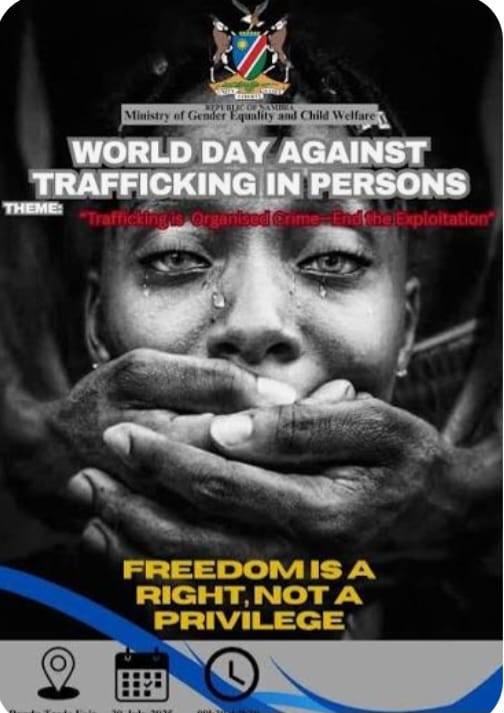
West Africa’s Shadow Network: The Human Trafficking Scam Crisis.
By George Omagbemi Sylvester | Published by saharaweeklyng.com
“How Criminal Syndicates Are Turning Hope into Exploitation and What the World Must Do.”
Human trafficking is not a distant atrocity happening “somewhere else.” It is a brutal reality unfolding across West Africa (a region grappling with socioeconomic hardship, youth unemployment and porous borders) where criminal networks exploit desperation, allure victims with false promises of jobs abroad and entrap them in modern slavery. This crisis has morphed into a scam-driven trafficking epidemic that not only enslaves victims physically but also weaponizes digital deception to sustain itself. It is a crisis that demands global attention, decisive policy and coordinated enforcement if countless lives are to be saved.

A Crime of Two Fronts: Promise and Deceit. At the heart of West Africa’s trafficking scandal are fraudulent employment schemes that prey on the hopes of young people seeking better lives. Recruiters promise coveted jobs in Canada, Europe or the Middle East (often backed by fraudulent phone numbers, falsified travel documents and compelling online material) only to deliver something far darker. In one high-profile case in Ivory Coast, 33 West Africans from Benin, Burkina Faso, Togo and Ghana paid up to $9,000 each for the promise of legitimate work abroad. Instead, they were trafficked to Abidjan, held under coercive conditions and forced to participate in scam operations designed to lure more victims into the web of exploitation.
Perpetrators not only deceive victims before arrival but keep them in psychological captivity. Those trafficked were made to take staged photos in luxury restaurants and hotels to create the illusion of Canadian employment, then restricted from contacting family and effectively deepening their isolation and reliance on traffickers.
These scams operate like twin instruments of coercion: the lure of opportunity and the fear of exposure or debt. Once ensnared, victims often endure physical abuse, debt bondage and forced labor under threat of violence and stark violations of human rights.

From Digital Scams to Physical Enslavement. Interpol, the world’s largest international police organization, has warned that West Africa is emerging as a regional hub for human trafficking-fueled scam centres, mirroring earlier trends in Southeast Asia. Traditionally associated with regions like Cambodia and Myanmar, these trafficking networks have now spread globally to include West Africa, where increasing evidence points to systemic exploitation through online scam syndicates.
According to Interpol’s crime trend analysis, victims from 66 countries have been trafficked into scam centres worldwide, with West Africa among the newly recognized hotspots. While Southeast Asia still accounts for the majority of cases, the rapid expansion of similar operations in West Africa and other regions highlights how organized crime evolves in response to global demand for cheap, exploitable labor and illicit profit.

Perhaps most troubling is how digital technology has exacerbated the threat. Traffickers now exploit artificial intelligence (AI) to craft convincing fake job ads, deepen deception and generate fake identities or profiles used in romance and sextortion scams though amplifying both recruitment and exploitation.
The Human Cost: Lives, Dignity, Futures. Human trafficking is not just a criminal statistic, but it is a human tragedy. Many of those trafficked into scam operations are young men and women with limited economic prospects at home. They represent regions most promising potential with education abandoned, futures deferred, lives destabilized.
Beyond online job scams, trafficking in West Africa also feeds into other forms of forced labor. According to migration and anti-trafficking data, children constitute more than 50% of detected trafficking victims across Africa, with forced labor including begging, domestic work and exploitation along migration routes.
For every case uncovered, many more remain unseen. The International Organization for Migration (IOM) and United Nations data consistently show that only a fraction of trafficking victims are detected or rescued, while many fall victim to smuggling networks that blur the lines between irregular migration and outright exploitation. The IOM reports that a majority of African migrants arriving irregularly in Europe are at high risk of being trafficked, especially women and girls.
Structural Drivers: Poverty, Unemployment and Desperation. What drives young West Africans into the hands of traffickers? The answer lies in structural inequalities: poverty, unemployment, climate change and lack of educational opportunities. In countries like Sierra Leone, where youth make up a large portion of the population and unemployment is chronic, the promise of jobs abroad becomes a lifeline worth pursuing, even at high financial and personal risk.
These vulnerabilities are compounded by weak enforcement infrastructures and limited cross-border cooperation. Traffickers exploit gaps in legal frameworks, corrupt practices and the relative ease of forging documents or digital identities to move victims across borders without detection.

What Experts Are Saying: Cyril Gout, Acting Executive Director of Police Services at Interpol, has emphasized the global scope and persistence of the crisis: “Tackling this rapidly globalising threat requires a coordinated international response.” His warning underscores that no single country can dismantle these networks alone, but a collaboration among law enforcement, NGOs and technology platforms is essential.
Scholars studying the nexus between trafficking and migrant smuggling underscore another crucial point: trafficking thrives where legal migration pathways are limited. Research from the Department of International Relations at Universidad Complutense de Madrid notes that criminal actors exploit migration pressures, turning migration aspirations into exploitation upon arrival.
At the grassroots level, activists like Chelcy Heroe of the Informal Workers Organisation in Sierra Leone highlight the gendered nature of exploitation, especially for women lured into forced labor under the guise of legitimate recruitment programmes.
Law Enforcement and the Global Response. Efforts to dismantle trafficking-linked scam operations have seen some successes. Law enforcement collaborations (such as joint operations between Côte d’Ivoire and Ghana) have led to arrests and the rescue of dozens of victims. Such initiatives demonstrate the potential of cooperative policing across borders.
African Union member states have also taken steps to reinforce continental cooperation against trafficking and migrant smuggling. In late 2024, senior officials validated Continental Guidelines for Sharing Information and Intelligence, aimed at strengthening mechanisms to detect, disrupt and prosecute trafficking networks.
However, enforcement alone cannot solve a problem rooted in structural inequity. Prevention (through education, community awareness, access to safe employment and legal migration pathways) must be part of a comprehensive response.
Conclusion: Turning the Tide Against Exploitation. The human trafficking scam crisis in West Africa is a stark reminder that vulnerability can be commodified by criminal actors who operate with sophisticated tools, global networks and a chilling disregard for human dignity. This is not abstract, it is a present-day stain on global society that undermines human rights, shatters families and erodes the very promise of opportunity.
Addressing this crisis requires collective resolve from governments, civil society, international institutions and everyday citizens. It demands robust legal structures, transparent international cooperation, investment in young people’s futures and a refusal to let exploitation flourish in the shadows.
Human trafficking is not inevitable. Where there is will and coordinated action, there is hope; for rescue, for justice and for renewed dignity for those who have been robbed of both. Let the world’s conscience be stirred, and let action follow urgently.





FOPCHEN Seeks Wider Engagement As Court Defers Hearing
OTA, OGUN STATE — The High Court of Ogun State, Ota Division, on Thursday resumed hearing in the ongoing matter involving cultural and societal concerns, before adjourning proceedings till Thursday, July 2, 2026, for continuation of hearing.
At the resumed sitting on May 28, 2026, counsel representing the various parties revisited key issues in the case and made further submissions before the court.
The matter, which has continued to generate public interest across different sectors, again drew attention from legal observers and stakeholders who described the case as one with significant implications for societal values, cultural identity and constitutional interpretation.
Speaking after the proceedings, the Foundation for the Protection of Cultural Heritage in Nigeria, popularly known as FOPCHEN, renewed its appeal for dialogue and constructive engagement among Nigerians, stressing that sensitive cultural and moral issues should not be left entirely within the confines of the courtroom.
According to the group, broader conversations involving traditional institutions, civil society organisations, religious leaders and policy stakeholders remain necessary in addressing issues relating to national values and social responsibility.
Legal analysts at the court premises noted that arguments being canvassed by parties in the suit could shape future legal interpretations surrounding cultural and moral questions in the country.
Following submissions by counsel, the presiding judge adjourned the matter till Thursday, July 2, 2026, to enable parties further prepare and respond to issues raised during the hearing.
The development has continued to spark reactions among observers, with many Nigerians closely monitoring the proceedings ahead of the next hearing date.

US-Based Society Lady, Fehintola-Brat Extends Eid-El-Kabir Greetings To Muslims
United States based fahionista of class, Chief (Mrs) Ayoola Fehintola-Brat has extended a warm greetings to Muslim faithful all over the world on the occasion of the 2026 Eid-El-Kabir celebration.
Fehintola-Brat who is the Balogun Egbe Obaneye Obinrin Akile Ijebu, and the Yeye Asofin of Idenaland in her message to Journalists urged Muslim to continually uphold the enduring values of sacrifice, obedience, faith, and compassion, which are central to the significance of Eid-El-Kabir festival.
A quiet philantropist whose humanitarian services has won her several laurels urged Muslims to use the spiritual occasion to pray for the peace co-existence of Nigerians regardless of religious, social and political leanings stressing that the oneness of the country should not be underplay.
In a related development, she expressed her felicitations to all sons and daughters of Ijebuland on the forthcoming Ojude Oba 2026 celebration, tasking age-groups otherwise known as Regbregbe to be more proactive in giving back to their immediate communities.
According to her, the beauty of the age-groups in Ijebuland is the need to contribute immensely to the development of the land in no small means. “This we will continue to achieve with God on our side”, she concluded.

Sallah: Obasa Felicitates Muslim Ummah, Commends Nigerians for APC Primaries Turnout
The Speaker of the Lagos State House of Assembly, Rt. Hon. Mudashiru Obasa has extended warm felicitations to Muslims in Lagos State and across Nigeria on the occasion of Eid al-Adha.
In a statement released by his Chief Press Secretary, Mr. Dave Agboola, Obasa described the festival as a season of sacrifice, reflection, and gratitude, urging the faithful to continue to uphold the values of peace, unity, and love that strengthen the nation.
He noted that the celebration of Eid al-Adha is not only a spiritual milestone but also a reminder of the importance of togetherness and collective responsibility in building a stronger society.
He, likewise, emphasized that the festival provides an opportunity for Nigerians to renew their commitment to national progress and to support leadership that prioritizes development and prosperity.
Obasa, however, commended Nigerians, particularly members of the All Progressives Congress (APC), for their massive turnout during the recently concluded party primaries. He described the participation as a clear demonstration of the people’s confidence in the government of President Bola Ahmed Tinubu and their belief in the administration’s vision for a greater Nigeria.
“The APC primaries have shown the resilience of our democracy and the confidence Nigerians have in the leadership of President Bola Ahmed Tinubu and the Renewed Hope Agenda. This is a strong message that our people are ready to continue supporting policies that will drive growth and prosperity,” Obasa stated.
The Speaker further encouraged Muslims to celebrate responsibly, stressing that the joy of Eid should be accompanied by prayers for the continued peace and progress of Lagos State and Nigeria.
“As you celebrate with family and loved ones, may this season bring joy, peace, and prosperity to your homes. Let us remain united in our resolve to build a stronger nation,” he added.
On behalf of the Lagos State House of Assembly, Obasa wished all Muslims a happy and fulfilling Eid al-Adha celebration.


- Société Nationale des Pétroles du Congo (SNPC) Chief Ominga to Speak at African Energy Week (AEW) 2026 as Congo Accelerates Gas Expansion May 29, 2026
- South Africa: Deputy President Mashatile arrives in India for a Working Visit May 29, 2026
- Seychelles: President Visits Key Development Sites on Coetivy Island May 29, 2026
- Accelerating regional action to advance mental health care in Africa May 29, 2026
- President of the Republic of Seychelles Meets Young La Digue Talent Ahead of London Showcase May 29, 2026
- United Nations Economic Commission for Africa (ECA) launches regional initiative to accelerate women’s digital entrepreneurship across four African countries May 29, 2026
- Ethiopia: International community must act to safeguard press freedom ahead of national election May 29, 2026
- CORRECTION: Annual Meetings 2026 (AM2026): African Development Bank (AfDB) 2025 Trade Finance Report Highlights Resilience of African Financial Institutions After Covid-19 May 29, 2026
- Why Big Tech Could Become Nigeria’s New Gas Partner May 29, 2026
- African Energy Chamber (AEC)-Venezuela Alliance Accelerates Pathways into South-South Energy Expansion May 29, 2026
- Société Nationale des Pétroles du Congo (SNPC) Chief Ominga to Speak at African Energy Week (AEW) 2026 as Congo Accelerates Gas Expansion May 29, 2026
- South Africa: Deputy President Mashatile arrives in India for a Working Visit May 29, 2026
- Seychelles: President Visits Key Development Sites on Coetivy Island May 29, 2026
- Accelerating regional action to advance mental health care in Africa May 29, 2026
- President of the Republic of Seychelles Meets Young La Digue Talent Ahead of London Showcase May 29, 2026
- United Nations Economic Commission for Africa (ECA) launches regional initiative to accelerate women’s digital entrepreneurship across four African countries May 29, 2026
- Ethiopia: International community must act to safeguard press freedom ahead of national election May 29, 2026
-

 news6 months ago
WHO REALLY OWNS MONIEPOINT? The $290 Million Deal That Sold Nigeria’s Top Fintech to Foreign Interests
-

 society4 weeks ago
SOCIAL MEDIA IS NOT A BATTLEFIELD COMMAND – WHY THE NIGERIAN ARMY’S ACTION AGAINST JUSTICE CRACK IS A NATIONAL SECURITY IMPERATIVE
-

 celebrity radar - gossips4 months ago
Dr. Chris Okafor Returns with Power and Fire of the Spirit -Mounts Grace Nation Altar with Fresh Anointing and Restoration Grace on February 1, 2026
-

 celebrity radar - gossips6 months ago
Prophet Kingsley Aitafo Releases 2026 Prophecy: ‘Nigeria Will Rise, but the World Must Prepare for Turbulence’