
society
Matters Arising as Nigeria’s Komolafe Leads AFRIPERF

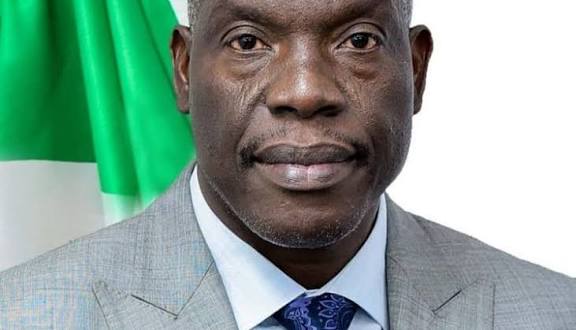
Matters Arising as Nigeria’s Komolafe Leads AFRIPERF
By Moses Dan
When Gbenga Komolafe, chief executive of the Nigerian Upstream Petroleum Regulatory Commission (NUPRC), assumed the role of interim chairman of the newly launched African Petroleum Regulators Forum (AFRIPERF), many across the continent’s oil and gas sector hailed it as a watershed moment. His elevation was not just a personal milestone but a recognition of Nigeria’s growing influence in shaping the governance of Africa’s energy future. Yet, even as praise pours in, questions linger about capacity, politics, and the sustainability of the project.
The launch and charter-signing of AFRIPERF took place on September 18, 2025, during Africa Oil Week in Accra, Ghana. Sixteen African countries participated, and eight of them — including Nigeria, Ghana, Somalia, Gambia, Madagascar, Sudan, Guinea, and Togo — formally endorsed the AFRIPERF Charter. Seven others pledged to join after domestic consultations. Komolafe was unanimously selected as interim chairman, a role that effectively positions Nigeria at the forefront of continental oil and gas regulation.
The forum’s objective is ambitious but urgent: to harmonise petroleum laws, standards, and regulatory practices across Africa. Over the decades, differences in national legislation, fiscal regimes, and licensing procedures have discouraged cross-border investments and weakened collective bargaining power. AFRIPERF is conceived to bridge those divides by creating a platform for knowledge exchange, peer review, and regional cooperation.
According to its charter, AFRIPERF will operate through an Executive Committee of national regulators, a Technical Committee of industry experts, and a rotating Secretariat to coordinate activities among member states. The framework builds on Nigeria’s earlier leadership in regulatory reform under the Petroleum Industry Act (PIA) of 2021.
Komolafe, who first proposed the idea of a continental regulatory network in 2023, has long argued that Africa must “own its resources with efficiency and integrity” rather than compete in isolation. The Abuja Declaration, introduced during Nigeria Oil and Gas Week in 2024, laid the philosophical foundation for AFRIPERF — emphasising transparency, environmental responsibility, and collaboration. The Accra meeting in 2025 marked the institutional birth of that vision.
The symbolism is significant. Nigeria remains one of Africa’s most experienced hydrocarbon producers, and its reform-driven regulatory commission has been widely seen as a model of post-PIA transformation. Komolafe’s emergence as the forum’s interim head therefore reinforces the view that Nigeria can export regulatory expertise in addition to crude oil.
*Nigeria’s Reformist Reputation Meets Continental Expectations*
Komolafe’s tenure at NUPRC offers clues about what to expect from his new continental assignment. Since assuming office, he has pushed reforms to digitise upstream licensing, streamline approvals, strengthen host community engagement, and curb oil theft through tighter metering systems. Under his leadership, the Commission has prioritised data transparency, community participation, and gas monetisation — themes that resonate with AFRIPERF’s founding principles.
But moving from national regulation to continental coordination is an entirely different challenge. Africa’s oil-producing nations operate under vastly different fiscal models, political pressures, and institutional capacities. Some have mature frameworks with digital monitoring systems; others still rely on paper records and manual audits. Aligning these disparities will test both Komolafe’s diplomatic skill and the credibility of the new forum.
In a statement issued on Monday, the Pan-African Regulatory Excellence Forum (PAREF), an industry think tank, commended Komolafe’s appointment as “a fitting recognition of Nigeria’s reform trajectory and the strength of his leadership.” The statement, signed by its executive director, Dr Aisha Njoroge, described the AFRIPERF chairmanship as “an opportunity to turn the rhetoric of regional cooperation into measurable results”.
According to her, “The success of AFRIPERF will depend not on the size of its membership but on the quality of its deliverables. It must demonstrate practical value by harmonising gas measurement standards, emissions regulations, and digital compliance systems. Otherwise, it risks becoming another talk shop”.
Dr Njoroge urged the interim chair to prioritise inclusivity and transparency in early decisions, ensuring that smaller or less-resourced countries are not marginalised. “Regulatory convergence should not become regulatory domination,” she added.
Beyond institutional design, several issues now dominate the agenda. The first is capacity disparity. Many African regulators lack technical manpower, laboratory infrastructure, and stable funding. Without a plan for shared resources or training exchanges, the forum could reinforce existing inequalities. The second is the question of authority. AFRIPERF’s recommendations are currently advisory, not binding, which may limit their impact unless member states voluntarily adopt harmonised frameworks.
Another pressing challenge is financing. Sustaining the forum will require predictable revenue — either through member dues, donor partnerships, or cost-sharing arrangements. Overreliance on external funding, especially from Western partners with decarbonisation agendas, could tilt priorities away from Africa’s own developmental needs.
There is also the matter of political independence. Regulators in several countries remain vulnerable to executive interference, particularly during licensing rounds and fiscal negotiations. Komolafe’s reputation for professionalism and non-partisanship at NUPRC will be critical in keeping AFRIPERF free from political capture.
*The Road Ahead for Africa’s Energy Governance*
Meanwhile, energy transition pressures loom large. Global investment in fossil fuels is tightening amid climate-related restrictions, yet Africa still relies on hydrocarbons for more than 70 per cent of government revenue in producing countries. AFRIPERF will need to navigate this paradox — promoting efficiency and environmental stewardship while defending the continent’s right to exploit its resources responsibly.
For Komolafe, the ultimate test will be turning vision into execution. The first set of deliverables expected from AFRIPERF include harmonised reporting templates for production data, a regional petroleum data repository, and shared capacity-building programmes for regulatory staff. Progress on these fronts will determine whether the forum becomes a genuine platform for transformation or fades into the background of African bureaucracy.
In his remarks at the Accra signing ceremony, Komolafe was clear about his priorities. “This is not just about creating another institution,” he said. “It is about aligning Africa’s regulatory systems with the demands of a new global energy order — one that rewards transparency, innovation, and sustainability.” He pledged that under his leadership, the forum would set measurable goals and enforce accountability through peer review.
Nigeria’s oil reforms have already strengthened its domestic regulatory identity. If Komolafe can translate that momentum into continental cooperation, AFRIPERF could become a defining institution for Africa’s late-oil era — a forum that speaks with one voice in global energy diplomacy while setting common rules for its own internal market.
But ambition alone will not suffice. The forum’s success depends on political will across capitals, not just the competence of its chairman. Africa has seen many grand alliances fade for lack of sustained follow-through. As one senior industry observer put it, “Komolafe’s leadership gives AFRIPERF credibility; now it must earn legitimacy.”
The months ahead will reveal whether Nigeria’s stewardship can turn this continental experiment into a lasting framework for energy governance. For now, the mood within the sector is one of cautious optimism — and a growing sense that, at least this time, Africa’s regulators might finally be speaking the same language.
Dan is an oil and gas expert writing from Port Harcourt.





US-Based Society Lady, Fehintola-Brat Extends Eid-El-Kabir Greetings To Muslims
United States based fahionista of class, Chief (Mrs) Ayoola Fehintola-Brat has extended a warm greetings to Muslim faithful all over the world on the occasion of the 2026 Eid-El-Kabir celebration.
Fehintola-Brat who is the Balogun Egbe Obaneye Obinrin Akile Ijebu, and the Yeye Asofin of Idenaland in her message to Journalists urged Muslim to continually uphold the enduring values of sacrifice, obedience, faith, and compassion, which are central to the significance of Eid-El-Kabir festival.
A quiet philantropist whose humanitarian services has won her several laurels urged Muslims to use the spiritual occasion to pray for the peace co-existence of Nigerians regardless of religious, social and political leanings stressing that the oneness of the country should not be underplay.
In a related development, she expressed her felicitations to all sons and daughters of Ijebuland on the forthcoming Ojude Oba 2026 celebration, tasking age-groups otherwise known as Regbregbe to be more proactive in giving back to their immediate communities.
According to her, the beauty of the age-groups in Ijebuland is the need to contribute immensely to the development of the land in no small means. “This we will continue to achieve with God on our side”, she concluded.
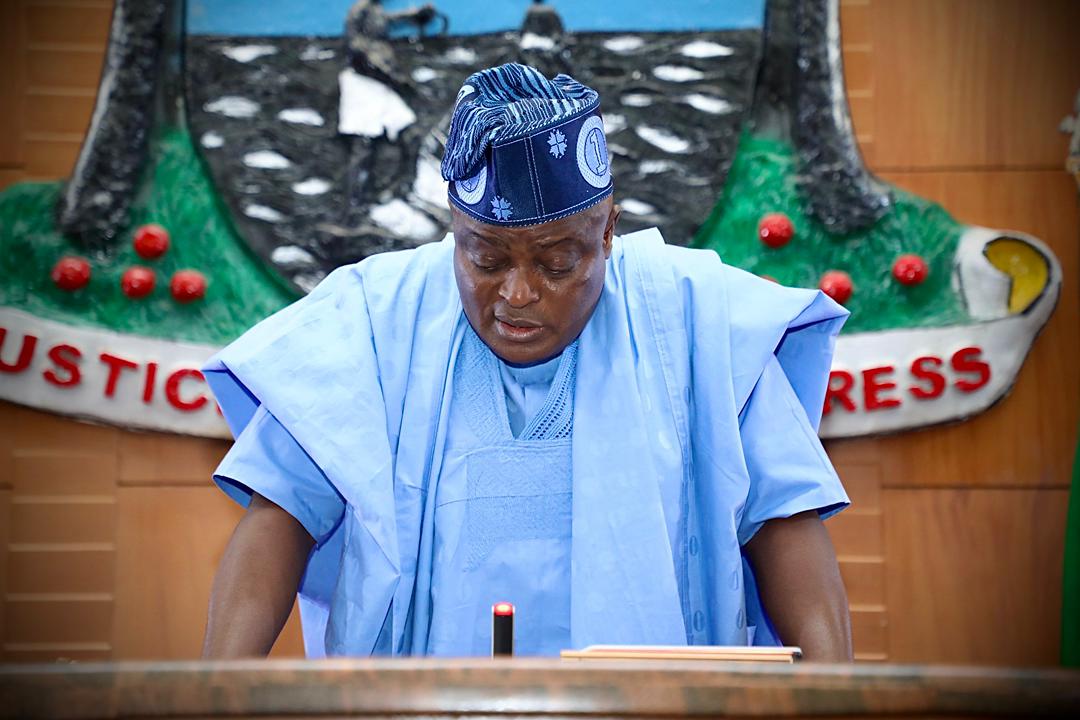
Sallah: Obasa Felicitates Muslim Ummah, Commends Nigerians for APC Primaries Turnout
The Speaker of the Lagos State House of Assembly, Rt. Hon. Mudashiru Obasa has extended warm felicitations to Muslims in Lagos State and across Nigeria on the occasion of Eid al-Adha.
In a statement released by his Chief Press Secretary, Mr. Dave Agboola, Obasa described the festival as a season of sacrifice, reflection, and gratitude, urging the faithful to continue to uphold the values of peace, unity, and love that strengthen the nation.
He noted that the celebration of Eid al-Adha is not only a spiritual milestone but also a reminder of the importance of togetherness and collective responsibility in building a stronger society.
He, likewise, emphasized that the festival provides an opportunity for Nigerians to renew their commitment to national progress and to support leadership that prioritizes development and prosperity.
Obasa, however, commended Nigerians, particularly members of the All Progressives Congress (APC), for their massive turnout during the recently concluded party primaries. He described the participation as a clear demonstration of the people’s confidence in the government of President Bola Ahmed Tinubu and their belief in the administration’s vision for a greater Nigeria.
“The APC primaries have shown the resilience of our democracy and the confidence Nigerians have in the leadership of President Bola Ahmed Tinubu and the Renewed Hope Agenda. This is a strong message that our people are ready to continue supporting policies that will drive growth and prosperity,” Obasa stated.
The Speaker further encouraged Muslims to celebrate responsibly, stressing that the joy of Eid should be accompanied by prayers for the continued peace and progress of Lagos State and Nigeria.
“As you celebrate with family and loved ones, may this season bring joy, peace, and prosperity to your homes. Let us remain united in our resolve to build a stronger nation,” he added.
On behalf of the Lagos State House of Assembly, Obasa wished all Muslims a happy and fulfilling Eid al-Adha celebration.

ABEOKUTA FILM FESTIVAL AT ILEYA
Kayshow Multimedia a filmmaking and Media organization this year 2026 holds its annual Abeokuta film festival at the Ake Palace in Abeokuta.
Alake of Egba land, Ọba Michael Adedotun Arẹmu Gbadebo has graciously endorsed the Free Training of Egba Youths on Film and Arts and the Entertainment of the the People with a FREE FILM SHOW at the AKE PAVILION. as part of the ABEOKUTA FILM FESTIVAL 2.0.
The Convener of the Film Festival Honorable Kehinde Soaga says this year’s event promises to be more exciting as distinguished personalities are sure to attend.
This includes the honorable Minister for Art Culture and Creative Economy in Nigeria, Barr. Hannatu Musa Musawa, Ààrẹ Lai Labode, Sen. Ibikunle Amosun and other special guests.
The event will feature Film, Cultural Dance Cultural foods and Award Ceremony.
The general public is hereby invited to the Free film show at the Abeokuta film festival at the Alake Palace Pavilion on Thursday 28th of May 2026 by 4:00 p.m.
Only well dressed is the Entry. The Abeokuta Film Festival is an annual event taking place in the capital city of Ogun State state.


- Qrent says delaying Information Technology (IT) refresh cycles may be increasing operational risk for businesses in Africa May 27, 2026
- Dentons’ Iyunola Adekanye Appointed to African Mining Week (AMW) Advisory Board May 27, 2026
- United Nations (UN) Women Liberia and Partners Convene for Spotlight Initiative 2.0 Women’s Economic Empowerment Inception Meeting May 27, 2026
- African Mining Week (AMW) to Host Central Bank Governors Roundtable as Monetary Authorities Deepen Role in Mining Sector Growth May 27, 2026
- Eritrea: Diaspora Nationals Celebrate Independence Day Anniversary May 27, 2026
- Africa Unveils Landmark Humanitarian Coordination Platform to Strengthen aligned Response to Humanitarian Crises May 27, 2026
- Seychelles: President Herminie Engages with Police and Fire Services on Praslin May 27, 2026
- Issue 3 of Mining Review Africa now available for free download May 27, 2026
- NOV Joins African Energy Week (AEW) 2026 as Gold Sponsor Amid Africa’s Offshore Expansion Push May 26, 2026
- African Union of Broadcasting (AUB) and United Nations University Institute for Water, Environment and Health (UNU-INWEH) Launch Landmark Webinar Series on Africa’s Water Crisis, Starting June 2, 2026 May 26, 2026
- Qrent says delaying Information Technology (IT) refresh cycles may be increasing operational risk for businesses in Africa May 27, 2026
- Dentons’ Iyunola Adekanye Appointed to African Mining Week (AMW) Advisory Board May 27, 2026
- United Nations (UN) Women Liberia and Partners Convene for Spotlight Initiative 2.0 Women’s Economic Empowerment Inception Meeting May 27, 2026
- African Mining Week (AMW) to Host Central Bank Governors Roundtable as Monetary Authorities Deepen Role in Mining Sector Growth May 27, 2026
- Eritrea: Diaspora Nationals Celebrate Independence Day Anniversary May 27, 2026
- Africa Unveils Landmark Humanitarian Coordination Platform to Strengthen aligned Response to Humanitarian Crises May 27, 2026
- Seychelles: President Herminie Engages with Police and Fire Services on Praslin May 27, 2026
-

 news5 months ago
WHO REALLY OWNS MONIEPOINT? The $290 Million Deal That Sold Nigeria’s Top Fintech to Foreign Interests
-

 society3 weeks ago
SOCIAL MEDIA IS NOT A BATTLEFIELD COMMAND – WHY THE NIGERIAN ARMY’S ACTION AGAINST JUSTICE CRACK IS A NATIONAL SECURITY IMPERATIVE
-

 celebrity radar - gossips4 months ago
Dr. Chris Okafor Returns with Power and Fire of the Spirit -Mounts Grace Nation Altar with Fresh Anointing and Restoration Grace on February 1, 2026
-

 celebrity radar - gossips6 months ago
Prophet Kingsley Aitafo Releases 2026 Prophecy: ‘Nigeria Will Rise, but the World Must Prepare for Turbulence’