
society
When the Past Knocks Twice: Lessons Nigeria Refuses to Learn

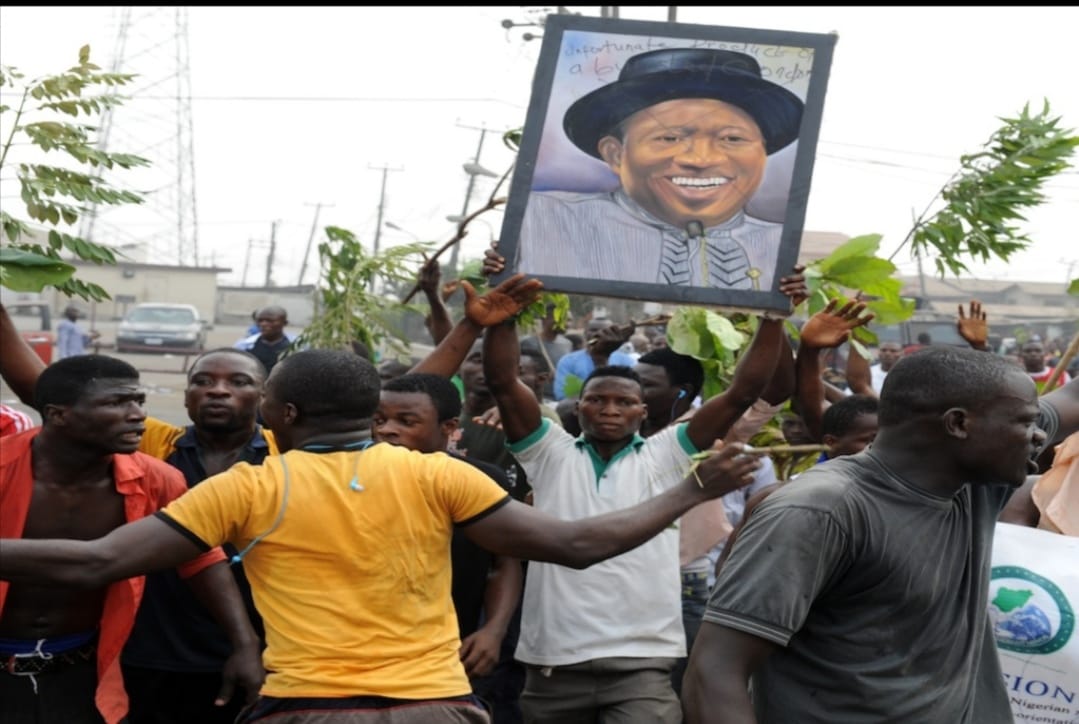
When the Past Knocks Twice: Lessons Nigeria Refuses to Learn.
By George Omagbemi Sylvester | Published by saharaweeklyng.com
“Same mistakes, harder landing; Nigeria keeps repeating the exam and failing the grade.”
Nigeria is a country with a long memory and a short attention span. We celebrate reforms when they arrive like overdue guests, then hand them off to a ruling class whose HABITS are older than the CONSTITUTION. The result is a recurring national tragedy: POLICY REVERSALS, HALF-MEASURES and a POLITICAL CULTURE that mistakes noise for progress. The past, when ignored, does not stay buried; it knocks again, louder and more destructive. Every time it knocks, the lesson missed is paid for by ordinary Nigerians: mothers making impossible choices about food, children missing school because of violence and households sliding into poverty while the corridors of power debate abstractions.

HISTORY is not merely background; it is a teacher. Chinua Achebe captured this precisely when he wrote that “THE NIGERIAN PROBLEM IS THE UNWILLINGNESS OR INABILITY OF ITS LEADERS TO RISE TO THE RESPONSIBILITY” and later warned that “UNTIL THE LIONS HAVE THEIR OWN HISTORIANS, THE HISTORY OF THE HUNT WILL ALWAYS GLORIFY THE HUNTER.” Those sentences are not aphorisms to be pinned on noticeboards; they are indictments that remain painfully current. Achebe’s diagnosis still fits: leadership in Nigeria too often defaults to expediency over courage, patronage over principle and narrative spin over accountability. The consequence is predictable, reform starts with fanfare and ends in the same patterns of exclusion and mismanagement that created the problems in the first place.
Consider the economy. The government of 2023–2025 undertook wrenching macroeconomic changes; SUBSIDY REMOVALS, EXCHANGE-RATE UNIFICATION and TAX REFORMS intended to restore fiscal sanity and attract capital. International institutions have cautiously applauded the direction, but the IMF and World Bank note that these measures have improved macro stability and investor sentiment and they stress that reforms can anchor medium-term growth if followed through with social protections and better implementation. Applause from capitals and boardrooms does not feed children. Nigeria’s headline problems; FOOD-PRICE SHOCKS, STUBBORN INFLATION and A POTENTIAL RISE IN POVERTY are the direct and measurable aftermath of policy choices that were not accompanied by the safety nets and supply-side fixes required to protect the vulnerable. The IMF itself acknowledged the reforms while urging careful sequencing and protection for those most at risk.

The numbers are unforgiving. Official and multilateral data show that millions of Nigerians are teetering on the edge of deprivation. The World Bank’s country assessments and poverty briefs have repeatedly warned that extreme poverty and food insecurity are rising and that millions more could be pushed below national and international poverty lines if inflation and food-price pressures persist. These are not abstract forecasts, they are household catastrophes that translate into empty plates and foregone healthcare. Policy without mitigation becomes punitive. Reforms must be accompanied by cash transfers, agricultural interventions and transparent targeting mechanisms; otherwise, they simply shift the cost of reform from the state’s balance sheet onto the backs of ordinary citizens.
If the economy is the sore muscle, insecurity is the gangrene. Violence in the north (from Boko Haram and ISWAP in the northeast to banditry and mass kidnappings across the northwest and north-central zones) has intensified. Human-rights monitors and independent reporting show that deaths, kidnappings and displacement rose sharply in recent years, with some months recording more fatalities than entire previous years. The security crisis compounds poverty and farmers cannot plant or harvest, markets are paralyzed and internal displacement creates humanitarian emergencies that the state cannot sustainably fund. Insecurity is not an adjunct problem; it is a structural brake on development, investment and the basic functioning of civic life. To treat it otherwise is to pretend the country can prosper while significant swaths of its people live under siege.

Why do we repeat the same mistakes? Part of the answer is INSTITUTIONAL SCLEROSIS. Nigeria inherited weak checks and balances and successive administrations have failed to build resilient institutions that outlive political survival. The civil service, meant to be the engine of continuity, is too often politicized; procurement systems remain opaque; and key service-delivery institutions are chronically underfunded or captured. When reforms require sustained administrative competence (to deliver conditional cash transfers, to run agricultural extension at scale, to prosecute corruption) Nigeria’s institutional weaknesses turn good policy into poorly implemented experiments. This is not an accident. It is the inevitable outcome of decades of governance where loyalty to party trumps service to the citizen.
Political culture matters as much as policy design. Nigerian politics rewards short-term rent extraction, not long-term public goods. Elites who profit from opacity and uncertainty will resist reforms that strip away patronage. So we have reform rhetoric paired with concession to vested interests; subsidies quietly reinstated, procurement diluted by political meddling and fiscal discipline undermined by emergency bailouts that reward political allies instead of correcting systemic inefficiency. The cycle is predictable and reform is announced, markets cheer, the elite lobby, policy is softened and the country ends up with neither sustained reform nor meaningful redistribution. The past knocks and we open the door to the very habits that produced the crisis.
What must change is not the occasional policy pivot but the underlying bargain between state and society. A credible social contract would mean that when hard reforms are necessary, they come with a transparent plan for protection and inclusion, measurable targets and independent monitoring. It would mean that revenues raised from subsidy savings or tax reforms are ring-fenced to improve power, roads, schools and safety nets not siphoned off into patronage. It would mean prosecuting corruption swiftly and visibly so that governance gains public legitimacy. In short, reforms must be sequenced with politics and administration in mind.

Though sequencing alone is not enough. Leadership must embrace humility and honesty. Politicians must stop treating citizens as collateral damage in a saga of HEADLINE-GRABBING POLICY and instead explain the trade-offs, accept short-term pain for long-term gain and deliver within a framework that offers concrete compensation for those hurt in the transition. Civil society, media and the judiciary must insist on transparency; the international community should condition support on verifiable social protection outcomes; and technocrats must be empowered and not sidelined by populist spectacle.
Nigeria has everything it needs to change course, HUMAN TALENT, a VAST DOMESTIC MARKET, ABUNDANT NATURAL RESOURCES and the INSTITUTIONAL HOOKS of DEMOCRACY. Potential is not destiny. If we do not learn from the past knocks, if we do not translate lessons into durable institutions, fair social contracts and brave leadership; those knocks will keep coming, louder each time, until the cost is CATASTROPHIC.
The invoice for today’s complacency reads in lives and livelihoods. The question for Nigeria is SIMPLE: Will we continue to answer the door to yesterday’s mistakes or Will we finally learn the lesson and refuse to open it?
History is waiting and the lions are ready to tell their side.
– George Omagbemi Sylvester





US-Based Society Lady, Fehintola-Brat Extends Eid-El-Kabir Greetings To Muslims
United States based fahionista of class, Chief (Mrs) Ayoola Fehintola-Brat has extended a warm greetings to Muslim faithful all over the world on the occasion of the 2026 Eid-El-Kabir celebration.
Fehintola-Brat who is the Balogun Egbe Obaneye Obinrin Akile Ijebu, and the Yeye Asofin of Idenaland in her message to Journalists urged Muslim to continually uphold the enduring values of sacrifice, obedience, faith, and compassion, which are central to the significance of Eid-El-Kabir festival.
A quiet philantropist whose humanitarian services has won her several laurels urged Muslims to use the spiritual occasion to pray for the peace co-existence of Nigerians regardless of religious, social and political leanings stressing that the oneness of the country should not be underplay.
In a related development, she expressed her felicitations to all sons and daughters of Ijebuland on the forthcoming Ojude Oba 2026 celebration, tasking age-groups otherwise known as Regbregbe to be more proactive in giving back to their immediate communities.
According to her, the beauty of the age-groups in Ijebuland is the need to contribute immensely to the development of the land in no small means. “This we will continue to achieve with God on our side”, she concluded.
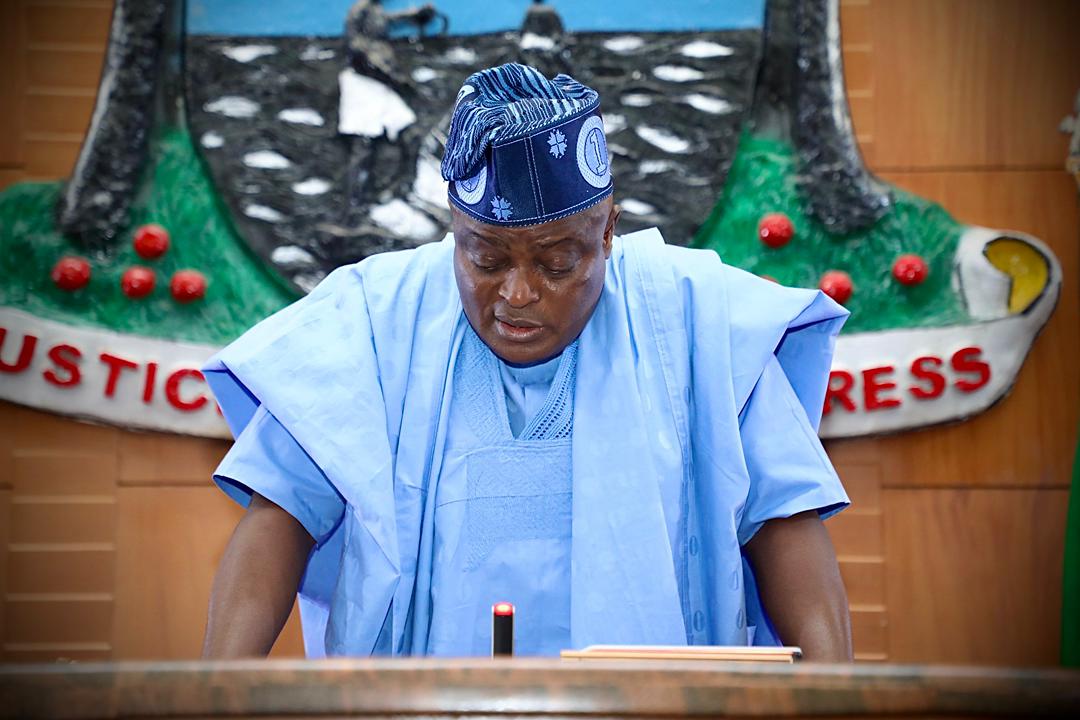
Sallah: Obasa Felicitates Muslim Ummah, Commends Nigerians for APC Primaries Turnout
The Speaker of the Lagos State House of Assembly, Rt. Hon. Mudashiru Obasa has extended warm felicitations to Muslims in Lagos State and across Nigeria on the occasion of Eid al-Adha.
In a statement released by his Chief Press Secretary, Mr. Dave Agboola, Obasa described the festival as a season of sacrifice, reflection, and gratitude, urging the faithful to continue to uphold the values of peace, unity, and love that strengthen the nation.
He noted that the celebration of Eid al-Adha is not only a spiritual milestone but also a reminder of the importance of togetherness and collective responsibility in building a stronger society.
He, likewise, emphasized that the festival provides an opportunity for Nigerians to renew their commitment to national progress and to support leadership that prioritizes development and prosperity.
Obasa, however, commended Nigerians, particularly members of the All Progressives Congress (APC), for their massive turnout during the recently concluded party primaries. He described the participation as a clear demonstration of the people’s confidence in the government of President Bola Ahmed Tinubu and their belief in the administration’s vision for a greater Nigeria.
“The APC primaries have shown the resilience of our democracy and the confidence Nigerians have in the leadership of President Bola Ahmed Tinubu and the Renewed Hope Agenda. This is a strong message that our people are ready to continue supporting policies that will drive growth and prosperity,” Obasa stated.
The Speaker further encouraged Muslims to celebrate responsibly, stressing that the joy of Eid should be accompanied by prayers for the continued peace and progress of Lagos State and Nigeria.
“As you celebrate with family and loved ones, may this season bring joy, peace, and prosperity to your homes. Let us remain united in our resolve to build a stronger nation,” he added.
On behalf of the Lagos State House of Assembly, Obasa wished all Muslims a happy and fulfilling Eid al-Adha celebration.

ABEOKUTA FILM FESTIVAL AT ILEYA
Kayshow Multimedia a filmmaking and Media organization this year 2026 holds its annual Abeokuta film festival at the Ake Palace in Abeokuta.
Alake of Egba land, Ọba Michael Adedotun Arẹmu Gbadebo has graciously endorsed the Free Training of Egba Youths on Film and Arts and the Entertainment of the the People with a FREE FILM SHOW at the AKE PAVILION. as part of the ABEOKUTA FILM FESTIVAL 2.0.
The Convener of the Film Festival Honorable Kehinde Soaga says this year’s event promises to be more exciting as distinguished personalities are sure to attend.
This includes the honorable Minister for Art Culture and Creative Economy in Nigeria, Barr. Hannatu Musa Musawa, Ààrẹ Lai Labode, Sen. Ibikunle Amosun and other special guests.
The event will feature Film, Cultural Dance Cultural foods and Award Ceremony.
The general public is hereby invited to the Free film show at the Abeokuta film festival at the Alake Palace Pavilion on Thursday 28th of May 2026 by 4:00 p.m.
Only well dressed is the Entry. The Abeokuta Film Festival is an annual event taking place in the capital city of Ogun State state.


- Qrent says delaying Information Technology (IT) refresh cycles may be increasing operational risk for businesses in Africa May 27, 2026
- Dentons’ Iyunola Adekanye Appointed to African Mining Week (AMW) Advisory Board May 27, 2026
- United Nations (UN) Women Liberia and Partners Convene for Spotlight Initiative 2.0 Women’s Economic Empowerment Inception Meeting May 27, 2026
- African Mining Week (AMW) to Host Central Bank Governors Roundtable as Monetary Authorities Deepen Role in Mining Sector Growth May 27, 2026
- Eritrea: Diaspora Nationals Celebrate Independence Day Anniversary May 27, 2026
- Africa Unveils Landmark Humanitarian Coordination Platform to Strengthen aligned Response to Humanitarian Crises May 27, 2026
- Seychelles: President Herminie Engages with Police and Fire Services on Praslin May 27, 2026
- Issue 3 of Mining Review Africa now available for free download May 27, 2026
- NOV Joins African Energy Week (AEW) 2026 as Gold Sponsor Amid Africa’s Offshore Expansion Push May 26, 2026
- African Union of Broadcasting (AUB) and United Nations University Institute for Water, Environment and Health (UNU-INWEH) Launch Landmark Webinar Series on Africa’s Water Crisis, Starting June 2, 2026 May 26, 2026
- Qrent says delaying Information Technology (IT) refresh cycles may be increasing operational risk for businesses in Africa May 27, 2026
- Dentons’ Iyunola Adekanye Appointed to African Mining Week (AMW) Advisory Board May 27, 2026
- United Nations (UN) Women Liberia and Partners Convene for Spotlight Initiative 2.0 Women’s Economic Empowerment Inception Meeting May 27, 2026
- African Mining Week (AMW) to Host Central Bank Governors Roundtable as Monetary Authorities Deepen Role in Mining Sector Growth May 27, 2026
- Eritrea: Diaspora Nationals Celebrate Independence Day Anniversary May 27, 2026
- Africa Unveils Landmark Humanitarian Coordination Platform to Strengthen aligned Response to Humanitarian Crises May 27, 2026
- Seychelles: President Herminie Engages with Police and Fire Services on Praslin May 27, 2026
-

 news5 months ago
WHO REALLY OWNS MONIEPOINT? The $290 Million Deal That Sold Nigeria’s Top Fintech to Foreign Interests
-

 society3 weeks ago
SOCIAL MEDIA IS NOT A BATTLEFIELD COMMAND – WHY THE NIGERIAN ARMY’S ACTION AGAINST JUSTICE CRACK IS A NATIONAL SECURITY IMPERATIVE
-

 celebrity radar - gossips4 months ago
Dr. Chris Okafor Returns with Power and Fire of the Spirit -Mounts Grace Nation Altar with Fresh Anointing and Restoration Grace on February 1, 2026
-

 celebrity radar - gossips6 months ago
Prophet Kingsley Aitafo Releases 2026 Prophecy: ‘Nigeria Will Rise, but the World Must Prepare for Turbulence’