
celebrity radar - gossips
Meet the Agege Boy who Built A $650 Million Luxury Real Estate Empire from Scratch


Meet the Agege Boy who Built A $650 Million Luxury Real Estate Empire from Scratch
From Agege to Ikoyi, Dr. Olasijibomi Ogundele, GMD Sujimoto Group, has grown up to belong to a rare breed of men who possess the ability to consistently go the extra mile and do more than they say. ‘If he promises you a hill, better be sure you’re getting a mountain’.

In an undercelebrated real estate sector where over 27 banks have only a 2.5 percent appetite for investment, the entrepreneurial mogul has successfully scaled from constructing a few units of luxury apartments to now building the tallest twin tower in Africa. Dr. Ogundele beams with the glow of perpetual investors’ confidence in an environment notorious for its herculean business climate.
The poster boy from the rusty slums of Agege, with the help of the Almighty, has turned the lemon life dealt him into lemonade by raising the bar for luxury living in Africa and putting Nigeria on the world’s list.
Like some of his peers, Dr. Olasijibomi has, over the years, sailed troubled waters, navigating numerous business tides with the grace and nous of a veteran captain. 12-12-2015 serves as an important reference point, when Nigeria witnessed the unveiling of the most audacious project in the real estate industry, The LorenzoBySujimoto. Although the ambitious project couldn’t continue after going through a lot of difficulties in 2016 due to the economic recession, government policies, and a disabling environment, even the only investor who said ‘yes’ as of then looked at the pressing economic situation and then pulled the last straw that broke the camel’s back, bringing the project to a halt.
Little did society know that the halt of this ambitious project would birth multiple folds of other successful projects like GiulianoBySujimoto, which sold out six months before completion, as well as the almost completed LucreziaBySujimoto (The Most Sophisticated building in Nigeria). Today, Providence has once again smiled on this astute entrepreneur and the brainchild behind this real estate powerhouse, as he has been included in the unique list of industrious changemakers who consistently create opportunities and impact through their remarkable projects and audacious business models.
The young CEO and Luxury Czar beams among the honourable list of outstanding African Changemakers such as Mr. Tunde Folawiyo, Nwankwo Kanu, Osimhen Victor, and Linda Ikeji, creating extraordinary footprints and providing leadership in their spheres of influence.
The luxury real estate Maestro didn’t just stumble on this feat with mere word of mouth, but through sheer hard work and utmost dedication. In fact, no one would have thought a young man from the remote corners of Agege would build a $650 million luxury real estate powerhouse from scratch, a testament to his strong, resolute, and resilient business mind.
Where laudable economic achievements are rare, capital is scarce, and government assistance is almost nonexistent, young Olasijibomi Ogundele, just like a rose that sprouted from concrete, has today, through passion and dedication, created the ultimate standard for luxury living in Africa with Sujimoto Group while revamping the real estate industry, which was previously dominated by top-grade mediocrity and profit maximisation over value creation.
Sujimoto Group, in less than a decade, has transformed into a Luxury real estate behemoth, focused on building extraordinary edifices in the premium neighbourhoods of Ikoyi and Banana Island. With annual revenue of approximately $50 million and many projects in the pipeline, Dr. Ogundele believes Sujimoto Group, as of today, is worth over $650 Million.
Dr. Ogundele ranks among a few entrepreneurs from Africa that can rub shoulders with other top businessmen around the globe as he commands respect in the Nigerian business sector, succeeding in engraving his name in the hearts of the generality of his high-end customers and business associates.
For the young CEO, success is no respecter of race or face; it only answers to hard work, God’s grace, integrity, and the spirit of excellence. In building the most gossiped-about building in Banana Island, LucreziaBySujimoto, he dared architectural complexities by erecting the tallest and most sophisticated residential building with never-seen-before facilities in Nigeria.
Now, the Beau De’ Monde of Luxury Living is on the cusp of creating the finest expression of waterfront living reserved for the lucky few luxury aficionados: The LeonardoBySujimoto an ultimate address where design artistry meets ultimate sophistication.
Nested in the Shimmering corners of Banana Island (Africa’s most expensive square metre) that is home to billionaires like Abdul Samad Rabiu, Sayyu Dantata, Mike Adenuga, amongst a host of other managing directors of multinationals as well as ambassadors, the extravagant 25-floor Leonardo high-rise building comes with high-end appliances and exceptional facilities that are second to none.
Forget every notion of luxury you’ve ever seen, The LeonardoBySujimoto waterfront project accentuates as the pinnacle of opulence that draws Inspiration from the iconic 16th-century artist and Renaissance man, Leonardo Da Vinci, embodying a standard of luxury that is rarely witnessed, standing at the very core of sophistication, art, and architecture.
LeonardoBySujimoto comes with limited-edition sanitary ware by Zaha Hadid, as well as other top-of-the-line features and facilities such as full home automation, Offending mediocrity interior by renowned luxury brand Fendi, a fully fitted European Standard kitchen, 3 metre doors, Duravit’s by Phillip Stark, Award-winning sanitary ware, Simone Saragoni’s Technogym Olympic size temperature-regulated swimming pool, Mini-mart, Mini-clinic, Hair salon, interactive lobby of 5-star hotel standard, squash court, 48-seater B&0 standard IMAX cinema, indoor virtual golf, luxury spa, bar & Lounge, and many more.
It is paramount to note that over the years, Sujimoto Group ‘The Talk and Do’ luxury real estate giant has established a firm reputation with its successfully scaled projects, based on a solid brand identity and philosophy of keeping stakeholders and customers at heart. The brand has over time established cash cow projects that have seen over 200% ROI for current investors as well as stakeholders.





celebrity radar - gossips
Adron Homes Celebrates Visionary Chairman, Aare Adetola Emmanuel King, at 51
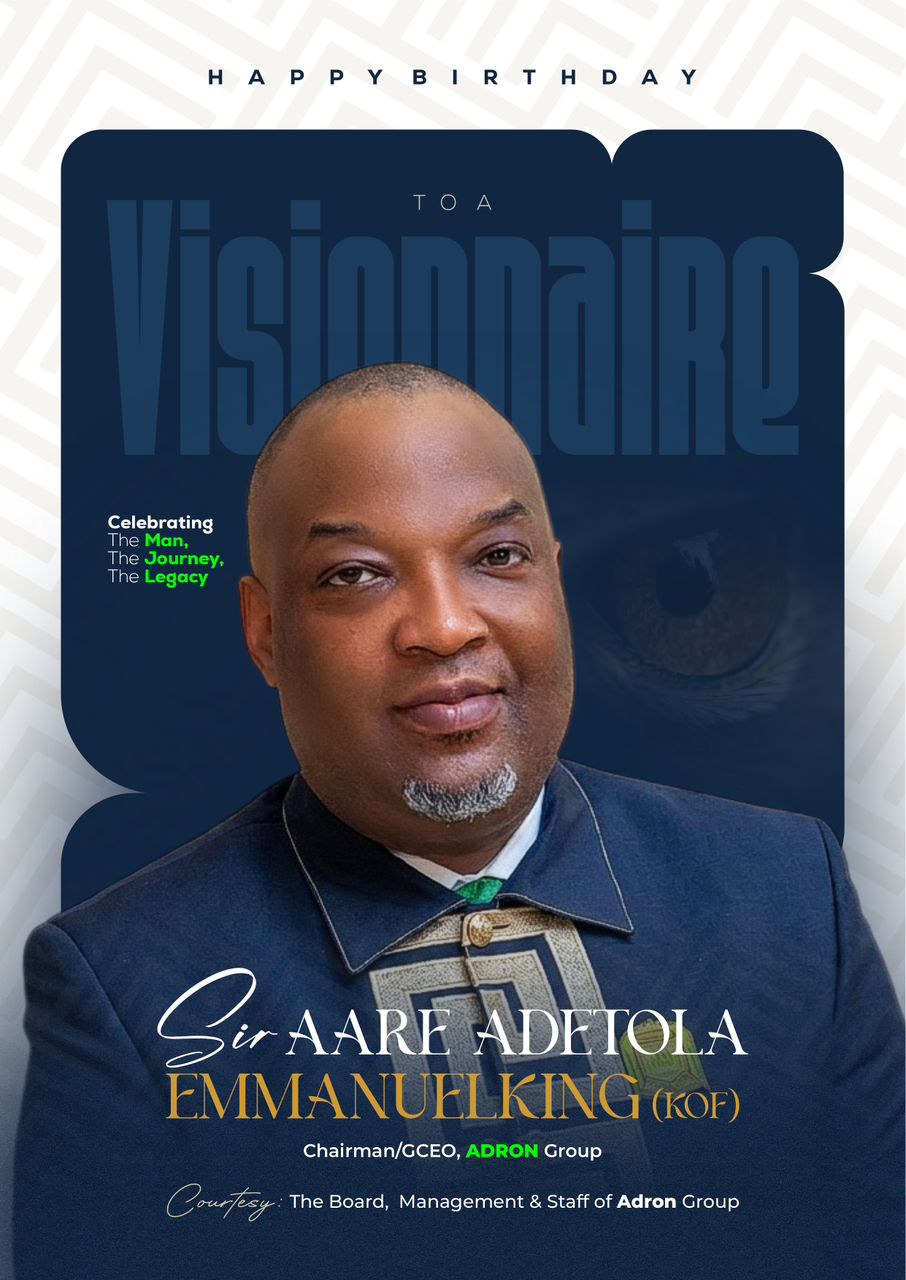
Adron Homes Celebrates Visionary Chairman, Aare Adetola Emmanuel King, at 51
The management and staff of Adron Homes and Properties Limited have joined family, friends, associates, and well-wishers across the globe to celebrate their Chairman and Chief Executive Officer, Aare Adetola EmmanuelKing, as he marks his 51st birthday.

In a statement released by the company, the milestone was described as a celebration of an exceptional leader whose vision, resilience, and entrepreneurial brilliance have not only transformed Adron Homes into a household name in Nigeria’s real estate sector but have also redefined affordable housing across the country.
Under his dynamic leadership, Adron Homes has continued to expand its footprint, delivering value-driven residential solutions while empowering thousands of Nigerians with opportunities for home ownership. His commitment to excellence, innovation, and customer satisfaction has remained the driving force behind the company’s sustained growth and industry leadership.
The statement further highlighted Aare EmmanuelKing’s passion for nation-building and community development, noting his significant contributions to job creation, youth empowerment, and the promotion of socio-economic development through real estate investments.
“As a leader, mentor, and visionary, Aare Adetola EmmanuelKing has consistently inspired a culture of excellence, integrity, and dedication within the organization. His ability to turn bold ideas into reality continues to position Adron Homes as a trailblazer in the industry,” the statement read.
The company expressed profound gratitude for his steadfast leadership and prayed for continued wisdom, strength, and sound health as he embarks on another year of impactful achievements.
As he celebrates his 51st birthday, the entire Adron Homes family proudly honours a man whose legacy continues to shape the future of real estate in Nigeria.
Happy 51st Birthday, Aare Adetola EmmanuelKing!
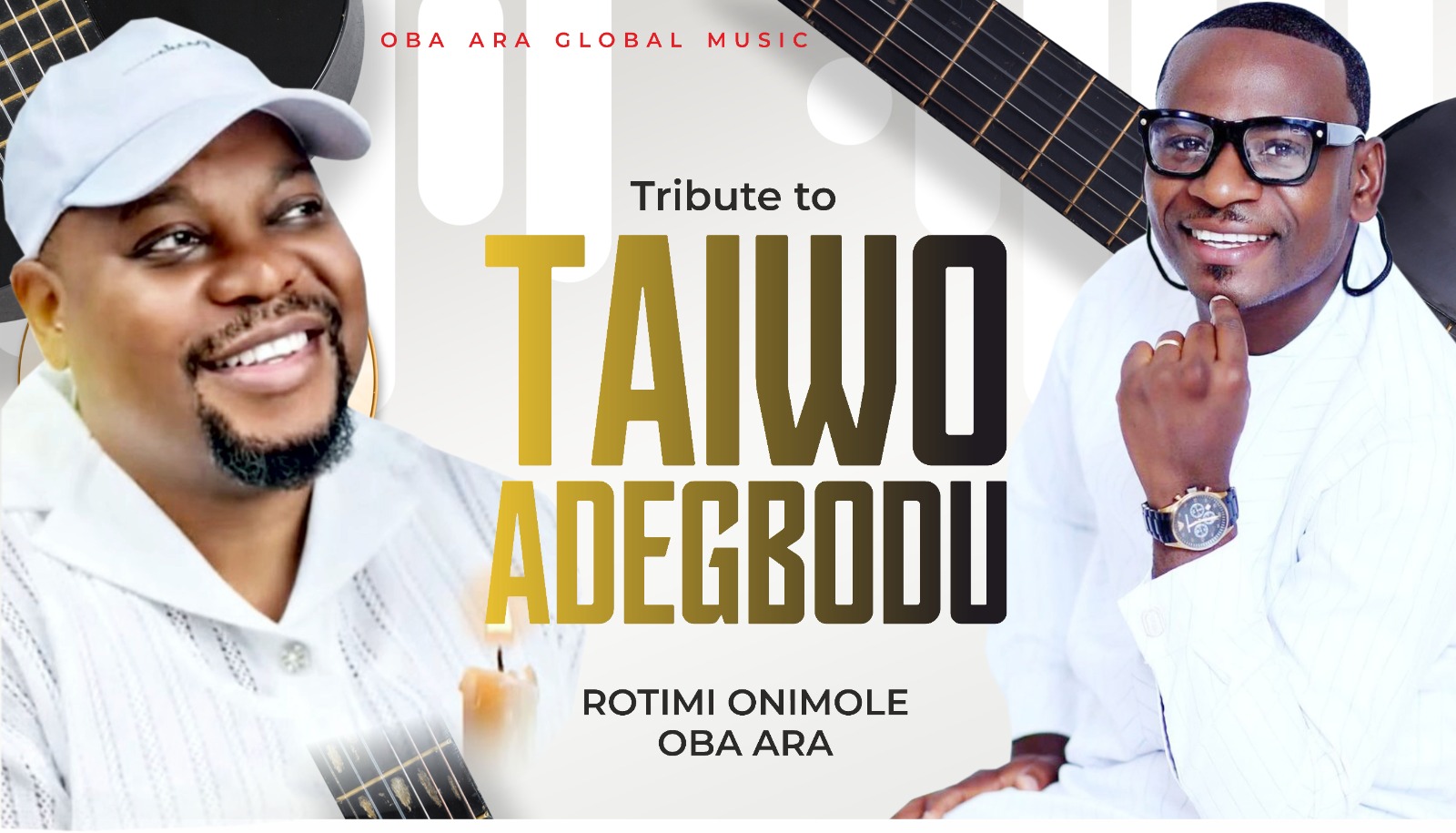
Oba Ara Releases Emotional Tribute to Late Taiwo Adegbodu
Taofik Afolabi
The gospel music community continues to grieve the painful loss of Taiwo Adegbodu, a beloved figure whose sudden departure left a deep void among fans, colleagues, and loved ones. In response to this loss, renowned gospel minister Rotimi Onimole, popularly known as Oba Ara, has released a moving tribute song that captures both the sorrow of the moment and the enduring legacy of the late singer.
Oba Ara, a proud son of Isale Eko, channels raw emotion throughout the song, using heartfelt lyrics and soul-stirring melodies to reflect on his personal connection with Taiwo Adegbodu. In the tribute, he openly expresses how deeply the news of Adegbodu’s passing shook him, describing it as a painful and unexpected loss that is difficult to come to terms with.
The song goes beyond mourning, it celebrates the life, ministry, and impact of Taiwo Adegbodu. Oba Ara highlights the late artist’s dedication to spreading the gospel through music, his inspiring voice, and the spiritual influence he had on many within and beyond Nigeria. Through powerful verses, he paints a picture of a man who lived for God and touched countless lives through his ministry.
Listeners have described the tribute as both comforting and deeply emotional, as it resonates with the collective grief of the gospel music community. It serves as a reminder that although Taiwo Adegbodu is no longer physically present, his music, message, and legacy will continue to live on.
In honoring his late colleague, Oba Ara not only pays his respects but also offers a source of healing for fans and fellow ministers, using music as a tool to process grief and celebrate a life well lived.
celebrity radar - gossips
Buratai, Fagbemi , Shagaya, Olofa, Others Eulogise Olowu Kuta’s Olori On 60th Birthday, Foundation Launch
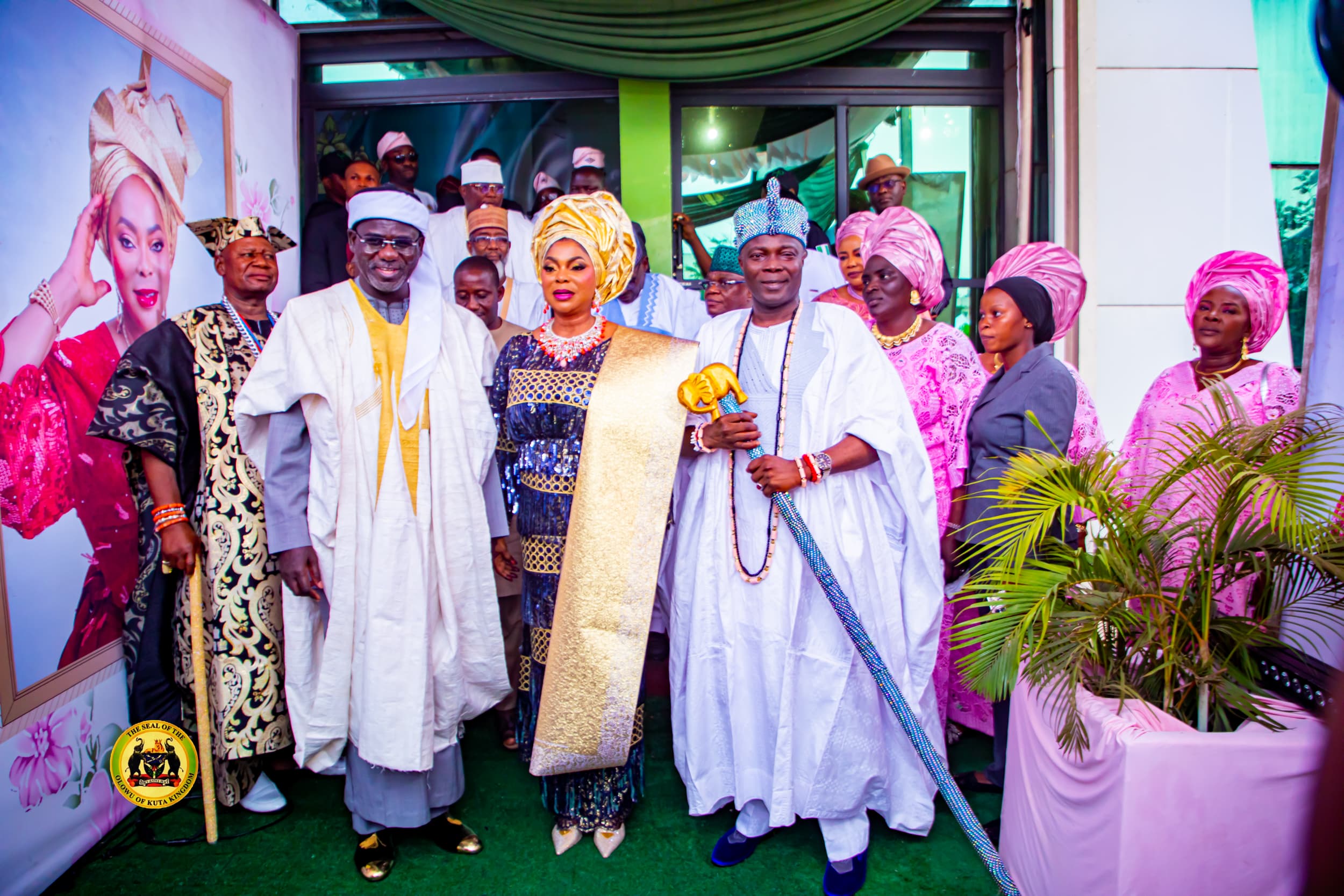
Buratai, Fagbemi , Shagaya, Olofa, Others Eulogise Olowu Kuta’s Olori On 60th Birthday, Foundation Launch
Eminent personalities across the Nigeria stormed the TFK Event Centre, Bala Mohammed Way, Guzape, Abuja, to celebrate the 60th birthday of Olowu Kuta’s Olori, Queen Jumai Amoke and her Foundation Launch on Saturday 28, March 2026.

From former Chief of Army Staff, Lt Gen TY Buratai rtd, to the Minister of Justice and Attorney-General of the Federation, Prince Lateef Fagbemi; Olofa of Offa, HRM Oba Mufutau Gbadamosi. Even top businesswoman and socialite, Chief (Mrs) Bola Shagaya, was in attendance.


Other dignitaries were newly promoted Deputy Inspector-General of Police and former AIG Zone 2 , Lagos , Adegoke Fayoade, Major General Abdumalik, Major General Samuel Adebayo rtd (Fmr CDI);
Major General Anthony Omozoje rtd (Fmr Copp);
Alhaji Tajudeen Owoyemi (Asiwaju of Offa and CEO Radisson Hotel Nigeria;
Dr Waheed Olagunju, former managing director of Bank of Industry, Oniba of Iba, Lagos State, HRM Oba Dr Suleiman Raji ;
Justice Falola, Olu of Ile-Ogbo , Oba Adetoyese amongst many traditional rulers and captains of industry too numerous to mention.
Speaking at the occasion, the Chief Host, Olowu of Kuta, HRM Oba Dr Adekunle Oyelude Makama, CON , Tegbosun iii, who is also the husband of the celebrant commended Queen Jumai for ‘ her slender arms full of kindness’ to establish such humanitarian Foundation, ‘Amoke Children and mother in Need Foundation’ at a time Nigerians are going through economic crisis occassioned by the global meltdown.
Olowu also commended her steadfastness and love for the less privileged and downtrodden.
The monarch refrenced the task before his wife’s humanitarian gesture said her best is yet to come.
” Olori Amoke Jumai, I celebrate you. You will celebrate 70, 80, 90 and continue to shine as you continue to put a smile on people’s faces. I love you, “Olowu Kuta added.
To Lt Gen Buratai, a former army chief and former Nigerian Ambassador to Benin Republic, the reward of hard work is more work.
Buratai, who also doubles as Balogun Agba of Owu Kuta, a chieftaincy title reserved for a generalismo congratulated Queen Jumai for attaining the age of 60 in good health.
The retired army General said he’s not surprised by the turn out of eminent personalities across the country to celebrate the Olowu Kuta’s Olori because she merited it through her hospitality to all, adding that Allah the most merciful, most beneficial would accept all her act of ibadah.
The minister of Justice, Prince Fagbemi, was full of praises for Queen Jumai for deeming it fit to have a place in her heart to accommodate the needy and less privileged in ‘our society.’
Prince Fagbemi urged the guests to contribute generously to support the Foundation in order to continue to alleviate poverty and put a smile on the faces of the people.
” I congratulate you on your 60th birthday and Foundation Launch. I wish you many happy returns of the day and many more fruitful services to the country and motherland”, Prince Fagbemi added.
The celebrant, Queen Jumai who was grining from ear to ear thankfully said she was excited by the turn out and the response of the people to her foundation.
Queen Jumai, however, promised to continue to use her resources and donations received for the good of the needy and less privileged in the society.
” I want to appreciate my own Kabiesi Olofa of Offa , for his presence and im I’m using him as a point of contact to all other Kabiesis present here, the minister of justice and Attorney-General, you’re welcome, sir; Mrs Bola Shagaya, I salute your enterprise, Lt Gen Buratai, I’m grateful, sir; DIG Fayoade, Justice Falola and other dignitaries too numerous to mention, I thank you, all. To my darling husband, Kabiesi Olowu , I thank you immensely for your support. And to my family and friends, I thank you , all. E se pupo!”, she said.


-

 society7 months ago
Religion: Africa’s Oldest Weapon of Enslavement and the Forgotten Truth
-

 news4 months ago
WHO REALLY OWNS MONIEPOINT? The $290 Million Deal That Sold Nigeria’s Top Fintech to Foreign Interests
-

 society6 months ago
“You Are Never Without Help” – Pastor Gebhardt Berndt Inspires Hope Through Empower Church (Video)
-

 celebrity radar - gossips2 months ago
Dr. Chris Okafor Returns with Power and Fire of the Spirit -Mounts Grace Nation Altar with Fresh Anointing and Restoration Grace on February 1, 2026