
society
Mr. Ibile Breaks Silence: Challenge Defamers, Calls for Transparent Investigation


Mr. Ibile Breaks Silence: Challenge Defamers, Calls for Transparent Investigation
Real estate magnate, Hon. Saheed Mosadoluwa, aka Mr. Ibile, recently found himself entangled in a web of defamation and accusations orchestrated by his adversaries, allegedly led by Kazeem All Rounder. All Rounder, who is nursing his landgrabbing engagement with Mike Utomi, was defeated legally. The support for these actions reportedly comes from Babatunde Olalere Gbadamosi (BOG), who is said to still harbor resentment about his ex-wife’s business relationship with Mr. Ibile. Hon. Saheed is now speaking up about the incident

According to him, “the IGP I know, in the person of Mr. Kayode Egbetokun, is a man of integrity who doesn’t take bribe. I do not believe anyone can entice him with land to do their bidding. As a father and the Chief Law Enforcement Officer in this country, he would not see a doctored video of a hired assassin they are parading as innocent Nigerian and be happy with my person. He cannot be happy until he understands what led to the content of the video and also the characters of those criminals, which the defamatory lawyer is trying to use the media to parade as innocent Nigerians. So, I don’t blame the IGP for his reaction for appropriate investigation report before my release, but he should allow the rule of law to take its course because all the cases are already in court, and the police do not have any reason to reopen the case if not for a witch-hunt and persecution at all costs, as I have already been charged in two different courts,” he said.
On Mike Utomi, who was said to have engaged Kazeem Salami All Rounder, Ibile said, “I commit them into the hands of the almighty God because they are everywhere parading forged documents, and now that I understand that the police in FIB just want them to continue forceful taking over. I will seek redress in a court of law.”
In a recent press briefing, Ibile vehemently refuted allegations of assault, murder, and land grabbing propagated by his detractors.
He labeled the online campaigns as pure envy from certain elements, who cannot stand his fast success in the real estate business in Ibeju-Lekki and Epe area, and are determined to tarnish his reputation.
Ibile cited multiple petitions and defamatory attempts orchestrated by Dotun Hassan, including what led to what the media painted as the assault of an alleged hired assassin, Samsideen Oluwo aka Ese Olobo. Police investigations reportedly vindicated Ibile, revealing Oluwo’s ties to one of Ibile’s adversaries in person of one Murphy Adebare Ademoye aka Topaz Gardens, who was alleged and confirmed to have engaged Samsudeen Oluwo to assassinate Ibile by the police investigation report and also the DPP legal advice of which the failure led to the viral video of dehumanization.
Furthermore, Ibile challenged his accusers, calling for a transparent investigation, not the type of the one before the DIG Habu Sanni, who chose to detain his person to please media trial and also handed over the company properties to land grabbers while he keeps the owner in police cell for no reason, even when he is fully aware that all the cases are a duplication of what the police have fully investigated and issued opinions on.
He expressed readiness to cooperate fully with the authorities to uncover the truth. “They are bankrolling on a false kidnapping alert, lying to the police with fake witnesses just because they had been able to use media to bastardize the police management’s minds”, he added.
Addressing the alleged land dispute with the Awujale, Ibile maintained his innocence, affirming his respect for the monarch. He clarified that he had willingly offered a portion of his land to the Awujale, dismissing claims of conflict.
In a bold stance against his antagonists, Ibile asserted his commitment to seeking justice and urged the public to scrutinize the motives behind the defamation campaigns.
In light of the ongoing legal battles, Ibile remains resolute in his pursuit of truth and justice, vowing to defend his integrity against all odds.




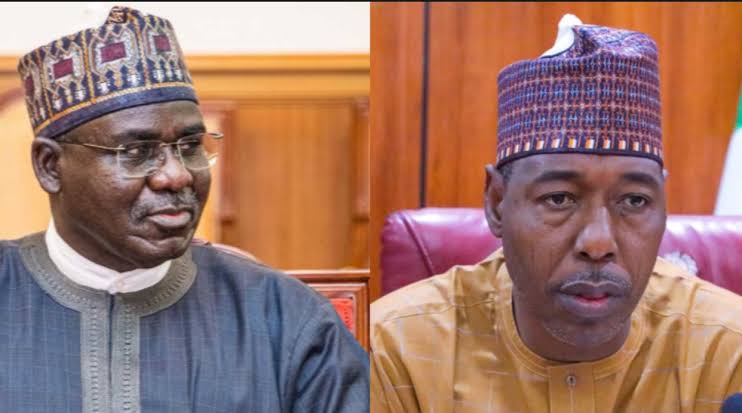
TY BURATAI HUMANITY CARE FOUNDATION COMMENDS GOVERNOR ZULUM FOR HELPING MILITARY FAMILIES
The TY Buratai Humanity Care Foundation has commended Borno State Governor Babagana Umara Zulum for his generous donation of ₦150 million to the families of three military officers who were tragically killed in recent attacks. Each family received ₦50 million as part of the state’s continued commitment to supporting fallen heroes and wounded personnel involved in counter-insurgency operations.
The commendation was contained in a statement signed by the foundation’s chairman, Ibrahim Dahiru Danfulani Sadaukin Garkuwan Keffi/Betara Biu, and made available to the press.
The foundation expressed gratitude for the governor’s compassionate gesture, which included personal visits to the families of the late Lieutenant Colonels Umar Farouq, Salihu Iliyasu, and Aliyu Saidu Paiko in Abuja, Niger, and Kano States. During the visits, Governor Zulum offered his condolences and praised the service, sacrifice, and patriotism of the fallen officers.
The foundation’s Grand Patron, His Excellency, Lieutenant General Tukur Yusufu Buratai, CFR (Rtd), personally commended the governor’s dedication to improving the lives of Borno State residents. He also extended his condolences to the families of the officers and soldiers who made the ultimate sacrifice in service to the nation.
During his visits, Governor Zulum reaffirmed his administration’s commitment to supporting bereaved families, which includes offering scholarships to the orphaned children of fallen personnel. He pledged to extend similar visits to other affected families, underscoring a compassionate approach to addressing the needs of those who have suffered in the line of duty.
society
Queen Amb Dr. Nwamaka Cordelia Anyatonwu Appointed Minister of Humanitarian, Culture, and Kingdom Affairs, United Kingdom of Atlantis
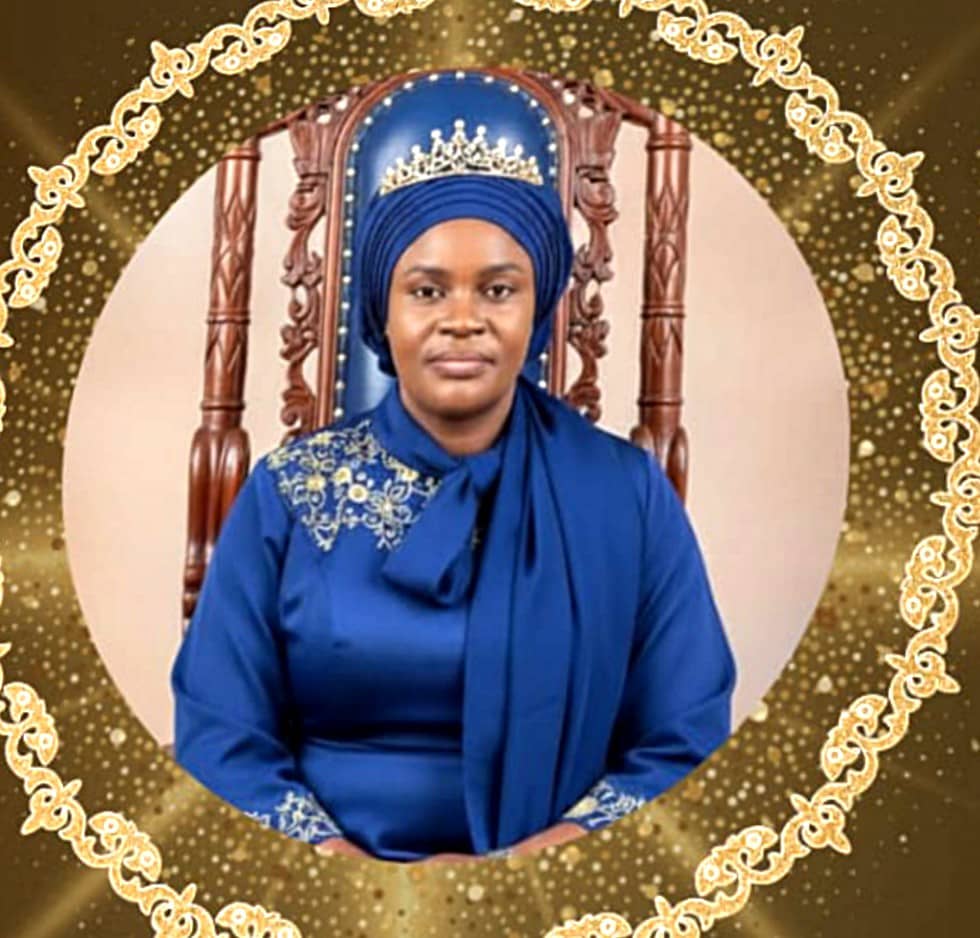
*Queen Amb Dr. Nwamaka Cordelia Anyatonwu Appointed Minister of Humanitarian, Culture, and Kingdom Affairs, United Kingdom of Atlantis
Her Majesty Queen Amb Dr. Nwamaka Cordelia Anyatonwu, Queen of the Aches Empire under the jurisdiction of the United Kingdom of Atlantis (UKA), has been appointed as the Minister of Humanitarian, Culture, and Kingdom Affairs, effective immediately.
This appointment comes as the UKA takes decisive steps to strengthen its humanitarian efforts and protect its citizens from unauthorized activities. In light of recent developments, the UKA has issued an official public disclaimer cautioning citizens, followers, and the general public about the activities of individuals promoting and operating a coin or platform not officially recognized by the Atlantian Gold Coin (ATC). This follows the hijacking of the 5 billion humanitarian project, a move that has been met with concern and condemnation from the international community.
As the newly appointed Minister, Queen Amb Dr. Anyatonwu has announced that all matters pertaining to the 5 billion humanitarian project in UKA should be directed to her office. This includes the newly captured NGOs, which are now required to report to the Office of Humanitarian Affairs, ensuring transparency and accountability in the management of humanitarian resources.
“We are committed to transparency and accountability in our humanitarian efforts,” said Queen Amb Dr. Anyatonwu. “We urge all stakeholders to work with us to ensure the success of our initiatives and protect our citizens from unauthorized activities. We will not tolerate any form of exploitation or mismanagement of humanitarian funds, and we will take all necessary measures to ensure that those responsible are held accountable.”
The UKA has assured its citizens and the international community that it is taking all necessary measures to recover the hijacked funds and bring the perpetrators to justice. The appointment of Queen Amb Dr. Anyatonwu is seen as a significant step towards achieving this goal and ensuring that humanitarian efforts are aligned with the UKA’s values and principles.
For more information. Please contact the Office of the Minister of Humanitarian, Culture and Kingdom Affairs.
*About the United Kingdom of Atlantis*
The United Kingdom of Atlantis is a sovereign nation committed to promoting peace, prosperity, and humanitarian values. The UKA is dedicated to working with international partners to address global challenges and improve the lives of its citizens and people around the world.
NASRE: Building A Safety Net For Nigeria’s Journalists
At a time when Nigeria’s media industry is strained by economic uncertainty, job instability, and shrinking newsroom resources, the Nigerian Association of Social and Resourceful Editors (NASRE) is redefining professional solidarity. More than a network of editors, it is emerging as a critical support system for journalists navigating an increasingly precarious landscape.
Founded on the principles of welfare, solidarity, and professional growth, NASRE has positioned itself as a responsive and forward-looking body within the media ecosystem. While many professional associations remain focused on advocacy and training, NASRE distinguishes itself by combining these roles with direct and practical support for journalists and their families.
At the core of its mission is a clear proposition that no journalist should be abandoned in times of need. Through financial assistance, targeted outreach, and sustained engagement, the association has supported members facing hardship, as well as widows and families of deceased practitioners. These largely understated interventions have steadily earned NASRE credibility and respect across the industry.
The organisation’s approach reflects a keen awareness of the pressures confronting media professionals, including irregular pay, job insecurity, and limited institutional backing. In such an environment, NASRE’s welfare initiatives are not merely charitable, they are essential.
Beyond welfare, the association is investing in professional resilience. Through collaboration, networking, and knowledge-sharing platforms, it is equipping editors and practitioners to remain competitive in a rapidly evolving digital media space, where adaptability is no longer optional.
Headquartered in Lagos, NASRE continues to broaden its reach, attracting a growing membership united by the need for a more responsive and supportive professional community. Its expansion signals a shift in expectations within the industry, away from symbolic affiliations towards institutions that deliver measurable value.
For many observers, NASRE represents a necessary evolution, a professional body anchored not just in ideals, but in impact. By combining empathy with structure, it offers a model of what media associations can become in challenging times.
As the industry continues to evolve, organisations like NASRE may prove indispensable. In a profession devoted to telling society’s stories, it is ensuring that the storytellers themselves are not left behind.


-

 society6 months ago
Religion: Africa’s Oldest Weapon of Enslavement and the Forgotten Truth
-

 news4 months ago
WHO REALLY OWNS MONIEPOINT? The $290 Million Deal That Sold Nigeria’s Top Fintech to Foreign Interests
-

 society6 months ago
“You Are Never Without Help” – Pastor Gebhardt Berndt Inspires Hope Through Empower Church (Video)
-

 celebrity radar - gossips2 months ago
Dr. Chris Okafor Returns with Power and Fire of the Spirit -Mounts Grace Nation Altar with Fresh Anointing and Restoration Grace on February 1, 2026