
news
Examining Mustapha Habib Ahmed’s Scorecard at NEMA – Toni Kan

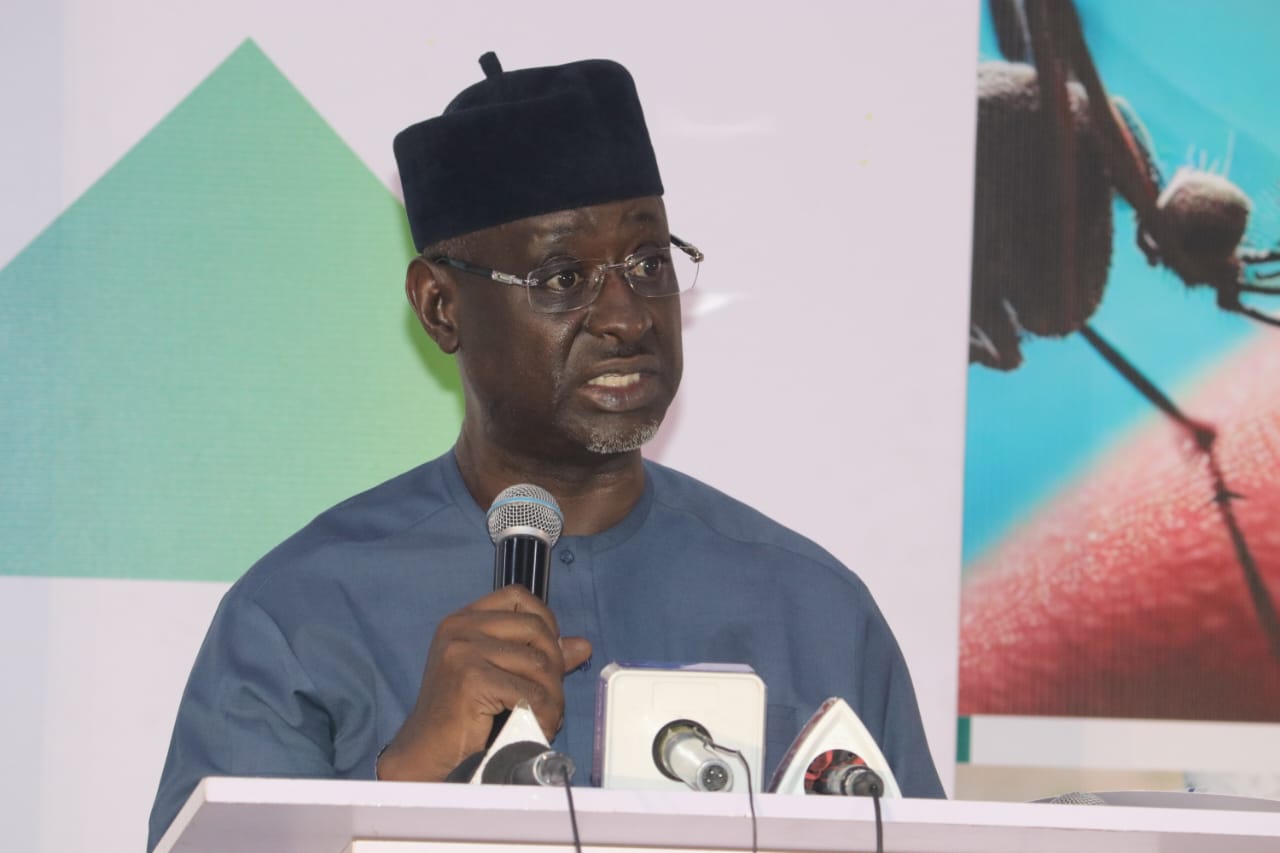
Examining Mustapha Habib Ahmed’s Scorecard at NEMA – Toni Kan
Sahara Weekly Reports That Those who are appointed at the pleasure of the President, to sensitive and critical Ministries Departments and Agencies (MDAs) are offered a unique opportunity to make a mark in the polity by impacting positively on the citizenry and populace.

But public service is increasingly becoming a thankless job in Nigeria where it has now become the norm for political appointees to be hounded and demonized when they leave office.
This happens many times because there is always scant proof of performance. Nigerians are often confounded by what political appointees do or achieve while in office. The question that roils their minds, to borrow a leaf from the annual lawyer fest convened years ago by the late Efere Ozako, is – wetin government appointees dey do sef?
That is, however, one question very few would ask of Mustapha Habib Ahmed, the immediate past Director General of the National Emergency Management Agency (NEMA).
Appointed to head the emergency agency on May 31st, 2021, Habib Ahmed sat in the saddle up until his handover to the incumbent Director General, Mrs. Zubaidah Umar who was appointed on March 15, 2024.
At the hand over-over ceremony on March 20, 2024, Mustapha Habib Ahmed displayed the same uncommon traits that have defined his tenure at NEMA with a proper and precise hand-over session to his successor.
‘Proper’ and ‘precise’ are two words that come to mind when you think of Mustapha Habib Ahmed, the multi-lingual business administration graduate of Ahmadu Bello University, Zaria. Born in Kaugama, Jigawa state in 1970, Ahmed studied at Federal Government College, Kaduna and Focus Tutorial College, Lagos before proceeding to ABU for his undergraduate degree.
An astute and successful businessman, his professional career saw him excel in communication, supply chain in engineering purchasing and supplies as well as bulk handling before rising to the position of Director of Finance and Administration at the Sealag Alliance Nigeria Ltd. He would later become the Managing Director of Rapid Engineering Company Limited both in Lagos.
His political sojourn was no less stellar with stints as Member Board of Trustees (BOT) of the All Progressives Congress (APC), Member, Directorate of Logistics, APC Presidential Campaign Council, National Chairman of the Buhari Support Group, member of the Presidential Campaign Council in 2019 etc.
His appointment as the DG of NEMA was loudly applauded by the All Progressives Congress (APC) which noted that his appointment was more than a reward for party loyalty but a “recognition of selfless service to the country, attributes which clearly describe your persona. We trust in your capacity to acquit yourself creditably well in your new assignment.”
Skeptics may well have seen those words as mere platitudes issued by political colleagues but a consideration of Mustapha Habib Ahmed’s stewardship will show clearly that the businessman, technocrat and politician acquitted himself creditably over the course of his almost three year stint at NEMA.
Immediately after the hand-over, Habib Ahmed was joined by his successor and members of staff of NEMA for group photographs and farewell outside the brand new premises of NEMA. It was a telling moment because the building, which was hitherto abandoned for six years, was brought to completion by Habib Ahmed thus bringing all departments and units under the same roof for the first time. (please confirm this)
But he did not just deliver a building; he delivered a world class disaster management facility boasting the very best amenities – Emergency Situation Room, GIS Laboratory, Nigeria Mission Control Centre (MCC) for tracking of distressed aircrafts and ships, Emergency Call Centre, Staff Clinic, and Library.
Speaker after speaker showered encomiums on the outgoing DG and from their tributes what came across was a man who led from the front with a leadership style that can easily be encapsulated under four broad themes: Co-ordination, Collaboration, Capacity building and Communication.
Coordination: Disaster management is about proactive co-ordination of disparate strands. During his time at NEMA, Habib Ahmed ensured that focus was placed on ensuring that the tools which facilitate co-ordination and the discharge of their mandate were available, fully maintained and in tip-top shape.
The Hytera modern communication system was deployed to enable real time communication and live streaming of events from incident sites both in Nigeria and abroad for a better coordinated disaster response; Medical Intensive Care Units (MICU) Ambulances, Search and Rescue Boats, extrication equipment and operational vehicles were procured to strengthen the capacity of NEMA Search and Rescue teams in all the six zones’ while the NEMA Air Wing comprised of the Fixed Wing Cessna Citation Air Ambulance and Bell 22 Helicopter which had been grounded for five years were revived to enhance capacity for Search and Rescue and medical evacuation.
Coordination also went beyond hardware to include processes. The launch of the NEMA Service Charter in 2023 was to help institutionalise and operationalise processes with a formal document that encapsulates and articulates NEMA’s obligations to its service users in terms of benchmarks and information dissemination.
During his tenure, NEMA also developed a comprehensive national Disaster Risk Reduction Strategy (2024-2030) and Action Plan (2024 – 2027) that addresses and puts in context the evolving landscape of risks and challenges facing Nigeria
The Special National Economic Livelihood Emergency Intervention (SNELEI) was a special intervention aimed at supporting the long-term recovery of the nation through the distribution of relief materials such as food and non-food items like water pumps, mattresses, and agricultural supplies.
Proper and precise coordination were key to the successes recorded in the evacuation of stranded Nigerians from various hotspots; Sudan, Libya, Ukraine, India, Dubai and Turkey and it was a delighted Mustapha Habib Ahmed who announced at the conclusion of evacuations from Sudan on 28 July, 2023 that “we have not lost one Nigerian life, which is most important to us.”
Collaboration: Mustapha Habib Ahmed’s savvy, urbane and national outlook as a politician, businessman and student who lived and studied in different parts of the country was obvious in his uncanny ability to forge partnerships and facilitate collaborations during his time at NEMA.
On Thursday August 10, 2023 NEMA reconvened the National Emergency Coordination Forum (ECF), a meeting of multi-sectoral stakeholders comprising agencies of Government, international organisations and the United Nations systems was predicated upon the recognition of coordination and collaboration as vital components of disaster management.
Under his leadership, NEMA emphasised Nigeria’s triple response structure and aligning NEMA to that structure ushered in a hitherto unseen level of collaboration between NEMA and national, state and sub-national level actors. NEMA and State Emergency Management Agencies (SEMAs) were for once, true partners in progress.
But collaboration wasn’t limited to emergency agencies. NEMA under Ahmed prioritised engagement with national-level agencies like the Nigerian Meteorological Agency (NIMET) and the Nigerian Hydrological Services Agency (NIHSA) by paying attention to their annual predictions and forecasts especially the Seasonal Climate Prediction (SCP) and Annual Flood Outlook (AFO) respectively. This led to the comprehensive mitigation of the effects of flooding in 2023.
That collaboration also extended to bilateral and multilateral cooperation and partnerships with participation at various global fora in fulfillment of Nigeria’s commitment to international protocols. NEMA participated and represented Nigeria in the midterm review of the Sendai Framework for Disaster Risk Reduction (SFDRR) 2015 -2030 held between 18th and 19th May, 2023 at the United Nations Headquarters, New York, USA and fostered collaborative partnerships with the United States, Madagascar and others.
Capacity building: A veritable sponge for knowledge, Mustapha Habib Ahmed placed a premium on capacity building and knowledge sharing during his tenure and he was sector, nationality and structure agnostic. Doctors, soldiers, students, community volunteers, journalists, nurses, voluntary organisations, all received emergency response and disaster management especially as first responders.
Under his leadership, NEMA facilitated a training program on Incident Command System (ICS) and Emergency Operation Centre (EOC) in collaboration with the United States Agency for International Development (USAID), the US Federal Emergency Management Agency (FEMA), and the US Forestry Service.
A ground-breaking collaboration with the Disaster Management Centre of Bournemouth University saw NEMA hosting an Executive Disaster Management Course which focused on finding ways to enhance the capacity of disaster responders.
Communication: There is a common saying attributed to Stuart Britt and it goes like this: Doing business without advertising is like winking at someone in the dark. You know what you are doing, but nobody else does.
During his tenure at NEMA, Mustapha Habib Ahmed showed, without equivocation, that he is not one to wink in the dark. He was a master of communicating plans, processes, initiatives, knowledge and impact.
Under his watch, NEMA’s website was unarguably the most vibrant website of any MDA in Nigeria. Reports on the agencies activities and initiatives were shared copiously and timeously keeping stakeholders informed while the DG’s X (formerly Twitter) handle provided a weekly run-down of his itinerary and activities something not commonly seen in these climes.
The communication of NiMEt and NIHSA’s predictions and forecasts captured as “the downscaling of disaster early warning measures to grassroots for effective live-saving early actions” ensured that the devastation from the floods of 2022 did not repeat itself in 2023.
After his formal handover, Mustapha Habib Ahmed, presented a comprehensive, precise and proper scorecard on March 25, 2024, highlighting how his activities at NEMA impacted the nation in alignment with President Bola Ahmed Tinubu’s Renewed Hope Agenda.
In his scorecard published on social media, Ahmed thanked his colleagues and collaborators at NEMA while emphasising the agency’s “significant transformation, elevating itself to the forefront of disaster management not only within Nigeria but across the entire West African sub-region.”
He noted that even though “Nigeria’s disaster risk profile and the resulting humanitarian outcomes, stemming from both natural and human-induced disasters, have experienced a notable upward trajectory” the effects have been meditated, moderated and minimised considerably because of NEMA’s proactivity under his leadership.
Mustapha Habib Ahmed’s example is not just a humble invitation for scrutiny and corroboration, it is also an example of the standard all public officials and political appointees should aspire and be held accountable to.
**Toni Kan, a PR and developmental expert writes from London.





More than ₦3 billion was targeted, but about ₦677 million reached the culprits, with recovery and prosecutions underway, reflecting how banks are responding to more sophisticated fraud risks.
Nigeria’s expanding digital banking sector is facing increasingly sophisticated fraud attempts, as financial institutions adapt to faster transactions and broader online services.
A recent case involving First City Monument Bank (FCMB), linked to fraudulent activity detected in December 2025, has drawn attention to how banks are responding to such incidents, with a focus on limiting exposure, recovering funds and working with law enforcement.
According to findings referenced in proceedings before the Lagos State Special Offences Court, the incident involved unauthorised transactions tied to a digital product. Early reports erroneously suggested more than ₦3 billion was lost. Subsequent clarification shows that over ₦3 billion was targeted, ₦2.4 billion was blocked and recovered, while ₦677 million got into the possession of the culprits. This outcome reflects the bank’s cyber security and monitoring capabilities, as well as improved collaboration among regulated financial institutions and with law enforcement agencies. Several suspects and beneficiaries have been apprehended, while recovery and prosecution efforts are ongoing, led by the Economic and Financial Crimes Commission (EFCC).
Proceedings at the Lagos State Special Offences Court have resulted in convictions, including that of a repeat offender, with restitution orders issued. Related matters are also being handled at the Federal High Court in Lagos, where additional suspects are being tried in connection with the scheme. This process is aimed at ensuring that bad actors are identified and permanently blacklisted from the financial system.
Authorities say recovery efforts are continuing as additional funds are traced.
Analysts note that the pace of legal action reflects closer coordination between financial institutions and enforcement agencies in addressing cyber-related financial crime.
The case comes as banks contend with more complex fraud methods, including social engineering and automated exploitation of system processes.
As digital products and platforms expand, so too does the risk associated with cyber-crime and related fraud.
“The scale of digital banking means risks are evolving alongside the systems,” said a Lagos-based financial analyst. “Institutions are now judged by how they manage these events.”
Observers say the sector is moving toward a stronger focus on response and recovery, rather than prevention alone.
This includes improving monitoring capabilities, strengthening transaction controls and enhancing collaboration with regulators and law enforcement. The FCMB case, with limited exposure relative to the amount targeted and ongoing recovery, reflects that shift.
For customers, the primary concern is the safety of their funds. In this case, there has been no indication of losses affecting customer deposits. Maintaining that level of protection remains central to sustaining trust in the financial system.
Nigeria’s financial sector continues to grow, supported by digital innovation and expanding access to banking services.
However, analysts say fraud attempts are likely to persist as systems become more complex and interconnected.
They say institutions will increasingly be judged not only on their ability to prevent incidents, but on how effectively they respond and recover when they occur.
news
Ex-APC Deputy Guber flag bearer, Joshua MacIver backs Tinubu, express fears over implosion in Bayelsa APC

….congratulates new State Party Chairman, Warman Ogoriba
APC Deputy Governorship Candidate in the 2023 general elections in Bayelsa State, Great Joshua MacIver has declared his total commitment to the re-election of President Bola Tinubu come 2027, declaring that the Tinubu re-election project is non-negotiable.
Great Joshua MacIver, in his statement titled ” BAYELSA APC CONGRESSES: GOING FORWARD, A CALL TO LOOK INWARDS” and made available to newsmen in Yenagoa, warned APC leaders in the state to look Inward and take note of certain factors which may hinder or cut short our victory.
According to Great Joshua MacIver, such noticeable pitfalls include the imbalance in the united front being put up by the State Governor,Senator Douye Diri among various political blocs in the state.
In the statement issued at the weekend. Great Joshua MacIver stated that “First, before His Excellency, Senator Douye Diri, joined the APC in the state, there were clearly two political blocs that made up the party, with the approximate population ratios of the blocs standing at 95% to 5%.”
“After the entrance of His Excellency, Senator Douye Diri, ONLY THE SMALLER BLOC IS BEING CARRIED ALONG IN THE AFFAIRS OF THE PARTY, leaving the greater percentage to their fate, and this situation has the potential to build anger and dissatisfaction in our dear party.”
” The consequence of this has been the high level defection we have witnessed in the party recently and we believe more may likely follow, if we do not put our house in order.”
” If we do not pull together as a party, we may witness a situation where we will lose key stakeholders, especially after the State and National Assembly Primaries as well the Gubernatorial Primaries.”
“Finally, while it is very clear that we are the party to beat in the 2027 elections and that our loyalty to Mr. President IS NON-NEGOTIABLE, we must make haste to say that we cannot afford to create situations or loopholes in our unity which will be exploited by other political interests in the state. We cannot afford to under-rate anyone.”
“Our core interest remains the re-election of Mr. President, a project to which we have committed our all. We also pledge our total loyalty to the party as we have no alternative to the APC. However, our concern is that we must, as a party, look inwards and ensure that we do not create loopholes that can impede our common goal.”
Great Joshua MacIver, however congratulated the newly elected State Executives of the APC in Bayelsà State led by Hon. Warman Ogoriba, saying their emergence is welcomed at this critical time in our national history.
At least 23 people were killed in a series of suspected suicide bombings, police in Nigeria’s northeastern city of Maiduguri said on Tuesday.

https://www.stanbicibtcbank.com/nigeriabank/personal/products-and-services/all-loans/stanbic-ibtc-mreif-home-loans
More than 100 other people were injured in the blasts that took place on Monday evening in the capital of Nigeria’s restive Borno state.
No group has claimed responsibility for the suspected attacks.
The deadly blasts come after a military post was attacked overnight Sunday to Monday, which authorities blamed on suspected Islamist militants.
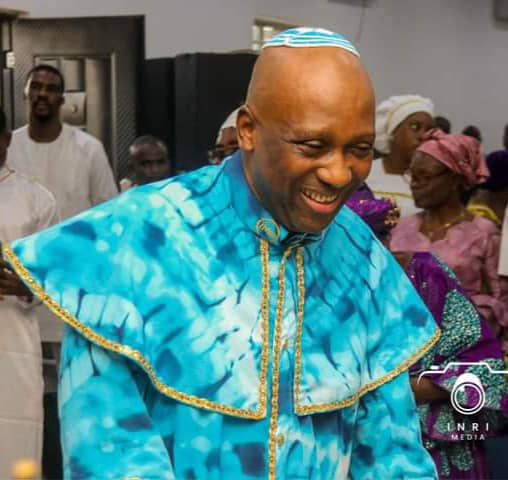
This sad incident is coming barely two weeks after Primate Elijah Ayodele, the Leader of INRI Evangelical Spiritual Church specifically warned against attacks in some states. He mentioned these states while calling on security operatives to pay close attention to them.
These were his words:
“Another attack is coming up in these following states where the military must watch carefully and intelligently; Kano, Kaduna, Zamfara, Kebbi, Niger, Borno, Kwara and Kogi state. They want to do a deadly attack, it’s preventable but it depends on how they will handle it. I have told you about the danger coming up.”
@primateayodele
Unfortunately, some of our military agencies don’t believe spiritual intelligence can save the country from so much danger hence, their neglect of this prophetic warning but now, it has been fulfilled with the miliary losing credibility by the day while Primate Ayodele continues to gain momentum.
Likewise, At least 26 passengers and crew sustained varying degrees of injuries on Monday following an accident involving the Kaduna–Abuja train, according to the Nigerian Railway Corporation (NRC).
Opeifa explained that the train departed Rigasa in Kaduna at 7:15 a.m. and was approaching Asham station around 9:16 a.m. when a loud bang was heard after the power car and trailing locomotive collided with one of the passenger coaches.
In July 2025, Primate Ayodele asked nigerians to pray not to see train mishap on the Kaduna-Abuja route.
@primateayodele #nigeriantiktok🇳🇬 #fulfillment #train #abuja #primateayodele
“Let’s pray not to see train mishap in Abuja-Kaduna, Kaduna-Abuja route.”
This has also been fulfilled.


-

 society7 months ago
Religion: Africa’s Oldest Weapon of Enslavement and the Forgotten Truth
-

 news4 months ago
WHO REALLY OWNS MONIEPOINT? The $290 Million Deal That Sold Nigeria’s Top Fintech to Foreign Interests
-

 society7 months ago
“You Are Never Without Help” – Pastor Gebhardt Berndt Inspires Hope Through Empower Church (Video)
-

 celebrity radar - gossips2 months ago
Dr. Chris Okafor Returns with Power and Fire of the Spirit -Mounts Grace Nation Altar with Fresh Anointing and Restoration Grace on February 1, 2026