Connect with us

celebrity radar - gossips

Mutual Security, Shared Prosperity: A Strategic Path Beyond the US–Nigeria Stalemate

Published

on

Tukur Buratai: Soldier. Scholar. Statesman. Symbol of Strategic Leadership By Femi Oyewale

Mutual Security, Shared Prosperity: A Strategic Path Beyond the US–Nigeria Stalemate
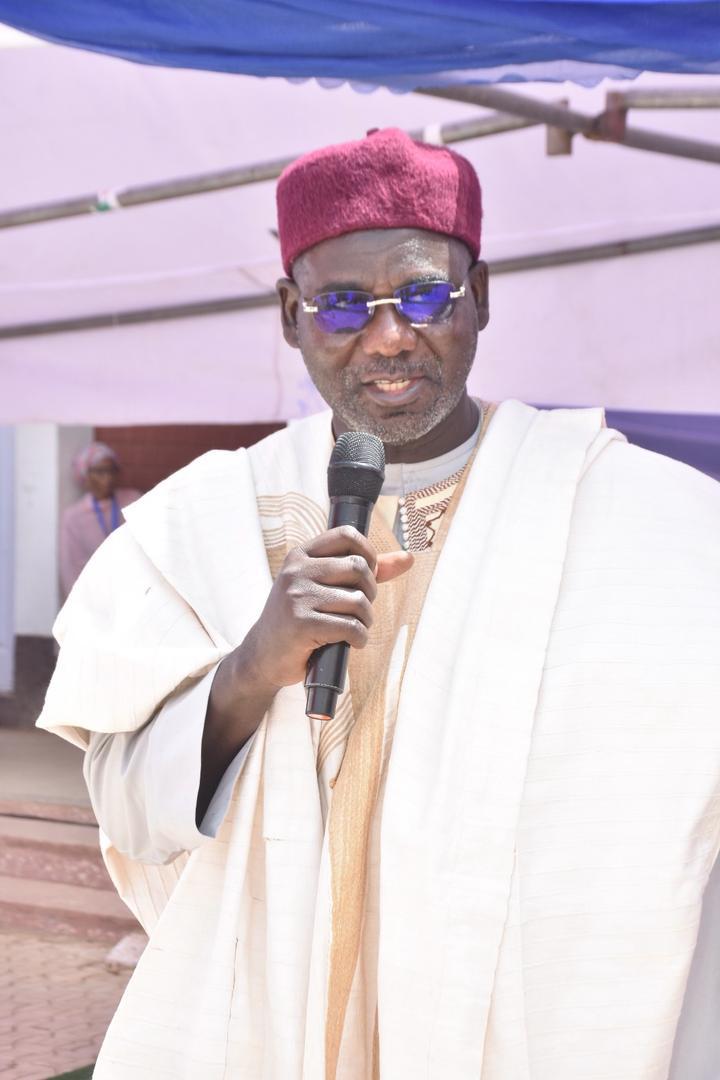
By Lt. Gen. Tukur Yusufu Buratai (Rtd), former Chief of Army Staff and Nigerian Ambassador to the Republic of Benin


The current confrontation between the United States and Nigeria, ignited by the spectre of foreign military intervention, represents a perilous crossroads. This is a moment charged with the danger of catastrophic miscalculation, yet it also holds the potential for a more resilient and mutually advantageous alliance. The “Christian genocide” narrative is a dangerously reductive distortion of Nigeria’s intricate realities. For the United States, acting on this fallacy would be a profound strategic blunder; for Nigeria, it constitutes an existential menace. To retreat from this brink, both nations must transcend immediate political posturing and acknowledge their fundamental, aligned interests in lasting stability and shared economic advancement.
For the United States, a coercive, militaristic approach is a blueprint for strategic defeat. Public ultimatums and intimidation directed at a sovereign nation of Nigeria’s stature—Africa’s largest economy and most populous democracy—weaken, not strengthen, American credibility. This stance forcibly unites a diverse Nigeria against a common external aggressor, framing the US as a neo-colonial power instead of a trusted ally. It actively propels a nation of over 200 million people—and potentially the entire Economic Community of West African States (ECOWAS)—deeper into the strategic embrace of rivals like China and Russia, who stand ready to exploit an American retreat. The objective of safeguarding religious liberty, however principled, will never be achieved by triggering a national collapse. A destabilized Nigeria would unleash a maelstrom of instability across West Africa, intensifying the very security and migration challenges the US aims to contain.
The wiser, more sustainable course for the US is an unequivocal pivot from public coercion to resolute, private collaboration. This demands an immediate de-escalation of rhetoric and the replacement of threats with concrete offers of advanced intelligence collaboration, specialized counter-insurgency training, and security aid precisely calibrated to Nigeria’s unique threats in the Middle Belt and North-East. Policy must be grounded in verified data, not inflammatory fiction, facilitated by bipartisan congressional visits to witness the conflict’s complex dynamics firsthand. Crucially, the US must recognize that Nigeria’s economic vision, embodied by the transformative Dangote Refinery, represents a monumental opportunity, not a threat. By initiating high-level strategic engagement and positioning American enterprise as the primary partner in this burgeoning energy sector, the US can secure its interests through synergy, not sanctions. A stable, prosperous Nigeria is an infinitely more valuable ally than a fractured, dependent state.
For Nigeria, this crisis is a piercing alarm bell highlighting the dangers of diplomatic smugness. The government’s strategic silence in the face of a corrosive global narrative has become a critical national security liability. Nigeria’s rejoinder can not rest on indignant denials; it must be a swift, sophisticated, and assertive campaign to reclaim its narrative. This requires an immediate diplomatic surge: enlisting world-class international firms to advocate effectively in Washington, immediately deploying ambassadors to key capitals as a national priority, and dispatching high-level delegations of esteemed Christian and Muslim leaders to directly dismantle the genocide falsehood before US decision-makers.
Nigeria’s communication must be unyielding on sovereignty yet strategically diplomatic, avoiding an unproductive public feud. The focus must be on recasting the crisis as a unified struggle against terrorism and banditry afflicting all citizens and on amplifying the authoritative voices of prominent Nigerian Christian leaders who explicitly contradict the imported narrative.
Most critically, this is a definitive moment for national solidarity. The threat to Nigeria’s sovereignty and corporate existence demands that every citizen, Muslim and Christian alike, rally with unwavering unity behind the government. We must present an impregnable front against external interference. Our ultimate argument, however, will be demonstrable progress. Accelerating comprehensive security overhauls to show concrete outcomes and doing everything necessary to guarantee the triumph of economic self-sufficiency ventures like the Dangote Refinery are our most potent shields. A nation that demonstrably conquers its own challenges and stands united against internal schisms offers no justification for foreign intrusion.
The path forward is unequivocal. The United States must recognize that genuine partnership, not heavy-handed pressure, is the sole means to positively influence Nigeria and secure its own long-term interests in a stable and prosperous Africa. Nigeria must awaken to the reality that its sovereignty in an interconnected world hinges on a dynamic, articulate foreign policy that projects its multifaceted truth. This stalemate need not be a zero-sum contest. By choosing earnest dialogue over public diatribes and committed collaboration over destructive confrontation, both nations can forge this crisis into the cornerstone of a more robust, respectful, and productive relationship. The alternative—a descent into mutual suspicion and escalation—serves no one and jeopardizes everything.

brands/telecom

Femi Oyewale, Simon Kolawole Honoured with TY Buratai Humanity Care Foundation Award of Excellence in Journalism

Published

on

Femi Oyewale, Simon Kolawole Honoured with TY Buratai Humanity Care Foundation Award of Excellence in Journalism


Gora, Nasarawa State, 1 November 2025 – In a ceremony celebrating literary and journalistic excellence, Mr. Femi Oyewale, Publisher and Editor-in-Chief of Sahara Weekly and President of the National Association of Social and Resourceful Editors (NAOSRE), was conferred with the Award of Excellence in Journalism by the TY Buratai Humanity Care Foundation.

Femi Oyewale, Simon Kolawole Honoured with TY Buratai Humanity Care Foundation Award of Excellence in Journalism

The award was presented during the TY Buratai Literary Initiative Award Ceremony, which also featured the Young 20 Adult Literature Prize (YALP) 2024 Anthology Public Presentation at the newly commissioned Lt Gen OA Ihejirika (Rtd) Hall within the Tukur Buratai Research Center, Gora, Nasarawa State. The hall was officially declared open by Lt Gen OA Ihejirika (Rtd) himself, who also served as the Chairman of the occasion. Unable to attend in person due to international commitments, Mr. Oyewale was ably represented by Dr. Mohammed Sani Abubakar.

Celebrating a Legacy of Integrity and Humanitarianism

The award citation recognized Mr. Oyewale for his exemplary contributions to journalism, transformative leadership, and profound humanitarian service, perfectly aligning with the foundation’s mission: “helping the poor, improving lives.”

A distinguished publisher and visionary leader, Mr. Oyewale’s career trajectory exemplifies dedication and professionalism. Trained under the mentorship of Concord Newspapers, he rose to lead Sahara Weekly, NAOSRE, and the National Association of Online Security Reporters with a steadfast commitment to ethical, balanced, and impactful reporting.

Through the NASRE Media Foundation, he has pioneered initiatives providing financial aid, medical support, and educational scholarships to families of deceased and ailing journalists, creating a safety net for those who dedicate their lives to informing the nation.

General Buratai’s Remarks on the Occasion

In his keynote address, General Tukur Buratai (Rtd) lauded Mr. Oyewale as a “shining example of integrity and social consciousness in Nigerian journalism,” stating:


“In a time when the press faces numerous challenges, Femi Oyewale has consistently demonstrated that leadership in journalism is not only about reporting the truth, but also about uplifting those who risk everything to keep the public informed. His humanitarian work mirrors the core values of our foundation – compassion, service, and empowerment.”


General Buratai further encouraged media leaders to emulate Mr. Oyewale’s commitment, adding:

“We honour not just a journalist, but a visionary whose work strengthens the pillars of democracy and serves as a beacon of hope for all Nigerians.”


Media Houses and Recognition

The award was jointly acknowledged by two leading media institutions: The Cable Newspaper, led by Publisher Simon Kolawole, and Sahara Weekly, under Mr. Oyewale’s stewardship. This dual recognition highlighted the recipient’s leadership and collaborative spirit within Nigeria’s media landscape.

The award citation read:

“For his unwavering dedication to journalistic excellence, his visionary leadership that unites and empowers media professionals, and his profound humanitarian impact that touches countless lives, we celebrate him today. He is not just a master of his craft, but a beacon of hope and a true champion for humanity.”


A Personal Letter of Commendation

Prior to the ceremony, Mr. Oyewale received a formal letter of commendation from the TY Buratai Humanity Care Foundation, praising his leadership of NAOSRE and Sahara Weekly as a model for ethical journalism:

“Your distinguished career, marked by integrity and a steadfast commitment to the truth, is vividly reflected in your leadership of Sahara Weekly and Sahara TV. Your continued guidance will be defined by the same objectivity, resourcefulness, and unwavering dedication to the public interest that has characterized your work.”


The award, presented at the Tukur Buratai Research Centre, marks another milestone in Mr. Oyewale’s ongoing mission to champion ethical journalism and humanitarian service. His recognition today underscores a career dedicated not only to reporting the truth but also to uplifting and supporting those who serve the public through media.


About the TY Buratai Humanity Care Foundation

The foundation is committed to humanitarian service, social development, and recognition of excellence, particularly in fields that impact society, including media, education, and literature.

Continue Reading

celebrity radar - gossips

A TITAN DEPARTS: SALUTING THE BEDROCK OF INTERGRITY WHO REMADE THE ARMED FORCES

Published

on

A TITAN DEPARTS: SALUTING THE BEDROCK OF INTERGRITY WHO REMADE THE ARMED FORCES

By Ibrahim Dahiru Danfulani, Sadaukin Garkuwan Keffi,

In the annals of Nigeria’s military history, certain names are etched not merely in ink, but in the collective memory of valour, integrity, and transformative leadership. As General Christopher Gwabin Musa, Officer of the Order of the Federal Republic (OFR), prepares for a well deserved pullout ceremony, marking the end of an illustrious career, the nation pauses to pay tribute to a titan. He is, in the truest sense, a “Soldier’s Soldier,” an “Officer and a Gentleman,” whose distinguished service has left an indelible mark on the armed forces and the nation he so passionately served.
His tenure, particularly as the Chief of Defence Staff (CDS), stands as a masterclass in leadership, a period defined by a radical re-invigoration of morale, a unifying spirit, and an unflinching commitment to the constitutional duty of securing the nation.

THE UNIFIER: FORGING A SINGLE, INDOMITABLE FORCE

Upon assuming the role of CDS, General Musa inherited a defence architecture that, while competent, often operated in silos. The Nigerian Army, the Nigerian Navy, and the Nigerian Air Force each possessed distinct cultures and operational doctrines. General Musa’s strategic genius lay in his understanding that modern asymmetric warfare demanded not just cooperation, but seamless integration. He championed the mantra of “Jointness,” not as a bureaucratic slogan, but as a lived reality in every theatre of operation.

Under his watch, the concept of joint operations was elevated to an unprecedented level. He broke down inter-service rivalries and fostered an environment of mutual respect and shared purpose. The successful operations across the nation, from the thick forests of the South-East to the vast deserts of the North, became testaments to this new synergy. The Air Force provided decisive air cover and intelligence, surveillance, and reconnaissance (ISR); the Navy secured the nation’s waterways and oil assets with renewed vigour; and the Army, empowered and supported, took the fight directly to the adversaries on the ground. General Musa did not just command the armed forces, he united them into a single, cohesive, and indomitable fist that struck with precision and overwhelming force. He made the armed forces truly a team, where the success of one was the success of all.

THE BEDROCK OF INTEGRITY: A BEACON OF MORAL CLARITY

In a nation where public trust is a prized commodity, General Christopher Gwabin Musa stood as a pillar of integrity. His leadership was rooted in an unwavering moral compass that guided every decision and action. He understood that the fight against insurgency and criminality was not only physical but also a battle for the trust and hearts of the citizenry.

He was transparent in his dealings, accountable to the nation, and led by the power of personal example. There was no gap between his words and his actions. This integrity resonated deeply with the troops in the front lines. When a soldier saw that his CDS was a man of principle, who would not compromise on ethics or the welfare of his men, it instilled a profound sense of confidence and loyalty. He tackled corruption and indiscipline with courage, sending a clear message that the armed forces were a noble institution that would uphold the highest standards of conduct. For the Nigerian people, his transparent briefings and candid assessments fostered a renewed sense of trust and partnership between the military and the civilian population.

UNWAVERING COMMITMENT: A HEART FOR THE TROOPS AND THE NATION

General Musa’s commitment was twofold: an unyielding dedication to the territorial integrity of Nigeria and a profound, fatherly devotion to the welfare of the men and women under his command. He was a commander who did not lead from the comfort of an air conditioned office in Abuja. He was a constant presence in the theatres of war, sharing the harsh conditions with his troops, boosting their morale, and personally assessing the realities on the ground. This earned him the revered title of a “Soldier’s Soldier.”

His commitment to troops’ welfare was legendary. He fought for and ensured the timely provision of the right equipment, improved allowances, and better medical facilities for the wounded. He recognized that the soldier’s spirit is as important as his weapon. He was known to personally visit injured soldiers in hospital, offering comfort and ensuring they received the best care possible. This act alone, more than any speech, cemented his place in the hearts of the rank and file. They knew that their CDS saw them not as mere statistics, but as his own children, his comrades, for whom he bore ultimate responsibility.

Furthermore, his commitment extended to the broader national security architecture. He was a key advocate for the whole of society approach to security, fostering robust collaboration with other security agencies and engaging with local communities to build trust and gather vital intelligence.

A LEGACY ETCHED IN VALOUR AND PROGRESS

As General Christopher Gwabin Musa, OFR, pulls out from active service, he leaves behind a legacy that will inspire generations of military officers to come. He has redefined the essence of military leadership in the 21st century. He leaves a more unified, more professional, and more effective armed forces. The gains made in the fight against terrorism and insurgency under his watch, the restored pride of the Nigerian soldier, and the strengthened bond between the military and the citizenry are testaments to his exceptional leadership.

He is indeed an Officer and a Gentleman a man of impeccable character, courage, and compassion. The nation owes him a debt of gratitude that can never be fully repaid. I join millions of Nigerians in saying: Thank you, General. Thank you for your service. Thank you for your sacrifice. Thank you for your integrity. Your distinguished service to our nation will never be forgotten.

Enjoy your retirement, Sir. You have earned it
By Ibrahim Dahiru Danfulani, Sadaukin Garkuwan Keffi,

Continue Reading

celebrity radar - gossips

Flashback: When Pasuma Crowned Oba Ara as the “Oga Nla Gospel” By Taofik Afolabi

Published

on

Flashback: When Pasuma Crowned Oba Ara as the “Oga Nla Gospel”

By Taofik Afolabi

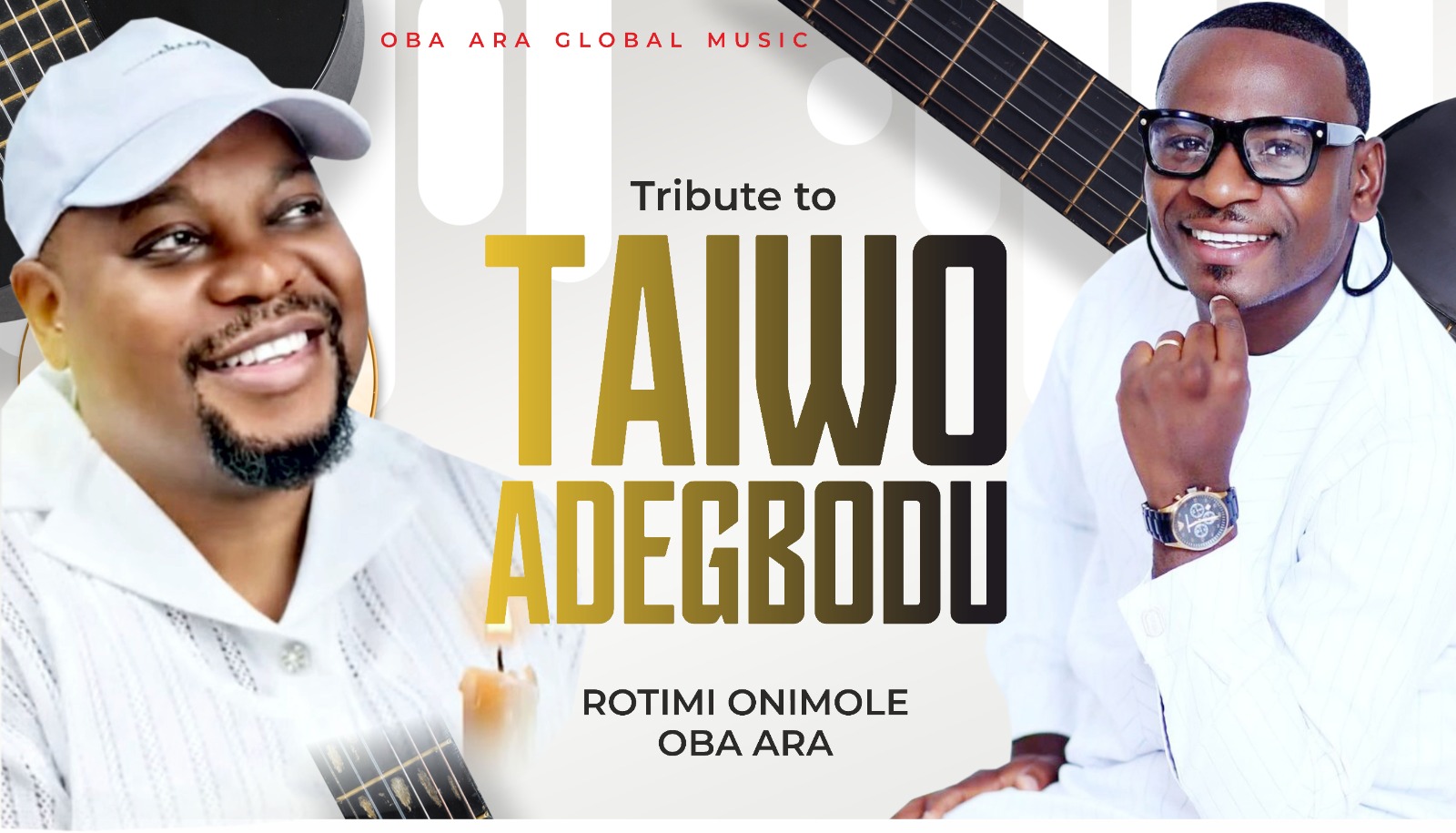
It was a moment of pure joy and musical unity on October 28, 2017, when two powerhouses from different ends of Nigeria’s music spectrum came together in an unexpected but heartwarming way. That day, the air was filled with rhythm, respect, and revelation as Alhaji Wasiu Alabi Pasuma, the acclaimed Fuji maestro fondly known as Oga Nla Fuji, officially crowned popular gospel singer Dr. Rotimi Onimole, a.k.a. Oba Ara, as the “Oga Nla Gospel.”

The event became an unforgettable highlight in the Nigerian music scene, — a moment where Fuji met Gospel, and where talent recognized grace.

In his characteristic energetic style, Pasuma paused his performance to acknowledge Oba Ara in a heartfelt tribute. With rhythmic chants flowing effortlessly from his lips, he sang:

“Oba Ara ti wa leleyii, olorin emin to niteriba, to je awokose fawon olorin emin egbe e, ko jo ara won rara, Oba Ara yato gedegbe, Oga nla Gospel ree, okan ninu ebi Oga Nla ree.”


The message was clear and deeply touching, Pasuma was publicly recognizing Oba Ara not just as a fellow artist, but as a respected brother and inspiration within the music family. The crowd erupted in cheers as the Fuji legend eulogized him with pride, filling the venue with warmth, smiles, and applause.


For Pasuma, this wasn’t just a random proclamation. Those close to him revealed that the decision came after years of observing Oba Ara’s humility, composure, and steadfast faith. Despite being from different genres, Pasuma reportedly told his team that Oba Ara embodied “the character of a true ambassador of Christ” — a shining light whose lifestyle spoke louder than his lyrics.

The title “Oga Nla Gospel” was therefore more than a name; it was a seal of respect, an acknowledgment of excellence, and a bridge between secular and spiritual artistry.

For Dr. Rotimi Onimole, the honor came as a pleasant surprise. Fresh from bagging the award as Icon of Gospel Music, Oba Ara was deeply moved by Pasuma’s recognition.

Speaking shortly after the event, he said:

> “This came as a total surprise to me. I believe Alhaji Pasuma has been following my journey in music, and I’m grateful for his kind words. Though I’m a gospel artist, Pasuma is a force to reckon with in the entire music industry. I appreciate him for this beautiful gesture.”


That single gesture from Pasuma, a Fuji legend crowning a gospel act was more than an endorsement. It represented unity in diversity, a rare show of mutual respect in a competitive industry. It showed that music, at its core, transcends boundaries, beliefs, and genres.

Years later, the moment remains a fond memory’s for fans and industry watchers, a timeless reminder that greatness recognizes greatness, no matter the rhythm.

Continue Reading

Cover Of The Week

Trending