
Business
MY ADVISE FOR EDO PEOPLE IN THIS COMING ELECTION – DR. SAMUEL OSAIGBOVOOGBEMUDIA

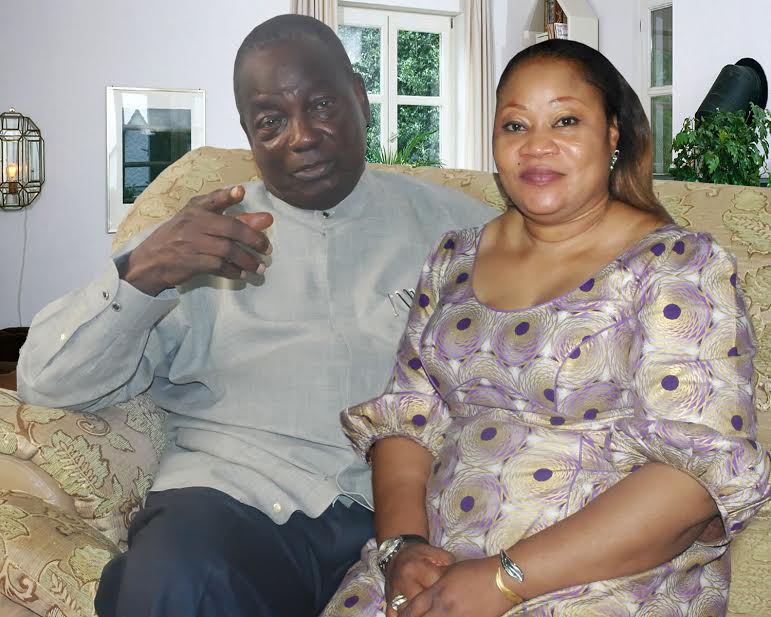

Former two-time governor of old Bendel State, Dr. Samuel Osaigbovo Ogbemudia is an elder states man. Many people have been waiting to hear from him to know his stand on this forth coming election in Edo state. In this Exclusive Interview with SUNDAY ADEBAYO, he expresses his belief and assessments of the present Edo state government, and also analyze the likely outcome of the coming election… Excerpt.
What is your assessment of the present Edo state government?
Well having been there by qualification, assessing them is that I have been there before and I know the problems and I understand some of their approaches taking the totality of what I know, the man, Adams Oshiomole has performed extremely well and that is why I decided to defend him, and that is why I give him all my support and that is why whatever he does, I look at it against the background of the difficulties which myself passed through. So from the point of view of development, he has done the best he could, but that doesn’t mean he could not do better maybe because there was not enough money.
For those ones that you think he has not done well, was it that you were not able to brief him about the major problem of the Benin people when he came in?
There is no one that he has not done well, there is nothing I asked him to do that he didn’t do, after looking at the totality of the problems of what I experienced myself, Oshiomole has done wonderfully well.
Looking at the activities that trailed during the APC primary that lead to the emergence of Obaseki, do you think the party is united enough to win this election?
Well I cannot speak on that because I was not at the primary, secondly I only read about it in the newspaper and perhaps the rumor here and there by people who attended and those who didn’t attend and there was great variation between the story being tabled by those who attended and those who heard it, so we don’t know which one to believe, but my believe is that if people appreciate goodness in anybody, they should appreciate what Oshiomole has done in this state because if other previous governors have done as much, he would have gone higher than he did now. So far as I am concern I think that people if they look at what Oshiomole has done against the background of what people did in the past, they will vote for APC.
Now Obaseki promised that if he comes in, he is going to provide over 200,000 jobs but people were now speculating, asking the question that when he was the head of economic team in Edo state, he was not able to provide anything of such. Do you think in your own opinion, looking at the present governance with your approval of Oshiomole great performance, do you think Obaseki is up to the task of the promise he is making?
Firstly, Obaseki is not in my view a politician, he is not a professional politician, he is a technocrat and in his position as a technocrat, he has information on all the affairs of government, as to whether he could have done that as technocrat, advising the governor, the ultimate responsibility for the job to be done is that of the governor, he may have recommended and the governor did not see it as a priority, so you cannot blame him, when he comes from what I have had in discussion with him and I was convinced that he knew where the pendulum was swinging, he knew where he was going because his objectives were very clear to him and he’s also not mindful of the fact that while he is looking straight at the objectives, there are many intervening obstacles, diversional obstacles on the way, and he is prepared to negotiate them. So it is that ability that gives him credit over his opponent.
Looking at when you used to be the governor of the old Bende, bringing together Edo state, Delta state and the couple of other states that you manage then, Things were going right, there was no much complain about running the government, but now what is your assessment of the crisis rocking PDP in Edo state right now?
The only word I’ve always used is mismanagement of victory, when a political party of substance going to election whether win, victory or defeat, must set up a committee to access their performance and see where things went wrong, whether PDP did it or not, I don’t know but not to my knowledge if they did, that notwithstanding its management of victory was not and I think too that the people themselves were tired of hearing the same voice every day, the issue of change came into focus.
Do you think pastor Osagie Ize Iyamu had the political sagacity to perform better than Oshiomole if he eventually becomes the governor of Edo state?
Pastor Osagie Ize Iyamu is my son, his father was my own father, so when the man was leaving, he said look after your son for me, pastor Osagie has tremendous energy unquestionable in credentials that he can use, but he is on a shaken platform, probably if he was in APC, there would be no problem, he would by now be celebrating, if he was in another party, probably he would be celebrating. But first, he had to kill two birds with one stone, he had to reactivate the reputation of the PDP and then take advantage of it to ask them to vote for him but he cannot do the two together because correcting the hills of the past and calling them to order, by the time they finish, the vote is over. But as a person you can’t beat him, he is a first class fellow and I will go with him anywhere.
So what you are telling us now is that come this election which is drawing close by, if past Ize Iyamu Can rectify some loop holes that you think are the problems of PDP in Edo state, do you think he has a higher chance of becoming the next governor of Edo state?
If there are two people that he has to do this to, he has to do this to the elites who at their drinking base, they criticize not himself but his party, then he have to do it to the population, and those population, the majority, card bearers who can vote, the elites their voice he will hear so loud every day, they are minority, so it is not something you can do in one month or two month if he still remain in PDP correct the hills of the past, he will be on top but whether he can do everything together before next two month election is what I don’t know.
Okay recently when the PDP want to have their gathering at Ogbemudia Stadium, there was an information that the governor instruct that they don’t have their campaign at that stadium, do you have any idea ?
No I never heard , the truth is this that as at today the government is the caretaker and trustee of the stadium, the stadium belong to the people, so it is for them to say yes, this man coming to the stadium, will it be in our own benefit or against us? So they take a decision and that in the decision influences the reply to its letter, that is what it is. But I believe that when government refuse to allow them to organize at the stadium, the generality of the people who would normally have gone to the stadium didn’t feel too good about it, so they might decide to punish government for it, so you don’t know where the pendulum is swinging but its important for people like us, it should not have been rejected the refused to the use of the stadium because that will not add any much value to whatever they are doing, but by refusing it, it has added value to it.
How can you compare politics in Edo state, the way it is practiced now and the way it was practiced when you were priviledge to be at the realms of power?
Yes remember I was the governor at a time when I was a military officer, I was only on posting by the supreme headquarter to Benin. I didn’t win any election but when I came back and decided to seek election I won because I told them to allow me finish the unfinished job and they agreed and I won so comparing the two, you will find that there is quite monumental difference
What is your advice for Edo people in this drawing near election?
My advice is this, if what they told me in the past and with my experience that they want development, they don’t want their money to be spent paying lawyers and going to court every day, then they must pick the person whose chances are better because every person has a way of accessing , for example I had a meeting here yesterday and I said to them, here is a paper for about 200 people, write down which party you think we should affiliate with, since we are not in politics, they all wrote down, over 100 voted for one party, six voted for one, two voted for one. So if you sent such people to the poll, they will all vote for A, what is in their mind is different, and they will go there.
How far will you tell us you have gone with Samuel Ogbemudia foundation?
Good, over the years I have been a victim of diabetic and from tablets, I progress to insulin injection and I started this 1970 and I started injection 1980 and I didn’t want other people to suffer the same thing because of lack of information, more importantly the diet that can easily cure the problem. So I got together experts who are prepared to help, some of them in America, some in Canada and some in Great Britain. So we set up Ogbemudia foundation to purely accomplish three things, the first is good governance, the second is youth empowerment and detect its non-communicable diseases, from the diabetic information we are putting together and talking to people on what they need to know. Sometimes I address people and at the end of it, I tell if they have diabetics. And it is going on gradually. But those who are going to help me are yet to come.
Since the beginning of the foundation, how much assistance or donations or help have you received from people that you have sent letters to or you can call to help curb fight the pulse?
We have not gone out, but the present Delta state government has been helpful. When he was coming, he brought a cheque of five million to the foundation, Oshiomole promised to help and am hoping that once the problem on hand is sorted out, he will do something. There are many people we’ve talk to, but we have not asked for help, and when I have got all those information and those visitors have come and put down what they can do, then I will know what I need and ask people to assist us.
So far will you say you have been receiving response from people in terms of visitation, and feedbacks?
Oh yes, a lot of people, our doctors go about talking to people, counseling them on what to use, and what to kind of food to eat because not everybody can afford insulin of 11,000, to avoid insulin you must take diet that will perform the same function.
A diversion from the foundation now, if anybody look at you some people will still think daddy is 70 or 75, but even looking at your present health condition over the years and the fact that you can no longer walk and run the way you used to do some years ago, what would you say you’ve been doing that is making you looks so good like this sir?
Well, credits goes to that lady (pointed at his wife Mrs Yetunde Ogbemudia), but apart from that, In 1953, I was admitted into hospital and the doctor diagnosed me of Amoebic dysentery and I spent twenty one days, but when I had my accident in August 5, 2010, I break my leg and I have to move from one operation to another, and apart from that leg, well so far am alright, I can see, I can move about with my walking stick but better than it was a year ago, so gradually the thing is coming up, because the doctor told me that I am suffering from incurable disease and when I asked him, he said old age and he asked me whether I’ve seen anybody who cured old age, I said no then he must keep off with it.
Looking at how far you have come, when you were born till now, what would you advice the younger generations who are aiming higher to be in the position of good health and proper understanding with their creator, what will be your advice for them?
My advice is simple, when I was a boy, an elder cousin of mine pass his junior Cambridge, we had a wake keeping to thank God that he was able to get to that standard, but since then, there have been PHDs, nobody worries about it, we have made tremendous progress to the young men of today to be able to catch up and keep himself and family together, he must educate himself, because education has no age limits, that is the invoice of continuing education and it means that there is no end. Sometime ago, I witnessed the graduation of open university in London and one of the graduates was 94 years old, and when the press asked him at the age of 94, what are you still doing? He said I have always wanted to be educated. Sometime in 1969, I was the sole administrator of the Nigerian Airway and I advertised for an accountant and twenty five thousand people applied and we set up a criteria to screen the application and we finally came to a hundred and we have to be looking for criteria to reduce it. But finally out of that hundred, there were six with master’s degree, there were two with a PHD, so what do you do, do you leave the PHD and take the first degree. Nigeria should no longer rely on first degree; they should go further and specialize , when I was the governor, I told the ministry of education , inform all the student ,anybody who comes out of the college with good result in WAEC because one boy from AGBOR had 7As and that’s an automatic scholarship, if you got a first class from a university degree, you get automatic scholarship to study for higher degree because the Nigeria of tomorrow is going to be very competitive and it has started, so the youth must learn to concentrate on their studies, stop fighting until they have reach the ultimate.
Would you say you are fulfilled in life?
I am fully fulfilled in many ways, first I never thought that I will ever get here till now. One gentle man brought his insurance paper to me in 1960, he said it will mature in 1975 it was 15 years away and I said I wont take because fifteen years is too far , but eventually I was quest to pay into bank in order to insure myself , on a date in 1975 I received a letter , it said your insurance is due, where do you want the money to be paid into, I regretted not putting more but I never thought I will witness it mature, two, I never dreamt that one day I will be a governor of a state, Benin state for that matter. three I never thought when I join the army I will be a general , I merely go there to go and do my own work and God was kind to me and they move me forward and fast. I have had children and God has been kind, not one of them has ever been admitted in the hospital, no one is sick. Where I live, this house I inherited it from my mother and I live here, I did my governor job from this very table so what else do I want, all I have gotten didn’t mean anything to my children because they all live at home but my other colleague were told to handover the government house within 24 hours to the new governor, but it didn’t happen to me because I just took my own briefcase and return back to my house where I operated from.





Fidelity Bank grows gross earnings by 38% to N434.95b in Q1
Fidelity Bank Plc recorded 37.9 per cent growth in gross earnings to N434.95 billion in first quarter 2026 as the international commercial bank continued to expand its core banking market share.
Interim report and accounts of Fidelity Bank for the three months ended March 31, 2026 released at the Nigerian Exchange (NGX) showed that gross earnings rose from N315.42 billion in first quarter 20025 to N434.95 billion in first quarter 2026, representing an increase of 37.9 per cent.
The top-line performance was driven by impressive growth in the bank’s core business operations with interest incomes rising by 22.8 per cent to N314.48 billion in first quarter 2026 as against N256.10 billion in first quarter 2025.
With net interest income at N180.97 billion, the bank closed the period with profit before tax of N92.48 billion. After taxes, net profit stood at N74.47 billion for the three-month period. Earnings per share remained high at N5.69, underlining the capacity of the bank to reward its shareholders.
The balance sheet of the bank also emerged stronger. Total assets crossed the N11 trillion mark to N11.35 trillion by March 2026 compared with N10.46 trillion recorded in December 2025. Customers’ deposits increased from N6.89 trillion to N7.38 trillion. Total equity rode on the back of earnings growth to a 27.5 per cent increase from N1.09 trillion in December 2025 to N1.39 trillion by March 2026.
The first quarter 2026 results further consolidated the strong earnings outlook of the bank, which had successfully completed its recapitalisation amidst impressive earnings performance in 2025.
Fidelity Bank had recorded double-digit growths in interest and non-interest incomes as well as key balance sheet items during the year ended December 31, 2025.
The audited report showed that gross earnings rose from N1.04 trillion in 2024 to N1.52 trillion in 2025, an increase of 45.6 per cent. Interest and similar incomes had grown by 38.7 per cent from N803.1 billion in 2024 to N1.11 trillion in 2025. Fees and commission incomes also rose by 44.7 per cent from N78.4 billion to N113.4 billion. The bank recorded net profit after tax of N242.4 billion in 2025.
The bank’s balance sheet emerged stronger with total assets rising by 18.6 per cent to N10.46 trillion in 2025 as against N8.82 trillion in 2024. Customer deposits increased by 16.1 per cent from N5.94 trillion to N6.89 trillion, reflecting continued franchise strength and an improved funding profile. Net loans and advances meanwhile declined by 2.4 per cent to N4.28 trillion in 2025 as against N4.39 trillion in 2024, attributable to customers paying down on their mature obligations.
The bank had in 2025 strengthened its capital position, with eligible capital rising to N561 billion, above the regulatory minimum of N500 billion for banks with international authorisation. In addition, capital adequacy had remained robust, with Capital Adequacy Ratio of 30.94 per cent by December 2025 as against 23.47 per cent by December 2024.
Managing Director, Fidelity Bank Plc, Dr. Nneka Onyeali-Ikpe, said the first quarter 2026 results reinforced the bank’s strong and resilient business model.
She noted that with the remarkable success of its recapitalisation programme and continuing expansion, Fidelity Bank has entered a new era of growth and impressive returns.
“We are on a stronger footing and confident that we will set new growth records that are reflective of our legacy and the future we are working on,” Onyeali-Ikpe said.
Business
Dangote Refinery Ends Nigeria’s Era of Fuel Import Dependence, Boosts GDP, FX Earnings — EIU
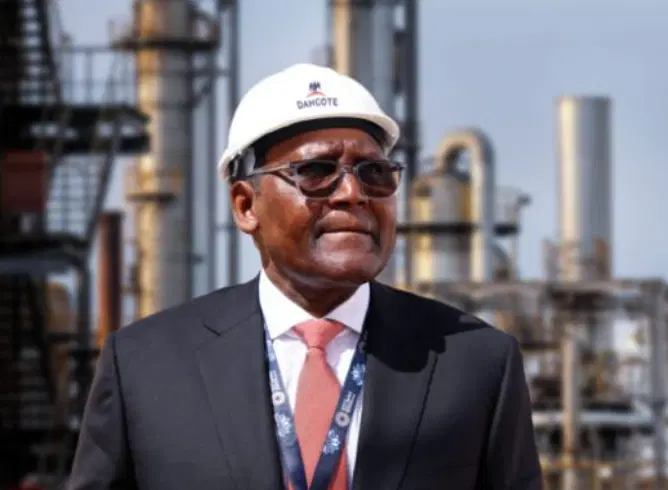
Dangote Refinery Ends Nigeria’s Era of Fuel Import Dependence, Boosts GDP, FX Earnings — EIU
The operational ramp up of the 650,000 barrels per day Dangote Petroleum Refinery & Petrochemicals is fundamentally reshaping Nigeria’s downstream oil sector, significantly reducing the country’s dependence on imported refined petroleum products and strengthening its external position, according to the Economist Intelligence Unit (EIU).
In its latest assessment on Nigeria’s fuel market and regulatory environment, the EIU said the refinery has already transformed a sector that was previously characterised by heavy reliance on imported fuel despite Nigeria being Africa’s largest crude oil producer. The report noted that the refinery met nearly 80 per cent of domestic petrol demand in April and produced enough volumes to satisfy local consumption requirements as operations approached full capacity.
The EIU described Nigeria’s downstream petroleum sector before the refinery as “long dysfunctional”, noting that the country had remained almost entirely dependent on costly imported fuel while producing nearly 1.5 million barrels of crude oil daily.
According to the report, the emergence of the refinery has reduced import dependence, improved domestic fuel availability and strengthened Nigeria’s balance of payments position through lower import demand and rising exports of refined petroleum products.
“The gradual ramp up of the 650,000 barrel/day Dangote refinery since May 2023 has transformed Nigeria’s long dysfunctional downstream sector,” the report stated. “The country’s main refineries, all state owned, had been inoperative for years and Nigeria was almost entirely reliant on costly imported fuel.”
The research and analysis division of The Economist Group, London added that the refinery’s attainment of full operational capacity and its planned expansion would further support Nigeria’s economic growth and foreign exchange earnings over the medium term.
“Meanwhile, the attainment of full capacity at, and an increase in exports from, the Dangote refinery will support real GDP growth and foreign exchange earnings in 2026 and 2027 and beyond, as a planned doubling of the plant’s output comes on stream around the end of the decade,” it added.
Industry analysts said the refinery is increasingly positioning Nigeria as an emerging refining and export hub, altering energy trade flows across Africa and reducing the vulnerability associated with fuel import dependence.
The EIU noted that the refinery’s expansion has coincided with major reforms in Nigeria’s downstream sector, including the removal of fuel subsidies and the introduction of market driven pricing mechanisms.
The report, however, said the transition from a state dominated fuel import structure to large scale domestic refining has triggered resistance from interests linked to the old import regime.
The latest tensions emerged following the decision by the Nigerian Midstream and Downstream Petroleum Regulatory Authority to relax restrictions on petrol imports despite the refinery’s growing capacity to meet domestic demand.
Dangote Industries subsequently initiated legal action, arguing that continued import approvals undermine domestic refining investments and conflict with the objectives of the Petroleum Industry Act, which seeks to encourage local refining capacity and reduce import dependence.
Analysts noted that the availability of large-scale domestic refining capacity has improved Nigeria’s energy security and reduced exposure to external supply shocks and foreign exchange volatility.
The Centre for the Promotion of Private Enterprise also cautioned against unrestrained importation of petroleum products, warning that such a policy could weaken Nigeria’s industrialisation drive and discourage investments in domestic refining.
Chief Executive Officer of CPPE, Muda Yusuf, said continued dependence on imported fuel had historically contributed to pressure on foreign reserves, exchange rate instability and fiscal leakages.
The refinery’s growing impact is also being reflected in Nigeria’s broader macroeconomic indicators. Earlier this month, S&P Global Ratings cited increased domestic refining capacity and rising hydrocarbon exports among the major factors supporting Nigeria’s sovereign credit rating upgrade – the first in 14 years.
Beyond Nigeria, analysts said the refinery is increasingly being viewed as a strategic industrial asset for Africa, where many countries remain heavily dependent on imported fuel despite rising demand for transportation, manufacturing, and power generation.
Business
BREAKING: Court Dismisses $19.6 Million Claim Against NNPCL — Rules Contract Scope Cannot Be Changed Orally
BREAKING: Court Dismisses $19.6 Million Claim Against NNPCL — Rules Contract Scope Cannot Be Changed Orally
In a landmark ruling on Friday, May 22, 2026, the Federal Capital Territory High Court in Abuja threw out a $19.6 million lawsuit filed by Alternate Dimensions Ventures Ltd against the Nigerian National Petroleum Company Limited (NNPCL), affirming a key legal principle: a written contract cannot be expanded through oral agreements or conduct.
Alternate Dimensions had sought $19,600,000 in professional fees, claiming the scope of its Direct Sale, Direct Purchase (DSDP e-pro) contract with NNPCL was orally expanded. Represented by counsel Patrick Peter, the firm argued it was entitled to the revised sum for services rendered under the alleged new terms.
But NNPCL, through its lawyer Ituah Imhanze of KENNA LP, pushed back sharply, arguing that parties are bound exclusively by the clear terms of their written agreement. Imhanze contended that without any written amendment, the claim was legally unsound, and the court agreed.
Delivering judgment, Justice Hamza Mu’azu upheld NNPCL’s defense, stating that the contract was unambiguous and that no evidence was adduced during the trial, which supported the alleged scope expansion. The court further found that NNPCL fully complied with all contractual terms and committed no breach.
Dismissing the suit as meritless, Justice Mu’azu reinforced the doctrine of sanctity of contract: any amendment to a written agreement must be express, unequivocal, and documented, not implied or verbal.
The ruling spares NNPCL from the S19.6 million claim and also a floodgate of similar potential liabilities.


- Africa: UNAIDS calls for renewed global solidarity as UN Secretary-General’s report warns that AIDS is not over and fragile gains are at risk June 4, 2026
- Eritrea: Vocational training provided to college students June 4, 2026
- World Bank Group Launches Ten-Year Strategy to Drive Jobs and Prosperity in Uganda June 4, 2026
- Prof Oramah’s appointments to the Royal African Society Patronage and Kenya’s National Infrastructure Fund herald continued recognition of his global leadership and pan-African impact June 4, 2026
- Africa Finance Corporation Raises Record US$2 Billion Syndicated Loan in Landmark Show of Confidence in Transformational Infrastructure Strategy June 4, 2026
- Libya Energy & Economic Summit (LEES) 2027 to Define Libya’s Next Phase of Energy Expansion in Tripoli June 4, 2026
- Uganda: President delivers State of the Nation Address today June 4, 2026
- United Nations High Commissioner for Refugees (UNHCR): Refugees in Eastern and Southern Africa remain in exile for nearly 16 years June 4, 2026
- 85% of Ministry of Food and Agriculture's (MoFA) 2026 Budget Released to Boost Food Production — Deputy Finance Minister June 4, 2026
- Deputy (Dep.) Finance Minister Courts Investors to Transform Ghana’s rice Economy June 4, 2026
- Africa: UNAIDS calls for renewed global solidarity as UN Secretary-General’s report warns that AIDS is not over and fragile gains are at risk June 4, 2026
- Eritrea: Vocational training provided to college students June 4, 2026
- World Bank Group Launches Ten-Year Strategy to Drive Jobs and Prosperity in Uganda June 4, 2026
- Prof Oramah’s appointments to the Royal African Society Patronage and Kenya’s National Infrastructure Fund herald continued recognition of his global leadership and pan-African impact June 4, 2026
- Africa Finance Corporation Raises Record US$2 Billion Syndicated Loan in Landmark Show of Confidence in Transformational Infrastructure Strategy June 4, 2026
- Libya Energy & Economic Summit (LEES) 2027 to Define Libya’s Next Phase of Energy Expansion in Tripoli June 4, 2026
- Uganda: President delivers State of the Nation Address today June 4, 2026
-

 news6 months ago
WHO REALLY OWNS MONIEPOINT? The $290 Million Deal That Sold Nigeria’s Top Fintech to Foreign Interests
-

 society1 month ago
SOCIAL MEDIA IS NOT A BATTLEFIELD COMMAND – WHY THE NIGERIAN ARMY’S ACTION AGAINST JUSTICE CRACK IS A NATIONAL SECURITY IMPERATIVE
-

 celebrity radar - gossips4 months ago
Dr. Chris Okafor Returns with Power and Fire of the Spirit -Mounts Grace Nation Altar with Fresh Anointing and Restoration Grace on February 1, 2026
-

 celebrity radar - gossips6 months ago
Prophet Kingsley Aitafo Releases 2026 Prophecy: ‘Nigeria Will Rise, but the World Must Prepare for Turbulence’
You must be logged in to post a comment Login
You must log in to post a comment.