
celebrity radar - gossips
MY BOOK’S PRIMARY OBJECTIVE IS ADVOCACY FOR THE AGED – Felix Amadi

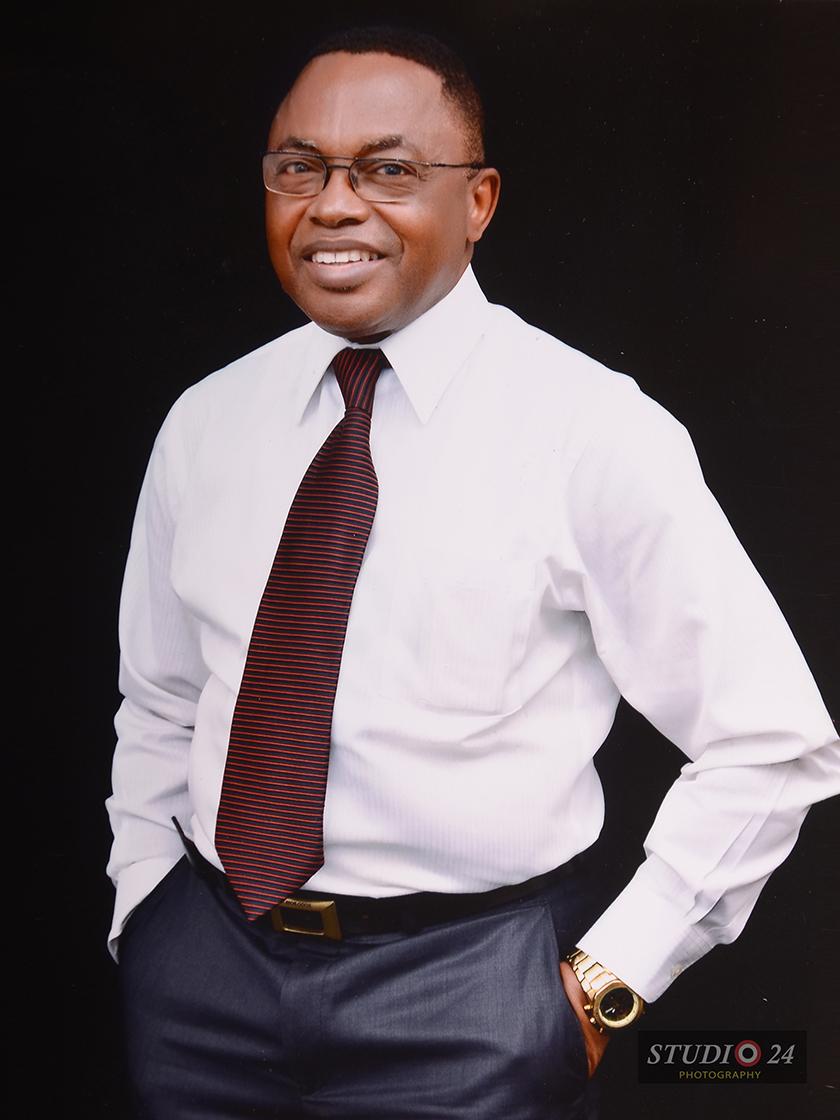
The Chairman of Crown Insurance Brokers, Chief Felix Ohiri Amadi has enjoyed a successful career spanning over three decades in the insurance sector of the economy, having worked closely in chatting lasting solutions towards pension management, he knew exactly what the senior citizens go through after their active service years in accessing their pension benefits, the challenges of retirement age and reasons why people fail to plan for their old age. In his new book, Retirement in Nigeria, Amadi sought to highlight the need to build a robust retirement sector, where professionals would be trained on the intricacies of managing and caring for the aged. He recently engaged the media on why he embarked on the project, “Retirement in Nigeria”, his insurance career, amongst other sundry issues. Enjoy the excerpt…

How has it been with Crown Insurance Company during this time of the pandemic?
Crown Insurance Brokers Limited is a company that has been in existence for over three decades. We have had very good times and difficult times such as this season and it has caused us to scale down our operations at the moment in other to cope effectively during this challenging period.
How well has Crown Insurance been able to fair in the insurance sector of Nigeria since its birth?
There is no Federal Government Institution that Crown Insurance hasn’t managed either full or in parts from MPC, MPA, Police, Custom, DSS and much more. We have been part of their management over time and we have also managed some private institutions like Shipping companies, Oil and Gas companies, too numerous to mention. So, Crown Insurance Brokers Limited can be taken as one of the elite insurance companies in Nigeria. Our records are intact and the reference about us can be obtained from the Nigeria Corporation of Registered Insurance Brokers (NCRIB).
With all the successes you’ve enumerated, it shows you’ve done well in the sector; what defines a good insurance company?
Insurance is a major aspect of risk management, whether it affects an individual or organization. Every insurance organization that cannot define the risk of an individual or the organization in a long term may not succeed because risk, if not properly managed to a long term can lead to a major hazard for either the individual or organization involved. Anybody that is managing another person’s risk and fails to define it well cannot have a lasting relationship and if an organization can’t keep a relationship then it will fail when its backups disengage. For the insurance companies that have succeeded, it means they’ve been able to define their client’s risks in a long term and have followed the procedures religiously.
What are the challenges of running an insurance company in Nigeria?
The challenges here aren’t different from the challenges of most other organizations. Economy is looking south and it’s been like this for some time that makes every organization that wants to remain in place to indulge in difficult management. Insurance as an area of endeavor is not considered most of the time as important as health and stomach care, so issues of risk management is put after the Medicare which is basic because people cannot combine them, even when they are aware they need it, the basics comes first. Historically, insurance in Nigeria hasn’t enjoyed deep penetration even with our efforts to create awareness and cause people to accept it.
What is the high point of your career as an insurance broker?
Well, over the years I have managed many public and private accounts and I have managed them veritably, it is difficult for me to single out one as the high point. When I was called by the Federal Ministry of Defense to review Military Pension as it was in serious crises; a lot of destitute were hanging round Ikoyi, claiming they were ex-soldiers who were waiting for their benefits so T. Y. Damjuma and Mrs. Delaja felt there was need to look critically into the reason the soldiers who claimed to be retirees were not being paid. That was where I was called to improve the management of retired soldiers in Nigeria. In 2015, Crown instituted what may have become the biggest Group Life Insurance Scheme other than the Omnibus scheme that is managed by the Head of Service in the Department of Security Services (DSS). That scheme has the signature Crown Insurance and it is one of the finest insurance schemes running now in the country. There are much more achievements to count regarding my high points in service.
If you weren’t an insurance broker what other business or career would you have ventured into?
I would have loved to retire as a professor; I would have functioned well as an intellectual. When I graduated from the University of Lagos, Akoka at the age of 23 the University enlisted me for post graduate studies in Colombian University, somehow I preferred going to work in other to support my younger ones, that was how I diverted my career in the world of academics. Before I decided to quite my dreams, I had calculated that at the age of 27 I would’ve gained my PH.D and if I kept working hard as I did at that time, I foresaw myself as a Professor at the age of 35/36 but all that didn’t happen because I diverted from it.
Some time ago you had a stint in politics, what was your intention when you delve into it then and currently are you still nursing political ambitions?
My sojourn in politics is still work in progress. When you see some people in the corridor of power in Nigeria, you’ll feel that they don’t have the indebt of love that is required from the leaders in a nation. Unlike some serious minded professionals that have attempted politics who go there to assist because they’ve seen some loopholes they think they can fill-in in order to move the country to a better place that was the motive that made me become a politician. I joined a political party, I was an active member of the party and secured a ticket to run for the senatorial seat of Imo East where I come from; I didn’t win but everybody says I made a very huge impact. You know that once you attempt a political position in Nigeria you are likely to sacrifice a lot of your personal savings so it’s not that I have quit politics but I am waiting to see my like minds come together to form a critical movement so that the country can be safe. If you are a reasonable human being in Nigerian politics and you have to go against fifty rascals out there, you cannot maneuver them; they’ll deal with you and make you seem useless. Our prayer is that more mature minds, more professionals and more of the ones that has the good of the country at heart should come up and work together to make this country a better place.
As 2023 approaches, do you have any intention of coming out for an elective position and are you one of the people clamoring for Igbo presidency?
I have no such plans now and it is too early for one to come out and start telling what will happen in three years’ time. Instead of clamoring for either Igbo, Hausa or Yoruba president pray that only a person suitable for the position will come and let’s advice those in government starting from the local government that politics isn’t about getting rich in government and gaining firm and power. Let them understand that politics is about governing the people with good will. All the people that think about how to win the next elections at all costs are the traditional politicians who have nothing to offer and I am not one of them.
Talking about groups like minds and professionals, few months ago, Pat Utomi, Olisa Agbakoba and others came together to form a coalition for 2023, what’s your take about such moves and would you embrace their idea?
Of course their ideas are good, more people should join them. They aren’t forming a political party; they are uniting to realize what’s in the best interest of the people, people like them are good people. Anybody who has intention in just willing and dealing is making a mistake because at the end of the day there might not be a country for them to continue to deal if they don’t protect the one at stake now.
Generally speaking Sir, what’s your assessment of the Nigerian political space?
A lot of improvement is needed. There are good people but I would say that they are in the minority, the job is to bring more people that are ready to save Nigeria and impact the people in a way that will benefit the country’s future; people have to forget about the old ways of becoming a billionaire without lifting a finger. Let them bring in people that will make impact in a way that the future generation will look back and say “but for this people”, that’s the way forward.
You’ve done well with your new book, Retirement in Nigeria; can you talk about it?
Retirement is one of those areas that are still lagging behind particularly from the point of view of those that are retired and aged. You don’t need to stretch your neck to have a view of those who are suffering because they have not received their retirement funds from either the state or local government. So there is need for our government to champion the cause of these suffering senior citizens, they say little or nothing about it and it’s bad. I embarked on retirement management research for the reason of the suffering retirees; the same thing I realized when I was called to manage the military retirement. If you go through the whole of Nigeria you’ll see that there is no solid literature that can be used as reference or capacity building in terms of retirement so I decided to write about it. No one talks about retirement till death and for one to be able to manage retirement in order for old people not to suffer it has to be well planned; between retirement planning and retirement management the time has come for further research for people both in the higher institutions and professional institutions to be trained for proper clarification so that when they are confronted by retirees or workers either as consultant or employees of Retirement Management organization, they would be adequately prepared. Federal Government has done well through the Obasanjo regime that saw the decay in pension management and they put together in a reform act in 2004, now successive governments have been managing pensions based on the reform principles yet no refunds are needed, the states and local governments have to look into the affairs of pensioners in their areas. What affects a part of the country affects everywhere so they have to begin to take issues that concerns pensions seriously. I do not want to review my book, let others do it for me but it covers a lot. The Retirement Management Industry has come, research is seriously needed in this area; we have Pediatricians everywhere who take care of babies but a lot of old people need care, they need a special hospital not General Hospital. Look carefully, you’ll discover that the traditional system of children taking care of their parents has collapsed. The reason is the world is now a global village and your child can decide to go and live in another country; while you as the parent is here in Nigeria. All the child can do is send money to you and money can’t take care of an old parent but if there is a professional who has passion and ethics governed by the profession will take care of you and get paid. An aged person doesn’t need money but care, but such things are lacking in this country and it’s in this book I’ve written. If you look around the entire world, countries that have the size and economic capacity of Nigeria all have elderly people whether they have worked or not, they collect a certain amount of money for their care but we don’t have that here and advocacy is needed. We don’t have so many elderly people in Nigeria who live beyond 70 and 80 years because of suffering, let this people live and be happy; let them not die cursing the government and the system. This book will help those that are making laws on social securities to begin to re-examine current positions to make amends where necessary so that those who will be managing pensions will manage better and those who will receive pensions will be happy and be thankful to the government.
What challenges did you face in putting up this massive volume of write-up “Retirement in Nigeria”?
Writing a book first of all needs a clear motivation. It is the motivation that guides and being that I’ve encountered a lot of retired people both as a consultant and individually, I know a lot of what they go through. Once you have motivation and you decide to do a thing out of your busy schedule you’ll create your time for passion because it is what you want to do properly not because of money but for impact and education; though it cost me time and money but for the sake that I wanted to do it and here it is ready to be presented to the world.
How soon should we expect the book on the shelves?
We delayed the public presentation because of the Covid-19 challenges but now we know that social distancing is the new order for safety so we’ll soon with safety measures adequately put in place present it to the general public.




celebrity radar - gossips
Adron Homes Celebrates Visionary Chairman, Aare Adetola Emmanuel King, at 51
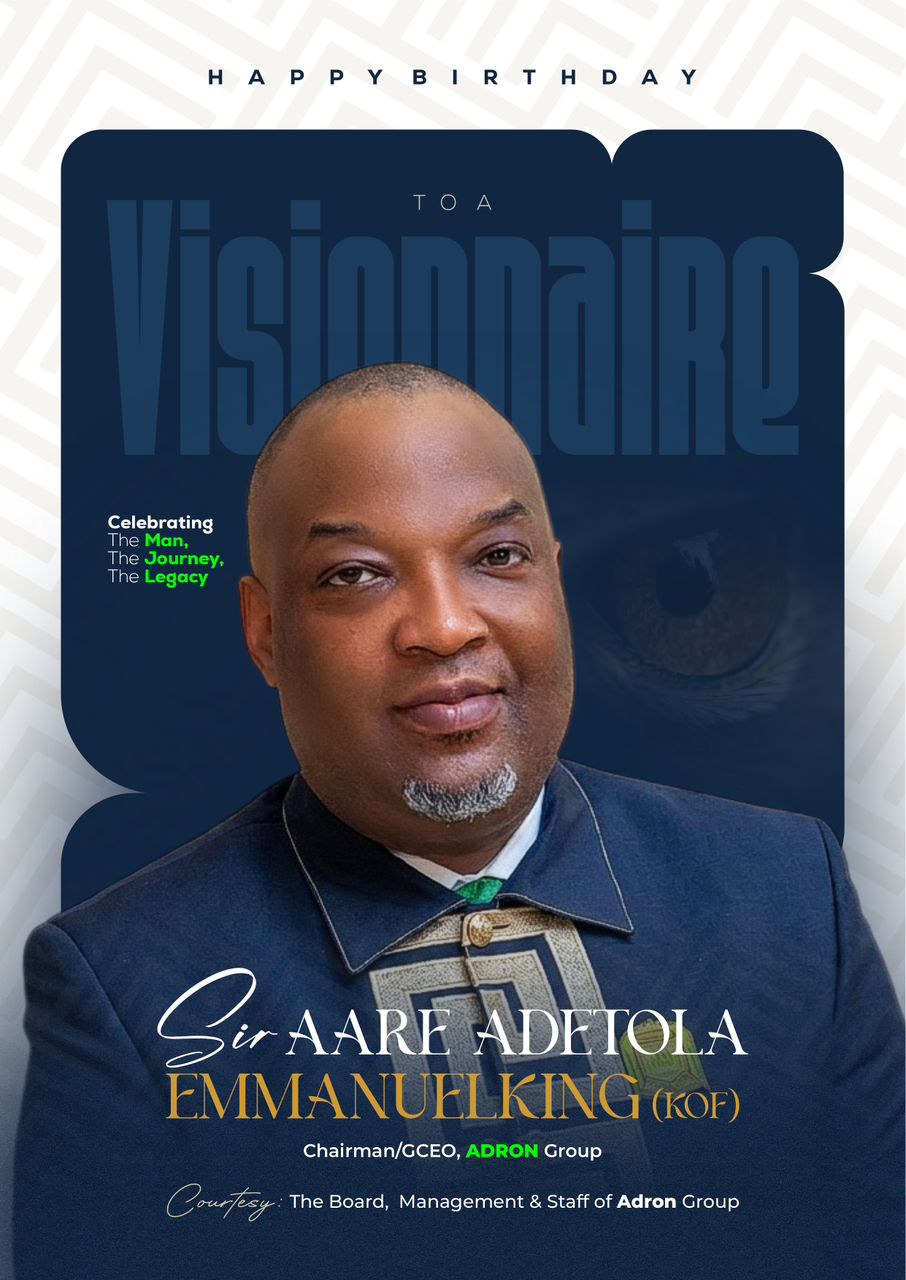
Adron Homes Celebrates Visionary Chairman, Aare Adetola Emmanuel King, at 51
The management and staff of Adron Homes and Properties Limited have joined family, friends, associates, and well-wishers across the globe to celebrate their Chairman and Chief Executive Officer, Aare Adetola EmmanuelKing, as he marks his 51st birthday.

In a statement released by the company, the milestone was described as a celebration of an exceptional leader whose vision, resilience, and entrepreneurial brilliance have not only transformed Adron Homes into a household name in Nigeria’s real estate sector but have also redefined affordable housing across the country.
Under his dynamic leadership, Adron Homes has continued to expand its footprint, delivering value-driven residential solutions while empowering thousands of Nigerians with opportunities for home ownership. His commitment to excellence, innovation, and customer satisfaction has remained the driving force behind the company’s sustained growth and industry leadership.
The statement further highlighted Aare EmmanuelKing’s passion for nation-building and community development, noting his significant contributions to job creation, youth empowerment, and the promotion of socio-economic development through real estate investments.
“As a leader, mentor, and visionary, Aare Adetola EmmanuelKing has consistently inspired a culture of excellence, integrity, and dedication within the organization. His ability to turn bold ideas into reality continues to position Adron Homes as a trailblazer in the industry,” the statement read.
The company expressed profound gratitude for his steadfast leadership and prayed for continued wisdom, strength, and sound health as he embarks on another year of impactful achievements.
As he celebrates his 51st birthday, the entire Adron Homes family proudly honours a man whose legacy continues to shape the future of real estate in Nigeria.
Happy 51st Birthday, Aare Adetola EmmanuelKing!
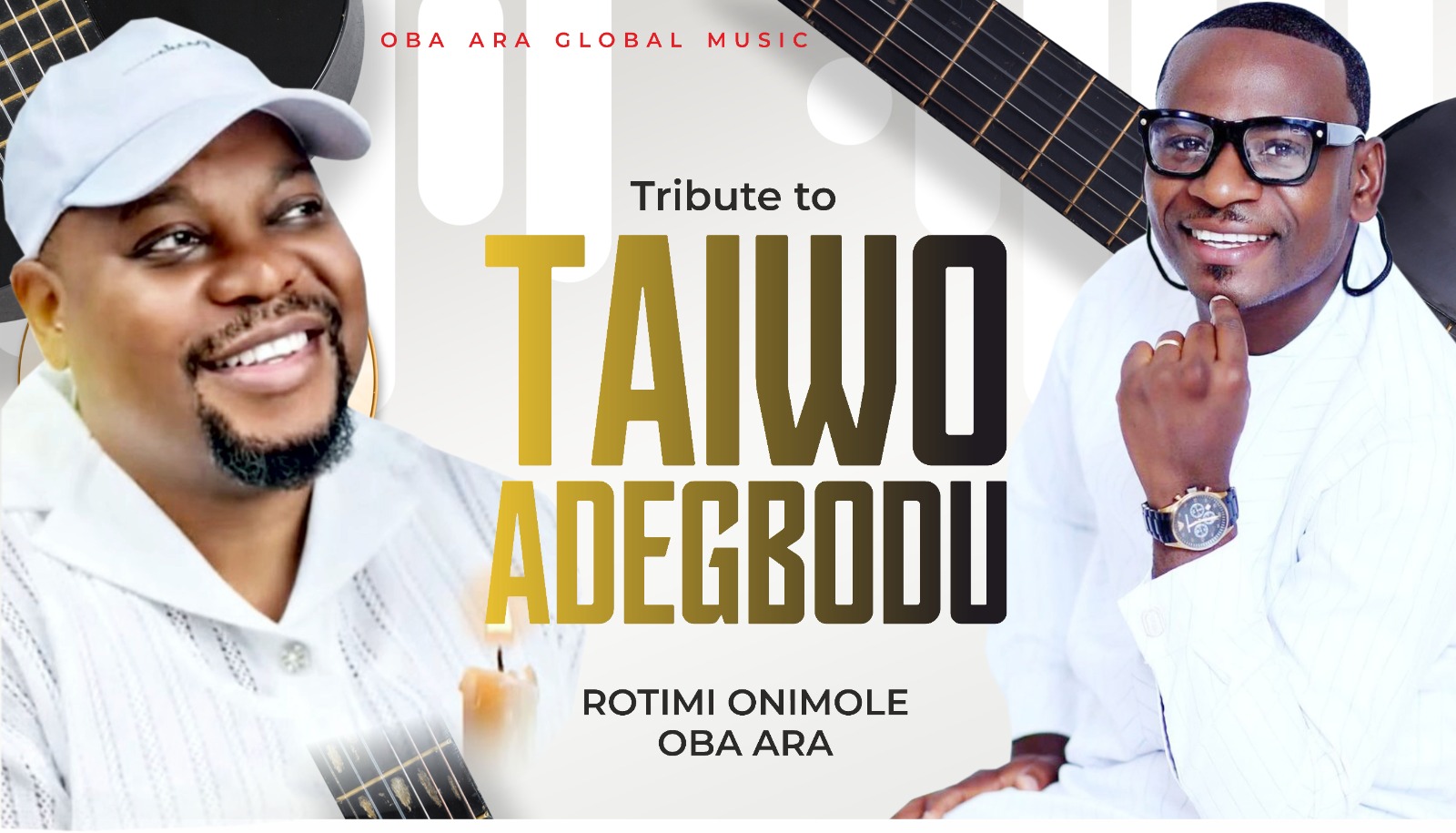
Oba Ara Releases Emotional Tribute to Late Taiwo Adegbodu
Taofik Afolabi
The gospel music community continues to grieve the painful loss of Taiwo Adegbodu, a beloved figure whose sudden departure left a deep void among fans, colleagues, and loved ones. In response to this loss, renowned gospel minister Rotimi Onimole, popularly known as Oba Ara, has released a moving tribute song that captures both the sorrow of the moment and the enduring legacy of the late singer.
Oba Ara, a proud son of Isale Eko, channels raw emotion throughout the song, using heartfelt lyrics and soul-stirring melodies to reflect on his personal connection with Taiwo Adegbodu. In the tribute, he openly expresses how deeply the news of Adegbodu’s passing shook him, describing it as a painful and unexpected loss that is difficult to come to terms with.
The song goes beyond mourning, it celebrates the life, ministry, and impact of Taiwo Adegbodu. Oba Ara highlights the late artist’s dedication to spreading the gospel through music, his inspiring voice, and the spiritual influence he had on many within and beyond Nigeria. Through powerful verses, he paints a picture of a man who lived for God and touched countless lives through his ministry.
Listeners have described the tribute as both comforting and deeply emotional, as it resonates with the collective grief of the gospel music community. It serves as a reminder that although Taiwo Adegbodu is no longer physically present, his music, message, and legacy will continue to live on.
In honoring his late colleague, Oba Ara not only pays his respects but also offers a source of healing for fans and fellow ministers, using music as a tool to process grief and celebrate a life well lived.
celebrity radar - gossips
Buratai, Fagbemi , Shagaya, Olofa, Others Eulogise Olowu Kuta’s Olori On 60th Birthday, Foundation Launch
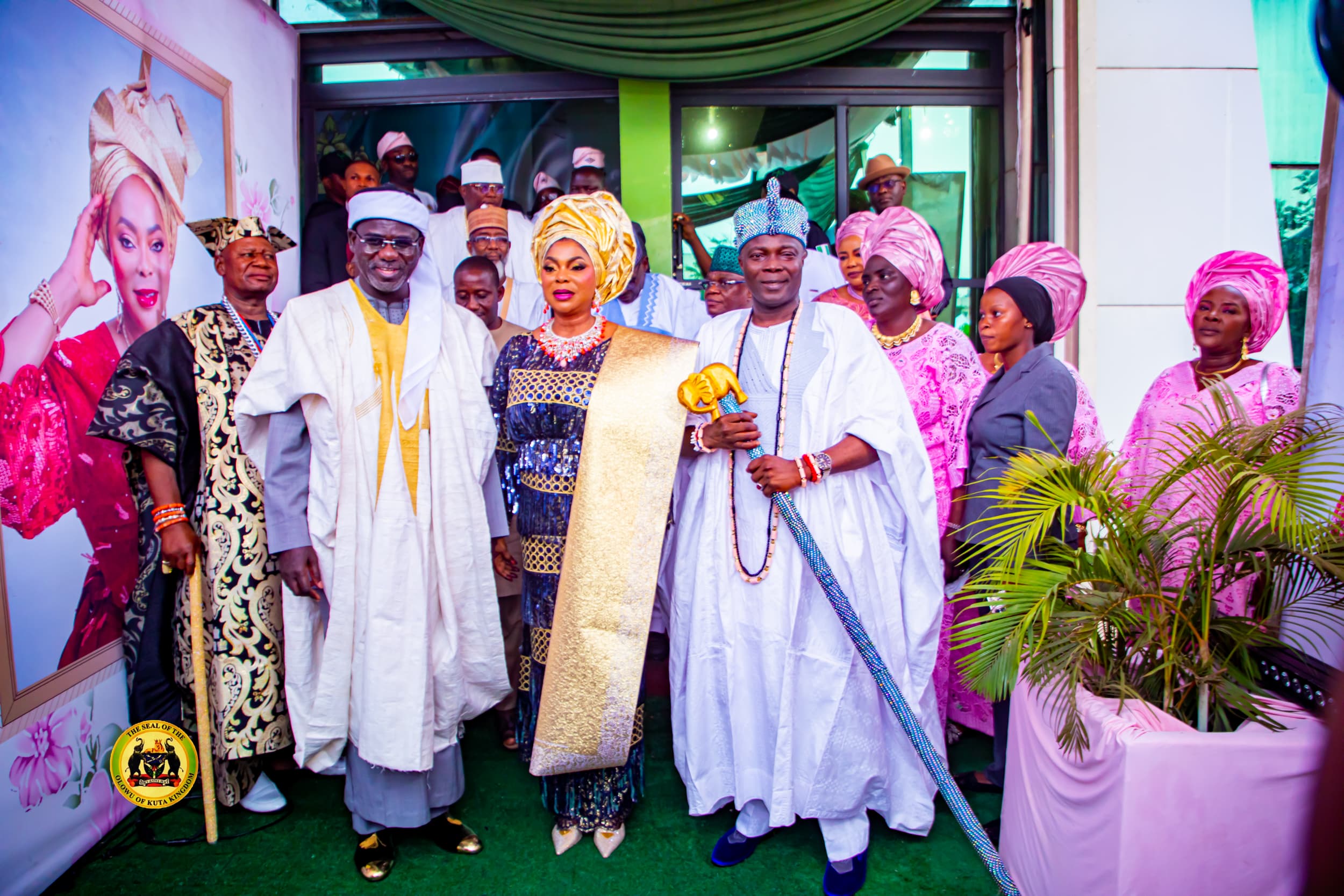
Buratai, Fagbemi , Shagaya, Olofa, Others Eulogise Olowu Kuta’s Olori On 60th Birthday, Foundation Launch
Eminent personalities across the Nigeria stormed the TFK Event Centre, Bala Mohammed Way, Guzape, Abuja, to celebrate the 60th birthday of Olowu Kuta’s Olori, Queen Jumai Amoke and her Foundation Launch on Saturday 28, March 2026.

From former Chief of Army Staff, Lt Gen TY Buratai rtd, to the Minister of Justice and Attorney-General of the Federation, Prince Lateef Fagbemi; Olofa of Offa, HRM Oba Mufutau Gbadamosi. Even top businesswoman and socialite, Chief (Mrs) Bola Shagaya, was in attendance.


Other dignitaries were newly promoted Deputy Inspector-General of Police and former AIG Zone 2 , Lagos , Adegoke Fayoade, Major General Abdumalik, Major General Samuel Adebayo rtd (Fmr CDI);
Major General Anthony Omozoje rtd (Fmr Copp);
Alhaji Tajudeen Owoyemi (Asiwaju of Offa and CEO Radisson Hotel Nigeria;
Dr Waheed Olagunju, former managing director of Bank of Industry, Oniba of Iba, Lagos State, HRM Oba Dr Suleiman Raji ;
Justice Falola, Olu of Ile-Ogbo , Oba Adetoyese amongst many traditional rulers and captains of industry too numerous to mention.
Speaking at the occasion, the Chief Host, Olowu of Kuta, HRM Oba Dr Adekunle Oyelude Makama, CON , Tegbosun iii, who is also the husband of the celebrant commended Queen Jumai for ‘ her slender arms full of kindness’ to establish such humanitarian Foundation, ‘Amoke Children and mother in Need Foundation’ at a time Nigerians are going through economic crisis occassioned by the global meltdown.
Olowu also commended her steadfastness and love for the less privileged and downtrodden.
The monarch refrenced the task before his wife’s humanitarian gesture said her best is yet to come.
” Olori Amoke Jumai, I celebrate you. You will celebrate 70, 80, 90 and continue to shine as you continue to put a smile on people’s faces. I love you, “Olowu Kuta added.
To Lt Gen Buratai, a former army chief and former Nigerian Ambassador to Benin Republic, the reward of hard work is more work.
Buratai, who also doubles as Balogun Agba of Owu Kuta, a chieftaincy title reserved for a generalismo congratulated Queen Jumai for attaining the age of 60 in good health.
The retired army General said he’s not surprised by the turn out of eminent personalities across the country to celebrate the Olowu Kuta’s Olori because she merited it through her hospitality to all, adding that Allah the most merciful, most beneficial would accept all her act of ibadah.
The minister of Justice, Prince Fagbemi, was full of praises for Queen Jumai for deeming it fit to have a place in her heart to accommodate the needy and less privileged in ‘our society.’
Prince Fagbemi urged the guests to contribute generously to support the Foundation in order to continue to alleviate poverty and put a smile on the faces of the people.
” I congratulate you on your 60th birthday and Foundation Launch. I wish you many happy returns of the day and many more fruitful services to the country and motherland”, Prince Fagbemi added.
The celebrant, Queen Jumai who was grining from ear to ear thankfully said she was excited by the turn out and the response of the people to her foundation.
Queen Jumai, however, promised to continue to use her resources and donations received for the good of the needy and less privileged in the society.
” I want to appreciate my own Kabiesi Olofa of Offa , for his presence and im I’m using him as a point of contact to all other Kabiesis present here, the minister of justice and Attorney-General, you’re welcome, sir; Mrs Bola Shagaya, I salute your enterprise, Lt Gen Buratai, I’m grateful, sir; DIG Fayoade, Justice Falola and other dignitaries too numerous to mention, I thank you, all. To my darling husband, Kabiesi Olowu , I thank you immensely for your support. And to my family and friends, I thank you , all. E se pupo!”, she said.


-

 society7 months ago
Religion: Africa’s Oldest Weapon of Enslavement and the Forgotten Truth
-

 news4 months ago
WHO REALLY OWNS MONIEPOINT? The $290 Million Deal That Sold Nigeria’s Top Fintech to Foreign Interests
-

 society6 months ago
“You Are Never Without Help” – Pastor Gebhardt Berndt Inspires Hope Through Empower Church (Video)
-

 celebrity radar - gossips2 months ago
Dr. Chris Okafor Returns with Power and Fire of the Spirit -Mounts Grace Nation Altar with Fresh Anointing and Restoration Grace on February 1, 2026