
Business
‘My Grass to Grace story’ – Prophet Joshua Iginla Recounts

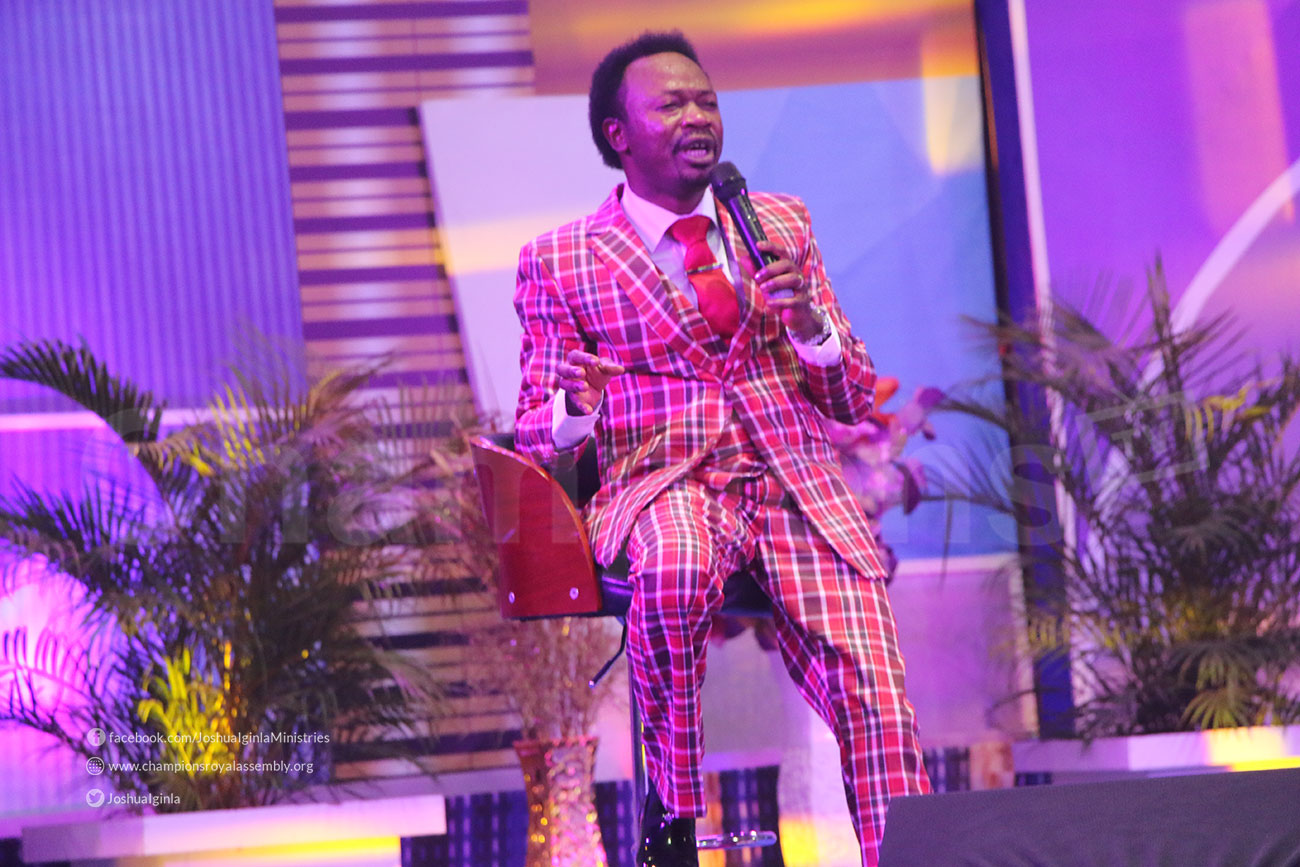


Bro Joshua Iginla led Champions Royal Assembly clock 10 this month and in this interview the philanthropic but fiery prophet opened up on his travails and grass to grace story.
Enjoy…
Q Can you tell us how it all began?
R – My conversion began at the city of Jos. It was very strong because i’m from a muslim background and my father’s name Is Lasisi Disu Iginla and everyone of us from my elder sister to the last were all Muslims. We have names like Radiatu, Abdul lameed, Abdul Lasisi, Bilikatu, Risikatu, abdulfatai etc


Q What was your parents reaction to your conversion?
R – My conversion didn’t go well with my father because he was not happy about it. Then I lost a lot of friends because I was a very stubborn barrack boy and some of them made jest of me saying In few days, i’ll return to my senses. But my father rejected me outrightly. I could remember that he threw me out of the house in the middle of the night. It was a painful experience, curses were laid on me and I was treated like an out cast.
My journey to glory was painful. Infact, my father’s mind set and was that as time goes on, probably I will become a Mallam like the rest them. The night I came back with the bible i thought my father didn’t see me not knowing he had actually discussed with my other siblings and told them I went to church . He was angry. First of all, what he did was to drag me in, used the military belt to beat me up and broke my head, I was bleeding and he chased me out of the house. It was very painful. I remembered my father disowned me and called me a bastard and a disgrace. Then there was a pastor who encourages me. He used to come to fellowship to minister. That night, I think around 12, I had to run down to see him in order to be encouraged and to squat with him.
I knocked the door, he came out and I narrated all the story and he also saw me bleeding. He just told me he knows how wicked my father was and he doesn’t think he can allow me stay in his house because he doesn’t want to be locked up. I begged him to please allow me, he slammed the door and ordered me to go, I felt depressed. I remembered leaving the house of that pastor crying, my pain was not what my father did to me but what this pastor did to me.
if a man of God can get to this height of treating a new convert this way, then Christianity is a fake thing and I remember the holy spirit encouraged me that night…


Q – What about your mum?
R – You know the power of a man over his wife. My mum was always supporting my father, saying I should listen to whatever my father is saying. But she wept the night I was leaving. You know mothers are precious, they don’t want to Lose their son but she was behind my father. She was just saying I should adjust and renounce this thing and whatever my father says is what I should do. I could remember I went to Ekwa Primary school to sleep in one of the classes and there were vigilante groups there. In the quest to sleep there, they thought I was a thief, they followed me and wanted to shoot me. I started screaming that I was not a thief which prompted them to ask me what I was doing there. Before that, a dog harassed me and almost bit me. I explained to them and they told me that the place isn’t too good. I was taken to a class where they were all staying and asked me to find my level the next day. After that night, I squatted with one of them, the one that actually cocked the gun and he said because he’s an elderly man, he will see how he can follow me to my father and I stayed with him for two weeks. After that we had issues, he said he can’t accommodate me anymore until I take him to my father. When the pressure became very much, two of them followed me to beg my father but he insisted that there’s no way. That journey led me to one of the fellowship member, late Ibrahim Baka. He’s one of those that helped me before the freedom for all nation scholarship came up. The persecution lasted for more than three years


When everything was down and things became rough and I had issues of going back to my father’s house, I met my sister on Jan 19 that year,. She was half dead and my mother was in tears . The experience of the conversion was very strong and I told them that if they believe in Jesus, he can do this, I came back home after many years and met that scene and my mother told me to do anything I can do just to revive my sister. My father was sitting down and people were there trying to pacify him. I laid my hands on my sister and God revived her and brought her to life. That became a scene of great miracle. It brought a revolution to the whole family and the conversion of my father, mother and the acceptance of my faith. On that junction, my father was posted to odogbo barrack in ibadan. When we got to odogbo barrack, the quest to start a ministry came up clear and we started like a joke. I started a ministry in ibadan. It was a painful and bitter experience. The burden for the ministry started in ibadan and that’s where we started. We started in the army day secondary school in the barrack and we started with ‘atmosphere of power’. It was like an interdenominational ministry, it wasn’t really a church. We were using a class room and people from the barrack gathered. We started a fellowship which comes up every Saturday by 3pm.


Q – what were the challenges ?
R – A challenge I don’t wish my enemy go through because first, when we started in the barracks, I was seen as a riff-raff who doesn’t know what he’s doing because we take drums from one block to the other and a lot of youths follow me. We clap our hands, people come from the blocks and we go to villages. My understanding about ministry then wasn’t for money or offering. It was only just to preach the gospel. We survived by working in farms the stipends we earn were used for crusade . We later moved to Overcomers prevailing Evangelical Ministry (OPEM) and we started the ministry in Hope international school. We were using the primary school which has now become a living place. We were using one of the classrooms. We pleaded with the proprietress to allow us stay. We were using that school and the class couldn’t take up to 100 people. We were around 30 and we later had up to 70. It was a huge crowd to us. Infact, we celebrated it. We didn’t have drum set or keyboard. We used to rent a local drum in iwo road and whenever we have that drum set, the praise, worship and the power of God will come down very well. We celebrated the move of God. The church wasn’t big and we had cases of members making vow. The highest tither then was N1000 and he so much intimidated me whenever he gives tithe. We had to use visitation to pay for the tithe.


Q – How did you survive those trying periods?
R- There was a time i had to go to a block industry to carry blocks and some of my members saw me but I hid my face from them. They argued if it was me or not. It was a shameful thing. It was better I did that than to steal or go into occultism .
Some people see our glory today an think we just arrived, we have told ourselves that irrespective of our poverty, we won’t eat on Jezebel’s table. I kept saying that if i didn’t back slide then, nothing will take me away from God.
Ii was living in one room apartment with my team. we can smile about it now but the experience is bad. I was staying in that room with my, pastors emeka Clement, Moses, Segun, Sunday Adamson. We had a foam and by the right side of the room, I put a plank and an iron rod which was used as my wall hanger and we fold ourselves. Even at that I couldn’t pay N300 for house rent which is N6000 in a year. I had an ‘international stove’, it was terrible. Each time I lit the2 stove, the fire just blow up and i’ll have to pour a lot of water, everywhere will be filled with smoke and my landlord will come and say ‘ Pasito, do you want to burn down my house?’ though he’s late now. It became a big argument and the smoke will be entering everybody’s eyes because it was an old stove. We had to use 3 stones to balance it.


One of the terrible experiences was that I had eba but there was no soup and there was no money. Poverty can make you have all manner of wisdom. I went to the woman selling food around me and told her to sell food for me and normally, we tell them they shouldn’t put meat and they should put soup separately in another plate. When she finished selling it, I told her she didn’t give me the right thing so she got angry and poured the soup back in the pot so I took the empty plate home, left with little soup in it and use it to take my eba. It was an experience in my life I felt my poverty was bad, I wept.


Q_- what’s that memorable experience you recalled during such period?
R – There was a case of betrayal where one of the sons whom I’ raised up came back and met me in that one room and was supposed to call me ‘Papa’ but he said’ Pupper, so you are still here’ he repeated it again. It’s one experience i’ll never forget because when he left, I knelt down on my bed and wept. I told God that i’m not asking him to make me rich as a pastor, i’m asking him to give me a means to live my life in order to bless lives. Of course, I wasn’t lazy, I did security job, teaching job, I carried blocks, I already started training in a Nigerian depot before God intervened so my story isn’t a story of a man who just came to ministry overnight.
The experience was bitter because of the house I lived in. The house is a one room apartment and I stayed there for seven years. I couldn’t pay my landlord’s rent. There was a bad well you could even see germs on it, that was the water I drank. Even the bathroom was so terrible that you will have to cover your nose before you take your bath because they would have defecated on it. The one room was so bad that there wasn’t even a ceiling and the window was bad. All through the 7 years, sometimes in the middle of the night, I go into the bush to pass out feaces.


It was bad that sometimes, I use omo to take my bath, even my landlady pity me whenever she sees me. My landlady called iyaleko, sells Pap and I used to collect from her on credit and sometimes when I don’t pay, she will harass me. There was a little breakthrough that came in, I moved to another house in Aligongo. I call my landlord Babadudu, he’s a wonderful landlord, he’s both positive and negative wire. I couldn’t pay his house rent too and I could remember I used to tip-toe when I come late at night and his wife will blow a whistle signalling the landlord that i’m around. Then the landlord will harass me that I don’t want to pay his rent and I call myself a man of God. I’ll kneel down and start begging. He will say i’m not a good pastor, the experience was bad, there was a provision store close to me, I owed them money too for goods and I will hide so they won’t see me, even I didn’t believe there can be a future with that experience. There was one of my pastors that told me that if my life was like that, what confidence do they have as my followers because truly my life was bad. 90 percent of my early pastors left me not because they didn’t love me but because the poverty was bad and there was no hope. Infact, I was living on them. There was a time pastor emeka would go and do block work and bring money to me, it became a pain. There was a day my landlady abused me that how can I be a pastor, asking if God can’t see my sufferings because it was bad. I was the usher, the sanctuary cleaner at the early stage of the ministry.


Q – so how did the story turns to glory
R – It was on that quest when the pressure became high that God told me that the place isn’t where i’ll prosper. He opened the scripture to me and told me how he told Abraham to leave his father’s house to a land he will show him. He said my allocation has expired in Ibadan and the place i’ll prosper is Abuja, I borrowed the money that took me from ibadan to abuja.
I landed in Dutse Alhaji in Abuja had a friend there who was part of my prayer band at the youth fellowship in jos. His name is Revd. Joseph Yusuf Haruna. He’s the founder of Gospel Grace ministry. I stayed in his house, I slept on his 3-seater. He was better than me. I became like an assistant pastor to him because it was preferable to stay in Abuja than ibadan, the storm was so much and I already ran from my landlord in ibadan due to non payment rent and at that time, while I was with him, I learnt that 7 of my pastors left and all broke out. I won’t blame them ‘because if you see my condition, even if you are genuine and called by God, you will lose hope. It was the prophetic word of God that kept me going and after sometime, we had little issues and I kept telling him what God told me, which was my conviction. That led me to go to Global light assembly, Buari. Imagine a general overseer applying to work under a ministry. I told myself that it was better i’m into the system of the ministry than to backslide or to dip my hands into things that isn’t of God. The leader was Revd. Gbenga, he was a wonderful man. He taught me in the area of Giving.


Q – so how did champions Royal Assembly came to being ?
R- Champions Royal Assembly is a sweet part of the story. While I was in Buari, God started speaking to me that it is time to raise a champions generation. God said I shouldn’t use my first church name which was Overcomers that we already over came, so I used champions assembly but I was willing to stay with Rev Gbenga and what God did was there was a strong wind of pressure from everywhere. Revd Gbenga called me one day and said he knows God has called me. After one of two things, God said to me that I shouldn’t betray Revd Gbenga because I have a call but he didn’t know I was a senior pastor, I didn’t tell him but I later confessed, I was living in a room and parlor then. He was a wonderful man. He told his wife at home and I believe she told him to let me go. He released me. I didn’t have money, I didn’t know where to start
In all honesty, Revd. Gbenga is an angel because he came to meet me in the early hours of one morning and told me that he loves me so much and he believes I have the leading of God. He gave me N70,000 to start a church and told me not to let his wife know. I took the money and started looking for a house that can serve as a ministry place. I met an agent called Chuks. He said there’s an abandoned house I can use. It was abandoned because thieves were always disturbing the owners, I told him there’s no problem that the only thing that can be stolen is my bible, I have nothing else, That’s how we got to the place. We packed in on a Friday, cut the grass on saturday and we started the church on Sunday, we were just four in numbers.


I faced a lot of resistance, some people mocked me. I remember the first fellowship, there was no cotton, I just came out of the gate and some women started laughing at me saying we are hungry and looking for money, it was shameful. I was passing one day and they were saying what kind of end time pastors I was. There was no tambourine and the first offering was collected with bible, that was how we started. I started having issues with the owner of the place in millionaires quaters when we were becoming much, I went to the landlord to allow me use the little tent in the compound which he agreed and after sometime we will be paying for it, we agreed. We rented the tent and the following week, the wife came to the place, fought me, abuse me, I couldn’t talk, I covered my face in shame. I entered the house and kept quiet. The man denied permitting me ‘cos the wife was in charge. They pulled down the whole structure and asked us not to use it for church any longer then one of our members borrowed us his land in that same millionaires quaters, we erected tent and used sack to cover the tent and started church.
Q how did the breakthrough come?
R – One of the things that exploded this ministry was the death of a member. She dropped dead in the church and everybody ran away and started telling people that I wanted to kill people for rituals. In the quest of praying for that woman, she came back to life . The news broke out in the whole Kubwa and the next Sunday, the church number rose up. As soon as the church started growing, some members of the church went to the man who gave us the land and told him that I want to take over and that he should send us packing. He was a member but he gave us notice to quit the land. One thing led to another and we got another and we got another place through God’s breakthrough. The glory started changing levels. That breakthrough brought about a turning point in my life. There was also a senator who sent people to tell me to come and see him, I was so excited but God asked me not to go. I didn’t hear from them for more than two months and I felt bad within myself. Later, one night he came to see me at that bush I was living so I prayed for him and I gave him a prophetic word. He was menstruating like a woman, every 28 days he passes out blood, he went to America for treatment but no cure. He ran back. He brought out money after the prayer. It was my first time of seeing that kind of money and the holy spirit asked me not to collect it. I remember my hands were shaking and I told him I would have loved to collect the money but the holy spirit asked me not to. He laughed and I felt bad. The holy spirit told me that if I had collected the money, there won’t be healing for the man. After some period, he called back and asked to see me after four months only to discover that he has been healed. He brought money in a little bag, it was my first time of seeing that kind of money, I didn’t know it was money. He just dropped it and I opened it and saw money. My body was shaking and I grabbed it before th holy spirit would say I shouldn’t collect it. That was the turning point. He left and I was so excited. I wept and rolled before God, it pays to wait upon the lord, it pays to stand and believe God can do all things. It was in the midst of all this that the miracle started, infact, that money gave birth to the first land where we built our church today. When the Glory started changing levels, some pastors who do not know me in Kubwa thought I came overnight.


City of wonders vision has been there since 1996. The lord spoke to me and gave me the vision. I have it in my prophetic book. I never knew it’s going to come this time. I have seen this vision and the lord said to me that i’ll gather the whole world in here. When it was time we started having overflow in the other church, God told me it was time. God gave me the vision of where it would be and i announced it. It will be of interest to know that when i announced it, people thought i had the money on ground , NO! But when theres a vision, there is a provision . we started building, we never envisaged it as a 80,000 capacity building , we just wanted to build a place that can accommodate people. I even quarrelled with the architect for doing that kind of drawing though i said he should build a big church but not of that magnitude. I got angry and went home then God told me that i shouldn’t deduct a dime from it so that was how the building started. Some people are thinking we are competing with some great men of God, NO, Anything that is done out of competition can’t stand the test of time, you won’t even be able to complete it. This is just a vision of 10 years, how do you build this kind of capacity except the lord is with you, if it is done out of competition, God will not allow the resources to come, we have ministries which have been there for a long time but haven’t attained this kind of height yet within 13 months, we were able to do this without borrowing money from bank. People ask me where i got the money from, i didn’t take money from bank, foreign countries, the money came from inside and because we have a lot of things we do, God gave us, not even a politician or president gave us the money. i have sons who are wealthy but they are not part of it though God has blessed me with men who are oil moguls, wealthy people who are just blessed but God has blessed me too, all i can say is thank God because we didn’t owe anyone, not even a bag of cement
I’ll simply say My story was that of grass to grace. Grace is an unmerited favour of God that brings a man out of obscurity, qualifying the unqualified. I feel God loves me so much, he has used me to show the world that you don’t need to belong to some cabal in the ministry to get to the top if he is behind you. I respect fatherhood in the ministry and i know God has placed some people before you but the truth is there’s a belief that you must come through a cabal. In my own case, God has done mine this way, not even a prophet can take glory over my life, God did what he has to do for me. Infact, i was rejected by top ministers, i remember staying from morning to night at one of the great men of God’s place but i was frustrated by even the sons under him but i thank God that didn’t happen because today some men would have taken the glory. God allowed it to happen so i can become a litre of love to some generation, minus men plus God, all things are possible. My life is a typical example of grass to grace and we are just in grace primary one, we have not started, i feel the glory is just about to unfold itself. Like i said to the church, this isn’t the vision God has given me, this is just the primary vision. Somebody asked me if theres something beyond city of wonders, i said Yes, i’m already on it because this is just the stepping stone for the real vision i have. indeed, it is a story of grass to grace





Fidelity Bank grows gross earnings by 38% to N434.95b in Q1
Fidelity Bank Plc recorded 37.9 per cent growth in gross earnings to N434.95 billion in first quarter 2026 as the international commercial bank continued to expand its core banking market share.
Interim report and accounts of Fidelity Bank for the three months ended March 31, 2026 released at the Nigerian Exchange (NGX) showed that gross earnings rose from N315.42 billion in first quarter 20025 to N434.95 billion in first quarter 2026, representing an increase of 37.9 per cent.
The top-line performance was driven by impressive growth in the bank’s core business operations with interest incomes rising by 22.8 per cent to N314.48 billion in first quarter 2026 as against N256.10 billion in first quarter 2025.
With net interest income at N180.97 billion, the bank closed the period with profit before tax of N92.48 billion. After taxes, net profit stood at N74.47 billion for the three-month period. Earnings per share remained high at N5.69, underlining the capacity of the bank to reward its shareholders.
The balance sheet of the bank also emerged stronger. Total assets crossed the N11 trillion mark to N11.35 trillion by March 2026 compared with N10.46 trillion recorded in December 2025. Customers’ deposits increased from N6.89 trillion to N7.38 trillion. Total equity rode on the back of earnings growth to a 27.5 per cent increase from N1.09 trillion in December 2025 to N1.39 trillion by March 2026.
The first quarter 2026 results further consolidated the strong earnings outlook of the bank, which had successfully completed its recapitalisation amidst impressive earnings performance in 2025.
Fidelity Bank had recorded double-digit growths in interest and non-interest incomes as well as key balance sheet items during the year ended December 31, 2025.
The audited report showed that gross earnings rose from N1.04 trillion in 2024 to N1.52 trillion in 2025, an increase of 45.6 per cent. Interest and similar incomes had grown by 38.7 per cent from N803.1 billion in 2024 to N1.11 trillion in 2025. Fees and commission incomes also rose by 44.7 per cent from N78.4 billion to N113.4 billion. The bank recorded net profit after tax of N242.4 billion in 2025.
The bank’s balance sheet emerged stronger with total assets rising by 18.6 per cent to N10.46 trillion in 2025 as against N8.82 trillion in 2024. Customer deposits increased by 16.1 per cent from N5.94 trillion to N6.89 trillion, reflecting continued franchise strength and an improved funding profile. Net loans and advances meanwhile declined by 2.4 per cent to N4.28 trillion in 2025 as against N4.39 trillion in 2024, attributable to customers paying down on their mature obligations.
The bank had in 2025 strengthened its capital position, with eligible capital rising to N561 billion, above the regulatory minimum of N500 billion for banks with international authorisation. In addition, capital adequacy had remained robust, with Capital Adequacy Ratio of 30.94 per cent by December 2025 as against 23.47 per cent by December 2024.
Managing Director, Fidelity Bank Plc, Dr. Nneka Onyeali-Ikpe, said the first quarter 2026 results reinforced the bank’s strong and resilient business model.
She noted that with the remarkable success of its recapitalisation programme and continuing expansion, Fidelity Bank has entered a new era of growth and impressive returns.
“We are on a stronger footing and confident that we will set new growth records that are reflective of our legacy and the future we are working on,” Onyeali-Ikpe said.
Business
Dangote Refinery Ends Nigeria’s Era of Fuel Import Dependence, Boosts GDP, FX Earnings — EIU
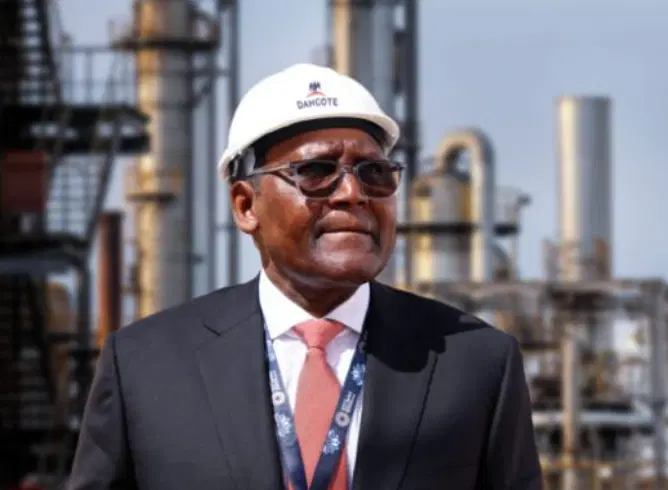
Dangote Refinery Ends Nigeria’s Era of Fuel Import Dependence, Boosts GDP, FX Earnings — EIU
The operational ramp up of the 650,000 barrels per day Dangote Petroleum Refinery & Petrochemicals is fundamentally reshaping Nigeria’s downstream oil sector, significantly reducing the country’s dependence on imported refined petroleum products and strengthening its external position, according to the Economist Intelligence Unit (EIU).
In its latest assessment on Nigeria’s fuel market and regulatory environment, the EIU said the refinery has already transformed a sector that was previously characterised by heavy reliance on imported fuel despite Nigeria being Africa’s largest crude oil producer. The report noted that the refinery met nearly 80 per cent of domestic petrol demand in April and produced enough volumes to satisfy local consumption requirements as operations approached full capacity.
The EIU described Nigeria’s downstream petroleum sector before the refinery as “long dysfunctional”, noting that the country had remained almost entirely dependent on costly imported fuel while producing nearly 1.5 million barrels of crude oil daily.
According to the report, the emergence of the refinery has reduced import dependence, improved domestic fuel availability and strengthened Nigeria’s balance of payments position through lower import demand and rising exports of refined petroleum products.
“The gradual ramp up of the 650,000 barrel/day Dangote refinery since May 2023 has transformed Nigeria’s long dysfunctional downstream sector,” the report stated. “The country’s main refineries, all state owned, had been inoperative for years and Nigeria was almost entirely reliant on costly imported fuel.”
The research and analysis division of The Economist Group, London added that the refinery’s attainment of full operational capacity and its planned expansion would further support Nigeria’s economic growth and foreign exchange earnings over the medium term.
“Meanwhile, the attainment of full capacity at, and an increase in exports from, the Dangote refinery will support real GDP growth and foreign exchange earnings in 2026 and 2027 and beyond, as a planned doubling of the plant’s output comes on stream around the end of the decade,” it added.
Industry analysts said the refinery is increasingly positioning Nigeria as an emerging refining and export hub, altering energy trade flows across Africa and reducing the vulnerability associated with fuel import dependence.
The EIU noted that the refinery’s expansion has coincided with major reforms in Nigeria’s downstream sector, including the removal of fuel subsidies and the introduction of market driven pricing mechanisms.
The report, however, said the transition from a state dominated fuel import structure to large scale domestic refining has triggered resistance from interests linked to the old import regime.
The latest tensions emerged following the decision by the Nigerian Midstream and Downstream Petroleum Regulatory Authority to relax restrictions on petrol imports despite the refinery’s growing capacity to meet domestic demand.
Dangote Industries subsequently initiated legal action, arguing that continued import approvals undermine domestic refining investments and conflict with the objectives of the Petroleum Industry Act, which seeks to encourage local refining capacity and reduce import dependence.
Analysts noted that the availability of large-scale domestic refining capacity has improved Nigeria’s energy security and reduced exposure to external supply shocks and foreign exchange volatility.
The Centre for the Promotion of Private Enterprise also cautioned against unrestrained importation of petroleum products, warning that such a policy could weaken Nigeria’s industrialisation drive and discourage investments in domestic refining.
Chief Executive Officer of CPPE, Muda Yusuf, said continued dependence on imported fuel had historically contributed to pressure on foreign reserves, exchange rate instability and fiscal leakages.
The refinery’s growing impact is also being reflected in Nigeria’s broader macroeconomic indicators. Earlier this month, S&P Global Ratings cited increased domestic refining capacity and rising hydrocarbon exports among the major factors supporting Nigeria’s sovereign credit rating upgrade – the first in 14 years.
Beyond Nigeria, analysts said the refinery is increasingly being viewed as a strategic industrial asset for Africa, where many countries remain heavily dependent on imported fuel despite rising demand for transportation, manufacturing, and power generation.
Business
BREAKING: Court Dismisses $19.6 Million Claim Against NNPCL — Rules Contract Scope Cannot Be Changed Orally
BREAKING: Court Dismisses $19.6 Million Claim Against NNPCL — Rules Contract Scope Cannot Be Changed Orally
In a landmark ruling on Friday, May 22, 2026, the Federal Capital Territory High Court in Abuja threw out a $19.6 million lawsuit filed by Alternate Dimensions Ventures Ltd against the Nigerian National Petroleum Company Limited (NNPCL), affirming a key legal principle: a written contract cannot be expanded through oral agreements or conduct.
Alternate Dimensions had sought $19,600,000 in professional fees, claiming the scope of its Direct Sale, Direct Purchase (DSDP e-pro) contract with NNPCL was orally expanded. Represented by counsel Patrick Peter, the firm argued it was entitled to the revised sum for services rendered under the alleged new terms.
But NNPCL, through its lawyer Ituah Imhanze of KENNA LP, pushed back sharply, arguing that parties are bound exclusively by the clear terms of their written agreement. Imhanze contended that without any written amendment, the claim was legally unsound, and the court agreed.
Delivering judgment, Justice Hamza Mu’azu upheld NNPCL’s defense, stating that the contract was unambiguous and that no evidence was adduced during the trial, which supported the alleged scope expansion. The court further found that NNPCL fully complied with all contractual terms and committed no breach.
Dismissing the suit as meritless, Justice Mu’azu reinforced the doctrine of sanctity of contract: any amendment to a written agreement must be express, unequivocal, and documented, not implied or verbal.
The ruling spares NNPCL from the S19.6 million claim and also a floodgate of similar potential liabilities.


- Deputy (Dep.) Finance Minister Courts Investors to Transform Ghana’s rice Economy June 4, 2026
- Mobile health services in Kenya reduce the risk of stillbirths June 4, 2026
- JustMarkets Research Highlights Global Growth Divergence as a Key Market Driver June 4, 2026
- African Development Bank Group approves $125 million investment in African Trade and Investment Development Insurance (ATIDI) to expand risk insurance capacity in Africa June 4, 2026
- Congo Energy & Investment Forum 2027 to Position Brazzaville as a Hub for Global Energy Deal-Making June 4, 2026
- Africa Skills Hub (ASH) Transitions to ASH Africa as it Marks 10 Years of Impact June 4, 2026
- When women farm better, Eswatini eats better June 3, 2026
- Togo Hosts the 8th Annual Forum of National Volunteer Agencies in the Economic Community of West African States (ECOWAS) Region June 3, 2026
- Indigenous Peoples gravely vulnerable to Ebola epidemic, warn United Nations (UN) independent experts June 3, 2026
- Meeting between Parliamentary Vice-Minister ONISHI and His Excellency (H.E.) Mr. Cosgrow, Principal Minister and Minister for Agriculture, Fisheries and Blue Economy of Seychelles June 3, 2026
- Deputy (Dep.) Finance Minister Courts Investors to Transform Ghana’s rice Economy June 4, 2026
- Mobile health services in Kenya reduce the risk of stillbirths June 4, 2026
- JustMarkets Research Highlights Global Growth Divergence as a Key Market Driver June 4, 2026
- African Development Bank Group approves $125 million investment in African Trade and Investment Development Insurance (ATIDI) to expand risk insurance capacity in Africa June 4, 2026
- Congo Energy & Investment Forum 2027 to Position Brazzaville as a Hub for Global Energy Deal-Making June 4, 2026
- Africa Skills Hub (ASH) Transitions to ASH Africa as it Marks 10 Years of Impact June 4, 2026
- When women farm better, Eswatini eats better June 3, 2026
-

 news6 months ago
WHO REALLY OWNS MONIEPOINT? The $290 Million Deal That Sold Nigeria’s Top Fintech to Foreign Interests
-

 society1 month ago
SOCIAL MEDIA IS NOT A BATTLEFIELD COMMAND – WHY THE NIGERIAN ARMY’S ACTION AGAINST JUSTICE CRACK IS A NATIONAL SECURITY IMPERATIVE
-

 celebrity radar - gossips4 months ago
Dr. Chris Okafor Returns with Power and Fire of the Spirit -Mounts Grace Nation Altar with Fresh Anointing and Restoration Grace on February 1, 2026
-

 celebrity radar - gossips6 months ago
Prophet Kingsley Aitafo Releases 2026 Prophecy: ‘Nigeria Will Rise, but the World Must Prepare for Turbulence’
You must be logged in to post a comment Login
You must log in to post a comment.