
Business
MY TAKE AWAY FROM PMB’S FOREIGN TRIPS – BABATUNDE FASHOLA SAN


In making this public intervention, I seek to highlight the benefit of global relationships and cooperation in a world that is changing daily as a result of globalization and transborder economics, social and even criminal activities where no one is safe, except all are safe, and to leave the dispassionate observer his opinion after deep reflection on the value, or lack of it, of the President’s foreign trips.
This way I hope every Nigerian who cares about our country will have some information about what their President is doing about the things that concern them.
First I will start with context.
Barely 2 decades ago (between 1994 and 1998) we would not have quarreled with the description that we were a pariah nation.
We were ostracized from global events because of bad governance. We had lost the respect accorded Nations like ours were they well-led and well-run.
I recall that not a few Nigerians complained that the green passport was becoming, if it had not already become, a burden.
That was at the height of the dictatorial government that broke the rules of international relations.
It was from there that we started to heal. Investors entered our country. Many brands that we sought after abroad started coming to set up shop in our country.
The tourist footfalls in our country increased slowly but surely, but again we began to slide.
That was when Buhari declared at a meeting in Lagos during his campaign in 2015, that if elected, he would make us proud about our country again. Proud to be Nigerian again.
That is the context in which I view his foreign trips and the manifesto of the All Progressives Congress (APC) on Foreign Relations which promised to:
- Make the Nigerian national interest the overriding factor in its foreign policy and international relations.
- Work to reform global governance in multilateral institutions and agencies.
- Work to strengthen the African Union to become a more effective organization on global affairs.
- Engage the BRICS countries (Brazil, Russia, India, China and South Africa) on the basis of equality.
- Play a leadership role to develop a MINT (Mexico, India, Nigeria, and Turkey) as a counterforce to BRICS.
I will limit my takeaways to 4 (Four) trips that I attended with the President namely: the G7 Summit in Germany, the Oil and Gas Summit in Iran, the Renewable Energy Conference in Abu Dhabi and the State visit and Business Forum in China; and 2 (Two) trips that I did not attend, but whose deliberations I followed, namely: Paris for the COP 21 and USA for the Nuclear Energy Summit.
G7 in Germany
This is a club of eight of the most industrialized, economic and technologically advanced nations.
For the benefit of those who do not follow international politics it was originally the G8 comprising the USA, Britain, Germany, France, Canada, Japan, Italy, and Russia, who were later suspended and had sanctions imposed on them to make it G7 as a result.
It was formed in 1975 as a club of 6 (Six) before Canada and Russia were admitted.
They look after each other, and the rest of the world to put it simply.
They have gone to war together if you remember Iraq and Libya in recent memory and they are all largely collaborating to fight terror. (Most recently the FBI was rendering assistance to Belgium in the aftermath of the terror attacks in that Country).
Why G7 one might then ask?
Answer: German Chancellor Angela Merkel, as host, invited PMB on his inauguration to be their guest along with some three or four other African countries.
Their agenda was global security, global economy and global health in the aftermath of Ebola, which was still raging in some African countries.
Apart from the personal aides of the President, Governor Shettima of Borno, General Dambazau and myself were the only ones who accompanied PMB.
I recall that upon our arrival in Germany they expressed surprise that our delegation was small and asked if others were still coming.
In the pre-departure briefing, in addition to highlighting how the security and economic agenda of the G7 coincided with 2 (Two) of his campaign promises, security, (corruption)economy, PMB stated the reasons 3 of us were invited.
Governor Shettima was in the front line of terrorists and criminal activities in the north east; General AbdulrahmanDambazau, was a former Chief of Army Staff, and also a faculty associate of Harvard University Weatherhead Center for International Affairs; I had run the single biggest economy of a state within Nigeria for eight years and was in the frontline of Ebola.
Without ministers, one week after taking office, he felt we were the ones best suited to assist, if he needed it, on the issues of security, economy and health on the G7 agenda.
In the event, he did not need us. He held his ground admirably. He was the first person called upon to speak at a Summit in which Nigeria was not a member. I was proud to be a Nigerian.
At global summits we usually got to speak when others had spoken and the hall has emptied.
President Obama was the first G7 member to speak after PMB and he said that Nigeria has elected a President that brings a reputation of scrupulous integrity to the table. I was proud to be a Nigerian.
The opening session was robust and welcoming, we saw some of the world’s most powerful men and women take off their jackets, call each other by their first names in a club-like setting while addressing the world’s most serious problems. Problems that affect you and I daily.
I was proud that my President was in a room where decisions concerning my planet were being deliberated upon.
Prime Minister Cameron, Chancellor Merkel and others also spoke in similar vein about our President’s reputation and our nation’s strategic position in Africa and the world.
They pledged support for Nigeria on Terror and the Economy.
Importantly, I learned that their scientists were worried about increasing resistance of strains of infections to antibiotics; and that they were committing enormous resources into finding out why and what to do.
They highlighted the difficulty of time and resources that it will take to develop new antibiotics and the risk to global health.
If we all appreciate how vulnerable we can be without effective antibiotics, especially our children, and if we remember how low life expectancy was and how poor global health was before the discovery of Penicillin after the World War, we will appreciate the seriousness of the platform to which Nigeria was invited. I was proud that our President was there.
If the seven most powerful nations stand with you, who can stand against you?
I need not say more except that I can attest that PMB has been following up on these matters, and the progress on security is visible, while results on the economic front will manifest soon enough.
Iran Oil and Gas Summit
For those who are not aware, one of the reasons why oil prices went up, and from which we benefited in the past, was that Iran, the world’s 7th largest producer of oil, was facing global sanctions from which she was due to emerge in 2016.
Because Iran was soon to be selling oil, the likelihood of a further crash of oil prices that had drastically fallen was a threat to Nigeria’s economy if oil prices crashed further.(Our 2016 budget proposals had just been formulated on a $38 per barrel assumption)
I was witness to PMB’s persuasion to Iran to come to the market slowly instead of pushing out large volumes which will raise supply and crash prices, even though Iran also needed the cash.
You can’t do that type of diplomacy by letter or by phone, in my view, not when the major players were all there in person.
I witnessed the meeting with the Venezuelan prime minister, who was leading the South American producers to sell more and get cash even if the prices were lower.
PMB’s logic was different.
Hold your volumes, steady the price, and don’t let us hurt one another.
Recorders of history will recall that the Venezuelan government suffered a major political defeat in Parliament, while PMB’s logic has at least steadied oil prices.
It might interest you to know that all European nations sent their oil ministers, except Russia, where Vladimir Putin came in person, because having been suspended from the G8 and facing sanctions, this was the meeting where his country’s interests were best served.
For the record, Russia pledged a $5 Billion state support to Iran, and if the purpose of this is lost on anyone, I interpret it to mean, “Take cash, don’t pump out your oil. It will hurt me.”
This is the reality of international politics.
Finally on Iran, PMB told us, how when he flew to Iran in his days as Petroleum Minister, he noticed how much gas they were flaring and now he returned as President, all the flares were gone.
We found out that all the gas had been harvested and piped to every home for heating, cooking etc.
His mandate: “If they can do it, we must do it.”
I am proud to be led by a President who sees good things outside and seeks to bring them to his people.
Abu Dhabi Renewable Energy
This is reputed to be the richest of the Emirates in the United Arab Emirates (UAE).
Apart from seeking cooperation to recover Nigeria’s stolen wealth stored in the UAE [His anti-corruption commitment pursued in person], PMB addressed a renewable energy summit where we learned about initiatives to bring solar power price down to 5 (Five) US cents per kilowatt hour, (approximately N10) as against the price of 17 (seventeen) US cents (N34) per KW/h tariff in Nigeria fixed at privatization by the last Government.
PMB’s mandate was for us to explore collaboration for the manufacture of solar panels in Nigeria to bring down the price and deploy it to the sunlit areas of Nigeria, especially the North that is most prolific for irradiation.
We are currently working on the Energy Mix for Nigeria which is the implementation process of the energy policy that will take us there.
Hopefully we will soon be signing the first set of solar deployment agreements for Nigeria.
In this way, more solar and hydro will be used in the North, more coal and hydro in the Middle Belt, and more gas in the South; so that we take power generation closest to the most prolific source of fuel to bring down the cost and make it more affordable.
On the trip to China (which I will comment on) we met a few Chinese solar manufacturers (who recognized us from Abu Dhabi) who want to set up business of manufacturing solar panels in Nigeria.
China Investment Forum and State Visit
This is the visit that provoked this write up, because I had bottled what I knew. But it was time, I believe, to share some of it.
China is the second largest economy in the world with a per capita income of $8,000 which they are planning to raise to $12,000 by 2020.
By her own assessment, according to President Xi Jinping, they are still a developing nation seeking to achieve what he described as “initial prosperity” by 2020.
If you look at the back of your phone, your TV, your watch, your I-Pad, your Mobile Charger, many other accessories that you use, you are likely to find these three words “Made in China” printed somewhere.
For such a nation, (with trillions of dollars in reserves, that plans to spend $2 trillion on imports in the next five years and earn $100 billion annually) who still sees itself as a developing nation, such modesty in the face of success, assiduous hard work and productivity is a destination to seek cooperation in the pursuit of economic development.
This is where PMB led an array of Nigerian investors including Erisco Foods, (who now makes our tomato paste at home and employs people locally including farmers who supply the tomatoes), Power operators (DisCos and GenCos), and the Dangote Group, to meet with and address their Chinese partners.
During the meeting with the Chinese President, 6 (Six) collaboration agreements were signed including for agriculture and food production improvement techniques, rail and power infrastructure development, for funding the Dangote group to continue to expand and create jobs at home and keeping some of our reserves in the currency of the richest nation in the world.
This last mentioned agreement was a legitimate coup by PMB because the intelligence was that some West African countries were going to sign before us.
PMB seized the moment.
Of course he had to apologize for our previous failures on our agreement made to part-fund 4 airport projects in Lagos, Kano, Abuja and Port Harcourt and Abuja-Kaduna rail project.
The Chinese had provided their agreed part of 85% but the remaining 15% Nigeria did not honour during the last administration.
Some of the recent revelations about financial scandals estimated at $2.1 billion in the office of the National Security Adviser alone during the last administration suggest how impactful such funds would have been in delivering these critical infrastructure; but we all know what happened.
This is why PMB is traveling. To repair our reputation severely damaged by the last government, and to assure our partners that Nigeria has CHANGED. And from there to re-negotiate an existing funding agreement to complete critical Transport infrastructure.
Because of his reputation, President Xi Jinping believed him, and to quote him, he said: “It is better late than never. ”
Through him China literally opened the door to Nigeria in areas of infrastructure (power, railways and roads), agriculture, education and manufacturing especially in our Free Trade Zones.
To paraphrase the Chinese President, “ask us for whatever support or partnership and we will be happy to respond.”
“We wish to see you take your rightful place and we are happy that you are the first African president visiting China, after my visit to Africa last year to pledge a $60 billion support for the Development of the continent.”
If this was not initiative I doubt what is?
As for the trips to Paris, COP 21 and the USA, Nuclear Security Summit, I will only say this:
- a) The threat of climate change, global warming, desertification in the north of Nigeria and coastal erosion in the Atlantic (Bar beach in Lagos) and in the south, affecting Rivers, Bayelsa and other coastal states, the clear scientific evidence lays the blame at the door of the world’s most industrialized nation for their pollution.
- b) Since the Kyoto protocol they have paid lip service to remedying the situation, which unfortunately affects developing nations more adversely.
- c) COP 21 was the first serious commitment that these leaders made to ensure that global temperatures do not rise above 2°C and indeed are reduced to 1.5°C. I am proud that Nigeria was not missing at this historic moment. When the planet is saved, the next and future generations of Nigerians will recall that PMB was present, when all of the world leaders were present to save the planet.
- d) In the aftermath of COP 21, the commitment of these nations is to increase production and technology for renewable energy and to reduce the use of carbon fuels. One way they plan to achieve this is increased deployment of nuclear energy.
- e) These nations are at the cusp of sharing safe nuclear technology for peaceful uses with developing nations for power generation. This for me was reason enough and a good one at that for PMB to be in the USA because Nigeria has been pursuing a nuclear power program for about 17 years, not as an alternative to gas or Hydro, but as additions to them.
The world leaders must trust you for you to partake.
At that summit, in the group photograph, PMB stood on the second row along side Britain and Turkey. In the past, we used to be on the last row. This is CHANGE.
As he meets with world leaders outside Africa, he has not forgotten the home front. He is regularly visiting and receiving his sister and brother presidents on the African continent.
PMB has earned their trust for all of us and I am proud to carry my green passport.
Yes, some results are not yet manifest, and may take a little while to do so, but a solid foundation for a sustainable, respectable and prosperous future is being laid, block by block.
This is how to build a solid “home” from whence we can project respect abroad with confidence.
How many of us will do business with total strangers without a reference or a good reputation in this age of due diligence?
PMB is building affiliations everywhere that if well-managed in future, will develop into a global network of friendships, trust and respect for Nigeria and Nigerians.
I once heard that the role of a leader, like that of the head of a family, is that of an aggregator, opening doors and opportunities, breaking down barriers and forging alliances. I agree.
This is my Takeaway on these trips.
BabatundeRajiFashola, SAN




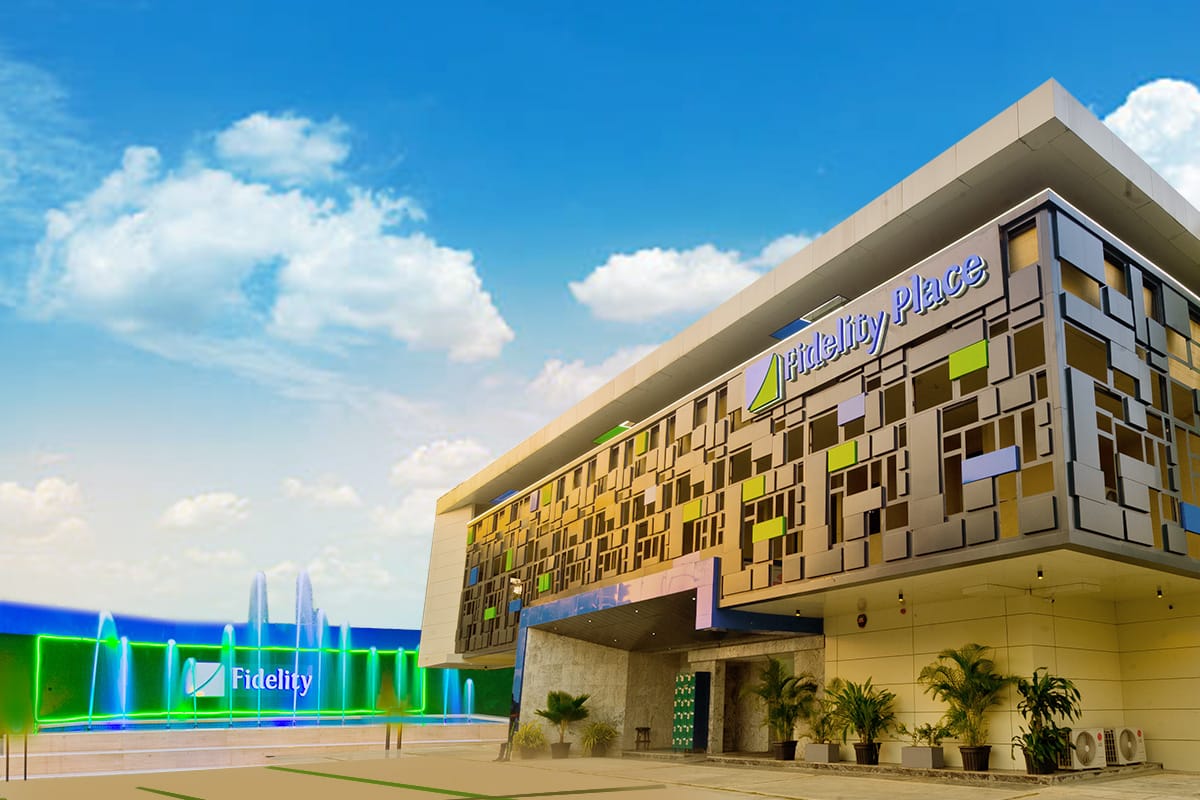
Fidelity Bank grows gross earnings by 38% to N434.95b in Q1
Fidelity Bank Plc recorded 37.9 per cent growth in gross earnings to N434.95 billion in first quarter 2026 as the international commercial bank continued to expand its core banking market share.
Interim report and accounts of Fidelity Bank for the three months ended March 31, 2026 released at the Nigerian Exchange (NGX) showed that gross earnings rose from N315.42 billion in first quarter 20025 to N434.95 billion in first quarter 2026, representing an increase of 37.9 per cent.
The top-line performance was driven by impressive growth in the bank’s core business operations with interest incomes rising by 22.8 per cent to N314.48 billion in first quarter 2026 as against N256.10 billion in first quarter 2025.
With net interest income at N180.97 billion, the bank closed the period with profit before tax of N92.48 billion. After taxes, net profit stood at N74.47 billion for the three-month period. Earnings per share remained high at N5.69, underlining the capacity of the bank to reward its shareholders.
The balance sheet of the bank also emerged stronger. Total assets crossed the N11 trillion mark to N11.35 trillion by March 2026 compared with N10.46 trillion recorded in December 2025. Customers’ deposits increased from N6.89 trillion to N7.38 trillion. Total equity rode on the back of earnings growth to a 27.5 per cent increase from N1.09 trillion in December 2025 to N1.39 trillion by March 2026.
The first quarter 2026 results further consolidated the strong earnings outlook of the bank, which had successfully completed its recapitalisation amidst impressive earnings performance in 2025.
Fidelity Bank had recorded double-digit growths in interest and non-interest incomes as well as key balance sheet items during the year ended December 31, 2025.
The audited report showed that gross earnings rose from N1.04 trillion in 2024 to N1.52 trillion in 2025, an increase of 45.6 per cent. Interest and similar incomes had grown by 38.7 per cent from N803.1 billion in 2024 to N1.11 trillion in 2025. Fees and commission incomes also rose by 44.7 per cent from N78.4 billion to N113.4 billion. The bank recorded net profit after tax of N242.4 billion in 2025.
The bank’s balance sheet emerged stronger with total assets rising by 18.6 per cent to N10.46 trillion in 2025 as against N8.82 trillion in 2024. Customer deposits increased by 16.1 per cent from N5.94 trillion to N6.89 trillion, reflecting continued franchise strength and an improved funding profile. Net loans and advances meanwhile declined by 2.4 per cent to N4.28 trillion in 2025 as against N4.39 trillion in 2024, attributable to customers paying down on their mature obligations.
The bank had in 2025 strengthened its capital position, with eligible capital rising to N561 billion, above the regulatory minimum of N500 billion for banks with international authorisation. In addition, capital adequacy had remained robust, with Capital Adequacy Ratio of 30.94 per cent by December 2025 as against 23.47 per cent by December 2024.
Managing Director, Fidelity Bank Plc, Dr. Nneka Onyeali-Ikpe, said the first quarter 2026 results reinforced the bank’s strong and resilient business model.
She noted that with the remarkable success of its recapitalisation programme and continuing expansion, Fidelity Bank has entered a new era of growth and impressive returns.
“We are on a stronger footing and confident that we will set new growth records that are reflective of our legacy and the future we are working on,” Onyeali-Ikpe said.
Business
Dangote Refinery Ends Nigeria’s Era of Fuel Import Dependence, Boosts GDP, FX Earnings — EIU
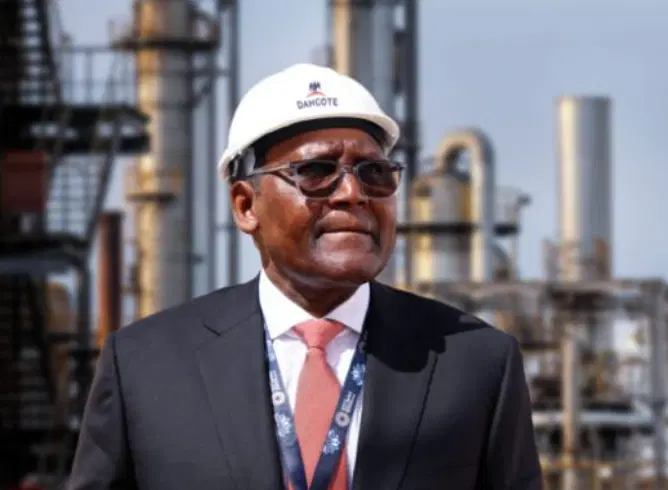
Dangote Refinery Ends Nigeria’s Era of Fuel Import Dependence, Boosts GDP, FX Earnings — EIU
The operational ramp up of the 650,000 barrels per day Dangote Petroleum Refinery & Petrochemicals is fundamentally reshaping Nigeria’s downstream oil sector, significantly reducing the country’s dependence on imported refined petroleum products and strengthening its external position, according to the Economist Intelligence Unit (EIU).
In its latest assessment on Nigeria’s fuel market and regulatory environment, the EIU said the refinery has already transformed a sector that was previously characterised by heavy reliance on imported fuel despite Nigeria being Africa’s largest crude oil producer. The report noted that the refinery met nearly 80 per cent of domestic petrol demand in April and produced enough volumes to satisfy local consumption requirements as operations approached full capacity.
The EIU described Nigeria’s downstream petroleum sector before the refinery as “long dysfunctional”, noting that the country had remained almost entirely dependent on costly imported fuel while producing nearly 1.5 million barrels of crude oil daily.
According to the report, the emergence of the refinery has reduced import dependence, improved domestic fuel availability and strengthened Nigeria’s balance of payments position through lower import demand and rising exports of refined petroleum products.
“The gradual ramp up of the 650,000 barrel/day Dangote refinery since May 2023 has transformed Nigeria’s long dysfunctional downstream sector,” the report stated. “The country’s main refineries, all state owned, had been inoperative for years and Nigeria was almost entirely reliant on costly imported fuel.”
The research and analysis division of The Economist Group, London added that the refinery’s attainment of full operational capacity and its planned expansion would further support Nigeria’s economic growth and foreign exchange earnings over the medium term.
“Meanwhile, the attainment of full capacity at, and an increase in exports from, the Dangote refinery will support real GDP growth and foreign exchange earnings in 2026 and 2027 and beyond, as a planned doubling of the plant’s output comes on stream around the end of the decade,” it added.
Industry analysts said the refinery is increasingly positioning Nigeria as an emerging refining and export hub, altering energy trade flows across Africa and reducing the vulnerability associated with fuel import dependence.
The EIU noted that the refinery’s expansion has coincided with major reforms in Nigeria’s downstream sector, including the removal of fuel subsidies and the introduction of market driven pricing mechanisms.
The report, however, said the transition from a state dominated fuel import structure to large scale domestic refining has triggered resistance from interests linked to the old import regime.
The latest tensions emerged following the decision by the Nigerian Midstream and Downstream Petroleum Regulatory Authority to relax restrictions on petrol imports despite the refinery’s growing capacity to meet domestic demand.
Dangote Industries subsequently initiated legal action, arguing that continued import approvals undermine domestic refining investments and conflict with the objectives of the Petroleum Industry Act, which seeks to encourage local refining capacity and reduce import dependence.
Analysts noted that the availability of large-scale domestic refining capacity has improved Nigeria’s energy security and reduced exposure to external supply shocks and foreign exchange volatility.
The Centre for the Promotion of Private Enterprise also cautioned against unrestrained importation of petroleum products, warning that such a policy could weaken Nigeria’s industrialisation drive and discourage investments in domestic refining.
Chief Executive Officer of CPPE, Muda Yusuf, said continued dependence on imported fuel had historically contributed to pressure on foreign reserves, exchange rate instability and fiscal leakages.
The refinery’s growing impact is also being reflected in Nigeria’s broader macroeconomic indicators. Earlier this month, S&P Global Ratings cited increased domestic refining capacity and rising hydrocarbon exports among the major factors supporting Nigeria’s sovereign credit rating upgrade – the first in 14 years.
Beyond Nigeria, analysts said the refinery is increasingly being viewed as a strategic industrial asset for Africa, where many countries remain heavily dependent on imported fuel despite rising demand for transportation, manufacturing, and power generation.
Business
BREAKING: Court Dismisses $19.6 Million Claim Against NNPCL — Rules Contract Scope Cannot Be Changed Orally
BREAKING: Court Dismisses $19.6 Million Claim Against NNPCL — Rules Contract Scope Cannot Be Changed Orally
In a landmark ruling on Friday, May 22, 2026, the Federal Capital Territory High Court in Abuja threw out a $19.6 million lawsuit filed by Alternate Dimensions Ventures Ltd against the Nigerian National Petroleum Company Limited (NNPCL), affirming a key legal principle: a written contract cannot be expanded through oral agreements or conduct.
Alternate Dimensions had sought $19,600,000 in professional fees, claiming the scope of its Direct Sale, Direct Purchase (DSDP e-pro) contract with NNPCL was orally expanded. Represented by counsel Patrick Peter, the firm argued it was entitled to the revised sum for services rendered under the alleged new terms.
But NNPCL, through its lawyer Ituah Imhanze of KENNA LP, pushed back sharply, arguing that parties are bound exclusively by the clear terms of their written agreement. Imhanze contended that without any written amendment, the claim was legally unsound, and the court agreed.
Delivering judgment, Justice Hamza Mu’azu upheld NNPCL’s defense, stating that the contract was unambiguous and that no evidence was adduced during the trial, which supported the alleged scope expansion. The court further found that NNPCL fully complied with all contractual terms and committed no breach.
Dismissing the suit as meritless, Justice Mu’azu reinforced the doctrine of sanctity of contract: any amendment to a written agreement must be express, unequivocal, and documented, not implied or verbal.
The ruling spares NNPCL from the S19.6 million claim and also a floodgate of similar potential liabilities.


- When women farm better, Eswatini eats better June 3, 2026
- Togo Hosts the 8th Annual Forum of National Volunteer Agencies in the Economic Community of West African States (ECOWAS) Region June 3, 2026
- Indigenous Peoples gravely vulnerable to Ebola epidemic, warn United Nations (UN) independent experts June 3, 2026
- Meeting between Parliamentary Vice-Minister ONISHI and His Excellency (H.E.) Mr. Cosgrow, Principal Minister and Minister for Agriculture, Fisheries and Blue Economy of Seychelles June 3, 2026
- Eritrea: Construction of Elementary School in Gogni Sub-Zone June 3, 2026
- African Union Commission (AUC) Chairperson His Excellency (H.E.) Mahmoud Ali Youssouf highlighted thePermanent Representatives’ Committee (PRC) critical role in advancing the Union’s agenda and laying the groundwork for the forthcoming Mid-Year Coordination Meeting (MYCM) June 3, 2026
- Eritrea: Eighth Grade National Examination Commences June 3, 2026
- Many Africans see justice system as unequal, costly, and slow, Afrobarometer survey reveals June 3, 2026
- Prof. Benedict Oramah to Chair Finance Summit as African Energy Week (AEW) 2026 Prepares for Major Deal Flow June 3, 2026
- The Islamic Development Bank (IsDB) Group Affiliates to Host the 14th Private Sector Forum in Baku, Azerbaijan (16-19 June 2026) June 3, 2026
- When women farm better, Eswatini eats better June 3, 2026
- Togo Hosts the 8th Annual Forum of National Volunteer Agencies in the Economic Community of West African States (ECOWAS) Region June 3, 2026
- Indigenous Peoples gravely vulnerable to Ebola epidemic, warn United Nations (UN) independent experts June 3, 2026
- Meeting between Parliamentary Vice-Minister ONISHI and His Excellency (H.E.) Mr. Cosgrow, Principal Minister and Minister for Agriculture, Fisheries and Blue Economy of Seychelles June 3, 2026
- Eritrea: Construction of Elementary School in Gogni Sub-Zone June 3, 2026
- African Union Commission (AUC) Chairperson His Excellency (H.E.) Mahmoud Ali Youssouf highlighted thePermanent Representatives’ Committee (PRC) critical role in advancing the Union’s agenda and laying the groundwork for the forthcoming Mid-Year Coordination Meeting (MYCM) June 3, 2026
- Eritrea: Eighth Grade National Examination Commences June 3, 2026
-

 news6 months ago
WHO REALLY OWNS MONIEPOINT? The $290 Million Deal That Sold Nigeria’s Top Fintech to Foreign Interests
-

 society1 month ago
SOCIAL MEDIA IS NOT A BATTLEFIELD COMMAND – WHY THE NIGERIAN ARMY’S ACTION AGAINST JUSTICE CRACK IS A NATIONAL SECURITY IMPERATIVE
-

 celebrity radar - gossips4 months ago
Dr. Chris Okafor Returns with Power and Fire of the Spirit -Mounts Grace Nation Altar with Fresh Anointing and Restoration Grace on February 1, 2026
-

 celebrity radar - gossips6 months ago
Prophet Kingsley Aitafo Releases 2026 Prophecy: ‘Nigeria Will Rise, but the World Must Prepare for Turbulence’
You must be logged in to post a comment Login
You must log in to post a comment.