
celebrity radar - gossips
NAOSRE Felicitates With FRSC At 33 As Kazeem, Ogungbemide Assure Safer Travels

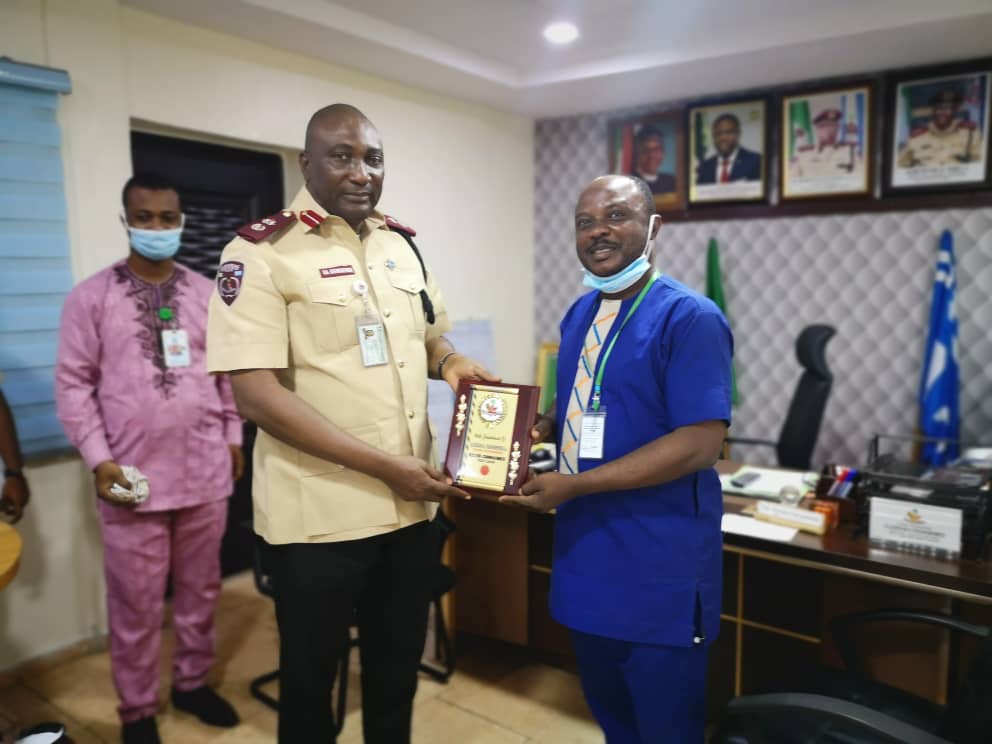
Assistant Corps Marshal, ACM, and Corps Public Education Officer, Bisi Kazeem, and the Sector Commander RS2.1 Lagos, Corps Commander Olusegun Ogungbemide of the Federal Road Safety Corps, FRSC, have reinstated the commitment of the Commission to provide excellent services in eradicating road traffic crashes and safer motoring environment through enhanced professionalism as the commission marks its 33 years of creation.

The Commission was created in February 1988 by the Federal Government to among other things, regulate, enforce and coordinate all road traffic and safety management activities.
Speaking during a courtesy visit to the Sector Commander RS2.1 Lagos by the National Association of Online Security Reporters, NAOSRE on Thursday led by the association’s President Mr. Femi Oyewale, Corps Commander Olusegun Ogungbemide re emphasized the important role of the commission in the country’s security and safety architecture by ensuring road safety and effective traffic management.
He noted that though the past 33 years may have been challenging, the Commission has established itself as foremost on the continent as an agency that has entrenched an appreciable degree of safety on the roads in line with global best practice.
Ogungbemide however sued for more media supports in enlightening the public about the activities of the Corps to promote compliance.
“I see today as a great privilege to host NAOSRE. I thank you for monitoring us and presenting the public with balanced reportage about our activities. We value our relationship with the media and we seek more co operation for better and public enlightenment about the Road Safety Corps,” he requested.
Earlier, Oyewale Femi thanked the Commission for honouring the association Security Dinner Discourse event which held on December 11, 2020 at Oriental Hotel Lagos.
He explained that the essence of the courtesy visit was to felicitate with the Commission on the occasion of their 33rd anniversary and seek better working relationship for a safer Nigeria.
Oyewale emphasized the association’s commitment to promoting the activities of security agents through unbiased reportage and vowed to sustain the professionalism the association is noted for.
“The physical presence of the Federal Road Safety Commission at our Dinner Discourse event in December 2020 year was the needed conviction of the cordial working relationship between NAOSRE and FRSC. We cherish our relationship with you and that informs the reason we are also here today to felicitate with you on the occasion of your 33rd anniversary. You can count on NAOSRE always,” Oyewale assured.
In a statement by the Corps spokesman, Bisi Kazeem made available to NAOSRE, the Commission disclosed that it has recorded tremendous achievements in the area of Traffic Engineering, Road Safety Administration, Traffic Management, rescue operation, and crash reduction in its 33rd year of creation.
It noted that it has achieved this glorious feat, as a result of a chain of leadership ingenuity that led to the fusion of the services of volunteers called Special Marshals and social responsibility groups in its programmes to enhance road safety management in Nigeria.
The statement titled “33 Years Of Road Safety Administration, Traffic Management In Nigeria, Journey So Far,” Assistant Corps Marshal Bisi Kazeem explained that FRSC defines its cause in tandem with UN Decade of Action as well as the mantra of functional 21st adding that the Commission is committed to transparent evaluation of trends and sustained drive for improved performance.
Bisi Kazeem’s statement reads in part:
“The establishment of the Federal Road Safety Commission (FRSC) in 1988, as the Lead Agency in road safety administration and traffic management in Nigeria via decree no 45 of 1988 as amended by decree no 35 of 1992, later codified as FRSC Act (CAP 141) Laws of the Federation 1990 and FRSC Act CAP F19, LFN, 2004; FRSC (Establishment) Act, 2007 is to address the ugly trend of road crashes.
“The FRSC has, since its establishment operated in line with best global practices to achieve this cardinal mandate of saving lives without compromise by religiously walking the path of honour in efficient service conveyance, by delivering high quality services in line with a Quality Management Policy that is not at variance with other laws of the land in respect to road safety administration and management in the country.
“In its thirty three years as lead agency in traffic and safety management, FRSC has recorded tremendous achievements in the area of Traffic Engineering, Road Safety Administration, Traffic Management, rescue operation, and Crash reduction. It has achieved this glorious feat, as a result of a chain of leadership ingenuity that led to the fusion of the services of volunteers called Special Marshals and social responsibility groups in its programmes to enhance road safety management in Nigeria.
“To this end, road safety administration in Nigeria has witnessed a paradigm shift from Traditional approach to Safe Systems Approach through the use of state of the art Information Technology facilities; the Corps has been able to enhance its operational capacity aimed at promoting public safety and security. The Corps under different governmental and administrative leaderships has proven to allay the menace of road traffic crashes in the past 33 years.
“Again, it is noteworthy to look at the direction of the present leadership of Dr Boboye Oyememi’s swift response to the incessant abuse of traffic rules which led to the putting together of the OPERATION COBRA to address certain life-threatening traffic-related offences. This singular step has become instrumental to the decline in crash rate as offenders apprehended by the Operation Cobra squad are usually referred to a government health facility for Emotional Stability Test. Oyeyemi’s Management has so far constructed and inaugurated 16 permanent structures in various Sector commands, with other two awaiting inauguration.
“To achieve the stated targets, the Corps has developed transformational initiatives focused on People, Processes and Technology (PPT) that is why today not only does its staff pride as the most disciplined but the Corps stands as the best Information Technology (IT) driven organization in Nigeria with its robust data base and over 95 percentage digitalized administrative and operational procedures.
“It is therefore expedient to state that the era covering the period of reign of the present Corps Marshal, Dr. Boboye Oyeyemi, and establishment of State Traffic Agencies was encouraged to further complement the function of the FRSC within the states. The Corps also embarks in consultation with stakeholders who have become more involved through the mechanism of the special marshals, celebrity Special Marshals and road Safety clubs. The deployment of FRSC personnel to Tank Farms has to a large degree, dwindled the rate of crashes associated with articulated vehicles, particularly tankers carrying petroleum products.
“Through its Safe-to- Load initiative, articulated vehicle have been subjected to checks before they are allowed to load from the various depots across the country with trained personnel of the Corps undertaken routine checks to ensure strict compliance.
“In pursuit of aggressive public enlightenment programme, the FRSC Management under him established the National Traffic Radio 107.1 FM in October, 2019 as a medium for educating mass members of the public on traffic matters and updating them of road conditions across the country. The Corps further introduced a massive welfare scheme through the Post Service Scheme and the 20,000 Housing project for Staff,” Kazeem stated.





Beauty Meets Glamour as Olaide Ogunyemi Opens New Studio in Mushin
Popular Nollywood actress and professional makeup artiste, Olaide Ogunyemi Oluwayemisi aka Damilola, has expanded her footprint in the beauty industry with the grand opening of her new makeup studio in Lagos.
The talented thespian, who is also the Chief Executive Officer of @Dobc_makeovers_andmore, officially unveiled the ultra-modern beauty space last Thursday, April 2, 2026, in a colourful ceremony filled with glamour, fashion, and pageantry.
Strategically located at 101 Palm Avenue, right beside FitPlus and Sparklight Hospital in Mushin area of Lagos, the new studio is designed to offer top-notch beauty services, reflecting Ogunyemi’s commitment to excellence and professionalism in the ever-growing makeup industry.
The opening ceremony attracted friends, colleagues from the Nollywood industry, beauty enthusiasts, and well-wishers who came out in large numbers to celebrate the entrepreneur’s latest milestone. Guests were treated to a vibrant atmosphere that showcased creativity, style, and the evolving standards of the beauty business in Lagos.
Speaking at the event, Ogunyemi expressed her excitement and gratitude, noting that the new studio represents years of hard work, dedication, and passion for her craft. She reaffirmed her commitment to delivering premium beauty services while empowering aspiring makeup artistes.
The launch of the studio further cements her reputation as a dynamic force, successfully blending her career in Nollywood with a thriving beauty brand.
With this latest development, Olaide Damilola Ogunyemi continues to inspire many young entrepreneurs, proving that talent, consistency, and vision remain key drivers of success in Nigeria’s creative and business landscape.


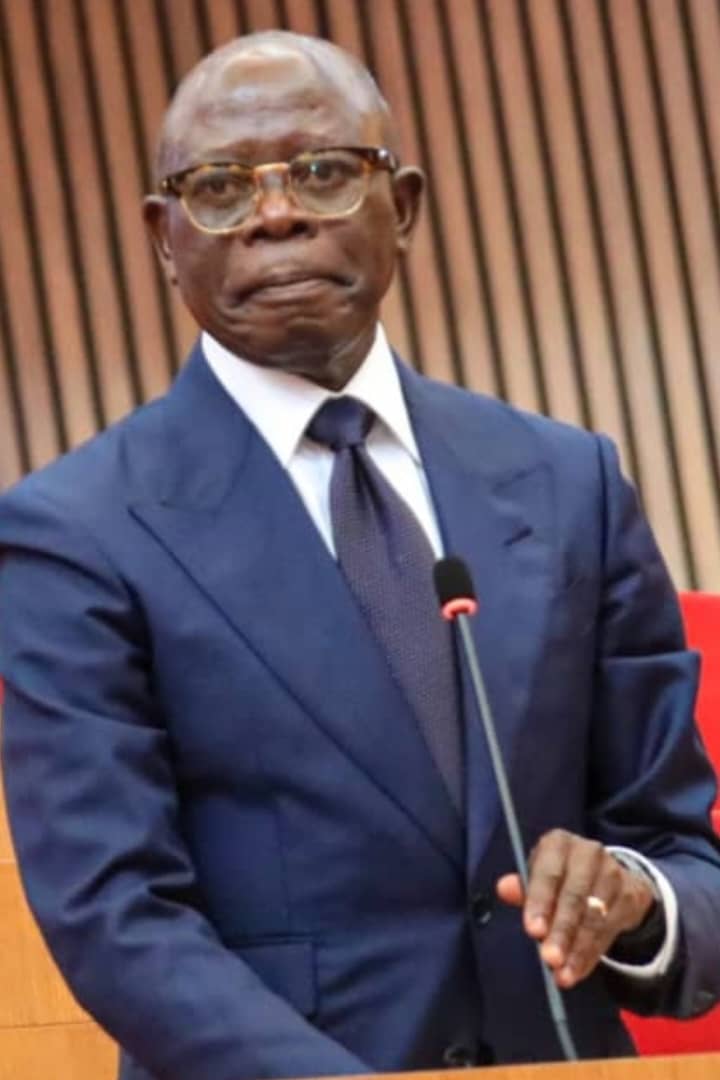
Daniel Eromosele Eulogize Adams Oshiomole as he turns 74 years
Today, I celebrate an exceptional leader, a fearless voice for the people, and a man whose life has remained a symbol of courage, sacrifice, and unwavering commitment to justice—Distinguished Comrade Senator Adams Aliu Oshiomhole.

Your journey has been nothing short of inspiring. From your days as a vibrant labour leader to your impactful tenure as the Executive Governor of Edo State, and now as a respected Senator of the Federal Republic, you have consistently demonstrated what it means to serve with integrity, strength, and purpose. Your contributions to the growth of our nation and the development of Edo State remain indelible and deeply appreciated.
You have not only built structures and institutions but have also built people. I am personally a beneficiary of your leadership, your guidance, and your belief in empowering others. Your influence in my life has been profound, and I remain grateful for the opportunities and inspiration you have given me.
On this special day, I celebrate not just your achievements, but the man you are—resilient, principled, and ever committed to the progress of Nigeria and her people.

May this new year bring you renewed strength, greater wisdom, good health, and more remarkable accomplishments. May your legacy continue to shine brighter with each passing year.
Happy Birthday, sir. Wishing you many more fruitful and impactful years ahead.
celebrity radar - gossips
Accolades to Empress Genevieve Wining as she Celebrate birthday in Grand style

Accolades to Empress Genevieve Wining as she Celebrate birthday in Grand style
Emmanuel Clement
Vilnius, Lithuania – The Grand Hotel Vilnius will host a grand birthday celebration in honor of Her Majesty The Empress Genevieve Wining of the United Kingdom of Atlantis (UKA) on April 4th, 2026.
The four-day event promises to be an extravagant affair, marking the special birthday of Empress Genevieve Wining. The celebration will take place at the prestigious Grand Hotel Vilnius, Lithuania, renowned for its luxurious ambiance and exceptional service.

According to the event flyer, the birthday celebration will be a spectacular occasion, fitting for an empress. Guests can expect an elegant setting adorned with golden accents, sparkling champagne, and festive decorations, creating a regal atmosphere befitting the occasion.
The Empress Genevieve Wining of UKA is expected to grace the event, which will include various festivities and celebrations in her honor. The occasion aims to bring together dignitaries, followers, and guests to commemorate the empress’s birthday with grandeur and joy.
For media inquiries, accreditation, or further information about the birthday celebration of The Empress Genevieve Wining of UKA, please contact the event organizers.
Courtesy of His Excellency Emperor Prof. Solomon Wining. UKA


-

 society7 months ago
Religion: Africa’s Oldest Weapon of Enslavement and the Forgotten Truth
-

 news4 months ago
WHO REALLY OWNS MONIEPOINT? The $290 Million Deal That Sold Nigeria’s Top Fintech to Foreign Interests
-

 society7 months ago
“You Are Never Without Help” – Pastor Gebhardt Berndt Inspires Hope Through Empower Church (Video)
-

 celebrity radar - gossips2 months ago
Dr. Chris Okafor Returns with Power and Fire of the Spirit -Mounts Grace Nation Altar with Fresh Anointing and Restoration Grace on February 1, 2026