
society
NDUME’S TRUTH, ASO ROCK’S SILENCE


NDUME’S TRUTH, ASO ROCK’S SILENCE.
George Omagbemi Sylvester | Published by SaharaWeeklyNG.com
“When Silence Becomes Complicity: Senator Ndume Exposes Corruption and Incompetence at the Heart of Aso Rock”
Two days ago, a veteran senator, Ali Ndume, tore off the veneer of polite politics on national television and laid bare what many Nigerians already know; yet fear to say. Speaking on Arise TV, Ndume accused the Bola Ahmed Tinubu‑led administration of corruption so brazen that even the hallowed walls of the Aso Rock Presidential Villa remain silent. By now, the silence from the presidency isn’t simply deafening, it has become a sign of tacit complicity.
Senator Ndume did not mince words. He asserted that the Tinubu regime is dominated by “KAKISTOCRATS” (meaning those least qualified to hold office) and “KLEPTOCRATS” (meaning thieves masquerading as leaders). These are not rhetorical barbs but issues of survival: “The people who are supposed to help him are the ones deceiving him or damaging his image,” he warned.
More damning still, Ndume says that even accessing the President is blocked by a crude question: “owo da?” (“Where is money?”) — in other words, “What payoff are you bringing?” He says this is the experience of everyone wanting a meeting with the presidency. Pending no refutation from Aso Rock, the claim stands.
The presidency’s silence is no accident. It is calculated. Because if the Presidency were to respond with rebuttal or justification, then the matter would enter the arena of accountability. Silence, by contrast, suggests one of two things: either the presidency lacks confidence in its own position, or it actually agrees (just without saying so). In either scenario, Nigerians lose.
The Reality of Governance Under Tinubu. Let us take stock. This is a regime in which:
A minister removed for corruption walks free; supporters call for her recall rather than prosecution.
A minister is observed driving a Rolls‑Royce, replies “and so?” when asked; yet claims to have never worked his entire life.
Land allocation receipts fly left, right, front and centre to children, cronies, family members. The minister defends them.
Million‑dollar houses in the United States tied to sitting ministers? Allegations exist. And on the Nigerian side, the presidency and the anti‑graft agencies like Economic and Financial Crimes Commission (EFCC) and Independent Corrupt Practices and Other Related Offences Commission (ICPC) act like ostriches: see no evil, hear no evil, speak no evil.
Meanwhile, the citizenry struggles under groaning economic hardship, soaring inflation, a faltering currency, indefinite power outages, insecurity unchecked and the sense that state resources vanish into private pockets.
These are not fanciful stories. The facts, in many cases, are public. One study by Chatham House shows that Nigeria still ranks among the top 40 most corrupt countries globally and counts among the lowest performing in governance indices.
As one scholar put it: “The trouble with Nigeria is simply and squarely a failure of leadership.” That failure becomes grotesque when state institutions meant to enforce transparency are rendered toothless by the very regime they are supposed to police. Prof. John Oyedepo of the University of Lagos notes: “Governance without accountability is not governance; it is legalized robbery.”
Why Ndume’s Accusations Matter. Why do these allegations from a senator of the ruling party matter? Because it signals that the rot is not external but internal. When a loyalist stands up, when a Senate leader turns whistle‑blower, the crisis is deeper than opposition bravado, it is a systemic collapse.
Ndume’s charge that the government is run by “KAKISTOCRATS and KLEPTOCRATS” is not mere hyperbole. He defined the two: kakistocrats are “people holding positions they are not supposed to be in”; kleptocrats are “those in politics for personal gain, not public service.”
And he explained the damage in sharp terms: “The President cannot go out to the streets like I do and know how the people feel. Even outside the Villa they drive him in tinted glass so he doesn’t even see what is going on.”
This is governance by isolation, cushioned by privilege, and cushioned further by silence. When insiders begin to speak, one might hope for correction. But the silence from Aso Rock has been total. It is not just negligence; it is abdication of moral leadership.
The Silent President, The Loud Reality. The contrast is stark: the presidency enjoys pomp, ceremony, tinted limousines, and global photo‑ops — yet at home, the people suffer. The gap between public image and private record has never been greater.
Government supporters rush to defend with excuses. The All Progressives Congress (APC) Youth Network responded to Ndume’s previous comments by calling them “misleading”, “reckless”, and “unbecoming of a ranking legislator.” But defence does not equate to performance. And signals of crisis remain.
Anti‑graft agencies boast of recoveries; the EFCC claimed it recovered nearly half a billion dollars in one year, according to SaharaWeeklyNG.com. But even that pales when stripped against the scale of the problem. Recoveries are reactive; prevention would require structural reform; which remains absent. Dr. Akin Oyebode, a governance analyst, adds: “The issue is not just theft, it is normalization of theft in governance. That is the real danger.”
A Call to Recognition, Not Defeatism. Let us be clear: pointing out corruption, incompetence, and patronage is not defeatism; it is news, it is accountability, it is citizenship.
As Dr Ngozi Okonjo‑Iweala remarked years ago: “People have lost faith. They don’t believe anyone can serve their country”. When those within the regime echo that sentiment, the rupture between the people and the powerful becomes undeniable.
We must demand of the presidency: respond. We must demand of the anti‑graft agencies: act. We must demand that governance be more than display, more than cameras, more than slogans of fiscal reform, it must translate into integrity, transparency, responsibility, service.
The silence of Aso Rock is a vacuum. Into that vacuum seep cronyism, entitlement and theft. It is not enough for the president to say, “Be patient.” Patience has limits when citizens watch national coffers bleed and personal fortunes blossom. Prof. Chukwuemeka Eze notes, “Corruption thrives in silence. Confronting it requires courage, even from those within the system.”
The Take Away and The Road Forward. Senator Ndume’s words ring with conviction because they reflect lived experience and structural breakdown. The pharmaceutical term for this: when help is expected from institutions, but the institutions themselves have become carriers of the disease.
The presidency’s failure (or refusal) to respond is neither trivial nor temporary. It reveals dysfunction at the core of state leadership. The crisis is not only that some individuals are corrupt; the crisis is that the system accommodates them, protects them, remains inert.
This moment will not be measured by the allegations alone. It will be measured by response; by whether the presidency and its proxies choose silence and shield, or accountability and reform. The people of Nigeria deserve an administration that listens, not one that ignores; one that sees, not one that is driven past in tinted glass. They deserve leaders of competence and character; not the least suitable or the most brazen thieves cloaked in power.
Senator Ndume spoke. The question now is: who will answer?





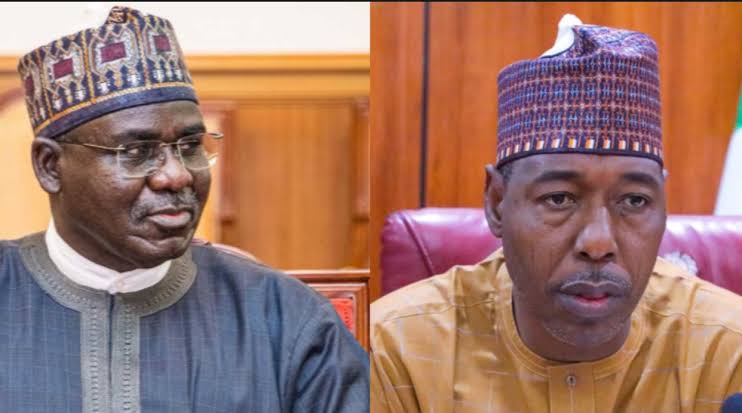
TY BURATAI HUMANITY CARE FOUNDATION COMMENDS GOVERNOR ZULUM FOR HELPING MILITARY FAMILIES
The TY Buratai Humanity Care Foundation has commended Borno State Governor Babagana Umara Zulum for his generous donation of ₦150 million to the families of three military officers who were tragically killed in recent attacks. Each family received ₦50 million as part of the state’s continued commitment to supporting fallen heroes and wounded personnel involved in counter-insurgency operations.
The commendation was contained in a statement signed by the foundation’s chairman, Ibrahim Dahiru Danfulani Sadaukin Garkuwan Keffi/Betara Biu, and made available to the press.
The foundation expressed gratitude for the governor’s compassionate gesture, which included personal visits to the families of the late Lieutenant Colonels Umar Farouq, Salihu Iliyasu, and Aliyu Saidu Paiko in Abuja, Niger, and Kano States. During the visits, Governor Zulum offered his condolences and praised the service, sacrifice, and patriotism of the fallen officers.
The foundation’s Grand Patron, His Excellency, Lieutenant General Tukur Yusufu Buratai, CFR (Rtd), personally commended the governor’s dedication to improving the lives of Borno State residents. He also extended his condolences to the families of the officers and soldiers who made the ultimate sacrifice in service to the nation.
During his visits, Governor Zulum reaffirmed his administration’s commitment to supporting bereaved families, which includes offering scholarships to the orphaned children of fallen personnel. He pledged to extend similar visits to other affected families, underscoring a compassionate approach to addressing the needs of those who have suffered in the line of duty.
society
Queen Amb Dr. Nwamaka Cordelia Anyatonwu Appointed Minister of Humanitarian, Culture, and Kingdom Affairs, United Kingdom of Atlantis
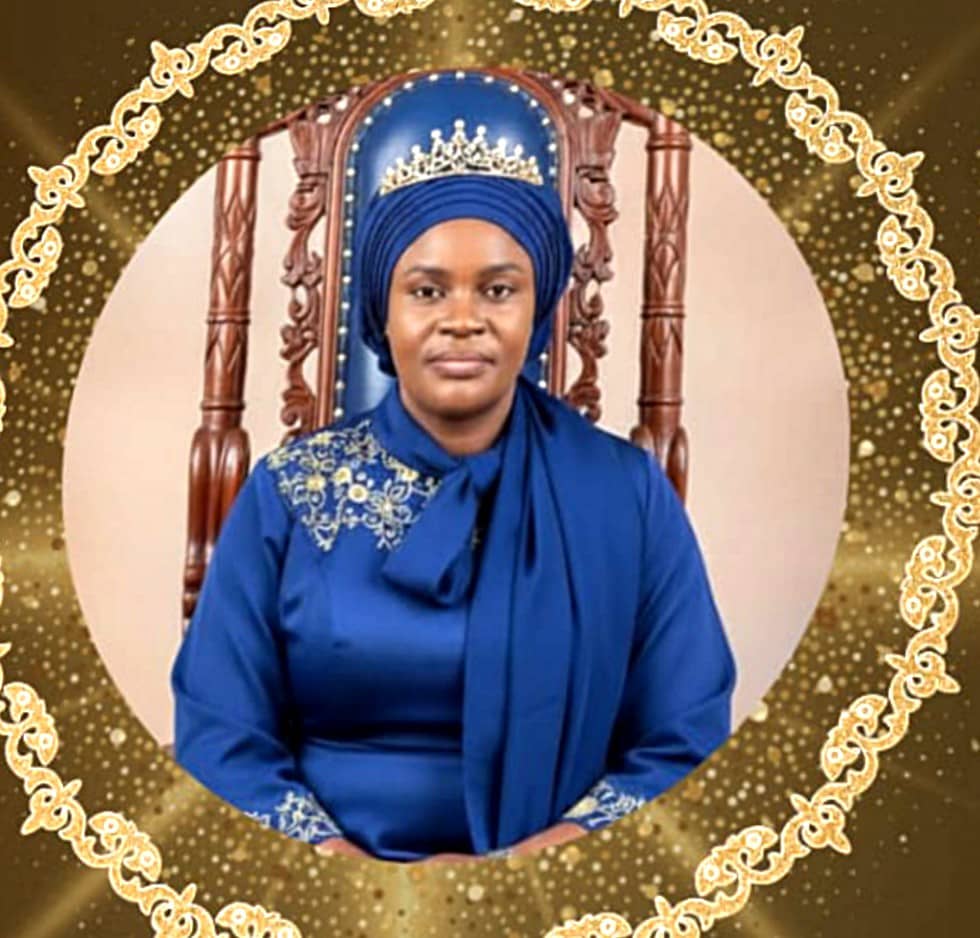
*Queen Amb Dr. Nwamaka Cordelia Anyatonwu Appointed Minister of Humanitarian, Culture, and Kingdom Affairs, United Kingdom of Atlantis
Her Majesty Queen Amb Dr. Nwamaka Cordelia Anyatonwu, Queen of the Aches Empire under the jurisdiction of the United Kingdom of Atlantis (UKA), has been appointed as the Minister of Humanitarian, Culture, and Kingdom Affairs, effective immediately.
This appointment comes as the UKA takes decisive steps to strengthen its humanitarian efforts and protect its citizens from unauthorized activities. In light of recent developments, the UKA has issued an official public disclaimer cautioning citizens, followers, and the general public about the activities of individuals promoting and operating a coin or platform not officially recognized by the Atlantian Gold Coin (ATC). This follows the hijacking of the 5 billion humanitarian project, a move that has been met with concern and condemnation from the international community.
As the newly appointed Minister, Queen Amb Dr. Anyatonwu has announced that all matters pertaining to the 5 billion humanitarian project in UKA should be directed to her office. This includes the newly captured NGOs, which are now required to report to the Office of Humanitarian Affairs, ensuring transparency and accountability in the management of humanitarian resources.
“We are committed to transparency and accountability in our humanitarian efforts,” said Queen Amb Dr. Anyatonwu. “We urge all stakeholders to work with us to ensure the success of our initiatives and protect our citizens from unauthorized activities. We will not tolerate any form of exploitation or mismanagement of humanitarian funds, and we will take all necessary measures to ensure that those responsible are held accountable.”
The UKA has assured its citizens and the international community that it is taking all necessary measures to recover the hijacked funds and bring the perpetrators to justice. The appointment of Queen Amb Dr. Anyatonwu is seen as a significant step towards achieving this goal and ensuring that humanitarian efforts are aligned with the UKA’s values and principles.
For more information. Please contact the Office of the Minister of Humanitarian, Culture and Kingdom Affairs.
*About the United Kingdom of Atlantis*
The United Kingdom of Atlantis is a sovereign nation committed to promoting peace, prosperity, and humanitarian values. The UKA is dedicated to working with international partners to address global challenges and improve the lives of its citizens and people around the world.
NASRE: Building A Safety Net For Nigeria’s Journalists
At a time when Nigeria’s media industry is strained by economic uncertainty, job instability, and shrinking newsroom resources, the Nigerian Association of Social and Resourceful Editors (NASRE) is redefining professional solidarity. More than a network of editors, it is emerging as a critical support system for journalists navigating an increasingly precarious landscape.
Founded on the principles of welfare, solidarity, and professional growth, NASRE has positioned itself as a responsive and forward-looking body within the media ecosystem. While many professional associations remain focused on advocacy and training, NASRE distinguishes itself by combining these roles with direct and practical support for journalists and their families.
At the core of its mission is a clear proposition that no journalist should be abandoned in times of need. Through financial assistance, targeted outreach, and sustained engagement, the association has supported members facing hardship, as well as widows and families of deceased practitioners. These largely understated interventions have steadily earned NASRE credibility and respect across the industry.
The organisation’s approach reflects a keen awareness of the pressures confronting media professionals, including irregular pay, job insecurity, and limited institutional backing. In such an environment, NASRE’s welfare initiatives are not merely charitable, they are essential.
Beyond welfare, the association is investing in professional resilience. Through collaboration, networking, and knowledge-sharing platforms, it is equipping editors and practitioners to remain competitive in a rapidly evolving digital media space, where adaptability is no longer optional.
Headquartered in Lagos, NASRE continues to broaden its reach, attracting a growing membership united by the need for a more responsive and supportive professional community. Its expansion signals a shift in expectations within the industry, away from symbolic affiliations towards institutions that deliver measurable value.
For many observers, NASRE represents a necessary evolution, a professional body anchored not just in ideals, but in impact. By combining empathy with structure, it offers a model of what media associations can become in challenging times.
As the industry continues to evolve, organisations like NASRE may prove indispensable. In a profession devoted to telling society’s stories, it is ensuring that the storytellers themselves are not left behind.


-

 society6 months ago
Religion: Africa’s Oldest Weapon of Enslavement and the Forgotten Truth
-

 news4 months ago
WHO REALLY OWNS MONIEPOINT? The $290 Million Deal That Sold Nigeria’s Top Fintech to Foreign Interests
-

 society6 months ago
“You Are Never Without Help” – Pastor Gebhardt Berndt Inspires Hope Through Empower Church (Video)
-

 celebrity radar - gossips2 months ago
Dr. Chris Okafor Returns with Power and Fire of the Spirit -Mounts Grace Nation Altar with Fresh Anointing and Restoration Grace on February 1, 2026