
society
Nigeria at a Crossroads: The Struggle of the Ordinary Citizen Amidst Systemic Failures

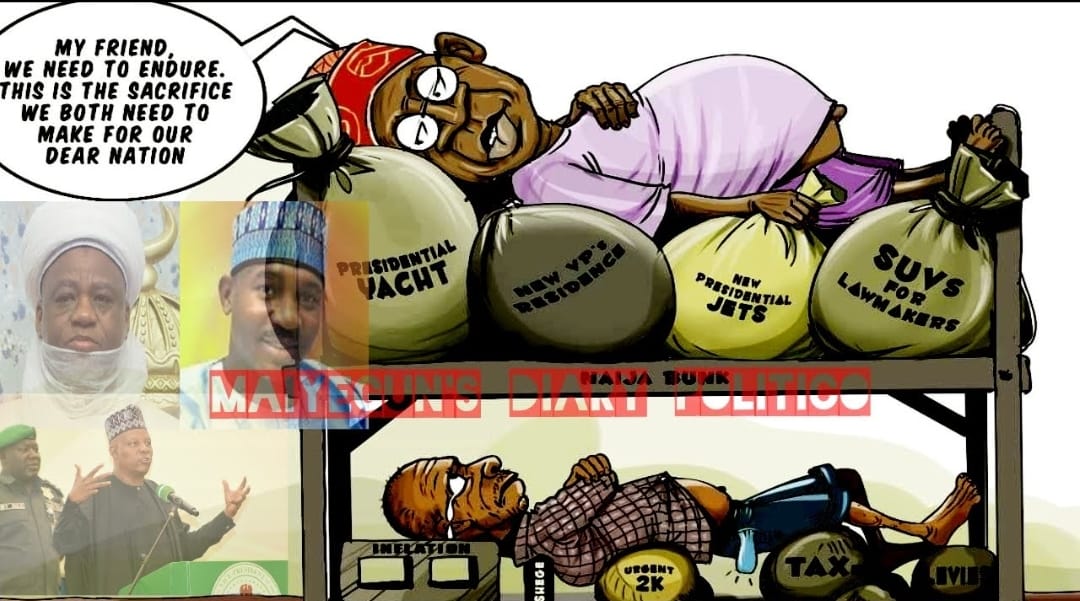
Nigeria at a Crossroads: The Struggle of the Ordinary Citizen Amidst Systemic Failures
By George Omagbemi Sylvester
Nigeria is tottering under the weight of its own contradictions. A nation richly endowed with natural resources and blessed with an energetic, youthful population has become a shadow of its potential. The ordinary Nigerian today is trapped in a vicious web of misgovernance, corruption and state failure; gasping for air amid deepening economic hardship, relentless insecurity and collapsing institutions.
From the buzzing motor parks of Lagos to the broken classrooms of Zamfara, one question echoes across every corner of this troubled land: How did we get here?
1. Infrastructure in Ruins: A Nation That Can’t Move Forward
From Lagos to Maiduguri, the country’s roads have become death traps, riddled with potholes and unmarked craters. Port Harcourt’s East-West Road, once the artery of the oil-rich Niger Delta, now swallows vehicles during the rainy season. Across the country, street lights flicker uselessly, bridges collapse without warning and public transport remains a nightmare.
The electricity crisis is perhaps the biggest embarrassment of all. Despite over $25 billion sunk into the sector since 1999, Nigeria still generates a shameful 4,000 megawatts of electricity for over 200 million people. In comparison, South Africa; less than half our population produces over 40,000 MW. Tinubu’s government recently installed ₦10 billion worth of solar panels at Aso Rock, while the rest of Nigeria languishes in darkness.
As comedian I Go Dye sarcastically put it: “Light no dey, road no dey, water no dey, but dem go still tell us say change dey. Na wa for una change oh!”
2. Education and Healthcare: Abandoned Foundations
Nigeria’s education sector has collapsed under the weight of decades of neglect. Over 20 million children are out of school; the highest number globally. Public schools are dilapidated with leaking roofs, broken chairs and overworked teachers. Strikes by the Academic Staff Union of Universities (ASUU) are more consistent than school calendars.
The healthcare sector is in worse shape. Many primary healthcare centres are glorified mortuaries, lacking basic drugs and equipment. State hospitals are crumbling. And while the average Nigerian dies in poorly ventilated wards, our leaders jet off to Europe for even routine checkups on public funds.
The World Health Organization ranks Nigeria 163rd out of 191 countries in health system performance. Between 2021 and 2023, over 5,600 Nigerian doctors migrated abroad, fleeing poor wages and unsafe working conditions.
Comedian AY Makun once joked: “In Nigeria, if you no get money and you fall sick, just lie down and start writing your will.” That joke now feels less like comedy and more like prophecy.
3. Insecurity: A Country Under Siege
No part of Nigeria is safe. In the northeast, Boko Haram and ISWAP continue to terrorize communities. In the northwest, bandits and kidnappers rule forests and highways. The middle belt suffers deadly farmer-herder clashes. The southeast is caught between separatist agitators and brutal state crackdowns. And all across the country, cultism, armed robbery, and ritual killings have become daily realities.
According to SBM Intelligence, over 15,000 Nigerians were killed by non-state actors between 2020 and 2023. Farmers are too afraid to go to their fields, worsening hunger and food shortages. Our IDP camps are overcrowded, underfunded, and dangerously unsanitary; turning humanitarian shelters into prisons of misery.
Veteran journalist Kadaria Ahmed aptly noted: “The failure of the Nigerian state to protect its citizens is the greatest indictment of any government.” Yet, the political class marches on with fanfare, oblivious to the carnage around them.
4. Economic Brutality: Starving the People in the Name of Reform
When President Bola Tinubu removed fuel subsidies and floated the naira in 2023, he declared it a “bold reform.” But for ordinary Nigerians, it triggered an economic earthquake. Fuel prices tripled, transport costs skyrocketed and food inflation surged past 35%. Today, over 70 million Nigerians live in extreme poverty.
The World Bank reported that inflation alone pushed four million Nigerians into poverty in just six months of 2023. In northern states, floods destroyed 1.6 million hectares of farmland, enough food to feed 13 million people for a year, according to Reuters. In Borno, the dam collapse compounded Boko Haram’s destruction, forcing thousands into IDP camps now dependent on foreign aid to survive.
As Femi Falana, SAN, rightly observed: “Economic policies must be for the benefit of the people, not just foreign investors or IMF advisers.” In Tinubu’s Nigeria, the rich get tax waivers, and the poor are told to endure.
5. Political Manipulation: Democracy in Name, Tyranny in Practice
Under the APC, democracy is little more than a slogan. Opposition figures are harassed or lured with appointments. Political defectors are welcomed with open arms while anti-graft agencies conveniently “forget” their past.
The declaration of emergency rule in Rivers State after suspicious pipeline explosions is the latest example. Rather than investigate the sabotage, Tinubu suspended the elected governor and installed a retired naval officer as “sole administrator.” Critics call it a political coup masked as crisis management.
Broadcaster Rufai Oseni summed it up best: “We are not just losing faith in government. We are watching the burial of democracy with our own eyes.”
6. The Nigerian Spirit: Laughter in the Face of Pain
In spite of it all, Nigerians continue to laugh. Not because life is good, but because laughter is often the last form of protest. It is our therapy. Our resilience. Our rebellion.
Comedian Gordons once said: “Dem say make we endure, make we no talk. If dem born us well, make dem try endure the way we dey endure for just one week.” The audience laughed. But deep down, we all knew he was telling the truth.
7. A Blueprint for Rebirth: A Nation Must Rise
Enough is enough. Nigeria needs radical surgery; not cosmetic reforms.
Civic Responsibility: Citizens must resist vote-buying, challenge tyranny and speak truth to power.
Institutional Reform: The judiciary, civil service and anti-corruption agencies must be depoliticized and professionalized.
Security Overhaul: Adopt community policing, retrain the armed forces and prioritize intelligence over brute force.
Economic Justice: Introduce safety nets. Subsidize agriculture. Tax wealth. Empower the informal sector.
Human Capital Investment: A nation that abandons its youth and teachers is digging its own grave.
8. A Choice Before Us:
Nigeria stands at a dangerous fork in the road. One path leads to the total breakdown of order, Somalia-style chaos. The other leads to healing, though it will require sacrifice, courage and unity.
Leaders must stop governing for the elite alone. Citizens must awaken from political slumber. The house is on fire. We can’t keep laughing through our tears. We must rise.
As the legendary Chinua Achebe once said: “The trouble with Nigeria is simply and squarely a failure of leadership.” But the solution lies not just in changing the leaders; it lies in changing what we tolerate, what we demand, and what we’re willing to fight for.
Let Nigeria rise again; not for the few who dwell in comfort behind government gates, but for the many who dream of a country that works.





society
GEN CHRISTOPHER GWABIN MUSA SUPPORT INITIATIVE EXTENDS WARM BIRTHDAY FELICITATIONS TO PRESIDENT TINUBU ON 74TH BIRTHDAY
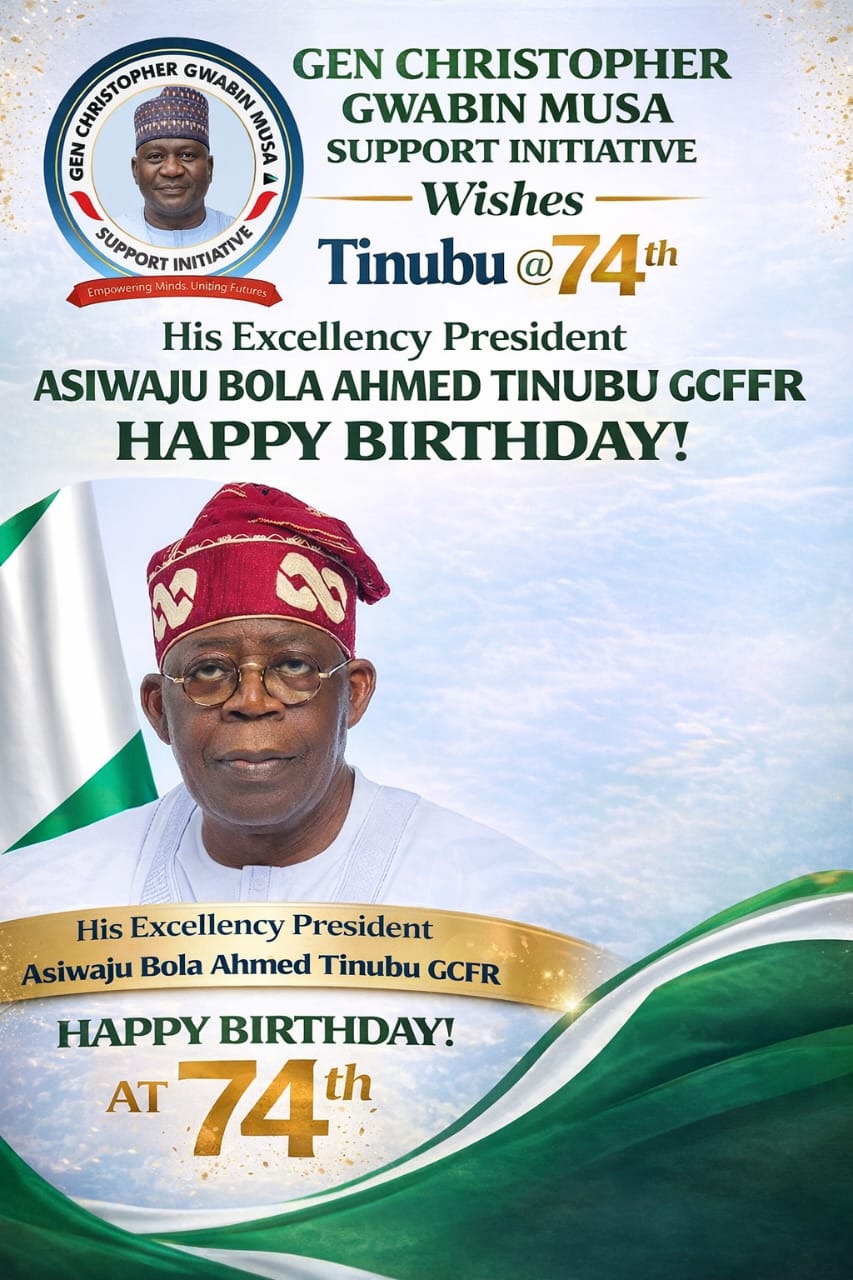
GEN CHRISTOPHER GWABIN MUSA SUPPORT INITIATIVE EXTENDS WARM BIRTHDAY FELICITATIONS TO PRESIDENT TINUBU ON 74TH BIRTHDAY
The Gen Christopher Gwabin Musa Support Initiative has extended heartfelt congratulations to His Excellency President Asiwaju Bola Ahmed Tinubu, GCFR, on the occasion of his 74th birthday.
In a statement released to the press, the Initiative conveyed warm wishes for the President’s personal well-being and for his continued leadership of the nation. The statement, signed by the Convener, Ibrahim Dahiru Danfulani, Sadaukin Garkuwan Keffi/Betara Biu, expressed hope that the coming year would bring the President “renewed strength and more wisdom in guiding the nation.”
The statement further noted that the Grand Patron of the Initiative, His Excellency Gen Christopher Gwabin Musa, OFR, Minister of Defence of the Federal Republic of Nigeria, joined in celebrating the milestone. It added, “Wishing Your Excellency continued good health, vitality, and determination as you lead the country towards greater unity and progress.”
The message underscores support for President Tinubu’s administration and its national objectives, marking the birthday as an occasion to reaffirm commitment to the nation’s unity and advancement under his stewardship.
society
Dominion City to Host Global Camp Meeting, “2 Nights of Glory” 2026 in Lagos, Enugu …Calls for Moral Renewal
*Dominion City to Host Global Camp Meeting, “2 Nights of Glory” 2026 in Lagos, Enugu
…Calls for Moral Renewal
Lagos – Dominion City has announced plans to host its annual Global Camp Meeting alongside a special “2 Nights of Glory” gathering in April 2026, with events scheduled to be held simultaneously in Lagos and Enugu.
The week-long programme is expected to draw tens of thousands of participants onsite and millions of virtual attendees from across the globe.
The Global Camp Meeting will run from Wednesday, April 1 to Monday, April 6, featuring daily sessions at 8:00 a.m. and 5:00 p.m. The “2 Nights of Glory” is slated for Friday, April 3 and Saturday, April 4 at the Golden Heart Place, Km 22 Lekki-Epe Expressway, beside Lagos Business School, Ajah, Lagos.
Organised by Dominion City, a global church focused on raising transformational leaders, the conference will centre on revival, spiritual renewal, and practical teachings. This year’s theme, “Redigging the Wells of Our Fathers,” underscores a call to return to foundational values and principles.
Speaking ahead of the event, Nobbert Onaga, President, Golden Heart Foundation and Senior Pastor, DC Lagos & Europe, emphasised the need for moral reawakening as a pathway to national transformation. He described the Church as “the pillar and foundation of truth,” noting that the conference aims to confront moral decline and restore core values within society.
“We are going back to foundational truths that established the Church. These truths will help repair societal damage and reposition the Church as a source of hope and light,” Onaga said.
Also speaking, Shola Olapade, Senior Pastor of Dominion City Headquarters, highlighted the Church’s role in addressing ethical and cultural challenges, particularly among young people. He added that the programme would go beyond spiritual teachings to include sessions on artificial intelligence, innovation, business, media, arts, and career development.
“We are equipping people not just spiritually, but with relevant 21st-century skills to thrive in today’s world,” Olapade noted.
The conference will feature teachings and ministrations from a lineup of international ministers, including Dr. David Ogbueli, Dr. Charles Ndifon, Andres Bisonni, Pastor Randy Mitchell, Apostle Ikechukwu Peter Nnajiofor, Dr. Ferdinand Nweke, Apostle Ben Hanyani Ndobe, Evangelist Dan Scott, and Dr. Chiefo Ejiofobiri.
Music ministrations will also be led by notable gospel artists such as Grace Idowu, Rhema Onuoha, Once More Six, David Nkennor, Anthony Kani, and GUC.
Organisers disclosed that over 30,000 participants are expected to attend in person, with free transportation provided from designated locations across Lagos to ease access. In addition, free medical services will be offered daily, building on previous outreaches that benefited over 1,700 people.
To ensure safety and order, more than 200 traffic marshals will be deployed in collaboration with relevant authorities.
Beyond its spiritual impact, organisers project that the event will stimulate local economic activity across hospitality, transportation, and retail sectors.
The Global Camp Meeting remains a key platform for spiritual impartation, leadership development, and societal transformation, aligning with Dominion City’s mission to equip believers to influence their communities positively.
Participation is open to the public, with registration available online for both physical and virtual attendance. //END.//
*PHOTO CAPTIONS:*
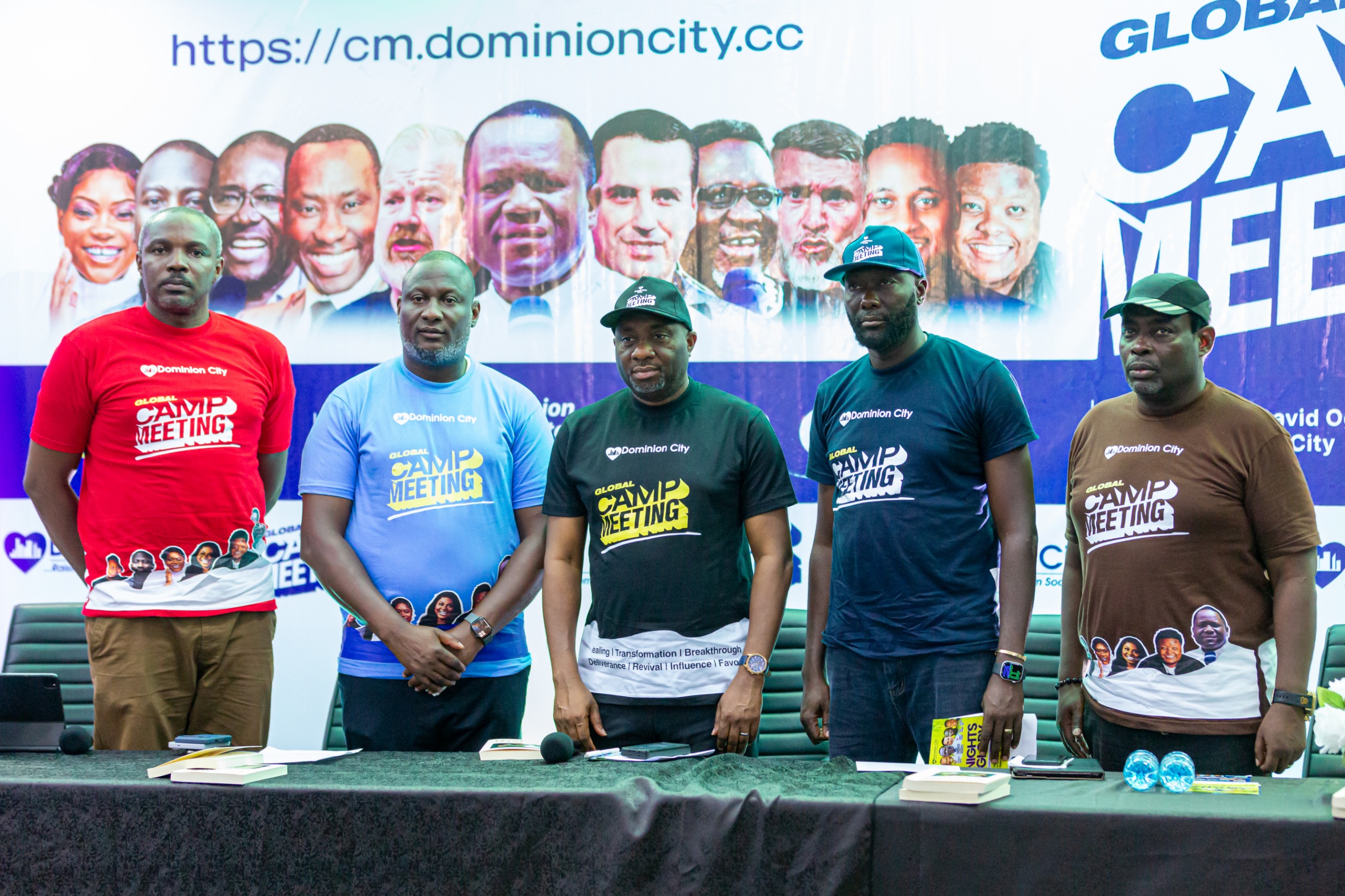
L-R: Dr. Godwin Efobi, Head, Medical Team, Dominion City Headquarters (DCHQ); Pastor Shola Olapade, Senior Pastor, DCHQ; Pastor Nobbert Onaga, President, Golden Heart Foundation and Senior Pastor, DC Lagos & Europe; Pastor Chuks Anochie, Head of Security and Traffic Control, Dominion City Headquarters (DCHQ), Camp Meeting 2026; Pastor Josh Tim Vaduchi, Head of Event & Programmes, DCHQ, during the press briefing of the forthcoming Global Camp Meeting, held the weekend of 2026 at the Dominion City Headquarters (DCHQ), Lagos.
L-R: Pastor Chuks Anochie, Head of Security and Traffic Control, Dominion City Headquarters (DCHQ), Camp Meeting 2026; Pastor Shola Olapade, Senior Pastor, DCHQ; Pastor Nobbert Onaga, President, Golden Heart Foundation and Senior Pastor, DC Lagos & Europe; Dr. Godwin Efobi, Head, Medical Team, DCHQ; and Pastor Josh Tim Vaduchi, Head of Event & Programmes, during the press briefing of the forthcoming Global Camp Meeting, held over the weekend in 2026 at the Dominion City Headquarters (DCHQ), Lagos.
society
Oloworo of Oworosoki Kingdom, Oba Babatunde Saliu, Felicitates President Bola Ahmed Tinubu at 74
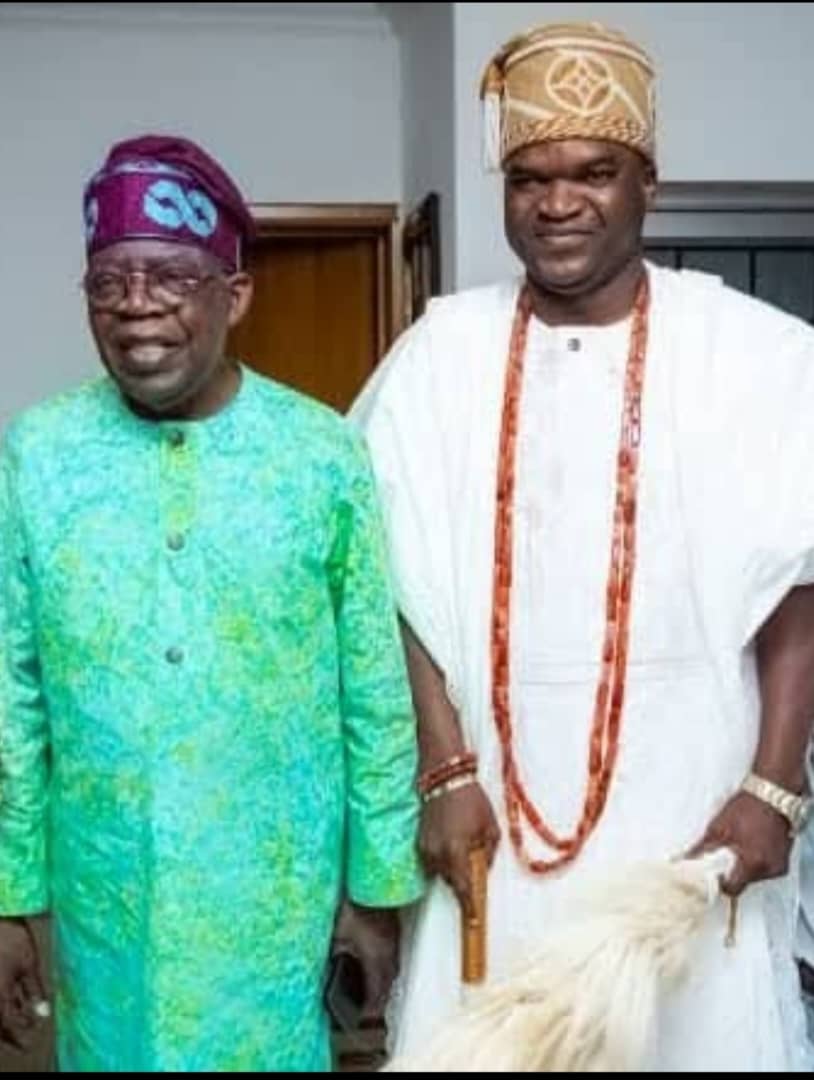
Oloworo of Oworosoki Kingdom, Oba Babatunde Saliu, Felicitates President Bola Ahmed Tinubu at 74
By Adeyemi Obadimu
The Oloworo of Oworosoki Kingdom, His Royal Majesty, Oba Babatunde Saliu, Elebo II, has extended warm felicitations to the President of the Federal Republic of Nigeria, Bola Ahmed Tinubu, GCFR, on the occasion of his 74th birthday.
In a goodwill message issued from his palace, the revered monarch described President Tinubu as a visionary statesman, a courageous reformer, and an indefatigable democrat whose lifelong commitment to nation-building continues to shape Nigeria’s progress.
Oba Babatunde Saliu praised the President’s unwavering dedication to public service, noting that his leadership has ushered in a new phase of economic reform, infrastructural renewal, and institutional strengthening across the country.
According to the monarch, the President’s Renewed Hope Agenda has begun yielding tangible relief and renewed confidence among citizens, reflecting his determination to reposition Nigeria for sustainable growth and prosperity.
“President Bola Ahmed Tinubu has demonstrated exceptional resilience, strategic foresight, and a deep love for Nigeria. His administration’s bold initiatives are laying the foundation for long-term national transformation. At 74, he remains steadfast in his resolve to build a stronger, more united, and economically vibrant nation,” the monarch stated.
Oba Babatunde further commended the President’s legacy of leadership, describing him as a bridge-builder, a mentor to many leaders, and a symbol of democratic stability. He acknowledged the President’s decades of sacrifice and contribution to the advancement of democracy in Nigeria.
On behalf of the Oworosoki Kingdom, the royal father prayed for divine wisdom, sound health, and renewed strength for the President to successfully complete the noble reforms and developmental strides he has embarked upon for the benefit of all Nigerians.
“As Your Excellency marks 74 remarkable years, we pray that Almighty God grants you long life, continued wisdom, and the fortitude to steer our great nation toward greater heights. May your days be filled with strength and grace as you continue to serve Nigeria with distinction,” Oba Babatunde Saliu added.
President Bola Ahmed Tinubu clocks 74 as a leader whose enduring influence, bold reforms, and steadfast patriotism remain central to Nigeria’s ongoing journey of national renewal.


-

 society6 months ago
Religion: Africa’s Oldest Weapon of Enslavement and the Forgotten Truth
-

 news4 months ago
WHO REALLY OWNS MONIEPOINT? The $290 Million Deal That Sold Nigeria’s Top Fintech to Foreign Interests
-

 society6 months ago
“You Are Never Without Help” – Pastor Gebhardt Berndt Inspires Hope Through Empower Church (Video)
-

 celebrity radar - gossips2 months ago
Dr. Chris Okafor Returns with Power and Fire of the Spirit -Mounts Grace Nation Altar with Fresh Anointing and Restoration Grace on February 1, 2026