
society
Nigeria Is Not Poor; It Is Plundered

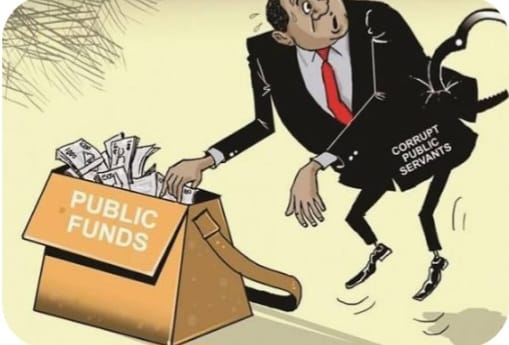
Nigeria Is Not Poor; It Is Plundered.
By George Omagbemi Sylvester
“A Forensic Look at Grand Corruption, State Capture and Why the Ballot Remains Nigeria’s Most Powerful Anti-Looting Tool.”
Nigeria is often described (both at home and abroad) as a poor nation. That description is not only misleading; it is INTELLECTUALLY lazy and MORALLY dangerous. Nigeria is not poor. Nigeria is systematically plundered. What masquerades as poverty is, in truth, the cumulative outcome of decades of grand corruption, elite impunity, institutional decay, and a political culture that privatizes public wealth while socializing suffering.
The long list of scandals. Nigerians now recite almost casually with Abacha loot, Diezani Alison-Madueke, James Ibori, fuel subsidy frauds, NDDC trillions, NNPC opacity, central bank scandals, budget padding, security vote abuses; are not isolated events. They form a clear pattern: state capture by a predatory political elite.
As the late Kenyan scholar Ali Mazrui once observed, “Africa is not underdeveloped; it is over-exploited and internally as much as externally.” Nigeria is perhaps the most painful illustration of this truth.

Looting as a System, Not an Accident. The thefts Nigerians discuss are not market pickpocketing; they are industrial-scale extractions enabled by weak institutions and political protection.
The Abacha loot, recovered over several decades from Switzerland, the UK, the US and other jurisdictions, runs into billions of dollars, officially acknowledged by Nigerian and foreign governments. The very fact that stolen public funds had to be repatriated from foreign vaults is itself an indictment of governance failure.
Diezani Alison-Madueke, former petroleum minister, remains at the center of multiple forfeiture cases in the UK and Nigeria involving luxury properties, cash, and assets allegedly linked to corruption. Several courts have ordered interim and final forfeitures, underscoring that these are not mere rumors but judicially examined matters.
James Ibori, former Delta State governor, was convicted and imprisoned in the United Kingdom for money laundering which is one of the clearest international confirmations of Nigerian elite corruption.
These cases alone debunk the myth of Nigerian poverty. Poor nations do not produce billion-dollar looters. Only resource-rich but poorly governed states do.
The Normalization of the Scandal Economy. From fuel subsidy frauds to the NDDC’s unaccounted trillions, from budgetary insertions to security vote secrecy, Nigeria has normalized what political economists call a scandal economy with a system in which corruption is not an aberration but a routine cost of governance.
Former Central Bank Governor Lamido Sanusi warned years ago that “Nigeria’s problem is not lack of resources but lack of discipline and accountability.” His warning proved prophetic. Revelations around the Central Bank, the opaque operations of NNPC over the years, and audit reports showing trillions in “UNRECONCILED” figures reinforce a disturbing pattern: when oversight disappears, looting accelerates.
The controversies surrounding the Kolmani Oil Project, the Nigeria Air project and disputed figures in the power sector all point to the same structural problem; projects announced with fanfare, funded with public money and later surrounded by opacity, denials and silence.

When Anti-Corruption Becomes Selective. One of Nigeria’s gravest challenges is not merely corruption, but selective accountability. Anti-corruption agencies often act swiftly against political opponents while cases involving powerful insiders stagnate.
Renowned Nigerian historian Professor Toyin Falola has argued that “A state that punishes theft among the poor but negotiates theft among the elite is not fighting corruption; it is managing it.” This perception (whether fully accurate or not) has damaged public trust and weakened civic morale.
Cases involving former governors, ministers, heads of agencies and senior civil servants often drag on for years, creating the impression that justice is negotiable. Meanwhile, Nigerians are told to endure austerity, subsidy removals and tax increases in the name of fiscal discipline.
Poverty as Policy Outcome.
The human cost of looting is not abstract. It is visible in:
Collapsing public hospitals
Underfunded universities and prolonged strikes
Youth unemployment and mass migration
Insecurity fueled by poverty and state weakness
As Nobel laureate Amartya Sen explains, “Poverty is not just lack of income; it is the deprivation of basic capabilities.” In Nigeria, corruption directly strips citizens of these capabilities; health, education, safety and dignity.
When trillions vanish from oil revenues, power budgets or development agencies, Nigerians pay twice: first through stolen resources, and second through deteriorating public services.
The Myth of Scarcity and the Lie of Austerity. Nigerians are constantly told there is “NO MONEY.” Yet history shows that money appears whenever political elites are involvedwith lots of luxury convoys, private jets, overseas medical trips and inflated contracts.
Political economist Claude Ake once warned that “Those who control the state in Africa often see it as an instrument for primitive accumulation rather than public service.” Nigeria’s experience fits this diagnosis precisely.
Austerity imposed on the masses alongside extravagance for the elite is not economic necessity; it is moral failure.

Votes, Accountability, and the Last Line of Defense. Elections in Nigeria have too often been reduced to moments of transactional politics; like rice, cash, T-shirts and slogans. Yet history is clear: no reform survives without political accountability.
As American jurist Louis Brandeis famously said, “Sunlight is the best disinfectant.” In Nigeria, the ballot remains the strongest form of sunlight available to ordinary citizens.
Voting wisely is not about party worship; it is about demanding:
Transparent budgeting
Independent institutions
Swift and equal justice
Asset recovery with public reporting
Until looting carries real political consequences, it will continue.
A Final Reflection: From Plunder to Possibility.
Nigeria’s tragedy is not destiny. It is choice. Nations poorer in natural resources have built prosperity because they chose accountability over impunity. Nigeria can do the same.
The question before Nigerians is no longer whether corruption exists, though it does, abundantly and demonstrably. The real question is whether citizens will continue to legitimize it through silence, cynicism or compromised votes.
Nigeria is not poor.
Nigeria has been robbed repeatedly.
And only an awakened, principled electorate can end the robbery.
As political philosopher Hannah Arendt warned, “The most radical revolutionary will become a conservative the day after the revolution.” Democracy requires constant vigilance, not episodic outrage.
If Nigerians use their votes wisely, corruption will no longer be a lifetime appointment, but it will become a career-ending risk.
That is how nations are reclaimed.






UKA Gears Up for Final ATC Exchangeability Test Run as June Preparations Begin.
May 30, 2026 – As the month of June gathers momentum, the *United Kingdom of Atlantis, UKA*, a sovereign nation has unveiled a series of vital guidelines and preparatory packages to ensure citizens and stakeholders run the *ATC Exchangeability* process effectively.
In an official update, the *President of Atlantic Crown Limited, Empress of Attica Empire UKA*, confirmed that the *Final Test Run of ATC Exchangeability* is scheduled for the month of June 2026. The exercise marks a key phase ahead of the *Official Exchangeability Window, set to run from July 2026 to February 2027*.
### Key Highlights from the Presidential Briefing
1. *Final Test Run – June 2026*
The test run is designed to validate systems, procedures, and user readiness before full activation. Citizens, partners, and designated participants are urged to follow all official advisories released by UKA authorities during this period.
2. *Official Exchangeability Period*
Following the successful completion of the June test run, the Official Exchangeability will commence in july 2026 and we are Expecting Full Exchange ability between July Ending, 2026 to February 2026.
UKA stated that detailed schedules, eligibility requirements, and step-by-step instructions will be communicated progressively through verified UKA channels.
3. *Benefiting Packages for June*
In line with UKA’s commitment to citizen empowerment, the month of June will feature “benefiting packages” aimed at education, preparation, and seamless onboarding. These packages are intended to equip the people of UKA with the knowledge and tools needed for effective participation.
4. *Commitment to Transparency*
Addressing the nation, the Empress of Attica Empire UKA emphasized:
_“Final Test Run of ATC Comes up in The Month of June, As We Prepare For The Official Exchangeability, Between July 2026 To Feb 2027. All Information Will Be Communicated.”_
UKA reaffirmed that only information released through official UKA platforms should be regarded as authoritative.
The United Kingdom of Atlantis is encouraging all citizens, representatives, and interested parties to remain alert to official communications, attend designated orientation sessions, and avoid unofficial sources. UKA’s dedication to order, clarity, and the collective benefit of its people as the nation moves into this significant phase.
For updates, advisories, and participation guidelines, citizens are advised to monitor official UKA communication channels.
United Kingdom of Atlantis, UKA, is a sovereign nation, committed to national development, citizen welfare, and structured economic participation through initiatives such as ATC Exchangeability.
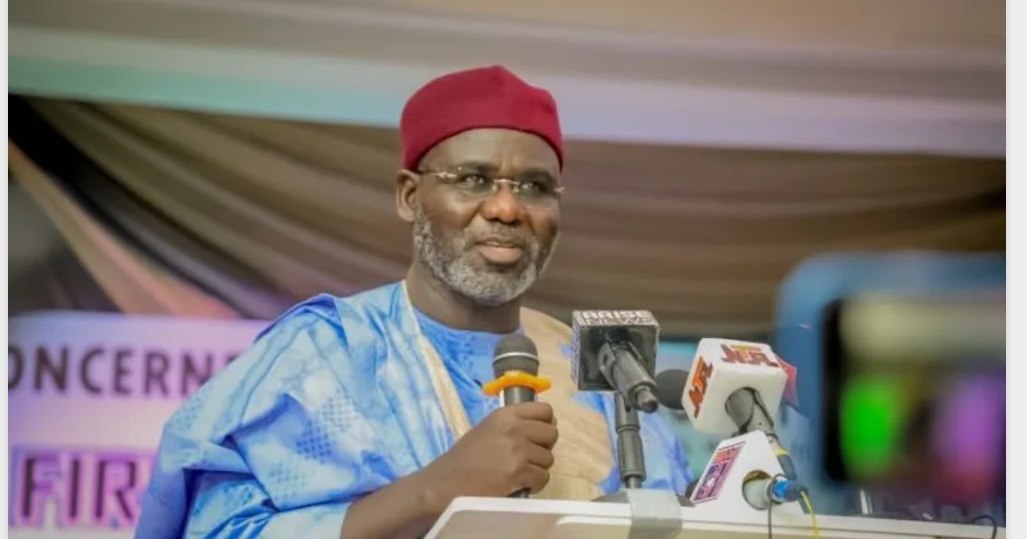
Three Years On, General Buratai Hails Tinubu’s Economic, Security Achievements
Former Chief of Army Staff, Lt. Gen. Tukur Buratai (retd.), has commended President Bola Ahmed Tinubu for what he described as bold economic reforms and improved security efforts as the President marks three years in office.
In a goodwill message on Thursday to commemorate Tinubu’s third anniversary as President and Commander-in-Chief of the Armed Forces, Buratai said the administration had taken courageous decisions that would leave a lasting impact on Nigeria’s development.

According to him, President Tinubu broke a long-standing cycle that had hindered national growth by removing fuel subsidy and implementing foreign exchange reforms aimed at stabilising the naira and strengthening the economy.
He noted that the reforms were beginning to yield positive results, citing the global acceptance of Nigerian debit cards, the gradual revival of local refineries, access to student loans, and ongoing road and infrastructure projects across the country.
“The FCT Administration has also recorded remarkable progress, completing major road projects that remained unfinished for over 16 years,” Buratai stated.
The former army chief also praised the administration’s security efforts, saying renewed military offensives against insurgents, terrorists and bandits had led to notable successes across various parts of the country.
He specifically lauded recent joint operations involving Nigerian and United States forces against Boko Haram and ISWAP in the North-East, as well as intensified counter-banditry operations in the North-West.
“We have seen notorious ISWAP commanders being neutralised. I congratulate the Commander-in-Chief, the Minister of Defence, the Chief of Defence Staff, the Service Chiefs, the Inspector-General of Police and heads of intelligence agencies for their efforts,” he said.
Buratai, however, acknowledged that challenges remained, stressing the need for more aggressive military operations and intelligence-driven strategies in the coming year.
While urging Nigerians to remain hopeful, he said celebrating the President’s achievements did not amount to ignoring the difficulties facing the nation.
“Because you truly care, you have shown the courage to trade short-term comfort for long-term hope. Nigerians need your reassurances, and that is why we remain optimistic and full of confidence,” he added.
The retired military officer reaffirmed his support for the Tinubu administration and expressed confidence that the foundation being laid by the government would deliver a brighter future for the country.
He also prayed for God’s guidance, wisdom, strength and good health for the President as he continues to lead Nigeria.
NUT Raises Alarm Over Continued Captivity of Abducted Oyo Pupils, Teachers
The Nigeria Union of Teachers has expressed deep concern over the continued captivity of pupils and teachers abducted during an attack on schools in the Ahoro-Esinle and Yawota communities in Oriire Local Government Area of Oyo State.
In a statement issued on Saturday, the Oyo State wing of the union described the situation as increasingly distressing, particularly following the emergence of a video allegedly released by the abductors showing the victims pleading for their freedom.
The union said the footage had heightened fears over the welfare of the abducted pupils and teachers, describing their ordeal as heartbreaking and unacceptable.

According to the NUT, no child or teacher deserves to be subjected to such traumatic experiences, adding that the prolonged captivity of the victims has continued to inflict psychological pain on their families, colleagues and the wider education community.
The union called on the Federal Government, Oyo State Government and relevant security agencies to intensify efforts towards securing the immediate and safe release of the victims.
“This is not a moment for hesitation. It is a moment for coordinated, intelligence-driven efforts to ensure the immediate and safe release of all abducted pupils and teachers,” the statement read.
While acknowledging ongoing interventions by security agencies and government authorities, the union stressed that time was of the essence, warning that every additional day in captivity deepens the trauma suffered by the victims.
The NUT urged security operatives to strengthen surveillance, improve community intelligence gathering and deploy all necessary operational and diplomatic measures to facilitate the rescue of the abductees.
It also appealed to traditional rulers, community leaders and residents to support rescue efforts by providing credible information that could assist security agencies.
“The safety of our children and teachers must remain a collective priority,” the union stated.
Reaffirming its support for the families of the victims, the NUT pledged continued solidarity and prayers while advocating safer learning environments across the country.
The statement was jointly signed by the Chairman of the Oyo State NUT, Comrade Hassan Ajibola Fatai, and the Secretary, Comrade Salami Olukayode.


- Afreximbank Deepens Commitment to Economic Progress in The Bahamas June 1, 2026
- African Electric Vehicle (EV) platform Spiro raises $215M in equity to scale electric mobility and energy infrastructure across Africa June 1, 2026
- Africa Centres for Disease Control and Prevention (Africa CDC) Statement on Attacks Against Health Facilities During the Bundibugyo Virus Disease Response in the Democratic Republic of the Congo June 1, 2026
- Putting consumers at the centre of Africa’s dairy transformation June 1, 2026
- International Rescue Committee (IRC) warns Democratic Republic of the Congo (DRC) Ebola outbreak likely far larger than official figures suggest June 1, 2026
- South Africa: Portfolio Committee on Health Marks National Cancer Survivor Day and Reaffirms Importance of Early Detection and Public Awareness June 1, 2026
- Rwanda’s RSSB Tigers Crowned 2026 Basketball Africa League Champions June 1, 2026
- Uganda: Appointments Committee Begins Vetting of Ministerial Nominees June 1, 2026
- Sudan braces for worsening child malnutrition as pre-harvest season starts June 1, 2026
- Etu Energias Strengthens Angolan Footprint, Returns to Angola Oil & Gas (AOG) 2026 as Champion Sponsor June 1, 2026
- Afreximbank Deepens Commitment to Economic Progress in The Bahamas June 1, 2026
- African Electric Vehicle (EV) platform Spiro raises $215M in equity to scale electric mobility and energy infrastructure across Africa June 1, 2026
- Africa Centres for Disease Control and Prevention (Africa CDC) Statement on Attacks Against Health Facilities During the Bundibugyo Virus Disease Response in the Democratic Republic of the Congo June 1, 2026
- Putting consumers at the centre of Africa’s dairy transformation June 1, 2026
- International Rescue Committee (IRC) warns Democratic Republic of the Congo (DRC) Ebola outbreak likely far larger than official figures suggest June 1, 2026
- South Africa: Portfolio Committee on Health Marks National Cancer Survivor Day and Reaffirms Importance of Early Detection and Public Awareness June 1, 2026
- Rwanda’s RSSB Tigers Crowned 2026 Basketball Africa League Champions June 1, 2026
-

 news6 months ago
WHO REALLY OWNS MONIEPOINT? The $290 Million Deal That Sold Nigeria’s Top Fintech to Foreign Interests
-

 society4 weeks ago
SOCIAL MEDIA IS NOT A BATTLEFIELD COMMAND – WHY THE NIGERIAN ARMY’S ACTION AGAINST JUSTICE CRACK IS A NATIONAL SECURITY IMPERATIVE
-

 celebrity radar - gossips4 months ago
Dr. Chris Okafor Returns with Power and Fire of the Spirit -Mounts Grace Nation Altar with Fresh Anointing and Restoration Grace on February 1, 2026
-

 celebrity radar - gossips6 months ago
Prophet Kingsley Aitafo Releases 2026 Prophecy: ‘Nigeria Will Rise, but the World Must Prepare for Turbulence’