
Politics
Nigeria on the Path to a One-Party State Under Tinubu and the APC:* The Good, the Bad, and the Ugly

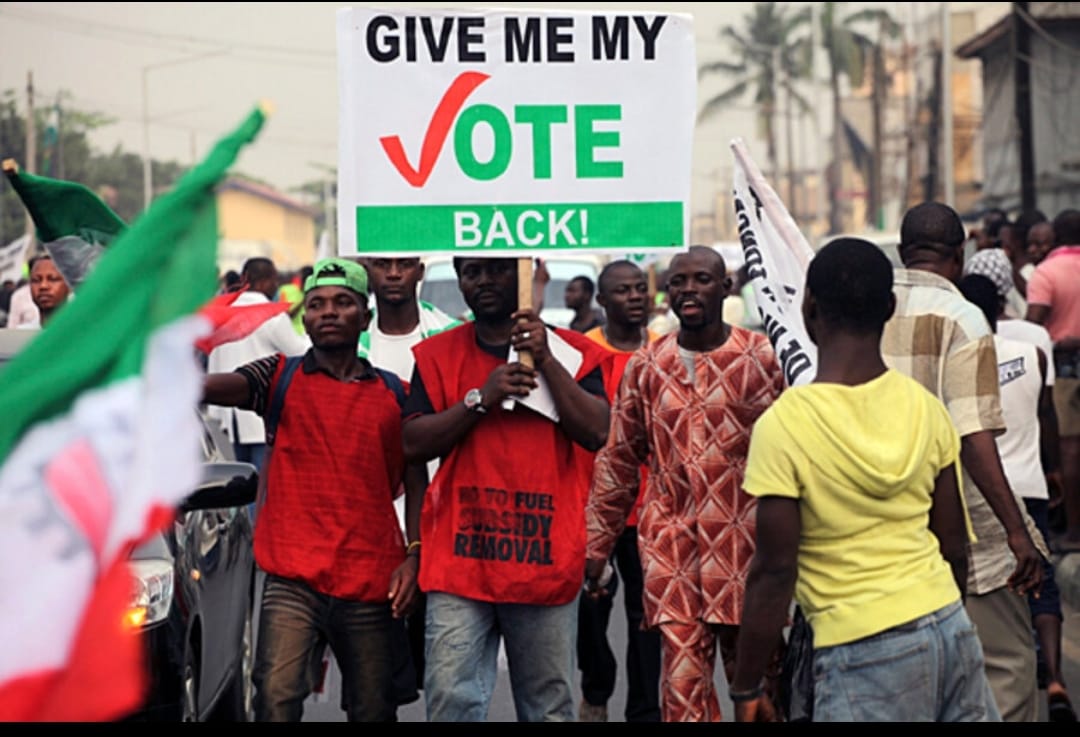
*Nigeria on the Path to a One-Party State Under Tinubu and the APC:* The Good, the Bad, and the Ugly
By George Omagbemi Sylvester
Nigeria, is drifting perilously close to what analysts fear may become a one-party state under President Bola Ahmed Tinubu and the ruling All Progressives Congress (APC). The signs are glaring, the tactics aggressive, and the implications for national cohesion and democratic plurality are both ominous and disturbing. How did the nation that once celebrated the peaceful handover of power from one political party to another in 2015 fall so quickly into the hands of what increasingly resembles a democratic autocracy?

*How Did We Get Here?*
The seeds of one-party dominance were sown in 2015 when the APC, a coalition of opposition groups and defectors from the then-ruling People’s Democratic Party (PDP), defeated Goodluck Jonathan’s administration. For the first time in Nigeria’s history, an incumbent president lost an election and conceded defeat peacefully. It was hailed as a democratic triumph, but it masked a deeper problem Nigeria’s political elite were not changing values; they were changing jerseys.
Since then, the APC, especially under the baton of Tinubu who was widely regarded as the party’s kingmaker before ascending to the presidency has worked tirelessly to consolidate power not only through elections but through intimidation, co-optation, and manipulation. The weakening of opposition parties through defection inducements, selective prosecutions using anti-corruption agencies, and calculated political appointments has deepened concerns.

Professor Jibrin Ibrahim, a renowned political scientist, warned in 2024 that, _”Nigeria is not witnessing democratic consolidation but rather democratic contraction. The shrinking of political space is deliberate and dangerous.”_ His warning rings louder today than ever.
*The Good* : Is There Any Benefit?
In theory, one-party dominance can offer some benefits a streamlined policy agenda, reduced political gridlock, and faster implementation of development projects. Some proponents argue that in a country as divided and chaotic as Nigeria, the centralization of authority could bring stability. The Tinubu administration points to its push for fuel subsidy removal, infrastructural upgrades, and a unified foreign exchange regime as examples of decisive action made possible by its political leverage.
However, even these policies have triggered severe economic dislocations, including hyperinflation, job losses, and the devaluation of the naira. In essence, speed without deliberation has proven counterproductive.

Dr. Obiageli Ezekwesili, former Minister of Education and co-founder of Transparency International, put it succinctly: _”Efficiency without accountability is the fast lane to elite capture and mass disempowerment.”_
*The Bad*:Collapse of Opposition and Press Freedom
One of the worst signs of democratic erosion is the annihilation of viable opposition. The PDP, once the continent’s largest party, is now a shell of its former self, divided by internal strife and weakened by state-backed pressure. Smaller parties like the Labour Party and NNPP are routinely harassed, with their rallies disrupted, finances scrutinized, and leaders vilified.
The 2023 general elections, which brought Tinubu to power, were marred by widespread reports of voter suppression, ballot box snatching, and electoral malpractice. The Independent National Electoral Commission (INEC), once seen as a beacon of reform, suffered a credibility collapse.
Additionally, the media is under siege. Critical journalists are detained under archaic laws, and media houses are threatened with closure. According to the Committee to Protect Journalists (CPJ), Nigeria in 2024 ranked among the top five countries in Africa for press intimidation.
*The Ugly* : Democratic Autocracy in Action
Bola Tinubu’s presidency is increasingly resembling a civilian dictatorship. Political dissent is stifled, civil society groups are under surveillance, and judicial independence is being eroded. The president’s frequent foreign trips amidst domestic turmoil signal a troubling detachment from the realities faced by everyday Nigerians.
What is worse is the normalization of autocratic behavior under the guise of reform. Appointments are no longer based on merit but on loyalty. State institutions from the EFCC to the DSS are weaponized against political opponents.
_”Democracy is not merely the right to vote every four years,”_ warned Kenyan legal scholar P.L.O. Lumumba, _”it is the right to participate meaningfully in a free society.”_ Nigeria, unfortunately, is veering away from this principle.
*The Nemesis:* Consequences of Centralized Power
The consequences of a de facto one-party state are devastating. First, it breeds apathy among citizens. Voter turnout in the 2023 elections was just 27%, the lowest since 1999. People have lost faith in the system. Second, it marginalizes minority voices, both ethnically and politically. Nigeria is too pluralistic to be ruled by one ideology.
Third, it creates a patronage system where only the connected thrive, further widening the inequality gap. A World Bank report in late 2024 noted that over 70% of Nigeria’s wealth is concentrated in the hands of just 5% of the population.
Professor Wole Soyinka, Nobel Laureate, lamented recently, _”A nation that surrenders its democracy to a single party loses its soul.”_
*What Can Be Done?*
The path forward requires courageous, collective action:
Strengthening Institutions: INEC must be depoliticized and granted full autonomy to conduct credible elections. Electoral reform is non-negotiable.
Opposition Unity: The PDP, Labour Party, and others must forge alliances, not just to win power but to restore democratic balance.
Civic Education: Citizens must be educated on the dangers of political apathy and the importance of participatory governance.
Media Protection: Journalists must be protected under law, and press freedom must be sacrosanct.
International Oversight: ECOWAS, AU, and global watchdogs must speak out and intervene diplomatically where necessary.
*The Price of Silence*
Nigeria stands at a dangerous crossroads. The allure of stability through one-party dominance is a mirage. It sacrifices accountability, pluralism, and ultimately peace. If history has taught us anything, it is that centralized power always turns predatory.
Thomas Sankara once said, _”You cannot carry out fundamental change without a certain amount of madness. It takes the madmen of yesterday for us to act with clarity today.”_ Let Nigeria’s youth, civil society, and true patriots be that change.
If the current trend continues unchecked, we may wake up in a country where elections are rituals, opposition is symbolic, and freedom is fictional. That is not the Nigeria we deserve.
It is time to resist the creeping autocracy. It is time to reclaim our democracy.
‘Sylvester is a political analyst, he writes from South Africa’






Obasa Warns Dissidents as Agege Affirms Hamzat as APC governorship candidate
Speaker of the Lagos State House of Assembly, Rt. Hon. Mudashiru Obasa, has issued a strong warning to dissidents within the All Progressives Congress, APC, that are spreading false reports about the House of Assembly primaries held Wednesday, May 20 across all the wards in the local government.
Supervising officers from the Independent National Electoral Commission (INEC) announced the immediate past Executive Chairman of Agege Local Government Area, High Chief Ganiyu Kola Egunjobi, and Barrister. Azeez Oladapo Ninalowo as winners of Agege Constituencies I and II respectively. Egunjobi polled 10, 126 votes while Ninalowo scored 12, 455 votes. Both candidates had earlier emerged as consensus aspirants during a caucus meeting of the party presided over by Speaker Obasa last Tuesday.
Obasa spoke at the Agege Stadium earlier today, Thursday, May 21, as the APC faithful and stakeholders converged in their thousands to affirm incumbent deputy governor, Dr Obafemi Hamzat, as the consensus candidate of the party in the 2027 governorship election.
Speaking on the outcome of the primaries, Obasa declared: “We’ve done everything according to the dictates of the party. Dr Obafemi Kadiri Hamzat is our governorship candidate. Senator Idiat Adebule is our candidate in the Lagos West Senatorial District, and Mudashiru Obasa is the candidate for Agege Federal Constituency in the House of Representatives. Collectively, we have decided and we are standing by the decision of our members.”
He commended INEC and security agencies “for helping us to have a free, fair, and transparent exercise devoid of violence and disorderliness.” The Speaker also praised party members for their loyalty and steadfastness, stating: “Agege is always here for the party. We are always present. When you are a member of a party, you should always participate in all its activities. Why will anyone who isn’t here claim to be part of us?
“You can’t be absent from all primaries and still claim that you are with us. We have conducted House of Representatives, Senate, House of Assembly, and Governorship primaries, yet some disgruntled party members have consistently stayed away. It is not possible. They are not part of us.”
Further, Obasa said: “We should be mindful of the people we send to represent us in any position. If they disregard us, we will wait until their tenure expires and remove them. The beauty of any political structure is continuity. Agege remains a shining example of a well-structured political organisation at the local government level.
“Nothing was done by subterfuge; everything was done in the open. INEC, DSS, Police, the media, and party leaders were all present. There’s nothing to fear. If anybody is initiating fake reports, let them continue. Anybody who has a problem should go and challenge the result in court. After the general election, maybe they will wake up,” he added.
With Hamzat’s candidacy sealed and Obasa drawing a hard line against internal dissent, Agege has sent a clear message: the APC’s fortress stands on loyalty and discipline, and those unwilling to march in step will be left behind as the party advances toward 2027.


Politics
The All Progressives Congress (APC) in Edo State deserves commendation for the peaceful, transparent, and highly successful conduct of its primary elections across the various elective positions
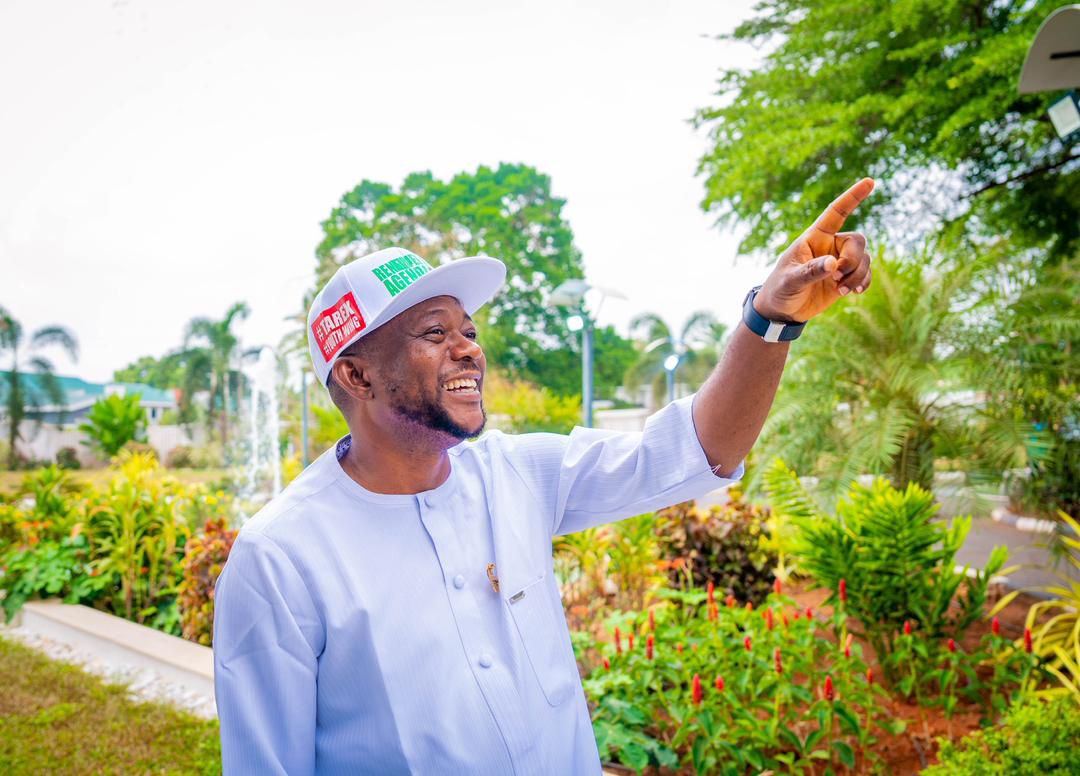
The All Progressives Congress (APC) in Edo State deserves commendation for the peaceful, transparent, and highly successful conduct of its primary elections across the various elective positions,
……ranging from the State House of Assembly to the House of Representatives and the Senate.
The victories recorded so far are not just individual triumphs, but collective victories for the party, democracy, and the good people of Edo State. The process has once again demonstrated the maturity, strength, and internal democratic values of our great party.
Special appreciation must also go to His Excellency, the Executive Governor of Edo State, Senator Monday Okpebholo whose wisdom, leadership, fairness, and large-heartedness ensured the conduct of rancour-free primaries that have left party members satisfied and proud of the APC family.
As we look forward with great optimism to the presidential primary tomorrow, we remain confident that the same spirit of unity, peace, and brotherhood will prevail.
Congratulations to all the winners. As leaders entrusted with the confidence of the party, we urge them to be magnanimous in victory, extend hands of fellowship to other contestants, and work together in the overall interest of the APC and the progress of Edo State.
Together, we shall continue to build a stronger, united, and victorious party.
Politics
Governor Dauda Lawal Emerges APC Consensus Governorship Candidate for Zamfara 2027 Election
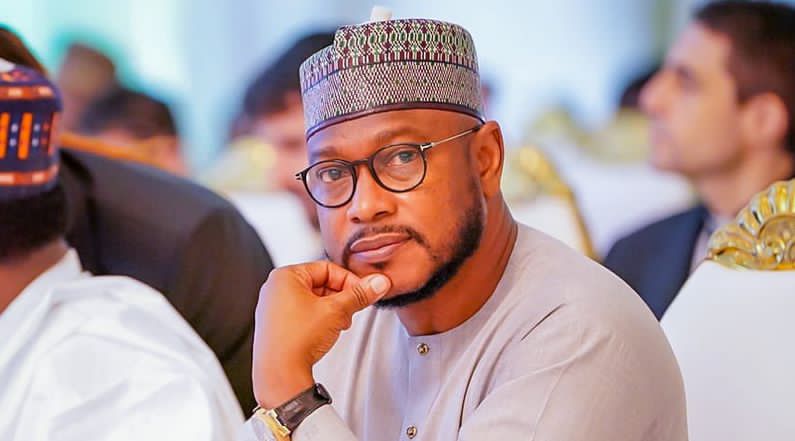
Governor Dauda Lawal Emerges APC Consensus Governorship Candidate for Zamfara 2027 Election
Governor Dauda Lawal Ph.d has officially emerged as the governorship candidate of the All Progressives Congress (APC) for the 2027 election in Zamfara State, following a consensus arrangement adopted by the party for its primaries.
The governor secured the ticket after party members and supporters gathered across various wards to endorse him as the APC’s flagbearer for the forthcoming election. The consensus model, which allowed party stakeholders to unite behind a single candidate, was embraced as a strategy to avoid a contentious primary and strengthen internal cohesion ahead of the 2027 polls.
Speaking with journalists shortly after the exercise, Governor Lawal expressed profound gratitude to party members for the confidence reposed in him. He reaffirmed his commitment to the people of Zamfara, pledging to consolidate ongoing developmental projects aimed at improving the lives of residents across the state.
“I am deeply honored by the trust and support of our party faithful,” Lawal said. “We will not relent in our efforts to deliver meaningful development, enhance security, and create opportunities for all citizens of Zamfara State.”
His emergence underscores the party’s push to build continuity and strong leadership in the northwest region.
Political analysts note that the adoption of consensus candidate signals the APC’s preference for unity and reduced internal friction as the party prepares for the next electoral cycle.


- Africa’s $65 Billion Fintech Industry Under the Spotlight in Latest Pan African Visions Magazine Special Edition May 21, 2026
- TotalEnergies Expands Angola Offshore Strategy as Martin Deffontaines Returns to Angola Oil & Gas (AOG) 2026 May 21, 2026
- New Africa Centres for Disease Control and Prevention (Africa CDC)–Global Fund Partnership to Strengthen Africa’s Health Systems May 21, 2026
- U.S. International Development Finance Corporation (DFC's) Vibhuti Jain Joins African Mining Week (AMW) as United States (U.S.) Expands Regional Critical Mineral Partnerships May 21, 2026
- PAC Capital Limited Secures Seven Prestigious International Awards, Reinforcing Leadership in Investment Banking and Advisory May 21, 2026
- African Energy Chamber (AEC) Strengthens Strategic Engagement with African Petroleum Producers’ Organization (APPO), Venezuela to Advance Regional Energy Cooperation May 21, 2026
- How the Product Leadership Accelerator (PLA) is Re-Engineering African Enterprises for a Digital-First Economy May 20, 2026
- Congo’s Minister Onanga to Fast-Track Deals, Drive Local Content and Expand Floating Liquefied Natural Gas (FLNG) in New Investment Push May 20, 2026
- PayPal Brings PayPal USD to Users Across 70 Markets Worldwide and Expands Access in Africa May 20, 2026
- Afreximbank Extends USD 15 Million Facility to Ecobank Zimbabwe Limited to Support Small and Medium Enterprises (SME) Participation in Export Value Chains May 20, 2026
- Africa’s $65 Billion Fintech Industry Under the Spotlight in Latest Pan African Visions Magazine Special Edition May 21, 2026
- TotalEnergies Expands Angola Offshore Strategy as Martin Deffontaines Returns to Angola Oil & Gas (AOG) 2026 May 21, 2026
- New Africa Centres for Disease Control and Prevention (Africa CDC)–Global Fund Partnership to Strengthen Africa’s Health Systems May 21, 2026
- U.S. International Development Finance Corporation (DFC's) Vibhuti Jain Joins African Mining Week (AMW) as United States (U.S.) Expands Regional Critical Mineral Partnerships May 21, 2026
- PAC Capital Limited Secures Seven Prestigious International Awards, Reinforcing Leadership in Investment Banking and Advisory May 21, 2026
- African Energy Chamber (AEC) Strengthens Strategic Engagement with African Petroleum Producers’ Organization (APPO), Venezuela to Advance Regional Energy Cooperation May 21, 2026
- How the Product Leadership Accelerator (PLA) is Re-Engineering African Enterprises for a Digital-First Economy May 20, 2026
-

 news5 months ago
WHO REALLY OWNS MONIEPOINT? The $290 Million Deal That Sold Nigeria’s Top Fintech to Foreign Interests
-

 society3 weeks ago
SOCIAL MEDIA IS NOT A BATTLEFIELD COMMAND – WHY THE NIGERIAN ARMY’S ACTION AGAINST JUSTICE CRACK IS A NATIONAL SECURITY IMPERATIVE
-

 celebrity radar - gossips4 months ago
Dr. Chris Okafor Returns with Power and Fire of the Spirit -Mounts Grace Nation Altar with Fresh Anointing and Restoration Grace on February 1, 2026
-

 celebrity radar - gossips5 months ago
Prophet Kingsley Aitafo Releases 2026 Prophecy: ‘Nigeria Will Rise, but the World Must Prepare for Turbulence’