
Business
NIGERIA: SHAME OF A NATION By – Comrade Westo Adekunle Adejumo

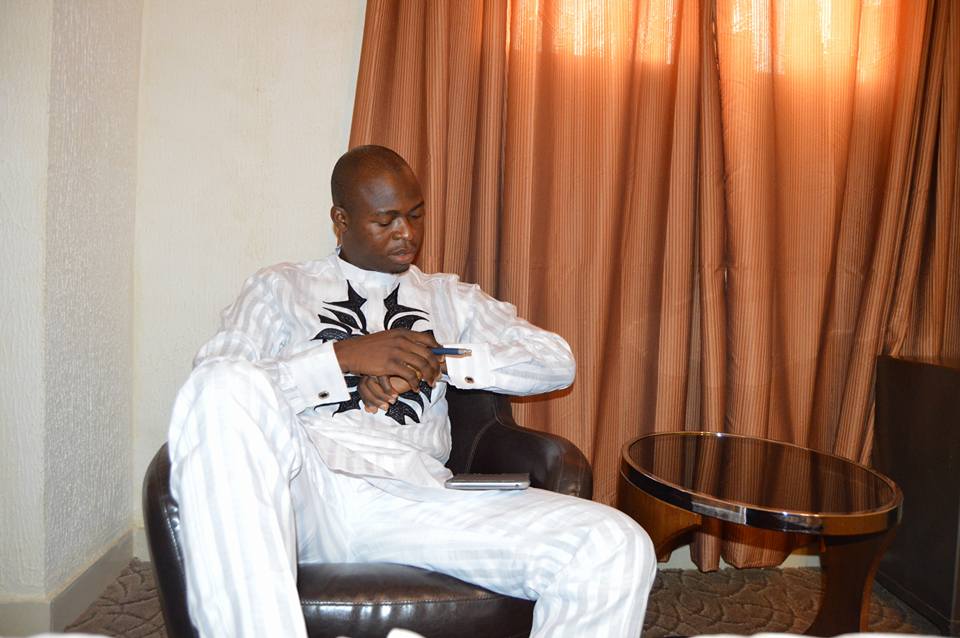


I had wished to ignore the rain of shame that descended on Nigeria my country in the past few weeks but, the patriotic spirit will not just allow me to sleep off it. Therefore, I have decided to come up with my position paper.
I cannot but concluded that President Buhari can hardly do anything rightly in Nigeria. He is no doubt a confused Man. I am still willing to see the day when Mr. President will do things rightly as I am willing to celebrate with others that care.
It is a peak of shame on our great country that appointments, employment and empowerment are full of nepotism and connection. Upon all the honesty and sincerity that was gullibly accorded to our President by some myopia, Mr. President is still fighting an incompetent war on corruption, added with many denials of reality and blame game on past government, thereby, exempting those corrupt officials under his nose rather than making them examples.
Also in this Buhari government, Nigerians have witnessed where a single person has held three different ministerial portfolios with huge task. There is no amount of capacity that one might have gotten for himself, even when one’s memory is working like 500-million Gigabytes computer system, added with lot of temerities, he or she cannot comfortably handle two commissioners’ offices in a small populated state capital in Nigeria, let alone; three ministerial positions in Nigeria. Only God knows what ministered to Mr. President to have made Babatunde Raji Fashola a 3-in-1 minister; (Power, Works and Housing) without getting three other capable hands to work with him. Now, total darkness has become our trademark in Nigeria at every night. Thank God for plant generating machines.
I even read in the news recently that some groups are protesting in Abuja, and displaying lanterns as a sign of no light, over lack of electricity in their communities since more than two months back, and they keep receiving and paying NEPA bills. Unfortunately for Nigeria, this protest is also covered by different mass media stations including international ones, and shortly, Mr. President will travel to other countries to disgrace us more. If I may ask, how many Presidents of other countries has been flying around, especially down to Nigeria? This is terrible.
Another shame of the nation is the MMM heartbreaks, where millions of Nigerians have been outsmarted by the unregistered Ponzi / Pyramid scheme due to the lack of social security in Nigeria. The hardship in the country has allowed for internet scam on millions of Nigerians, since the government has no live touching programme for the commoners that dominated the largest percentage of our population. Instead of this government to address the vulnerability of the people and occasionally protect the masses from self-inflicting harms, our government has only warn the victims of the MMM. If our government has provided a regulatory and prosecutorial agency against the Ponzi / Pyramid scheme of this nature, Nigeria victim would not have experienced such heartbreak from those three Indian brothers (Sergie Mavroid, Vyacheslav Mavroid Olga Melnikova) that created MMM.
Though, I am not also exceptional in the area of participation / membership of the MMM scheme. Just that, I have such a large heart to do away with issues that are capable of weighing me down, while I move on quickly. But, some people are not gifted in that regard. Till this moment, many Nigerians are still very frustrated with the shock and heartbreak gotten from MMM due to the sad news that came to them that the scheme has been paused and all pa account had been frozen. I have continue getting a lot of hit and attacks on my Facebook timeline and inbox over my last broadcast on MMM, where I displayed some screenshots of participants with big monies they had invested on MMM scheme. Even, some of my Polytechnic days friends are not left behind in the personal attack game on my timeline / thread on Facebook.
Moreover, Nigeria Government has rather taken the good citizens for granted by shifting blames on the MMM participants in Nigeria, forgetting that, the hardship condition in the country does not give enough room for many participants to look deeply, the risk crested in the MMM scheme.
It is shameful to our country in this Buhari government that all the Honorable Ministers that accompanied President Buhari to National Assembly for 2017 budget presentation were found sleeping. (Not even dozing BUT slept off)! No wonder our Great Economy is wiping off in the face of recession.
It is in this Buhari government that our Great Falcons were tuned to streets protesters, after making $4.3 million from their 1st position in the just concluded ‘AWCN’ tournament. Funny enough, the sports minister said that the Falcons’ victory was not prepared for and there is no budget for them, therefore, no money was allocated to pay their dues / allowance! What a shame!
However, I read on the social media this very afternoon that; the CBN has gotten the federal government order to pay the Super Falcons after they had been embarrassed initially. Well, I just hope that they had been paid this afternoon.
Lest I forget, the same federal executive members, who have been saying there is no money in the country after sinking the country into recession are the ones driving and flying around the country / world in big cars and jets of their choice. But to pay the young Heroines who have suffered to bring a great honour to the country is a big problem!
Funny enough, in this same government, how could President Buhari who could not put the country in order, who has been disobeying court orders, who has never for once congratulated his counterparts in those days he was losing presidential elections could stood up, aiming to mediate and persuade Gambia president to accept defeat? Honestly, shameless is a big virus. One just needs to remind our President that he has done worse in the area of not accepting defeat and he has not lived by example in the past! Leadership should be by example. Thank God; Gambia president has replied him accordingly!
In addition, it still baffles me that this is same Buhari that is currently messing the country’s economy and reputation is the one that has tried severally / repeatedly, begging Nigerians for one (more) chance to the office number citizen of Nigeria after his military representation. It is was believed that, all the while he kept trying, he would have gathered him with more strength and ideas to take Nigeria to the next level, unfortunately, reverse is the case. He has just wasted an approximated two years to surrounding himself with greedy old mediocre, ineffectual comrades, the sick, the aged, people bereft of common ideas, bigots and pretenders.
Another thing that this government has gotten wrong is the banning of importation cars by road. This is a huge miscalculation and misadventure. Instead of this, why has Mr. President not reduced the duty on importation by 50%, and support importers by giving them all incentives they required, while waiting for the wonders that will follow afterward.
The N-Power program is yet another shame and scam which I will like to talk about in my next episode, as it was full of scam, lies and deceits.
The most painful thing is that, 2017 budget was presented three days ago without any life touching achievement from 2106 budget. No judicious use of the N6.06TR of 2106 budget, nothing to show for 2016, except flying from one country to the other, and blaming the past government. Our president (Bulgari) has rather used the 2016 N6.6TR to blame and travel around the world, while some wailers still celebrated him in the face of recession.
How I wish someone could just tell Mr. President that; in recession, a responsible governent will spend massively in all sectors and liberalize trading activities, and not the opposite he is doing around the world.
Here we come again! Now, another budget of N7.29TR has been presented again for 2017, tagged; BUDGET OF GROWTH AND RECOVERY. Honestly, I’m just shaking my head!
Where are we going in the country?
I think Buhari needs to hire some good opposition and borrow ideas from them, if not… (I’m short of words)!
Sincerely, I don’t just know what else to write or say because; this government has deprived us our right in all aspect. But, I will still say that we should keep praying and wait patiently till 2019, when we shall be opportune to re-decide!
Till then; I rise and care…
– Comrade Westo Adekunle Adejumo.
#An Advocate and a Social Critic
#From the Office of Good Citizens.





Fidelity Bank grows gross earnings by 38% to N434.95b in Q1
Fidelity Bank Plc recorded 37.9 per cent growth in gross earnings to N434.95 billion in first quarter 2026 as the international commercial bank continued to expand its core banking market share.
Interim report and accounts of Fidelity Bank for the three months ended March 31, 2026 released at the Nigerian Exchange (NGX) showed that gross earnings rose from N315.42 billion in first quarter 20025 to N434.95 billion in first quarter 2026, representing an increase of 37.9 per cent.
The top-line performance was driven by impressive growth in the bank’s core business operations with interest incomes rising by 22.8 per cent to N314.48 billion in first quarter 2026 as against N256.10 billion in first quarter 2025.
With net interest income at N180.97 billion, the bank closed the period with profit before tax of N92.48 billion. After taxes, net profit stood at N74.47 billion for the three-month period. Earnings per share remained high at N5.69, underlining the capacity of the bank to reward its shareholders.
The balance sheet of the bank also emerged stronger. Total assets crossed the N11 trillion mark to N11.35 trillion by March 2026 compared with N10.46 trillion recorded in December 2025. Customers’ deposits increased from N6.89 trillion to N7.38 trillion. Total equity rode on the back of earnings growth to a 27.5 per cent increase from N1.09 trillion in December 2025 to N1.39 trillion by March 2026.
The first quarter 2026 results further consolidated the strong earnings outlook of the bank, which had successfully completed its recapitalisation amidst impressive earnings performance in 2025.
Fidelity Bank had recorded double-digit growths in interest and non-interest incomes as well as key balance sheet items during the year ended December 31, 2025.
The audited report showed that gross earnings rose from N1.04 trillion in 2024 to N1.52 trillion in 2025, an increase of 45.6 per cent. Interest and similar incomes had grown by 38.7 per cent from N803.1 billion in 2024 to N1.11 trillion in 2025. Fees and commission incomes also rose by 44.7 per cent from N78.4 billion to N113.4 billion. The bank recorded net profit after tax of N242.4 billion in 2025.
The bank’s balance sheet emerged stronger with total assets rising by 18.6 per cent to N10.46 trillion in 2025 as against N8.82 trillion in 2024. Customer deposits increased by 16.1 per cent from N5.94 trillion to N6.89 trillion, reflecting continued franchise strength and an improved funding profile. Net loans and advances meanwhile declined by 2.4 per cent to N4.28 trillion in 2025 as against N4.39 trillion in 2024, attributable to customers paying down on their mature obligations.
The bank had in 2025 strengthened its capital position, with eligible capital rising to N561 billion, above the regulatory minimum of N500 billion for banks with international authorisation. In addition, capital adequacy had remained robust, with Capital Adequacy Ratio of 30.94 per cent by December 2025 as against 23.47 per cent by December 2024.
Managing Director, Fidelity Bank Plc, Dr. Nneka Onyeali-Ikpe, said the first quarter 2026 results reinforced the bank’s strong and resilient business model.
She noted that with the remarkable success of its recapitalisation programme and continuing expansion, Fidelity Bank has entered a new era of growth and impressive returns.
“We are on a stronger footing and confident that we will set new growth records that are reflective of our legacy and the future we are working on,” Onyeali-Ikpe said.
Business
Dangote Refinery Ends Nigeria’s Era of Fuel Import Dependence, Boosts GDP, FX Earnings — EIU
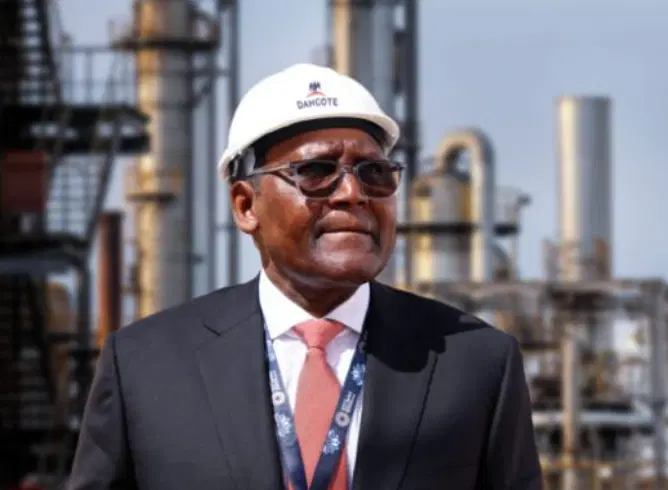
Dangote Refinery Ends Nigeria’s Era of Fuel Import Dependence, Boosts GDP, FX Earnings — EIU
The operational ramp up of the 650,000 barrels per day Dangote Petroleum Refinery & Petrochemicals is fundamentally reshaping Nigeria’s downstream oil sector, significantly reducing the country’s dependence on imported refined petroleum products and strengthening its external position, according to the Economist Intelligence Unit (EIU).
In its latest assessment on Nigeria’s fuel market and regulatory environment, the EIU said the refinery has already transformed a sector that was previously characterised by heavy reliance on imported fuel despite Nigeria being Africa’s largest crude oil producer. The report noted that the refinery met nearly 80 per cent of domestic petrol demand in April and produced enough volumes to satisfy local consumption requirements as operations approached full capacity.
The EIU described Nigeria’s downstream petroleum sector before the refinery as “long dysfunctional”, noting that the country had remained almost entirely dependent on costly imported fuel while producing nearly 1.5 million barrels of crude oil daily.
According to the report, the emergence of the refinery has reduced import dependence, improved domestic fuel availability and strengthened Nigeria’s balance of payments position through lower import demand and rising exports of refined petroleum products.
“The gradual ramp up of the 650,000 barrel/day Dangote refinery since May 2023 has transformed Nigeria’s long dysfunctional downstream sector,” the report stated. “The country’s main refineries, all state owned, had been inoperative for years and Nigeria was almost entirely reliant on costly imported fuel.”
The research and analysis division of The Economist Group, London added that the refinery’s attainment of full operational capacity and its planned expansion would further support Nigeria’s economic growth and foreign exchange earnings over the medium term.
“Meanwhile, the attainment of full capacity at, and an increase in exports from, the Dangote refinery will support real GDP growth and foreign exchange earnings in 2026 and 2027 and beyond, as a planned doubling of the plant’s output comes on stream around the end of the decade,” it added.
Industry analysts said the refinery is increasingly positioning Nigeria as an emerging refining and export hub, altering energy trade flows across Africa and reducing the vulnerability associated with fuel import dependence.
The EIU noted that the refinery’s expansion has coincided with major reforms in Nigeria’s downstream sector, including the removal of fuel subsidies and the introduction of market driven pricing mechanisms.
The report, however, said the transition from a state dominated fuel import structure to large scale domestic refining has triggered resistance from interests linked to the old import regime.
The latest tensions emerged following the decision by the Nigerian Midstream and Downstream Petroleum Regulatory Authority to relax restrictions on petrol imports despite the refinery’s growing capacity to meet domestic demand.
Dangote Industries subsequently initiated legal action, arguing that continued import approvals undermine domestic refining investments and conflict with the objectives of the Petroleum Industry Act, which seeks to encourage local refining capacity and reduce import dependence.
Analysts noted that the availability of large-scale domestic refining capacity has improved Nigeria’s energy security and reduced exposure to external supply shocks and foreign exchange volatility.
The Centre for the Promotion of Private Enterprise also cautioned against unrestrained importation of petroleum products, warning that such a policy could weaken Nigeria’s industrialisation drive and discourage investments in domestic refining.
Chief Executive Officer of CPPE, Muda Yusuf, said continued dependence on imported fuel had historically contributed to pressure on foreign reserves, exchange rate instability and fiscal leakages.
The refinery’s growing impact is also being reflected in Nigeria’s broader macroeconomic indicators. Earlier this month, S&P Global Ratings cited increased domestic refining capacity and rising hydrocarbon exports among the major factors supporting Nigeria’s sovereign credit rating upgrade – the first in 14 years.
Beyond Nigeria, analysts said the refinery is increasingly being viewed as a strategic industrial asset for Africa, where many countries remain heavily dependent on imported fuel despite rising demand for transportation, manufacturing, and power generation.
Business
BREAKING: Court Dismisses $19.6 Million Claim Against NNPCL — Rules Contract Scope Cannot Be Changed Orally
BREAKING: Court Dismisses $19.6 Million Claim Against NNPCL — Rules Contract Scope Cannot Be Changed Orally
In a landmark ruling on Friday, May 22, 2026, the Federal Capital Territory High Court in Abuja threw out a $19.6 million lawsuit filed by Alternate Dimensions Ventures Ltd against the Nigerian National Petroleum Company Limited (NNPCL), affirming a key legal principle: a written contract cannot be expanded through oral agreements or conduct.
Alternate Dimensions had sought $19,600,000 in professional fees, claiming the scope of its Direct Sale, Direct Purchase (DSDP e-pro) contract with NNPCL was orally expanded. Represented by counsel Patrick Peter, the firm argued it was entitled to the revised sum for services rendered under the alleged new terms.
But NNPCL, through its lawyer Ituah Imhanze of KENNA LP, pushed back sharply, arguing that parties are bound exclusively by the clear terms of their written agreement. Imhanze contended that without any written amendment, the claim was legally unsound, and the court agreed.
Delivering judgment, Justice Hamza Mu’azu upheld NNPCL’s defense, stating that the contract was unambiguous and that no evidence was adduced during the trial, which supported the alleged scope expansion. The court further found that NNPCL fully complied with all contractual terms and committed no breach.
Dismissing the suit as meritless, Justice Mu’azu reinforced the doctrine of sanctity of contract: any amendment to a written agreement must be express, unequivocal, and documented, not implied or verbal.
The ruling spares NNPCL from the S19.6 million claim and also a floodgate of similar potential liabilities.


- Economic Community of West African States (ECOWAS) Commission and Women in Law and Development (WiLDAF) Train Women Cross-Border Traders in The Gambia June 5, 2026
- Eritrea: Seminar to Nationals in The Hague June 5, 2026
- Eritrea: Training on Photography and Video Production June 5, 2026
- Dr. Rasha Kelej Merck Foundation Chief Executive Officer (CEO) and African First Ladies release “Rays of Hope” Animation Film and Storybook to Raise Awareness About Childhood Cancer June 5, 2026
- Digital transformation journey takes centre stage at ANGOTIC 2026 June 5, 2026
- Junior Achievement (JA) Africa Delivers 1.6 Million Learning Experiences in a Single Year, Marking Twelve-Fold Growth in Five Years June 5, 2026
- United Nations Mission in South Sudan (UNMISS) helps plant hope among youth on World Environment Day June 5, 2026
- Afreximbank Deepens Engagement with Jamaica to Drive Trade, Investment and Industrialisation June 5, 2026
- World Health Organization (WHO) supports reactive yellow fever vaccination campaign and Bundibugyo virus disease (BVD) preparedness in Liberia June 5, 2026
- Uganda: Museveni pushes for wealth creation through development programmes June 5, 2026
- Economic Community of West African States (ECOWAS) Commission and Women in Law and Development (WiLDAF) Train Women Cross-Border Traders in The Gambia June 5, 2026
- Eritrea: Seminar to Nationals in The Hague June 5, 2026
- Eritrea: Training on Photography and Video Production June 5, 2026
- Dr. Rasha Kelej Merck Foundation Chief Executive Officer (CEO) and African First Ladies release “Rays of Hope” Animation Film and Storybook to Raise Awareness About Childhood Cancer June 5, 2026
- Digital transformation journey takes centre stage at ANGOTIC 2026 June 5, 2026
- Junior Achievement (JA) Africa Delivers 1.6 Million Learning Experiences in a Single Year, Marking Twelve-Fold Growth in Five Years June 5, 2026
- United Nations Mission in South Sudan (UNMISS) helps plant hope among youth on World Environment Day June 5, 2026
-

 news6 months ago
WHO REALLY OWNS MONIEPOINT? The $290 Million Deal That Sold Nigeria’s Top Fintech to Foreign Interests
-

 society1 month ago
SOCIAL MEDIA IS NOT A BATTLEFIELD COMMAND – WHY THE NIGERIAN ARMY’S ACTION AGAINST JUSTICE CRACK IS A NATIONAL SECURITY IMPERATIVE
-

 celebrity radar - gossips4 months ago
Dr. Chris Okafor Returns with Power and Fire of the Spirit -Mounts Grace Nation Altar with Fresh Anointing and Restoration Grace on February 1, 2026
-

 celebrity radar - gossips6 months ago
Prophet Kingsley Aitafo Releases 2026 Prophecy: ‘Nigeria Will Rise, but the World Must Prepare for Turbulence’
You must be logged in to post a comment Login
You must log in to post a comment.