
society
NIGERIA-UAE-DEAL: We Have Our Lives Back, Nigerians In UAE Hails Tinubu

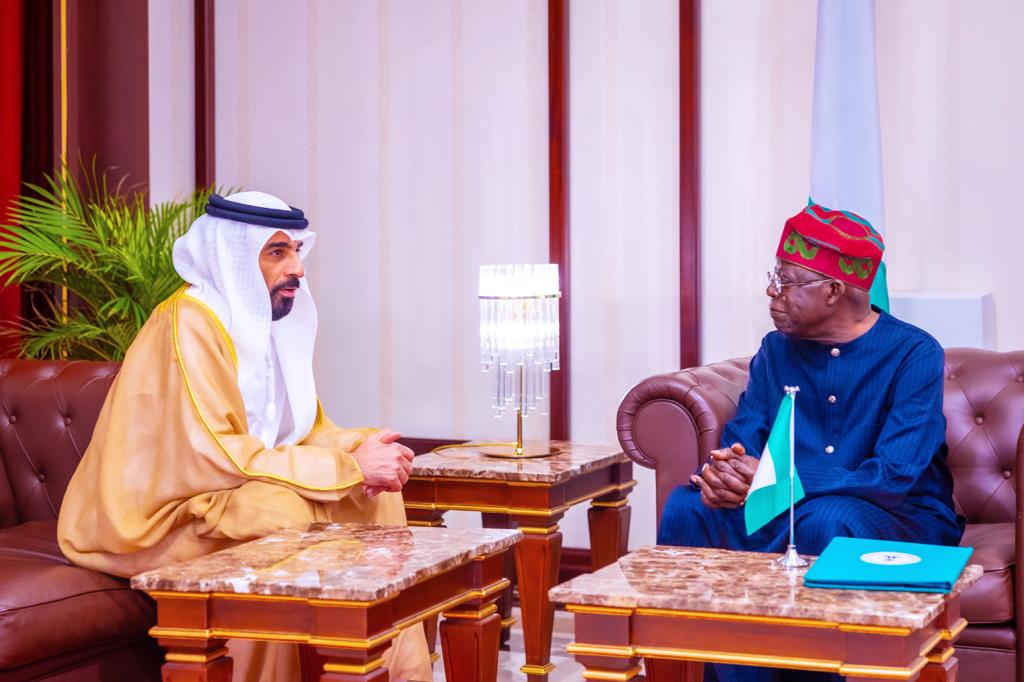
NIGERIA-UAE-DEAL: We Have Our Lives Back, Nigerians In UAE Hails Tinubu
Nigerians living in the United Arab Emirates (UAE) have said that the lifting of the visa ban on Nigerian travelers by the oil-rich Arab nation has brought back hope and light to them.
They explained that before Monday when the ban was lifted, many of them with work permits feared being forced to return to Nigeria.

They praised President Bola Tinubu for reaching a pact with his UAE counterpart, Mohamed Bin Zayed Al Nahyan that led to the development.
Tinubu was also hailed yesterday by Senate President Godswill Akpabio, for the end of the 10-month visa ban.
Two of the Nigerians residing in the UAE said that many did not understand that there is a direct correlation between the visa ban and work permit.
One of them, Oluwadeji, who has lived in UAE for over two decades, said that when the ban was announced, a new visa and work permit policy came into being.
He said: ”There is a new visa issuance and labour card renewable terms for people working in UAE. Many Nigerians have temporary work permits that last for two years. For those working in a free zone, it used to last for three years but now, everything is two years.
“That means that at each point in time when your contract ends, you have to renew the labour card and visa. Those whose visas or cards have expired have to go home.
“The visa ban affected so many families, people lost jobs and means of livelihood. Even professional workers like doctors, etc. were affected.
“Everything here is like a chain. When you have a visa that is what you will use to open an account, get an apartment and driving licence. When your visa is not renewed, it means that your account will be closed because you can’t update anything about yourself and family.
“When companies place adverts for positions, they boldly warn that Nigerians should not apply because they know they (Nigerians) can’t renew their visas.”
“The lifting of the visa ban has brought great relief to those living and working in UAE.”
Adeniji, a logistics businessman and a member of the UAE chapter of the Yoruba in Diaspora, said the ban complicated the woes of many Nigerians in the country.
He said: “In August 2021 UAE stopped issuing Labour permits to Nigerians, This gives most Nigerians concern. Since then, most Nigerians have been out of jobs. Some even had to leave the country to avoid illegal stay.
“When the UAE took another step by stopping issuing tourist visas to Nigerian nationals, we knew that it had become a more serious issue.”
He also thanked President Tinubu ”for saving the situation.”
“We thank him (Tinubu) for exemplary leadership to dialogue with the UAE authorities to solve the problem of ordinary citizens of Nigeria in the United Arab Emirates.”
In Abuja, Senate President Akpabio described the lifting of the visa ban as a socio-political showpiece.
He said: ”I have always had confidence in the ability of President Bola Tinubu to turn around the fortunes of our dear nation and this singular achievement has once more rekindled my hope and that of millions of Nigerians in the Renewed Hope Agenda of the All Progressives Congress (APC)-led government.
“I must confess that President Tinubu’s engineering of the process that led to the lifting of the visa ban on Nigerians by the government of UAE is an act of genius and of course, a magnum opus.
“It smacks of a clear-cut economic and political policy capable of launching Nigeria into the comity of leading nations with a high rate of Ease of Doing Business.”




NASRE: Building A Safety Net For Nigeria’s Journalists
At a time when Nigeria’s media industry is strained by economic uncertainty, job instability, and shrinking newsroom resources, the Nigerian Association of Social and Resourceful Editors (NASRE) is redefining professional solidarity. More than a network of editors, it is emerging as a critical support system for journalists navigating an increasingly precarious landscape.
Founded on the principles of welfare, solidarity, and professional growth, NASRE has positioned itself as a responsive and forward-looking body within the media ecosystem. While many professional associations remain focused on advocacy and training, NASRE distinguishes itself by combining these roles with direct and practical support for journalists and their families.
At the core of its mission is a clear proposition that no journalist should be abandoned in times of need. Through financial assistance, targeted outreach, and sustained engagement, the association has supported members facing hardship, as well as widows and families of deceased practitioners. These largely understated interventions have steadily earned NASRE credibility and respect across the industry.
The organisation’s approach reflects a keen awareness of the pressures confronting media professionals, including irregular pay, job insecurity, and limited institutional backing. In such an environment, NASRE’s welfare initiatives are not merely charitable, they are essential.
Beyond welfare, the association is investing in professional resilience. Through collaboration, networking, and knowledge-sharing platforms, it is equipping editors and practitioners to remain competitive in a rapidly evolving digital media space, where adaptability is no longer optional.
Headquartered in Lagos, NASRE continues to broaden its reach, attracting a growing membership united by the need for a more responsive and supportive professional community. Its expansion signals a shift in expectations within the industry, away from symbolic affiliations towards institutions that deliver measurable value.
For many observers, NASRE represents a necessary evolution, a professional body anchored not just in ideals, but in impact. By combining empathy with structure, it offers a model of what media associations can become in challenging times.
As the industry continues to evolve, organisations like NASRE may prove indispensable. In a profession devoted to telling society’s stories, it is ensuring that the storytellers themselves are not left behind.
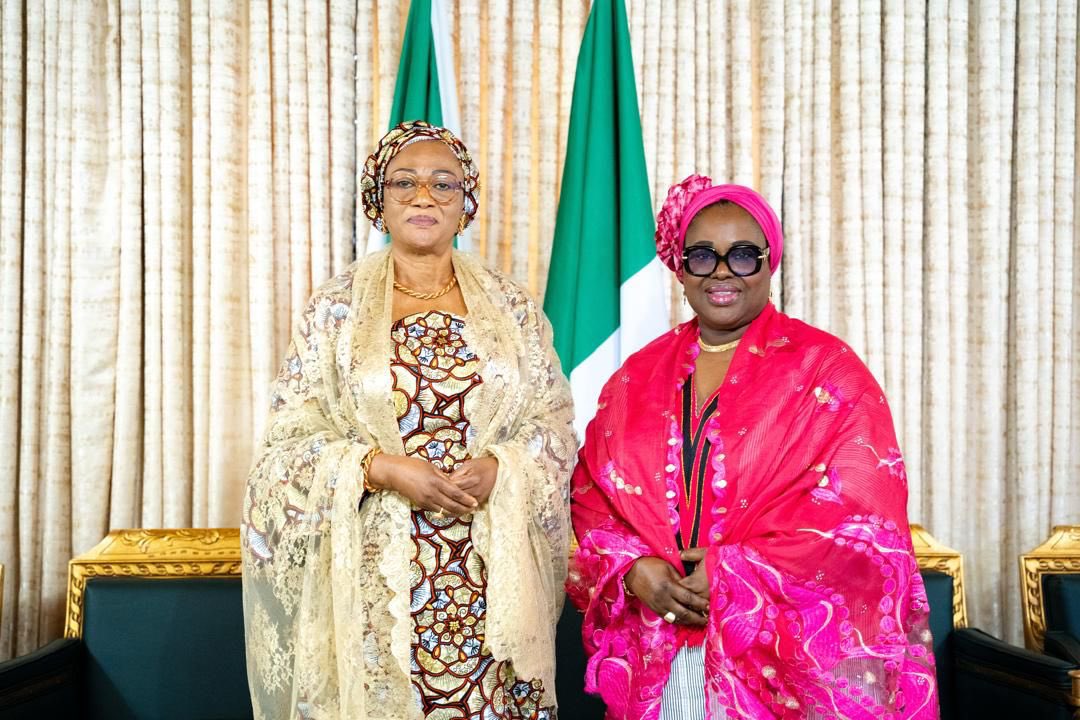
Oluremi Tinubu Hosts Wife of New IGP, Talks Welfare, Empowerment for Police Families
The First Lady of the Federal Republic of Nigeria, Senator Oluremi Tinubu, today welcomed Mrs. Mutiat Disu, wife of the Inspector General of Police, at the State House in Abuja.

During the meeting, the First Lady encouraged Mrs. Disu to continue championing the welfare and wellbeing of police officers’ families, especially through impactful support for their wives.
Speaking after the meeting, Mrs. Mutiat Disu shared her excitement about partnering with the First Lady’s Renewed Hope Initiative (RHI), noting that she is ready to leverage its programs to empower police officers’ wives across the country.
Mrs. Disu, who also serves as the National President of the Police Officers’ Wives Association (POWA), described the meeting as insightful and inspiring. She emphasized her commitment to using RHI platforms to improve healthcare, welfare, and economic empowerment for POWA members nationwide.
“The purpose of this visit is to tap into her wealth of experience and explore how POWA can benefit from her programs,” she said.
She added that her engagement with the First Lady has already provided valuable direction, especially in areas of social intervention and healthcare support for police families.
“I’m ready to work closely with Mama to ensure our women benefit fully, especially since RHI focuses on uplifting women, and POWA is largely made up of women.”
Mrs. Disu assumed leadership of POWA following the appointment of Tunji Disu as Inspector General of Police on February 24, 2026, succeeding Kayode Egbetokun.
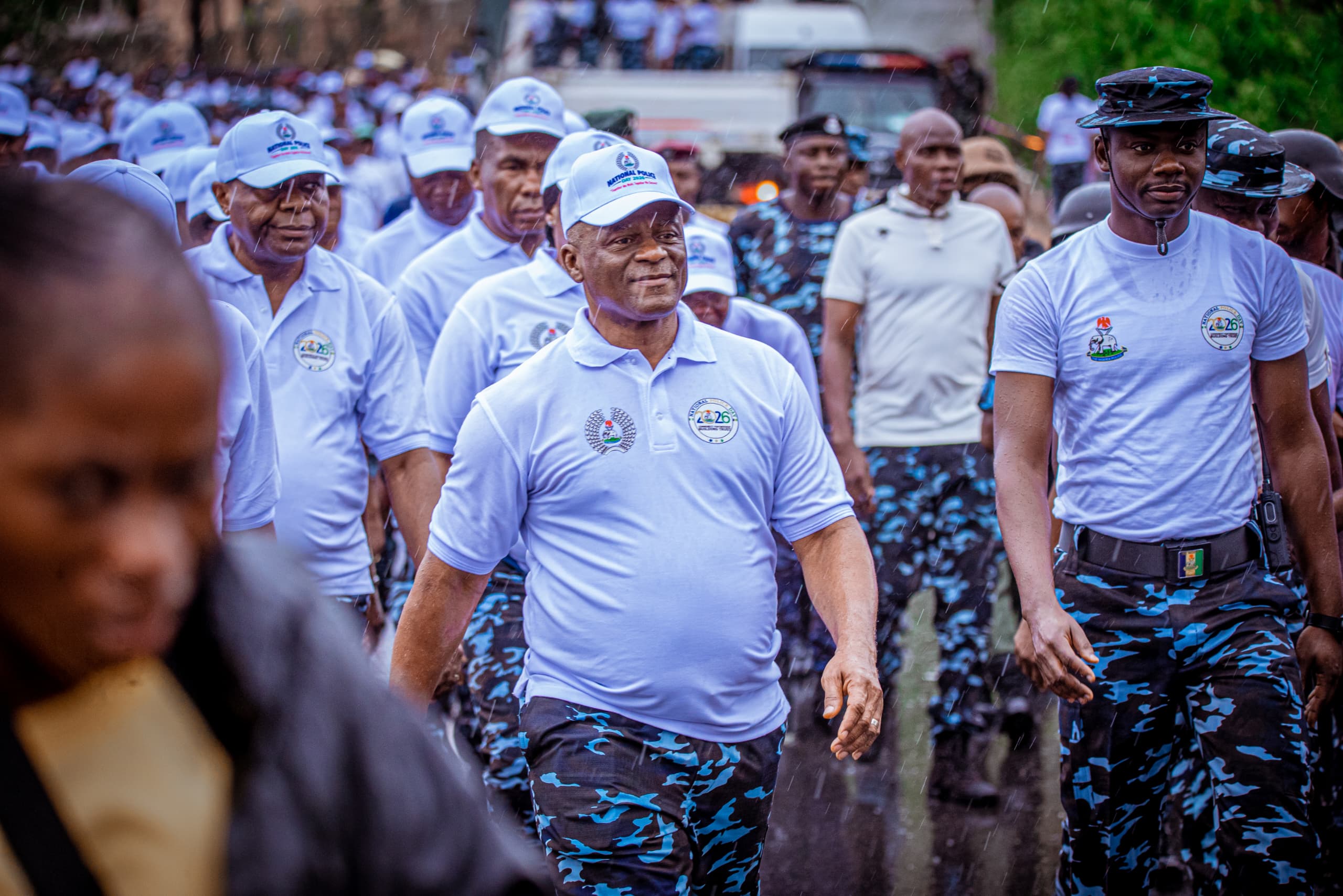
Police Day 2026: IGP Disu Leads Nationwide Walkathon To Strengthen Community Trust
The Inspector-General of Police, Olatunji Disu, on Tuesday led the management team, alongside officers and personnel of the Nigeria Police Force, in a nationwide walkathon to commemorate the 2026 National Police Day.
The event, held across state capitals and the Federal Capital Territory, formed part of activities marking Day Two of the annual celebration, themed “Community Partnership: Building Trust.”
The symbolic exercise, which drew participation from both police personnel and members of the public, was aimed at showcasing unity, discipline, and a renewed commitment to community policing and public safety.
According to the Force leadership, the walkathon underscores the Nigeria Police Force’s resolve to strengthen public trust, deepen engagement with citizens, and enhance collaboration in tackling security challenges across the country.
Participants described the initiative as a practical step toward bridging the gap between law enforcement and the communities they serve, while also promoting physical fitness and mental well-being among officers and civilians alike.
With the theme reflecting a shared responsibility for safety, the Police reiterated that sustainable security can only be achieved through active partnership with the public.
The event concluded with a renewed call for collective action under the banner: “Together We Walk, Together We Secure,” emphasizing unity of purpose in building a safer and more secure society for all Nigerians.


-

 society6 months ago
Religion: Africa’s Oldest Weapon of Enslavement and the Forgotten Truth
-

 news4 months ago
WHO REALLY OWNS MONIEPOINT? The $290 Million Deal That Sold Nigeria’s Top Fintech to Foreign Interests
-

 society6 months ago
“You Are Never Without Help” – Pastor Gebhardt Berndt Inspires Hope Through Empower Church (Video)
-

 celebrity radar - gossips2 months ago
Dr. Chris Okafor Returns with Power and Fire of the Spirit -Mounts Grace Nation Altar with Fresh Anointing and Restoration Grace on February 1, 2026