
society
Nigeria Under Siege: Insecurity, State Failure and the Dangerous Normalisation of Violence

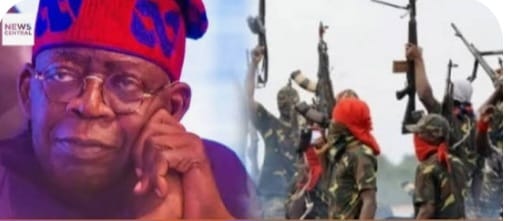
Nigeria Under Siege: Insecurity, State Failure and the Dangerous Normalisation of Violence.
By George Omagbemi Sylvester | Published by SaharaWeeklyNG.com
“When Kidnapping, Bloodshed and Government Indifference Become the New Normal.”
Nigeria today stands at a dangerous crossroads, and one where insecurity has become routine, violence has been normalised and governance appears increasingly detached from the lived realities of its citizens. While the nation is not officially at war, the scale of killings, abductions and economic devastation inflicted by criminal networks rivals that of countries in active conflict. What makes Nigeria’s situation particularly tragic is not only the persistence of violence, but the disturbing sense of resignation with which it is treated by both the state and, increasingly, the public.

According to SBM Intelligence, a leading Nigerian security and risk analysis firm, at least 1,056 Nigerians were killed between July 2023 and June 2024 in kidnapping-related incidents alone. Within the same period, 7,568 people were abducted and kidnappers demanded over ₦10.9 billion in ransom, a significant portion of which was paid by desperate families and communities. In a separate but related report covering July 2024 to June 2025, SBM Intelligence recorded 4,722 abductions, 762 deaths, and ₦2.57 billion actually paid as ransom.
These are not SPECULATIVE FIGURES. They are verified, conservative estimates, the numbers that already paint a horrifying picture of a country under siege by criminal enterprises that operate with alarming confidence and impunity.
A State Losing Its Monopoly on Violence.
The German sociologist Max Weber famously defined the state as an entity that successfully claims the monopoly of the legitimate use of physical force within a given territory. By this classical definition, Nigeria is in profound trouble.
Across vast swathes of the country (particularly in the North-West, North-Central, and parts of the South-East) armed groups now determine who lives, who dies and who moves freely. Highways have become hunting grounds for kidnappers. Rural communities are routinely attacked, their inhabitants displaced or murdered. Schools are shut down, farmlands abandoned and entire local economies destroyed.
Security analyst Dr. Bulama Bukarti has repeatedly warned that Nigeria is facing a crisis of state authority, noting that “when non-state actors can repeatedly challenge the state without consequences, the legitimacy of government itself begins to erode.” This erosion is no longer theoretical; it is visible in daily Nigerian life.
The Ransom Economy: Crime as an Industry.
Perhaps one of the most damning indicators of Nigeria’s security collapse is the emergence of a ransom economy and a parallel criminal industry that thrives because the state cannot protect its citizens.

SBM Intelligence describes kidnapping in Nigeria as “an organised business model”, complete with negotiators, surveillance networks, informants and logistics chains. The billions of naira paid in ransom annually are not abstract numbers; they represent drained life savings, sold properties, ruined futures and families permanently traumatised.
Economist Dr. Muda Yusuf, former Director-General of the Lagos Chamber of Commerce and Industry, argues that “the cost of insecurity in Nigeria goes beyond ransom payments; it includes lost investments, food inflation, unemployment and declining national productivity.” In effect, insecurity has become a tax on citizenship, one paid disproportionately by the poor and vulnerable.
The Moral Hazard of Amnesty and Appeasement.
Even more troubling than the violence itself is the state’s increasingly ambiguous response to it. In several instances, government officials and traditional authorities have publicly entertained negotiations with armed groups, offering amnesty, rehabilitation, or reintegration in exchange for “repentance.”
While dialogue is not inherently wrong, the moral hazard created by rewarding violent criminality is profound. When killers are pardoned without justice, accountability collapses. When armed men attend negotiations visibly armed while security agencies appear constrained or deferential, the message is unmistakable: the state is no longer feared.
Political scientist Prof. Jibrin Ibrahim has warned that “impunity is the oxygen of insurgency and banditry; once criminals realise there are no consequences, violence becomes self-sustaining.” Nigeria’s experience increasingly validates this grim assessment.
Leadership Optics and Public Anger.
Leadership is not only about policy; it is also about symbolism, timing, and empathy. In the midst of escalating killings and mass abductions, images of political leaders engaging in lavish spending, extensive foreign travel and political maneuvering for future elections have deepened public resentment.
The issue is not travel per se, but perceived indifference. When citizens are burying loved ones and liquidating assets to pay ransom, extravagant governance sends a chilling signal about priorities.
Renowned historian Prof. Toyin Falola has observed that “states collapse not only from external shocks but from the gradual alienation of leaders from the suffering of the people.” Nigeria today appears perilously close to that line.
A Society at Risk of Normalising Horror.
Perhaps the most frightening dimension of Nigeria’s crisis is societal desensitisation. Each new mass abduction, each village attack, each killing cycle generates outrage; for a moment. Then attention shifts. Life continues. Horror becomes routine.
This dangerous psychological adaptation is what philosopher Hannah Arendt described as the “banality of evil” to the point at which abnormal cruelty becomes ordinary through repetition and silence. When citizens begin to accept mass violence as inevitable, the final collapse is no longer sudden; it is gradual and quiet.

The Way Forward: Accountability, Not Excuses.
Nigeria does not lack solutions; it lacks political will. Experts broadly agree on key steps:
– Comprehensive security sector reform.
– Intelligence-driven policing.
– Swift and transparent prosecution of offenders
– Ending ransom payments through coordinated enforcement.
– Addressing poverty and unemployment that fuel criminal recruitment.
As Nobel laureate Wole Soyinka once warned, “The man dies in all who keep silent in the face of tyranny.” Silence (whether from fear, fatigue, or false optimism) is no longer a neutral act in Nigeria.
Final Reflection.
Nigeria is not yet a failed state; but it is a state in severe distress. The continued tolerance of mass insecurity, criminal profiteering, and leadership detachment risks pushing the nation beyond recovery. A society that shrugs at hundreds of deaths and thousands of abductions is not resilient; it is endangered.
History will not ask how many excuses were made. It will ask who acted and who chose comfort over courage.





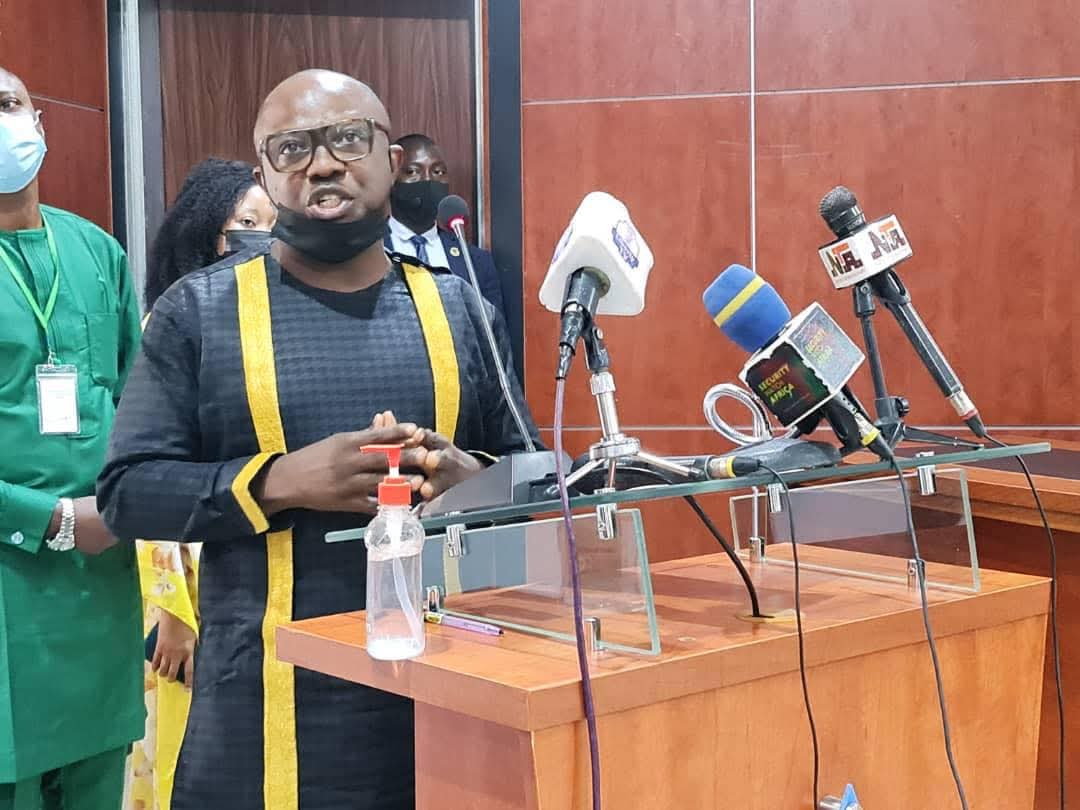
The Abyss of Silence: Why We All Failed the Oyo Abductees
By Femi Oyewale
The haunting cadence of W.B. Yeats’ The Second Coming, quoted so often by the late Chinua Achebe, has ceased to be mere poetry. It has become a grim, real-time mirror reflecting our national existence: “Things fall apart; the centre cannot hold; / Mere anarchy is loosed upon the world.”

In a nation that boasts some of the brightest minds globally, a land steeped in the communal sanctity of “it takes a village to raise a child,” we have descended into an unthinkable abyss. Daredevil criminals have reached into the heart of Oyo State, snatched our children—the very architects of our future—and vanished. Yet, as the sun rises and sets, from the gilded halls of the Presidency to the dusty corners of the local street, we remain paralyzed, tethered to a collective ignorance that is as chilling as it is shameful.
The Theatre of Performative Outrage
We have become a nation of “noises.” We trade blame with surgical precision—the Presidency points to the state, the state points to the security architecture, and the populace directs its vitriol toward the political elite. We have seen the press releases, the hashtags, the fleeting television appearances, and the hollow promises of “concerted efforts.”
But let us be painfully honest: these are not efforts; they are performances. There is not even a whisper of a “near-success syndrome.” While we debate and defend our preferred political affiliations, our children are sleeping under the cold, unforgiving stars of a forest floor. They are subjected to the kind of trauma that shatters souls long before it breaks bodies. They are waiting for a rescue that we are too divided to coordinate.
The Mirror of Empathy
Let us strip away the facade of civic detachment. I challenge every father in this country: if that abducted child were your only son, would you be content with a tweet? To every mother: if that child were the fruit of your old age, would you accept a press statement as enough?
To our governors, our senators, and our political titans: if these children were the heirs to your empires, would the current pace of “investigation” satisfy you? To our billionaires, our security chiefs, and our local traditional warriors, those who claim the mantle of protectors, what if these children were born of your own loins?
The silence that would follow that personal connection is the same silence currently haunting the homes of these victims. We have allowed the abstraction of “national crisis” to desensitize us to the visceral reality of a child’s terror.
Beyond the “One-Man” Savior Complex
We have developed a dangerous habit of outsourcing our conscience. We wait for the radical activist, the viral influencer, or the singular loud voice to carry the burden of the nation. We expect a solitary figure like VDM or a lone firebrand like Sowore to move mountains that require the combined weight of a movement.
But no singular individual can replace the collective pulse of a people. Their rescue is not a one-man job; it is a fundamental test of our humanity.
The Path to Reclamation
We are currently a house divided by party lines, religious silos, and ethnic prejudices. Yet, we have seen that we possess a dormant capacity for unity. When the Super Eagles take to the pitch, our differences vanish. We become one heartbeat, one voice, one nation. Why is it that a game can unify us, but the abduction of our children leaves us fractured?
We do not need more talk. We do not need more inquiries that lead to no arrests. We need to acknowledge a hard truth: we have failed. We have failed the children, we have failed their teachers, and we have failed ourselves.
No stranger knows our terrain better than we do. No satellite imagery can replace the intelligence of a community that refuses to be silent. It is our land. These are our children.
The systemic rot has metastasized to the point where “efforts” no longer count. Only results matter. The time for performative sorrow is over; the time for a unified, uncompromising demand for their return is now. If we do not rise, if we do not act with the singular intensity of a people reclaiming their future, then let the history books record that when our children were taken, Nigeria chose its politics over its people.
We must rescue them. Not tomorrow. Not after the next meeting. Now.
Femi Oyewale is the publisher of Sahara Online and President of NASRE who
writes on national affairs, security, and social development.
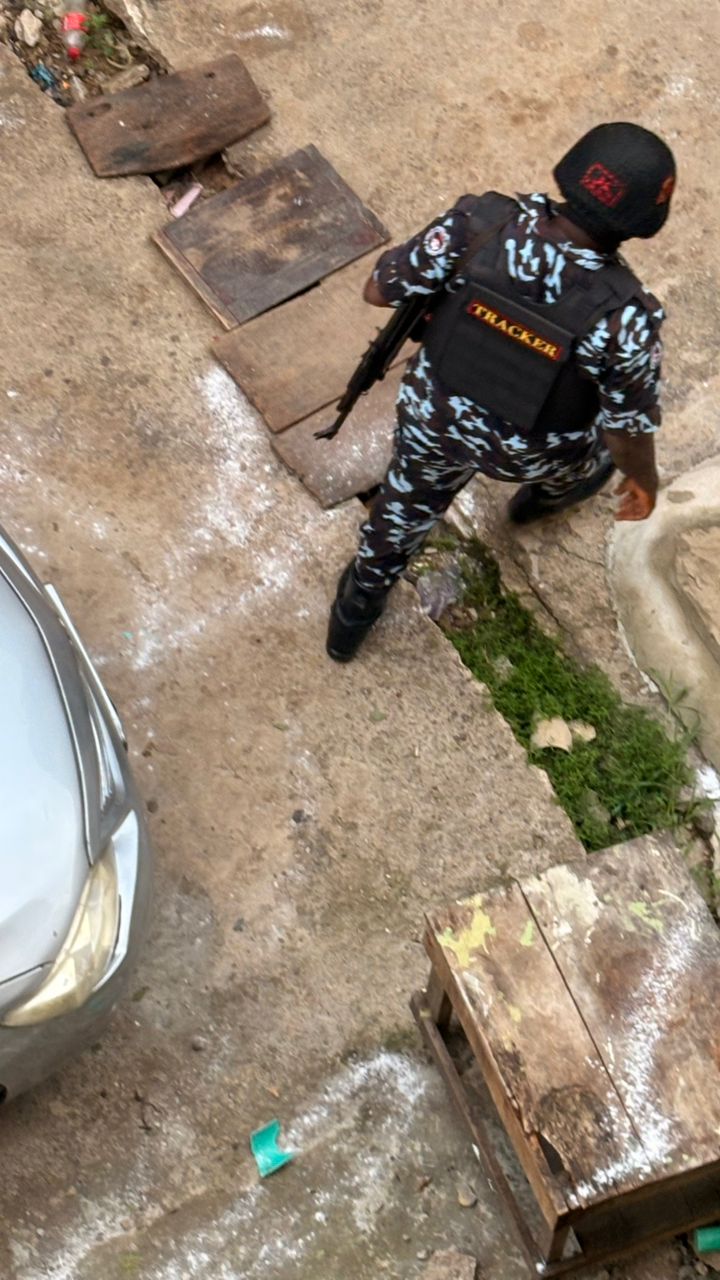
Police Officers Detained as Family Property Dispute Sparks Demolition Controversy in Lagos
By Ifeoma Ikem
A property dispute within the Omotayo-Ojo family has taken a dramatic turn following a controversial demolition exercise at a residential building in Ikosi-Ketu, Lagos State, which reportedly left tenants displaced and led to the detention of some police officers allegedly involved in the operation.

The property, located at 23B Loveall Street, Ikosi-Ketu, has been the subject of a prolonged ownership tussle since the death of its owner, Chief Oludola Omotayo Ojo, the Babaalaje of Imesi-Ile, Osun State, in 2019.
Residents said tension erupted when a group of individuals, accompanied by security operatives, stormed the premises and commenced demolition activities.
According to eyewitnesses, portions of the building were pulled down while tenants rushed to salvage their belongings from affected apartments.
The residents alleged that windows, doors and roofing sheets were damaged during the exercise, exposing parts of the building to the elements and causing significant losses to occupants.
At the centre of the dispute is Mrs Mojisola Omotayo Ojo Alolagbe, who claimed that the property was allocated to her by her late father during his lifetime as a source of financial support.
She alleged that some family members had persistently challenged her ownership claim despite ongoing legal proceedings relating to the administration of the deceased’s estate.
Alolagbe further claimed that the latest incident was part of a series of attempts to wrest control of the property, citing previous cases of alleged vandalism and partial demolition in November 2025, January 2026 and February 2026.
The situation escalated further when reports emerged that police officers allegedly involved in the demolition were later apprehended and conveyed in a Black Maria vehicle over questions surrounding the legality of their participation in the operation.
Sources familiar with the matter said those behind the demolition had initially claimed to be acting on approval from the Lagos State Ministry of Lands. However, the authenticity and extent of such approval could not be independently verified as of the time of filing this report.
The development has generated concern among residents and community members, who questioned the involvement of security personnel in what they described as a civil matter.
Some tenants, who said they had recently renewed their tenancy agreements, lamented the destruction of their property and appealed to the authorities for protection and possible compensation.

They also called for a thorough investigation into the circumstances surrounding the demolition, insisting that the rights of all parties involved should be protected.
Stakeholders have urged the Lagos State Government, security agencies and the judiciary to intervene and ensure that the dispute is resolved through lawful means to prevent further escalation.
The controversy has continued to draw public attention, raising concerns over property rights, estate administration and the role of law enforcement agencies in civil disputes.

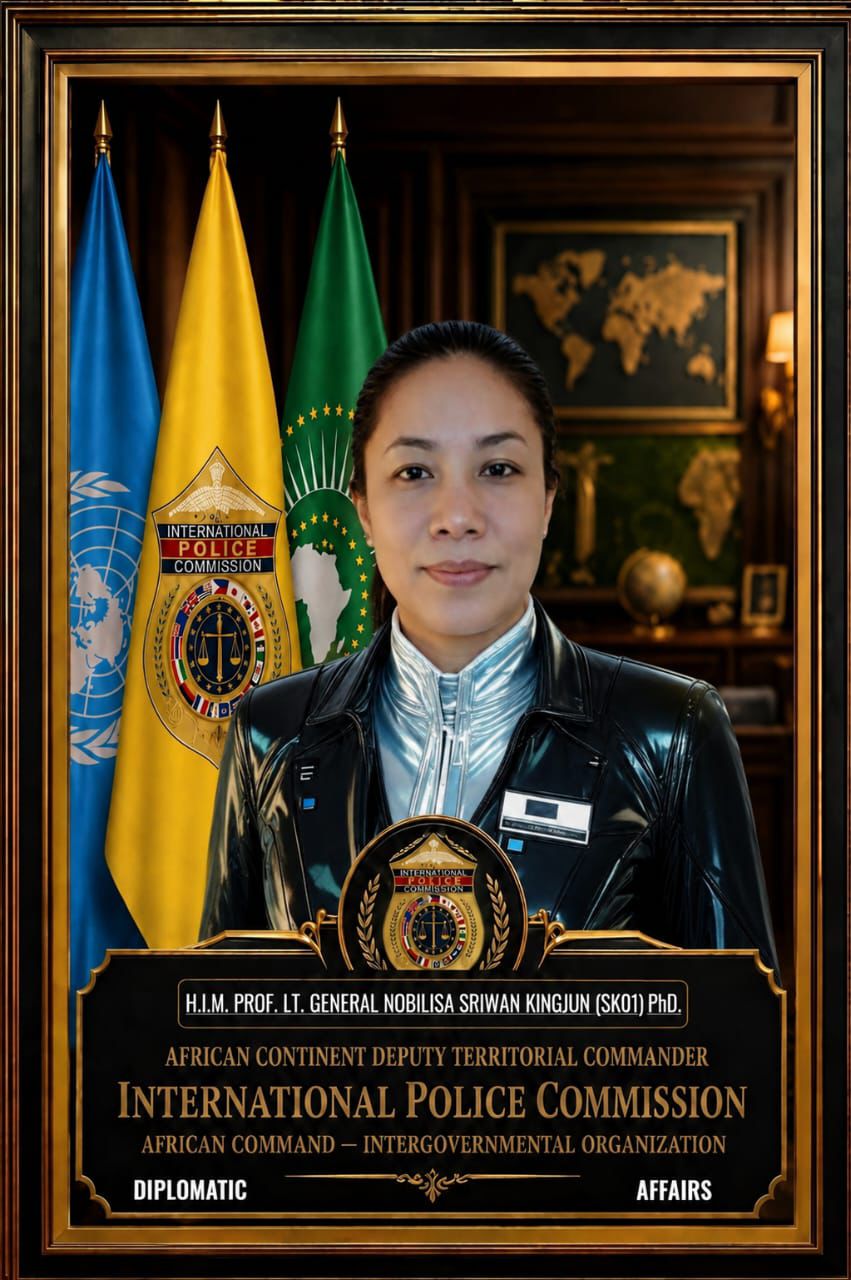
UKA Gears Up for Final ATC Exchangeability Test Run as June Preparations Begin.
May 30, 2026 – As the month of June gathers momentum, the *United Kingdom of Atlantis, UKA*, a sovereign nation has unveiled a series of vital guidelines and preparatory packages to ensure citizens and stakeholders run the *ATC Exchangeability* process effectively.
In an official update, the *President of Atlantic Crown Limited, Empress of Attica Empire UKA*, confirmed that the *Final Test Run of ATC Exchangeability* is scheduled for the month of June 2026. The exercise marks a key phase ahead of the *Official Exchangeability Window, set to run from July 2026 to February 2027*.
### Key Highlights from the Presidential Briefing
1. *Final Test Run – June 2026*
The test run is designed to validate systems, procedures, and user readiness before full activation. Citizens, partners, and designated participants are urged to follow all official advisories released by UKA authorities during this period.
2. *Official Exchangeability Period*
Following the successful completion of the June test run, the Official Exchangeability will commence in july 2026 and we are Expecting Full Exchange ability between July Ending, 2026 to February 2026.
UKA stated that detailed schedules, eligibility requirements, and step-by-step instructions will be communicated progressively through verified UKA channels.
3. *Benefiting Packages for June*
In line with UKA’s commitment to citizen empowerment, the month of June will feature “benefiting packages” aimed at education, preparation, and seamless onboarding. These packages are intended to equip the people of UKA with the knowledge and tools needed for effective participation.
4. *Commitment to Transparency*
Addressing the nation, the Empress of Attica Empire UKA emphasized:
_“Final Test Run of ATC Comes up in The Month of June, As We Prepare For The Official Exchangeability, Between July 2026 To Feb 2027. All Information Will Be Communicated.”_
UKA reaffirmed that only information released through official UKA platforms should be regarded as authoritative.
The United Kingdom of Atlantis is encouraging all citizens, representatives, and interested parties to remain alert to official communications, attend designated orientation sessions, and avoid unofficial sources. UKA’s dedication to order, clarity, and the collective benefit of its people as the nation moves into this significant phase.
For updates, advisories, and participation guidelines, citizens are advised to monitor official UKA communication channels.
United Kingdom of Atlantis, UKA, is a sovereign nation, committed to national development, citizen welfare, and structured economic participation through initiatives such as ATC Exchangeability.


- President Isaias Afwerki Departs for Egypt June 7, 2026
- Eritrea: Athlete Nahom Ermias Champion of Asmara Marathon 2026 June 7, 2026
- World Health Organization (WHO) Hands Over Ebola Preparedness Supplies to Strengthen Zambia’s Readiness June 7, 2026
- Joint Statement by the World Health Organization (WHO) and Food and Agriculture Organization of the United Nations (FAO) in South Africa on World Food Safety Day 2026: From burden to solutions – safe food everywhere June 7, 2026
- Liberia: President Boakai Oversees Signing of US$125 Million in World Bank Financing Agreements for Digital Connectivity, Renewable Energy, and Road Infrastructure June 7, 2026
- President Mahama explores Belarus’ agro-industrial hub; seeks partnerships to boost Ghana’s food security June 7, 2026
- National Insurance Corporation of Eritrea (NICE): Shareholders’ Annual Regular Meeting June 6, 2026
- World Cup accredited journalists raise concerns over unfair United States (US) visa restrictions, International Sports Press Association (AIPS) calls on FIFA to intervene June 6, 2026
- Ghana: President Mahama arrives in Belarus, lays wreath at Victory Monument June 6, 2026
- Liberia: President Boakai Advances Clean Energy Agenda; Dedicates 20-Megawatt Solar Power Plant at Mount Coffee June 6, 2026
- President Isaias Afwerki Departs for Egypt June 7, 2026
- Eritrea: Athlete Nahom Ermias Champion of Asmara Marathon 2026 June 7, 2026
- World Health Organization (WHO) Hands Over Ebola Preparedness Supplies to Strengthen Zambia’s Readiness June 7, 2026
- Joint Statement by the World Health Organization (WHO) and Food and Agriculture Organization of the United Nations (FAO) in South Africa on World Food Safety Day 2026: From burden to solutions – safe food everywhere June 7, 2026
- Liberia: President Boakai Oversees Signing of US$125 Million in World Bank Financing Agreements for Digital Connectivity, Renewable Energy, and Road Infrastructure June 7, 2026
- President Mahama explores Belarus’ agro-industrial hub; seeks partnerships to boost Ghana’s food security June 7, 2026
- National Insurance Corporation of Eritrea (NICE): Shareholders’ Annual Regular Meeting June 6, 2026
-

 news6 months ago
WHO REALLY OWNS MONIEPOINT? The $290 Million Deal That Sold Nigeria’s Top Fintech to Foreign Interests
-

 society1 month ago
SOCIAL MEDIA IS NOT A BATTLEFIELD COMMAND – WHY THE NIGERIAN ARMY’S ACTION AGAINST JUSTICE CRACK IS A NATIONAL SECURITY IMPERATIVE
-

 celebrity radar - gossips4 months ago
Dr. Chris Okafor Returns with Power and Fire of the Spirit -Mounts Grace Nation Altar with Fresh Anointing and Restoration Grace on February 1, 2026
-

 celebrity radar - gossips6 months ago
Prophet Kingsley Aitafo Releases 2026 Prophecy: ‘Nigeria Will Rise, but the World Must Prepare for Turbulence’