
Politics
Where Is Our Leader? We are not asking for perfection; we demand presence

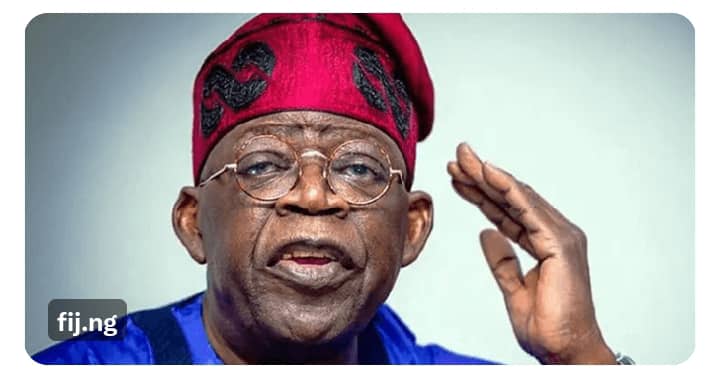
Where Is Our Leader? We are not asking for perfection; we demand presence.
By George Omagbemi Sylvester | Published by saharaweeklyng.com
“Obi Demands Accountability, Questions Tinubu’s Whereabouts Amid National Crisis.”
In an era marked by escalating socioeconomic collapse, violent insecurity and mounting public despair, the question reverberating across Nigeria’s political landscape is as simple as it is damning: Where is the President when the nation is in crisis?
On January 12, 2026, former Labour Party presidential candidate and former Governor of Anambra State Peter Obi issued an unprecedented call for accountability, publicly questioning the prolonged absence and silence of President Bola Ahmed Tinubu amid what he described as a “NATIONAL EMERGENCY.” Obi’s statement, widely disseminated on social media and confirmed across multiple news outlets, framed this inquiry not as partisan politics but as a fundamental requirement of democratic leadership.

At the core of Obi’s intervention is a stark charge: Nigeria is in the grips of deepening crises (extreme poverty, mass unemployment, hunger, insecurity and worsening public health) yet its chief executive appears largely absent from the national stage. Obi’s demand for leadership presence is not an abstract critique; it is rooted in data and observable national realities.
A Nation Gripped by Crisis.
Obi’s statement highlights alarming statistics that paint a bleak picture of Nigeria’s condition:
By the end of 2025, Nigeria was projected to host approximately 140 million people living in extreme poverty, the highest such figure globally.
Widespread hunger continues to afflict millions of households, with food insecurity deepening across urban and rural areas alike.
Youth unemployment (already one of the world’s most severe) exceeds 80 million people, crippling economic prospects and social stability.
Healthcare systems struggle under high infant mortality rates, positioning Nigeria near the bottom of global indicators for child survival.

These challenges (rampant poverty, unemployment, hunger and poor health outcomes) are not random occurrences but the product of systemic governance failures and economic dislocations that have continued for years under successive administrations.
Under such conditions, any functioning democratic leader must lead visibly, speak directly to the people and provide a strategic path forward. Instead, as Obi and others have noted, Nigerians have been left largely in the dark.
The President’s Absence: Numbers Tell a Story.
Perhaps the most striking part of Obi’s rebuke lies in his detailing of President Tinubu’s travel record:
“Spending 196 days abroad in 2025 alone (more time outside the country than within it) while Nigeria grapples with profound crises.”
This figure, widely reported across leading Nigerian news outlets, underscores a rare and troubling phenomenon: the head of state has spent more than half the year outside his own country during a period of severe national stress. Such extended absences raise legitimate questions about executive engagement with core governance duties.
What makes this absence deeper than mere travel patterns is the accompanying silence and a lack of direct communication from the president to the nation:
NO NEW YEAR ADDRESS WAS DELIVERED AT THE BEGINNING OF 2026.
NO NATIONAL BROADCAST TO REASSURE CITIZENS DURING WIDESPREAD ECONOMIC ANXIETY HAS BEEN RECORDED.
Major security developments (including purported foreign military actions on Nigerian soil) were learned by citizens through foreign media and external sources rather than from the Presidency itself.
In a democracy, such prolonged absence and silence from the nation’s highest office are without precedent and deeply corrosive to civic trust.
What Leadership Looks Like: Lessons from Global Experiences.
Internationally, leaders facing crises are measured not only by policy initiatives but by visibility, communication and symbolic solidarity with the citizenry.
As political scientist Dr. Amina Suleiman of the University of Lagos notes, “A leader must inhabit the nation’s struggles as much as its triumphs. Visibility during hardship is not symbolic but it is governance itself.”

Similarly, governance expert Professor Lawal Ibn Yaro of Bayero University argues that:
“Leadership is measured not in press releases, but in presence and in standing before the people when they need reassurance, direction and hope.”
These insights resonate globally. During the COVID-19 pandemic, leaders like New Zealand’s Jacinda Ardern delivered frequent, direct messages to citizens, helping to foster public confidence even amid uncertainty. In contrast, leadership silence (especially during crisis) often signals disengagement and erodes national morale.
Critics and Counterarguments.
Defenders of the Presidency argue that many of President Tinubu’s trips were “working vacations” or engagements at international forums essential for Nigeria’s global diplomacy. They also contend that governance requires delegation and that not all presidential work needs public broadcast.
Yet such defenses ring hollow when millions are unemployed, the nation’s economy shows fragile growth and citizens feel abandoned in the face of rising insecurity. The central critique is not that a president travels; but that he fails to communicate and lead while crises intensify at home.
The Cost of Leadership Silence.
Obi’s statement carries a grave warning:
“In a time of crisis, the absence of leadership is not just troubling; it is perilous. Silence in the face of crisis is the loudest form of failure.”
This assertion underscores a deeper truth: leadership failure does not only manifest in policy missteps and it is equally evident in absence, invisibility and silence. When citizens cannot see or hear their leader, mistrust spreads, unity falters and governance itself becomes dysfunctional.
Political psychologist Dr. Ifeoma Nwachukwu explains that:
“Silence from leadership during crisis fosters anxiety, fuels speculation, and weakens the psychological fabric of national unity. People require reassurance and clarity or else fear fills the void.”
In the absence of that reassurance, disillusionment spreads. Young Nigerians, already disenchanted by lack of opportunity, interpret silence as abandonment. Regional tensions deepen when there is no central voice articulating a shared vision of national recovery.
A Call for Accountability, Not Chaos.
Obi’s demand (“Where is the President?”) is, at its core, a demand for accountability. Democratic governance mandates that leaders justify their decisions, articulate strategies and provide transparency to the people they serve.
Obi reinforces this:
“We are not asking for perfection; we demand presence.”
This distinction is critical. Expecting perfect policy solutions during crisis may be unrealistic. Expecting leadership presence, direct communication, and accountability, however, is not only realistic but it is indispensable.
Obi’s broader vision, encapsulated in his concluding affirmation (“A New Nigeria is not just possible; it is essential”) demands that leadership vacuums be filled with vision, clarity and engagement.
Why This Matters: The Price of Leadership Vacuity.
As Nigeria confronts multiple crises, the absence of its chief executive (both physically and rhetorically) raises profound questions about governance, responsibility and national direction.
Peter Obi’s forceful demand for accountability is not mere opposition rhetoric; it is a call grounded in observable reality, democratic principle and national urgency. In a nation where millions endure hunger, insecurity and lack of opportunity, silence is not neutrality, it is neglect.
If Nigeria is to emerge from its existential challenges, leadership must be present, accountable and communicative. The people deserve nothing less.





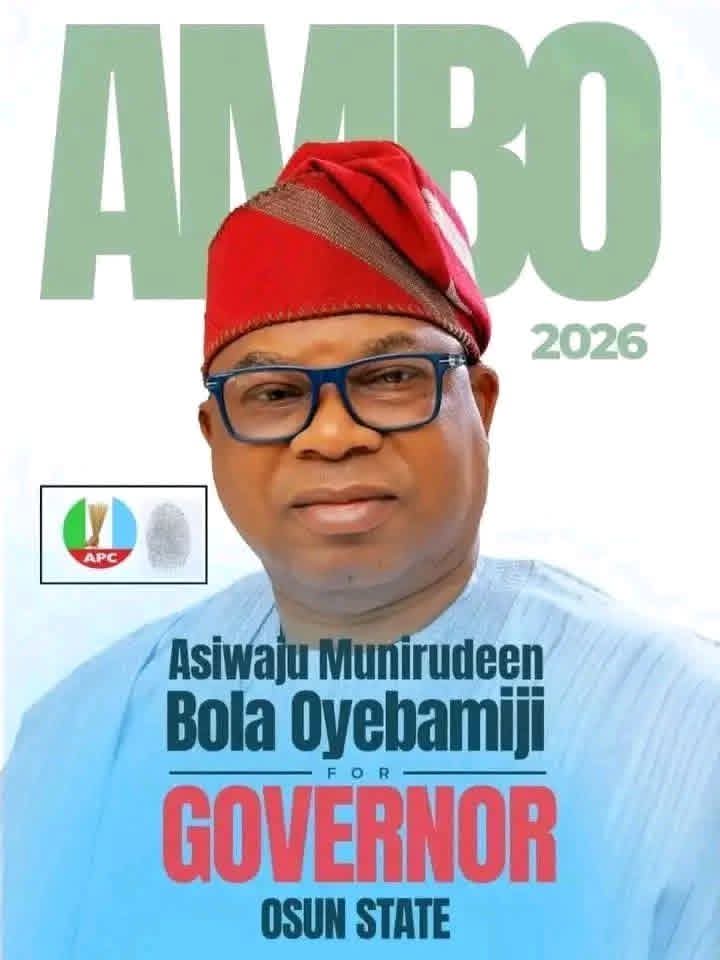
AMBO and the Osun Governorship Race: Assessing the Man, the Politics and the Vision
As political activities gather momentum ahead of the 2026 Osun State governorship election, a public affairs commentator, Oluseyi Olonade, has described the emergence of Asiwaju Munirudeen Bola Oyebamiji, popularly known as AMBO, as a significant development in the state’s political landscape.
In an article titled “Oyebamiji: The Man, The Politics and The Aspiration,” Olonade argued that the All Progressives Congress governorship hopeful possesses the character, experience and vision needed to reposition Osun State for sustainable growth.
According to the writer, Oyebamiji’s appeal stems from his extensive background in the banking sector, where he spent nearly three decades working with institutions including Wema Bank, Trans International Bank, Spring Bank and Enterprise Bank.
A native of Ikire in Irewole Local Government Area, Oyebamiji was described as a technocrat whose experience in corporate governance, finance and risk management has shaped his approach to public administration.
The article noted that his public service journey gained prominence in 2012 when he was appointed to oversee the then Osun State Investment Company Limited. Under his leadership, the organisation was reportedly restructured and transformed into Omoluabi Holdings Limited.
The writer further highlighted Oyebamiji’s tenure as Commissioner for Finance under successive APC administrations, where he was credited with managing the state’s finances during challenging economic periods.
Olonade also referenced Oyebamiji’s appointment as Managing Director of the National Inland Waterways Authority, describing it as further evidence of his administrative and leadership capabilities.
The article contrasted Oyebamiji’s governance philosophy with that of the current administration in Osun State, arguing that the APC aspirant favours institutional reforms, economic diversification and fiscal discipline.

According to the writer, Oyebamiji’s proposed agenda includes strengthening transparency in government spending, expanding internally generated revenue, attracting private-sector investments and promoting industrial and agricultural development.
The article also highlighted youth empowerment, entrepreneurship development and digital skills acquisition as key components of his vision for the state.
Olonade concluded that the forthcoming governorship election would present voters with a choice between different approaches to governance, expressing confidence that Oyebamiji’s experience and developmental agenda make him a strong contender in the race.
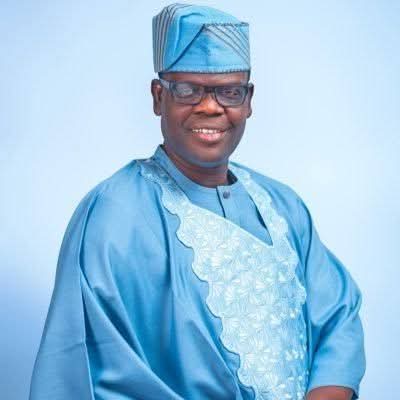
*Oselu Tiwa nTiwa Endorses Oriyomi Hamzat for Oyo Governorship*
A sociopolitical support group in Oyo State, Oselu Tiwa nTiwa, has declared its support for Alhaji Oriyomi Hamzat as the authentic governorship candidate of the Accord Party ahead of the forthcoming governorship election in the state.
The group made its position known in a statement jointly signed by its President, Mr. Adewale Oluwaseyi and Secretary, Alh. Adebayo Oyewole, on Thursday, describing Hamzat as a grassroots figure with strong connection to the people and a track record of humanitarian interventions across Oyo State.

According to the group, the endorsement followed what it described as careful observation of Hamzat’s leadership qualities, compassion and dedication to the welfare of ordinary citizens.
“Oriyomi Hamzat has consistently demonstrated empathy, courage and selfless commitment to humanity. Through his numerous interventions in the lives of ordinary citizens, he has become a symbol of hope to many families and communities,” the statement read.
Oselu Tiwa nTiwa also appealed to the national leadership of the Accord Party to prioritise the long-term future and electoral growth of the party in its decision-making process.
The group noted that Hamzat’s candidacy presents an opportunity for the party to strengthen its grassroots support base and expand its political relevance across Oyo State.
“We respectfully appeal to the National Leadership of the Accord Party to look beyond immediate political calculations and consider the bigger picture, the future growth, stability and electoral success of the party in Oyo State and beyond,” the statement added.
The group further expressed confidence in the leadership of the party, saying it believes the party’s national officers and stakeholders would take decisions that reflect fairness, inclusiveness and the collective interest of members.
While calling on party loyalists to remain calm and united, Oselu Tiwa nTiwa said continued consultations among stakeholders would help strengthen the Accord Party ahead of the election.
Signed:
Alh. Adebayo Oyewole,
Secretary.
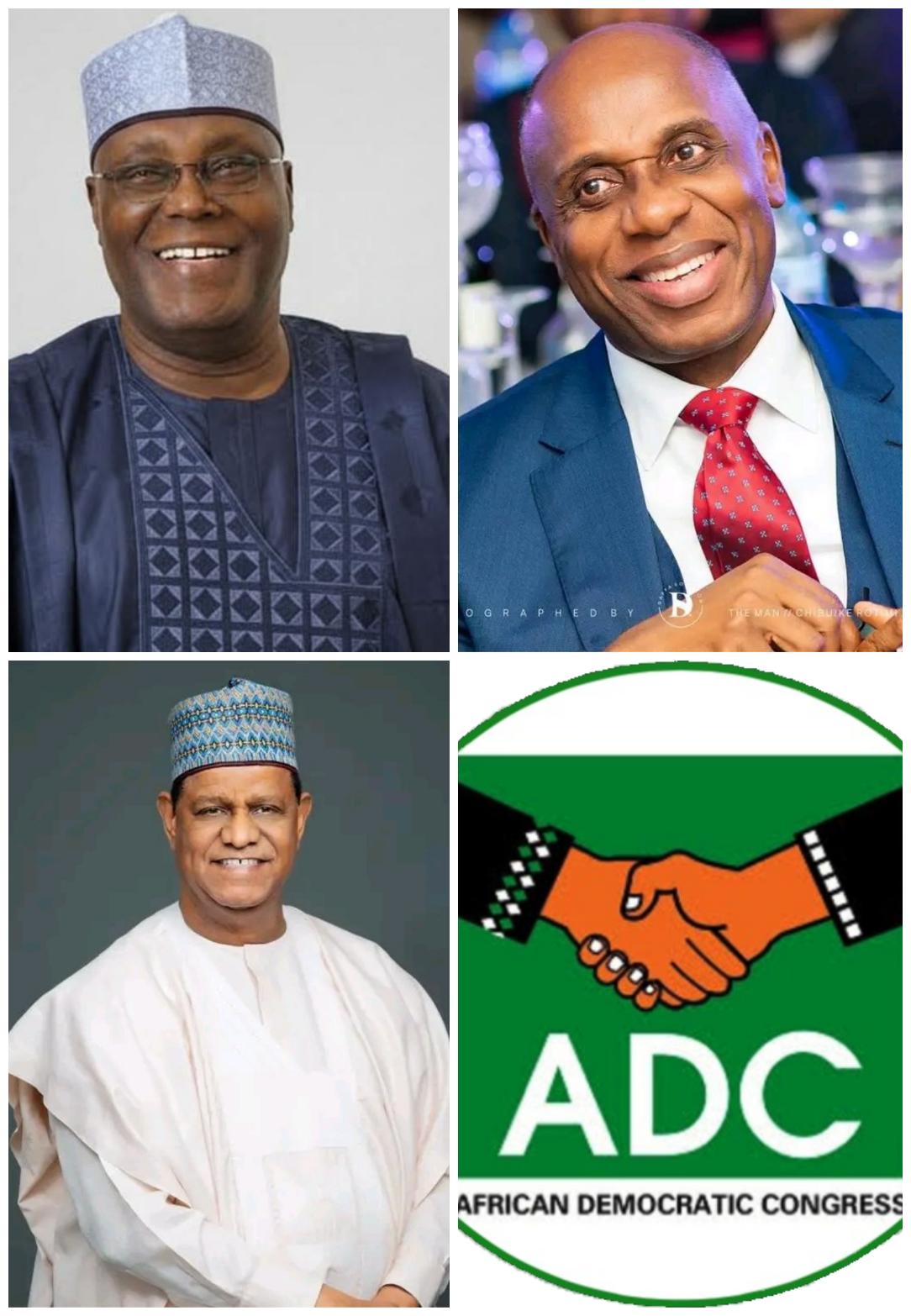
Atiku Set To Clinch ADC Presidential Ticket, Leads Amaechi, Hayatu-Deen In 34 States
Former Vice President of Nigeria and frontline presidential aspirant of the African Democratic Congress (ADC), Atiku Abubakar, is projected to emerge winner of the party’s presidential primaries, according to impeccable sources in Abuja.
The primaries, conducted across over 8,000 wards in the 36 states of the federation and the Federal Capital Territory, reportedly placed Atiku far ahead of his closest rivals — former Rivers State Governor, Rotimi Amaechi, and former Chairman of the Nigerian Economic Summit Group, Mohammed Hayatu-Deen.

Highly placed party insiders disclosed that Atiku is currently leading in 34 states, including the FCT, after securing dominance across the 19 Northern states, the five South-East states, and the six South-West states, while also maintaining a strong showing in at least three states in the South-South geopolitical zone.
The sources added that the outcome reflects what they described as “an overwhelming nationwide acceptance” of the former vice president within the opposition party ahead of the 2027 general election.
Meanwhile, the ADC leadership has invited members of the press to the official announcement of the final collated results scheduled for 11:00 a.m. on Tuesday, May 26, 2026, in Abuja.
The declaration of results is expected to be broadcast live on ARISE Television and two other major television stations, while also being livestreamed on the party’s official social media platforms on X and Facebook.
Speaking ahead of the announcement, the founding National Chairman of the ADC, Chief Ralph Nwosu, said the decision to televise the exercise live was aimed at promoting transparency and democratic accountability.
“We want millions of Nigerians at home and in the Diaspora to witness democracy in action,” Nwosu said.
He further revealed that the party leadership would encourage all three presidential aspirants to publicly embrace a peace accord and commit themselves to working together in unity for the party’s success.
According to him, the move is necessary to strengthen internal cohesion and position the ADC for victory in the presidential election scheduled for January 16, 2027.
Details later.


- President Isaias Afwerki Departs for Egypt June 7, 2026
- Eritrea: Athlete Nahom Ermias Champion of Asmara Marathon 2026 June 7, 2026
- World Health Organization (WHO) Hands Over Ebola Preparedness Supplies to Strengthen Zambia’s Readiness June 7, 2026
- Joint Statement by the World Health Organization (WHO) and Food and Agriculture Organization of the United Nations (FAO) in South Africa on World Food Safety Day 2026: From burden to solutions – safe food everywhere June 7, 2026
- Liberia: President Boakai Oversees Signing of US$125 Million in World Bank Financing Agreements for Digital Connectivity, Renewable Energy, and Road Infrastructure June 7, 2026
- President Mahama explores Belarus’ agro-industrial hub; seeks partnerships to boost Ghana’s food security June 7, 2026
- National Insurance Corporation of Eritrea (NICE): Shareholders’ Annual Regular Meeting June 6, 2026
- World Cup accredited journalists raise concerns over unfair United States (US) visa restrictions, International Sports Press Association (AIPS) calls on FIFA to intervene June 6, 2026
- Ghana: President Mahama arrives in Belarus, lays wreath at Victory Monument June 6, 2026
- Liberia: President Boakai Advances Clean Energy Agenda; Dedicates 20-Megawatt Solar Power Plant at Mount Coffee June 6, 2026
- President Isaias Afwerki Departs for Egypt June 7, 2026
- Eritrea: Athlete Nahom Ermias Champion of Asmara Marathon 2026 June 7, 2026
- World Health Organization (WHO) Hands Over Ebola Preparedness Supplies to Strengthen Zambia’s Readiness June 7, 2026
- Joint Statement by the World Health Organization (WHO) and Food and Agriculture Organization of the United Nations (FAO) in South Africa on World Food Safety Day 2026: From burden to solutions – safe food everywhere June 7, 2026
- Liberia: President Boakai Oversees Signing of US$125 Million in World Bank Financing Agreements for Digital Connectivity, Renewable Energy, and Road Infrastructure June 7, 2026
- President Mahama explores Belarus’ agro-industrial hub; seeks partnerships to boost Ghana’s food security June 7, 2026
- National Insurance Corporation of Eritrea (NICE): Shareholders’ Annual Regular Meeting June 6, 2026
-

 news6 months ago
WHO REALLY OWNS MONIEPOINT? The $290 Million Deal That Sold Nigeria’s Top Fintech to Foreign Interests
-

 society1 month ago
SOCIAL MEDIA IS NOT A BATTLEFIELD COMMAND – WHY THE NIGERIAN ARMY’S ACTION AGAINST JUSTICE CRACK IS A NATIONAL SECURITY IMPERATIVE
-

 celebrity radar - gossips4 months ago
Dr. Chris Okafor Returns with Power and Fire of the Spirit -Mounts Grace Nation Altar with Fresh Anointing and Restoration Grace on February 1, 2026
-

 celebrity radar - gossips6 months ago
Prophet Kingsley Aitafo Releases 2026 Prophecy: ‘Nigeria Will Rise, but the World Must Prepare for Turbulence’