
Business
Nigerian Excellence in Medicine: Dr. Dennis Agbazue Makes History in South Africa with Groundbreaking Spine Surgery


Nigerian Excellence in Medicine: Dr. Dennis Agbazue Makes History in South Africa with Groundbreaking Spine Surgery
By George O. Sylvester
On March 22, 2025, a new chapter was written in the annals of spinal surgery in South Africa. In what medical professionals are hailing as a major breakthrough in minimally invasive spine treatment, Nigerian-born orthopaedic and spinal surgeon, Dr. Dennis Agbazue, successfully performed Gauteng Province’s first fully endoscopic lumbar spinal decompression and fusion at Mediclinic Vereeniging. This landmark procedure has not only redefined the surgical possibilities within the province but has also elevated South Africa’s standing in the realm of advanced spinal care. More importantly, it represents the growing global footprint of Nigerian professionals who are transforming lives and industries in their host countries.

The patient, a 55-year-old male suffering from spondylolisthesis; a condition where one vertebra slips over another, often causing debilitating nerve compression and spinal stenosis underwent a complex yet precise surgical procedure executed entirely through two tiny incisions. Known as the bi-portal endoscopic technique, this method allows for bilateral laminectomy (removal of part of the vertebral bone), disc removal and spinal fusion all done with minimal disruption to muscle and tissue. This technique, relatively new in South Africa, reduces hospital stay, speeds up recovery and offers patients immediate relief from pain.
This is a monumental stride, not just for Mediclinic Vereeniging but for the entire province of Gauteng. Until now, endoscopic spinal surgeries, especially bi-portal decompression and fusion, were rarely performed in the region due to their high level of technical difficulty and the need for specialized training and equipment. Dr. Agbazue’s success now opens the door to a future where such procedures become commonplace, benefiting thousands of patients suffering from chronic spinal conditions.

A Surgeon of Many Firsts
Dr. Agbazue is not new to trailblazing. Since 2022, he has emerged as one of the few spinal surgeons in South Africa proficient in both uni-portal and bi-portal endoscopic spinal techniques. His journey into endoscopic spine surgery began with the uni-portal approach, a technique that involves a single incision for both visualization and surgical instruments. Since adopting it, he has successfully completed approximately 330 cases, earning him accolades from both peers and patients.
What sets him apart is not just his technical expertise, but his commitment to patient-centered care and surgical innovation. The transition to the bi-portal technique in 2024 allowed Dr. Agbazue to tackle more complex spinal conditions with enhanced surgical visibility and dexterity. Unlike open surgery, which often requires long incisions and extended recovery periods, the bi-portal method uses two small portals, one for a camera and another for surgical tools enabling more precision and less trauma to surrounding tissues.
“This technique represents the future of spine surgery,” Dr. Agbazue noted. “We are now able to offer patients the best of both worlds: surgical efficacy and a rapid return to normal life. It’s truly transformative.”
Building a Hub of Excellence in Vereeniging
Since leading the first endoscopic spinal surgery at Mediclinic Vereeniging on August 9, 2022, Dr. Agbazue has been instrumental in transforming the facility into a center of excellence for minimally invasive spine care. By March 2024, he had performed over 200 successful endoscopic spinal procedures, with outstanding outcomes and low complication rates.
His collaboration with Q Surgical, a medical instrumentation firm, has played a pivotal role in advancing the hospital’s capabilities. Together, they have introduced state-of-the-art endoscopic equipment and surgical tools, ensuring that local patients receive world-class care without the need to travel abroad.
As a result, Mediclinic Vereeniging has seen an influx of patients from across Gauteng, including metropolitan hubs like Johannesburg and Pretoria, seeking treatment under Dr. Agbazue’s expert care. For many, this represents not only hope but a second chance at life free from the chronic pain and disability associated with spinal disorders.
Representing Nigeria with Pride
At a time when negative narratives often dominate discussions about Nigeria and its citizens abroad, individuals like Dr. Dennis Agbazue offer a powerful counter-narrative. A proud Nigerian, Dr. Agbazue embodies the resilience, intellect and work ethic that define the best of the Nigerian spirit. His achievements are not isolated; rather, they are part of a broader wave of Nigerian professionals excelling globally in medicine, law, academia, technology and business.
From the corridors of Johns Hopkins and Mayo Clinic in the United States to the consulting rooms of top hospitals in the UK, Canada and Australia, Nigerian doctors have built a formidable reputation for excellence. According to a 2021 report by the UK’s General Medical Council, over 7,000 Nigerian-trained doctors were registered to practice in the UK, one of the largest contingents of foreign-trained doctors. In the United States, Nigerian-Americans are among the most highly educated immigrant groups, with medicine ranking among the top professions.
In South Africa, despite facing xenophobic challenges, Nigerians like Dr. Agbazue continue to distinguish themselves through competence and integrity. They fill critical gaps in healthcare and education and contribute to national development in quiet yet powerful ways.
The Global Shift Toward Minimally Invasive Surgery
Dr. Agbazue’s success must also be seen within the global context of medical innovation. The past two decades have seen a seismic shift from traditional open surgeries to minimally invasive procedures across all specialties. Spinal surgery, once known for long recovery periods and high complication risks, has now embraced technologies such as robotics, navigation systems and endoscopic tools.
In endoscopic spinal surgery, the benefits are indisputable. Studies published in peer-reviewed journals such as The Spine Journal and Journal of Neurosurgery: Spine have shown that endoscopic techniques result in less blood loss, shorter operative times, lower infection rates and faster functional recovery compared to open surgery. This approach is particularly beneficial for older patients or those with comorbidities who might not tolerate extensive surgery well.
Dr. Agbazue’s use of bi-portal endoscopy aligns South African spinal care with these international best practices, giving local patients access to treatment modalities previously reserved for developed countries.
A Call to Celebrate Nigerian Excellence
As Nigerians, we must learn to recognize, amplify and celebrate our own. In a world quick to highlight the failures and shortcomings of African professionals, stories like that of Dr. Dennis Agbazue remind us of our boundless potential. These are the narratives that must dominate our airwaves, newspapers and social platforms not only as a source of national pride but as an inspiration to young Nigerians at home and in the diaspora.
The future of Nigeria lies in the excellence of its people. Whether in medicine, innovation or public service, it is those who dare to push boundaries and defy odds that will shape our nation’s global identity. In Dr. Agbazue, we find one such individual a healer, a pioneer, and a worthy ambassador of the Nigerian dream.
Final note
The March 22 procedure at Mediclinic Vereeniging was more than a surgical first, it was a testament to the transformative power of skill, vision and perseverance. Dr. Dennis Agbazue’s achievement has not only raised the bar for spinal surgery in South Africa but has also positioned him as a beacon of excellence among Nigerian professionals abroad.
As we look to the future, may we continue to support and celebrate the likes of Dr. Agbazue, whose work reminds us that, regardless of where we come from, greatness knows no boundaries.





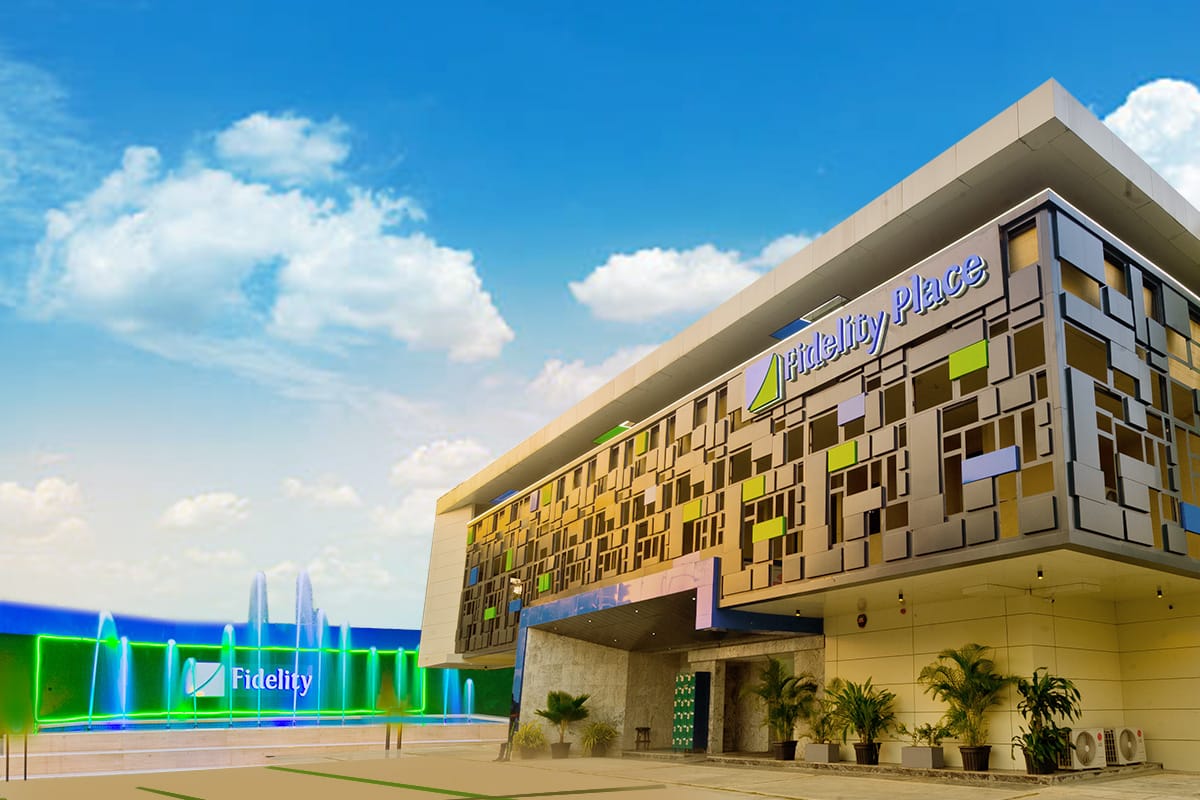
Fidelity Bank grows gross earnings by 38% to N434.95b in Q1
Fidelity Bank Plc recorded 37.9 per cent growth in gross earnings to N434.95 billion in first quarter 2026 as the international commercial bank continued to expand its core banking market share.
Interim report and accounts of Fidelity Bank for the three months ended March 31, 2026 released at the Nigerian Exchange (NGX) showed that gross earnings rose from N315.42 billion in first quarter 20025 to N434.95 billion in first quarter 2026, representing an increase of 37.9 per cent.
The top-line performance was driven by impressive growth in the bank’s core business operations with interest incomes rising by 22.8 per cent to N314.48 billion in first quarter 2026 as against N256.10 billion in first quarter 2025.
With net interest income at N180.97 billion, the bank closed the period with profit before tax of N92.48 billion. After taxes, net profit stood at N74.47 billion for the three-month period. Earnings per share remained high at N5.69, underlining the capacity of the bank to reward its shareholders.
The balance sheet of the bank also emerged stronger. Total assets crossed the N11 trillion mark to N11.35 trillion by March 2026 compared with N10.46 trillion recorded in December 2025. Customers’ deposits increased from N6.89 trillion to N7.38 trillion. Total equity rode on the back of earnings growth to a 27.5 per cent increase from N1.09 trillion in December 2025 to N1.39 trillion by March 2026.
The first quarter 2026 results further consolidated the strong earnings outlook of the bank, which had successfully completed its recapitalisation amidst impressive earnings performance in 2025.
Fidelity Bank had recorded double-digit growths in interest and non-interest incomes as well as key balance sheet items during the year ended December 31, 2025.
The audited report showed that gross earnings rose from N1.04 trillion in 2024 to N1.52 trillion in 2025, an increase of 45.6 per cent. Interest and similar incomes had grown by 38.7 per cent from N803.1 billion in 2024 to N1.11 trillion in 2025. Fees and commission incomes also rose by 44.7 per cent from N78.4 billion to N113.4 billion. The bank recorded net profit after tax of N242.4 billion in 2025.
The bank’s balance sheet emerged stronger with total assets rising by 18.6 per cent to N10.46 trillion in 2025 as against N8.82 trillion in 2024. Customer deposits increased by 16.1 per cent from N5.94 trillion to N6.89 trillion, reflecting continued franchise strength and an improved funding profile. Net loans and advances meanwhile declined by 2.4 per cent to N4.28 trillion in 2025 as against N4.39 trillion in 2024, attributable to customers paying down on their mature obligations.
The bank had in 2025 strengthened its capital position, with eligible capital rising to N561 billion, above the regulatory minimum of N500 billion for banks with international authorisation. In addition, capital adequacy had remained robust, with Capital Adequacy Ratio of 30.94 per cent by December 2025 as against 23.47 per cent by December 2024.
Managing Director, Fidelity Bank Plc, Dr. Nneka Onyeali-Ikpe, said the first quarter 2026 results reinforced the bank’s strong and resilient business model.
She noted that with the remarkable success of its recapitalisation programme and continuing expansion, Fidelity Bank has entered a new era of growth and impressive returns.
“We are on a stronger footing and confident that we will set new growth records that are reflective of our legacy and the future we are working on,” Onyeali-Ikpe said.
Business
Dangote Refinery Ends Nigeria’s Era of Fuel Import Dependence, Boosts GDP, FX Earnings — EIU
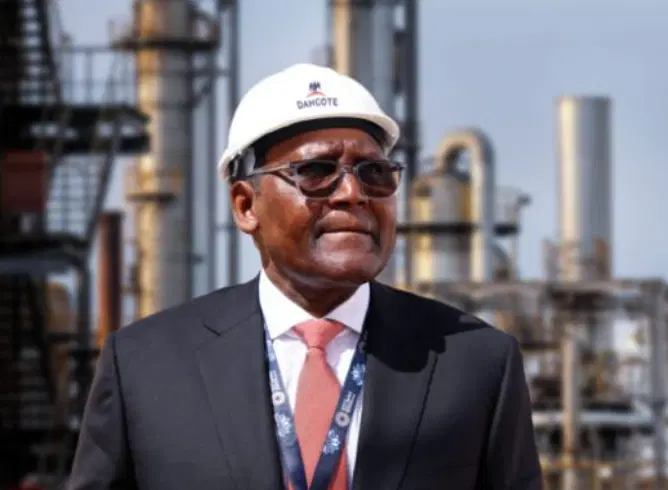
Dangote Refinery Ends Nigeria’s Era of Fuel Import Dependence, Boosts GDP, FX Earnings — EIU
The operational ramp up of the 650,000 barrels per day Dangote Petroleum Refinery & Petrochemicals is fundamentally reshaping Nigeria’s downstream oil sector, significantly reducing the country’s dependence on imported refined petroleum products and strengthening its external position, according to the Economist Intelligence Unit (EIU).
In its latest assessment on Nigeria’s fuel market and regulatory environment, the EIU said the refinery has already transformed a sector that was previously characterised by heavy reliance on imported fuel despite Nigeria being Africa’s largest crude oil producer. The report noted that the refinery met nearly 80 per cent of domestic petrol demand in April and produced enough volumes to satisfy local consumption requirements as operations approached full capacity.
The EIU described Nigeria’s downstream petroleum sector before the refinery as “long dysfunctional”, noting that the country had remained almost entirely dependent on costly imported fuel while producing nearly 1.5 million barrels of crude oil daily.
According to the report, the emergence of the refinery has reduced import dependence, improved domestic fuel availability and strengthened Nigeria’s balance of payments position through lower import demand and rising exports of refined petroleum products.
“The gradual ramp up of the 650,000 barrel/day Dangote refinery since May 2023 has transformed Nigeria’s long dysfunctional downstream sector,” the report stated. “The country’s main refineries, all state owned, had been inoperative for years and Nigeria was almost entirely reliant on costly imported fuel.”
The research and analysis division of The Economist Group, London added that the refinery’s attainment of full operational capacity and its planned expansion would further support Nigeria’s economic growth and foreign exchange earnings over the medium term.
“Meanwhile, the attainment of full capacity at, and an increase in exports from, the Dangote refinery will support real GDP growth and foreign exchange earnings in 2026 and 2027 and beyond, as a planned doubling of the plant’s output comes on stream around the end of the decade,” it added.
Industry analysts said the refinery is increasingly positioning Nigeria as an emerging refining and export hub, altering energy trade flows across Africa and reducing the vulnerability associated with fuel import dependence.
The EIU noted that the refinery’s expansion has coincided with major reforms in Nigeria’s downstream sector, including the removal of fuel subsidies and the introduction of market driven pricing mechanisms.
The report, however, said the transition from a state dominated fuel import structure to large scale domestic refining has triggered resistance from interests linked to the old import regime.
The latest tensions emerged following the decision by the Nigerian Midstream and Downstream Petroleum Regulatory Authority to relax restrictions on petrol imports despite the refinery’s growing capacity to meet domestic demand.
Dangote Industries subsequently initiated legal action, arguing that continued import approvals undermine domestic refining investments and conflict with the objectives of the Petroleum Industry Act, which seeks to encourage local refining capacity and reduce import dependence.
Analysts noted that the availability of large-scale domestic refining capacity has improved Nigeria’s energy security and reduced exposure to external supply shocks and foreign exchange volatility.
The Centre for the Promotion of Private Enterprise also cautioned against unrestrained importation of petroleum products, warning that such a policy could weaken Nigeria’s industrialisation drive and discourage investments in domestic refining.
Chief Executive Officer of CPPE, Muda Yusuf, said continued dependence on imported fuel had historically contributed to pressure on foreign reserves, exchange rate instability and fiscal leakages.
The refinery’s growing impact is also being reflected in Nigeria’s broader macroeconomic indicators. Earlier this month, S&P Global Ratings cited increased domestic refining capacity and rising hydrocarbon exports among the major factors supporting Nigeria’s sovereign credit rating upgrade – the first in 14 years.
Beyond Nigeria, analysts said the refinery is increasingly being viewed as a strategic industrial asset for Africa, where many countries remain heavily dependent on imported fuel despite rising demand for transportation, manufacturing, and power generation.
Business
BREAKING: Court Dismisses $19.6 Million Claim Against NNPCL — Rules Contract Scope Cannot Be Changed Orally
BREAKING: Court Dismisses $19.6 Million Claim Against NNPCL — Rules Contract Scope Cannot Be Changed Orally
In a landmark ruling on Friday, May 22, 2026, the Federal Capital Territory High Court in Abuja threw out a $19.6 million lawsuit filed by Alternate Dimensions Ventures Ltd against the Nigerian National Petroleum Company Limited (NNPCL), affirming a key legal principle: a written contract cannot be expanded through oral agreements or conduct.
Alternate Dimensions had sought $19,600,000 in professional fees, claiming the scope of its Direct Sale, Direct Purchase (DSDP e-pro) contract with NNPCL was orally expanded. Represented by counsel Patrick Peter, the firm argued it was entitled to the revised sum for services rendered under the alleged new terms.
But NNPCL, through its lawyer Ituah Imhanze of KENNA LP, pushed back sharply, arguing that parties are bound exclusively by the clear terms of their written agreement. Imhanze contended that without any written amendment, the claim was legally unsound, and the court agreed.
Delivering judgment, Justice Hamza Mu’azu upheld NNPCL’s defense, stating that the contract was unambiguous and that no evidence was adduced during the trial, which supported the alleged scope expansion. The court further found that NNPCL fully complied with all contractual terms and committed no breach.
Dismissing the suit as meritless, Justice Mu’azu reinforced the doctrine of sanctity of contract: any amendment to a written agreement must be express, unequivocal, and documented, not implied or verbal.
The ruling spares NNPCL from the S19.6 million claim and also a floodgate of similar potential liabilities.


- Qrent says delaying Information Technology (IT) refresh cycles may be increasing operational risk for businesses in Africa May 27, 2026
- Dentons’ Iyunola Adekanye Appointed to African Mining Week (AMW) Advisory Board May 27, 2026
- United Nations (UN) Women Liberia and Partners Convene for Spotlight Initiative 2.0 Women’s Economic Empowerment Inception Meeting May 27, 2026
- African Mining Week (AMW) to Host Central Bank Governors Roundtable as Monetary Authorities Deepen Role in Mining Sector Growth May 27, 2026
- Eritrea: Diaspora Nationals Celebrate Independence Day Anniversary May 27, 2026
- Africa Unveils Landmark Humanitarian Coordination Platform to Strengthen aligned Response to Humanitarian Crises May 27, 2026
- Seychelles: President Herminie Engages with Police and Fire Services on Praslin May 27, 2026
- Issue 3 of Mining Review Africa now available for free download May 27, 2026
- NOV Joins African Energy Week (AEW) 2026 as Gold Sponsor Amid Africa’s Offshore Expansion Push May 26, 2026
- African Union of Broadcasting (AUB) and United Nations University Institute for Water, Environment and Health (UNU-INWEH) Launch Landmark Webinar Series on Africa’s Water Crisis, Starting June 2, 2026 May 26, 2026
- Qrent says delaying Information Technology (IT) refresh cycles may be increasing operational risk for businesses in Africa May 27, 2026
- Dentons’ Iyunola Adekanye Appointed to African Mining Week (AMW) Advisory Board May 27, 2026
- United Nations (UN) Women Liberia and Partners Convene for Spotlight Initiative 2.0 Women’s Economic Empowerment Inception Meeting May 27, 2026
- African Mining Week (AMW) to Host Central Bank Governors Roundtable as Monetary Authorities Deepen Role in Mining Sector Growth May 27, 2026
- Eritrea: Diaspora Nationals Celebrate Independence Day Anniversary May 27, 2026
- Africa Unveils Landmark Humanitarian Coordination Platform to Strengthen aligned Response to Humanitarian Crises May 27, 2026
- Seychelles: President Herminie Engages with Police and Fire Services on Praslin May 27, 2026
-

 news5 months ago
WHO REALLY OWNS MONIEPOINT? The $290 Million Deal That Sold Nigeria’s Top Fintech to Foreign Interests
-

 society3 weeks ago
SOCIAL MEDIA IS NOT A BATTLEFIELD COMMAND – WHY THE NIGERIAN ARMY’S ACTION AGAINST JUSTICE CRACK IS A NATIONAL SECURITY IMPERATIVE
-

 celebrity radar - gossips4 months ago
Dr. Chris Okafor Returns with Power and Fire of the Spirit -Mounts Grace Nation Altar with Fresh Anointing and Restoration Grace on February 1, 2026
-

 celebrity radar - gossips6 months ago
Prophet Kingsley Aitafo Releases 2026 Prophecy: ‘Nigeria Will Rise, but the World Must Prepare for Turbulence’