
Politics
Nigerians, Are You Better Than You Were Two Years Ago?

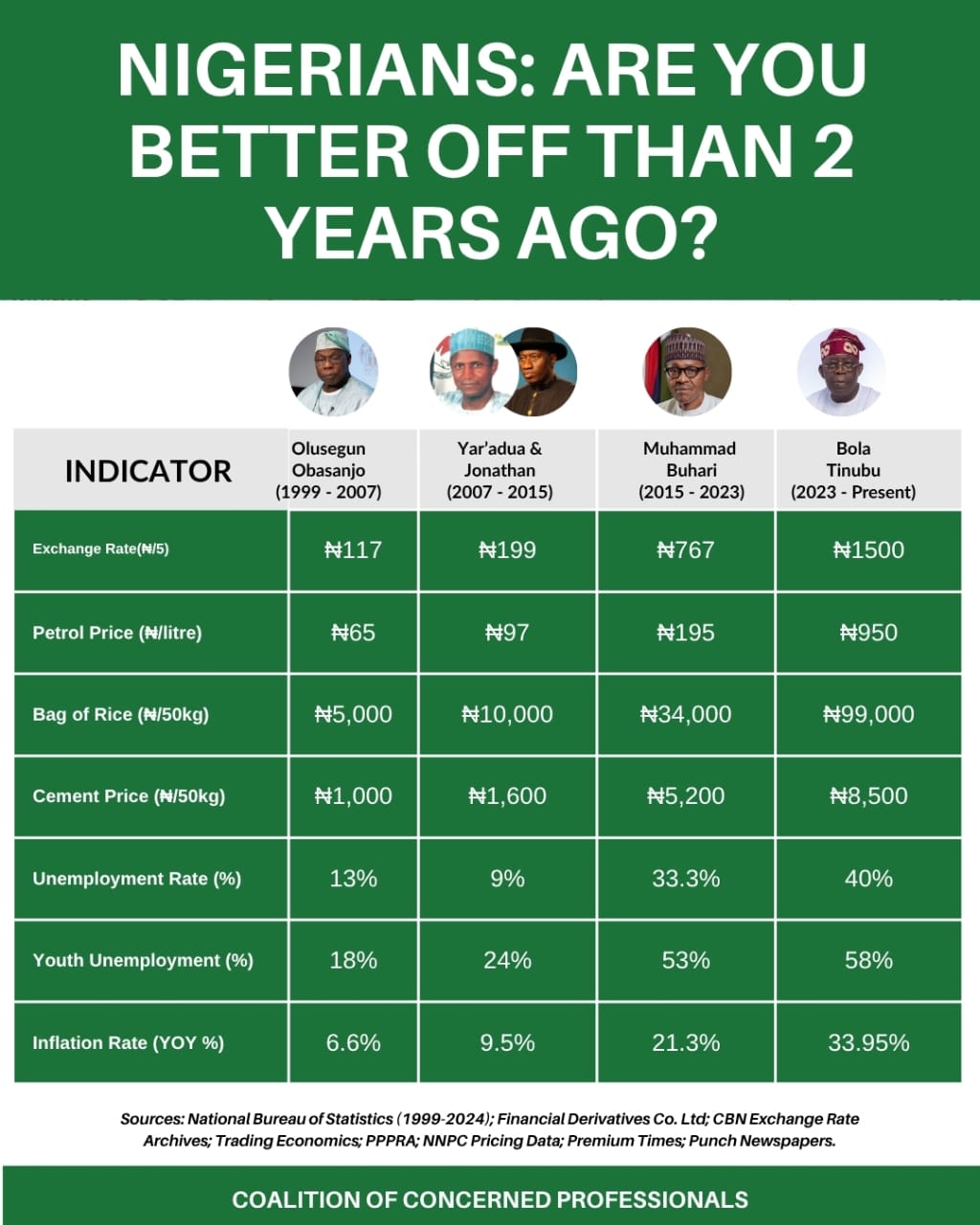
Nigerians, Are You Better Than You Were Two Years Ago?
By Gbenga Shaba
In 2025, a critical question resonates across Nigeria: “Am I better off today than I was yesterday?” For the vast majority of Nigerians, this is not a rhetorical exercise but a stark, lived reality, whispered in homes fractured by hunger and screamed in the silent desperation of stalled ambitions. From the bustling arteries of Lagos to the tranquil villages of Lafia, the answer, tragically, is a resounding no. Since the return to democratic governance in 1999, despite five presidents promising a brighter dawn, each new regime seems to bring less hope and more profound hardship.

The very essence of democracy, upon which its foundations were laid in 1999, promised something profoundly transformative: a demonstrably better life. This envisioned reality was not abstract; it meant the assurance of food on the table, consistent electricity, affordable healthcare, quality education, and jobs that could cover essential expenses and leave a little for life’s simple pleasures. Instead, Nigerians have largely received a relentless succession of economic experiments, a recurring drama surrounding fuel subsidies that consistently ends in public pain, a notoriously fragile national currency, and a poverty rate that has ballooned to alarming and unprecedented levels.
Empirical Comparisons Of Key Economic Indicators Across Administrations
Empirical comparisons of key economic indicators across administrations reveal a consistently worsening pattern for the average citizen. A single litre of petrol now commands a price that, for many, exceeds a worker’s entire daily wage. In 1999, a litre of petrol cost approximately eleven naira. In 2025, that same litre costs well over seven hundred naira, a staggering sixty-threefold increase. The Nigerian naira, once trading at a relatively stable eighty to the United States dollar in 1999, now fluctuates precariously around one thousand four hundred and fifty to one thousand five hundred naira to the dollar, according to recent figures from financial markets. This represents an almost eighteenfold depreciation. As of July 2025, the naira trades around one thousand five hundred and twenty-eight naira to the dollar in the official window.
Inflation
Inflation, a voracious and unseen predator, devours incomes with the efficiency of termites in a wooden hut, leaving behind only the husks of diminished purchasing power. While hovering in single digits in 1999, the latest figures for May 2025 indicate headline inflation hovering around twenty-two point nine seven percent, with food inflation soaring to over forty percent. This means the cost of basic food items is increasing at an almost uncontrollable rate, eroding every gain. While the national minimum wage has nominally grown tenfold since 1999, now standing at thirty thousand naira, its real value has been devastatingly eroded by the relentless march of inflation. A nominal increase means little when purchasing power is decimated.
The Poverty Rate
The poverty rate, a stark measure of human well-being, has regrettably risen again. As of the latest multidimensional poverty index report, over one hundred and thirty-three million Nigerians, representing approximately sixty-three percent of the population, are now living in multidimensional poverty, lacking access to basic services and decent living standards.
This is not merely an economic crisis that can be neatly categorized within macroeconomic models. It is a profound national trauma etched onto the faces of its citizens. The cost of essential staples like rice and garri, the burden of transport fares, the escalating burden of rent, the prohibitive expense of school fees, and even the price of a sachet of water have multiplied severalfold in a short period. An average family in Kogi or Kano, which in 2005 could budget approximately five thousand naira for a week’s meals, now requires over thirty thousand naira to feed the same household. Chillingly, for this increased expenditure, the quality and nutritional value of the food consumed is often worse, a tragic testament to compromised living standards.
The current economic strain has become an oppressive weight, crushing aspirations and fostering widespread despair. Mrs Uzo, a mother in Aba, can no longer afford life-saving asthma medication for her young son. Tunde, a bright university graduate in Lagos, precariously sells phone accessories from a wheelbarrow, his dreams of a professional career indefinitely deferred. Amina, a widowed mother in Bauchi, makes the agonizing decision to skip meals herself so her children might at least have something to eat. These are the vivid and heart-wrenching realities and the raw, personal toll of abstract numbers and economic policies.
President Olusegun Obasanjo Vs Now
Under President Olusegun Obasanjo from 1999 to 2007, the administration embarked on broad and ambitious economic reforms. A landmark achievement was the successful negotiation of eighteen billion dollars in foreign debt relief through the Paris Club, significantly unburdening the national treasury. His tenure also oversaw the crucial consolidation of Nigeria’s banking sector. Perhaps most transformative was the advent of the telecom revolution, with GSM lines expanding explosively, birthing a dynamic new middle class. Macroeconomic stability was relatively sustained, inflation was managed, and real GDP demonstrated steady growth. The national minimum wage doubled, and poverty rates fell by a commendable eleven percentage points.
President Umaru Musa Yar’Adua and President Goodluck Jonathan Vs Now
During the administration of President Umaru Musa Yar’Adua and President Goodluck Jonathan from 2007 to 2010, despite electoral controversy and illness, a significant achievement was the Niger Delta Amnesty Programme, which restored stability and crucial oil output. While ambitious reforms were not fully realized, the renewed focus on the rule of law offered hope. Economically, inflation rose, reaching eleven point five eight percent in 2008 and twelve point five four percent in 2009, while poverty spiked by eight percent.
From 2010 to 2015, President Goodluck Jonathan and Vice President Namadi Sambo oversaw a period when Nigeria experienced a surge in GDP growth, propelled by high global oil prices. A rebasing exercise positioned Nigeria as Africa’s largest economy. However, this impressive GDP growth did not fully translate into real prosperity for the majority, and inequality widened. The power sector privatization largely failed to deliver stable electricity, and the Occupy Nigeria movement in 2012 highlighted growing discontent over fuel subsidy removal. Despite these challenges, poverty did decline marginally, and the agricultural sector saw reforms. Youth-targeted programs like YouWin provided some relief.
President Muhammadu Buhari and Vice President Yemi Osinbajo Also?
The administration of President Muhammadu Buhari and Vice President Yemi Osinbajo from 2015 to 2023 was heralded by many as a messianic anti-corruption movement, promising sweeping changes. It recorded successes in mainstreaming social investments and other programs. Significant investments were made in infrastructure projects, and social intervention programs were implemented to alleviate poverty and unemployment. However, the initial dream of revitalization soon withered under a cascade of economic shocks. A precipitous crash in global oil prices in 2016 triggered Nigeria’s first recession in decades. By 2020, the unforeseen onslaught of the COVID-19 pandemic dealt another devastating blow, knocking the economy into yet another tailspin and marking two recessions within a single tenure. Inflation soared to unprecedented heights, becoming a daily torment for households. Jobs disappeared at an alarming rate, exacerbating an already dire unemployment crisis. The naira was devalued not once but twice over, further eroding purchasing power and making imports prohibitively expensive. The undeniable reality for the average Nigerian was one of increasing poverty, pervasive hunger, and a deepening sense of hopelessness. While the minimum wage was eventually raised to thirty thousand naira, it was swiftly outpaced by the relentless surge in food inflation and punitive fuel price hikes, rendering the increment almost immediately insufficient.
The last 2 years!
President Bola Ahmed Tinubu and Vice President Kashim Shettima came into office in 2023 on the campaign theme of Renewed Hope. However, their administration’s immediate and simultaneous removal of the fuel subsidy and floating of the naira sent seismic shockwaves through the fragile economy. Within days, transport costs tripled, and the price of a common loaf of bread skyrocketed. Many families were forced to pull their children out of school. Markets emptied, and small businesses closed in droves. The economy, already bruised, began to fracture under the pressure.
The government maintains that these drastic measures are necessary pains that will eventually lead to broader prosperity. This argument is not new, but Nigerians are profoundly tired of deferred dreams and promises of future abundance that never materialize. The pressing question remains: how long must the poor wait for the promised benefits, and how much more suffering can be endured?
True reform, the kind that genuinely uplifts a nation, fundamentally puts its people first. It is not about abstract macroeconomic numbers or accolades from multilateral financial institutions. It is, first and foremost, about the tangible impact on the lives of ordinary citizens. A truly people-oriented leadership would embody a different approach. It would push for social equity, prioritize local content development, and champion grassroots empowerment. Where the current approach removes subsidies without adequate cushioning, a people-oriented leadership would meticulously sequence reforms, implementing robust safety nets and palliative measures. Where the naira has been fully floated, a people-oriented leadership would carefully protect strategic sectors and essential commodities from volatile market forces. And crucially, where blame is cast upon the past, a people-oriented leadership would believe in co-creating the future with the people through inclusive dialogue and participatory governance.
Economic Indicators
A Declining Trajectory
Empirical comparisons of key economic indicators across administrations reveal a consistently worsening pattern for the average citizen.
Petrol Price: A single litre of petrol now commands a price that, for many, exceeds a worker’s entire daily wage. In 1999, a litre of petrol cost approximately eleven Naira. In 2025, that same litre costs well over seven hundred Naira, a staggering sixty-three-fold increase.
Exchange Rate: The Nigerian Naira, once trading at a relatively stable eighty to the United States Dollar in 1999, now fluctuates precariously around one thousand four hundred and fifty to one thousand five hundred Naira to the dollar, according to recent figures from financial markets. This represents an almost eighteen-fold depreciation. As of July 2025, the Naira trades around one thousand five hundred and twenty-eight Naira to the dollar in the official window.
Inflation: Inflation, a voracious, unseen predator, devours incomes with the efficiency of termites in a wooden hut, leaving behind only the husks of diminished purchasing power. While hovering in single digits in 1999, the latest figures for May 2025 indicate headline inflation hovering around twenty-two point nine-seven percent, with food inflation soaring to over forty percent. This means the cost of basic food items is increasing at an almost uncontrollable rate, eroding every gain.
Minimum Wage: While the national minimum wage has nominally grown tenfold since 1999, now standing at thirty thousand Naira, its real value has been devastatingly eroded by the relentless march of inflation. A nominal increase means little when purchasing power is decimated.
Poverty Rate: The poverty rate, a stark measure of human well-being, has regrettably risen again. As of the latest multidimensional poverty index report, over one hundred and thirty-three million Nigerians, representing approximately sixty-three percent of the population, are now living in multidimensional poverty, lacking access to basic services and living standards.
The difference is crystal clear. One governs with an eye on the boardroom. The other governs for the marketplace, for the common man and woman, for the struggling family. As 2025 unfolds, the fundamental question persists, demanding an answer. Ask the mechanic in Minna, the teacher in Ikare, or the tomato seller in Mile Twelve. Their answer, spoken in the language of hunger and hardship, is tragically and unambiguously the same: no, we are not better off.
Until Nigeria consistently and genuinely puts its people first, it will remain trapped in a disheartening cycle of unfulfilled promises. Genuine change is not merely about new faces in power. It is about an unwavering focus on serving the people those numbers are meant to represent and uplift. The true measure of a nation’s progress lies not in its statistical achievements but in the tangible improvement of the lives of its most vulnerable citizens. Only then can the answer to that profound question finally be a resounding and joyous yes.
Gbenga Shaba is a journalist and an analyst from Lagos State, Nigeria.




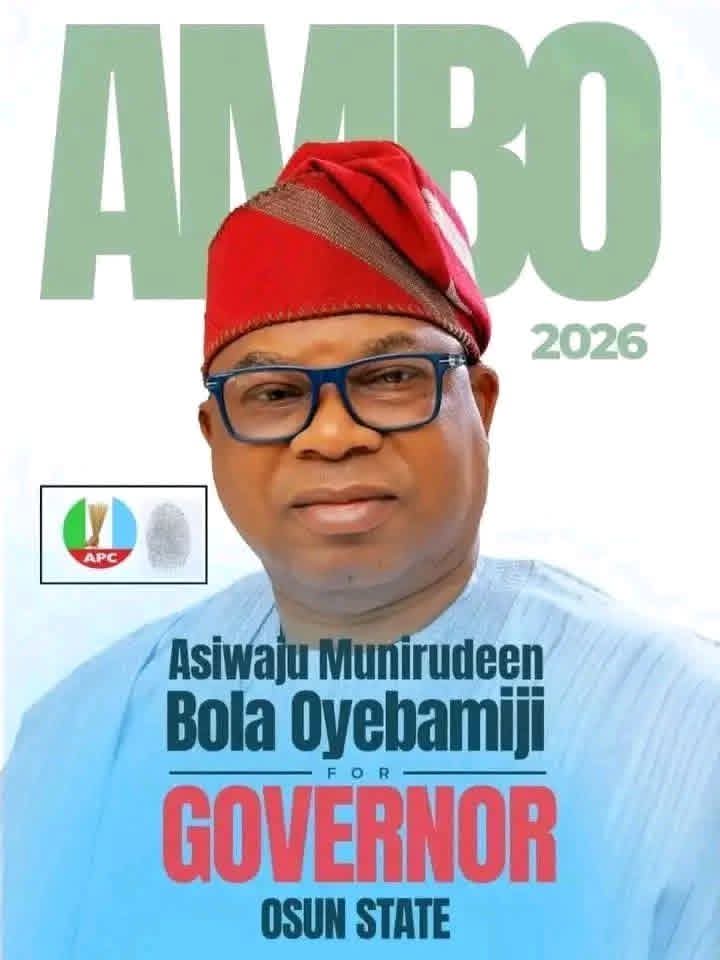
AMBO and the Osun Governorship Race: Assessing the Man, the Politics and the Vision
As political activities gather momentum ahead of the 2026 Osun State governorship election, a public affairs commentator, Oluseyi Olonade, has described the emergence of Asiwaju Munirudeen Bola Oyebamiji, popularly known as AMBO, as a significant development in the state’s political landscape.
In an article titled “Oyebamiji: The Man, The Politics and The Aspiration,” Olonade argued that the All Progressives Congress governorship hopeful possesses the character, experience and vision needed to reposition Osun State for sustainable growth.
According to the writer, Oyebamiji’s appeal stems from his extensive background in the banking sector, where he spent nearly three decades working with institutions including Wema Bank, Trans International Bank, Spring Bank and Enterprise Bank.
A native of Ikire in Irewole Local Government Area, Oyebamiji was described as a technocrat whose experience in corporate governance, finance and risk management has shaped his approach to public administration.
The article noted that his public service journey gained prominence in 2012 when he was appointed to oversee the then Osun State Investment Company Limited. Under his leadership, the organisation was reportedly restructured and transformed into Omoluabi Holdings Limited.
The writer further highlighted Oyebamiji’s tenure as Commissioner for Finance under successive APC administrations, where he was credited with managing the state’s finances during challenging economic periods.
Olonade also referenced Oyebamiji’s appointment as Managing Director of the National Inland Waterways Authority, describing it as further evidence of his administrative and leadership capabilities.
The article contrasted Oyebamiji’s governance philosophy with that of the current administration in Osun State, arguing that the APC aspirant favours institutional reforms, economic diversification and fiscal discipline.

According to the writer, Oyebamiji’s proposed agenda includes strengthening transparency in government spending, expanding internally generated revenue, attracting private-sector investments and promoting industrial and agricultural development.
The article also highlighted youth empowerment, entrepreneurship development and digital skills acquisition as key components of his vision for the state.
Olonade concluded that the forthcoming governorship election would present voters with a choice between different approaches to governance, expressing confidence that Oyebamiji’s experience and developmental agenda make him a strong contender in the race.
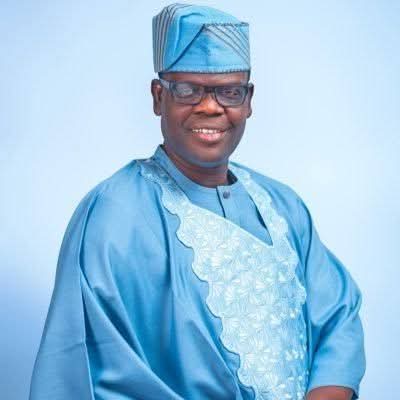
*Oselu Tiwa nTiwa Endorses Oriyomi Hamzat for Oyo Governorship*
A sociopolitical support group in Oyo State, Oselu Tiwa nTiwa, has declared its support for Alhaji Oriyomi Hamzat as the authentic governorship candidate of the Accord Party ahead of the forthcoming governorship election in the state.
The group made its position known in a statement jointly signed by its President, Mr. Adewale Oluwaseyi and Secretary, Alh. Adebayo Oyewole, on Thursday, describing Hamzat as a grassroots figure with strong connection to the people and a track record of humanitarian interventions across Oyo State.

According to the group, the endorsement followed what it described as careful observation of Hamzat’s leadership qualities, compassion and dedication to the welfare of ordinary citizens.
“Oriyomi Hamzat has consistently demonstrated empathy, courage and selfless commitment to humanity. Through his numerous interventions in the lives of ordinary citizens, he has become a symbol of hope to many families and communities,” the statement read.
Oselu Tiwa nTiwa also appealed to the national leadership of the Accord Party to prioritise the long-term future and electoral growth of the party in its decision-making process.
The group noted that Hamzat’s candidacy presents an opportunity for the party to strengthen its grassroots support base and expand its political relevance across Oyo State.
“We respectfully appeal to the National Leadership of the Accord Party to look beyond immediate political calculations and consider the bigger picture, the future growth, stability and electoral success of the party in Oyo State and beyond,” the statement added.
The group further expressed confidence in the leadership of the party, saying it believes the party’s national officers and stakeholders would take decisions that reflect fairness, inclusiveness and the collective interest of members.
While calling on party loyalists to remain calm and united, Oselu Tiwa nTiwa said continued consultations among stakeholders would help strengthen the Accord Party ahead of the election.
Signed:
Alh. Adebayo Oyewole,
Secretary.
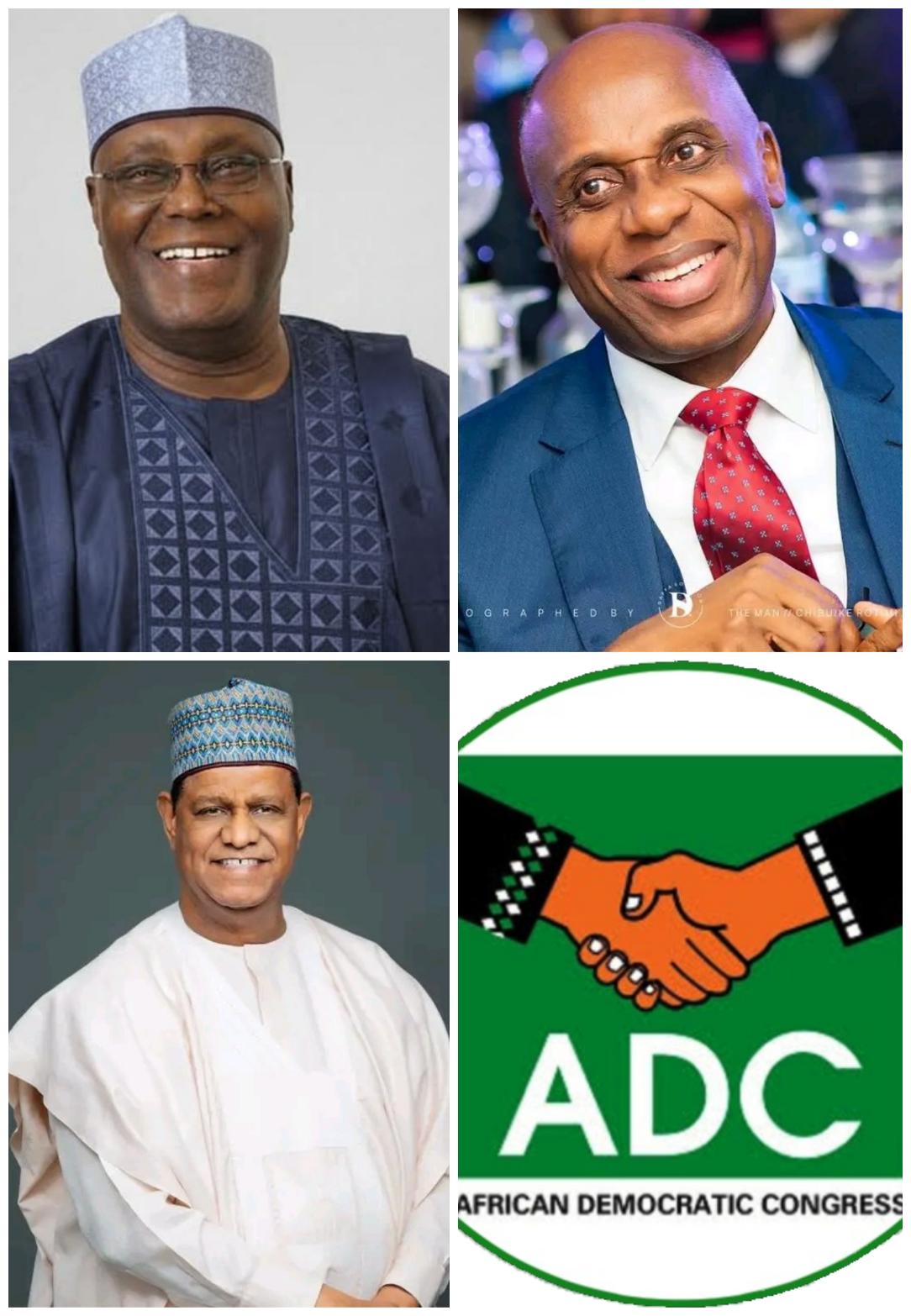
Atiku Set To Clinch ADC Presidential Ticket, Leads Amaechi, Hayatu-Deen In 34 States
Former Vice President of Nigeria and frontline presidential aspirant of the African Democratic Congress (ADC), Atiku Abubakar, is projected to emerge winner of the party’s presidential primaries, according to impeccable sources in Abuja.
The primaries, conducted across over 8,000 wards in the 36 states of the federation and the Federal Capital Territory, reportedly placed Atiku far ahead of his closest rivals — former Rivers State Governor, Rotimi Amaechi, and former Chairman of the Nigerian Economic Summit Group, Mohammed Hayatu-Deen.

Highly placed party insiders disclosed that Atiku is currently leading in 34 states, including the FCT, after securing dominance across the 19 Northern states, the five South-East states, and the six South-West states, while also maintaining a strong showing in at least three states in the South-South geopolitical zone.
The sources added that the outcome reflects what they described as “an overwhelming nationwide acceptance” of the former vice president within the opposition party ahead of the 2027 general election.
Meanwhile, the ADC leadership has invited members of the press to the official announcement of the final collated results scheduled for 11:00 a.m. on Tuesday, May 26, 2026, in Abuja.
The declaration of results is expected to be broadcast live on ARISE Television and two other major television stations, while also being livestreamed on the party’s official social media platforms on X and Facebook.
Speaking ahead of the announcement, the founding National Chairman of the ADC, Chief Ralph Nwosu, said the decision to televise the exercise live was aimed at promoting transparency and democratic accountability.
“We want millions of Nigerians at home and in the Diaspora to witness democracy in action,” Nwosu said.
He further revealed that the party leadership would encourage all three presidential aspirants to publicly embrace a peace accord and commit themselves to working together in unity for the party’s success.
According to him, the move is necessary to strengthen internal cohesion and position the ADC for victory in the presidential election scheduled for January 16, 2027.
Details later.


- Economic Community of West African States (ECOWAS) Commission and Women in Law and Development (WiLDAF) Train Women Cross-Border Traders in The Gambia June 5, 2026
- Eritrea: Seminar to Nationals in The Hague June 5, 2026
- Eritrea: Training on Photography and Video Production June 5, 2026
- Dr. Rasha Kelej Merck Foundation Chief Executive Officer (CEO) and African First Ladies release “Rays of Hope” Animation Film and Storybook to Raise Awareness About Childhood Cancer June 5, 2026
- Digital transformation journey takes centre stage at ANGOTIC 2026 June 5, 2026
- Junior Achievement (JA) Africa Delivers 1.6 Million Learning Experiences in a Single Year, Marking Twelve-Fold Growth in Five Years June 5, 2026
- United Nations Mission in South Sudan (UNMISS) helps plant hope among youth on World Environment Day June 5, 2026
- Afreximbank Deepens Engagement with Jamaica to Drive Trade, Investment and Industrialisation June 5, 2026
- World Health Organization (WHO) supports reactive yellow fever vaccination campaign and Bundibugyo virus disease (BVD) preparedness in Liberia June 5, 2026
- Uganda: Museveni pushes for wealth creation through development programmes June 5, 2026
- Economic Community of West African States (ECOWAS) Commission and Women in Law and Development (WiLDAF) Train Women Cross-Border Traders in The Gambia June 5, 2026
- Eritrea: Seminar to Nationals in The Hague June 5, 2026
- Eritrea: Training on Photography and Video Production June 5, 2026
- Dr. Rasha Kelej Merck Foundation Chief Executive Officer (CEO) and African First Ladies release “Rays of Hope” Animation Film and Storybook to Raise Awareness About Childhood Cancer June 5, 2026
- Digital transformation journey takes centre stage at ANGOTIC 2026 June 5, 2026
- Junior Achievement (JA) Africa Delivers 1.6 Million Learning Experiences in a Single Year, Marking Twelve-Fold Growth in Five Years June 5, 2026
- United Nations Mission in South Sudan (UNMISS) helps plant hope among youth on World Environment Day June 5, 2026
-

 news6 months ago
WHO REALLY OWNS MONIEPOINT? The $290 Million Deal That Sold Nigeria’s Top Fintech to Foreign Interests
-

 society1 month ago
SOCIAL MEDIA IS NOT A BATTLEFIELD COMMAND – WHY THE NIGERIAN ARMY’S ACTION AGAINST JUSTICE CRACK IS A NATIONAL SECURITY IMPERATIVE
-

 celebrity radar - gossips4 months ago
Dr. Chris Okafor Returns with Power and Fire of the Spirit -Mounts Grace Nation Altar with Fresh Anointing and Restoration Grace on February 1, 2026
-

 celebrity radar - gossips6 months ago
Prophet Kingsley Aitafo Releases 2026 Prophecy: ‘Nigeria Will Rise, but the World Must Prepare for Turbulence’