
society
Nigeria’s Endless Circle of Failure: Citizens’ Silence Feeds Corruption

Nigeria’s Endless Circle of Failure: Citizens’ Silence Feeds Corruption.
By George Omagbemi Sylvester
Published by SaharaWeeklyNG.com
History shows nations rise when people refuse injustice. Nigeria remains trapped in poverty and misrule because too many endure what others fought to change.
Introduction.
Nigeria’s greatest challenge has never been government alone; it is also the citizens who condone and normalize its failures. For more than six decades, the country has been trapped in a vicious cycle of corruption, mismanagement and betrayal by leaders. Yet the deeper tragedy lies in how Nigerians quickly adjust to suffering, excuse incompetence and allow mediocrity to become the national culture.

This dangerous tolerance has created a fertile ground for political recycling. Leaders fail, loot and mismanage with confidence, knowing that after a few weeks of public outrage, citizens will quiet down, move on and even reward them with RE-ELECTION. The consequence is clear: Nigeria remains a paradox; RESOURCE-RICH yet POVERTY-STRICKEN, where leadership failure is matched only by citizens’ complacency.
According to the World Bank, 46% of Nigerians lived below the poverty line in 2024, despite the country being Africa’s largest oil producer. This contradiction cannot be explained by corrupt governance alone; it is equally about a people who no longer demand accountability.
How Nigerians Enable Failure.
A telling example is the ₦70,000 minimum wage law passed in June 2024. More than 20 state governments have refused to implement it, claiming empty treasuries. Instead of citizens uniting to demand compliance, silence and excuses dominate. By tolerating such disobedience, Nigerians indirectly empower leaders to keep breaking promises without fear of backlash.

The same pattern played out after the fuel subsidy removal in 2023. Fuel prices tripled overnight, transportation costs skyrocketed and food inflation hit record highs. By mid-2024, the National Bureau of Statistics (NBS) reported food inflation above 35%, the worst in two decades. After brief protests, Nigerians adjusted to the pain and carried on, leaving government unchallenged.
The imposition of mandatory identification systems further demonstrates this passivity. From BVN (Bank Verification Number) to NIN (National Identification Number) and now TIN (Tax Identification Number), Nigerians are forced through chaotic rollouts that deny millions access to financial services and business operations. Instead of demanding efficiency and fairness, citizens simply comply, regardless of the exploitation involved.
To make matters worse, in 2025 the government introduced a 5% fuel tax, compounding the suffering of a people already bleeding from subsidy removal. After some murmurs of discontent, Nigerians once again accepted it in silence.
“Corruption thrives not in the halls of government, but in the quiet acceptance of those it is meant to serve.” ~ George O. Sylvester.

This culture of quiet endurance sends a dangerous message: leaders can impose any burden on the masses, and they will endure it without organized resistance.
Lessons from Nepal: Citizens Who Refused to Accept Failure.
To grasp the heavy cost of Nigeria’s complacency, one must look at Nepal. For centuries, Nepal endured an absolute monarchy where power was concentrated in the hands of kings who ignored the people’s needs. Corruption, inequality and suppression of freedoms left citizens desperate and disillusioned.
The turning point came with the People’s Movement of 2006 (Loktantra Andolan). Millions of Nepalis poured into the streets, demanding democracy, justice and freedom. Despite military crackdowns, arrests and bloodshed, they refused to retreat. The Maoist insurgency, ongoing since 1996, merged with civil protests, creating unstoppable pressure. By 2008, the monarchy was abolished and Nepal became a republic.
This historic revolution proves a timeless truth: change is never handed down by leaders; it is demanded and often forced, by the people.
Other Nations That Rejected Failure.
Nepal’s story is not isolated. History is filled with examples of nations where citizens refused to condone injustice and compelled leaders to change course.
South Korea (1987): After decades of military dictatorship, millions of South Koreans flooded the streets demanding free elections. Despite violent crackdowns, their persistence paid off. Democratic reforms followed, laying the foundation for South Korea’s transformation into one of the world’s most advanced economies.
Tunisia (2011): The Arab Spring began in Tunisia after Mohamed Bouazizi, a street vendor, set himself ablaze in protest against corruption and police harassment. The people erupted in mass protests and within weeks, President Ben Ali (who had ruled for 23 years) was forced into exile. Tunisia became the first Arab country to topple a dictator in that wave of uprisings.
Sudan (2019): After 30 years of Omar al-Bashir’s iron-fisted rule, Sudanese citizens mobilized in unprecedented protests against economic hardship and political repression. Despite brutal crackdowns, they persisted until the regime collapsed. Bashir was ousted, proving yet again that united citizens are stronger than entrenched rulers.
These examples highlight one truth: GOVERNMENTS ONLY RESPECT CITIZENS WHO REFUSE TO REMAIN SILENT.
Why Nigerians Remain Silent.
If history shows the power of resistance, why do Nigerians remain trapped in silence? Several factors explain this dangerous pattern:
Ethnic and Religious Divisions – Many defend leaders from their tribe or faith, even when those leaders fail spectacularly. This toxic loyalty recycles incompetence across elections.
Weaponized Poverty – Nearly half of Nigerians live in poverty and politicians exploit this vulnerability by distributing food or cash during elections, buying silence at a cheap price.
Fear of Repression – Decades of authoritarian crackdowns have instilled fear in Nigerians. Yet history proves that tyrannies collapse when citizens resist together.
Resigned Helplessness – After endless cycles of betrayal, many Nigerians believe change is impossible. This resignation feeds the system, ensuring nothing improves.
The Heavy Price of Silence.
The consequences of this citizen silence are devastating:
Mass Exodus of Youth: Between 2022 and 2024, over 2 million Nigerians emigrated legally and illegally, according to the African Union. This brain drain is stripping the country of its most productive citizens.
Persistent Insecurity: Boko Haram, kidnappings and banditry continue because leaders mismanage security resources while citizens adjust to living in fear.
Economic Stagnation: Nigeria has earned over $1 trillion from oil since independence, yet it ranks among the poorest nations globally in per capita income.
Silence has turned Nigeria into a paradox: RICH IN RESOURCES, POOR IN REALITY.
Nepal’s Revolution vs Nigeria’s Complacency.
The revolutions in Nepal, South Korea, Tunisia, and Sudan contrast sharply with Nigeria’s passivity:
Unity Over Division: Citizens in those countries set aside ethnic, tribal and sectarian divides to fight for a common cause. Nigerians remain trapped in divisions that weaken collective action.
Persistent Action: Protests in those nations continued until victory was secured. Nigerians often protest for a few days, then return to routine, giving government room to recover.
Clear Mission: Nepalese, Tunisians and Sudanese citizens demanded specific goals (democracy, justice, freedom) and achieved them. Nigerians lack a unified demand, drifting between complaints and resignation.
Until Nigerians learn persistence, unity and clarity of purpose, their protests will remain fleeting and their silence deafening.
Final Word.
Nigeria’s endless circle of failure is not sustained by corrupt leaders alone; it is fueled by citizens who excuse corruption, tolerate mediocrity and endure suffering without demanding accountability. Whether it is unpaid wages, exploitative taxes, chaotic identification schemes or destructive fuel policies, Nigerians have learned to adjust instead of resist.
“A nation does not fail because of bad leaders alone; it fails when its people choose to remain silent in the face of injustice.” ~ George O. Sylvester
The lesson from Nepal, South Korea, Tunisia and Sudan is simple yet powerful: change comes only when people stop condoning failure. When citizens unite with one voice, no government can resist transformation.
The choice before Nigerians is clear: remain silent and watch the nation decay further; or rise, as others once did and rewrite history.





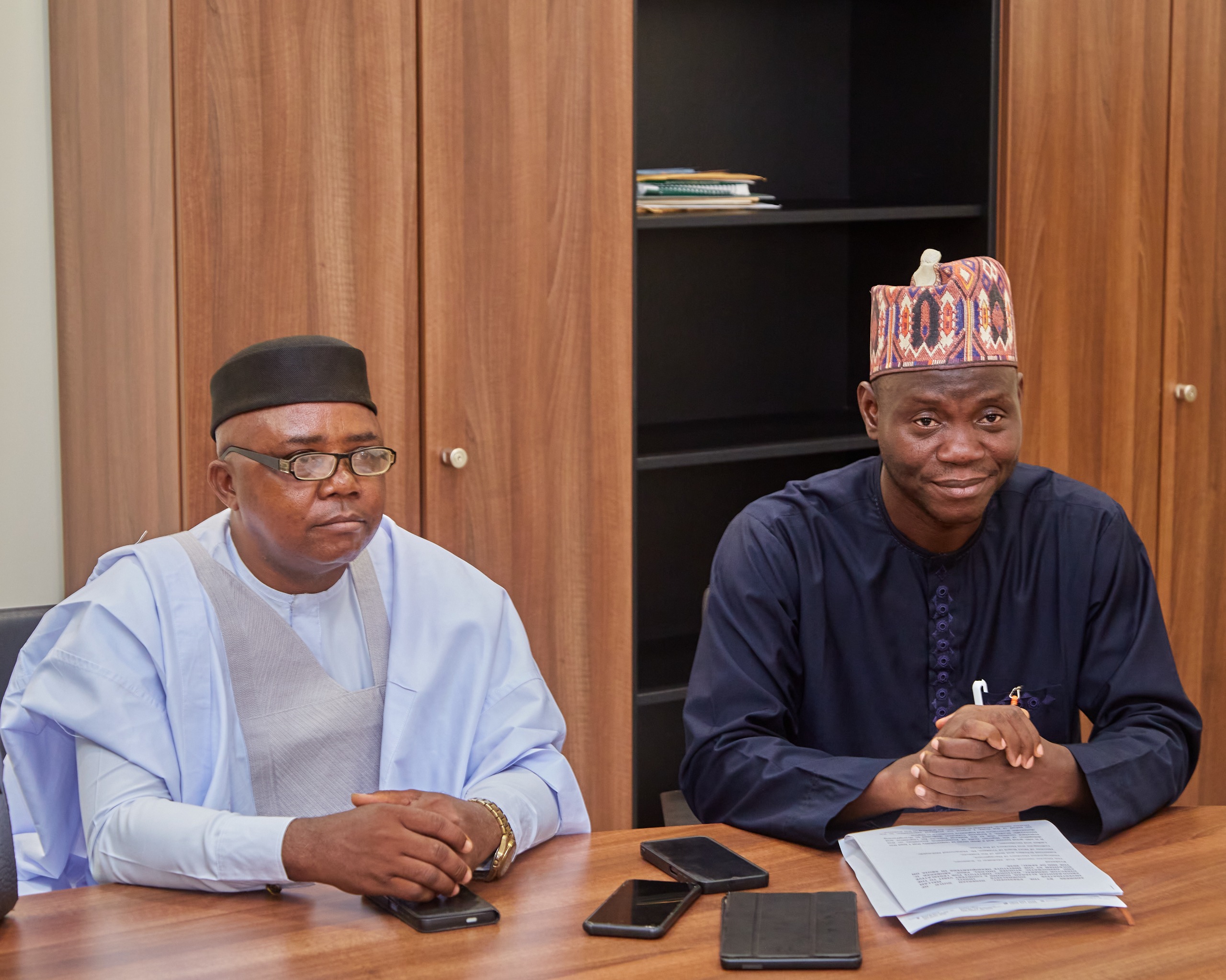
Democratic Accountability in Focus as NGIJ Courts NILDS for Strategic Collaboration
The Nigerian Guild of Investigative Journalists (NGIJ) has sought a strategic partnership with the National Institute for Legislative and Democratic Studies (NILDS) to enhance legislative reporting, strengthen democratic accountability, and promote evidence-based journalism in Nigeria.
The proposal was made during a courtesy visit by the NGIJ delegation, led by its President, Mallam Abdulrahman Aliagan, to the Institute’s headquarters in Abuja.
The Director-General of NILDS, Professor Abubakar O. Suleiman, was represented at the meeting by the Director of Legal Services, Professor Ibrahim Danwanka. Also in attendance were the Special Adviser to the DG on Media, Mr. Muhammad Abdulkadir and the Director of Information, Mr. Emmanuel Atakpo.
Speaking during the visit, Aliagan described the engagement as a strategic step toward building synergy between investigative journalism and legislative research institutions. He commended the leadership of Professor Suleiman for transforming NILDS into a leading centre for legislative studies and democratic governance in Africa.
“This visit is not merely ceremonial—it is deeply strategic. NGIJ and NILDS share a common vision of strengthening democracy, promoting accountability, and deepening good governance in Nigeria,” Aliagan said.
He explained that while NILDS advances democratic governance through research and legislative capacity development, NGIJ complements these efforts through investigative journalism and public-interest reporting.
Aliagan highlighted the Guild’s activities across the country, particularly its Governance Assessment Visits conducted in Kogi, Bayelsa, Ondo, Kwara, Osun, and Kaduna states, noting that such engagements have improved public discourse and strengthened accountability at the subnational level.
“Our mission is to promote ethical investigative journalism, strengthen transparency in governance, and build capacity for data-driven reporting that connects citizens with democratic institutions,” he said.
The NGIJ President also proposed collaboration in areas such as training on legislative processes, joint research and publications, policy dialogues, data sharing, and fellowship programmes for journalists and researchers.
He further informed the Institute of the Guild’s plan to host the Dele Giwa Memorial Annual Lecture on Investigative Journalism in June as part of activities marking Democracy Day. The Guild requested that Professor Suleiman serve as keynote speaker and sought approval to use NILDS’ auditorium for the event.
“We are confident that your presence and intellectual contribution will greatly enrich the discourse and lend national significance to the event,” Aliagan added.
Responding on behalf of the Director-General, Professor Danwanka welcomed the proposal and described the initiative as timely and beneficial to national development. He commended NGIJ for its commitment to accountability journalism and its recognition of the Institute’s growing impact.
“If there is any institution journalists need to collaborate with, it is NILDS.
Legislative reporting requires specialised knowledge that many journalists currently lack,” Danwanka said.
He explained that NILDS was established by an Act of Parliament in 2011 and later expanded in 2017 to include broader responsibilities covering democratic institutions and civil society organisations.
According to him, the Institute has grown significantly under Professor Suleiman’s leadership, expanding from four departments to eleven, with increased staff strength and wider national, regional, and continental visibility.
Danwanka noted that NILDS currently provides research and capacity-building support not only to Nigeria’s legislature but also to parliaments across West Africa and other parts of the continent, including Kenya, Zimbabwe, Malawi, Ghana, and Togo.
“Legislature is a specialised field. Even experts from other disciplines must acquire knowledge of its processes to report it accurately. That is where NILDS comes in,” he said.
He assured the NGIJ delegation that all requests presented during the visit, including collaboration proposals, the use of the Institute’s facilities, and the invitation to the DG would be communicated for necessary action.
Danwanka also acknowledged NGIJ’s commendation of the appointment of Mr. Abdulkadir as Special Adviser on Media, describing the recognition as thoughtful and well-deserved.
The meeting ended with both parties expressing optimism about establishing a formal framework for collaboration, with a shared commitment to strengthening democratic institutions and improving governance through knowledge-driven journalism.
“This engagement marks the beginning of a sustainable partnership that will advance legislative excellence and investigative journalism in Nigeria,” Danwanka said.


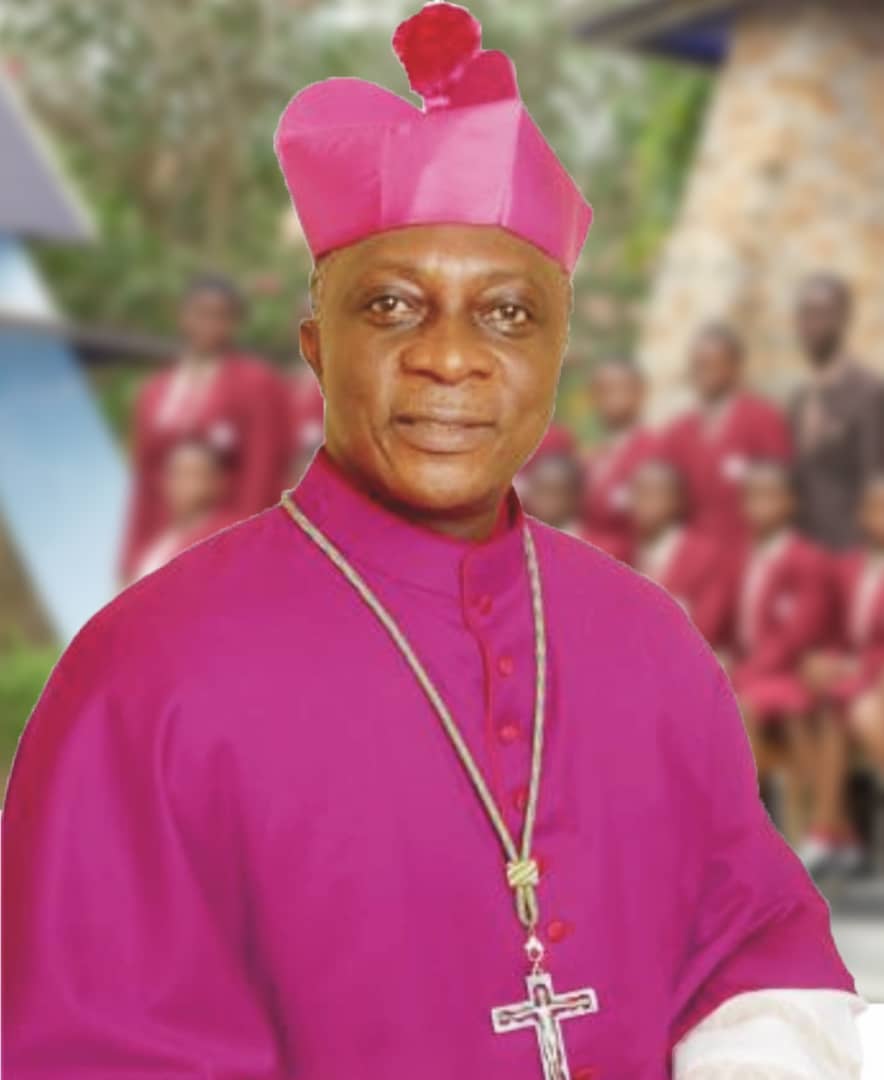
GOVERNMENT MUST TACKLE NATION’S PRESSING CHALLENGES — BISHOP MARTINS URGES AT CHRISM MASS
By Ifeoma Ikem
The Holy Cross Cathedral, Lagos, was filled with joy, reverence, and renewed commitment on Holy Thursday as Catholic faithful across the metropolis gathered for the annual Chrism Mass — a solemn celebration marking the institution of the priesthood, the Holy Eucharist, and the blessing of sacred oils used throughout the liturgical year.

During the ceremony, the Catholic Archbishop of Lagos, Most Rev. Adewale Martins, described the Chrism Mass as a profound moment in the life of the Church.
He noted that it offers priests an opportunity to renew their vows and reflect on the centrality of the Eucharist, which he emphasized remains the heartbeat of the Catholic faith.
Addressing national issues, Bishop Martins acknowledged the government’s ongoing efforts to tackle Nigeria’s current challenges.
However, he stressed the need for more decisive and accelerated interventions, particularly in securing lives and easing the economic burdens confronting citizens.
He congratulated priests on their feast day and reflected on the rising influence of digital evangelization. While recognizing that many people now “inhabit online spaces,” he warned clergymen to handle social media with caution, discipline, and fidelity to Church teachings. According to him, digital influence must never overshadow spiritual integrity.
“The oils blessed today are not simply symbols; they speak of being set apart by a mark not earned, not crafted, but given,” he said. “As we renew our promises, we do not recreate ordination; we awaken memory. We were not ordained to build profiles but to bear Christ.”
He further noted that the digital world has become a place where people “gather, argue, celebrate, confess, misunderstand, and sometimes encounter truth.” For this reason, he said the Church recognizes the need to take the Gospel into that space without compromising its authenticity.
In his homily, Rev. Fr. Paul Akin-Otiko, Chaplain of St. Thomas More Catholic Chaplaincy, University of Lagos, emphasized the enduring significance of the Chrism Mass as an ancient tradition where sacred oils are consecrated.
He urged priests to pray fervently for the sick using the blessed oils, reminding them that true healing comes from God.
Fr. Akin-Otiko encouraged clergy to remain selfless, warning them never to turn the Church into a source of personal gain.
He stressed that their primary duty is the salvation of souls and the welfare of the people entrusted to them.
Monsignor John Aniagwu took a moment to appreciate Anthony Cardinal Olubunmi Okogie for his fatherly guidance and exemplary leadership. He prayed for God’s continued blessings, asking that all present be granted good health to witness many more Chrism Masses.
The highlight of the ceremony was the renewal of vows by hundreds of priests, who reaffirmed their commitment to lives of dedication, chastity, and obedience to the Church and their bishop — an act that drew heartfelt applause from the congregation.
The celebration concluded with songs of thanksgiving, joy, and renewed devotion.
society
Liberian Leaders, Citizens Bear Witness as Apostle Suleman Hosts Two-Day Power-Packed Crusade
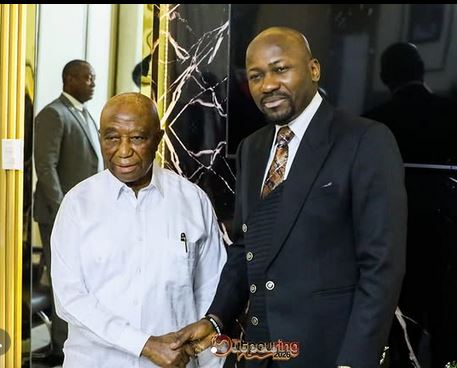
Liberian Leaders, Citizens Bear Witness as Apostle Suleman Hosts Two-Day Power-Packed Crusade
It was testimonies galore on Tuesday, March 31, the first day of the famous servant of God and founder of the Omega Fire Ministries (OFM) worldwide, Apostle Johnson Suleman’s power-packed two-day crusade. The event documented impactful moments with the Gospel and miracles, emphasizing the power of faith and the tangible confirmation of God’s Word through signs and wonders. It was equally an atmosphere of miraculous healing, restoration of lives, and the strengthening of faith.
At the crusade, which was held at the SKD Sports Stadium in Paynesville City, and themed, “Liberia Outpouring Crusade” witnessed testimonies of impact and miracles with participants experiencing instant healing of various kinds of challenges.
Apostle Suleman’s first port of call was Paynesville, the office of Liberian government’s president, Mr. Joseph Nyuma Boakai, who received him in an audience with his junior ministers. Apostle Suleman, who also met with the vice-president, Mr. Jeremiah Kpan Koung, was welcomed by the Liberian leader’s office as part of the president’s ongoing engagements with religious leaders aimed at fostering spiritual support for national development.
The president expressed profound appreciation to Apostle Suleman for the visit and continued prayers and intercessions by men and women of God on behalf of Liberia, emphasizing his firm belief that sustained spiritual guidance and prayer remain vital to the transformation and progress of the nation.
During the visit, Apostle Suleman offered prayers for President Boakai, his cabinet and the Liberian nation, invoking divine alignment, wisdom, and insight in Liberia’s path toward growth and stability. He prayed that the Almighty God would position Liberia for relevance and fulfillment of its national destiny.
Apostle Johnson Suleman, an evangelist who knows no bounds of where preaching the gospel comes to a stop, visited Liberia prepared with the message, compelling power of the Gospel and the work of the Holy Spirit, and bringing people to a point of decision where they surrendered their lives to Christ.
Aside from being prophetic and timely, OFM sources disclosed that the servant of God’s visit underscores the importance of faith-based partnerships in supporting governance and national renewal efforts.


-

 society7 months ago
Religion: Africa’s Oldest Weapon of Enslavement and the Forgotten Truth
-

 news4 months ago
WHO REALLY OWNS MONIEPOINT? The $290 Million Deal That Sold Nigeria’s Top Fintech to Foreign Interests
-

 society6 months ago
“You Are Never Without Help” – Pastor Gebhardt Berndt Inspires Hope Through Empower Church (Video)
-

 celebrity radar - gossips2 months ago
Dr. Chris Okafor Returns with Power and Fire of the Spirit -Mounts Grace Nation Altar with Fresh Anointing and Restoration Grace on February 1, 2026