
society
Nigeria’s N58.18trn Budget and Rising Cost of Deficit Governance

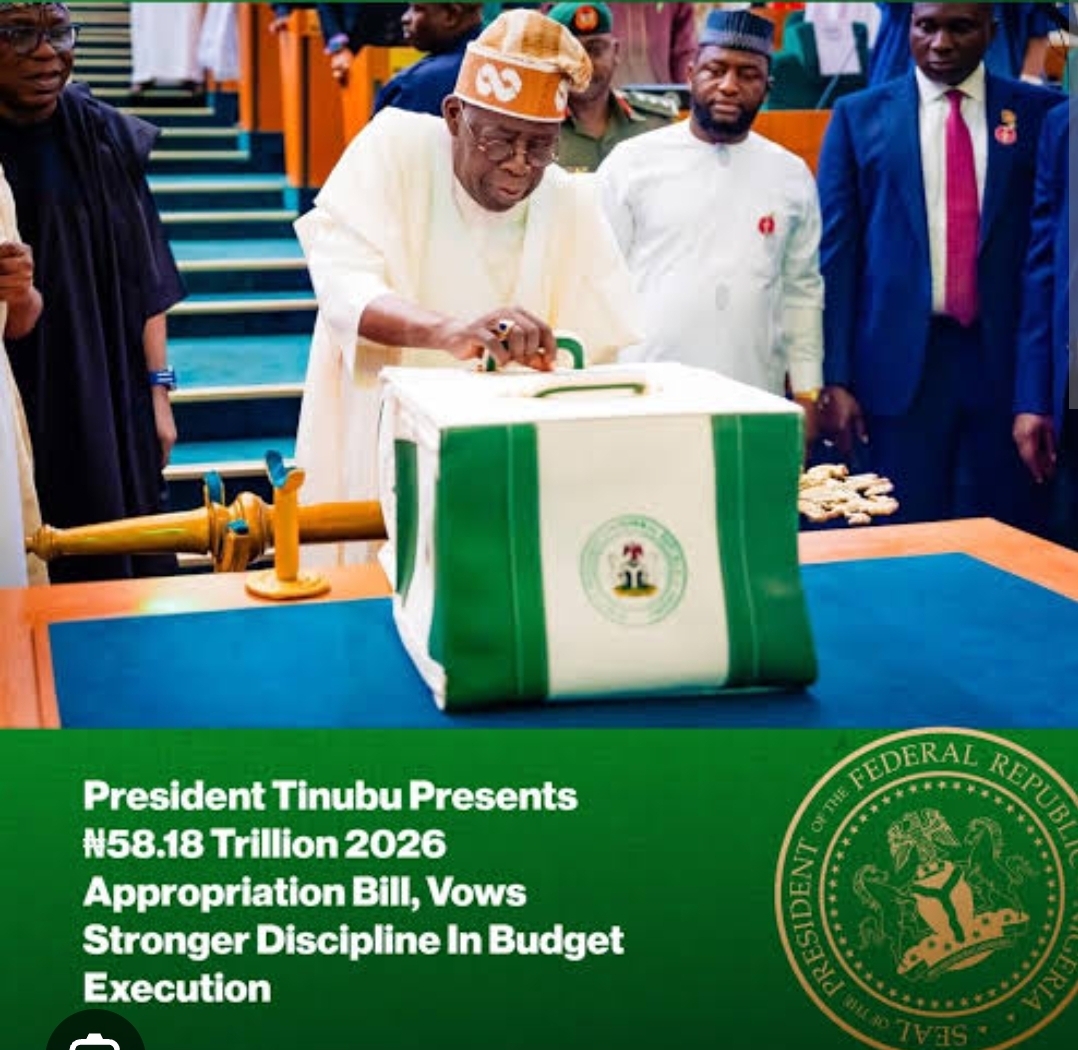
Nigeria’s N58.18trn Budget and Rising Cost of Deficit Governance
BY BLAISE UDUNZE
When President Bola Tinubu presented the N58.18 trillion 2026 Appropriation Bill to the National Assembly, unbeknownst to some, it opened with a contradiction that should unsettle even its most optimistic readers. It is an irony that a budget promises consolidation, renewed resilience, and shared prosperity, at the same time, it is built on a deficit of N23.85 trillion, as the largest budget in the nation’s history, equivalent to 4.28 percent of GDP, financed largely through borrowing, and debt servicing alone will consume N15.52 trillion, nearly half of the projected revenue. What a contradiction! The reality today is that Nigeria is borrowing not primarily to expand productive capacity or unlock long-term growth, but to keep the machinery of the state running. Salaries, overheads, inherited liabilities, and interest payments increasingly define the purpose of new debt. Capital formation, though loudly advertised, struggles to keep pace with fiscal reality. This raises a fundamental and unavoidable question. How sustainable is a fiscal model where debt service crowds out development spending year after year? Until this question is convincingly answered, no amount of reform rhetoric can restore confidence in Nigeria’s budgeting process.
A Nation Drowning in Deficits and Debt
The problem with the deficit is that it is not a number by itself. It shows that there are problems with the way things are set up. By the middle of 2025, Nigeria owed a lot of money, N152.4 trillion, which represented about a 348.6 percent increase following the assumption of President Bola Tinubu into office in 2023. Before he assumed office, the country owed N33.3 trillion, and this is a country that was already having trouble paying for basic things it needed to.
Reflecting on Nigeria’s predicament, it mirrors a wider African crisis. Reviewing the occurrences across the continent of Africa, external debt now surpassed $1.3 trillion, while the debt servicing costs are estimated at $89 billion this year alone. Nigeria’s case is unique not because of the amount of debt, but because of its poor productive return. The lingering challenge is that Nigeria’s borrowing has skyrocketed, yet the economy remains conspicuously faced with fragile infrastructure. The fiscal irony is stark that Nigeria is borrowing to survive, not to thrive.
A Deficit-Fuelled Budget and the Rising Cost of Survival
Deficits can be useful tools when deployed strategically. But Nigeria’s deficits have become structural, persistent, and increasingly divorced from growth outcomes. The N23.85 trillion deficit in the 2026 budget represents a dramatic escalation from the N11-N12 trillion range of recent years. Analysts warn that this is no longer a counter-cyclical policy; it is a sign of fiscal stress. Tilewa Adebajo, Chief Executive Officer of CFG Advisory, describes Nigeria’s fiscal space as “the biggest threat to our economic recovery.” According to him, the country continues to expand its budget despite failing to meet revenue targets. “We cannot have a N23 trillion deficit, that’s not sustainable,” he warned, noting that deficits have doubled in just a few years. More troubling is what the deficit implies. With N15.52 trillion earmarked for debt servicing, nearly half of the projected revenue is already spoken for before development spending begins. Some estimates suggest that over 25 percent of Nigeria’s annual revenue now goes directly into debt servicing, and in certain months, the ratio rises far higher. Experts warn that when over 90 percent of revenue is consumed by old debts, governance becomes an exercise in survival rather than progress. This is the fiscal corner Nigeria is steadily backing itself into.
Borrowing to Run Government, Not to Build the Economy
Between July and October 2025 alone, Nigeria secured over $24.79 billion in new borrowings, alongside €4 billion, ¥15 billion, N757 billion, $500 million in sukuk, and other facilities, most justified as “development financing.” Yet the real sector continues to wait for a tangible impact. The African Democratic Congress (ADC) argues that a budget planning to generate N34 trillion in revenue while borrowing nearly N24 trillion amounts to an admission of fiscal insolvency. A deficit-to-revenue ratio approaching 70 percent, it insists, would be unacceptable in any functional fiscal system. While opposition language is often sharp, the underlying concern is valid. Borrowing makes economic sense only when it finances self-liquidating projects like investments that generate revenue to repay the loans. Instead, Nigeria increasingly borrows to service past debts and plug recurrent expenditure gaps. Uche Uwaleke, Professor of Finance and Capital Markets at Nasarawa State University, underscores the danger: “Nigeria’s debt service ratio is inimical to economic development, chiefly because what could have been used to build infrastructure and invest in human capital is used to service debt. The opportunity cost for the country is high.” In effect, debt has shifted from a development instrument to a fiscal life support system.
Revenue Projections Caught Between Reform Ambition and Structural Limits
The Nigerian government projected N34.33 trillion in revenue for 2026, which is squarely anchored on improved oil output, non-oil tax reforms, and digitised revenue mobilisation across Government-Owned Enterprises (GOEs). To actualize its target, President Tinubu vowed to clamp down on leakages, enforce performance targets, and deploy real-time monitoring systems. Though these reforms are necessary. The question is whether they are sufficient and timely. Recent performance suggests caution. As at Q3 2025, only 61 percent of revenue targets had been achieved. Capital releases lagged sharply, and comprehensive implementation reports have not been published. Ayokunle Olubunmi, Head of Financial Institutions Ratings at Agusto & Co., expressed doubts about the credibility of the projections, citing weak performance in 2024 and 2025. “We don’t even know how many budgets we are implementing now,” Olubunmi observed, pointing to overlapping cycles and missing reports. The ADC goes further, describing revenue projections as detached from reality, while noting that revenue growth in 2024 was largely driven by currency devaluation, not structural expansion, before being doubled for 2025 and increased again for 2026. Nominal gains, it argues, are being mistaken for real fiscal strength. Without deep structural reforms, reliable power, export diversification, and productivity growth, revenue expansion risks remaining inflationary and fragile, unable to support the scale of spending proposed.
Budget Execution and the Credibility Gap
President Tinubu has declared 2026 a turning point. He promised an end to overlapping budgets, abandoned projects, and perpetual rollovers. All prior capital liabilities, he said, will be closed by March 31, 2026, ushering in a single budget cycle. Yet Nigeria’s execution record invites skepticism. The Coalition of United Opposition Political Parties (CUPP) points out that no comprehensive 2025 budget implementation report has been published, the first such lapse in 15 years. Quarterly performance reports, once routine, have been withheld, violating fiscal responsibility norms. “How can a new budget be proposed when the performance of the current one remains unknown?” CUPP asked. Execution failure is not cosmetic; it is costly. Projects stall, costs balloon, and borrowed funds yield no returns. Without transparency and enforcement, discipline risks becoming a slogan rather than a system.
Capital Spending vs the Persistent Cost of Governance
The N26.08 trillion allocated to capital expenditure is one of the budget’s most advertised strengths, with infrastructure, agriculture, education, and health featuring prominently. Yet Nigeria’s history cautions against equating allocations with outcomes. Recurrent non-debt expenditure remains high at N15.25 trillion, reflecting a governance structure that consumes significant resources. Ministries, departments, agencies, and political overheads continue to limit fiscal space. Mr. Idakolo Gbolade of SD&D Capital Management acknowledges the budget’s ambition but warns that over 70 percent of capital expenditure may be carried over into 2026. This suggests that implementation bottlenecks remain unresolved. Borrowing to fund capital projects that are delayed or abandoned compounds fiscal inefficiency. Nigeria risks paying interest on infrastructure that exists only on paper. Until the cost of governance is structurally reduced, capital spending will struggle to deliver transformative impact, regardless of headline figures.
Security Spending at Scale, But Lacking Clarity
Security receives the largest sectoral allocation, N5.41 trillion, alongside a new national counterterrorism doctrine targeting all armed non-state actors. The administration argues, correctly, that without security, investment cannot thrive. On the contrary, Nigeria’s experience shows that security spending does not automatically translate into security outcomes. Over the years, allocations have risen while insecurity persists across multiple regions. The challenge is not merely funding, but accountability, coordination, and effectiveness. Without transparency in procurement and deployment, security budgets risk becoming opaque sinks for public funds, undermining the very growth assumptions embedded in the budget.
Shared Prosperity Under Pressure
Though the budget promises shared prosperity, citing allocations of N3.52 trillion for education and N2.48 trillion for health, alongside agricultural and infrastructure investments, and with the National Bureau of Statistics announcement that inflation has moderated, and growth has improved modestly. Yet for ordinary Nigerians, relief remains elusive. Food prices are high, transport costs elevated, and real incomes squeezed. Social sector spending still struggles to keep pace with population growth. Shared prosperity cannot remain an aspiration deferred to the future. It must translate into jobs, affordable food, functioning schools, accessible healthcare, and rising real incomes.

Borrowing Without Beneficiaries
At the 2025 IMF and World Bank Annual Meetings in Washington, D.C., global leaders again pledged to address developing countries’ debt burdens. But as Nigeria continues to issue Eurobonds, sukuk, and bilateral loans, a simple question demands attention: who benefits from all this borrowing? If the answer is not citizens, businesses, and future generations, then the debt is not development finance; it is deferred hardship.
When Deficits Become Destiny
The 2026 budget reflects an administration aware of Nigeria’s fiscal dysfunctions and eager to correct them. The language of discipline, digitisation, and delivery signals intent. But credibility is not declared; it is earned. A deficit-driven budget that leans heavily on borrowing, struggles with revenue realism, and carries unresolved execution gaps places Nigeria on a narrow fiscal path. If borrowing is decisively tied to self-liquidating projects, transparency restored, and governance costs reduced, the budget could mark a turning point. If not, it risks confirming a grim truth as Nigeria is financing today by mortgaging tomorrow. Until debt stops crowding out development and revenue begins to fund governance rather than merely service it, deficits will no longer be temporary tools. They will become destiny.
Blaise, a journalist and PR professional, writes from Lagos and can be reached via: [email protected]





US-Based Society Lady, Fehintola-Brat Extends Eid-El-Kabir Greetings To Muslims
United States based fahionista of class, Chief (Mrs) Ayoola Fehintola-Brat has extended a warm greetings to Muslim faithful all over the world on the occasion of the 2026 Eid-El-Kabir celebration.
Fehintola-Brat who is the Balogun Egbe Obaneye Obinrin Akile Ijebu, and the Yeye Asofin of Idenaland in her message to Journalists urged Muslim to continually uphold the enduring values of sacrifice, obedience, faith, and compassion, which are central to the significance of Eid-El-Kabir festival.
A quiet philantropist whose humanitarian services has won her several laurels urged Muslims to use the spiritual occasion to pray for the peace co-existence of Nigerians regardless of religious, social and political leanings stressing that the oneness of the country should not be underplay.
In a related development, she expressed her felicitations to all sons and daughters of Ijebuland on the forthcoming Ojude Oba 2026 celebration, tasking age-groups otherwise known as Regbregbe to be more proactive in giving back to their immediate communities.
According to her, the beauty of the age-groups in Ijebuland is the need to contribute immensely to the development of the land in no small means. “This we will continue to achieve with God on our side”, she concluded.
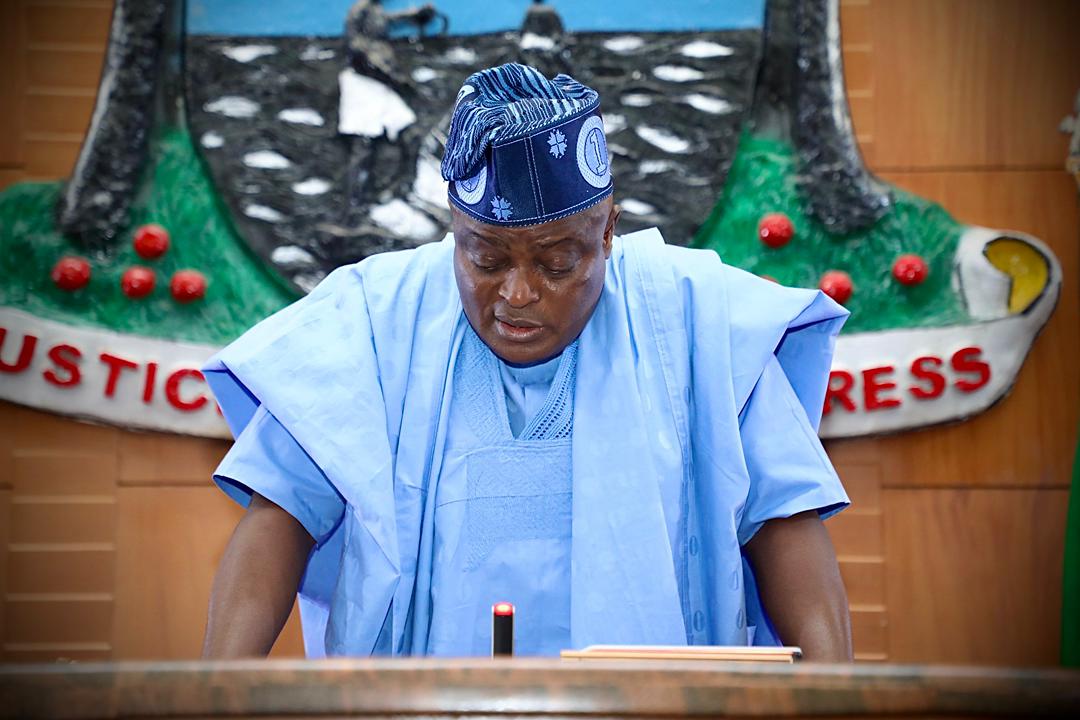
Sallah: Obasa Felicitates Muslim Ummah, Commends Nigerians for APC Primaries Turnout
The Speaker of the Lagos State House of Assembly, Rt. Hon. Mudashiru Obasa has extended warm felicitations to Muslims in Lagos State and across Nigeria on the occasion of Eid al-Adha.
In a statement released by his Chief Press Secretary, Mr. Dave Agboola, Obasa described the festival as a season of sacrifice, reflection, and gratitude, urging the faithful to continue to uphold the values of peace, unity, and love that strengthen the nation.
He noted that the celebration of Eid al-Adha is not only a spiritual milestone but also a reminder of the importance of togetherness and collective responsibility in building a stronger society.
He, likewise, emphasized that the festival provides an opportunity for Nigerians to renew their commitment to national progress and to support leadership that prioritizes development and prosperity.
Obasa, however, commended Nigerians, particularly members of the All Progressives Congress (APC), for their massive turnout during the recently concluded party primaries. He described the participation as a clear demonstration of the people’s confidence in the government of President Bola Ahmed Tinubu and their belief in the administration’s vision for a greater Nigeria.
“The APC primaries have shown the resilience of our democracy and the confidence Nigerians have in the leadership of President Bola Ahmed Tinubu and the Renewed Hope Agenda. This is a strong message that our people are ready to continue supporting policies that will drive growth and prosperity,” Obasa stated.
The Speaker further encouraged Muslims to celebrate responsibly, stressing that the joy of Eid should be accompanied by prayers for the continued peace and progress of Lagos State and Nigeria.
“As you celebrate with family and loved ones, may this season bring joy, peace, and prosperity to your homes. Let us remain united in our resolve to build a stronger nation,” he added.
On behalf of the Lagos State House of Assembly, Obasa wished all Muslims a happy and fulfilling Eid al-Adha celebration.

ABEOKUTA FILM FESTIVAL AT ILEYA
Kayshow Multimedia a filmmaking and Media organization this year 2026 holds its annual Abeokuta film festival at the Ake Palace in Abeokuta.
Alake of Egba land, Ọba Michael Adedotun Arẹmu Gbadebo has graciously endorsed the Free Training of Egba Youths on Film and Arts and the Entertainment of the the People with a FREE FILM SHOW at the AKE PAVILION. as part of the ABEOKUTA FILM FESTIVAL 2.0.
The Convener of the Film Festival Honorable Kehinde Soaga says this year’s event promises to be more exciting as distinguished personalities are sure to attend.
This includes the honorable Minister for Art Culture and Creative Economy in Nigeria, Barr. Hannatu Musa Musawa, Ààrẹ Lai Labode, Sen. Ibikunle Amosun and other special guests.
The event will feature Film, Cultural Dance Cultural foods and Award Ceremony.
The general public is hereby invited to the Free film show at the Abeokuta film festival at the Alake Palace Pavilion on Thursday 28th of May 2026 by 4:00 p.m.
Only well dressed is the Entry. The Abeokuta Film Festival is an annual event taking place in the capital city of Ogun State state.


- Qrent says delaying Information Technology (IT) refresh cycles may be increasing operational risk for businesses in Africa May 27, 2026
- Dentons’ Iyunola Adekanye Appointed to African Mining Week (AMW) Advisory Board May 27, 2026
- United Nations (UN) Women Liberia and Partners Convene for Spotlight Initiative 2.0 Women’s Economic Empowerment Inception Meeting May 27, 2026
- African Mining Week (AMW) to Host Central Bank Governors Roundtable as Monetary Authorities Deepen Role in Mining Sector Growth May 27, 2026
- Eritrea: Diaspora Nationals Celebrate Independence Day Anniversary May 27, 2026
- Africa Unveils Landmark Humanitarian Coordination Platform to Strengthen aligned Response to Humanitarian Crises May 27, 2026
- Seychelles: President Herminie Engages with Police and Fire Services on Praslin May 27, 2026
- Issue 3 of Mining Review Africa now available for free download May 27, 2026
- NOV Joins African Energy Week (AEW) 2026 as Gold Sponsor Amid Africa’s Offshore Expansion Push May 26, 2026
- African Union of Broadcasting (AUB) and United Nations University Institute for Water, Environment and Health (UNU-INWEH) Launch Landmark Webinar Series on Africa’s Water Crisis, Starting June 2, 2026 May 26, 2026
- Qrent says delaying Information Technology (IT) refresh cycles may be increasing operational risk for businesses in Africa May 27, 2026
- Dentons’ Iyunola Adekanye Appointed to African Mining Week (AMW) Advisory Board May 27, 2026
- United Nations (UN) Women Liberia and Partners Convene for Spotlight Initiative 2.0 Women’s Economic Empowerment Inception Meeting May 27, 2026
- African Mining Week (AMW) to Host Central Bank Governors Roundtable as Monetary Authorities Deepen Role in Mining Sector Growth May 27, 2026
- Eritrea: Diaspora Nationals Celebrate Independence Day Anniversary May 27, 2026
- Africa Unveils Landmark Humanitarian Coordination Platform to Strengthen aligned Response to Humanitarian Crises May 27, 2026
- Seychelles: President Herminie Engages with Police and Fire Services on Praslin May 27, 2026
-

 news5 months ago
WHO REALLY OWNS MONIEPOINT? The $290 Million Deal That Sold Nigeria’s Top Fintech to Foreign Interests
-

 society3 weeks ago
SOCIAL MEDIA IS NOT A BATTLEFIELD COMMAND – WHY THE NIGERIAN ARMY’S ACTION AGAINST JUSTICE CRACK IS A NATIONAL SECURITY IMPERATIVE
-

 celebrity radar - gossips4 months ago
Dr. Chris Okafor Returns with Power and Fire of the Spirit -Mounts Grace Nation Altar with Fresh Anointing and Restoration Grace on February 1, 2026
-

 celebrity radar - gossips6 months ago
Prophet Kingsley Aitafo Releases 2026 Prophecy: ‘Nigeria Will Rise, but the World Must Prepare for Turbulence’