
Business
Nigeria’s Poverty Crisis: A World Bank Perspective on the Deepening Divide

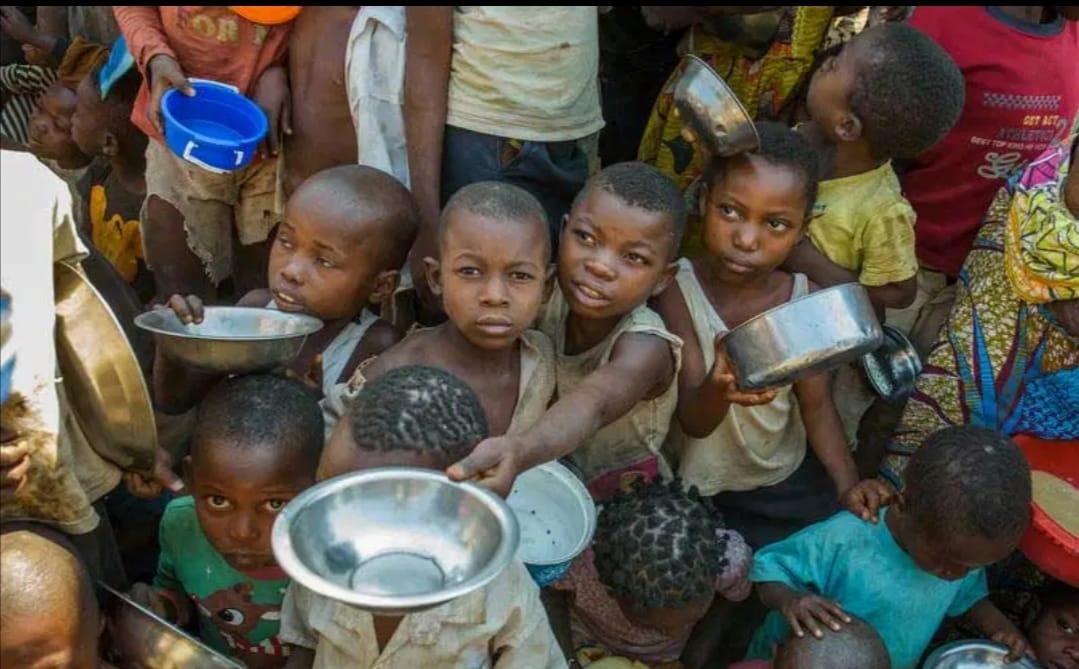
Nigeria’s Poverty Crisis: A World Bank Perspective on the Deepening Divide.
George Omagbemi Sylvester | SaharaWeeklyNG.com
Half of Nigerians Are Now Poor And the Numbers Are Set to Worsen.
Introduction.
Nigeria, Africa’s most populous nation and one of its largest economies, stands at a crossroads. Despite abundant natural resources, trillions of naira in revenue and successive economic reform programs, nearly half of its population is trapped in poverty. The latest World Bank data paints a stark picture, 46% of Nigerians lived below the poverty line in 2024, with projections indicating that 52.5% could fall into extreme poverty by 2025. This is not merely a statistic; but a humanitarian crisis, a warning signal for policymakers and a stark indictment of decades of economic mismanagement.

The Stark Reality: Rising Poverty in Nigeria.
The World Bank’s October 2025 Poverty & Equity Brief underscores that Nigeria is sliding deeper into poverty. Food inflation, which disproportionately affects low-income households spending up to 70% of their income on essentials, has been a major driver. The depreciation of the naira has compounded the problem, making imports prohibitively expensive, squeezing household purchasing power and forcing millions into deprivation.
George O. Sylvester encapsulates this harsh reality with piercing clarity: “You cannot borrow your way out of poverty. You must produce your way to prosperity.” This statement resonates today more than ever. Successive governments reliance on external borrowing, often without creating productive industries or jobs, has left Nigeria with towering debt and a declining standard of living for its citizens. Production, entrepreneurship and wealth creation must replace borrowing as the engine for sustainable poverty alleviation.
Structural Barriers Hindering Poverty Reduction.
The World Bank’s 2022 Poverty Assessment highlights structural deficiencies that stymie progress. Nigeria suffers from sluggish economic growth, insufficient human capital development, weak labor markets and vulnerability to external shocks such as climate disasters and regional conflicts.
Economic growth, while occurring intermittently, has not been inclusive. Wealth remains concentrated among elites and in specific regions, while northern states face disproportionately high poverty levels. Infrastructure deficits, inadequate healthcare and underfunded education systems exacerbate inequality, creating a cycle where the poor remain trapped while the rich consolidate wealth.
Inflation and Currency Depreciation: Pushing Nigerians into Poverty.
The inflationary spiral in Nigeria has been brutal. Food prices have soared, energy costs have risen and the naira has lost substantial value against major currencies. This triple pressure has disproportionately impacted the poor. According to the World Bank, households already living near the poverty line are now being pushed below it, a phenomenon economists term “NEW POVERTY ENTRANTS.”

Professor Ngozi Okonjo-Iweala, former Nigerian Finance Minister, has consistently emphasized that currency stability, inflation control and domestic production are critical. Without addressing these factors, any attempt to reduce poverty through subsidies or borrowing is temporary and unsustainable.
The Role of Employment and Social Protection.
Social protection programs, while conceptually promising, have been undermined by poor targeting, corruption and inadequate funding. Programs like the National Social Investment Programmes (NSIP) have helped some communities, but millions of Nigerians remain excluded.
Simultaneously, the labor market fails to absorb new entrants, resulting in high unemployment and underemployment rates, especially among youths. A growing population of idle, educated youth becomes both an economic and social risk, fueling urban poverty, crime and social unrest.

Renowned economist Justin Yifu Lin observes, “Inclusive growth is the key to poverty reduction.” Economic expansion must be paired with deliberate policies to empower the poorest. Nobel laureate Amartya Sen adds that expanding individual capabilities through investment in education, healthcare and social infrastructure is central to sustainable poverty alleviation.
Regional Disparities: North vs. South.
The poverty divide between northern and southern Nigeria remains stark. Northern states face higher rates of extreme poverty, compounded by insecurity, poor infrastructure, low literacy levels and weak governance. Southern states, particularly in oil-rich regions, have higher income levels but also stark pockets of inequality.
Without deliberate interventions, these regional disparities will persist, creating long-term political, social and economic instability. The World Bank stresses the need for localized development policies, targeted social programs and investment in human capital to bridge this divide.
Debt Dependency vs. Productive Growth.
Nigeria’s debt-to-GDP ratio has risen sharply in recent years, largely to service budget deficits rather than fund productive sectors. This approach perpetuates a vicious cycle of borrowing temporarily plugs fiscal gaps but does not create jobs or industries, leaving poverty unabated.
Here, Sylvester’s quote resonates powerfully: “You cannot borrow your way out of poverty. You must produce your way to prosperity.” Any sustainable anti-poverty strategy must prioritize domestic production, value-added industries and entrepreneurship. Only through production-driven growth can Nigeria create employment, generate revenue and reduce dependence on loans.
Climate Change and External Shocks: Hidden Threats.
Nigeria’s vulnerability to climate change (manifested through flooding, desertification and agricultural disruption) directly impacts poverty. Poor households, largely dependent on subsistence farming, are hit hardest. Similarly, security crises, such as the Boko Haram insurgency and banditry in northern states, displace millions, disrupting livelihoods and deepening poverty.
The World Bank emphasizes that social protection alone cannot counter these shocks. Strengthening resilience through infrastructure investment, disaster preparedness and diversification of local economies is critical.

The Urgency of Reform: A Call to Action.
The World Bank’s reports are clear, Nigeria is at a tipping point. Without comprehensive reforms, poverty will become entrenched, with nearly 53% of Nigerians projected to live in extreme poverty by 2025.
Key measures include:
Boosting production and industrialization – to generate jobs and reduce reliance on imports.
Strengthening social protection programs – with precise targeting and sufficient funding.
Improving education and healthcare – to expand human capital and capabilities.
Controlling inflation and stabilizing the naira – to protect purchasing power.
Addressing regional disparities – through localized policies that prioritize underdeveloped areas.
As Sylvester warns, the path to prosperity is PRODUCTION-DRIVEN, not DEBT-DRIVEN. Borrowing may provide temporary relief, but only meaningful investment in productive sectors can create jobs, raise incomes and lift millions out of poverty.
The Bottom Line.
Nigeria’s poverty crisis is not inevitable; it is the product of policy failure, structural inefficiency and governance challenges. The World Bank’s data presents both a warning and an opportunity. Urgent, evidence-based reforms, focused on inclusive growth and production, are imperative. As George Omagbemi Sylvester states emphatically: “You cannot borrow your way out of poverty. You must produce your way to prosperity.”
The nation’s future depends on decisive action today; otherwise, millions of Nigerians will be condemned to poverty for generations.





Business
Alpha Morgan Bank Reinforces Commitment to Education at Redeemer’s University Business School Commissioning
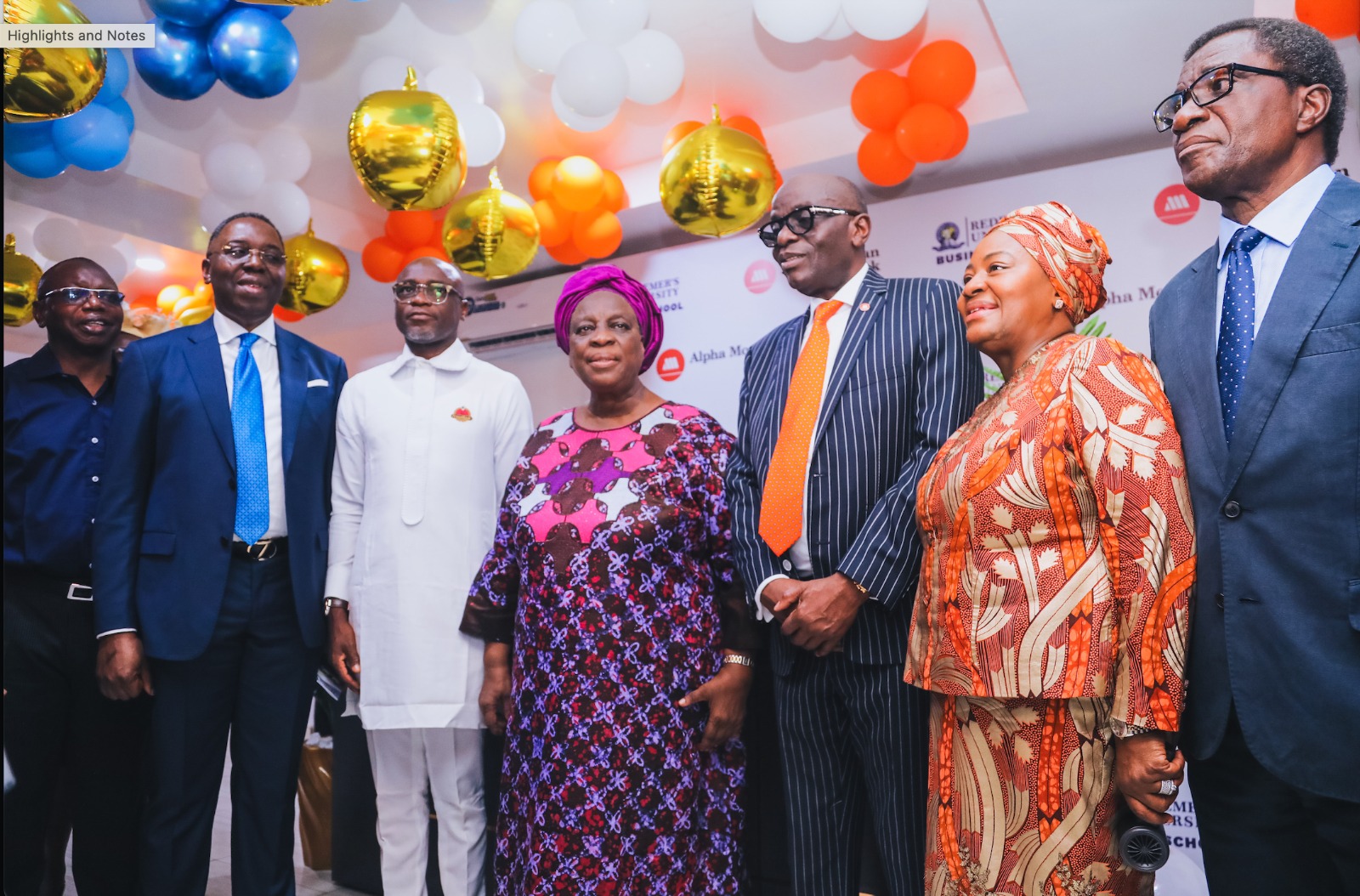
Alpha Morgan Bank Reinforces Commitment to Education at Redeemer’s University Business School Commissioning
Alpha Morgan Bank has reaffirmed its commitment to education and institutional development through its support for the commissioning of the Redeemer’s University Business School.
The Business School was officially inaugurated by Pastor (Mrs.) Folu Adeboye, at the commissioning ceremony attended by distinguished guests including Her Excellency, Mrs. Bola Obasanjo; the Pro-Chancellor and Chairman, Governing Council of Redeemers University, Professor Oluwatoyin Ogundipe; the Vice Chancellor, Professor Shadrach Olufemi Akindele; and other notable dignitaries.
Speaking at the event, the Managing Director of Alpha Morgan Bank reiterated the Bank’s commitment to supporting institutions that drive intellectual growth and national development.
As part of its broader focus on knowledge sharing and thought leadership, Alpha Morgan Bank will host its Economic Review Webinar in May 2026, bringing together experts to share insights on key economic trends and opportunities.
The Bank’s involvement reflects its continued dedication to empowering institutions and shaping the future of business and leadership in Nigeria.
Read more about Alpha Morgan Bank on www.alphamorganbank.com
PHOTO
L-R: Prof. Shadrach Olufemi Akindele, Vice Chancellor, Redeemers University, Engr. Eloka Eje, Dr Perez Araka, Pastor (Mrs) Folu Adeboye, Mother-In-Israel, The Redeemed Christian Church of God, Mr Ade Buraimo, MD/CEO Alpha Morgan Bank, Dr (Mrs) Oluwatomi Somefun, Dr. Simeon Ifere, at the inauguration of the Redeemer’s University Business School, Redemption City, Ogun State on Thursday 2nd April, 2026

Tinubu Aide Rebuts Rufai Oseni Over ₦3.3tn Power Debt Deal
Business
Aare Adetola Emmanuelking Welcomes President Tinubu to Gateway International Airport Commissioning in Iperu-Remo

Aare Adetola Emmanuelking Welcomes President Tinubu to Gateway International Airport Commissioning in Iperu-Remo
In a momentous occasion that underscores the rapid infrastructural advancement of Ogun State, renowned real estate mogul and philanthropist, Aare Adetola Emmanuelking, warmly received the President of the Federal Republic of Nigeria, Bola Ahmed Tinubu, at the official commissioning of the Gateway International Airport, located in Iperu-Remo.
The landmark event, held under the visionary leadership of the Ogun State Governor, Dapo Abiodun, marks a significant stride in the state’s economic transformation agenda, positioning Ogun as a key hub for aviation, commerce, and investment in Nigeria.
Aare Emmanuelking, who is also the Chairman/CEO of Adron Homes and Properties, commended the Ogun State Government for its foresight and commitment to infrastructural excellence. He described the airport project as a “game-changer” that will not only boost connectivity but also stimulate real estate growth, tourism, and industrial expansion across the region.
Speaking during the commissioning, President Tinubu lauded Governor Abiodun’s administration for delivering a world-class facility that aligns with the Federal Government’s Renewed Hope Agenda, emphasizing the importance of strategic infrastructure in driving national development.
The Gateway International Airport is expected to serve as a critical gateway for investors and travelers, further enhancing Ogun State’s reputation as one of Nigeria’s most business-friendly environments.
The presence of top dignitaries, industry leaders, and stakeholders at the event underscores the project’s significance and its anticipated impact on the state’s socio-economic landscape and beyond.


- Seychelles Strengthens Human Rights Reporting through National Workshop April 8, 2026
- ABB’s Application Configurator brings speed and precision to grid-feeding protection system design April 7, 2026
- Can Equatorial Guinea Reposition as West Africa’s Gas Hub? April 7, 2026
- Afreximbank Partners with African Energy Week 2026 to Drive Africa-Led Energy Deals April 7, 2026
- Merck Foundation Marks ‘World Health Day’ 2026 – Transforming Patient Care in Africa and Beyond through 2600+ Scholarships for Healthcare Providers From 52 Countries April 7, 2026
- Morocco Gas Plan Reset Could Open Door to New Investment Models April 7, 2026
- African Petroleum Producers Organization (APPO) Secretary General Joins Angola Oil & Gas (AOG) 2026 as African Energy Bank Eyes June 2026 Debut April 7, 2026
- Ghanaian Biomedical Specialist Receives International Award April 7, 2026
- Grey Connects the Africa-Canada Money Corridor With Instant Transfers via Interac April 7, 2026
- Nigeria’s Oil Revival in Focus as Petroleum Minister Lokpobiri Joins Paris Energy Forum April 7, 2026
- Seychelles Strengthens Human Rights Reporting through National Workshop April 8, 2026
- ABB’s Application Configurator brings speed and precision to grid-feeding protection system design April 7, 2026
- Can Equatorial Guinea Reposition as West Africa’s Gas Hub? April 7, 2026
- Afreximbank Partners with African Energy Week 2026 to Drive Africa-Led Energy Deals April 7, 2026
- Merck Foundation Marks ‘World Health Day’ 2026 – Transforming Patient Care in Africa and Beyond through 2600+ Scholarships for Healthcare Providers From 52 Countries April 7, 2026
- Morocco Gas Plan Reset Could Open Door to New Investment Models April 7, 2026
- African Petroleum Producers Organization (APPO) Secretary General Joins Angola Oil & Gas (AOG) 2026 as African Energy Bank Eyes June 2026 Debut April 7, 2026
-

 news4 months ago
WHO REALLY OWNS MONIEPOINT? The $290 Million Deal That Sold Nigeria’s Top Fintech to Foreign Interests
-

 society7 months ago
“You Are Never Without Help” – Pastor Gebhardt Berndt Inspires Hope Through Empower Church (Video)
-

 celebrity radar - gossips2 months ago
Dr. Chris Okafor Returns with Power and Fire of the Spirit -Mounts Grace Nation Altar with Fresh Anointing and Restoration Grace on February 1, 2026
-

 celebrity radar - gossips4 months ago
Prophet Kingsley Aitafo Releases 2026 Prophecy: ‘Nigeria Will Rise, but the World Must Prepare for Turbulence’