
Business
NNPCL and Corruption’s Final Throes

NNPCL and Corruption’s Final Throes
By Pius Olasanmi
In the twilight of the Obasanjo administration, when Nigerians were still capable of being outraged, when Turn Around Maintenance (TAM) of refineries was a buzzword that still held some mysticism to bamboozle citizens, during a conversation, a certain man said something profound. The man said, “As a businessman, if I were the owner of these refineries, knowing that they are three decades old, I would take the last money I have, hire bulldozers, raze them to the ground, and obtain loans to build new ones.”
When we pressed him further on why he would engage in such waste, he explained that repairing the refineries is the real waste. He explained that even if the TAM were honestly carried out, a thirty-year-old refinery would never compete favourably with a new one that would integrate contemporary technology. Operating at its best, such a refinery would never be comparatively more efficient. It is therefore pointless to have spent another one naira on the refineries at that point.
A few months later, I had a conversation with a then-lawmaker on an entirely different matter. I mentioned that the National Assembly has failed by not crafting legislation that would criminalise and punish public office holders who foist wrong decisions on the country. The logic: a public office holder need not steal to be punished, wrong decisions should attract penalties for an office holder who opts for the worst of all options when there are less injurious ones.
These established premises speak to the ongoing nauseating efforts at revisionism by those who wrecked the Nigerian National Petroleum Company Limited (NNPCL) and its previous iteration, the Nigerian National Petroleum Corporation (NNPC). Notably, this campaign to rewrite history is traceable to Engineer Mele Kolo Kyari, the disgraced immediate past Chief Executive Officer of NNPCL and his hirelings. They have suffocated the news and the public opinion space with even more lies than they spun while in office.
The Saint Kyari campaign is anchored on convincing Nigerians that the Port Harcourt, Warri and Kaduna Refineries were fully functional when he was booted out of office. So brazen is the campaign that one of its talking heads challenged the group chief executive officer (GCEO), Engr. Bayo Ojulari, to “inform Nigerians categorically what happened to the functioning refineries he inherited from his predecessor, Engr. Mele Kyari.” The effrontery.
We have not forgotten so soon the charade that followed the baffling claim that Nigeria has spent $2.8 billion on the repair of the refineries, while they are not churning out even a single litre of refined product among them. Saint Kyari and his goons played all manner of tricks, all of which embarrassed President Bola Tinubu, who had counted on ticking off the return to productivity of the refineries as part of his achievements, only to realise that he was deceived into celebrating phantoms. Tragic.
Lest we forget, 200 trucks were arranged as props in a well-directed video clip to celebrate the re-streaming of the Port Harcourt Refinery. The disappointment. Nigerians were to learn from several reports that the Port Harcourt refinery was not producing and was instead using old, stored petroleum products to load trucks. Worse still, the Kyari crew was passing off sanction-tainted Russian-sourced crude oil refined in Malta as locally refined products. More insult was piled on the assault on our collective sensibility with the lies that the Port Harcourt Refinery exported semi-finished products. Brazen.
Meanwhile, Kyari and his hirelings called those who pointed out or protested these glaring scams all manner of names. They hid behind industry technicalities and jargon to create the impression that those of us who knew Nigerians were being robbed did not understand what we were saying. The point remains that a $2.8 billion investment can potentially build a refinery with a capacity of around 100,000 barrels per day (bpd). Of course, the actual capacity of such a refinery will depend on various factors, including the complexity of the refinery, the technology used, and the location. That is the amount that Kyari’s regime at the NNPCL took and did not give Nigerians refined products.
Fast forward to Kyari’s sack and the appointment of Engineer Bayo Ojulari, who has demonstrated that things can indeed be done differently. Kyari’s exit was expectedly followed by the Economic and Financial Crimes Commission (EFCC) going after him and his associates. The extent of the theft is better understood against the backdrop of N80 billion being found in the bank account of one of his associates. They went on the run.
Perhaps because the EFCC was biding its time on securing international warrants for the arrests of these characters on the lam, they have become emboldened. They have decided to fight back and rewrite the story of their participation in the greatest fraud against Nigerians. Engineer Ojulari’s renewed mindset, which is entrenching a semblance of the transparency Nigerians demand, became their natural target. The demons that once roamed around the corporation came out with malevolence. They started spinning stories of corruption to tarnish the incumbent who refused to hide their crimes. The objective: bring Ojulari down. But alas, he is winning the war as it stands.
His innocence is proven, and it is glaring that those who want him out are mere charlatans who can no longer ply their corrupt wares because of the impact of the new reforms. Corruption in the NNPCL is in its final throes. The fake news being unleashed against the incumbent leadership is akin to corruption’s last kicks as reforms in the sector strangulate it and its practitioners. The reforms must take place in the NNPCL, whether the industry demons like it or not.
As a parting shot, Kyari and his associates would do well to prepare their defence. In addition to accounting for the $2.8 billion they laundered in the name of repairing the moribund refineries, they must also answer for the poor decision to fix that which is irretrievably broken. Awarding contracts for Turn Around Maintenance of 59-year-old refineries that a right-thinking person had suggested should be demolished almost twenty years ago, when they were only 30 years old, is criminal. Trying to deceive Nigerians that the fake repairs worked is treason.

Olasanmi is a public affairs analyst writing from Lagos.




*Oceangate Engineering Oil & Gas LTD to appeal Federal High ruling over forfeiture assets*
Oceangate Engineering Oil & Gas Limited has said it will appeal to the recent ruling of the Federal High Court ordering the forfeiture of certain assets.
Barr. Nnenna Onyeaso, the Company Secretary said in a statement on Thursday insisting that neither the company nor its leadership was found guilty of any wrongdoing.
Onyeaso said that the firm has described the court’s decision as a civil asset forfeiture order based on suspicion rather than proof, stressing that the judgment did not establish any criminal liability against the organisation.
According to her, the company maintain that it has already directed its legal team to file an appeal, expressing confidence in the judicial process and the outcome of a thorough review of the case.
“To be clear, this ruling is a civil asset forfeiture order with no finding of wrongdoing against Oceangate or its leadership.
“The court’s decision rested on a legal standard of suspicion, not proof, and it is one we intend to pursue fully through the appeals process,” she said in a statement.
The firm secretary also said that Oceangate has reiterated its belief in the rule of law, noting that the appellate system exists to address such outcomes.
She added that the company remained confident that the facts of the case will ultimately affirm its integrity and business practices.
Onyeaso said that the firm also emphasised that its operations remained unaffected, stating that it continues to provide employment for many Nigerians while contributing to the country’s energy sector and broader economy.
“We have always believed in the ability of the judicial process, and that belief has not wavered,” she added.
She noted that Oceangate further expressed appreciation to its employees, partners, and clients for their continued support amid the development, assuring stakeholders of its commitment to transparency and accountability.
The Secretary said that the company reaffirmed its confidence in Nigeria as a viable destination for investment, describing the country as a land of equity, growth, and opportunity.
“We remain committed to the continued growth of our business and the communities we serve as we are optimistic that justice will prevail at the end of the legal process.
FirstBank Empowers SMEs with AI-Driven Growth Strategies, Hosts SMEConnect Webinar
Lagos, 20 March 2026 – FirstBank, West Africa’s premier financial institution and financial inclusion services provider, is pleased to announce the upcoming edition of the SMEConnect Webinar scheduled to hold on Tuesday, 31 March 2026. The event will equip small and medium-sized enterprises (SMEs) with the knowledge and tools to harness the power of Artificial Intelligence (AI) for business growth.
This edition is strategically curated to inform and educate SMEs on how AI can be applied to scale their businesses in today’s rapidly evolving digital economy. The chosen theme, “AI for Business Growth: From Adoption to Integration and Scalable Impact,” reflects the growing importance and timeliness of AI as one of the most influential trends shaping the SME business landscape. The session will provide SMEs with actionable insights on how to leverage AI to enhance productivity, streamline operations, strengthen customer engagement, and make smarter, data-driven decisions.
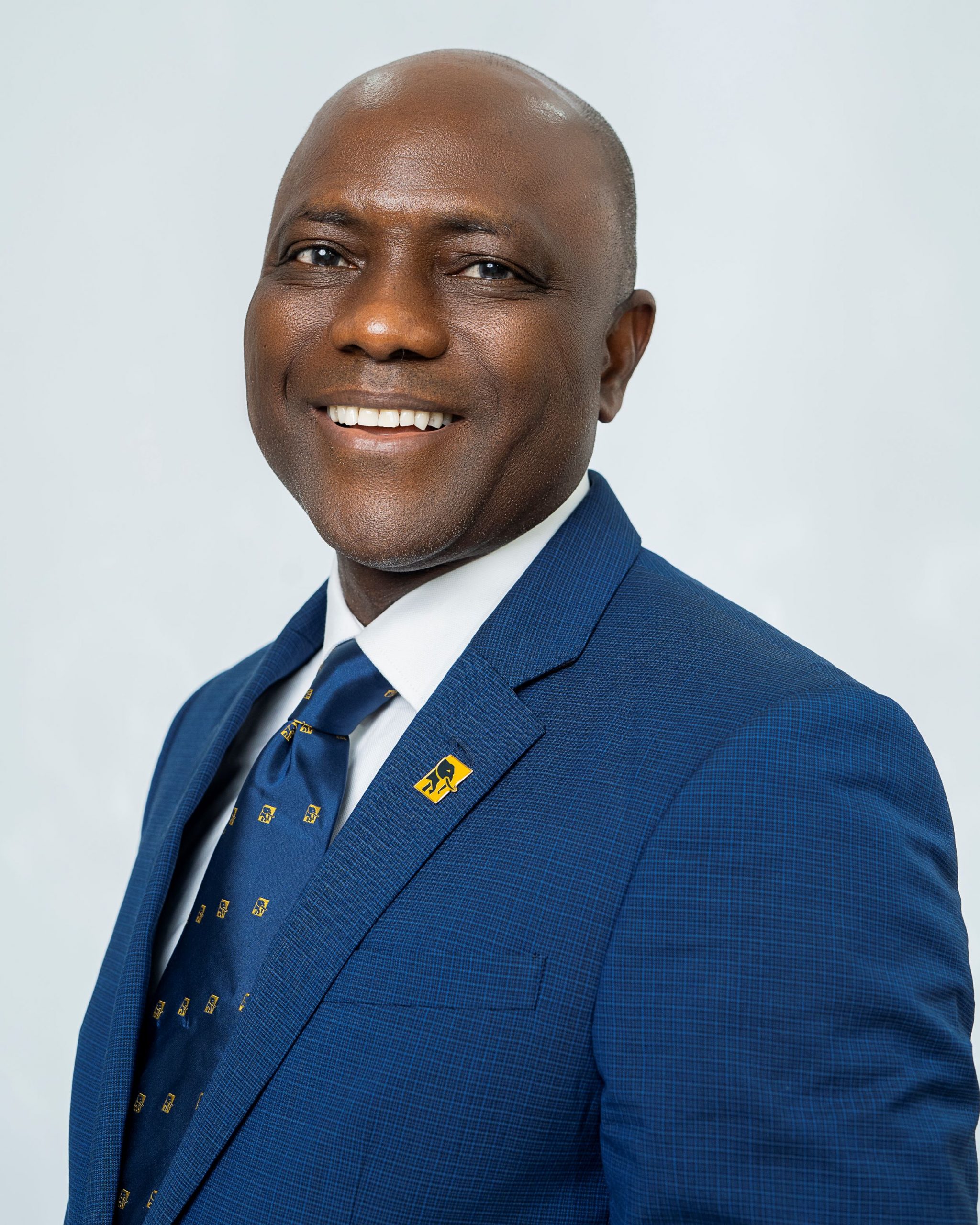
The SMEConnect webinar will feature experts, including Temitope Odude, Senior AI Solutions Architect at Microsoft as a guest speaker. Odude will provide credible and globally relevant perspectives on how SMEs can successfully adopt and integrate AI into their everyday business operations. Other speakers include Abednego Ugwueke, Head of Digital Channels and Ibidun Adedewe, Head of SME Acquisition & Partnerships at FirstBank.
Speaking ahead of the event, Chuma Ezirim, Group Executive, e-Business and Retail Products at FirstBank, said “SMEs are the backbone of the Nigerian economy, and at FirstBank, we recognise that the economy cannot thrive without them. As a committed growth partner to SMEs, this session reinforces our strong focus on innovation, demonstrated through initiatives such as the use of AI‑enabled credit scoring to deliver fast, instant loans to micro‑SMEs, with over ₦1 trillion disbursed to support customers’ financial needs. Building on this foundation, we are equipping business owners with the right knowledge and practical insights on Artificial Intelligence to help them scale in the short term and drive sustainable growth. I encourage every business owner to participate in this session to gain hands‑on guidance on integrating AI into everyday business operations.”
SME owners and entrepreneurs can register for the webinar at https://firstbanknigeria.zoom.us/webinar/register/WN_cUr1LhWFQXymTqWtONOOVg
SMEConnect Webinar series is one of FirstBank’s signature platforms for supporting SMEs with practical knowledge and strategic insights. The Bank has consistently won awards for impacting businesses and for providing innovative solutions for customers and other stakeholders, including SMEs.
The Bank was named Best SME Bank in Nigeria and Best SME Bank in Africa by TAB Global Excellence in Retail Finance Awards for 2 years as at 2025. The Bank also won the SME Financier of the Year- Nigeria awarded by The Digital Banker.
EvaluatePR to Explore “PR After the Algorithm: Trust, Truth & Intelligence in 2026
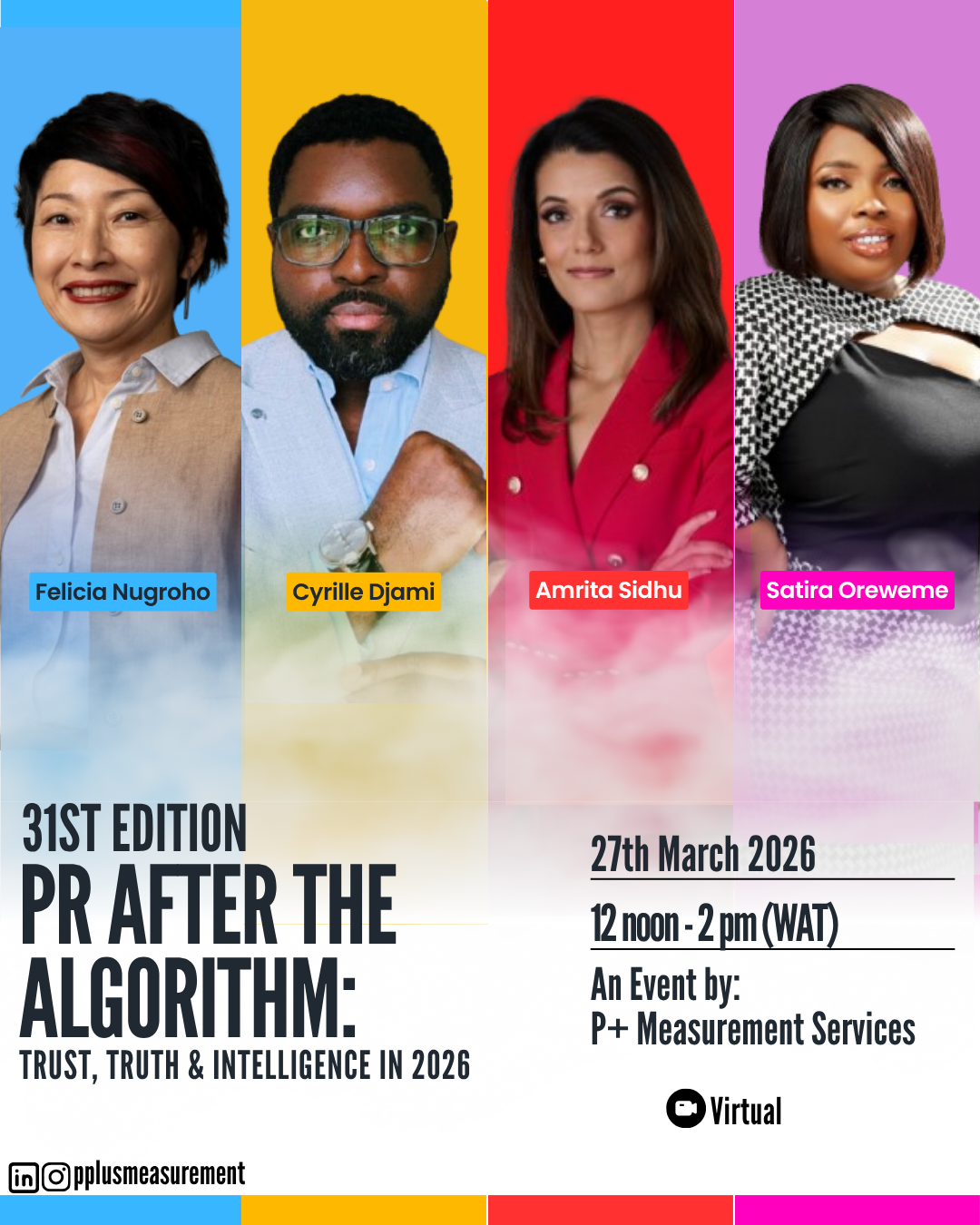
P+ Measurement Services, Nigeria’s leading independent media intelligence and PR measurement agency, will host the 31st edition of its flagship thought-leadership platform, EvaluatePR, on Friday, March 27, 2026, at 12:00 p.m. (WAT).
Themed “PR After the Algorithm: Trust, Truth & Intelligence in 2026,” this virtual session will convene professionals across public relations, communications, and media measurement to explore how algorithms, artificial intelligence, and digital ecosystems are reshaping reputation management, media influence, and audience trust.
With the increasing role of automation in communications, the event will challenge professionals to rethink how credibility is built and sustained in a fast-evolving digital landscape, while emphasizing the need for transparency, ethical measurement, and strategic intelligence.
The session will feature a distinguished lineup of speakers representing diverse expertise across global communications, media intelligence, and analytics: Felicia Nugroho – Director, Analytics & Insights, Maverick Indonesia / Chair, Asia Pacific & International Board Director, AMEC; Cyrille Djami – Founder & Publisher, CommsOfAfrica; Strategic Communications, Editorial and Influence Consultant; Amrita Sidhu – Managing Director, Medianet / Director & Board Representative, AsiaNet / Board Member, AMEC; and Satira Osemudiamen Oreweme – Principal Consultant, Satira Media & Public Relations Limited.
Together, they will lead insightful discussions on how communicators can navigate the intersection of technology and trust, maintain authenticity in automated environments, and leverage data-driven intelligence to deliver meaningful communication outcomes.
Participation in the session is free, with access available via the official registration link:
https://bit.ly/4stWjUh


-

 society6 months ago
Religion: Africa’s Oldest Weapon of Enslavement and the Forgotten Truth
-

 news4 months ago
WHO REALLY OWNS MONIEPOINT? The $290 Million Deal That Sold Nigeria’s Top Fintech to Foreign Interests
-

 society6 months ago
“You Are Never Without Help” – Pastor Gebhardt Berndt Inspires Hope Through Empower Church (Video)
-

 celebrity radar - gossips2 months ago
Dr. Chris Okafor Returns with Power and Fire of the Spirit -Mounts Grace Nation Altar with Fresh Anointing and Restoration Grace on February 1, 2026