
society
Nuclear Trip to Russia and Atoms Online Video Competition for African youths

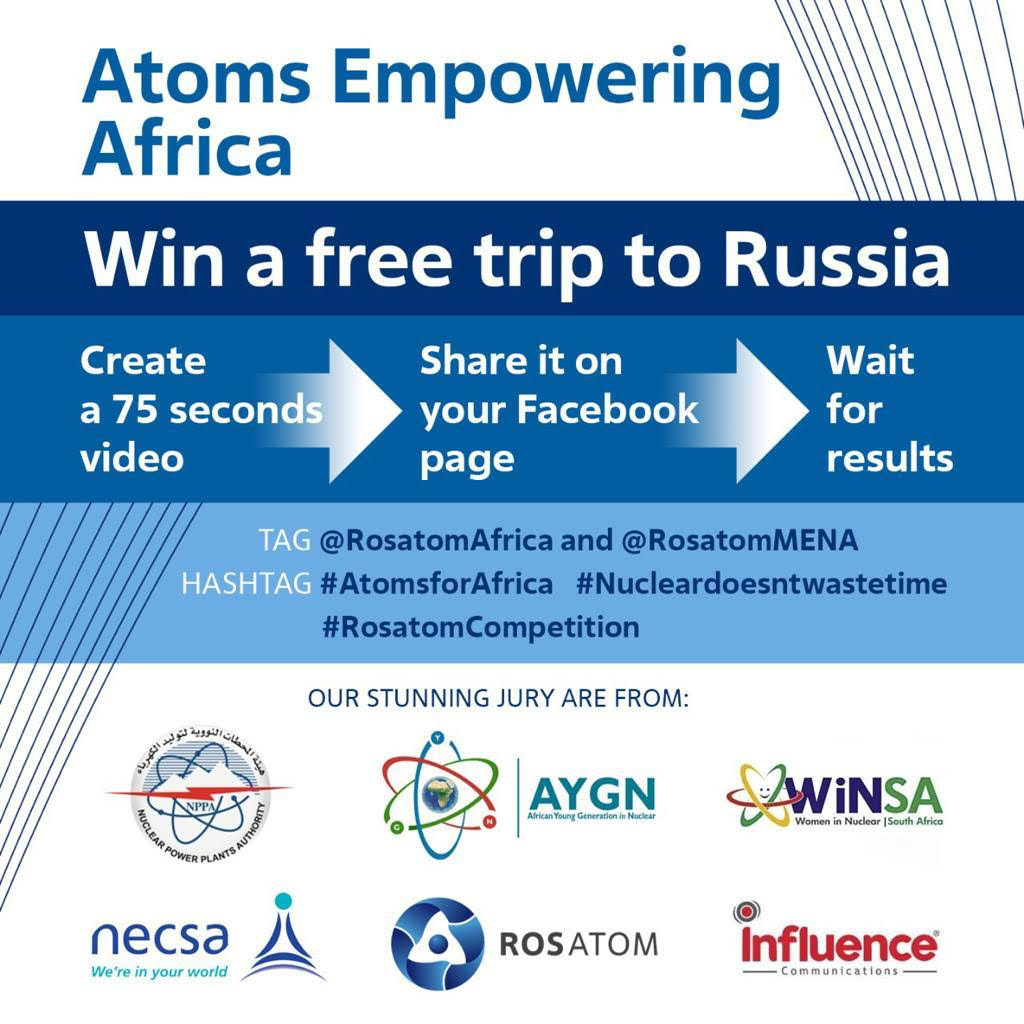
Nuclear technology minded youths in Nigeria and Africa are getting the opportunity to visit the nuclear facilities in Russia by participating in the “Atoms Empowering Africa” video competition. In response to the huge demand, the Russian State Atomic Energy Corporation Rosatom, has also extended the deadline for the 6th annual competition of online videos to February 15th.
The “Atoms Empowering Africa” competition, enables African students and young professionals explore the potential of nuclear power in boosting industrialization in Africa. The participants from the age of 18 to 35 residing in African countries are encouraged to post their videos on Facebook, following the formal guidelines and based on wide range of nuclear related topics.
The topics or themes could include: Myths and fears about nuclear and how to overcome them; Nuclear in our everyday lives; How nuclear technologies can assist in achieving the United Nations Sustainable Development Goals (UNSDGs) in Africa; How non-power related nuclear science and technology can benefit your country or community.
With this in mind, participants are expected to produce a 75-second video, with either professional camera or smartphone with a video quality of at least 720p HD quality. The video can be live-action or animation, with narration language in either English or features English subtitles. The name(s) of the creator(s) and the name of the university they are attending or attended, must be written in the first frame of the video. The video can be done by either an individual or a team of up to 3 people, and must be published on Facebook with no restrictions on its visibility for any Facebook visitors. Then, the participants must tag @RosatomAfrica and @RosatomMENA Facebook page and contain hashtags: #Nucleardoesntwastetime, #AtomsforAfrica, #RosatomCompetition. There should be no copyright violations, no harmful or offensive behaviour or discrimination of any kind. Applicants must submit their applications before the deadline to the email [email protected] or by the link to the online submission form https://tinyurl.com/RosatomAfrica.
The top three winning videos will be selected by an independent expert panel observing various criteria including original content and creativity, overall quality of the video and content, accuracy and relevance of technical content, as well as ability to clearly communicate the content to an audience. The makers of the top three videos will be rewarded with an all-expenses paid trip to Russia, where they will get the opportunity to visit several of the country’s world-renowned tourist attractions as well as as its advanced nuclear facilities and institutions.
Jury includes representatives of nuclear enterprises such as ROSATOM, Nuclear Power Plants Authority (NPPA, Egypt), media practitioners like Influence Communications (Egypt) and regional nuclear NGOs Women in Nuclear South Africa (WinSA), African Young Generation in Nuclear (AYGN) and Nuclear Corporation of South Africa (NESCA).
Over the last five years of running the “Atoms Empowering Africa” competition, 51 winners have received the accolades and prizes and about 17 of them have visited Russian nuclear facilities in Moscow, Obninsk, Tomsk, and Voronezh. The competition was selected by the International Atomic Energy Agency (IAEA) IAEA for its technical and practical using of social media for public communication and stakeholder involvement in nuclear programs. It has also been well featured in international and regional media.




society
WHEN PUBLIC TRUST IS TRADED: A PASSIONATE CALL FOR TRANSPARENCY AND ACCOUNTABILITY IN THE FGCK KANO LAND CONCESSION
WHEN PUBLIC TRUST IS TRADED: A PASSIONATE CALL FOR TRANSPARENCY AND ACCOUNTABILITY IN THE FGCK KANO LAND CONCESSION
By Tijjani Sarki
It is with deep concern and a profound sense of civic responsibility that I respond to the recent press release issued by Pluck Global Construction Company regarding the proposed concession of a substantial portion of land within Federal Government College, Kano. Beyond the polished assurances and technical justifications lies a matter that touches the very soul of public trust, institutional heritage, and the collective conscience of our society. I feel obliged to add my voice to that of the old students and other critical stakeholders, while also expressing serious concern regarding the implications this arrangement may have on the school’s future expansion projects.
This is not merely about land. It is about legacy, about the sanctity of a national institution, and about the obligation we owe to future generations who deserve to inherit not diminished assets,but strengthened foundations.
While the Company attempts to justify the arrangement under the framework of a Public-Private Partnership (PPP), its response raises more concerns than assurances, and leaves several critical issues either insufficiently addressed or deliberately glossed over.
At the heart of the matter is the proposed concession of approximately 40% of the College’s total land area,a decision of far-reaching implications for the heritage, future expansion, environmental balance, and overall integrity of one of Nigeria’s foremost unity colleges. The characterization of such a vast portion of institutional land as merely “underutilised” is, at best, subjective and, at worst, a convenient pretext for a transaction whose long-term consequences remain unclear.
The justification that this concession is in exchange for infrastructural development valued at over ₦8 billion further invites scrutiny. Given prevailing economic realities, inflationary trends, and the dynamic nature of project costing, the assertion that such an agreement is not subject to review or adjustment raises legitimate questions about transparency, fairness, and value-for-money. Who determined this valuation, and on what basis should it remain static despite changing economic conditions?
Furthermore, while regulatory approvals from bodies such as the Infrastructure Concession Regulatory Commission (ICRC) are cited, mere compliance with procedural requirements does not equate to public acceptability, stakeholder consent, or ethical soundness. Due process must go beyond paperwork, it must reflect inclusiveness, accountability, and sensitivity to institutional legacy.
Of particular concern is the underlying rationale for situating a commercial or quasi-commercial land-swap arrangement within the premises of a functioning educational institution. This naturally leads to a fundamental question:
Why must such a project be tied to land within the school environment?
If indeed the Company possesses the technical and financial capacity it claims, why has it not sought to execute similar developments on virgin land outside the state capital, where there would be no conflict with an academic setting, historical legacy, or public sentiment?
The insistence on acquiring a substantial portion of land within a prestigious federal institution inevitably fuels skepticism regarding the true motives behind the arrangement. Is the primary objective the development of educational infrastructure, or the strategic acquisition of high-value urban land under the guise of a PPP?
Additionally, the assurance that possession of the land will only occur upon project completion, while noted, does not sufficiently mitigate concerns about the eventual permanent transfer of public institutional assets into private hands. What guarantees exist to protect future generations from irreversible decisions taken today?
Equally troubling is the apparent disconnect between the scale of the concession and the voice of critical stakeholders. Institutions such as Federal Government College, Kano, are not merely physical spaces, they are national assets with deep historical and emotional significance. Any decision affecting such institutions must command broad-based consensus,not just regulatory approval.
In light of the foregoing, several key questions remain unanswered:
What independent valuation was conducted to justify the exchange of 40% of institutional land for the proposed developments?
Why is the agreement insulated from review despite obvious economic fluctuations?
What alternative sites were considered, and why were they deemed unsuitable?
What long-term safeguards exist to protect the school’s territorial integrity and future expansion needs?
To what extent were stakeholders, including alumni and the host community, consulted prior to finalizing this agreement?
Until these questions are satisfactorily addressed, the concerns raised by stakeholders remain valid, urgent, and compelling.
This is a defining moment. We must decide whether public institutions exist for the common good or as convenient instruments for opaque transactions. Silence, in this instance, would amount to complicity.
We therefore call on all relevant authorities to act with courage and conscience,revisit this agreement, open it to public scrutiny, and ensure that decisions of such magnitude are guided not only by technical compliance, but by transparency, equity, and the enduring public interest.
Tijjani Sarki
*Good Governance Advocate and Public Policy Analyst*

“Jesus Christ is the Way, the Truth, and the Life.” — Dr. Chris Okafor
Grace Nation Worldwide marked a special occasion as members gathered at the international headquarters in Lagos, Nigeria, to celebrate the birthday of the Generational Prophet and Senior Pastor, Christopher Okafor, who turned a year older on April 4, 2026.
A Service of Thanksgiving and Celebration
The atmosphere was filled with gratitude as sons and daughters of the ministry came together to appreciate God for the life and impact of their spiritual leader.
The celebration featured a variety of activities, including special musical renditions, Bible recitations, choreography presentations, and a vibrant praise and worship session led by the Liberation Voices.
The highlight of the event was the ceremonial cutting of the birthday cake, followed by joyful celebration and thanksgiving, all dedicated to the glory of God.
Teaching on the Death and Resurrection of Christ ,Earlier in the day, the service also commemorated the resurrection of Jesus Christ, with Dr. Okafor delivering a message on “The Death and Resurrection of Jesus Christ.”
In his teaching, he described the sacrifice of Christ at Calvary as the foundation of the Christian faith.
“The death of Jesus represents the depth of God’s love for humanity,” he said, while emphasizing that the resurrection is the ultimate confirmation and strength of the believer’s faith.
The State of Humanity Before Redemption
Dr. Okafor explained that before the sacrifice of Christ, humanity was bound by sin, subject to judgment, and separated from God. He highlighted the consequences of the fall of man, including spiritual loss and the inevitability of judgment.
The Purpose of Christ’s Sacrifice
According to the cleric, the death and resurrection of Jesus Christ brought restoration and reconciliation between God and humanity.
“When a person is restored to God, life becomes meaningful,” he noted, adding that the sacrifice of Christ signifies the forgiveness of sin and a new beginning for believers.
A Message of Hope
In conclusion, Dr. Okafor stated that the resurrection of Jesus Christ provides believers with the opportunity to live a fruitful and abundant life, anchored in faith and divine purpose.
The combined celebration of his birthday and the message of Easter created a moment of reflection, joy, and renewed commitment among members of Grace Nation Worldwide.


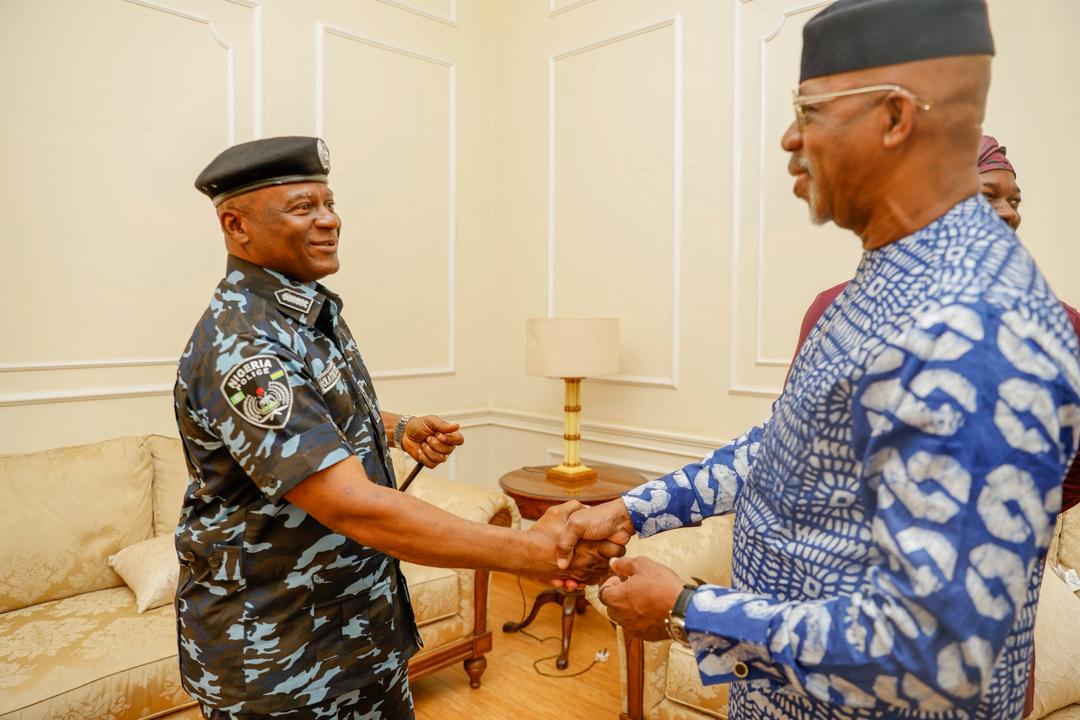
IGP Disu Unveils New Security Vehicles, Bikes In Ogun,
The Inspector-General of Police, Olatunji Rilwan Disu, on Saturday took centre stage at the commissioning of landmark projects in Ogun State, reaffirming the Nigeria Police Force’s commitment to strengthening national security and deepening collaboration with state authorities.
The high-profile event, attended by top government officials and security stakeholders, highlighted the strategic importance of security in driving development. Disu’s presence underscored ongoing efforts by the Police leadership to align operational priorities with infrastructural growth across the country.
A key highlight of the ceremony was the commissioning of new security vehicles and electric motorbikes aimed at boosting the operational capacity of security agencies in the state. The IGP commended the Ogun State Government for what he described as a proactive and forward-thinking approach to security, noting that the newly deployed assets would significantly enhance rapid response and patrol efficiency.
He stressed that effective policing remains central to maintaining peace and order, assuring residents that the Force would continue to evolve strategies to tackle emerging threats. According to him, the Nigeria Police Force is committed to working closely with both the Federal Government and sub-national authorities to ensure the safety of lives and property.
Disu further called on members of the public to support security agencies by providing timely and credible information, describing community cooperation as vital in combating crime and sustaining a secure environment.
The Police leadership also expressed appreciation to the Ogun State Government and other dignitaries for their continued partnership, noting that such collaboration is essential to advancing security initiatives and fostering national development.


-

 society7 months ago
Religion: Africa’s Oldest Weapon of Enslavement and the Forgotten Truth
-

 news4 months ago
WHO REALLY OWNS MONIEPOINT? The $290 Million Deal That Sold Nigeria’s Top Fintech to Foreign Interests
-

 society7 months ago
“You Are Never Without Help” – Pastor Gebhardt Berndt Inspires Hope Through Empower Church (Video)
-

 celebrity radar - gossips2 months ago
Dr. Chris Okafor Returns with Power and Fire of the Spirit -Mounts Grace Nation Altar with Fresh Anointing and Restoration Grace on February 1, 2026