
society
NUPRC AT 4 AND TRIBUTES TO MODEL OF EXCELLENCE By Nnoli Okojie

*NUPRC AT 4 AND TRIBUTES TO MODEL OF EXCELLENCE
By Nnoli Okojie
Four years ago, a quiet ceremony in Abuja marked the birth of a new institution. The Nigerian Upstream Petroleum Regulatory Commission (NUPRC) was not launched with fanfare or fireworks—just a signed document, a handshake, and a promise to fix what had long been broken.
From that modest beginning, under the steady hand of Engr. Gbenga Komolafe, appointed Chief Executive in October 2021, a regulator once seen as a mere successor to legacy bodies has emerged as the architect of Nigeria’s upstream renaissance. This is not a tale of slogans, but of systems rebuilt, revenues reclaimed, and a nation’s energy future reclaimed—one bold decision at a time.
The Nigerian Upstream Petroleum Regulatory Commission (NUPRC) stands as the apex regulatory agency established to oversee and supervise upstream petroleum operations in Nigeria, ensuring compliance, efficiency, and sustainable growth.
Its broad Regulatory Action Plan (RAP) is meticulously focused on enhancing regulatory certainty and predictability, advancing future licensing rounds through robust policy and seamless implementation, optimizing the unit cost of production for greater competitiveness, automating processes and improving business workflows for heightened operational efficiency, promoting ease of entry and retention of investments, vacating burdensome entry barriers such as exorbitant asset acquisition fees, deepening transparency, accountability, and the elimination of discriminatory regulatory practices, implementing a comprehensive carbon credit earnings framework for upstream operations, accelerating the execution of oil and gas development and production projects, and enforcing the Drill or Drop provisions of the Petroleum Industry Act (2021).
It also emphasizes the optimization of federation revenues, decarbonization and greenhouse gas (GHG) emissions management in production environments, incorporating green sustainability narratives into Field Development Plans (FDPs), diligent monitoring and implementation of the Nigerian Gas Flare Commercialization Programme (NGFCP) awarded sites for optimal flare-out monetization, Host Community Trust Fund implementation and guiding trust fund activities to minimize agitations in operational areas, achieving 100% hydrocarbon accounting, implementing the new production curtailment regime and domestic crude supply obligations, conducting annual asset performance assessments and reviews, enforcing Domestic Crude Supply Obligation (DCSO) and Domestic Gas Distribution Obligation (DGDO) to bolster domestic refining capacity, maintaining zero tolerance for defaults in royalty payments, creating value through rigorous approval of annual work programmes/budgets and monitoring financial viability, addressing crude oil and gas pricing in contemporary terms, and pursuing revenue generation with a zero-default strategy on royalty payments.
These are by no means exhaustive, as the mandate of the Commission encompasses its general objectives and functions as outlined in the PIA and, by extension, all other laws governing upstream petroleum operations in Nigeria. This includes rapidly actualizing the transformative vision of the PIA (2021) and elevating the efficiency and performance of the sector, with a strategic agenda tailored for Nigeria, Africa, and other resource-rich developing economies. This agenda navigates the evolving energy dynamics, calibrated against geography, history, and politics, while advocating for energy justice, equity, inclusivity, and long-term sustainability.
Today, the commission marks its fourth anniversary, birthed as a child of necessity to reclaim and restore our nation’s lost glory in the global energy arena. Instructively, a major challenge with such special purpose vehicles is the critical question of leadership, which can make or break their effectiveness.
It is against this backdrop that Engr. Gbenga Komolafe was appointed the Commission Chief Executive in October 2021, armed with a clear vision and mandate to drive systemic change. In this role, the mission was known and clearly defined from the outset by the leadership.
Since then, he has been instrumental in shaping the direction of the Nigerian Upstream Petroleum Regulatory Commission (NUPRC) through proactive, visionary, and significant leadership, transforming Nigeria’s oil and gas industry into a model of excellence in Africa’s energy sector. This has significantly boosted revenue generation, with the commission consistently surpassing its budgeted revenue target by 84%, demonstrating its unparalleled effectiveness in managing the nation’s hydrocarbon resources.
Engr. Gbenga’s institutionalization of positive reforms that promote transparency and accountability in the industry has led to enhanced oil production, with Nigeria’s output increasing to 1.7 million barrels per day, a significant reduction in oil theft from 200,000 barrels per day to 5,000 barrels per day, and driving Nigeria’s gas development agenda through initiatives like the National Gas Policy and the Gas Flare Commercialization Program. Additionally, the development of 25 priority regulations, with 17 already gazetted, provides a clear, structured framework for the industry, earning several awards and nominations, including the SERVICOM Outstanding Leadership Award and the Africa Energy Sector Regulator of the Year award.
Indeed, Engr. Gbenga has convincingly demonstrated his commitment to excellence, transparency, and sustainability in regulating Nigeria’s oil and gas industry through various frameworks that aid the autonomization of NUPRC’s operations, allowing it to make balanced decisions that foster investor confidence while safeguarding national interests. He has showcased competence and expertise in regulating the upstream petroleum industry, with reforms that promote transparency, efficiency, and professionalism, coupled with a data transparency model that publishes clearer data on production, investment flows, and environmental performance, ensuring accountability and informed decision-making.
He has also implemented the most ambitious Host Communities Development Trust (HCDT), an innovation that grants oil-producing communities a direct voice in project planning and environmental management, and introduced automated regulatory processes which have positively reduced inefficiencies, time wastages, and improved data accuracy and reliability in monitoring upstream activities.
Engr. Gbenga’s pursuit of excellence and verifiable results has led to the promotion of sustainable value creation from Nigeria’s petroleum resources for shared prosperity. With his various intentionally driven efforts to increase transparency and accountability in the oil and gas sector, he has favourably aligned the Commission with the provisions of the Petroleum Industry Act (PIA), leading to the development of 25 priority high-impact regulations, with 17 gazetted, to provide clarity and structure to the industry. This regulatory framework is expected to boost investor confidence and promote sustainable development in the upstream petroleum sector, while the automated regulatory processes have greatly reduced inefficiencies, time wastage, and improved precision and data accuracy in monitoring upstream activities, substantially improving oil production and increasing it to over 1.6 million barrels per day, with efforts to reach 1.8 million barrels per day and beyond.
Engr. Gbenga’s enhanced positive efforts to reduce emissions and promote sustainable energy development have aligned the Commission with global best practices. The several reforms introduced by him are taking shape, increasing Nigeria’s oil production to over 1.6 million barrels per day, with efforts to reach 1.8 million barrels per day and beyond.
The commission aims to retain existing investments, encourage additional investments, and attract fresh investments by eliminating identified barriers. Presently, Engr. Gbenga is driving Nigeria’s gas development agenda through initiatives like the National Gas Policy and the Gas Flare Commercialization Program.
Through this pragmatic problem-solving approach, the commission has also approved 28 new Field Development Plans, which are expected to unlock an additional 600,000 barrels of oil per day and more than 2 billion standard cubic feet of gas daily. His prioritization of transparency and accountability in the operations of the Commission, with a focus on regulatory compliance and stakeholder engagement, has led to the implementation of measures to deepen transparency, accountability, and eliminate discriminatory regulatory practices.
These actions amplify his commitment to forging strategies aimed at reducing emissions and promoting sustainable energy development, driving efforts towards reducing greenhouse gas emissions and promoting the use of cleaner energy sources, while aggressively working to promote investment in the upstream petroleum sector by providing a conducive business environment and streamlining regulatory processes that position Nigeria as a prime destination for foreign direct investment in the sector.
Already, NUPRC has developed a comprehensive strategic plan that outlines its goals, strategies, and actions for the next decade. This plan focuses on optimizing value creation, diversifying revenue resources, enhancing stakeholder relationships, ensuring regulatory compliance, attracting investors, and improving operational efficiency in the nearest future, and is anchored on the dynamic and people-oriented leadership of Engr. Gbenga Komolafe. The plan is to implement its Regulatory Action Plan, which focuses on regulatory certainty and predictability, future licensing rounds policy and implementation, unit cost of production optimization, and automation and business process improvements for operational efficiency.
This will surely attract fresh investments in the upstream petroleum sector by providing a conducive business environment and streamlining regulatory processes, and increase revenue generation for the government through increased oil and gas production, improved regulatory compliance, and effective management of the nation’s petroleum resources, while also promoting sustainable development in the upstream petroleum sector by ensuring that operations are carried out in an environmentally friendly and socially responsible manner.
The Commission will also evolve plans for the actualization of the Project 1 Million Barrels of Oil Per Day, an initiative which aims to ramp up oil production and create solutions for production growth, coupled with driving a stronger commitment to reducing emissions and promoting sustainable energy development while holistically digitizing regulatory processes to enhance efficiency and service delivery.
Today, four candles burn bright on NUPRC’s anniversary cake—not just symbols of survival, but emblems of transformation. What began as a regulatory reset has become a national success story, powered by a leader who turned policy into progress and potential into performance.
Engr. Gbenga Komolafe didn’t just inherit a mandate; he redefined it. And in doing so, he has given Nigeria more than oil—he has given it ownership of its future.
As the next chapter unfolds, one thing is certain: with Komolafe at the helm, NUPRC is not just keeping pace with global energy shifts—it is setting the rhythm. From the Niger Delta to the world stage, the message is clear: Nigeria’s upstream sector is open, accountable, and unstoppable. The journey of excellence continues—and the best, without question, is yet to come.
Okojie is an oil and gas expert writing from Abu Dhabi, UAE.


society
Liberian Leaders, Citizens Bear Witness as Apostle Suleman Hosts Two-Day Power-Packed Crusade
Liberian Leaders, Citizens Bear Witness as Apostle Suleman Hosts Two-Day Power-Packed Crusade
It was testimonies galore on Tuesday, March 31, the first day of the famous servant of God and founder of the Omega Fire Ministries (OFM) worldwide, Apostle Johnson Suleman’s power-packed two-day crusade. The event documented impactful moments with the Gospel and miracles, emphasizing the power of faith and the tangible confirmation of God’s Word through signs and wonders. It was equally an atmosphere of miraculous healing, restoration of lives, and the strengthening of faith.
At the crusade, which was held at the SKD Sports Stadium in Paynesville City, and themed, “Liberia Outpouring Crusade” witnessed testimonies of impact and miracles with participants experiencing instant healing of various kinds of challenges.
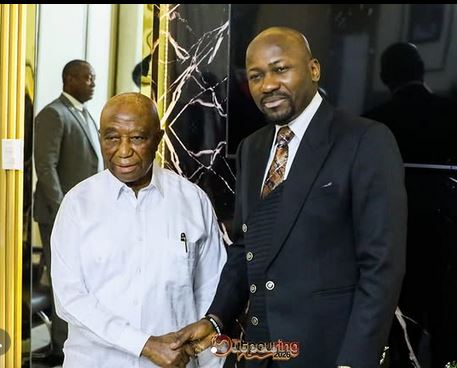
Apostle Suleman’s first port of call was Paynesville, the office of Liberian government’s president, Mr. Joseph Nyuma Boakai, who received him in an audience with his junior ministers. Apostle Suleman, who also met with the vice-president, Mr. Jeremiah Kpan Koung, was welcomed by the Liberian leader’s office as part of the president’s ongoing engagements with religious leaders aimed at fostering spiritual support for national development.
The president expressed profound appreciation to Apostle Suleman for the visit and continued prayers and intercessions by men and women of God on behalf of Liberia, emphasizing his firm belief that sustained spiritual guidance and prayer remain vital to the transformation and progress of the nation.
During the visit, Apostle Suleman offered prayers for President Boakai, his cabinet and the Liberian nation, invoking divine alignment, wisdom, and insight in Liberia’s path toward growth and stability. He prayed that the Almighty God would position Liberia for relevance and fulfillment of its national destiny.
Apostle Johnson Suleman, an evangelist who knows no bounds of where preaching the gospel comes to a stop, visited Liberia prepared with the message, compelling power of the Gospel and the work of the Holy Spirit, and bringing people to a point of decision where they surrendered their lives to Christ.
Aside from being prophetic and timely, OFM sources disclosed that the servant of God’s visit underscores the importance of faith-based partnerships in supporting governance and national renewal efforts.
society
Middle Belt Forum Hails Tinubu’s Jos Visit, Calls for United Civil-Military Effort to Restore Lasting Peace
*Middle Belt Forum Hails Tinubu’s Jos Visit, Calls for United Civil-Military Effort to Restore Lasting Peace
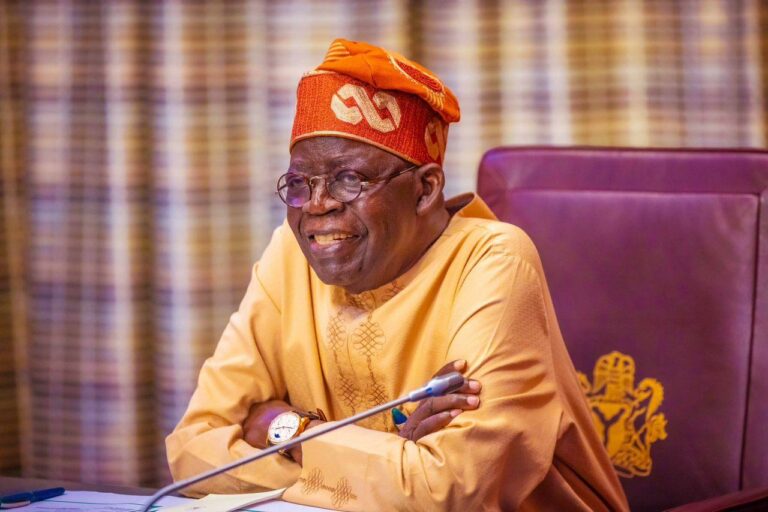
The Middle Belt Peace Forum (MBPF) has commended President Bola Ahmed Tinubu for his profound demonstration of empathy and responsive leadership following his decision to postpone an official engagement in Iperu in order to visit victims of the recent attacks in Jos.
In a statement signed by its National Coordinator, Pastor Bulus Garba, in Jos on Friday, the Forum said the President’s decision to personally identify with grieving communities sends a powerful message of solidarity and reinforces public confidence in the commitment of the Federal Government to the protection of lives and property.
“The Middle Belt Peace Forum warmly commends President Bola Ahmed Tinubu for prioritising compassion over ceremony. At a time of deep sorrow for the people of Plateau State, his decision to visit Jos stands as a mark of true leadership—one that listens, responds, and stands with the people in their moment of pain,” the statement read.
The Forum described the perpetrators of the recent attacks as “cowards who prey on innocent and defenceless citizens,” stressing that such acts of violence are not only inhumane but also a direct assault on the unity and peace of the nation.
“We condemn in the strongest terms the actions of these cowardly attackers whose only aim is to instil fear and destabilise peaceful communities. Their actions must be met with firm and decisive resistance from all arms of the state,” Pastor Garba said.
The MBPF further used the opportunity to salute the courage, gallantry, and sacrifices of the Armed Forces of Nigeria under the leadership of the Chief of Defence Staff, General Olufemi Oluyede, noting that their continued efforts remain central to restoring stability across troubled parts of the country.
According to the Forum, the Armed Forces have demonstrated resilience and professionalism in the face of complex security challenges, often operating under difficult conditions to safeguard communities and defend Nigeria’s territorial integrity.
“We salute the Armed Forces of Nigeria for their unwavering commitment and sacrifices. Their gallantry in confronting criminal elements and reclaiming territories is a testament to their dedication to national service. We recognise that the path to peace is demanding, and we honour those who stand daily in defence of our nation,” the statement added.
The Forum pledged its full support to ongoing military operations and called for strengthened collaboration between security agencies and local communities as a critical factor in achieving lasting peace.
It also urged citizens across the Middle Belt to cooperate with security forces by providing timely information and fostering unity within their communities.
The MBPF, however, expressed concern over the need for greater synergy among security agencies, particularly the role of the Nigeria Police in consolidating gains made by the military.
“We call on the Nigeria Police Force to rise fully to its constitutional responsibility by effectively supporting the Armed Forces in stabilising and securing areas that have been cleared of criminal elements. Holding and policing such territories is essential to preventing a resurgence of violence,” Pastor Garba stated.
The Forum emphasised that sustainable peace requires a coordinated approach in which the military clears and secures areas, while the police maintain law and order to enable displaced communities to return and rebuild their lives.
The MBPF concluded by reiterating its commitment to peacebuilding efforts across the Middle Belt and expressed optimism that with sustained leadership, coordinated security efforts, and active citizen participation, lasting peace can be achieved.
“Together, through unity, vigilance, and collective resolve, we can overcome these challenges and build a safer and more peaceful Middle Belt,” the statement added.
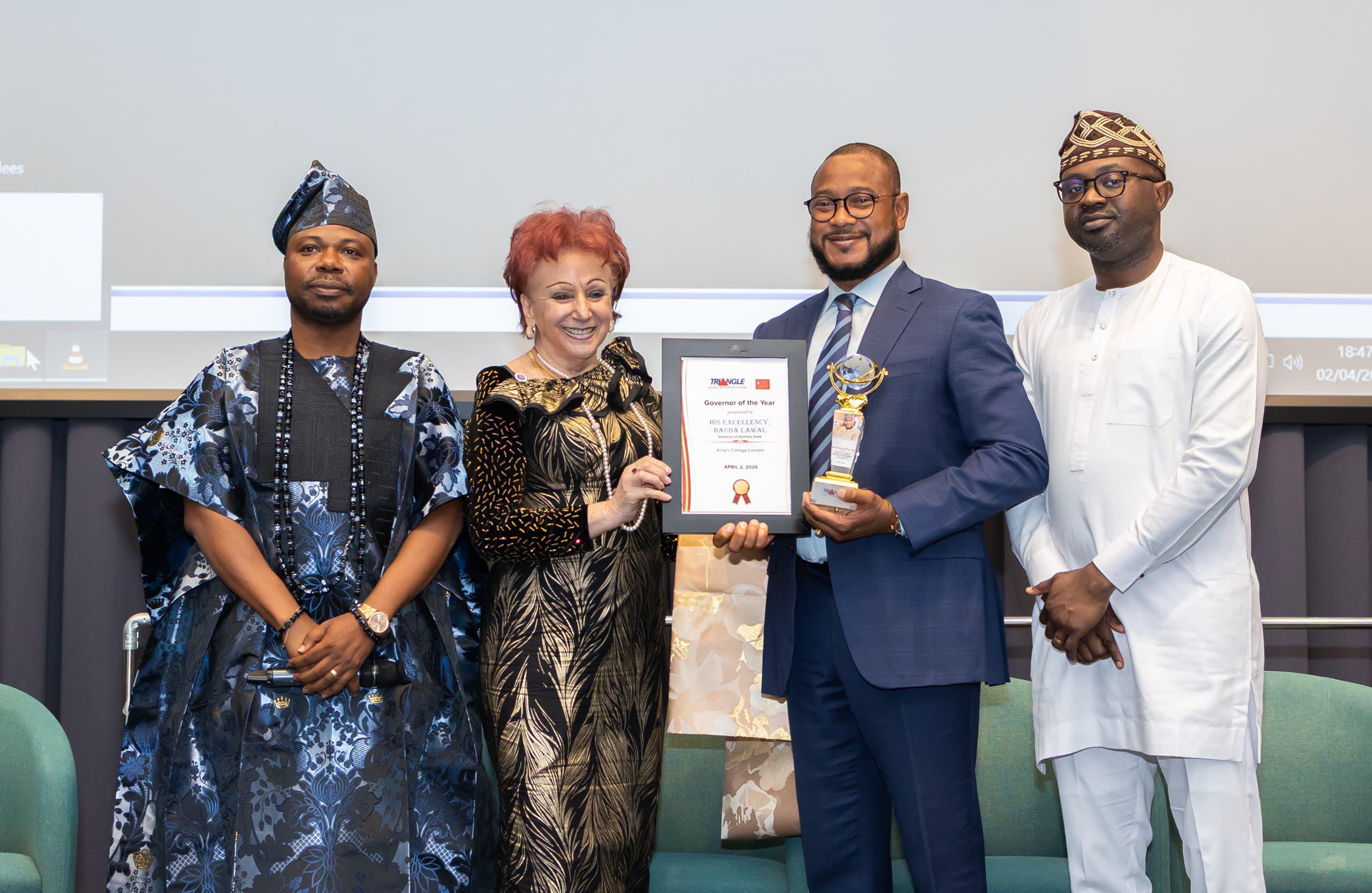
Governor Dauda Lawal Wins Face of Africa Governor of the Year Award in London
Governor Dauda Lawal has been honored with the Outstanding Governor of the Year award by Triangle Media International Magazine.
The award was presented during the magazine’s 10th annual lecture and award ceremony, held on Thursday at the Grand Hall of King’s College, London, United Kingdom.
According to a statement by the governor’s spokesperson, Sulaiman Bala Idris, the awards recognize public and private sector leaders whose leadership positively impacts governance and service delivery.
He added that the lecture, themed “Harnessing the Roles of Nigerians in Diaspora for National Development,” brought together stakeholders from both the public and private sectors.
The statement read in part: “Yesterday, in London, Governor Dauda Lawal received the 2026 Face of Africa Leadership Award for Outstanding Governor of the Year.
“The 2026 edition coincides with the 10th anniversary of Triangle International Magazine, which has over the years celebrated notable Africans across diverse fields.
“The award recognizes the Zamfara State Government under Governor Lawal’s leadership for achieving remarkable milestones in service delivery since his inauguration on 29 May 2023.
“The board of Triangle International noted that, despite inheriting an empty treasury, Governor Dauda Lawal has remained true to the Rescue Agenda’s campaign promise: to rescue and rebuild Zamfara.
“The award also reflects the state government’s innovative approach to indirectly curbing insecurity through educational advancement, demonstrated by the declaration of a state of emergency in the education sector.
“This includes the state government’s swift payment of the outstanding N3.4 billion for WAEC and NECO examinations, as well as the reconstruction and rehabilitation of schools across all 14 Local Government Areas of Zamfara State.
“The international magazine finds these initiatives to be strategic interventions toward long-term efforts to make Zamfara State better.”
The colourful event was attended by the Minister of Interior, Olubunmi Tunji-Ojo, and Sahara Group’s Group Managing Director, Kola Adesina, among others.


-

 society7 months ago
Religion: Africa’s Oldest Weapon of Enslavement and the Forgotten Truth
-

 news4 months ago
WHO REALLY OWNS MONIEPOINT? The $290 Million Deal That Sold Nigeria’s Top Fintech to Foreign Interests
-

 society6 months ago
“You Are Never Without Help” – Pastor Gebhardt Berndt Inspires Hope Through Empower Church (Video)
-

 celebrity radar - gossips2 months ago
Dr. Chris Okafor Returns with Power and Fire of the Spirit -Mounts Grace Nation Altar with Fresh Anointing and Restoration Grace on February 1, 2026