
society
NUSA’s Drive for Dignity in South Africa

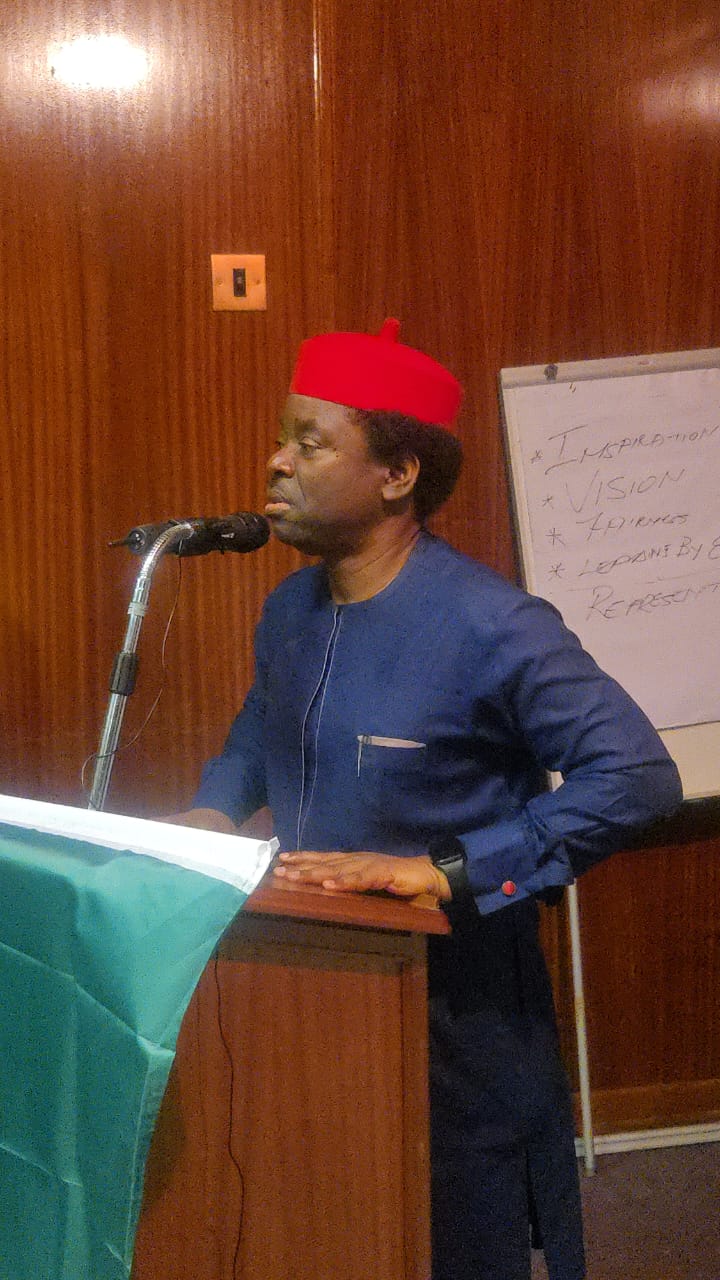
NUSA’s Drive for Dignity in South Africa.
By George Omagbemi
Sylvester | Published by SaharaWeeklyNG.com
Ambassador Ajayi’s call for law-abiding Nigerians meets NUSA’s vow of stronger advocacy.
In a season where divisions among migrants have often been exploited, the Nigerian Union South Africa (NUSA), under the determined leadership of its President General, Adv. Smart I. Nwobi, is rewriting the narrative. His recent drive to unite Nigerians across provinces reached a defining moment during the Bloemfontein Town Hall Meeting, held at the historic Bloemfontein National Museum. The event attracted Nigerian community leaders, professionals, students, business men/women and ordinary citizens, with the special presence of His Excellency Ambassador Alexander Temitope Ajayi (Acting High Commissioner for Nigerians in South Africa,), alongside senior members of the Nigerian Consulate in Johannesburg.

This gathering was not a routine community event. It was a turning point, a moment where the Nigerian diaspora in South Africa found both a voice and an audience with their government representatives.
A Call for Unity in a Divided Diaspora.
In his opening remarks, Adv. Nwobi emphasized the urgent need for Nigerians to unite irrespective of ethnic, religious or class differences. “When Nigerians stand together, no external challenge can divide us; but when we are divided, even the smallest issue becomes a mountain,” he declared, drawing loud applause from the audience.

Political scientists have long warned about disunity in diaspora communities. As Professor Adebayo Olukoshi, a leading African governance expert, once observed, “The weakness of the African diaspora lies not in numbers or resources, but in division and fragmentation. When organized, diaspora communities become forces of economic and political influence.” This town hall echoed that wisdom, showcasing NUSA’s new trajectory toward unity under Nwobi’s leadership.

Ambassador Ajayi’s Plea for Law-Abiding Citizenship.
When Ambassador Ajayi took the podium, he spoke with both empathy and firmness. His message was clear: Nigerians in Bloemfontein must continue to uphold their longstanding reputation for peaceful coexistence.
“I am proud of the Nigerian community here in Bloemfontein. You have shown resilience, hard work and dignity. I urge you to remain law-abiding, as you have always been, and to continue being ambassadors of Nigeria’s greatness,” he said.

His words carried special weight in a country where xenophobic tensions have, at times, threatened the safety of Nigerian migrants. By reminding the community of their duty while promising government attention to their challenges, the ambassador struck a careful balance between responsibility and reassurance.
The Tough Questions: Passports, NIN Fees and Permits.
The open-floor session brought a torrent of questions, reflecting the daily struggles of Nigerians in South Africa. Issues raised included:
Passport Hikes & Delays: Many lamented the skyrocketing cost of Nigerian passports and the long wait times, sometimes stretching into months.
National Identification Number (NIN) Fees: Complaints centered on high charges and bureaucratic bottlenecks.
Spousal Permits: Nigerians married to South Africans or other nationals raised concerns about unfair restrictions and costly processes.
Ambassador Ajayi did not shy away. He promised to table these matters urgently, acknowledging the depth of frustration. “These challenges are not invisible to us. I give you my word, we will revisit these issues and I will personally ensure they are addressed at the highest level,” he pledged.
In echoing him, Dr. Funmi Olonisakin, Vice-President at King’s College London and an authority on African security and migration, said: “For diasporas to thrive, host governments and home countries must create functional systems that do not criminalize mobility or make identification an endless punishment.” Her words framed the very heart of the frustrations raised at the town hall.
NUSA’s Broader Mission Across Provinces.
Adv. Nwobi, in his closing remarks, assured the community that Bloemfontein was only the beginning.
“We will not stop here. NUSA will continue to visit every province, listen to our people and ensure their voices reach both Pretoria and Abuja,” he vowed.
This reflects a new strategy: rather than waiting for Nigerians to come to the Union, the Union is going to Nigerians. Leadership analysts often remind us that proximity builds trust. According to John Kotter, one of the world’s most respected authorities on leadership and change, “Leaders who connect directly with their people ignite trust faster than those who operate from distance.” Adv. Nwobi seems to be applying this principle to the letter.
A Day of Football and Shared Identity.
Interestingly, the town hall coincided with the much-anticipated Super Eagles vs. Bafana Bafana clash at Toyota Stadium in Bloemfontein on the evening of September 9, 2025. The match ended in a 1-1 draw, but the stadium atmosphere was electric. Nigerians and South Africans, side by side, cheered passionately for their teams.
The symbolism was striking: while political challenges and bureaucratic frustrations had dominated the day, football reminded everyone of a shared African identity that transcends borders. As the late Nelson Mandela said, “Sport has the power to change the world. It has the power to unite people in a way that little else does.”
A New Era of Nigerian Leadership Abroad.
The Bloemfontein gathering was not merely about solving passport delays or clarifying fees. It was about redefining the role of NUSA as a unifying force. By pledging allegiance once more to Nigerians across South Africa, Adv. Nwobi underscored his leadership vision.
“It is my wish to see Nigerians united, recognized and attended to by the High Commission and the Consulate, not ignored. Under my watch, we will not relent,” he affirmed.
His words reflect a new wave of leadership, one that refuses to accept the diaspora as second-class citizens but instead as vital stakeholders in Nigeria’s future.
Why Unity Matters Now More Than Ever.
The importance of this moment cannot be overstated. The Nigerian community in South Africa is one of the largest migrant groups on the continent, with estimates ranging from 80,000 to over 120,000 people. Their economic contributions, from entrepreneurship to professional expertise, are immense. Yet, they face systemic challenges, including xenophobia, bureaucratic obstacles and stereotyping.
Unity under NUSA offers not just protection, but also collective bargaining power. As political philosopher Kwame Nkrumah wrote, “The forces that unite us are intrinsic and greater than the superimposed influences that divide us.” Nigerians in South Africa must internalize this truth if they are to thrive both individually and collectively.
Looking Forward: Beyond Bloemfontein.
The Bloemfontein Town Hall Meeting was more than an event. It was a manifesto of a new beginning. It showcased:
The Nigerian government’s willingness, through Ambassador Ajayi, to listen.
The Nigerian diaspora’s frustrations with structural inefficiencies.
NUSA’s renewed commitment under Adv. Smart Nwobi to lead with vision and courage.
As the Super Eagles and Bafana Bafana shared honors on the field, Nigerians in South Africa were reminded that their strength lies not in division, but in solidarity.
The task ahead is daunting. But if Bloemfontein is any indicator, then the Nigerian Union South Africa has taken a giant step in uniting Nigerians, amplifying their voices, and ensuring their dignity in a foreign land.
Or, to borrow from W.E.B. Du Bois: “The cost of liberty is less than the price of repression.” Unity, advocacy and representation; these are the tools that will secure a better future for Nigerians in South Africa.





society
GEN CHRISTOPHER GWABIN MUSA SUPPORT INITIATIVE EXTENDS WARM BIRTHDAY FELICITATIONS TO PRESIDENT TINUBU ON 74TH BIRTHDAY
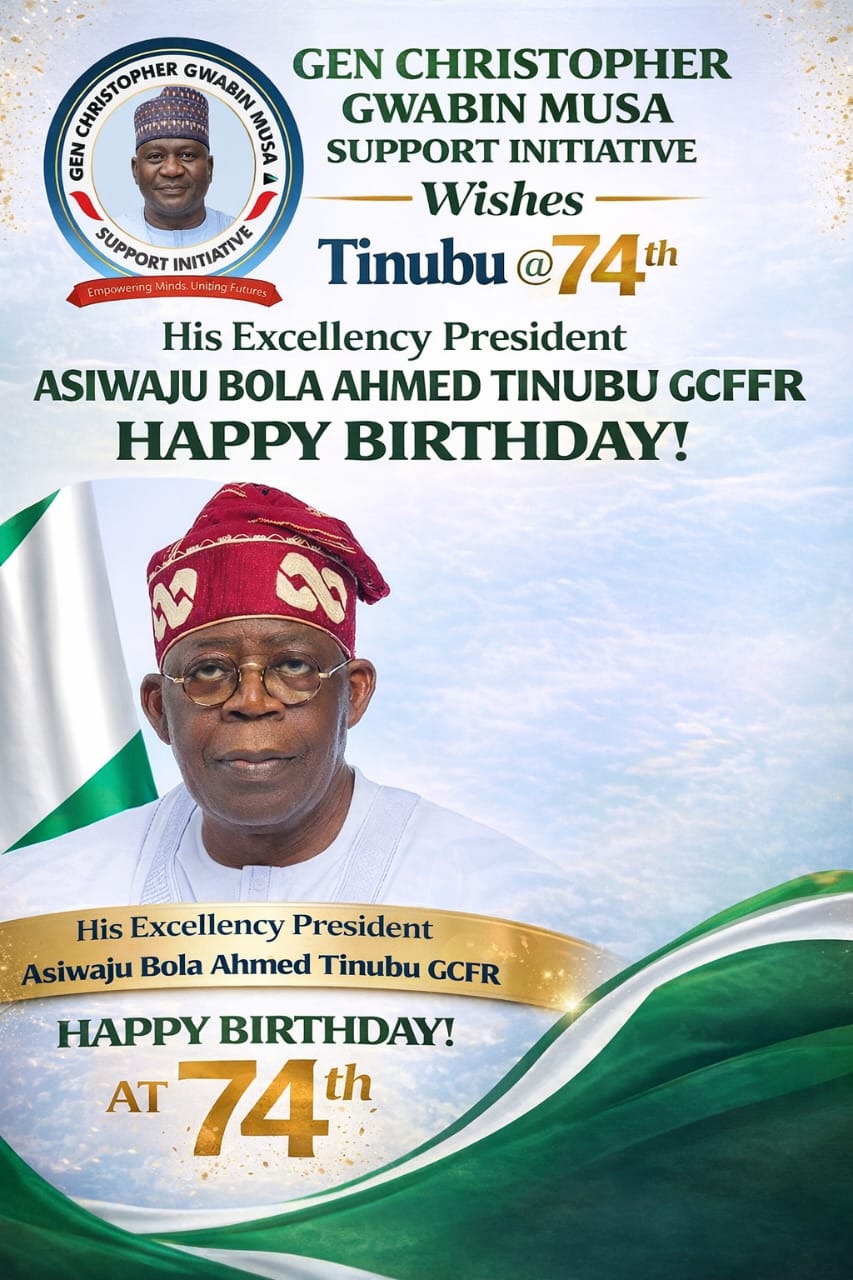
GEN CHRISTOPHER GWABIN MUSA SUPPORT INITIATIVE EXTENDS WARM BIRTHDAY FELICITATIONS TO PRESIDENT TINUBU ON 74TH BIRTHDAY
The Gen Christopher Gwabin Musa Support Initiative has extended heartfelt congratulations to His Excellency President Asiwaju Bola Ahmed Tinubu, GCFR, on the occasion of his 74th birthday.
In a statement released to the press, the Initiative conveyed warm wishes for the President’s personal well-being and for his continued leadership of the nation. The statement, signed by the Convener, Ibrahim Dahiru Danfulani, Sadaukin Garkuwan Keffi/Betara Biu, expressed hope that the coming year would bring the President “renewed strength and more wisdom in guiding the nation.”
The statement further noted that the Grand Patron of the Initiative, His Excellency Gen Christopher Gwabin Musa, OFR, Minister of Defence of the Federal Republic of Nigeria, joined in celebrating the milestone. It added, “Wishing Your Excellency continued good health, vitality, and determination as you lead the country towards greater unity and progress.”
The message underscores support for President Tinubu’s administration and its national objectives, marking the birthday as an occasion to reaffirm commitment to the nation’s unity and advancement under his stewardship.
society
Dominion City to Host Global Camp Meeting, “2 Nights of Glory” 2026 in Lagos, Enugu …Calls for Moral Renewal
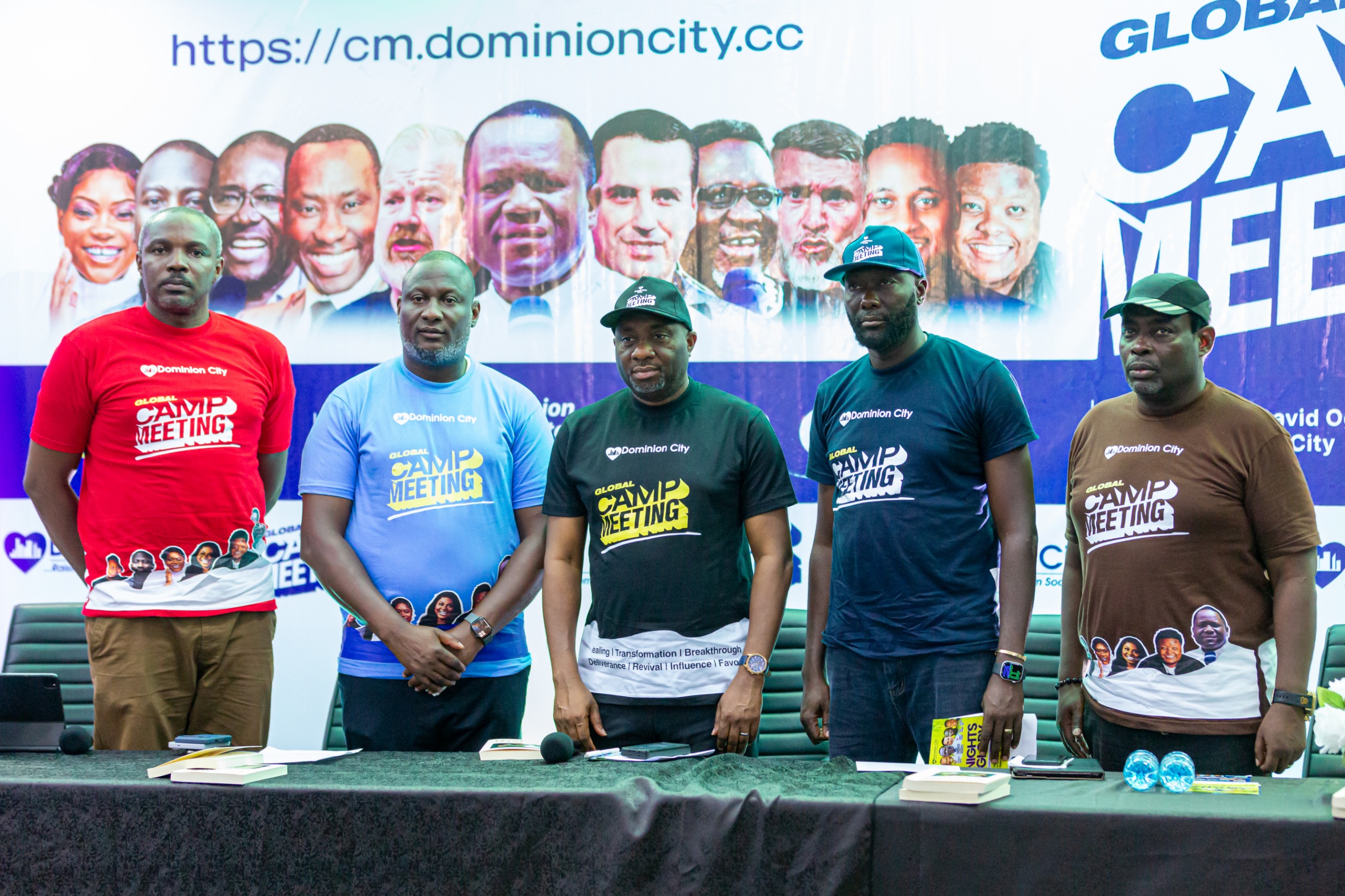
*Dominion City to Host Global Camp Meeting, “2 Nights of Glory” 2026 in Lagos, Enugu
…Calls for Moral Renewal
Lagos – Dominion City has announced plans to host its annual Global Camp Meeting alongside a special “2 Nights of Glory” gathering in April 2026, with events scheduled to be held simultaneously in Lagos and Enugu.
The week-long programme is expected to draw tens of thousands of participants onsite and millions of virtual attendees from across the globe.
The Global Camp Meeting will run from Wednesday, April 1 to Monday, April 6, featuring daily sessions at 8:00 a.m. and 5:00 p.m. The “2 Nights of Glory” is slated for Friday, April 3 and Saturday, April 4 at the Golden Heart Place, Km 22 Lekki-Epe Expressway, beside Lagos Business School, Ajah, Lagos.
Organised by Dominion City, a global church focused on raising transformational leaders, the conference will centre on revival, spiritual renewal, and practical teachings. This year’s theme, “Redigging the Wells of Our Fathers,” underscores a call to return to foundational values and principles.
Speaking ahead of the event, Nobbert Onaga, President, Golden Heart Foundation and Senior Pastor, DC Lagos & Europe, emphasised the need for moral reawakening as a pathway to national transformation. He described the Church as “the pillar and foundation of truth,” noting that the conference aims to confront moral decline and restore core values within society.
“We are going back to foundational truths that established the Church. These truths will help repair societal damage and reposition the Church as a source of hope and light,” Onaga said.
Also speaking, Shola Olapade, Senior Pastor of Dominion City Headquarters, highlighted the Church’s role in addressing ethical and cultural challenges, particularly among young people. He added that the programme would go beyond spiritual teachings to include sessions on artificial intelligence, innovation, business, media, arts, and career development.
“We are equipping people not just spiritually, but with relevant 21st-century skills to thrive in today’s world,” Olapade noted.
The conference will feature teachings and ministrations from a lineup of international ministers, including Dr. David Ogbueli, Dr. Charles Ndifon, Andres Bisonni, Pastor Randy Mitchell, Apostle Ikechukwu Peter Nnajiofor, Dr. Ferdinand Nweke, Apostle Ben Hanyani Ndobe, Evangelist Dan Scott, and Dr. Chiefo Ejiofobiri.
Music ministrations will also be led by notable gospel artists such as Grace Idowu, Rhema Onuoha, Once More Six, David Nkennor, Anthony Kani, and GUC.
Organisers disclosed that over 30,000 participants are expected to attend in person, with free transportation provided from designated locations across Lagos to ease access. In addition, free medical services will be offered daily, building on previous outreaches that benefited over 1,700 people.
To ensure safety and order, more than 200 traffic marshals will be deployed in collaboration with relevant authorities.
Beyond its spiritual impact, organisers project that the event will stimulate local economic activity across hospitality, transportation, and retail sectors.
The Global Camp Meeting remains a key platform for spiritual impartation, leadership development, and societal transformation, aligning with Dominion City’s mission to equip believers to influence their communities positively.
Participation is open to the public, with registration available online for both physical and virtual attendance. //END.//
*PHOTO CAPTIONS:*
L-R: Dr. Godwin Efobi, Head, Medical Team, Dominion City Headquarters (DCHQ); Pastor Shola Olapade, Senior Pastor, DCHQ; Pastor Nobbert Onaga, President, Golden Heart Foundation and Senior Pastor, DC Lagos & Europe; Pastor Chuks Anochie, Head of Security and Traffic Control, Dominion City Headquarters (DCHQ), Camp Meeting 2026; Pastor Josh Tim Vaduchi, Head of Event & Programmes, DCHQ, during the press briefing of the forthcoming Global Camp Meeting, held the weekend of 2026 at the Dominion City Headquarters (DCHQ), Lagos.
L-R: Pastor Chuks Anochie, Head of Security and Traffic Control, Dominion City Headquarters (DCHQ), Camp Meeting 2026; Pastor Shola Olapade, Senior Pastor, DCHQ; Pastor Nobbert Onaga, President, Golden Heart Foundation and Senior Pastor, DC Lagos & Europe; Dr. Godwin Efobi, Head, Medical Team, DCHQ; and Pastor Josh Tim Vaduchi, Head of Event & Programmes, during the press briefing of the forthcoming Global Camp Meeting, held over the weekend in 2026 at the Dominion City Headquarters (DCHQ), Lagos.
society
Oloworo of Oworosoki Kingdom, Oba Babatunde Saliu, Felicitates President Bola Ahmed Tinubu at 74
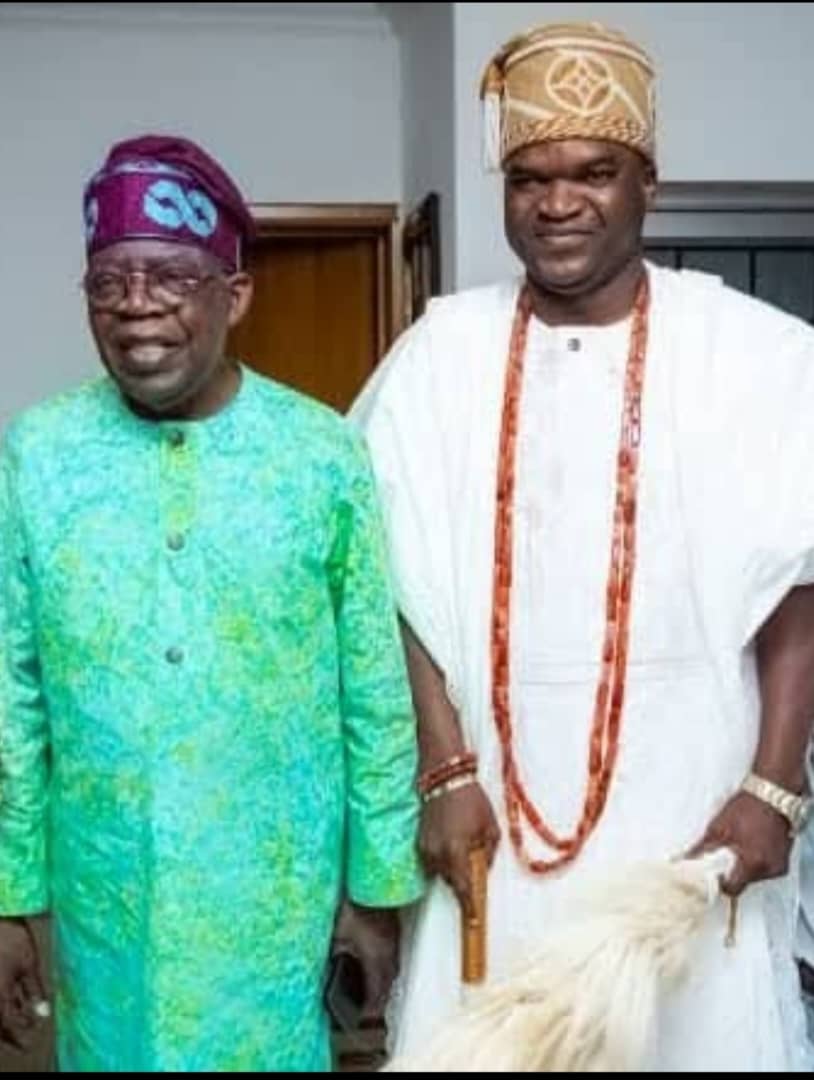
Oloworo of Oworosoki Kingdom, Oba Babatunde Saliu, Felicitates President Bola Ahmed Tinubu at 74
By Adeyemi Obadimu
The Oloworo of Oworosoki Kingdom, His Royal Majesty, Oba Babatunde Saliu, Elebo II, has extended warm felicitations to the President of the Federal Republic of Nigeria, Bola Ahmed Tinubu, GCFR, on the occasion of his 74th birthday.
In a goodwill message issued from his palace, the revered monarch described President Tinubu as a visionary statesman, a courageous reformer, and an indefatigable democrat whose lifelong commitment to nation-building continues to shape Nigeria’s progress.
Oba Babatunde Saliu praised the President’s unwavering dedication to public service, noting that his leadership has ushered in a new phase of economic reform, infrastructural renewal, and institutional strengthening across the country.
According to the monarch, the President’s Renewed Hope Agenda has begun yielding tangible relief and renewed confidence among citizens, reflecting his determination to reposition Nigeria for sustainable growth and prosperity.
“President Bola Ahmed Tinubu has demonstrated exceptional resilience, strategic foresight, and a deep love for Nigeria. His administration’s bold initiatives are laying the foundation for long-term national transformation. At 74, he remains steadfast in his resolve to build a stronger, more united, and economically vibrant nation,” the monarch stated.
Oba Babatunde further commended the President’s legacy of leadership, describing him as a bridge-builder, a mentor to many leaders, and a symbol of democratic stability. He acknowledged the President’s decades of sacrifice and contribution to the advancement of democracy in Nigeria.
On behalf of the Oworosoki Kingdom, the royal father prayed for divine wisdom, sound health, and renewed strength for the President to successfully complete the noble reforms and developmental strides he has embarked upon for the benefit of all Nigerians.
“As Your Excellency marks 74 remarkable years, we pray that Almighty God grants you long life, continued wisdom, and the fortitude to steer our great nation toward greater heights. May your days be filled with strength and grace as you continue to serve Nigeria with distinction,” Oba Babatunde Saliu added.
President Bola Ahmed Tinubu clocks 74 as a leader whose enduring influence, bold reforms, and steadfast patriotism remain central to Nigeria’s ongoing journey of national renewal.


-

 society6 months ago
Religion: Africa’s Oldest Weapon of Enslavement and the Forgotten Truth
-

 news4 months ago
WHO REALLY OWNS MONIEPOINT? The $290 Million Deal That Sold Nigeria’s Top Fintech to Foreign Interests
-

 society6 months ago
“You Are Never Without Help” – Pastor Gebhardt Berndt Inspires Hope Through Empower Church (Video)
-

 celebrity radar - gossips2 months ago
Dr. Chris Okafor Returns with Power and Fire of the Spirit -Mounts Grace Nation Altar with Fresh Anointing and Restoration Grace on February 1, 2026