
celebrity radar - gossips
Obasanjo’s Explosive Book: Corruption, Waste, and the Betrayal of Nigeria

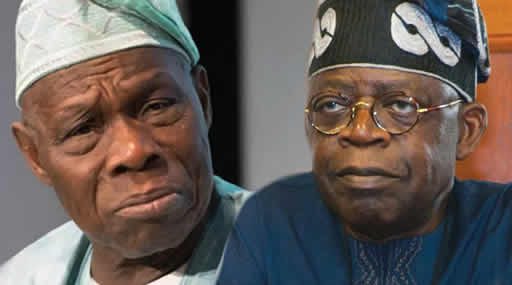
Obasanjo Unleashes Scathing Attack on Buhari and Tinubu, Declares Nigeria’s Leadership a Disaster
Former President Olusegun Obasanjo has launched a blistering critique of former President Muhammadu Buhari’s administration, branding it the worst in Nigeria’s democratic history. In his newly released book, Nigeria: Past and Future, Obasanjo pulls no punches, exposing what he calls the entrenched corruption, gross mismanagement, and outright betrayal of Nigerians under Buhari’s leadership. He further warns that President Bola Tinubu appears to be following in Buhari’s footsteps, and may even surpass his failures.
The book, released last week in celebration of Obasanjo’s 88th birthday, minces no words in condemning the controversial N15.6 trillion Lagos-Calabar Coastal Highway project, which Obasanjo describes as a financial black hole and a vehicle for massive corruption. He also slammed Tinubu’s government for approving a staggering N21 billion for a new vice-presidential residence amid economic hardship, calling it a ‘monument to greed and waste.’
“What small minds!” Obasanjo fumed. “The Lagos-Calabar Coastal Road is a mucky, corrupt project, and yet the President has turned a deaf ear to protests. Instead of focusing on the suffering of Nigerians, we are seeing a display of waste and misplacement of priorities.”
Buhari’s Administration: A Legacy of Corruption and Betrayal
Obasanjo’s attack on Buhari was particularly scathing, describing his tenure as an era that saw corruption flourish like never before. He accused Buhari of using his Attorney General and Minister of Justice, Abubakar Malami, as a tool to shield corrupt officials while punishing whistleblowers and anti-corruption crusaders.
“The most atrocious waste, the enthronement of corruption, and the destruction of any meaningful anti-corruption effort took place under Buhari’s watch,” Obasanjo wrote. “And his Attorney General, Malami, turned the justice system into a devil’s playground.”
Obasanjo further accused Malami of orchestrating the controversial release of convicted ex-governors Joshua Dariye and Jolly Nyame, who had been jailed for looting billions in public funds. He described their pardon as a disgraceful mockery of justice.
“But for my absence at the Council of State meeting where the pardon was granted, I would have fought against it,” Obasanjo lamented. “This was not justice; it was a well-orchestrated charade to protect political allies and further the legacy of corruption.”
Tinubu’s Government: More of the Same or Worse?
Obasanjo warned that Tinubu’s administration is already proving to be just as corrupt—if not worse—than Buhari’s. He accused Tinubu of running a transactional government where every deal is about personal enrichment rather than national interest.
“Given about two years of President Tinubu in office, it appears that the game of short-changing the over 230 million Nigerians continues,” he wrote. “Everything is now transactional, and the slogan is ‘It is my turn to chop.’”
The former President lambasted Tinubu’s handling of national projects, particularly the Lagos-Calabar Coastal Highway, calling it an overpriced scam designed to siphon billions from public funds.
“Tinubu’s peers are jealous, but that’s not because of any great achievements—it’s because they want their turn at the feeding trough,” he said.
The Presidency and Allies Fire Back
Predictably, Tinubu’s administration has come out swinging, dismissing Obasanjo’s claims as baseless and hypocritical. Presidential aides, including Sunday Dare and Temitope Ajayi, have accused Obasanjo of seeking relevance by attacking every sitting government after his own.
“If, as President for eight years, Obasanjo couldn’t even fix the Lagos-Ibadan Expressway, why should we take his criticism seriously?” Ajayi scoffed. “He sees himself as the only Nigerian who knows what is good for the country, but history will judge his failures.”
Minister of Works, David Umahi, defended the Lagos-Calabar Coastal Highway, calling it a ‘visionary project’ that will bring long-term economic prosperity. “People are only criticizing because they do not understand the benefits,” he argued.
Buhari, Malami Silent Amidst Firestorm
As the controversy rages, Buhari has remained conspicuously silent. His spokesperson, Garba Shehu, failed to respond to calls and messages, while Malami only issued a cautious statement, claiming he had not yet read the book.
“If these allegations exist, I will respond in due time,” Malami said. “However, I do not engage in speculation.”
A Nation in Crisis
Obasanjo’s book is a damning indictment of Nigeria’s leadership, past and present. It paints a grim picture of a nation plagued by corruption, misgovernance, and an elite class that continues to loot public resources at the expense of the masses. As the debate over the book’s revelations rages on, Nigerians are left to wonder: Will there ever be an administration that truly puts the people first?
With Tinubu’s government already mired in controversy, many fear that Obasanjo’s grim prophecy may indeed come true—that Nigeria is doomed to repeat the same cycle of corruption and mismanagement, only worse each time.




celebrity radar - gossips
Adron Homes Celebrates Visionary Chairman, Aare Adetola Emmanuel King, at 51
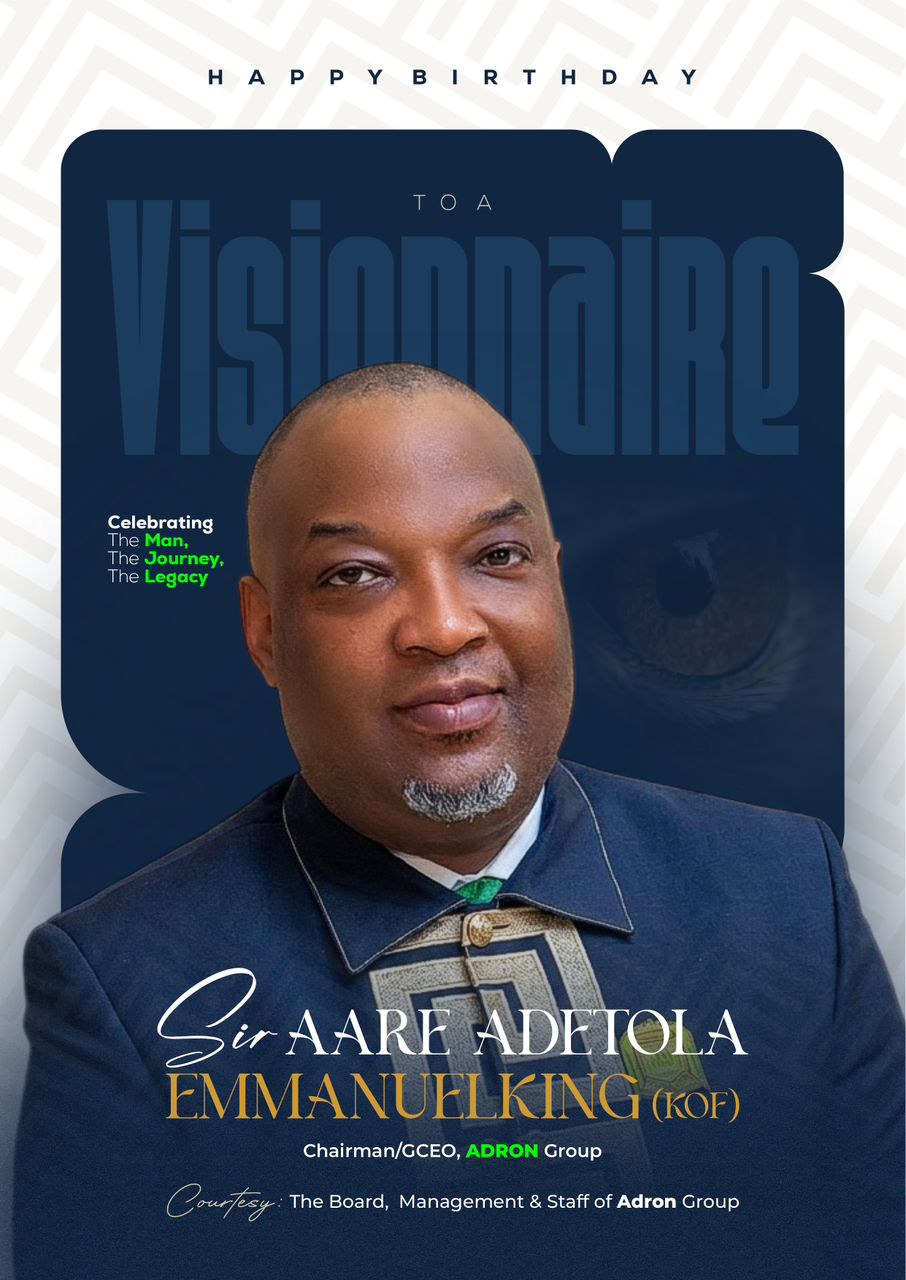
Adron Homes Celebrates Visionary Chairman, Aare Adetola Emmanuel King, at 51
The management and staff of Adron Homes and Properties Limited have joined family, friends, associates, and well-wishers across the globe to celebrate their Chairman and Chief Executive Officer, Aare Adetola EmmanuelKing, as he marks his 51st birthday.

In a statement released by the company, the milestone was described as a celebration of an exceptional leader whose vision, resilience, and entrepreneurial brilliance have not only transformed Adron Homes into a household name in Nigeria’s real estate sector but have also redefined affordable housing across the country.
Under his dynamic leadership, Adron Homes has continued to expand its footprint, delivering value-driven residential solutions while empowering thousands of Nigerians with opportunities for home ownership. His commitment to excellence, innovation, and customer satisfaction has remained the driving force behind the company’s sustained growth and industry leadership.
The statement further highlighted Aare EmmanuelKing’s passion for nation-building and community development, noting his significant contributions to job creation, youth empowerment, and the promotion of socio-economic development through real estate investments.
“As a leader, mentor, and visionary, Aare Adetola EmmanuelKing has consistently inspired a culture of excellence, integrity, and dedication within the organization. His ability to turn bold ideas into reality continues to position Adron Homes as a trailblazer in the industry,” the statement read.
The company expressed profound gratitude for his steadfast leadership and prayed for continued wisdom, strength, and sound health as he embarks on another year of impactful achievements.
As he celebrates his 51st birthday, the entire Adron Homes family proudly honours a man whose legacy continues to shape the future of real estate in Nigeria.
Happy 51st Birthday, Aare Adetola EmmanuelKing!
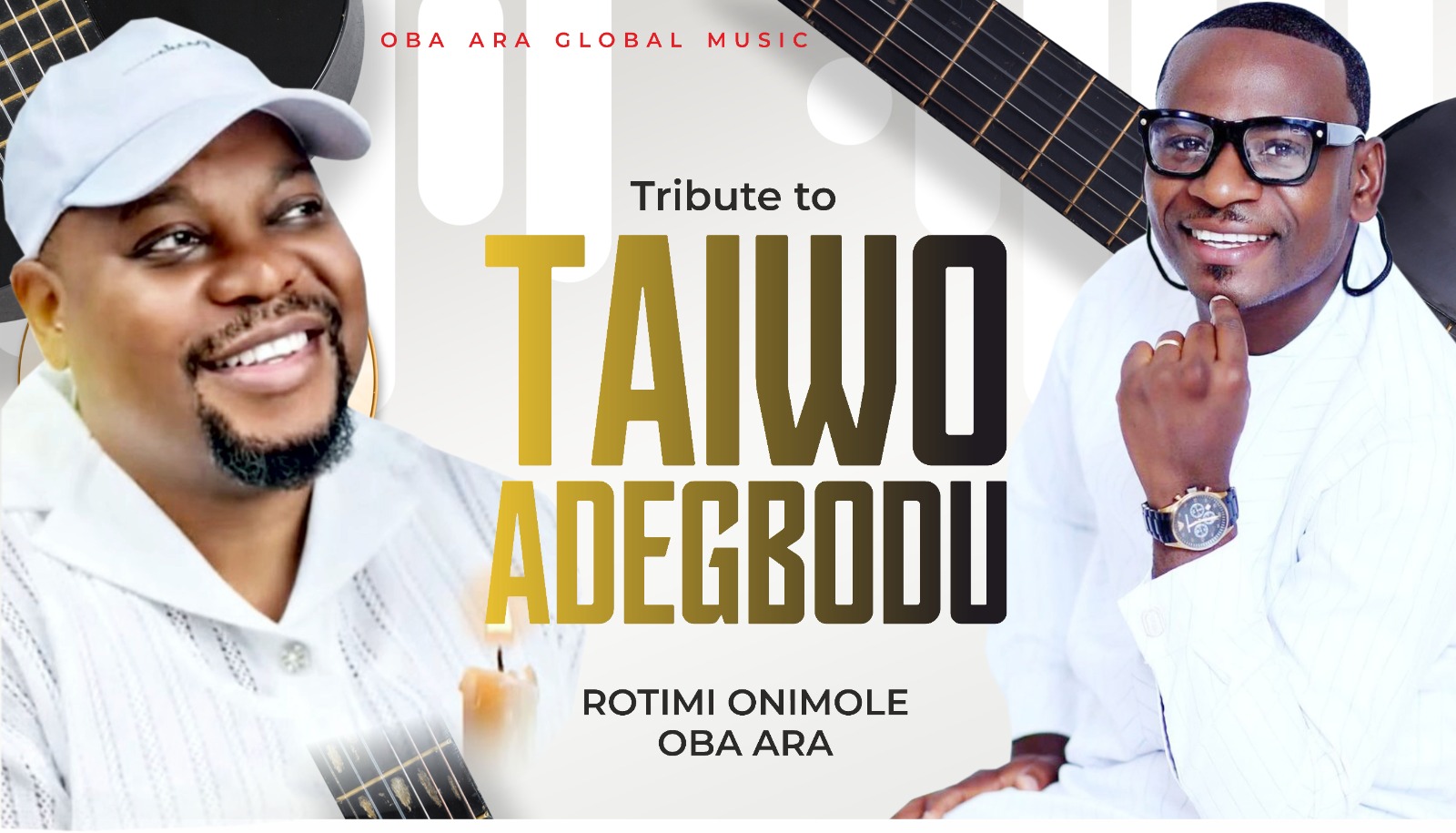
Oba Ara Releases Emotional Tribute to Late Taiwo Adegbodu
Taofik Afolabi
The gospel music community continues to grieve the painful loss of Taiwo Adegbodu, a beloved figure whose sudden departure left a deep void among fans, colleagues, and loved ones. In response to this loss, renowned gospel minister Rotimi Onimole, popularly known as Oba Ara, has released a moving tribute song that captures both the sorrow of the moment and the enduring legacy of the late singer.
Oba Ara, a proud son of Isale Eko, channels raw emotion throughout the song, using heartfelt lyrics and soul-stirring melodies to reflect on his personal connection with Taiwo Adegbodu. In the tribute, he openly expresses how deeply the news of Adegbodu’s passing shook him, describing it as a painful and unexpected loss that is difficult to come to terms with.
The song goes beyond mourning, it celebrates the life, ministry, and impact of Taiwo Adegbodu. Oba Ara highlights the late artist’s dedication to spreading the gospel through music, his inspiring voice, and the spiritual influence he had on many within and beyond Nigeria. Through powerful verses, he paints a picture of a man who lived for God and touched countless lives through his ministry.
Listeners have described the tribute as both comforting and deeply emotional, as it resonates with the collective grief of the gospel music community. It serves as a reminder that although Taiwo Adegbodu is no longer physically present, his music, message, and legacy will continue to live on.
In honoring his late colleague, Oba Ara not only pays his respects but also offers a source of healing for fans and fellow ministers, using music as a tool to process grief and celebrate a life well lived.
celebrity radar - gossips
Buratai, Fagbemi , Shagaya, Olofa, Others Eulogise Olowu Kuta’s Olori On 60th Birthday, Foundation Launch
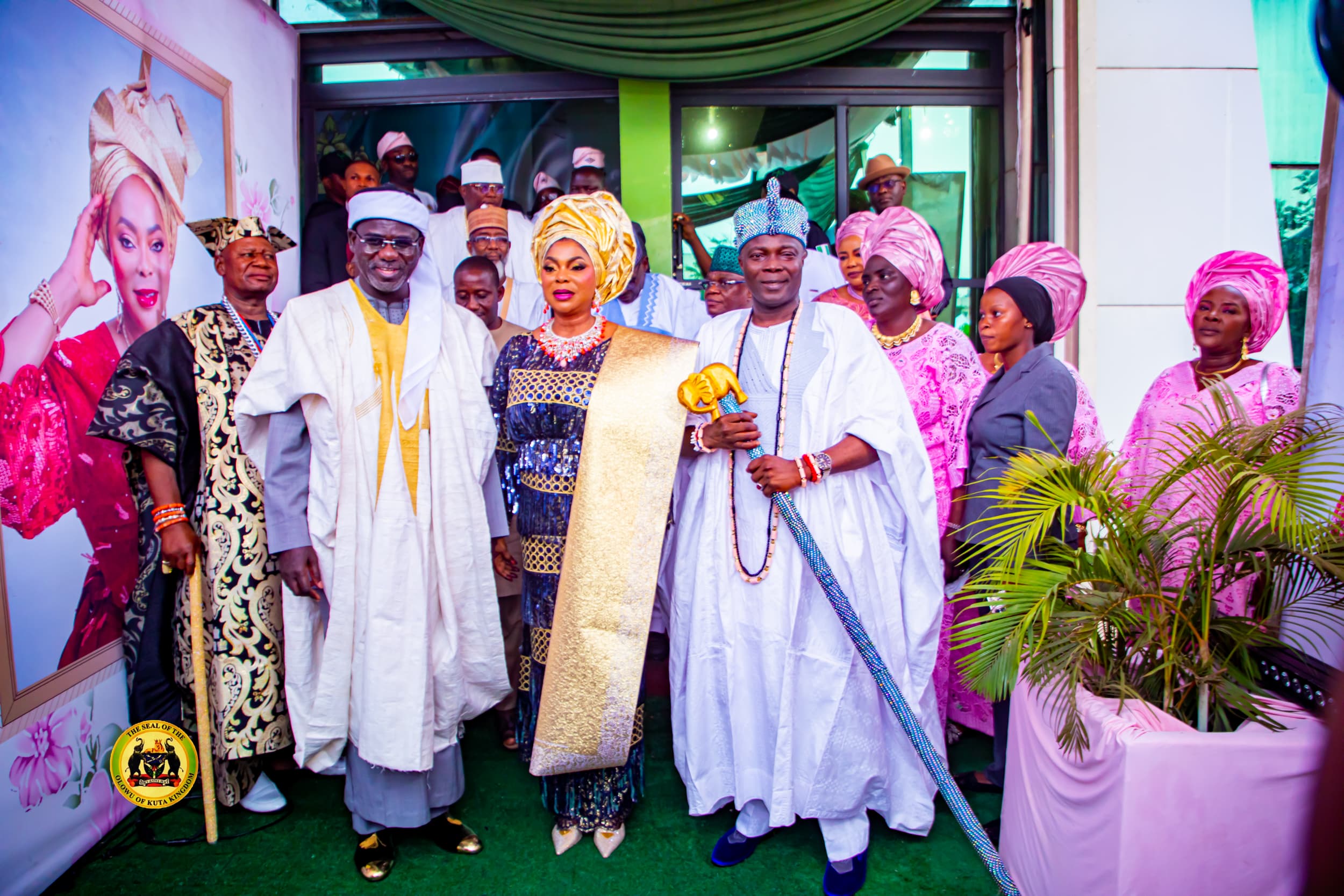
Buratai, Fagbemi , Shagaya, Olofa, Others Eulogise Olowu Kuta’s Olori On 60th Birthday, Foundation Launch
Eminent personalities across the Nigeria stormed the TFK Event Centre, Bala Mohammed Way, Guzape, Abuja, to celebrate the 60th birthday of Olowu Kuta’s Olori, Queen Jumai Amoke and her Foundation Launch on Saturday 28, March 2026.

From former Chief of Army Staff, Lt Gen TY Buratai rtd, to the Minister of Justice and Attorney-General of the Federation, Prince Lateef Fagbemi; Olofa of Offa, HRM Oba Mufutau Gbadamosi. Even top businesswoman and socialite, Chief (Mrs) Bola Shagaya, was in attendance.


Other dignitaries were newly promoted Deputy Inspector-General of Police and former AIG Zone 2 , Lagos , Adegoke Fayoade, Major General Abdumalik, Major General Samuel Adebayo rtd (Fmr CDI);
Major General Anthony Omozoje rtd (Fmr Copp);
Alhaji Tajudeen Owoyemi (Asiwaju of Offa and CEO Radisson Hotel Nigeria;
Dr Waheed Olagunju, former managing director of Bank of Industry, Oniba of Iba, Lagos State, HRM Oba Dr Suleiman Raji ;
Justice Falola, Olu of Ile-Ogbo , Oba Adetoyese amongst many traditional rulers and captains of industry too numerous to mention.
Speaking at the occasion, the Chief Host, Olowu of Kuta, HRM Oba Dr Adekunle Oyelude Makama, CON , Tegbosun iii, who is also the husband of the celebrant commended Queen Jumai for ‘ her slender arms full of kindness’ to establish such humanitarian Foundation, ‘Amoke Children and mother in Need Foundation’ at a time Nigerians are going through economic crisis occassioned by the global meltdown.
Olowu also commended her steadfastness and love for the less privileged and downtrodden.
The monarch refrenced the task before his wife’s humanitarian gesture said her best is yet to come.
” Olori Amoke Jumai, I celebrate you. You will celebrate 70, 80, 90 and continue to shine as you continue to put a smile on people’s faces. I love you, “Olowu Kuta added.
To Lt Gen Buratai, a former army chief and former Nigerian Ambassador to Benin Republic, the reward of hard work is more work.
Buratai, who also doubles as Balogun Agba of Owu Kuta, a chieftaincy title reserved for a generalismo congratulated Queen Jumai for attaining the age of 60 in good health.
The retired army General said he’s not surprised by the turn out of eminent personalities across the country to celebrate the Olowu Kuta’s Olori because she merited it through her hospitality to all, adding that Allah the most merciful, most beneficial would accept all her act of ibadah.
The minister of Justice, Prince Fagbemi, was full of praises for Queen Jumai for deeming it fit to have a place in her heart to accommodate the needy and less privileged in ‘our society.’
Prince Fagbemi urged the guests to contribute generously to support the Foundation in order to continue to alleviate poverty and put a smile on the faces of the people.
” I congratulate you on your 60th birthday and Foundation Launch. I wish you many happy returns of the day and many more fruitful services to the country and motherland”, Prince Fagbemi added.
The celebrant, Queen Jumai who was grining from ear to ear thankfully said she was excited by the turn out and the response of the people to her foundation.
Queen Jumai, however, promised to continue to use her resources and donations received for the good of the needy and less privileged in the society.
” I want to appreciate my own Kabiesi Olofa of Offa , for his presence and im I’m using him as a point of contact to all other Kabiesis present here, the minister of justice and Attorney-General, you’re welcome, sir; Mrs Bola Shagaya, I salute your enterprise, Lt Gen Buratai, I’m grateful, sir; DIG Fayoade, Justice Falola and other dignitaries too numerous to mention, I thank you, all. To my darling husband, Kabiesi Olowu , I thank you immensely for your support. And to my family and friends, I thank you , all. E se pupo!”, she said.


-

 society7 months ago
Religion: Africa’s Oldest Weapon of Enslavement and the Forgotten Truth
-

 news4 months ago
WHO REALLY OWNS MONIEPOINT? The $290 Million Deal That Sold Nigeria’s Top Fintech to Foreign Interests
-

 society6 months ago
“You Are Never Without Help” – Pastor Gebhardt Berndt Inspires Hope Through Empower Church (Video)
-

 celebrity radar - gossips2 months ago
Dr. Chris Okafor Returns with Power and Fire of the Spirit -Mounts Grace Nation Altar with Fresh Anointing and Restoration Grace on February 1, 2026