
celebrity radar - gossips
Obasanjo’s letter and Babangida’s Statement

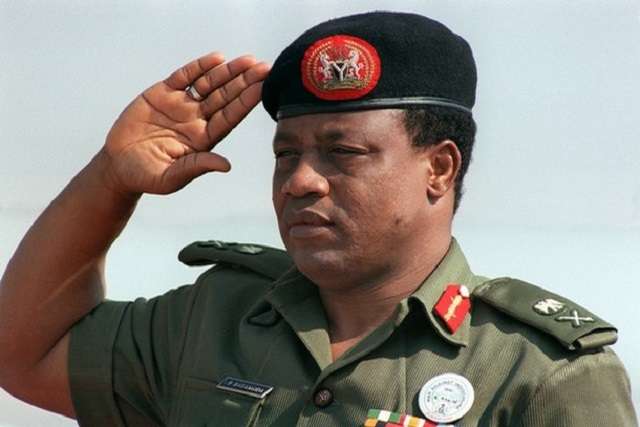
The Good people of Nigeria, would recall that first, ex president Obasanjo it was that began the uncharted, uncharitable venture of always writing open letters to all Heads of state and presidents after him, a method he invented rather than follow proper channels of reaching out to, and advising sitting Heads of state and Presidents, whenever and wherever he chooses to display his usual lack of patience with the leaders who he sees as not conforming to his biddings…
Characteristically, Ex President Obasanjo and Ex Military President Babangida are known to Nigerians as enablers of corruption and retailers of profiteering.
Fortunately Nigerians have come see and trust President Muhammadu Buhari as someone who abhors Corruption and also rebuffs profiteering.
Nigerians will not also forget in a hurry, the way and manner General Babangida hurriedly shoved aside the administration of Major General Muhammadu Buhari in just about 20 months of massive anti-corruption shake-up between 1984 and 1985 when Buhari was a Military Head of State, in what was meant to affect Babangida himself, who as the Army Chief of Staff was accused of many corrupt practices..
That Babangida has therefore joined Chief Olusegun Obasanjo in this letter writing exercise designed to impugn upon President Buhari’s integrity is therefore understandable.
The President Obasanjo that was indicted in the Haliburton bribery scandal, who was indicted in the National Assembly probe into the Energy sector in which sums of money to the tune of $16 billion was largely unaccounted for, the same Obasanjo of the illegal unconstitutional 3rd term venture in which he became not only complicit by giving support to illegality, but actively colluding in offering bribes to National Assembly members, cannot therefore stand on any moral ground upon which to launch an attack on a very Forthright and Hardworking administration of President Buhari.
In the same way and manner, a very Involved, Conniving, Collaborating and Manipulating Babangida that annulled the June 12, 1993 Election — an election which to date is seen as the fairest and freest in the history of this nation, which by the very act of annulment of it, plunged this country into a serious political crises, cannot be said to possess a moral platform upon which he also can become a voice of the people, let alone be grounded in a moral podium upon which to become the people’s ombudsman.
We as a group, geared toward eradicating Terrorism and planting good governance in Nigeria, therefore frown at these attempts, coming from both Ex Military Generals, Heads of state and Presidents, wishing to have their personal grievances become national tribulation.
It is simply not going to happen.
The real reason why both of them are doing this:
As we have established these cogent facts regarding the unsuitability of both Obasanjo and Babangida to invest upon themselves the unfit, descrepit and inappropriate garb of the conscience of the nation, it also becomes pertinent to state why these past leaders are at this time launching their written attacks on the Presidency of Muhammadu Buhari.
One would have reasoned that both Obasanjo and Babangida would have written personal letters to President Buhari if indeed they meant good.
What stops them from seeking an audience with their former colleague in the Military?
But they chooses to do a publicity stunt to create an impression that they meant well for Nigeria… But do they!?
When we consider that President Buhari put an end to the nearly N3 trillion subsidy payments to the independent oil marketers that mostly were paper invoices without actual deliveries, we should expect corruption to fight back.
If we consider the very important fact that Buhari also put an end to the payment of several billions of naira that monthly went into the hands of ghost workers the Beneficiaries of corruption will reach out to their enablers and that is exactly what we are seeing already.
Also considering the giant strides President Buhari has taken in the areas of agriculture and growth in the agricultural sector where Nigeria no longer depends on imported rice, salt, sugar, flour, it is also to be expected that those involved in racketeering entrenched into the system throughout the period of these past rulers will naturally find a way to bring the government of President Buhari down, so that Nigeria can go back to the old ways that stifled growth, concentrating instead, the control and monopoly of trade in a few hands.
Again to be expected will be opposition to Buhari’s strict enforcement of such policies that cut off corruption and exposes corrupt practices, the enforcement of BVN in the banking industry, which stopped the illicit fraud perpetrated by private and public officials….. Also, the enforcement of TSA where government ministries, agencies and parastatals operated unabashedly multiples of different accounts, without checks through which unauthorized funds without remittance to the Federation Account, we’re constantly being siphoned. Again this important achievements were overlooked by Obasanjo and Babangida, that one will be forced to ask if these leaders truly love Nigeria enough to push aside their personal grievances in order to help consolidate all of these gains under the current administration of Muhammadu Buhari that has shown tremendous courage and integrity in fighting corruption from it very roots.
To give Honor to whom Honor is Due.
In stating the facts above, it is only pertinent to give honor to whom honor is due. Buhari, more than any of his predecessors, and certainly not Babangida who constantly tampered with the Judiciary as a Military President and was rumored to have procured judgement a few times, especially during the days of the ABN, Association for Better Nigeria, the fraudulent organization he prodded, founded, funded to prolong his stay in office, was said to have procured the various judgements in favor of the annulled June 12 elections, likewise was Obasanjo not the president he was in his 8 years of office bold enough to tackle corruption in the Judiciary, which Buhari did, by exposing the corrupt practices in the Judiciary, which has led to a certain sanity in the 3rd tier of government and many corrupt judges flushed out of the system.
So, why will President Buhari, not be despised…?
We all can now see reasons why his detractors would prefer to spread false reports against him, ostensibly out of envy..!
Fortunately, Nigerians are now wiser — It is arguably the people who benefitted greatly from the corrupt practices of the past, who will support the habitual letter writers.
The right thinking good people of Nigeria are solidly behind the government of President Buhari.
At this juncture, Nigerians must answer; If by their letters and quest to pull Buhari down, what exactly are the implications;
We as a group, we are certain, if the duo of Obasanjo and Babangida succeed in pulling Buhari down, the following will follow:
1, Nigeria will be replacing a temporary hardship with permanent suffering…!
Certainly, a fertile ground for the old corrupt brigade to regroup will germinate.
Nigeria will simply regress… Much like giving up on the fight against corruption and simply rolling over playing dead to the war on corruption.
2, We as a group, we are very certain that if President Buhari is stopped from recontesting, Nigerians will be replacing a rare and honest man, full of integrity with a serial Liar and Deceiver.,
Nigerians will be replacing a man of impeccable character with a man of painful impunity.
3, if by any chance President Muhammadu Buhari is railroaded into not seeking a 2nd term, all the gains of economic recovery seen after just coming out of a bad recession, will be lost and a bigger more intense recession, will certainly follow.
Racketeering, roundtripping and other economic vices will be back and unashamedly too.
All the gains in improved revenue collections at the various ports will dwindle. The steady growth we have now will simply give way to a regression.
4, We as a group are again of the firm opinion that the country will suffer for it, if the coordinated plans and selfish machinations stand, to deprive Nigerians of the services of our most serious corruption fighter in Muhammadu Buhari…. And not only Nigeria, but the whole of Africa and the African Union, in their wisdom appointed President Muhammadu Buhari to head the African commission on the fight against corruption.
An incorruptible man, Buhari, is a symbol already as the face of Anti-corruption crusade in Africa, and our country will simply look bad in the sight of the AU and other nations, if our greatest anti-corruption President is himself, defeated, by corruption.
In conclusion:
It is our joint inference to conclude this statement by saying, individual liberty, freedom and justice will be the first casualty if Nigerians succumb and yield to the whims and caprices of these 2 old men in their very advanced age…
We are certainly better than being mere spectators and pawns in some intricate game in which, we the people are exactly the ball being played.
We therefore say, “No”, to the extent that, our Coalition is by this statement calling on all well meaning Nigerians to be steadfast in support of President Muhammadu Buhari, to continue with his enviable positive strides upon which a golden future is to be expected…. 
Comrade Oladimeji Odeyemi, the Convener of the Coalition of Civil Society Groups against Terrorism in Nigeria sent this piece from Lagos


celebrity radar - gossips
Adron Homes Celebrates Visionary Chairman, Aare Adetola Emmanuel King, at 51
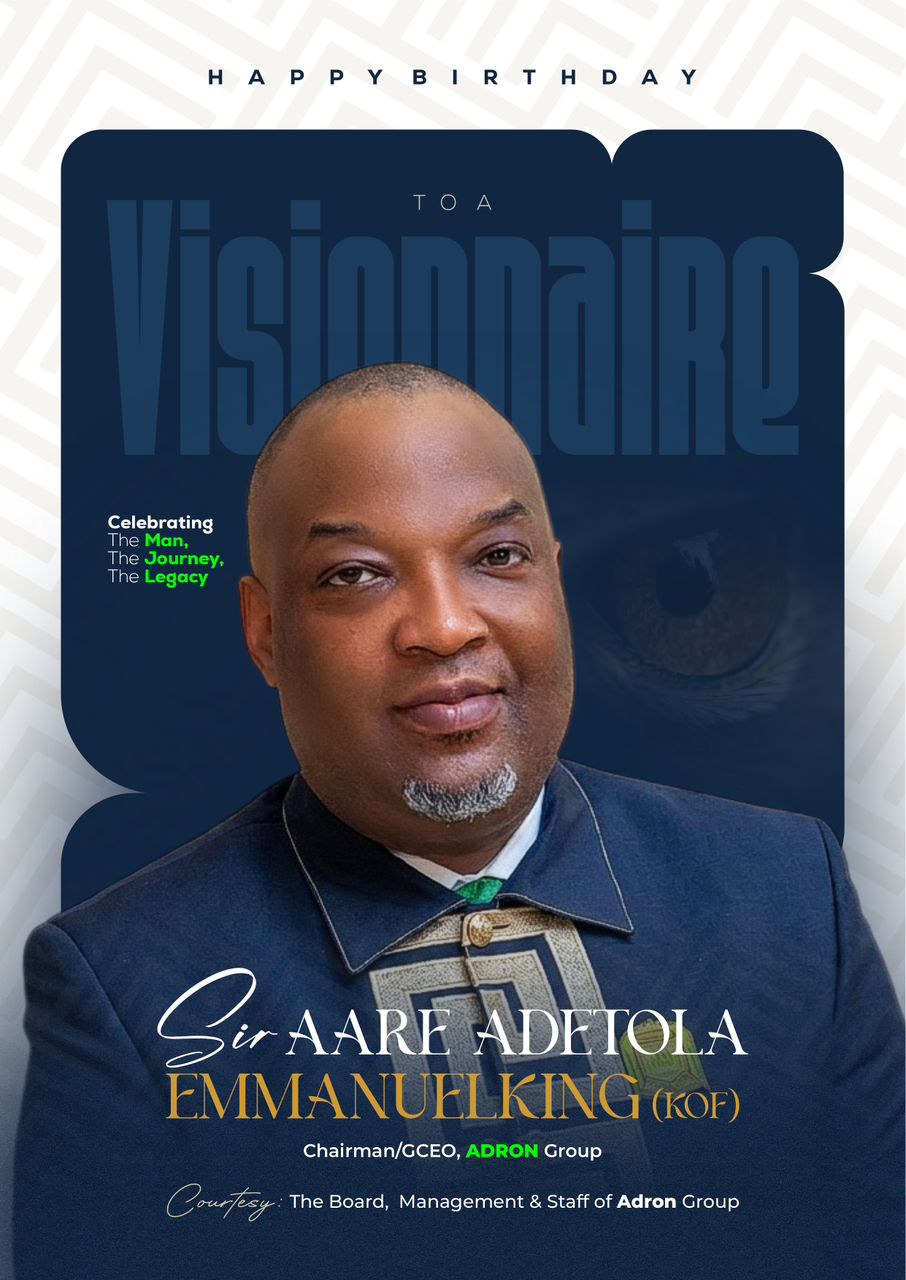
Adron Homes Celebrates Visionary Chairman, Aare Adetola Emmanuel King, at 51
The management and staff of Adron Homes and Properties Limited have joined family, friends, associates, and well-wishers across the globe to celebrate their Chairman and Chief Executive Officer, Aare Adetola EmmanuelKing, as he marks his 51st birthday.

In a statement released by the company, the milestone was described as a celebration of an exceptional leader whose vision, resilience, and entrepreneurial brilliance have not only transformed Adron Homes into a household name in Nigeria’s real estate sector but have also redefined affordable housing across the country.
Under his dynamic leadership, Adron Homes has continued to expand its footprint, delivering value-driven residential solutions while empowering thousands of Nigerians with opportunities for home ownership. His commitment to excellence, innovation, and customer satisfaction has remained the driving force behind the company’s sustained growth and industry leadership.
The statement further highlighted Aare EmmanuelKing’s passion for nation-building and community development, noting his significant contributions to job creation, youth empowerment, and the promotion of socio-economic development through real estate investments.
“As a leader, mentor, and visionary, Aare Adetola EmmanuelKing has consistently inspired a culture of excellence, integrity, and dedication within the organization. His ability to turn bold ideas into reality continues to position Adron Homes as a trailblazer in the industry,” the statement read.
The company expressed profound gratitude for his steadfast leadership and prayed for continued wisdom, strength, and sound health as he embarks on another year of impactful achievements.
As he celebrates his 51st birthday, the entire Adron Homes family proudly honours a man whose legacy continues to shape the future of real estate in Nigeria.
Happy 51st Birthday, Aare Adetola EmmanuelKing!
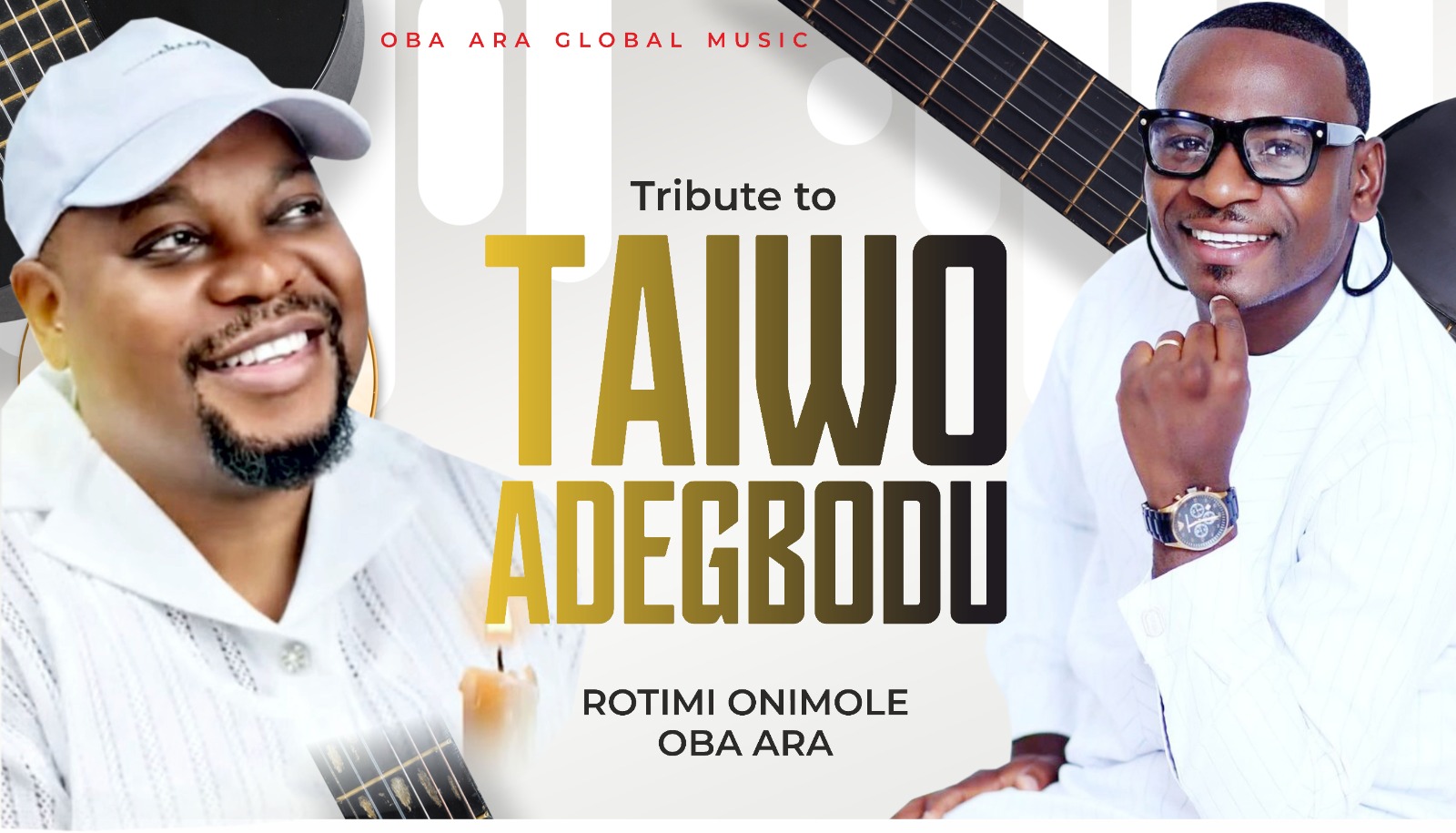
Oba Ara Releases Emotional Tribute to Late Taiwo Adegbodu
Taofik Afolabi
The gospel music community continues to grieve the painful loss of Taiwo Adegbodu, a beloved figure whose sudden departure left a deep void among fans, colleagues, and loved ones. In response to this loss, renowned gospel minister Rotimi Onimole, popularly known as Oba Ara, has released a moving tribute song that captures both the sorrow of the moment and the enduring legacy of the late singer.
Oba Ara, a proud son of Isale Eko, channels raw emotion throughout the song, using heartfelt lyrics and soul-stirring melodies to reflect on his personal connection with Taiwo Adegbodu. In the tribute, he openly expresses how deeply the news of Adegbodu’s passing shook him, describing it as a painful and unexpected loss that is difficult to come to terms with.
The song goes beyond mourning, it celebrates the life, ministry, and impact of Taiwo Adegbodu. Oba Ara highlights the late artist’s dedication to spreading the gospel through music, his inspiring voice, and the spiritual influence he had on many within and beyond Nigeria. Through powerful verses, he paints a picture of a man who lived for God and touched countless lives through his ministry.
Listeners have described the tribute as both comforting and deeply emotional, as it resonates with the collective grief of the gospel music community. It serves as a reminder that although Taiwo Adegbodu is no longer physically present, his music, message, and legacy will continue to live on.
In honoring his late colleague, Oba Ara not only pays his respects but also offers a source of healing for fans and fellow ministers, using music as a tool to process grief and celebrate a life well lived.
celebrity radar - gossips
Buratai, Fagbemi , Shagaya, Olofa, Others Eulogise Olowu Kuta’s Olori On 60th Birthday, Foundation Launch
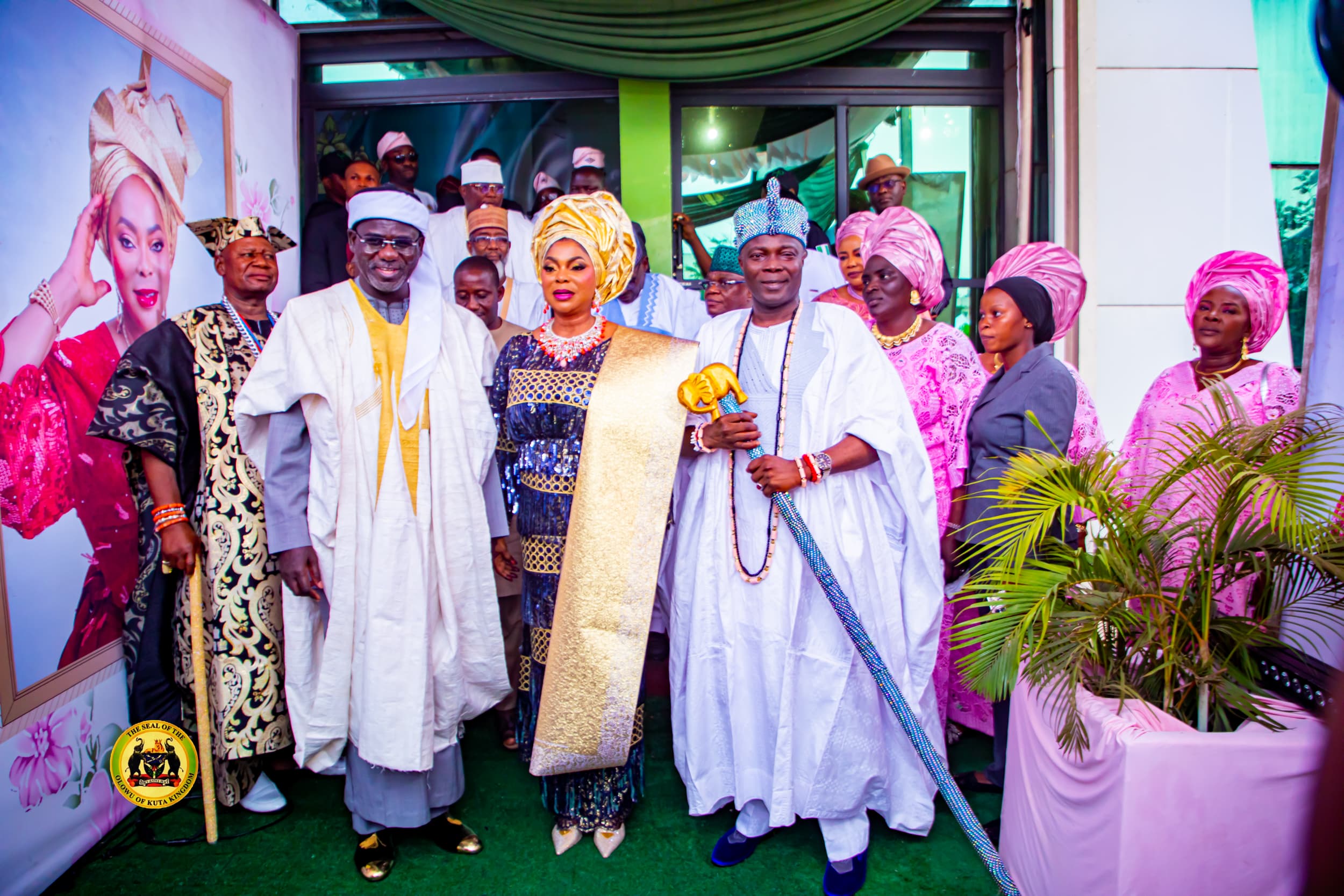
Buratai, Fagbemi , Shagaya, Olofa, Others Eulogise Olowu Kuta’s Olori On 60th Birthday, Foundation Launch
Eminent personalities across the Nigeria stormed the TFK Event Centre, Bala Mohammed Way, Guzape, Abuja, to celebrate the 60th birthday of Olowu Kuta’s Olori, Queen Jumai Amoke and her Foundation Launch on Saturday 28, March 2026.

From former Chief of Army Staff, Lt Gen TY Buratai rtd, to the Minister of Justice and Attorney-General of the Federation, Prince Lateef Fagbemi; Olofa of Offa, HRM Oba Mufutau Gbadamosi. Even top businesswoman and socialite, Chief (Mrs) Bola Shagaya, was in attendance.


Other dignitaries were newly promoted Deputy Inspector-General of Police and former AIG Zone 2 , Lagos , Adegoke Fayoade, Major General Abdumalik, Major General Samuel Adebayo rtd (Fmr CDI);
Major General Anthony Omozoje rtd (Fmr Copp);
Alhaji Tajudeen Owoyemi (Asiwaju of Offa and CEO Radisson Hotel Nigeria;
Dr Waheed Olagunju, former managing director of Bank of Industry, Oniba of Iba, Lagos State, HRM Oba Dr Suleiman Raji ;
Justice Falola, Olu of Ile-Ogbo , Oba Adetoyese amongst many traditional rulers and captains of industry too numerous to mention.
Speaking at the occasion, the Chief Host, Olowu of Kuta, HRM Oba Dr Adekunle Oyelude Makama, CON , Tegbosun iii, who is also the husband of the celebrant commended Queen Jumai for ‘ her slender arms full of kindness’ to establish such humanitarian Foundation, ‘Amoke Children and mother in Need Foundation’ at a time Nigerians are going through economic crisis occassioned by the global meltdown.
Olowu also commended her steadfastness and love for the less privileged and downtrodden.
The monarch refrenced the task before his wife’s humanitarian gesture said her best is yet to come.
” Olori Amoke Jumai, I celebrate you. You will celebrate 70, 80, 90 and continue to shine as you continue to put a smile on people’s faces. I love you, “Olowu Kuta added.
To Lt Gen Buratai, a former army chief and former Nigerian Ambassador to Benin Republic, the reward of hard work is more work.
Buratai, who also doubles as Balogun Agba of Owu Kuta, a chieftaincy title reserved for a generalismo congratulated Queen Jumai for attaining the age of 60 in good health.
The retired army General said he’s not surprised by the turn out of eminent personalities across the country to celebrate the Olowu Kuta’s Olori because she merited it through her hospitality to all, adding that Allah the most merciful, most beneficial would accept all her act of ibadah.
The minister of Justice, Prince Fagbemi, was full of praises for Queen Jumai for deeming it fit to have a place in her heart to accommodate the needy and less privileged in ‘our society.’
Prince Fagbemi urged the guests to contribute generously to support the Foundation in order to continue to alleviate poverty and put a smile on the faces of the people.
” I congratulate you on your 60th birthday and Foundation Launch. I wish you many happy returns of the day and many more fruitful services to the country and motherland”, Prince Fagbemi added.
The celebrant, Queen Jumai who was grining from ear to ear thankfully said she was excited by the turn out and the response of the people to her foundation.
Queen Jumai, however, promised to continue to use her resources and donations received for the good of the needy and less privileged in the society.
” I want to appreciate my own Kabiesi Olofa of Offa , for his presence and im I’m using him as a point of contact to all other Kabiesis present here, the minister of justice and Attorney-General, you’re welcome, sir; Mrs Bola Shagaya, I salute your enterprise, Lt Gen Buratai, I’m grateful, sir; DIG Fayoade, Justice Falola and other dignitaries too numerous to mention, I thank you, all. To my darling husband, Kabiesi Olowu , I thank you immensely for your support. And to my family and friends, I thank you , all. E se pupo!”, she said.


-

 society7 months ago
Religion: Africa’s Oldest Weapon of Enslavement and the Forgotten Truth
-

 news4 months ago
WHO REALLY OWNS MONIEPOINT? The $290 Million Deal That Sold Nigeria’s Top Fintech to Foreign Interests
-

 society6 months ago
“You Are Never Without Help” – Pastor Gebhardt Berndt Inspires Hope Through Empower Church (Video)
-

 celebrity radar - gossips2 months ago
Dr. Chris Okafor Returns with Power and Fire of the Spirit -Mounts Grace Nation Altar with Fresh Anointing and Restoration Grace on February 1, 2026
You must be logged in to post a comment Login
You must log in to post a comment.