
society
Obi’s Civility Mandate: Reclaiming Opposition Politics from the Politics of Toxicity

Obi’s Civility Mandate: Reclaiming Opposition Politics from the Politics of Toxicity
By George Omagbemi Sylvester | SaharaWeeklyNG.com
“Why condemning insults against coalition partners is not just strategy, but a moral imperative for Nigeria’s democratic renewal.”
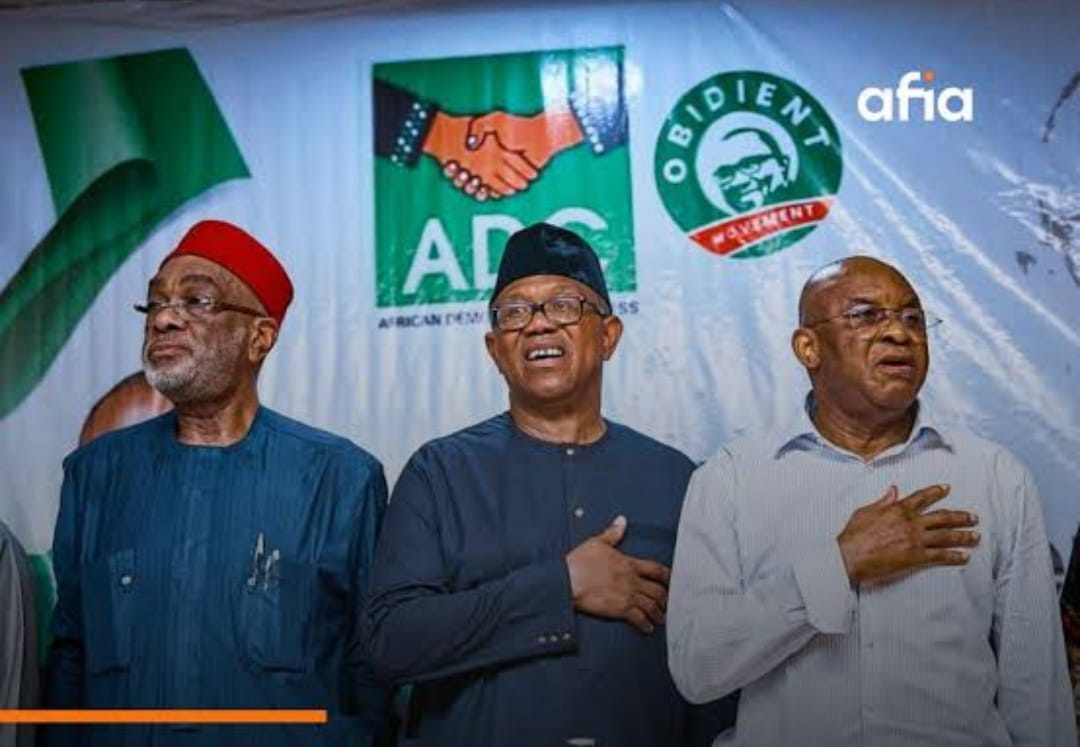
In an era when political discourse increasingly resembles a battlefield littered with verbal grenades, Peter Obi’s unmistakable declaration that “anyone insulting ADC leaders is a criminal, not an Obidient” marks not merely a rhetorical pivot, but a fundamental moral stance in Nigeria’s fractious political landscape.
Obi, the former Labour Party presidential candidate and one of the most consequential voices in Nigerian politics today, delivered the statement at an engagement of his Obidient Movement. In unmistakable terms he dissociated himself and his movement from the tidal wave of infighting poisoning the opposition coalition, insisting that resorting to name-calling, mudslinging and personal attacks does not belong in the politics he envisions for the nation.
This stance is not a trivial reprimand. It is a clarion call for a higher standard of political engagement at a time when Nigeria grapples with deepening insecurity, unemployment, institutional dysfunction and widening distrust between leaders and citizens. The significance of Obi’s statement is profound and its implications extend well beyond intra-party disagreements.
A Foundational Rejection of Toxic Politics.
Mr. Obi’s emphasis that verbal attacks against coalition partners or whether within the African Democratic Congress (ADC) coalition or among the broader opposition (are signs of criminal behavior, not genuine political advocacy) reframes how political movements should conduct themselves.
He refused to allow political identity to be weaponized against personal dignity. In his own words, those hurling insults are not authentic Obidients but “criminals that are not Obidient people.”
This matters for two reasons:
It anchors political contestation back to ideas and governance priorities rather than personality attacks.
It preserves the moral credibility of a movement that has attracted millions of Nigerians tired of corrosive politics.
In saying so, Obi effectively rejects a politics of vitriol that has, for decades, stood as an impediment to democratic deepening in Nigeria. Where political debate once focused on issues and policy, it all too often collapses into ad hominem attacks, death of ideas by drowning in anger.
Context: Opposition Realignment and Internal Strain.
Nigeria’s opposition has been in flux since the 2023 general elections. Parties and movements coalesced into what became the ADC coalition, seeking to offer a viable alternative to the ruling All Progressives Congress (APC). Embedded within that coalition are figures such as former Vice President Atiku Abubakar, Rotimi Amaechi, Nasir el-Rufai and other veterans of Nigeria’s political field.
As Obi engaged with the coalition, tensions emerged. Supporters of different aspirants, driven by fervent hope for leadership change, began to clash (sometimes online, sometimes in street protests) over ideas of zoning, prioritization and political leadership direction. Some of these disputes degraded into personal attacks.
In response, Obi’s emphatic repudiation of those attacks was not mere politeness. It was a strategic and ethical refusal to allow the opposition’s project to be undermined by the very habits of contempt that Nigerians have grown weary of under years of governance failures.
Why Civility Is Strategic Politics.
At first glance, insisting on respectful dialogue might appear soft politics in a hard political world. Yet respected political theorists have long argued that healthy democracies require norms of mutual respect, even amidst passionate disagreement.
The late political scientist Robert Dahl observed that “democracy is not merely a system of institutions; it is a culture of respect, dialogue and mutual tolerance.” When that culture is abandoned for polarization, democratic systems weaken and may eventually collapse into extremism or authoritarian habits.
By repudiating insults (even from within his own rank and file) Obi demonstrates an adherence to democratic norms that scholars say are essential for political legitimacy. Political psychologist Dr. Jonathan Haidt echoes this in his work on social cohesion, arguing that political movements that police toxic language are better positioned to build inclusive coalitions and durable governance frameworks. Such restraint signals maturity and a long-term view of national interest over short-term factional advantage.
A Principle-First Approach, Not Personality Politics.
Obi’s rebuke of abusive rhetoric is not a call for blind loyalty or silence in disagreement. Rather, it is a principled commitment that disagreements within democratic politics should advance through debate, persuasion and principle, never through degrading those with whom one disagrees.
This distinction is crucial. Civility is not the absence of dissent; it is dissent conducted with dignity.
This stance distinguishes Obi’s Obidient Movement from other movements in Nigerian politics. It counters narratives that portray his supporters as reactive or hostile and positions them instead as advocates of disciplined political engagement focused on solving Nigeria’s systemic problems.
Reframing Political Discourse: Issues Over Insults.
In his statement, Obi urged supporters to concentrate on the pressing challenges Nigeria faces: out-of-school children, hunger, unemployment, insecurity and widespread kidnappings.
This grounding in substantive issues reflects a broader philosophy in policy-oriented politics: discourse should elevate concerns that affect citizens’ lives rather than consume itself with internal squabbles.
Former U.S. President Abraham Lincoln captured the essence of political purpose when he said, “A house divided against itself cannot stand.” In a Nigerian context, if opposition politics devotes itself to name-calling, it betrays the very voters demanding accountability, competence and sustainable governance.
The Political Risks of Toxicity.
Why does this matter now, because toxicity in political movements is not just unprofessional, it is harmful.
Political science research shows that:
Electoral alliances built on bitter internal conflict rarely endure. Sections of coalition partners may defect, voter confidence may erode and narratives of incompetence can gain traction.
Toxic discourse can amplify divisions along ethnic, regional and religious lines, which Nigeria, with its historical regional and identity sensitivities, cannot afford ahead of national elections.
When insults become normalized, adversaries of democratic reform benefit. They use chaos to justify centralization, suppression or rule by decree. What starts as internal bickering can metastasize into a crisis of legitimacy and national instability.
Obi’s Leadership Test.
By disowning verbal attacks, Obi invites his supporters (and Nigerian politics) to a far higher standard of engagement. He calls for restraint without surrendering ambition; for firmness without bitterness; for advocacy without abuse.
In doing so, Obi’s message resonates with scholars like Norman Ornstein, who asserts that “democracy dies in darkness and thrives in the light of thoughtful, civil, informed dialogue.” This is not a call for passivity. It is a call to elevate the discourse while staying laser-focused on outcomes that impact Nigeria’s future.
Parting Thought: A Turn Toward Democratic Maturity.
Peter Obi’s statement is not a garden-variety political rebuke. It is a critical inflection point in Nigerian politics that emphasizes:
The importance of respect in political coalitions
The necessity of focusing on policy and governance not personalities
The moral foundation for opposition unity built on discourse not division
As Nigeria prepares for future elections and the challenges of nation-building ahead, Obi’s stance reminds us that leadership begins with how we speak to and about one another. Civility in politics is not weakness, it is strength, courage and a profound demonstration of a movement that seeks to govern with integrity, not insult.
In a country yearning for change, repositioning political language toward respect and substance may be the most transformative act of leadership of all.





society
Middle Belt Forum Hails Tinubu’s Jos Visit, Calls for United Civil-Military Effort to Restore Lasting Peace
*Middle Belt Forum Hails Tinubu’s Jos Visit, Calls for United Civil-Military Effort to Restore Lasting Peace
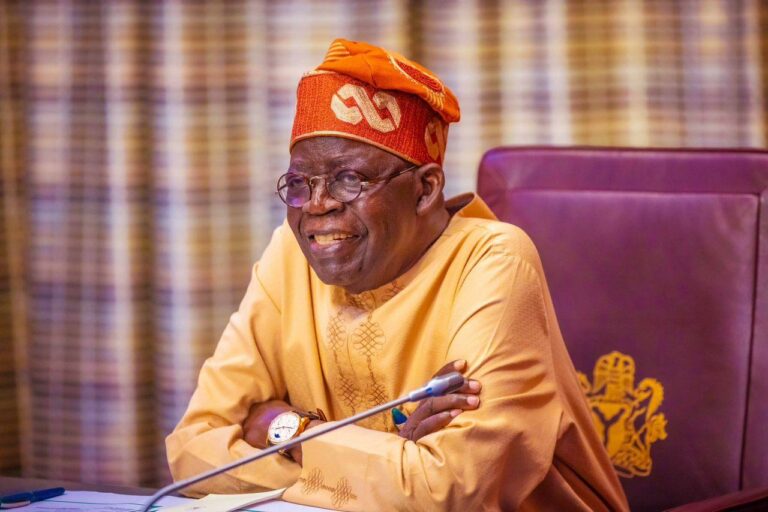
The Middle Belt Peace Forum (MBPF) has commended President Bola Ahmed Tinubu for his profound demonstration of empathy and responsive leadership following his decision to postpone an official engagement in Iperu in order to visit victims of the recent attacks in Jos.
In a statement signed by its National Coordinator, Pastor Bulus Garba, in Jos on Friday, the Forum said the President’s decision to personally identify with grieving communities sends a powerful message of solidarity and reinforces public confidence in the commitment of the Federal Government to the protection of lives and property.
“The Middle Belt Peace Forum warmly commends President Bola Ahmed Tinubu for prioritising compassion over ceremony. At a time of deep sorrow for the people of Plateau State, his decision to visit Jos stands as a mark of true leadership—one that listens, responds, and stands with the people in their moment of pain,” the statement read.
The Forum described the perpetrators of the recent attacks as “cowards who prey on innocent and defenceless citizens,” stressing that such acts of violence are not only inhumane but also a direct assault on the unity and peace of the nation.
“We condemn in the strongest terms the actions of these cowardly attackers whose only aim is to instil fear and destabilise peaceful communities. Their actions must be met with firm and decisive resistance from all arms of the state,” Pastor Garba said.
The MBPF further used the opportunity to salute the courage, gallantry, and sacrifices of the Armed Forces of Nigeria under the leadership of the Chief of Defence Staff, General Olufemi Oluyede, noting that their continued efforts remain central to restoring stability across troubled parts of the country.
According to the Forum, the Armed Forces have demonstrated resilience and professionalism in the face of complex security challenges, often operating under difficult conditions to safeguard communities and defend Nigeria’s territorial integrity.
“We salute the Armed Forces of Nigeria for their unwavering commitment and sacrifices. Their gallantry in confronting criminal elements and reclaiming territories is a testament to their dedication to national service. We recognise that the path to peace is demanding, and we honour those who stand daily in defence of our nation,” the statement added.
The Forum pledged its full support to ongoing military operations and called for strengthened collaboration between security agencies and local communities as a critical factor in achieving lasting peace.
It also urged citizens across the Middle Belt to cooperate with security forces by providing timely information and fostering unity within their communities.
The MBPF, however, expressed concern over the need for greater synergy among security agencies, particularly the role of the Nigeria Police in consolidating gains made by the military.
“We call on the Nigeria Police Force to rise fully to its constitutional responsibility by effectively supporting the Armed Forces in stabilising and securing areas that have been cleared of criminal elements. Holding and policing such territories is essential to preventing a resurgence of violence,” Pastor Garba stated.
The Forum emphasised that sustainable peace requires a coordinated approach in which the military clears and secures areas, while the police maintain law and order to enable displaced communities to return and rebuild their lives.
The MBPF concluded by reiterating its commitment to peacebuilding efforts across the Middle Belt and expressed optimism that with sustained leadership, coordinated security efforts, and active citizen participation, lasting peace can be achieved.
“Together, through unity, vigilance, and collective resolve, we can overcome these challenges and build a safer and more peaceful Middle Belt,” the statement added.
Governor Dauda Lawal Wins Face of Africa Governor of the Year Award in London
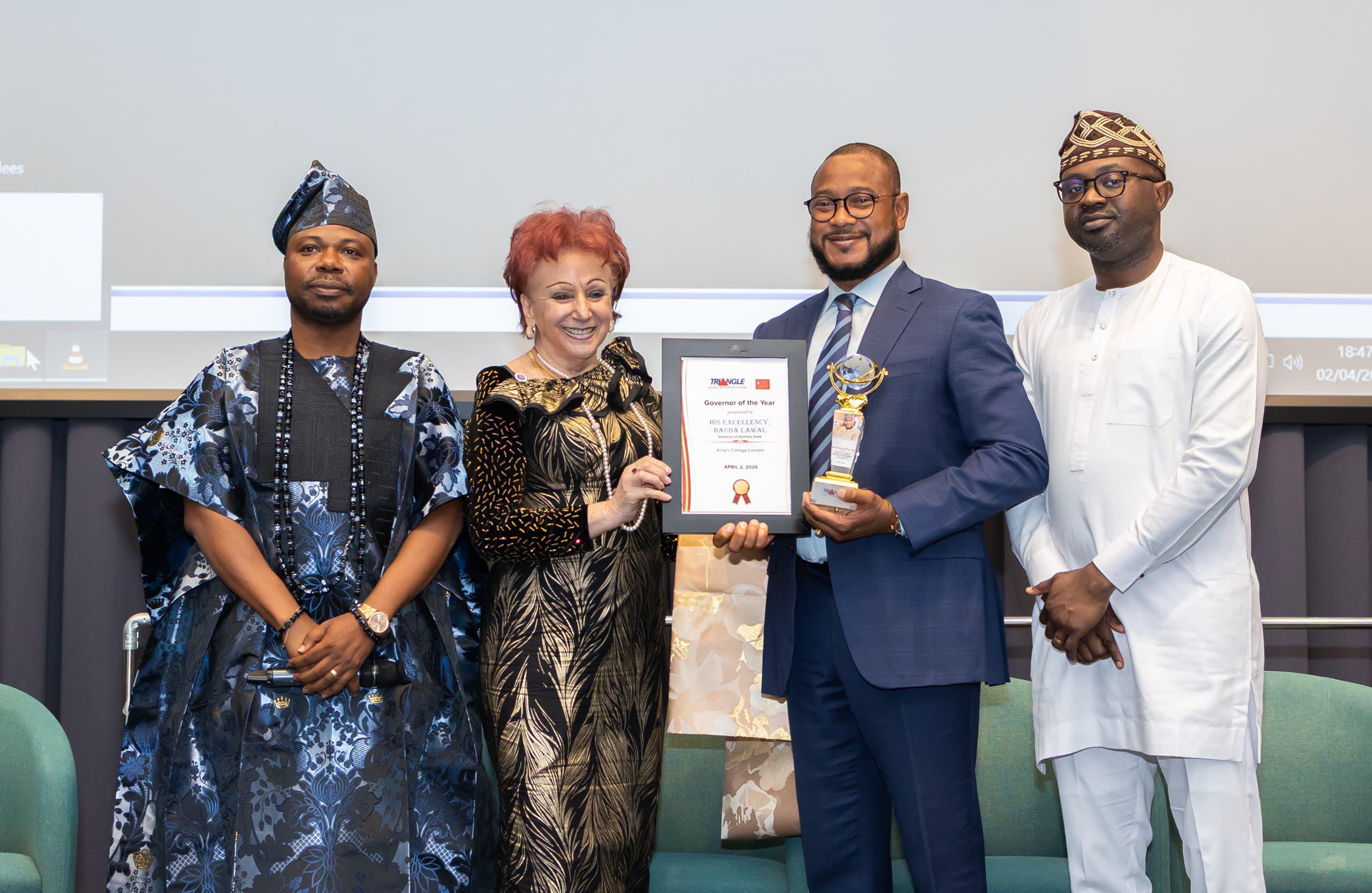
Governor Dauda Lawal has been honored with the Outstanding Governor of the Year award by Triangle Media International Magazine.
The award was presented during the magazine’s 10th annual lecture and award ceremony, held on Thursday at the Grand Hall of King’s College, London, United Kingdom.
According to a statement by the governor’s spokesperson, Sulaiman Bala Idris, the awards recognize public and private sector leaders whose leadership positively impacts governance and service delivery.
He added that the lecture, themed “Harnessing the Roles of Nigerians in Diaspora for National Development,” brought together stakeholders from both the public and private sectors.
The statement read in part: “Yesterday, in London, Governor Dauda Lawal received the 2026 Face of Africa Leadership Award for Outstanding Governor of the Year.
“The 2026 edition coincides with the 10th anniversary of Triangle International Magazine, which has over the years celebrated notable Africans across diverse fields.
“The award recognizes the Zamfara State Government under Governor Lawal’s leadership for achieving remarkable milestones in service delivery since his inauguration on 29 May 2023.
“The board of Triangle International noted that, despite inheriting an empty treasury, Governor Dauda Lawal has remained true to the Rescue Agenda’s campaign promise: to rescue and rebuild Zamfara.
“The award also reflects the state government’s innovative approach to indirectly curbing insecurity through educational advancement, demonstrated by the declaration of a state of emergency in the education sector.
“This includes the state government’s swift payment of the outstanding N3.4 billion for WAEC and NECO examinations, as well as the reconstruction and rehabilitation of schools across all 14 Local Government Areas of Zamfara State.
“The international magazine finds these initiatives to be strategic interventions toward long-term efforts to make Zamfara State better.”
The colourful event was attended by the Minister of Interior, Olubunmi Tunji-Ojo, and Sahara Group’s Group Managing Director, Kola Adesina, among others.


Easter: Oyo PDP Guber Aspirant, Ajadi, Greets Gov Makinde, CAN, Others
The leading Peoples Democratic Party, (PDP), Governorship Aspirant in Oyo State, Ambassador Olufemi Ajadi Oguntoyinbo has congratulated the Governor of Oyo State, Engr Seyi Makinde, the Christian Association of Nigeria, (CAN), the Pentecostal Fellowship of Nigeria, (PFN) and the entire Christians on the occasion of this year’s Easter Celebration.
Ajadi said that the Good Friday which marked the remembrance of the crucifixion of Jesus Christ and the Easter Sunday, which marks his risen from the dead, are important dates in the Christiandom.
Ajadi in a statement he personally signed on Friday to commemorate the Easter, said that he rejoiced with Christians that this year’s celebration is being witnessed in an atmosphere of peace and tranquility in the country.
He said that he particularly rejoiced with Gov Makinde saying that his exemplary leadership and good governance in Oyo State in the last seven years has shown him as a selfless person, a lover of the masses and one who cares for others.
He said that these are the traits of a good Christian, praying that God would continue to endear the governor with more wisdom and success.
He called on Christians to remember Jesus Christ’s directive that they should love their neighbours as themselves, saying that if this directive is strictly followed there would be peace in the World.
Ajadi, who is also a renowned philanthropist, called on Christians, especially the well to do, to learn the heart of helping the poor.
He said that the death and resurrection of Jesus Christ will not be in vain if Christians can abide by his directive on humility and love for one another.
Ajadi said that there is hope for Nigeria as a country despite the present harsh economy and prevalent of insecurity.
“We should take solace in the fact that God can do all things and that like He restores the lost glory and resources of the people of Zion, He will do same for Nigeria.
“Nigeria will reclaim her leading position both in Africa and among the black Nations. Let’s continue to pray for the good of our land,” Ajadi said in the statement.


-

 society7 months ago
Religion: Africa’s Oldest Weapon of Enslavement and the Forgotten Truth
-

 news4 months ago
WHO REALLY OWNS MONIEPOINT? The $290 Million Deal That Sold Nigeria’s Top Fintech to Foreign Interests
-

 society6 months ago
“You Are Never Without Help” – Pastor Gebhardt Berndt Inspires Hope Through Empower Church (Video)
-

 celebrity radar - gossips2 months ago
Dr. Chris Okafor Returns with Power and Fire of the Spirit -Mounts Grace Nation Altar with Fresh Anointing and Restoration Grace on February 1, 2026