
celebrity radar - gossips
ODUNLADE ADEKOLA IN SIZZLING ROMANCE WITH SEXY ACTRESS, BUKOLA ADEEYO


Award winning actor, Odunlade Adekola is currently enjoying a sizzling romance with delectable actress Bukola Adeeyo. Industry sources squealed that the tall handsome actor has found love in the arms of the sexy actress who is equally based in Abeokuta, Ogun State.
According to our source, the relationship is quite mutual. While the Glo ambassador finds succour in her, her career blossom and she has become a source of envy amongst her peers.
The adulterous union we reliably gathered took off months back and has become a source of whispers here and there on locations.
Odunlade Adekola, who is based in Abeokuta, Ogun State, has had a fair share of alleged romantic affairs with some actresses in the Yoruba film industry. He was once rumoured to have dated Mosun Filani, who was also linked with fellow actor, Muyiwa Ademola. It was then reported that the alleged affair between Muyiwa and Mosun had threatened the former’s marriage.
Fathia has also been romantically linked with some men, including the Corporate Pictures boss, Rasaq Abdullahi, who himself has been rumoured in the past to have dated some Yoruba actresses too.
Reports circulating in the movie circles, Reveal that the duo are having a romantic affair together & the rumour is spreading like wild fire.
DATE OF BIRTH: December
31st, 1977
OCCUPATION: Actor, Singer,Movie Producer
MARITAL STATUS: MARRIED
EARLY LIFE AND BACKGROUND
Odunlade Adekola was born in Abeokuta, Ogun State, He attended the Saint John RCM primary school, and later Saint Peter’s college, both in Abeokuta. After being into acting for some years, Odunlade Adekola is currently running an
undergraduate in one of the universities in Nigeria. He has not disclosed which university this is due what he called “personal reasons”.
Odunlade Adekola started acting at a very early age.
According to him, whenever any anniversary was to hold in his church (the Christ Apostolic Church, Lafenwa, Abeokuta), he and a friend, whose name he gave as “Tunde who was a part-time actor introduced him to a theatre group that rehearsed near his house. One day, he invited him to join the group and he agreed.
He went there that day and the man in charge asked him if he could act and he said he
could. He then told him to act like a crazy person and when he did that, everybody there began to clap. That was how he started gradually. Later on, He got to know about to go Association of Nigeria Theatre Arts Practitioners (now Theatre Arts and Movie Practitioners Association of Nigeria) and He joined fully in 1998 after showing in his first movie.
After being motivated by the likes of Taiwo Hassan, Adebayo Salami, Lere Paimo, and other genius Yoruba actors in Nollywood, he entered the professional scene around 2005. However, he never started becoming increasing popular until 2007. He received training and additional motivation from Isola Durojaye (Alasari), now late, who believed in his potential and assisted him in bringing out the best in him.
CAREER AND LIFE
He wrote a “script” for a comedy play involving just two characters (him and his friend). That was how it all began for this professional actor, director and producer.
After being motivated by the likes of Taiwo Hassan
(ogogo), Adebayo Salami (oga bello), Lere Paimo, and
other genius Yoruba actors in Nollywood, he entered theprofessional scene in 2005.
However, he started increasing popularity only in 2007.He received training and additional motivation from late Isola Durojaye (Alasari), who believed in his potential and assisted him in bringing out the best in him.
Odunlade have spend close to 10 years in the limelight now,
And he has featured in almost 100 Yoruba
movies. In a recent interview, he admitted that the film Asiri Gomina wa, in which he played the role of a state governor, was the most challenging assignment of his career, as criticisms and doubts flew about over his ability to play the role successfully. However, he was able to play the role perfectly, and according to him, he believes that his role in that film opened up the door of many greater opportunities for him.
Odunlade Adekola has written and produced about six
movies. These are
1. Farapamo
2. Emi nire kan
3. Baba super
4. Ila owo
5. Eje fun eje
6. Fayebora.
He’s works on new movies every single year which keeps increasing his fan base.
One of the most asked questions about Odunlade Adekola
is “Is Odunlade Adekola married?” Well, for your
information, the tall, handsome actor is legally married to Ruth with three kids.
The wife of Nigerian actor Odunlade Adekola, Mrs
Ruth Adekola, gave birth to her 3rd born on Saturday
April 13th, 2013 in Abeokuta, Ogun State.
In an interview granted by Taiwo Aromokun, a Yoruba
Nollywood actress and Odunlade Adekola’s trainee,
admitted that there existed a relationship between her
and the actor. However, the duo had to part ways as he was not willing to take a second wife, and of course, she had to carry on with her life. The breakup
notwithstanding, the duo is still on very good terms.
Apart from being an actor, Kola, as he is well known by fans, is also a Glo ambassador.
It has also been revealed the actor and fellow star Actress Funke Akindele are not cool with each other because of some silent rift between the two.
According to the online reports it was said that Funke was the reason his glo ambassador deal wasn’t renewed.
The actor is also rated as one of the top ten richest actors in Nigeria.
ENDORSEMENT
The actor signed a multimillion naira endorsement deal with telecom giant Glo in 2011/2012. And in 2015
RUMORS AND SCANDALS
The actor for real was involved in an adultery scandal with co-movie star Taiwo Aromokun a relationship they both later ended.
Odunlade once was rumored to be dating another Fathia Balogun in 2014 a rumor he debunked though.
He also was said to have fought with Mapoly students around a movie location using his power over them arresting them.. A rumor he later cleared himself over as the story was the other way round..




celebrity radar - gossips
Adron Homes Celebrates Visionary Chairman, Aare Adetola Emmanuel King, at 51
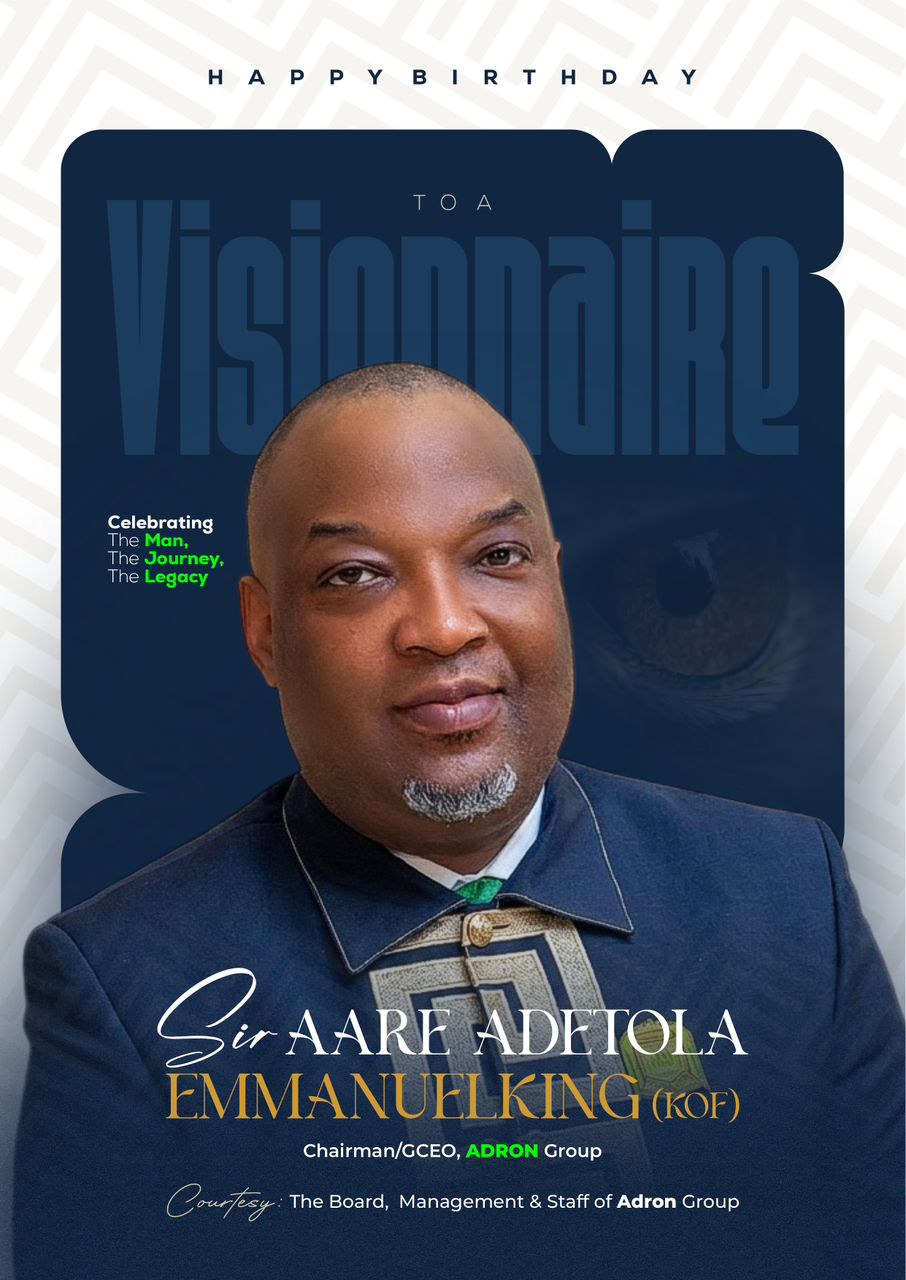
Adron Homes Celebrates Visionary Chairman, Aare Adetola Emmanuel King, at 51
The management and staff of Adron Homes and Properties Limited have joined family, friends, associates, and well-wishers across the globe to celebrate their Chairman and Chief Executive Officer, Aare Adetola EmmanuelKing, as he marks his 51st birthday.

In a statement released by the company, the milestone was described as a celebration of an exceptional leader whose vision, resilience, and entrepreneurial brilliance have not only transformed Adron Homes into a household name in Nigeria’s real estate sector but have also redefined affordable housing across the country.
Under his dynamic leadership, Adron Homes has continued to expand its footprint, delivering value-driven residential solutions while empowering thousands of Nigerians with opportunities for home ownership. His commitment to excellence, innovation, and customer satisfaction has remained the driving force behind the company’s sustained growth and industry leadership.
The statement further highlighted Aare EmmanuelKing’s passion for nation-building and community development, noting his significant contributions to job creation, youth empowerment, and the promotion of socio-economic development through real estate investments.
“As a leader, mentor, and visionary, Aare Adetola EmmanuelKing has consistently inspired a culture of excellence, integrity, and dedication within the organization. His ability to turn bold ideas into reality continues to position Adron Homes as a trailblazer in the industry,” the statement read.
The company expressed profound gratitude for his steadfast leadership and prayed for continued wisdom, strength, and sound health as he embarks on another year of impactful achievements.
As he celebrates his 51st birthday, the entire Adron Homes family proudly honours a man whose legacy continues to shape the future of real estate in Nigeria.
Happy 51st Birthday, Aare Adetola EmmanuelKing!
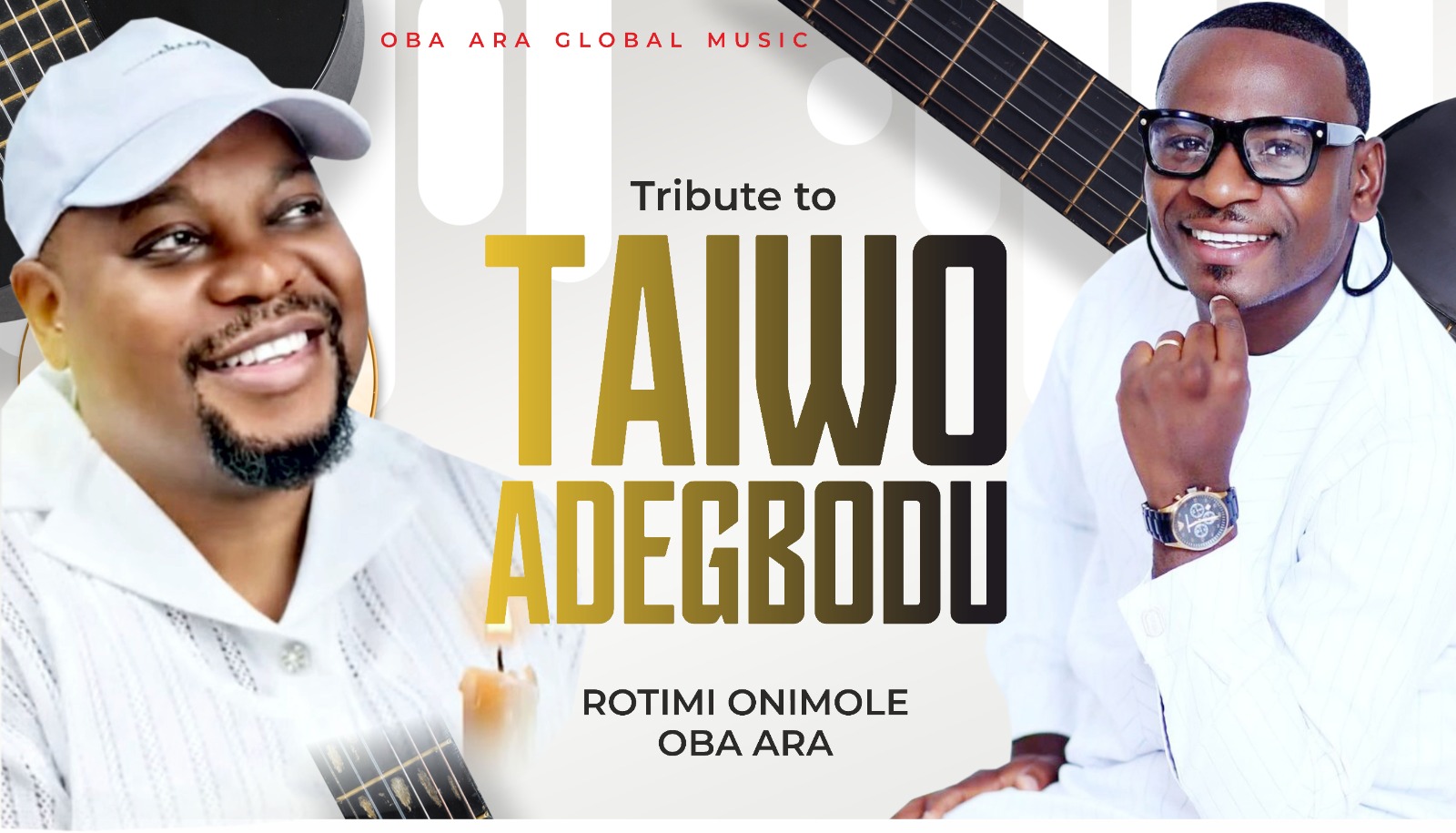
Oba Ara Releases Emotional Tribute to Late Taiwo Adegbodu
Taofik Afolabi
The gospel music community continues to grieve the painful loss of Taiwo Adegbodu, a beloved figure whose sudden departure left a deep void among fans, colleagues, and loved ones. In response to this loss, renowned gospel minister Rotimi Onimole, popularly known as Oba Ara, has released a moving tribute song that captures both the sorrow of the moment and the enduring legacy of the late singer.
Oba Ara, a proud son of Isale Eko, channels raw emotion throughout the song, using heartfelt lyrics and soul-stirring melodies to reflect on his personal connection with Taiwo Adegbodu. In the tribute, he openly expresses how deeply the news of Adegbodu’s passing shook him, describing it as a painful and unexpected loss that is difficult to come to terms with.
The song goes beyond mourning, it celebrates the life, ministry, and impact of Taiwo Adegbodu. Oba Ara highlights the late artist’s dedication to spreading the gospel through music, his inspiring voice, and the spiritual influence he had on many within and beyond Nigeria. Through powerful verses, he paints a picture of a man who lived for God and touched countless lives through his ministry.
Listeners have described the tribute as both comforting and deeply emotional, as it resonates with the collective grief of the gospel music community. It serves as a reminder that although Taiwo Adegbodu is no longer physically present, his music, message, and legacy will continue to live on.
In honoring his late colleague, Oba Ara not only pays his respects but also offers a source of healing for fans and fellow ministers, using music as a tool to process grief and celebrate a life well lived.
celebrity radar - gossips
Buratai, Fagbemi , Shagaya, Olofa, Others Eulogise Olowu Kuta’s Olori On 60th Birthday, Foundation Launch

Buratai, Fagbemi , Shagaya, Olofa, Others Eulogise Olowu Kuta’s Olori On 60th Birthday, Foundation Launch
Eminent personalities across the Nigeria stormed the TFK Event Centre, Bala Mohammed Way, Guzape, Abuja, to celebrate the 60th birthday of Olowu Kuta’s Olori, Queen Jumai Amoke and her Foundation Launch on Saturday 28, March 2026.

From former Chief of Army Staff, Lt Gen TY Buratai rtd, to the Minister of Justice and Attorney-General of the Federation, Prince Lateef Fagbemi; Olofa of Offa, HRM Oba Mufutau Gbadamosi. Even top businesswoman and socialite, Chief (Mrs) Bola Shagaya, was in attendance.


Other dignitaries were newly promoted Deputy Inspector-General of Police and former AIG Zone 2 , Lagos , Adegoke Fayoade, Major General Abdumalik, Major General Samuel Adebayo rtd (Fmr CDI);
Major General Anthony Omozoje rtd (Fmr Copp);
Alhaji Tajudeen Owoyemi (Asiwaju of Offa and CEO Radisson Hotel Nigeria;
Dr Waheed Olagunju, former managing director of Bank of Industry, Oniba of Iba, Lagos State, HRM Oba Dr Suleiman Raji ;
Justice Falola, Olu of Ile-Ogbo , Oba Adetoyese amongst many traditional rulers and captains of industry too numerous to mention.
Speaking at the occasion, the Chief Host, Olowu of Kuta, HRM Oba Dr Adekunle Oyelude Makama, CON , Tegbosun iii, who is also the husband of the celebrant commended Queen Jumai for ‘ her slender arms full of kindness’ to establish such humanitarian Foundation, ‘Amoke Children and mother in Need Foundation’ at a time Nigerians are going through economic crisis occassioned by the global meltdown.
Olowu also commended her steadfastness and love for the less privileged and downtrodden.
The monarch refrenced the task before his wife’s humanitarian gesture said her best is yet to come.
” Olori Amoke Jumai, I celebrate you. You will celebrate 70, 80, 90 and continue to shine as you continue to put a smile on people’s faces. I love you, “Olowu Kuta added.
To Lt Gen Buratai, a former army chief and former Nigerian Ambassador to Benin Republic, the reward of hard work is more work.
Buratai, who also doubles as Balogun Agba of Owu Kuta, a chieftaincy title reserved for a generalismo congratulated Queen Jumai for attaining the age of 60 in good health.
The retired army General said he’s not surprised by the turn out of eminent personalities across the country to celebrate the Olowu Kuta’s Olori because she merited it through her hospitality to all, adding that Allah the most merciful, most beneficial would accept all her act of ibadah.
The minister of Justice, Prince Fagbemi, was full of praises for Queen Jumai for deeming it fit to have a place in her heart to accommodate the needy and less privileged in ‘our society.’
Prince Fagbemi urged the guests to contribute generously to support the Foundation in order to continue to alleviate poverty and put a smile on the faces of the people.
” I congratulate you on your 60th birthday and Foundation Launch. I wish you many happy returns of the day and many more fruitful services to the country and motherland”, Prince Fagbemi added.
The celebrant, Queen Jumai who was grining from ear to ear thankfully said she was excited by the turn out and the response of the people to her foundation.
Queen Jumai, however, promised to continue to use her resources and donations received for the good of the needy and less privileged in the society.
” I want to appreciate my own Kabiesi Olofa of Offa , for his presence and im I’m using him as a point of contact to all other Kabiesis present here, the minister of justice and Attorney-General, you’re welcome, sir; Mrs Bola Shagaya, I salute your enterprise, Lt Gen Buratai, I’m grateful, sir; DIG Fayoade, Justice Falola and other dignitaries too numerous to mention, I thank you, all. To my darling husband, Kabiesi Olowu , I thank you immensely for your support. And to my family and friends, I thank you , all. E se pupo!”, she said.


-

 society7 months ago
Religion: Africa’s Oldest Weapon of Enslavement and the Forgotten Truth
-

 news4 months ago
WHO REALLY OWNS MONIEPOINT? The $290 Million Deal That Sold Nigeria’s Top Fintech to Foreign Interests
-

 society6 months ago
“You Are Never Without Help” – Pastor Gebhardt Berndt Inspires Hope Through Empower Church (Video)
-

 celebrity radar - gossips2 months ago
Dr. Chris Okafor Returns with Power and Fire of the Spirit -Mounts Grace Nation Altar with Fresh Anointing and Restoration Grace on February 1, 2026
You must be logged in to post a comment Login
You must log in to post a comment.