
Business
OGUN AND THE NEED FOR FREE EDUCATION: OTUNBA ROTIMI PERSPECTIVES

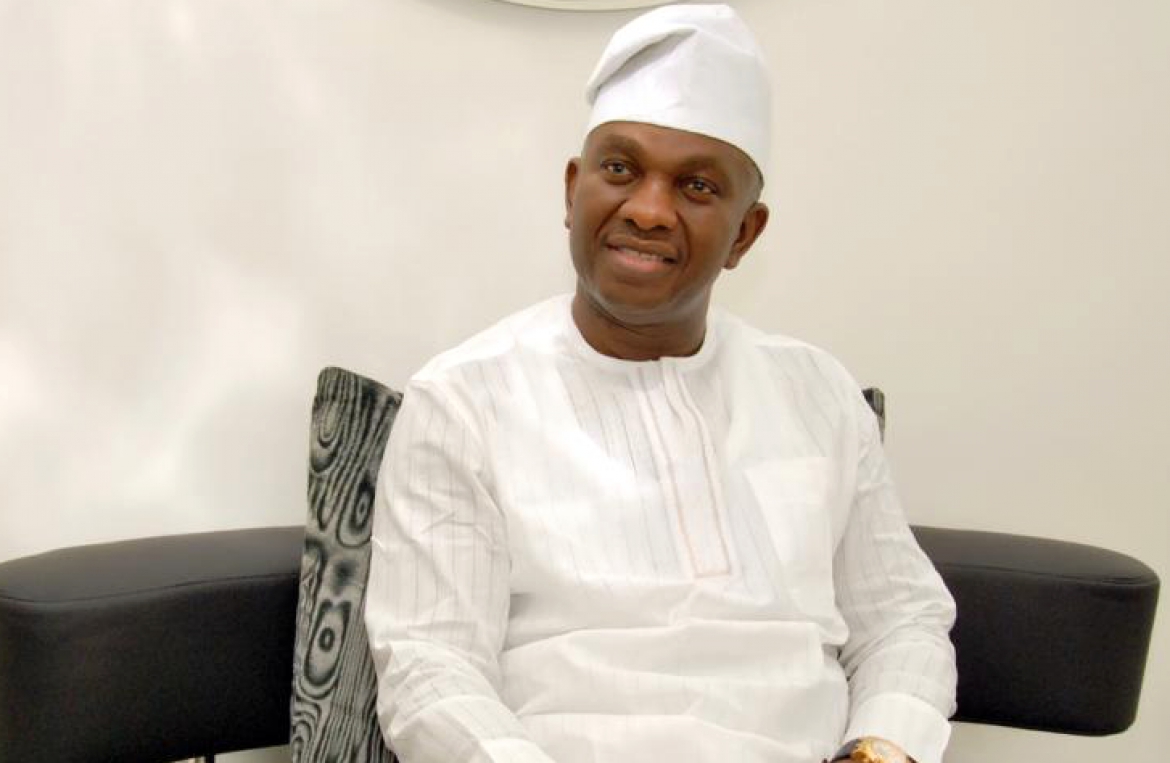

I am sure we all agree that the need for free higher education in Ogun is based on two main points:
One, social justice: increasing higher education access for the poor, especially previously marginalised communities, in the face of increasing tuition fees, and;
Two, growth externalities. So the earlier we redirect our priorities the better for the future.
Comparing us with the UK / US is a misnomer. The socio economic indices are far apart. One option we have Identified and assessed to be a viable option is “dual-track tuition approach whereby our institutions enrol two types of students: highly state-subsidised students selected on a numerus clausus basis for complete tuition free, and a second group of ‘unsubsidised’ ‘means tested’ students who will pay part or the full market-related tuition.
We have had expert reports on how we can slowly achieve full potential but leadership priority for complete commitment from government is needed.
As the second phase will be to now build on possible and achievable institution internally generated revenues opportunities / self sustaining business modules for diversification into specialised and targeted institution specific cottage industries etc, turning our institutions into a complete edubusiness community within and serving the larger community.
I have been working on achievable systemic plan to achieve this “sustainable edu-commerce chain” since 2015 and we have potential partner institutions willing able and ready to help us develop a sound and sustainable system and at the appropriate time we will unveil.
Ogun must develop her people and her people will develop the state, we must take bolder steps in other directions too, after all some financially worse states are giving it a good go moreover I am convinced it will and totally committed to making it work. Not possible, not achievable is not an option. What I am looking at is the bigger picture, benefit to our people and the economic multiplier effect of what the saved tuition fee would translate into in terms of family disposable income “economic impact”.
We should collectively be putting out thinking and innovative caps on looking at how we can make things work better irrespective of political affiliation and not just join the partisan and dismissal group who because it looks like it will benefit or showcase someone or some group of opposing disposition or the whole idea is seemingly like a Herculean task give up on the very idea.
NOTHING IS IMPOSSIBLE WITH THE RIGHT ATTITUDE, PEOPLE & INTENT.
Free education is here to stay. The youth will get what they so much need and deserve. Pa se da.




Business
Dangote Refinery Ends Nigeria’s Era of Fuel Import Dependence, Boosts GDP, FX Earnings — EIU
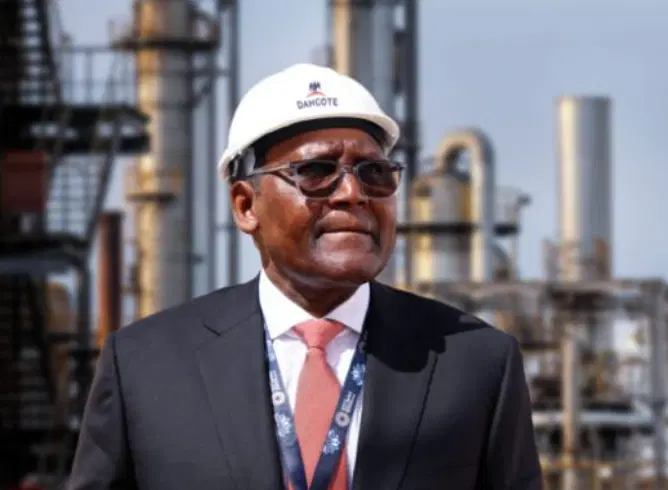
Dangote Refinery Ends Nigeria’s Era of Fuel Import Dependence, Boosts GDP, FX Earnings — EIU
The operational ramp up of the 650,000 barrels per day Dangote Petroleum Refinery & Petrochemicals is fundamentally reshaping Nigeria’s downstream oil sector, significantly reducing the country’s dependence on imported refined petroleum products and strengthening its external position, according to the Economist Intelligence Unit (EIU).
In its latest assessment on Nigeria’s fuel market and regulatory environment, the EIU said the refinery has already transformed a sector that was previously characterised by heavy reliance on imported fuel despite Nigeria being Africa’s largest crude oil producer. The report noted that the refinery met nearly 80 per cent of domestic petrol demand in April and produced enough volumes to satisfy local consumption requirements as operations approached full capacity.
The EIU described Nigeria’s downstream petroleum sector before the refinery as “long dysfunctional”, noting that the country had remained almost entirely dependent on costly imported fuel while producing nearly 1.5 million barrels of crude oil daily.
According to the report, the emergence of the refinery has reduced import dependence, improved domestic fuel availability and strengthened Nigeria’s balance of payments position through lower import demand and rising exports of refined petroleum products.
“The gradual ramp up of the 650,000 barrel/day Dangote refinery since May 2023 has transformed Nigeria’s long dysfunctional downstream sector,” the report stated. “The country’s main refineries, all state owned, had been inoperative for years and Nigeria was almost entirely reliant on costly imported fuel.”
The research and analysis division of The Economist Group, London added that the refinery’s attainment of full operational capacity and its planned expansion would further support Nigeria’s economic growth and foreign exchange earnings over the medium term.
“Meanwhile, the attainment of full capacity at, and an increase in exports from, the Dangote refinery will support real GDP growth and foreign exchange earnings in 2026 and 2027 and beyond, as a planned doubling of the plant’s output comes on stream around the end of the decade,” it added.
Industry analysts said the refinery is increasingly positioning Nigeria as an emerging refining and export hub, altering energy trade flows across Africa and reducing the vulnerability associated with fuel import dependence.
The EIU noted that the refinery’s expansion has coincided with major reforms in Nigeria’s downstream sector, including the removal of fuel subsidies and the introduction of market driven pricing mechanisms.
The report, however, said the transition from a state dominated fuel import structure to large scale domestic refining has triggered resistance from interests linked to the old import regime.
The latest tensions emerged following the decision by the Nigerian Midstream and Downstream Petroleum Regulatory Authority to relax restrictions on petrol imports despite the refinery’s growing capacity to meet domestic demand.
Dangote Industries subsequently initiated legal action, arguing that continued import approvals undermine domestic refining investments and conflict with the objectives of the Petroleum Industry Act, which seeks to encourage local refining capacity and reduce import dependence.
Analysts noted that the availability of large-scale domestic refining capacity has improved Nigeria’s energy security and reduced exposure to external supply shocks and foreign exchange volatility.
The Centre for the Promotion of Private Enterprise also cautioned against unrestrained importation of petroleum products, warning that such a policy could weaken Nigeria’s industrialisation drive and discourage investments in domestic refining.
Chief Executive Officer of CPPE, Muda Yusuf, said continued dependence on imported fuel had historically contributed to pressure on foreign reserves, exchange rate instability and fiscal leakages.
The refinery’s growing impact is also being reflected in Nigeria’s broader macroeconomic indicators. Earlier this month, S&P Global Ratings cited increased domestic refining capacity and rising hydrocarbon exports among the major factors supporting Nigeria’s sovereign credit rating upgrade – the first in 14 years.
Beyond Nigeria, analysts said the refinery is increasingly being viewed as a strategic industrial asset for Africa, where many countries remain heavily dependent on imported fuel despite rising demand for transportation, manufacturing, and power generation.
Business
BREAKING: Court Dismisses $19.6 Million Claim Against NNPCL — Rules Contract Scope Cannot Be Changed Orally
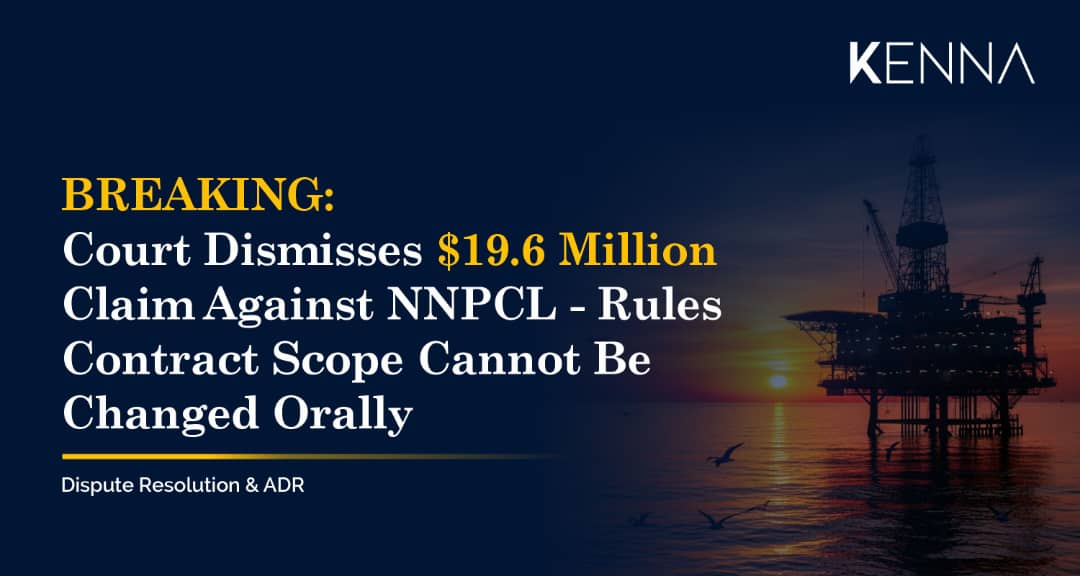
BREAKING: Court Dismisses $19.6 Million Claim Against NNPCL — Rules Contract Scope Cannot Be Changed Orally
In a landmark ruling on Friday, May 22, 2026, the Federal Capital Territory High Court in Abuja threw out a $19.6 million lawsuit filed by Alternate Dimensions Ventures Ltd against the Nigerian National Petroleum Company Limited (NNPCL), affirming a key legal principle: a written contract cannot be expanded through oral agreements or conduct.
Alternate Dimensions had sought $19,600,000 in professional fees, claiming the scope of its Direct Sale, Direct Purchase (DSDP e-pro) contract with NNPCL was orally expanded. Represented by counsel Patrick Peter, the firm argued it was entitled to the revised sum for services rendered under the alleged new terms.
But NNPCL, through its lawyer Ituah Imhanze of KENNA LP, pushed back sharply, arguing that parties are bound exclusively by the clear terms of their written agreement. Imhanze contended that without any written amendment, the claim was legally unsound, and the court agreed.
Delivering judgment, Justice Hamza Mu’azu upheld NNPCL’s defense, stating that the contract was unambiguous and that no evidence was adduced during the trial, which supported the alleged scope expansion. The court further found that NNPCL fully complied with all contractual terms and committed no breach.
Dismissing the suit as meritless, Justice Mu’azu reinforced the doctrine of sanctity of contract: any amendment to a written agreement must be express, unequivocal, and documented, not implied or verbal.
The ruling spares NNPCL from the S19.6 million claim and also a floodgate of similar potential liabilities.

Advanced Neonatal and Pediatric ICU births in Ikeja
Haven Pediatric Practice has officially launched a state-of-the-art Neonatal Intensive Care Unit (NICU) in Ikeja, Lagos State today.
This facility is a direct response to the urgent need for specialized care, bridging the gap between despair and survival for families in Lagos and beyond.
In the world over, the dream for every expectant mother is simple: to carry to term and hold a healthy baby. But when that dream is interrupted by preterm birth, the emotional toll is devastating. In Nigeria, currently ranked as one of the most challenging environments for premature infant survival, the stakes have never been higher.
But by synergizing cutting-edge technology with the highest level of professional expertise, Haven Pediatric Practice has assembled a dedicated team of Neonatologists and pediatric specialists. Recognizing that respiration is the greatest hurdle for “born too early” champions, the clinic has invested in top of the range ventilation technology capable of supporting infants weighing as little as 0.4kg.
The Chief Medical Director of Haven Pediatric Practice Dr. Adebajo Odedina told our correspondent at the event that,
“We aren’t just launching a ward; we are deploying a lifeline. By combining world-class ventilators with specialized, experienced medical hands, we are significantly increasing the chances of survival for even our smallest warriors.”
This expansion reaffirms Haven Pediatrics’ commitment to providing comprehensive, advanced care from the very first breath, ensuring that being born early no longer means losing the fight for life.


- African Leaders Mobilise Funding and Regional Response as Ebola Outbreak Escalates May 26, 2026
- Seychelles: Appointment of the Chief Executive Officer of the Careers and Further Education Agency May 26, 2026
- African Leadership Magazine Announces Winners of the 16th African Business Leadership Awards (ABLA) 2026 May 26, 2026
- President receives credentials of Ambassador of the Kingdom of Sweden to the Republic of Seychelles May 26, 2026
- Seychelles: President Herminie Presented with Future Development Vision for New Baie St Anne Jetty May 26, 2026
- Ammat Global Resources Redefines Local Content Through Congolese-Led Operations May 26, 2026
- Republic of Congo’s Newly-Appointed Hydrocarbons Minister Stev Simplice Onanga to Speak at African Energy Week (AEW) 2026 Amid Major Gas Expansion Push May 26, 2026
- Merck Foundation in partnership with Ghana First Lady and Lordina Foundation launch their “Educating Linda” Program to support Girl Education May 26, 2026
- Transforming Healthcare and Empowering Women: Dr. Rasha Kelej Recognized Among Africa’s 100 Most Influential Women May 25, 2026
- 2026 BASKETBALL AFRICA LEAGUE SEASON: BY THE NUMBERS May 25, 2026
- African Leaders Mobilise Funding and Regional Response as Ebola Outbreak Escalates May 26, 2026
- Seychelles: Appointment of the Chief Executive Officer of the Careers and Further Education Agency May 26, 2026
- African Leadership Magazine Announces Winners of the 16th African Business Leadership Awards (ABLA) 2026 May 26, 2026
- President receives credentials of Ambassador of the Kingdom of Sweden to the Republic of Seychelles May 26, 2026
- Seychelles: President Herminie Presented with Future Development Vision for New Baie St Anne Jetty May 26, 2026
- Ammat Global Resources Redefines Local Content Through Congolese-Led Operations May 26, 2026
- Republic of Congo’s Newly-Appointed Hydrocarbons Minister Stev Simplice Onanga to Speak at African Energy Week (AEW) 2026 Amid Major Gas Expansion Push May 26, 2026
-

 news5 months ago
WHO REALLY OWNS MONIEPOINT? The $290 Million Deal That Sold Nigeria’s Top Fintech to Foreign Interests
-

 society3 weeks ago
SOCIAL MEDIA IS NOT A BATTLEFIELD COMMAND – WHY THE NIGERIAN ARMY’S ACTION AGAINST JUSTICE CRACK IS A NATIONAL SECURITY IMPERATIVE
-

 celebrity radar - gossips4 months ago
Dr. Chris Okafor Returns with Power and Fire of the Spirit -Mounts Grace Nation Altar with Fresh Anointing and Restoration Grace on February 1, 2026
-

 celebrity radar - gossips6 months ago
Prophet Kingsley Aitafo Releases 2026 Prophecy: ‘Nigeria Will Rise, but the World Must Prepare for Turbulence’
You must be logged in to post a comment Login
You must log in to post a comment.