
celebrity radar - gossips
Ogun politics, Gbenga Daniel and another drama of absurdity

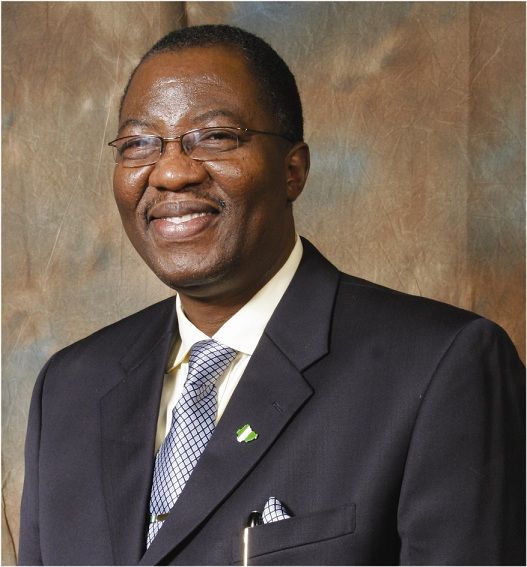
Ogun politics, Gbenga Daniel and another drama of absurdity
Our attention has been drawn to an interview reportedly granted by a former Governor of Ogun State and the member representing Ogun East Senatorial District at the National Assembly, Otunba Gbenga Daniel, wherein he shamelessly dished out falsehoods in his usual character.
Given the general perception about the former governor and his controversial image across Nigeria, it is basically needless to grant the man of many colours the dignity of a response. However, considering the power and passion of the media, especially beyond the State and for the benefit of many of our citizens in the Diaspora, we have decided to set the records straight and place Daniel where he pathetically belongs.

In the first place, the lawmaker by his antecedents in private business and in power painted a picture of dishonesty, making many to wonder how he managed to get near the power corridor, to the extent of becoming the Governor of a state like Ogun.
Every Nigerian in perfect consciousness of political events since 1999 knows Daniel as being chameleonic in appearance and deed; his unstable carriage with vague, perpetual laughter appropriately depict his dangerous persona, cocktail of lies and duplicity. His Sunday interview, which stood logic and truth on its head was the latest in the series, as he relentlessly pursued myopic and selfish interest.
It is laughable to hear Gbenga Daniel talking about his comradeship in the progressive fold and claiming that Governor Dapo Abiodun was not part of the fold between 1998 and 1999, when everyone is aware of how Daniel with his sneaky Machiavellian tactics and maneuvers surreptitiously dislodged a progressive party in the State in 2003 and became governor on the platform of PDP..
There is no record of Daniel’s role in Tinubu’s emergence as governor in Lagos State in 1999. In 2003, he contested under PDP and not AD, so what structure was he talking about? He ruled for eight years as a PDP governor before Ibikunle Amosun dislodged him and declared him persona non grata in the state, confining him to oblivion and castrating his businesses.
This is the same man who was rescued from political ignominy by Governor Abiodun against strong resistance from party members who were well apprised of what he represented. His liberation from the political oblivion into which he threw himself out of greed became necessary after his party, the PDP, lost presidential election in 2019. Many were taken aback by the speed with which Gbenga Daniel dumped his principal, Alhaji Atiku Abubakar and the PDP despite his position as the Director General of the Atiku Abubakar Campaign organization.
Daniel, an outlier of outsider in the APC during the presidential primaries of June 2022 who was neither a delegate nor had a single delegate from Ogun State, claimed that he supported Asiwaju Bola Ahmed Tinubu against Governor Dapo Abiodun’s wish. What a shameless merchant of falsehood!
As a matter of fact, his election to the Senate would have been disgracefully jeopardized by loosing ignominiously to Senator Lekan Mustafa, but for Governor Dapo Abiodun’s intervention, through moral suasion among party faithful and electorate alike, on the consideration that a former Governor should not be openly disgraced. Strangely, no sooner as he got the ticket, than Daniel returned to his traits, biting the hands that fed him.
To put it succinctly, Governor Abiodun, being a genuine leader and a progressive never worked against his party, APC unlike Senator Gbenga Daniel. And to give credence to his unflinching commitment and loyalty to the party, as soon as Asiwaju Bola Ahmed Tinubu emerged the presidential candidate of the APC, he immediately deployed all his political machineries and structures to support him, stoutly resisting all the gang-up within the fold spearheaded by Gbenga Daniel and his co-travellers. During the February 25 election, he won the State for Asiwaju Tinubu by a wide margin. That was quite unlike Gbenga Daniel who, for filthy lucre, criminally connived with the PDP after allegedly collecting N2 billion from Chief Kessington Adebutu and worked against the APC and its candidates in the presidential and gubernatorial elections.
There is overwhelming evidence to substantiate the claim that Daniel specifically directed his followers to work for the PDP and all its candidates for all political offices in the 2023 general election in Ogun State.It was on the strength of this evidence that APC youths moved against him and vehemently called for his dismissal from the party for committing such atrocities against their party despite rescuing him from his perilous situation. They flayed Daniel for defrauding their party by collecting mobilization funds from Governor Abiodun, only to betray him and APC. The people of Ogun State can never forget and will not forgive Gbenga Daniel for paying billions of naira as governor, in the name of feasibility studies, for bogus projects, thereby incurring a huge debt burden that the state is still battling with today.
Happily, President Tinubu knows more than any other person the dangerous antics of Gbenga Daniel and what he represents in the Nigeria’s political circles, and was alleged to have taunted him in the presence of some Senators, when he advised him to work on his reputation as a serial betrayal, but a leopard will never change its spots.
We, therefore, implore the former governor to turn a new leaf from his now legendary dubious political antics, act of ingratitude and political prostitution that have dishonourably marked his political career over the years with matchless notoriety and infamy. These are indeed unbecoming of a man of his age.
E -Signed
Olusola Ogunsanya Blessed
State Assistant Publicity Secretary
Ogun APC
June 26, 2023




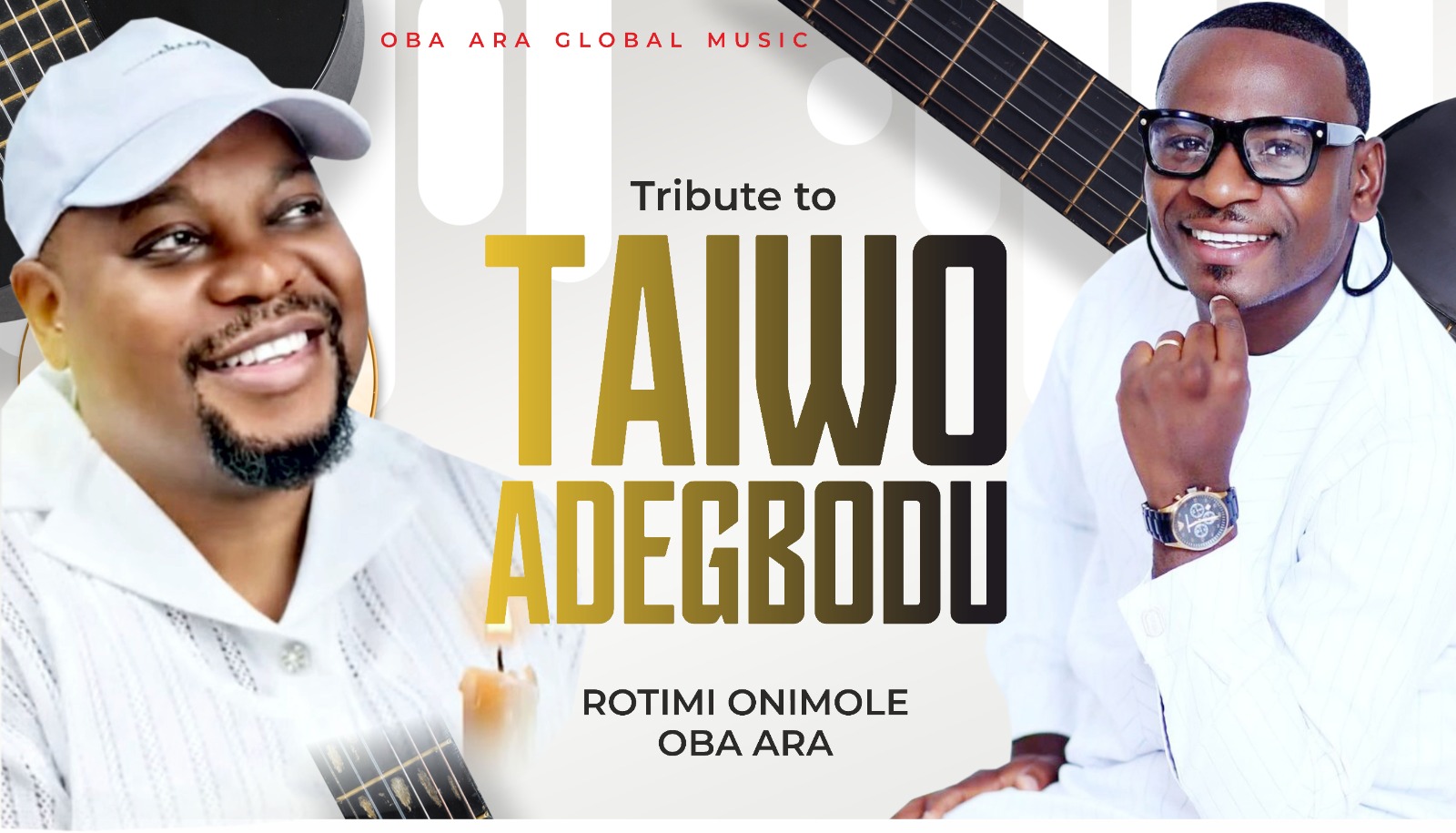
Oba Ara Releases Emotional Tribute to Late Taiwo Adegbodu
Taofik Afolabi
The gospel music community continues to grieve the painful loss of Taiwo Adegbodu, a beloved figure whose sudden departure left a deep void among fans, colleagues, and loved ones. In response to this loss, renowned gospel minister Rotimi Onimole, popularly known as Oba Ara, has released a moving tribute song that captures both the sorrow of the moment and the enduring legacy of the late singer.
Oba Ara, a proud son of Isale Eko, channels raw emotion throughout the song, using heartfelt lyrics and soul-stirring melodies to reflect on his personal connection with Taiwo Adegbodu. In the tribute, he openly expresses how deeply the news of Adegbodu’s passing shook him, describing it as a painful and unexpected loss that is difficult to come to terms with.
The song goes beyond mourning, it celebrates the life, ministry, and impact of Taiwo Adegbodu. Oba Ara highlights the late artist’s dedication to spreading the gospel through music, his inspiring voice, and the spiritual influence he had on many within and beyond Nigeria. Through powerful verses, he paints a picture of a man who lived for God and touched countless lives through his ministry.
Listeners have described the tribute as both comforting and deeply emotional, as it resonates with the collective grief of the gospel music community. It serves as a reminder that although Taiwo Adegbodu is no longer physically present, his music, message, and legacy will continue to live on.
In honoring his late colleague, Oba Ara not only pays his respects but also offers a source of healing for fans and fellow ministers, using music as a tool to process grief and celebrate a life well lived.
celebrity radar - gossips
Buratai, Fagbemi , Shagaya, Olofa, Others Eulogise Olowu Kuta’s Olori On 60th Birthday, Foundation Launch
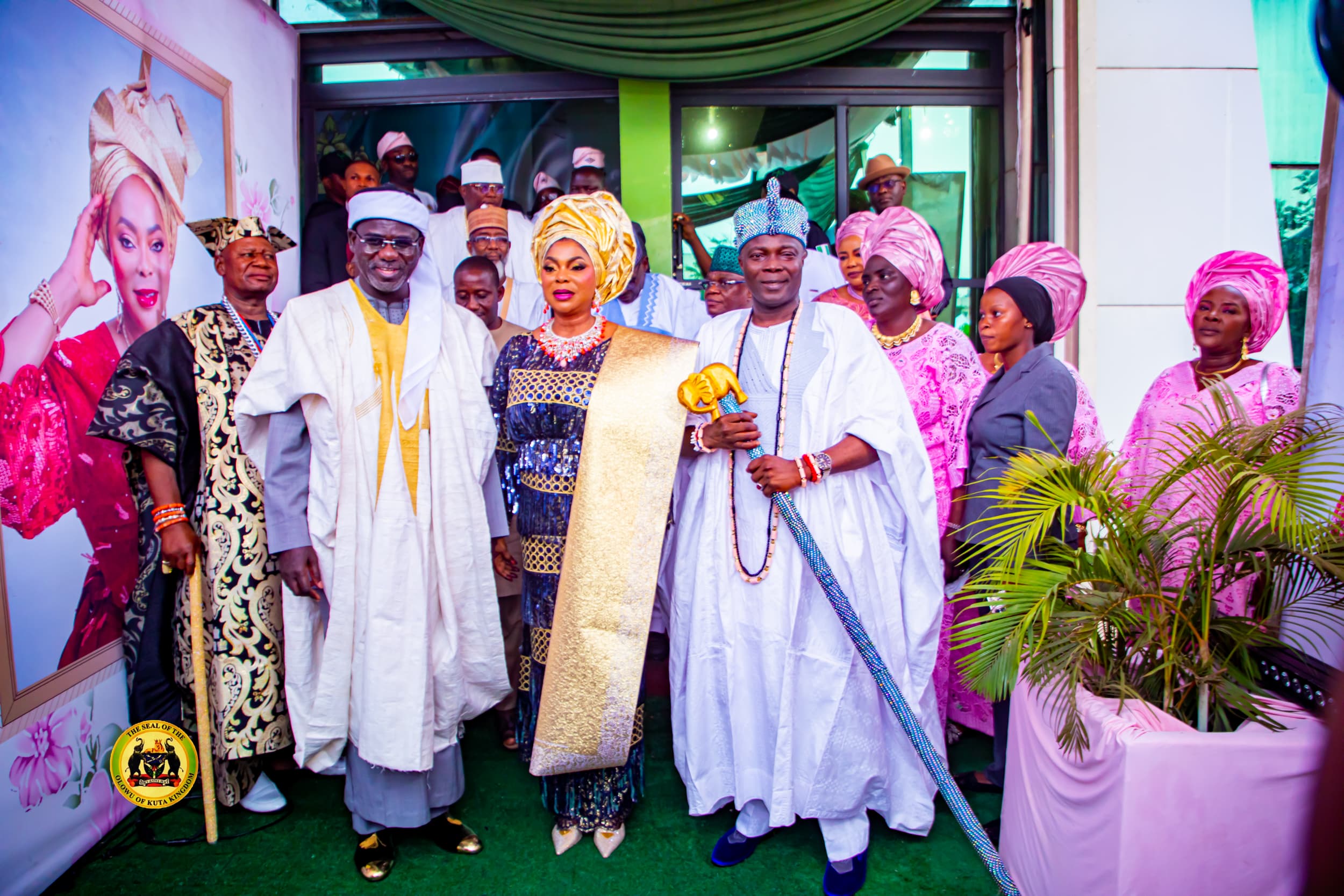
Buratai, Fagbemi , Shagaya, Olofa, Others Eulogise Olowu Kuta’s Olori On 60th Birthday, Foundation Launch
Eminent personalities across the Nigeria stormed the TFK Event Centre, Bala Mohammed Way, Guzape, Abuja, to celebrate the 60th birthday of Olowu Kuta’s Olori, Queen Jumai Amoke and her Foundation Launch on Saturday 28, March 2026.

From former Chief of Army Staff, Lt Gen TY Buratai rtd, to the Minister of Justice and Attorney-General of the Federation, Prince Lateef Fagbemi; Olofa of Offa, HRM Oba Mufutau Gbadamosi. Even top businesswoman and socialite, Chief (Mrs) Bola Shagaya, was in attendance.


Other dignitaries were newly promoted Deputy Inspector-General of Police and former AIG Zone 2 , Lagos , Adegoke Fayoade, Major General Abdumalik, Major General Samuel Adebayo rtd (Fmr CDI);
Major General Anthony Omozoje rtd (Fmr Copp);
Alhaji Tajudeen Owoyemi (Asiwaju of Offa and CEO Radisson Hotel Nigeria;
Dr Waheed Olagunju, former managing director of Bank of Industry, Oniba of Iba, Lagos State, HRM Oba Dr Suleiman Raji ;
Justice Falola, Olu of Ile-Ogbo , Oba Adetoyese amongst many traditional rulers and captains of industry too numerous to mention.
Speaking at the occasion, the Chief Host, Olowu of Kuta, HRM Oba Dr Adekunle Oyelude Makama, CON , Tegbosun iii, who is also the husband of the celebrant commended Queen Jumai for ‘ her slender arms full of kindness’ to establish such humanitarian Foundation, ‘Amoke Children and mother in Need Foundation’ at a time Nigerians are going through economic crisis occassioned by the global meltdown.
Olowu also commended her steadfastness and love for the less privileged and downtrodden.
The monarch refrenced the task before his wife’s humanitarian gesture said her best is yet to come.
” Olori Amoke Jumai, I celebrate you. You will celebrate 70, 80, 90 and continue to shine as you continue to put a smile on people’s faces. I love you, “Olowu Kuta added.
To Lt Gen Buratai, a former army chief and former Nigerian Ambassador to Benin Republic, the reward of hard work is more work.
Buratai, who also doubles as Balogun Agba of Owu Kuta, a chieftaincy title reserved for a generalismo congratulated Queen Jumai for attaining the age of 60 in good health.
The retired army General said he’s not surprised by the turn out of eminent personalities across the country to celebrate the Olowu Kuta’s Olori because she merited it through her hospitality to all, adding that Allah the most merciful, most beneficial would accept all her act of ibadah.
The minister of Justice, Prince Fagbemi, was full of praises for Queen Jumai for deeming it fit to have a place in her heart to accommodate the needy and less privileged in ‘our society.’
Prince Fagbemi urged the guests to contribute generously to support the Foundation in order to continue to alleviate poverty and put a smile on the faces of the people.
” I congratulate you on your 60th birthday and Foundation Launch. I wish you many happy returns of the day and many more fruitful services to the country and motherland”, Prince Fagbemi added.
The celebrant, Queen Jumai who was grining from ear to ear thankfully said she was excited by the turn out and the response of the people to her foundation.
Queen Jumai, however, promised to continue to use her resources and donations received for the good of the needy and less privileged in the society.
” I want to appreciate my own Kabiesi Olofa of Offa , for his presence and im I’m using him as a point of contact to all other Kabiesis present here, the minister of justice and Attorney-General, you’re welcome, sir; Mrs Bola Shagaya, I salute your enterprise, Lt Gen Buratai, I’m grateful, sir; DIG Fayoade, Justice Falola and other dignitaries too numerous to mention, I thank you, all. To my darling husband, Kabiesi Olowu , I thank you immensely for your support. And to my family and friends, I thank you , all. E se pupo!”, she said.
celebrity radar - gossips
Adron Homes Elevates Cultural Pride as Dignitaries Grace 39th Lisabi Festival in Abeokuta
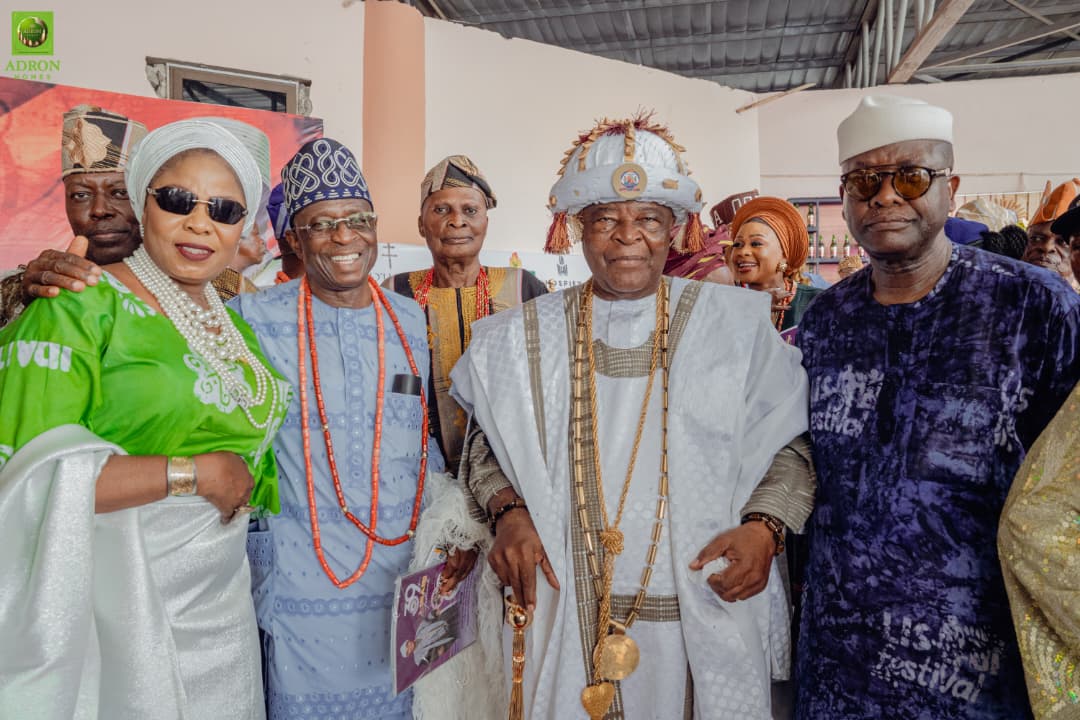
Adron Homes Elevates Cultural Pride as Dignitaries Grace 39th Lisabi Festival in Abeokuta
The ancient city of Abeokuta came alive in a grand display of culture, history, and unity as dignitaries from across Nigeria converged at the iconic Ake Palace Ground for the 39th edition of the Lisabi Festival, an annual celebration deeply rooted in the Egba people’s heritage.
The event, proudly supported by Adron Homes and Properties Limited, witnessed an impressive parade of distinguished personalities, traditional rulers, government officials, business leaders, and cultural enthusiasts, all captured in vibrant pictures that tell the story of a people united by history and pride.
From richly adorned monarchs in regal attire to elegantly dressed guests reflecting the depth of Yoruba tradition, the images from the festival encapsulate moments of honour, reverence, and celebration. Each photograph portrays not just faces, but influence, leaders, and stakeholders who continue to shape cultural preservation and community development.
At the heart of the celebration was the revered Oba Adedotun Aremu Gbadebo, whose presence underscored the festival’s significance as a symbol of Egba resilience and identity. Surrounding him were eminent dignitaries whose attendance further amplified the prestige of the event.
Adron Homes and Properties Limited stood out prominently, not only as a sponsor but as a key driver of cultural sustainability. Through its strategic support, the company reinforced its commitment to preserving indigenous heritage while fostering community engagement. The brand’s visibility across the venue and within the pictorial highlights reflects a deliberate alignment with culture, tradition, and people-centered development.
Beyond real estate, Adron Homes has continued to position itself as a cultural partner, investing in platforms that celebrate history and strengthen communal bonds. Its involvement in the Lisabi Festival is a testament to its broader vision of building not just homes, but legacies rooted in identity and pride.
The 39th Lisabi Festival, as captured through the lens of dignitaries in attendance, is more than an event, it is a narrative of continuity. And through its unwavering support, Adron Homes has once again set the pace, demonstrating that corporate institutions can play a vital role in sustaining the cultural heartbeat of a people.
As the echoes of drums fade and the colours of the festival linger in memory, one thing remains clear: the story told through these images is one of unity, heritage, and the enduring partnership between tradition and progress.


-

 society6 months ago
Religion: Africa’s Oldest Weapon of Enslavement and the Forgotten Truth
-

 news4 months ago
WHO REALLY OWNS MONIEPOINT? The $290 Million Deal That Sold Nigeria’s Top Fintech to Foreign Interests
-

 society6 months ago
“You Are Never Without Help” – Pastor Gebhardt Berndt Inspires Hope Through Empower Church (Video)
-

 celebrity radar - gossips2 months ago
Dr. Chris Okafor Returns with Power and Fire of the Spirit -Mounts Grace Nation Altar with Fresh Anointing and Restoration Grace on February 1, 2026