
society
Ogun State Government Debunks Senator Gbenga Daniel’s Barefaced Lie, Says Prince Abiodun Not after Former Governor

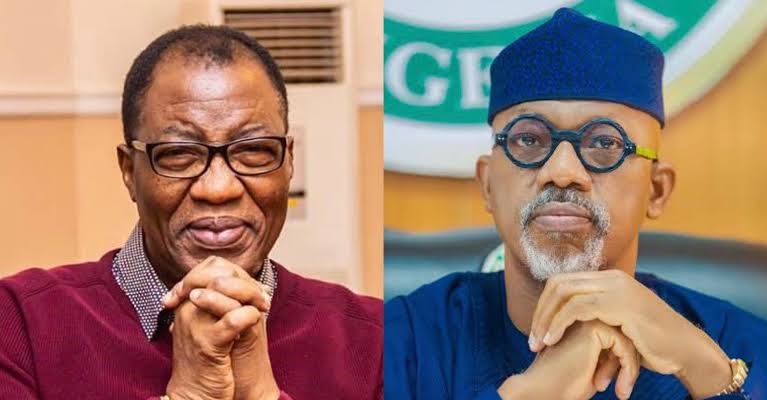
Ogun State Government Debunks Senator Gbenga Daniel’s Barefaced Lie, Says Prince Abiodun Not after Former Governor
The attention of the Ogun State Government has been drawn to a press statement issued by the Media Office of the Senator representing Ogun East and a former Governor of Ogun State, His Excellency, Otunba Gbenga Daniel, on Saturday, August 9 and titled “Political Persecution as Governor Abiodun Issues Quit, Demolition Notices on Daniel’s Properties in Ogun State.”
The statement written in extremely bad taste and with intent to cause disaffection and foment chaos in the state alleges that Governor Dapo Abiodun posted Notices of Contravention, Quit and threats of demolition on the Asoludero Court Sagamu private residence of Gbenga Daniel,the Conference Hotels Limited, Sagamu and the hotel Annex of the former Governor of Ogun State, with intent to illegally demolish those properties.
The statement framed the said notices purportedly received on Friday, August 8, as a clear demonstration of “malicious and vindictive abuse of power, hiding behind a newly-enacted law retroactively to target a political opponent.” Nothing can be further from the truth.
Of course, in what has become a familiar pattern, Senator Daniel and his Media Office have been ascribing political motives to a routine procedure, suggesting that they have something to hide and do not mind using underhand tactics to achieve their sinister objectives.
Contrary to the blatant distortions of facts and egregious purveyors of falsehood been propagated by the statement in question, the Ogun State Government is not engaged in any untoward move against Otunba Gbenga Daniel in anyway.
The fact of the matter, quite simply, is that in his holistic approach to development efforts across the length and breadth of Ogun State, His Excellency, Governor Dapo Abiodun, has embarked not only on building new communities as exemplified by the affordable housing estates and the yellow roof revolution but also on the redevelopment of Ogun State’s towns and cities through urban renewal. This, he started with Ibara GRA in Abeokuta, the state capital, and is being extended to Sagamu and Ijebu-Ode GRAs. This initiative involves the auditing of existing developments within these areas in order to determine the permit status of all types of developments, including houses, schools, hospitals and other commercial buildings. This is a statutory and due process requirement which will provide information for any government intervention. And this informed the development audit exercise currently being carried out simultaneously both in Ijebu-Ode and Sagamu GRAs.
Otunba Gbenga Daniel’s building happens to be within the Sagamu GRA and among those that were served notices as required under the Town Planning Law and Regulation of Ogun State. Many other structures were also similarly served. The exercise is a continuous one until the objective of government for the exercise is achieved. This process is not new. It had been in existence and operated even during his tenure as Governor of the State. The GRA is a government designed and allocated estate and it is subject to regulatory and oversight functions of governmet in perpetuity. All Otunba Gbenga Daniel needs to do, like every other person’s in similar situation that have been served with such notices in that neighbourhood, is to present his planning permit and land title to the relevant government Agency office for verification within the time specified in the notices rather than resorting to cheap blackmail. There are no exemptions under the law except as permitted by that Law.
Did the distinguished senator not conduct a check around the neighbourhood before hastily rushing to the media to demonise Governor Dapo Abiodun and his administration, as usual? The statement in question jumped the gun by saying that the Government is focusing on Senator Daniel. That is a barefaced lie. It is the duty of the Government to carry out audits and for someone who has been in office as Governor and who is now a Senator to be crying wolf is highly unfortunate. It seems that Senator Gbenga Daniel and his crew will do anything they can to drag the name of Governor Dapo Abiodun into every issue imaginable just to score cheap political points. This is not a hallmark of statesmanship, a topic that the distinguished senator likes to talk about with flourish; it is a dark tactic.
Nobody is bigger than the State. Senator Gbenga Daniel is distinguished no doubt, but he is not bigger than Ogun State. He should submit himself unreservedly to the same laws he once swore twice to uphold. He should refrain from elevating every issue of his contact with government institutions to a personal vendetta by Governor Abiodun, who obviously holds him in high esteem. Since his referenced buildings must have conformed with government regulations, there should not be any problem. The distinguished Senator knows the law and has presumably abided by it, so why is he crying foul instead of simply complying with lawful directive, supremely confident in the knowledge that he has done no wrong, and knowing the rights afforded him by the Constitution and the courts?

No one should assign impure motives to a routine procedure. If anyone is after Senator Gbenga Daniel, it is certainly not the Governor of Ogun State.
E signed
Kayode Akinmade
Special Adviser on Information and Strategy




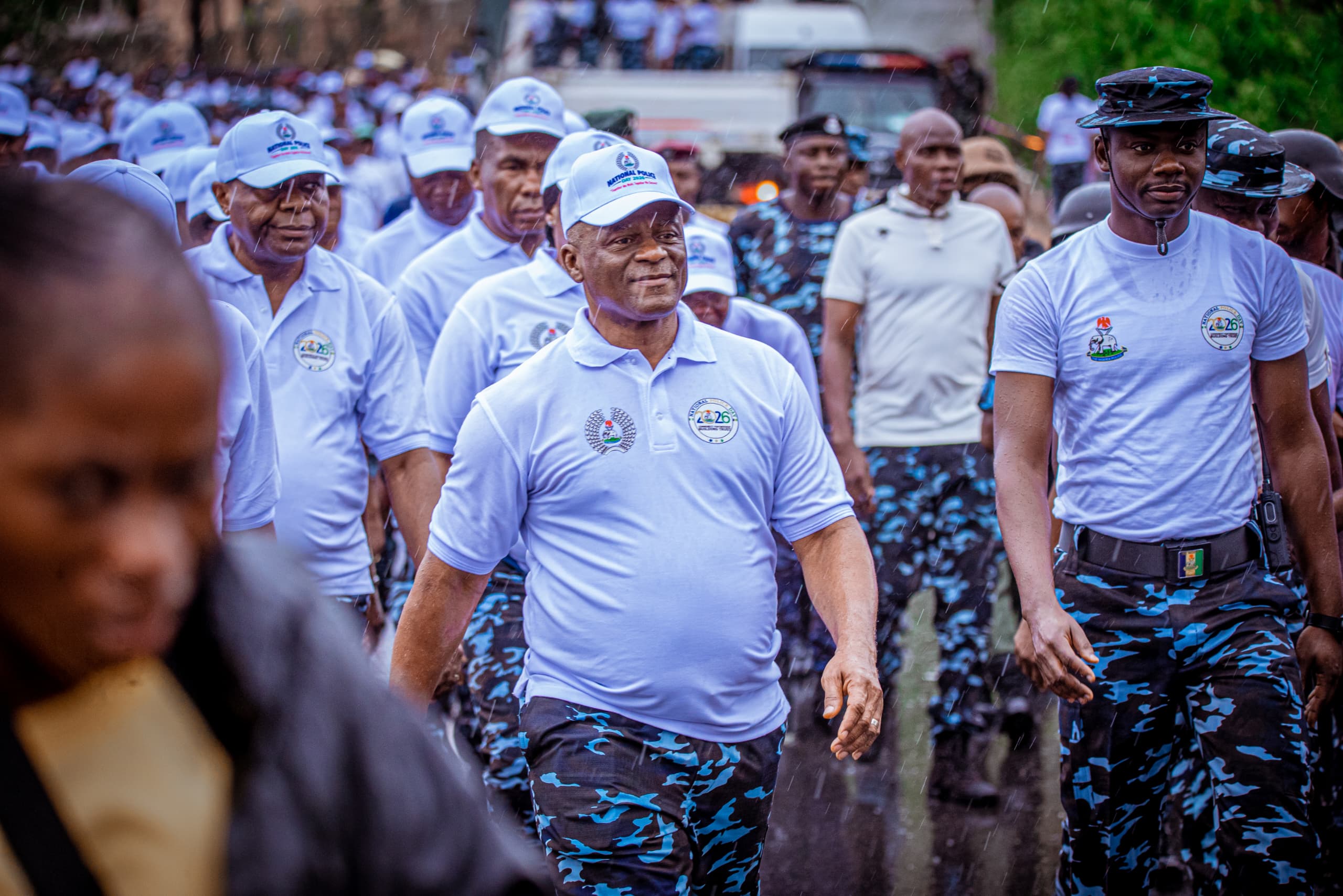
Police Day 2026: IGP Disu Leads Nationwide Walkathon To Strengthen Community Trust
The Inspector-General of Police, Olatunji Disu, on Tuesday led the management team, alongside officers and personnel of the Nigeria Police Force, in a nationwide walkathon to commemorate the 2026 National Police Day.
The event, held across state capitals and the Federal Capital Territory, formed part of activities marking Day Two of the annual celebration, themed “Community Partnership: Building Trust.”
The symbolic exercise, which drew participation from both police personnel and members of the public, was aimed at showcasing unity, discipline, and a renewed commitment to community policing and public safety.
According to the Force leadership, the walkathon underscores the Nigeria Police Force’s resolve to strengthen public trust, deepen engagement with citizens, and enhance collaboration in tackling security challenges across the country.
Participants described the initiative as a practical step toward bridging the gap between law enforcement and the communities they serve, while also promoting physical fitness and mental well-being among officers and civilians alike.
With the theme reflecting a shared responsibility for safety, the Police reiterated that sustainable security can only be achieved through active partnership with the public.
The event concluded with a renewed call for collective action under the banner: “Together We Walk, Together We Secure,” emphasizing unity of purpose in building a safer and more secure society for all Nigerians.


society
Dr. Chris Okafor invokes divine retribution upon individuals blackmailing the Grace Nation church

Dr. Chris Okafor invokes divine retribution upon individuals blackmailing the Grace Nation church
… Affirming God’s omnipotence to unveil malicious schemes.
To be frank, the ability of Doris Ogala and her associates to withstand the arduous challenges set by Senior Pastor Dr. Chris Okafor of Grace Nation Global at the culmination of the Harvest of Babies 2026 conference, the church’s flagship event, continues to elude me.
It’s advisable not to offend a powerful spiritual leader like Prophet Chris Okafor to avoid potential consequences, as seen in the situation with Doris Ogala, who was rebuked by the prophet; can she rectify the situation through confession?
Insiders close to the man of God claim that despite relentless online bullying and blackmailing, the Generational Prophet remains resolute, stating that God’s power has been evident throughout the commission’s existence. The reason for this wonderful statement is found in the scriptures, “Upon this rock I shall build my Church, and the gates of hell shall not prevail.” The more falsehoods are spread about the church and its leader, the more God elevates the church and propels him to greater heights, he asserted. He emphasized that blessings and fruitfulness are antidotes to curses, noting that God continues to bestow blessings upon the church, including miracles and the gift of children, which is one reason for the grand finale of the annual family liberation program, The Harvest of Babies.
However, the man of God issued a curse on each person speaking ill of the church, blackmailing, and uttering all sorts of falsehoods against the church, declaring that if they refused to repent within a few days, the earth would swallow them and their family members, stating that they would be of no use to themselves, their families, or society at large.
The spiritual leader cautions his followers to beware of such individuals including Doris Ogala who may taint their faith, and urges them to treat these persons as emissaries of the devil, avoiding them altogether.
Recall that the 2026 harvest of babies concluded with a remarkable birth of a miracle baby boy to a woman on the third day of the conference, accompanied by the dedication of several other miracle babies, all to the glory of God.
Christopher Sunday David writes from
Austria
“Together We Walk, Together We Secure”: Police Launch 2026 Walkathon In Abuja
The Nigeria Police Force has announced plans to host a walkathon in commemoration of the 2026 National Police Day, aimed at promoting unity, peace, and stronger community partnership.
The event is scheduled to take place on Tuesday, March 31, 2026, with participants expected to converge at the Force Headquarters Abuja by 6:00 a.m., where the walk will commence.
According to the organisers, the walkathon is designed to bring together members of the public, stakeholders, and security personnel in a show of solidarity and shared commitment to national security.
With the theme, “Together we walk, together we secure,” the initiative underscores the importance of collaboration between the police and citizens in maintaining peace and safety across the country.
Members of the public have been encouraged to participate in the exercise, which forms part of activities lined up to mark this year’s National Police Day celebration.
It is believed that the walkathon would not only foster closer ties between the police and the communities but also serve as a platform to promote awareness on collective responsibility in ensuring a safer society.


-

 society6 months ago
Religion: Africa’s Oldest Weapon of Enslavement and the Forgotten Truth
-

 news4 months ago
WHO REALLY OWNS MONIEPOINT? The $290 Million Deal That Sold Nigeria’s Top Fintech to Foreign Interests
-

 society6 months ago
“You Are Never Without Help” – Pastor Gebhardt Berndt Inspires Hope Through Empower Church (Video)
-

 celebrity radar - gossips2 months ago
Dr. Chris Okafor Returns with Power and Fire of the Spirit -Mounts Grace Nation Altar with Fresh Anointing and Restoration Grace on February 1, 2026