
society
Ogunmakin Family Reacts To Allegations of Installation of Disqualified Candidate As Next King, Warns Imposter To Desist From The Act

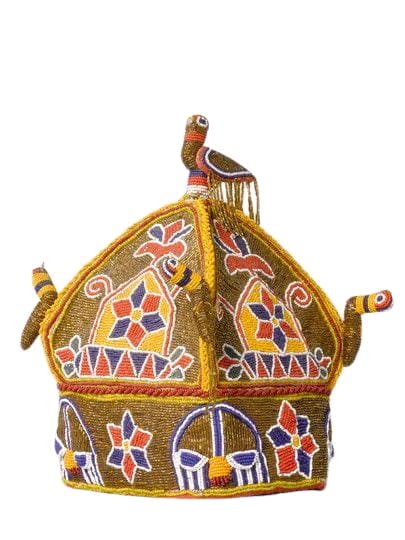
Ogunmakin Family Reacts To Allegations of Installation of Disqualified Candidate As Next King, Warns Imposter To Desist From The Act
……..Urges the general public to disregard any reports from the enemies of Ogunmakin community, Showcases the antecedents of Busari Ayinde Adenshile, his process of selection as the next Olu of Ogunmakin community.
Re: Family Raises Alarm Over Plot To Install ‘Disqualified’ Candidate As Next Olu of Ogunmakin
The attention of the Ogunmakin Royal family has been drawn to a publication made on the 20th of May 2024 by one Encounter Online Newspaper, with the heading; ‘Family Raises Alarm Over Plot to Install ‘Disqualified’ Candidate As Next Olu Ogunmakin’.
For the purpose of records, Chief Busari Adenshile by lineage belongs to the family of Pa Bisiriyu Ogunmakin the founder of the popular Ogunmakin in Ogun state.
The genealogy of Chief Busari showed that Pa Bisiriyu Ogunmakin, the founder of Ogunmakin was the father of Mrs Omonayajo, who got married to Imam Sunmonu Akande and gave birth to Busari Atanda the father of Chief Busari Ayinde Adenshile. The patriarch of Ogunmakin family married three wives, which are Salamotu from Olounde village, Osunfunke from Oniturupu village, and, Iyunade also from Oniturupu, all the efforts of Pa Ogunmakin to have a make child proof abortive therefore his marriage produced female children, though his grandchildren were male and female.
The Royal father of Ogunmakin, Oba James Sodiya joined his ancestors in the year 2023 hence the process of selection begin 20th of October 2023 where Chief Busari Ayinde was selected by all the king makers and the royal families, later the letter of nomination was presented to the Ikereku Council of Chiefs which was duly signed by the numero uno in Ogunmakin community and later to Osile of Oke–Ona Oba Adedapo Tejuosho for further approval, the nomination got a nod after thorough screening and investigations.
For the clarity of imdigeneship, Busari Ayinde was born in Ogunmakin, he attended Obafemi-Owode Local Government Primary School (OOLG) before he proceeded to Adelagun Memorial Grammar School Odinjo Ibadan, Oyo State where he obtained his Secondary School Leaving Certificate, SSCE then to Olabisi Onabanjo University, Ago–Iwoye, Ogun state.
Chief Busari Ayinde is an unflagging supporter of the cultural heritage of Yoruba who is also committed to the building of a virile and progressive society without neglecting customs and traditions of their forebears. His various chieftancy titles are Apesin of Ikereku Egba,Oke-Ona, Otunba Ilawo in Osun state, Baajiki of Owu Kingdom and Ekerin of Araromi Owu, Abeokuta Ogun state.
Our correspondent when he visited Ogunmakin community to investigate the true side of the issues from the royal families, He met with Pa Kehinde Odejobi, Pa Kehinde Salawu, Pa Rasheed Ogunmakin, Mr Jamiu Surakat Ogunmakin – Baale of Orile Ogunmakin, Mrs Oduwole Nee Ogunmakin, Mr Semiu Ogungbaje and they all threw weight behind Chief Busari Ayinde Adenshile, noting that he is the most qualified candidate to ascend the throne of his forefathers.
The letter of nomination of Chief Busari Ayinde Adenshile was presented to AMEBO NEWSPAPERS NG correspondent which proofs that he was the preferred candidate among the three contenders for Olu of Ogunmakin stool.
However, a letter from Ministry of Local Government and Chieftancy Affairs with file number CHM.10/255T/180, dated 5th of July 2023 with the subject, In line with the provision of Section 40 of the Obas and Chiefs’ Law of Ogun state 2021, Egba Traditional Council at her sitting of Friday 19th of April 2024 approved Coronet Oba Oluwanbe Mofolorunso Reuben Sogaolu as the new Oba Elect of Orile–Imo and Coronet Oba Busari Ayinde Adenshile as the Oba Elect of Ogunmakin both of Obafemi-Owode local government area of Ogun state as recommended by their prescribed authorities, HRM Oba A. A Gbadebo CFR and Oba A. A Tejuosho CON respectively.
Mr Jamiu Surakat Ogunmakin – Baale of Orile Ogunmakin, said Busari Ayinde Adenshile is a true indigenous son of the soil, experienced and vast in the community, and he is the most qualified candidate to ascend the throne of his forefathers in Ogunmakin, Obafemi-Owode Local Government, Ogun state.
Also, Mrs Oduwole Nee Ogunmakin said all the visitors who are claiming to be indigenous people of Ogunmakin should desist from the game of hatred and support Chief Busari Ayinde Adenshile as the next Olu of Ogunmakin in Ogun state.
Pa Kehinde Odejobi said Ramoni Jawe is who they all want as the next Olu of Ogunmakin based on his antecedents in ensuring the community is developed with projects, he has represented Ogunmakin community and brought good things back to benefit the common masses.
Mr Kehinde Salawu and many others affirmed the selection of Busari Ayinde Adenshile as the authentic process through ifa and kingmaker decisions, he said he is the preferred candidate to mount the throne for development of Ogunmakin.
Our correspondent to balance the story contacted Chief Busari Ayinde Adenshile on a telephone discussion, he appreciated our correspondent who deemed it necessary to hear from him about the ongoing tussle, he described the families who started maligning him as comedian, “How on earth would someone tell the world that I, Busari Ayinde Adenshile is not an indigenous son of Ogunmakin ? I believe the person needs urgent medical care because no sane person can think that way” he concluded.
He appreciated the chiefs and prominent people in Ikereku, Ogunmakin, while he prayed that may Almighty God continue to bless His Royal Majesty Oba Adedapo Tejuosho with long and peace of mind for following due process in the selection of next Olu of Ogunmakin, Obafemi-Owode Local Government, Ogun State.




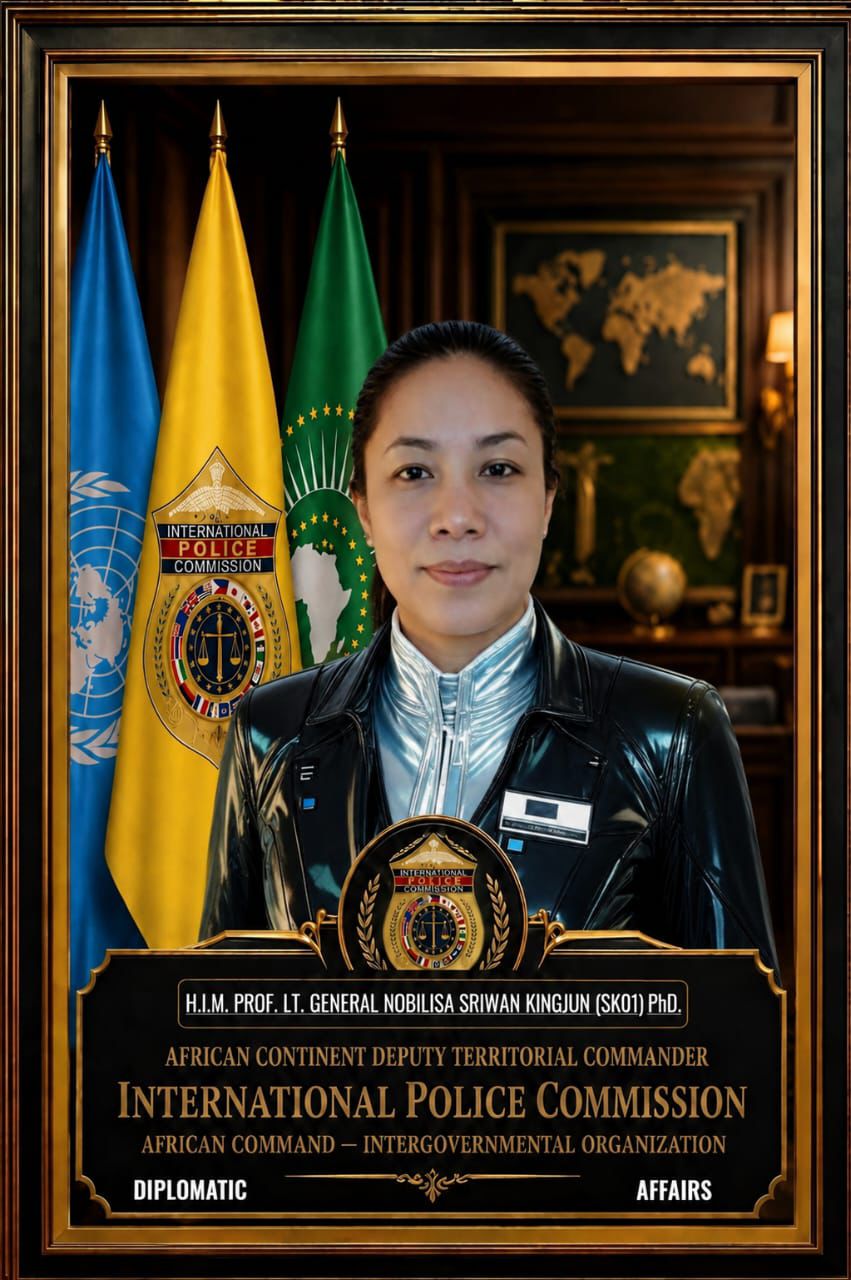
UKA Gears Up for Final ATC Exchangeability Test Run as June Preparations Begin.
May 30, 2026 – As the month of June gathers momentum, the *United Kingdom of Atlantis, UKA*, a sovereign nation has unveiled a series of vital guidelines and preparatory packages to ensure citizens and stakeholders run the *ATC Exchangeability* process effectively.
In an official update, the *President of Atlantic Crown Limited, Empress of Attica Empire UKA*, confirmed that the *Final Test Run of ATC Exchangeability* is scheduled for the month of June 2026. The exercise marks a key phase ahead of the *Official Exchangeability Window, set to run from July 2026 to February 2027*.
### Key Highlights from the Presidential Briefing
1. *Final Test Run – June 2026*
The test run is designed to validate systems, procedures, and user readiness before full activation. Citizens, partners, and designated participants are urged to follow all official advisories released by UKA authorities during this period.
2. *Official Exchangeability Period*
Following the successful completion of the June test run, the Official Exchangeability will commence in july 2026 and we are Expecting Full Exchange ability between July Ending, 2026 to February 2026.
UKA stated that detailed schedules, eligibility requirements, and step-by-step instructions will be communicated progressively through verified UKA channels.
3. *Benefiting Packages for June*
In line with UKA’s commitment to citizen empowerment, the month of June will feature “benefiting packages” aimed at education, preparation, and seamless onboarding. These packages are intended to equip the people of UKA with the knowledge and tools needed for effective participation.
4. *Commitment to Transparency*
Addressing the nation, the Empress of Attica Empire UKA emphasized:
_“Final Test Run of ATC Comes up in The Month of June, As We Prepare For The Official Exchangeability, Between July 2026 To Feb 2027. All Information Will Be Communicated.”_
UKA reaffirmed that only information released through official UKA platforms should be regarded as authoritative.
The United Kingdom of Atlantis is encouraging all citizens, representatives, and interested parties to remain alert to official communications, attend designated orientation sessions, and avoid unofficial sources. UKA’s dedication to order, clarity, and the collective benefit of its people as the nation moves into this significant phase.
For updates, advisories, and participation guidelines, citizens are advised to monitor official UKA communication channels.
United Kingdom of Atlantis, UKA, is a sovereign nation, committed to national development, citizen welfare, and structured economic participation through initiatives such as ATC Exchangeability.
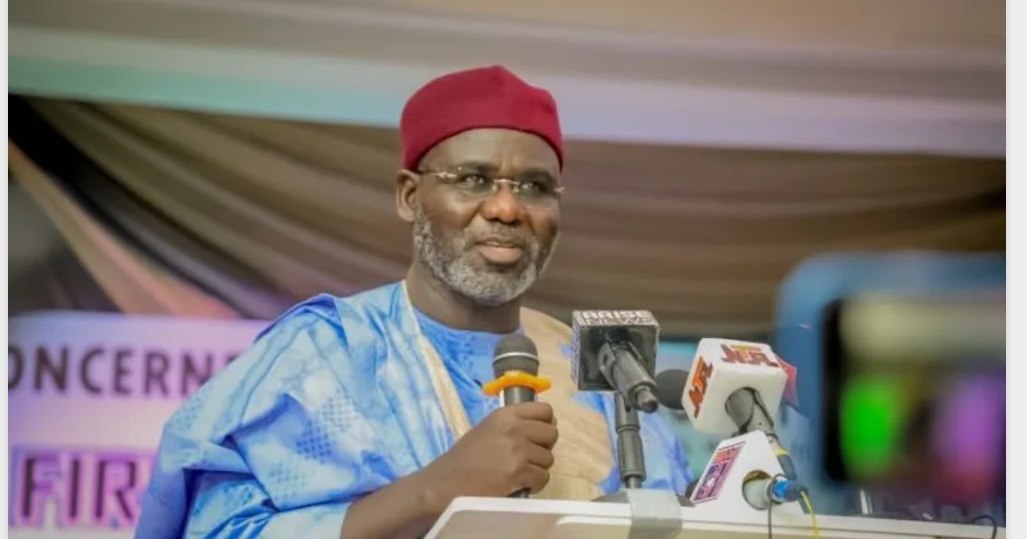
Three Years On, General Buratai Hails Tinubu’s Economic, Security Achievements
Former Chief of Army Staff, Lt. Gen. Tukur Buratai (retd.), has commended President Bola Ahmed Tinubu for what he described as bold economic reforms and improved security efforts as the President marks three years in office.
In a goodwill message on Thursday to commemorate Tinubu’s third anniversary as President and Commander-in-Chief of the Armed Forces, Buratai said the administration had taken courageous decisions that would leave a lasting impact on Nigeria’s development.

According to him, President Tinubu broke a long-standing cycle that had hindered national growth by removing fuel subsidy and implementing foreign exchange reforms aimed at stabilising the naira and strengthening the economy.
He noted that the reforms were beginning to yield positive results, citing the global acceptance of Nigerian debit cards, the gradual revival of local refineries, access to student loans, and ongoing road and infrastructure projects across the country.
“The FCT Administration has also recorded remarkable progress, completing major road projects that remained unfinished for over 16 years,” Buratai stated.
The former army chief also praised the administration’s security efforts, saying renewed military offensives against insurgents, terrorists and bandits had led to notable successes across various parts of the country.
He specifically lauded recent joint operations involving Nigerian and United States forces against Boko Haram and ISWAP in the North-East, as well as intensified counter-banditry operations in the North-West.
“We have seen notorious ISWAP commanders being neutralised. I congratulate the Commander-in-Chief, the Minister of Defence, the Chief of Defence Staff, the Service Chiefs, the Inspector-General of Police and heads of intelligence agencies for their efforts,” he said.
Buratai, however, acknowledged that challenges remained, stressing the need for more aggressive military operations and intelligence-driven strategies in the coming year.
While urging Nigerians to remain hopeful, he said celebrating the President’s achievements did not amount to ignoring the difficulties facing the nation.
“Because you truly care, you have shown the courage to trade short-term comfort for long-term hope. Nigerians need your reassurances, and that is why we remain optimistic and full of confidence,” he added.
The retired military officer reaffirmed his support for the Tinubu administration and expressed confidence that the foundation being laid by the government would deliver a brighter future for the country.
He also prayed for God’s guidance, wisdom, strength and good health for the President as he continues to lead Nigeria.
NUT Raises Alarm Over Continued Captivity of Abducted Oyo Pupils, Teachers
The Nigeria Union of Teachers has expressed deep concern over the continued captivity of pupils and teachers abducted during an attack on schools in the Ahoro-Esinle and Yawota communities in Oriire Local Government Area of Oyo State.
In a statement issued on Saturday, the Oyo State wing of the union described the situation as increasingly distressing, particularly following the emergence of a video allegedly released by the abductors showing the victims pleading for their freedom.
The union said the footage had heightened fears over the welfare of the abducted pupils and teachers, describing their ordeal as heartbreaking and unacceptable.

According to the NUT, no child or teacher deserves to be subjected to such traumatic experiences, adding that the prolonged captivity of the victims has continued to inflict psychological pain on their families, colleagues and the wider education community.
The union called on the Federal Government, Oyo State Government and relevant security agencies to intensify efforts towards securing the immediate and safe release of the victims.
“This is not a moment for hesitation. It is a moment for coordinated, intelligence-driven efforts to ensure the immediate and safe release of all abducted pupils and teachers,” the statement read.
While acknowledging ongoing interventions by security agencies and government authorities, the union stressed that time was of the essence, warning that every additional day in captivity deepens the trauma suffered by the victims.
The NUT urged security operatives to strengthen surveillance, improve community intelligence gathering and deploy all necessary operational and diplomatic measures to facilitate the rescue of the abductees.
It also appealed to traditional rulers, community leaders and residents to support rescue efforts by providing credible information that could assist security agencies.
“The safety of our children and teachers must remain a collective priority,” the union stated.
Reaffirming its support for the families of the victims, the NUT pledged continued solidarity and prayers while advocating safer learning environments across the country.
The statement was jointly signed by the Chairman of the Oyo State NUT, Comrade Hassan Ajibola Fatai, and the Secretary, Comrade Salami Olukayode.


- Afreximbank Deepens Commitment to Economic Progress in The Bahamas June 1, 2026
- African Electric Vehicle (EV) platform Spiro raises $215M in equity to scale electric mobility and energy infrastructure across Africa June 1, 2026
- Africa Centres for Disease Control and Prevention (Africa CDC) Statement on Attacks Against Health Facilities During the Bundibugyo Virus Disease Response in the Democratic Republic of the Congo June 1, 2026
- Putting consumers at the centre of Africa’s dairy transformation June 1, 2026
- International Rescue Committee (IRC) warns Democratic Republic of the Congo (DRC) Ebola outbreak likely far larger than official figures suggest June 1, 2026
- South Africa: Portfolio Committee on Health Marks National Cancer Survivor Day and Reaffirms Importance of Early Detection and Public Awareness June 1, 2026
- Rwanda’s RSSB Tigers Crowned 2026 Basketball Africa League Champions June 1, 2026
- Uganda: Appointments Committee Begins Vetting of Ministerial Nominees June 1, 2026
- Sudan braces for worsening child malnutrition as pre-harvest season starts June 1, 2026
- Etu Energias Strengthens Angolan Footprint, Returns to Angola Oil & Gas (AOG) 2026 as Champion Sponsor June 1, 2026
- Afreximbank Deepens Commitment to Economic Progress in The Bahamas June 1, 2026
- African Electric Vehicle (EV) platform Spiro raises $215M in equity to scale electric mobility and energy infrastructure across Africa June 1, 2026
- Africa Centres for Disease Control and Prevention (Africa CDC) Statement on Attacks Against Health Facilities During the Bundibugyo Virus Disease Response in the Democratic Republic of the Congo June 1, 2026
- Putting consumers at the centre of Africa’s dairy transformation June 1, 2026
- International Rescue Committee (IRC) warns Democratic Republic of the Congo (DRC) Ebola outbreak likely far larger than official figures suggest June 1, 2026
- South Africa: Portfolio Committee on Health Marks National Cancer Survivor Day and Reaffirms Importance of Early Detection and Public Awareness June 1, 2026
- Rwanda’s RSSB Tigers Crowned 2026 Basketball Africa League Champions June 1, 2026
-

 news6 months ago
WHO REALLY OWNS MONIEPOINT? The $290 Million Deal That Sold Nigeria’s Top Fintech to Foreign Interests
-

 society4 weeks ago
SOCIAL MEDIA IS NOT A BATTLEFIELD COMMAND – WHY THE NIGERIAN ARMY’S ACTION AGAINST JUSTICE CRACK IS A NATIONAL SECURITY IMPERATIVE
-

 celebrity radar - gossips4 months ago
Dr. Chris Okafor Returns with Power and Fire of the Spirit -Mounts Grace Nation Altar with Fresh Anointing and Restoration Grace on February 1, 2026
-

 celebrity radar - gossips6 months ago
Prophet Kingsley Aitafo Releases 2026 Prophecy: ‘Nigeria Will Rise, but the World Must Prepare for Turbulence’