
society
OIL, ETHNICITY AND BETRAYAL: WARRI’S STORY

OIL, ETHNICITY AND BETRAYAL: WARRI’S STORY.
By George Omagbemi Sylvester | Published by saharaweeklyng.com
“An authoritative chronicle of how greed, ethnic politics and failed leadership turned a booming economic hub into a battleground of poverty, bloodshed and broken promises.”
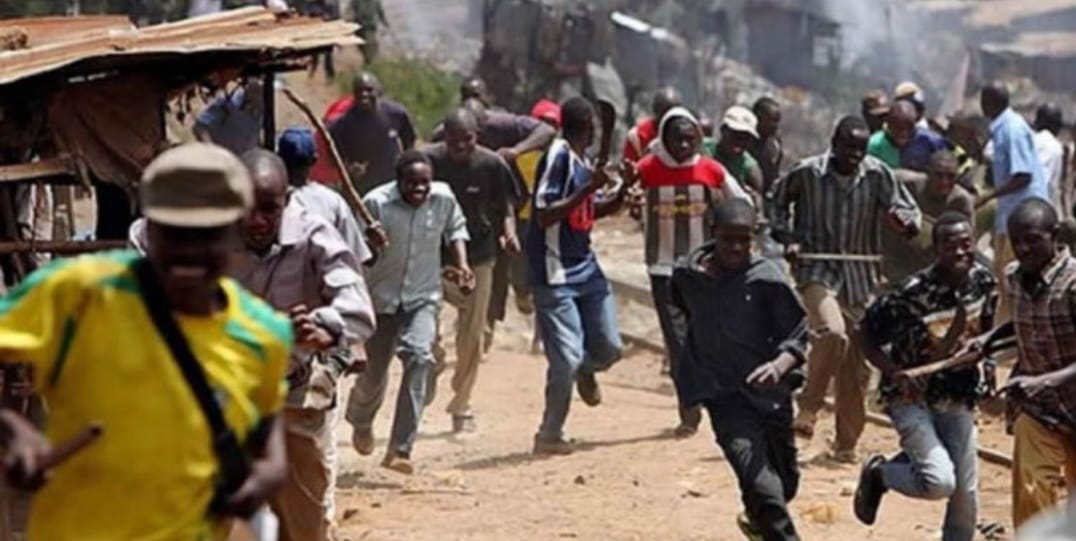
Warri (once billed as one of Nigeria’s great oil cities, home to refineries, petrochemical plants and a deep-water river port) has repeatedly been pushed to the brink. What should have been a modern hub of industry and prosperity instead became the theatre of chronic violence, displacement and economic sabotage. The Warri crisis is not an isolated outburst of tribal spite; it is the predictable, preventable implosion of governance in an oil-rich zone where the rules were rigged, revenues were coveted and local communities were left to fight for scraps.
The immediate flashpoint that detonated the late-1990s conflict was deceptively mundane: the relocation of a local government headquarters. In 1997 the federal government created new local government areas and moved the Warri South-West LGA headquarters from the Ijaw town of Ogbe-Ijoh to the Itsekiri community of Ogidigben. That decision (administrative on its face) was interpreted as a grab for oil rents and political access to state resources. The result was a low-intensity war that escalated quickly into pitched battles, revenge killings and the occupation of oil installations. The violence that followed underscored a simple truth: in the Niger Delta, control over territory is control over oil money.
This was not merely an ethnic feud. Human Rights Watch, after on-the-ground investigation, concluded the violence was “essentially a fight over the oil money” a concise but damning diagnosis. When institutions fail to distribute wealth transparently, social identities harden into combat brigades and youth militias. In Warri the principal actors included Itsekiri and Ijaw militias, with Urhobo groups drawn in at times; the conflict’s web of grievances ranged across land claims, political representation, community boundary disputes and the spoils of petroleum production.
The human toll was devastating. Reports from credible observers describe hundreds killed, thousands injured and mass displacement. Between the broader waves of violence across Delta State and the concentrated fighting in Warri, hundreds of thousands of people were driven from their homes. The Red Cross and humanitarian organizations documented scenes of shattered families, pillaged homes and a spiralling humanitarian crisis. For oil companies and the national economy the costs were also steep: pipelines were blown up, storage facilities seized and production slashed and losses that reverberated through export revenues and local livelihoods.
The economic dimension cannot be overstated. Warri was and remains, strategically vital: it hosts major refinery and storage infrastructure, petrochemical facilities and one of the region’s key ports. Disruptions there were not local problems, but they were national emergencies. During peak episodes of unrest companies such as Chevron and Shell reported dramatic drops in output as installations were attacked or abandoned, underlining how fragile Nigeria’s oil-dependent economy is when social cohesion unravels. The Warri disturbances therefore had direct macroeconomic consequences and exposed how local grievances can become national security risks.
Why did the crisis persist for so long? A combination of structural failure and opportunism. Colonial-era administrative boundaries and the later reorganization of native authorities created unequal access to power and resources; these historical distortions metastasized into contemporary grievance. Successive state and federal governments frequently reacted with ad hoc force rather than durable political solutions. Peace deals were negotiated, only to fray when accountability, resource sharing and local governance were not meaningfully addressed. International analysts warned time and again that quick fixes would not suffice and the violence demanded institutional reforms, investment in transparent revenue sharing and meaningful local empowerment.
There is an additional corrosive element: the rise of armed youth networks and criminal entrepreneurs who profited from pipeline vandalism, oil theft and the chaos itself. Where legitimate opportunity is absent, illegitimate economies thrive. The emergence of groups later associated with the Movement for the Emancipation of the Niger Delta (MEND) and other militias was partly a product of state neglect but also of cynical manipulation by political actors and shadowy economic interests. The result was a multi-layered conflict in which ethnicity, economics and criminality fed each other in a cycle of violence and impoverishment.
The consequences for ordinary people were predictable and brutal. Beyond deaths and displacements, the social fabric of communities frayed: schools closed, health services collapsed and markets ceased to function. Children lost years of schooling; breadwinners lost access to fishing and farming grounds as insecurity spread. The dream of Warri (a bustling oil city that would lift Delta State’s “Big Heart” into prosperity) was substituted with a daily scramble for survival, where the loudest voices were often those armed and paid by others agendas.
So what must be done to rebuild and reclaim Warri’s future? First, truth and accountability: the history of decisions that stoked the conflict (from dubious boundary changes to corrupt contracts) must be laid out honestly and remedied where possible. Second, transparent revenue-sharing mechanisms must be instituted and enforced so that oil wealth funds local development rather than patronage. Third, durable reconciliation processes are needed that go beyond ceasefires: land boundary disputes require independent adjudication, local governments must be empowered and traditional leaders and civil society should be central to peacebuilding. Lastly, economic regeneration must prioritize jobs, education and infrastructure so that youth have real alternatives to militia life. These are not fanciful prescriptions; they are pragmatic, evidence-based steps recommended by conflict analysts and development agencies.
There is an uncomfortable political truth: Warri’s collapse is a mirror reflecting national governance failures. When central and state authorities outsource order to security crackdowns without fixing underlying political grievances, each temporary “PEACE” simply stores up a deeper eruption. Nigeria cannot afford to treat its oil cities as policing problems alone; they are the seams where the nation’s social contract will either be reforged or finally tear. As one human rights observer summed up bluntly: when oil money becomes the axis of local power, democracy degrades into a rent-seeking scramble.
Warri can be rebuilt; but only if politics change. The Big Heart state of Delta must reclaim the narrative of its capital: investment, inclusion and the rule of law over guns, patronage and impunity. That means politicians need to accept uncomfortable compromises, companies must be accountable to communities rather than complicit in silence and civil society must be empowered to monitor and participate. The alternative is perpetual decline: an oil city that extracts wealth while exporting misery. That is a national scandal we can and must prevent.





COAS Launches Nationwide Security Renewal Mission in Plateau
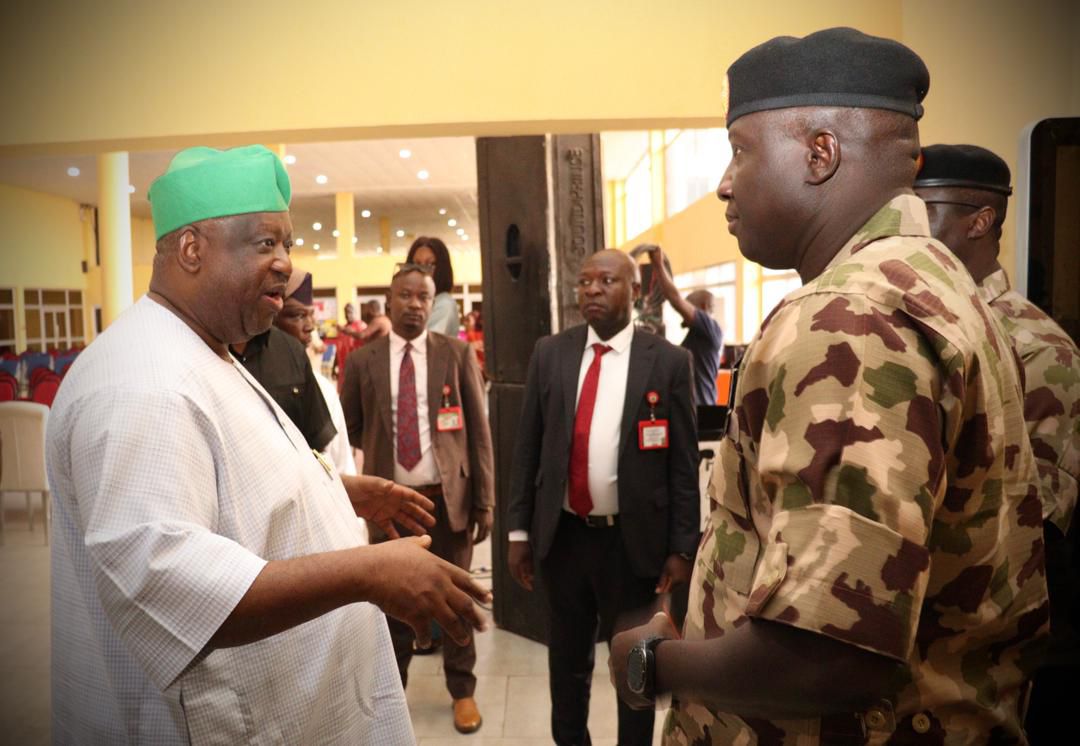
The Chief of Army Staff, Lieutenant General Waidi Shaibu, on Thursday led a high-level delegation of security chiefs to Plateau State, flagging off a nationwide security renewal mission aimed at strengthening civil-military cooperation and restoring lasting peace across the country.
The visit to Jos, the Plateau State capital, marks the first phase of a coordinated national effort to address persistent security challenges through joint operations, community engagement, and proactive intelligence gathering.

Governor Caleb Muftwang received the delegation, describing the initiative as a critical step toward stabilizing affected communities and reinforcing public confidence in security institutions.
Civil-Military Synergy Takes Centre Stage
At the heart of the mission is a renewed emphasis on collaboration between the military, civil authorities, and local communities. Speaking during the visit, Lt. Gen. Shaibu stressed that national security must be treated as a collective responsibility.
He urged citizens to support security agencies by remaining vigilant, sharing credible information, and complying with lawful directives, noting that effective security cannot be achieved in isolation.
Community Engagement as Confidence-Building Tool
In a departure from purely operational engagements, the Army Chief held direct consultations with community leaders and residents in Jos, reinforcing the importance of trust and dialogue in conflict resolution.
Lawmakers, including Dachung Bagos and Ladi Dangyok, commended the initiative, stating that visible engagement by top military leadership helps rebuild confidence among citizens and fosters cooperation.

Proactive Security Operations Underway
Operational updates were provided by Major General Folusho Oyinlola, who disclosed that troops under Operation Enduring Peace have intensified surveillance, intelligence-led patrols, and coordinated actions with other security agencies.
According to the Army, the approach is designed to prevent escalation of threats, safeguard lives and property, and stabilize vulnerable communities before crises emerge.
A Shift Toward Sustainable Peace
Military authorities emphasized that the Plateau visit is part of a broader, long-term strategy to transition from reactive responses to sustainable peacebuilding nationwide. The framework includes strengthening local resilience, ensuring justice, and maintaining continuous engagement with stakeholders.
Analysts view the initiative as a significant policy shift, reflecting a more inclusive security architecture that integrates community participation with military operations.
Call for National Unity
The Army leadership concluded with an appeal to Nigerians to reject divisive narratives and support ongoing efforts to promote unity and peace.
“The success of this mission depends not only on the armed forces but on the cooperation of every citizen,” the COAS stated.
The nationwide security renewal campaign is expected to extend to other regions in the coming weeks as authorities seek to consolidate gains and build a safer, more unified Nigeria.


IGP Disu Visits Plateau, Orders Tactical Deployment To Reinforce Security
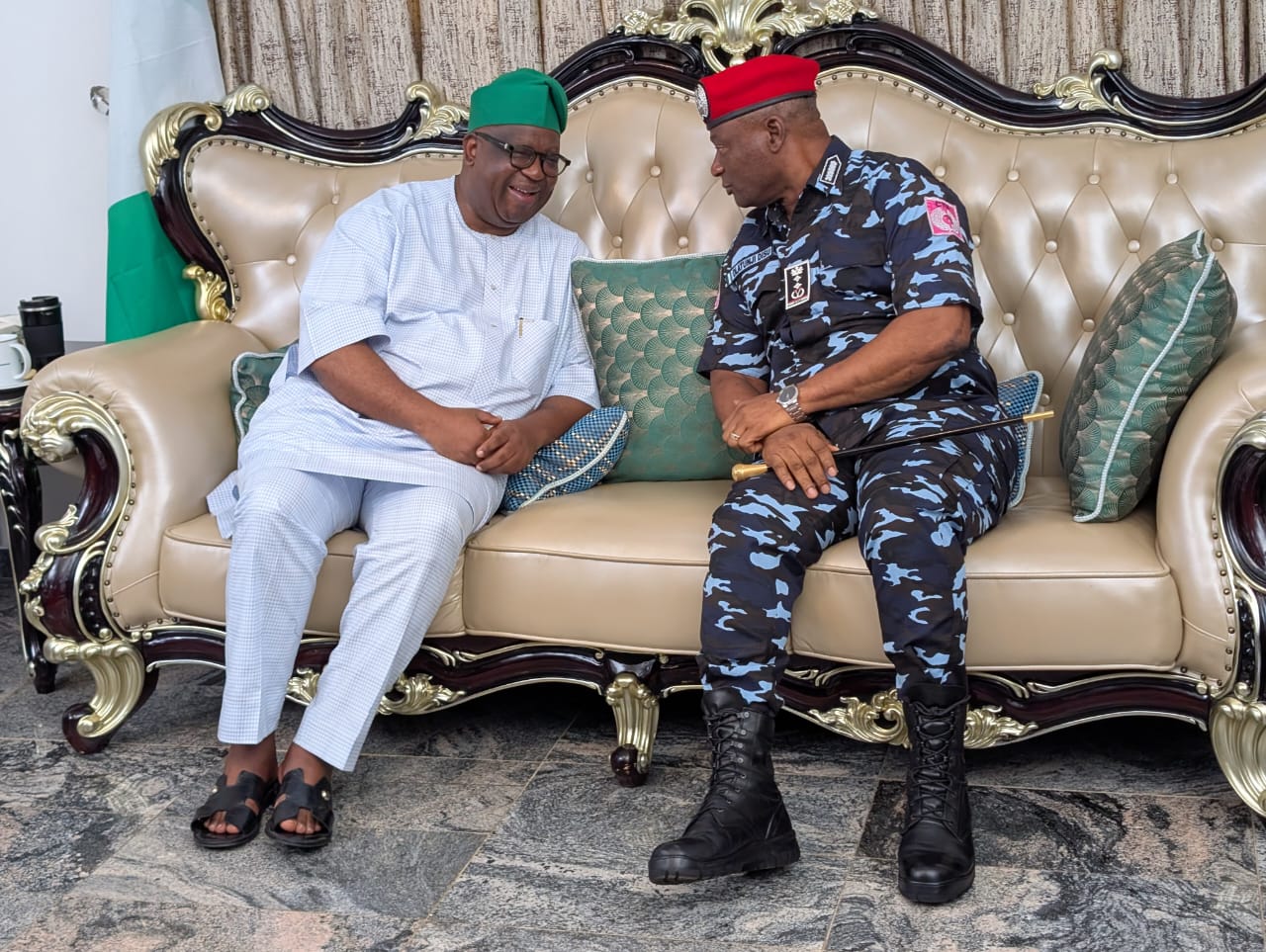
The Inspector General of Police, Olatunji Disu, on Thursday paid a working visit to Plateau State following recent unrest, holding strategic talks with Governor Caleb Muftwang on measures to strengthen security and prevent further disturbances.
As part of immediate steps to stabilise the situation, the police chief authorised the deployment of specialised tactical units to support officers already on ground across affected areas.
Governor Muftwang commended the swift intervention of the police leadership, praising the dedication and professionalism of security personnel working to restore calm. He also acknowledged the efforts of mobile police officers and lauded the leadership of the state’s Commissioner of Police, Bassey Ewah.
Both the Nigeria Police Force and the Plateau State Government reaffirmed their commitment to safeguarding lives and property, stressing that enhanced collaboration remains key to restoring lasting peace in Plateau State, popularly known as the Home of Peace and Tourism.


Grace Nation Worldwide: A Living Reality – Dr. Chris Okafor
……“Miracles, Healing, and Deliverance Overflow at Grace Nation Services”
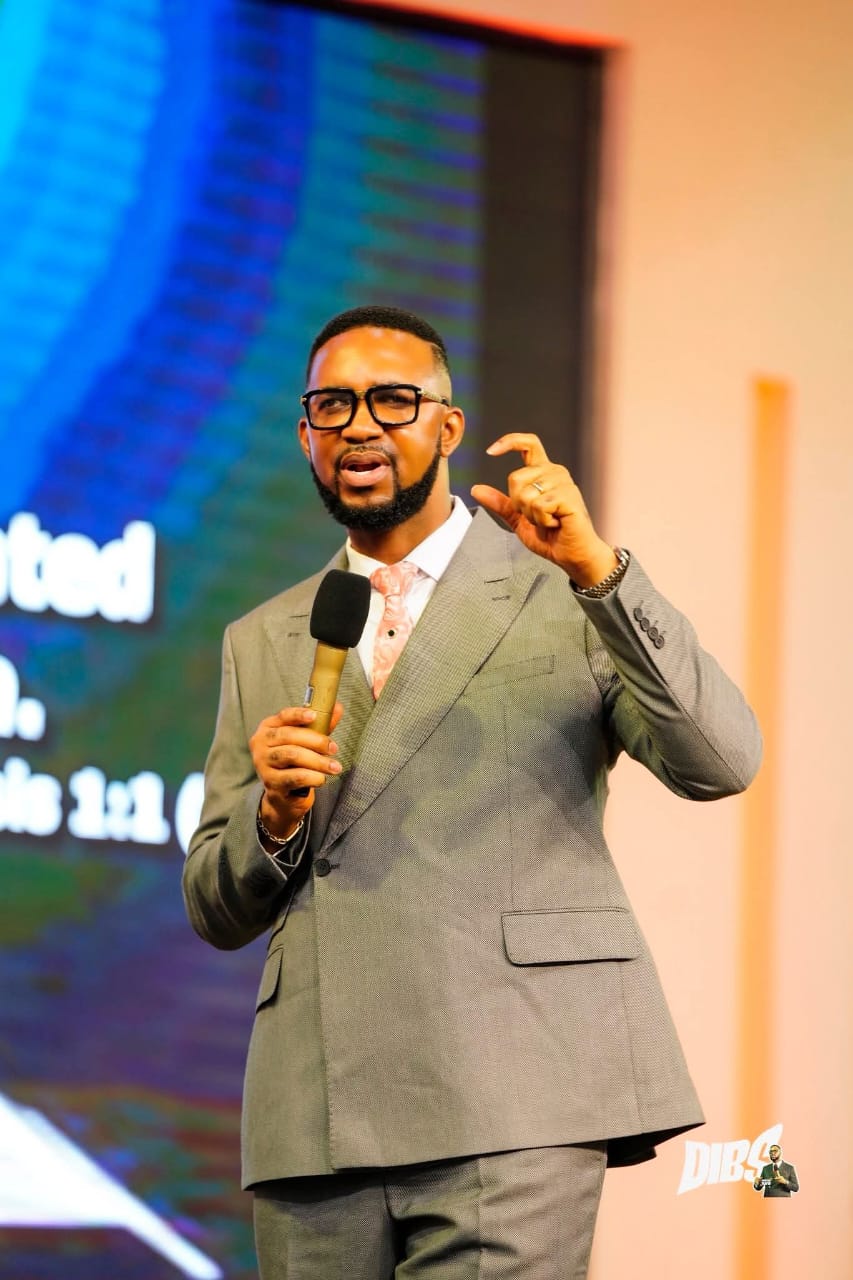
The Grace Nation midweek Prophetic Healing, Deliverance, and Solutions (PHDS) Service on 2nd April 2026 at the international headquarters in Ojodu Berger, Lagos, was a spectacular display of God’s power, marked by miracles, healing, and deliverance.
The God of Grace Nation continues to demonstrate His authority, breaking strongholds, healing the sick, restoring lost glory, and providing solutions to every problem presented at His altar.
Testimonies of God’s Power
One woman, previously diagnosed with a terminal condition and slated for a ₦4.5 million surgery due to inability to excrete, was prayed for by the Generational Prophet, Christopher Okafor, just a week after visiting the church. Declaring healing within 24 hours, she returned to testify to God’s miraculous intervention.
Another pregnant woman, whose baby was bridged and at risk, was located and prayed for. She returned to service with confirmation that her child is now well-positioned for delivery. Similarly, a woman booked for a C-section due to an overdue and poorly positioned pregnancy testified during the service that her baby is now properly positioned, ready for birth.
These testimonies underscore the truth: what God cannot do does not exist. Grace Nation has entered a new level of spiritual authority, and with faith, believers are witnessing the impossible become reality.
God Works by Principle, Not Gossip
In his sermon, Dr. Okafor emphasized that God does not operate on superstition, gossip, or social media pressures. His work is grounded in His Word, and it is through adherence to His principles that Grace Nation continues to flourish.
The Generational Prophet stressed that to enjoy divine blessings and fruitfulness, believers must remain connected to God’s Word, faithfully serve Him, and ignore distractions or side-talks. Focused commitment to God’s service guarantees alignment with His miraculous power.
Join the Movement
Grace Nation Worldwide is open for all who desire a life transformed by divine intervention. Weekly services include:
Sunday Service: 7:00 AM
Grace Nation Island Service (Ogombo): Wednesday, 5:00 PM
Midweek PHDS Service: Thursday, 7:00 AM
Attending these services under the ministry of the Generational Prophet ensures encounters with God’s supernatural power, life-changing miracles, and lasting breakthroughs.
Grace Nation Worldwide is not just a church—it is a reality where faith meets the supernatural.
By Sunday Adeyemi


-

 society6 months ago
Religion: Africa’s Oldest Weapon of Enslavement and the Forgotten Truth
-

 news4 months ago
WHO REALLY OWNS MONIEPOINT? The $290 Million Deal That Sold Nigeria’s Top Fintech to Foreign Interests
-

 society6 months ago
“You Are Never Without Help” – Pastor Gebhardt Berndt Inspires Hope Through Empower Church (Video)
-

 celebrity radar - gossips2 months ago
Dr. Chris Okafor Returns with Power and Fire of the Spirit -Mounts Grace Nation Altar with Fresh Anointing and Restoration Grace on February 1, 2026