
Politics
Oladejo Lamikanra, SAN, Sketches Policy Framework For President Tinubu On Effective Justice System

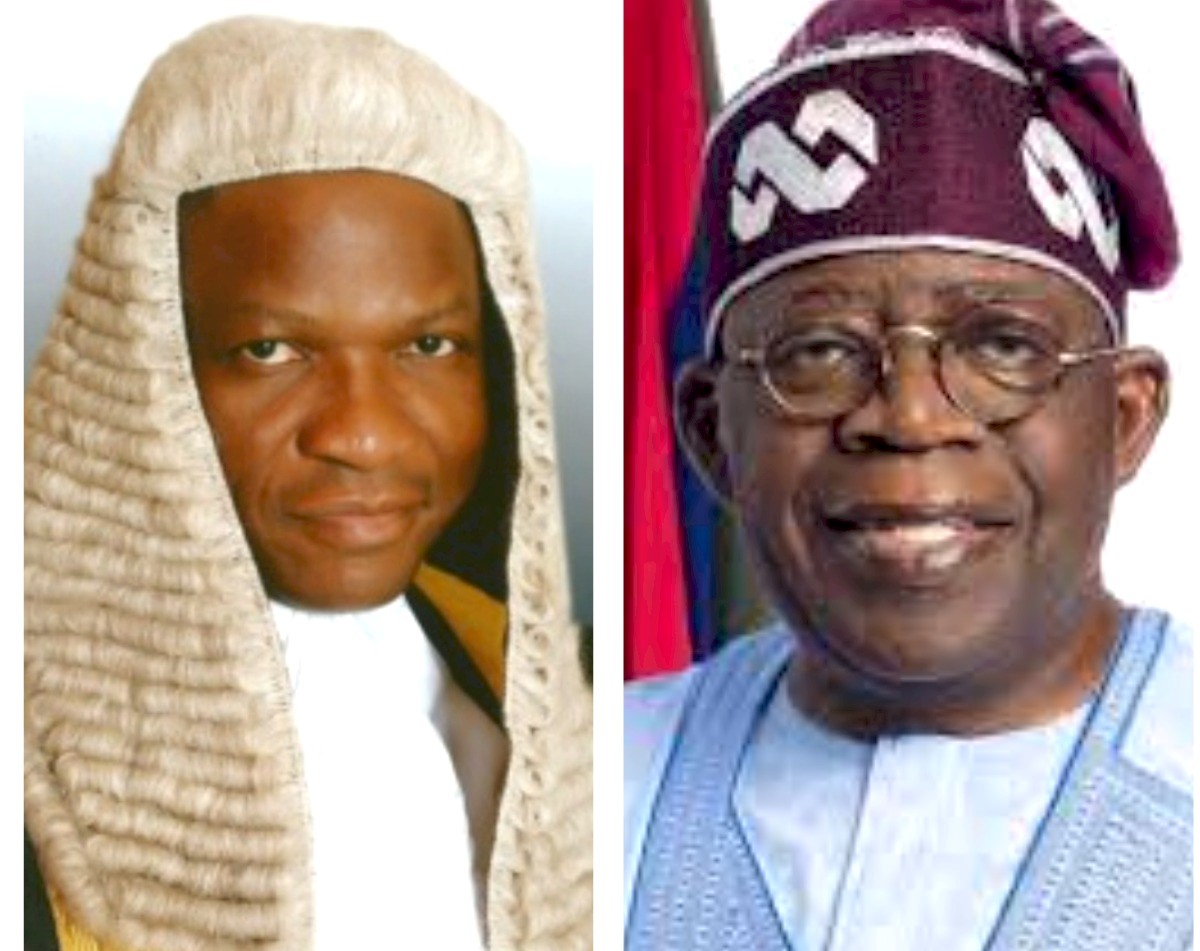
Oladejo Lamikanra, SAN, Sketches Policy Framework For President Tinubu On Effective Justice System
Given what many have described as broken criminal justice system in Nigeria, Oladejo Lamikanra, a leading Senior Advocate of Nigeria, SAN, has offered useful insights on effective justice system to President Asiwaju Bola Ahmed Tinubu who assumed office as President and Commander-in-Chief of the Armed Forces, Federal Republic of Nigeria on May 29, 2023.

Our reporters caught up with the legal eagle on the steps of Court of Appeal, Abuja.
Coming at a critical stage in the socio-economic and political fortunes of the most populous black country on earth, Oladejo Lamikanra is persuaded to offer suggestions to the Tinubu led administration in the interest of national growth, prosperity and confidence building.
He posits that the criminal justice system is, perhaps, the most important tool for the promotion of law and order in any functional society. He views effective justice system as a veritable tool for social engineering and rejuvenation.
To Lamikanra, an effective criminal justice system is one of the key pillars upon which the concept of the rule of law is built adding that it serves as a functional mechanism to redress grievances and bring violators of social norms to justice.
The SAN stressed that unless and until the courts system are equipped for efficient justice delivery and judges motivated and encouraged to perform at optimal level of output, the pursuit of encouraging business environment for investors would be difficult to achieve.
“Just last week, President Bola Ahmed Tinubu actively participated in a ‘Global Financing Pact,’ summit in France hosted by President Emmanuel Macron. He met and encouraged Nigerians and other investors to look at the direction of Nigeria under his watch for investment and enterprise. That is a good step. And that also informs the reasons I am persuaded to offer these sketches policy framework for effective justice system in a manner that would encourage citizens’ confidence and investors’ interests. Nigeria stands to harvest bountifully from those negotiations once our justice system is further strengthened,” Lamikanra stated.
He added that the current operational modes of correctional institutions should be reviewed to correct and reintegrate back into society and not to criminalise and incubate criminals.
The criminal Bar practitioners in Nigeria, according to Lamikanra, needs to conduct some reorientations as to how they could assist our courts to do better rather than being clogs in the wheel of speedy dispensation of justice.
“Our Police and law enforcement personnel could actually be collective force for good – if well motivated, educated and re-oriented to invest more in the Nigerian State and in our core values as a nation,” Lamikanra advised.
Significantly, the learned silk emphasises the roles of families and right parenting.
According to him, a cohesive nations invariably starts with a cohesive and functional family units across all cultures and tribe, pointing out that it is the Latinate tool for crime prevention and control.
With this conviction, the legal expert is of the view that for the Tinubu led federal government to succeed, the former Lagos State governor must re work the criminal justice system policy document which would reflect Nigeria’s unique social and diverse cultural orientations as well as define the institutional objective of the system in coherent and practical terms.
He noted that the administration should consider a framework for effective relationship between the components of the criminal justice system.
Notably, Lamikanra identifies near absence of case management strategy, overloaded and congested dockets, frivolous and useless actions that serve no purpose than to Easter the time of court and wear out judges, congest prisons, delay litigation and deteriorate standards of legal education in Nigeria.
He noted that a combination of these fundamental flaws and defects manifest at every processing point on the entire criminal justice system line that do not serve the current needs of the country.
In addition, Lamikanra explained that indiscriminate transfer of Police prosecutors could be partly responsible for incomplete investigations and delays to on going trials because of consequential and frequent adjournments.
He particularly pointed out what he describes as crippling, outdated and counterproductive style of policing, Correctional Services that has basically become warehouses for inhumane treatment of fellow human beings who could be reformed and reoriented to be useful to themselves and the society
Lamikanra advised Tinubu to ensure that necessary policies and legislation that facilitate fair trial are initiated and properly put in place. He emphasized that to restore investors and international community’s confidence, Tinubu needs to completely erase delays and other numerous defects in the country’s Criminal Justice system.
The Senior Advocate further pointed out that the Administration of Criminal Justice Act was signed into law in 2015 by former president Goodluck Jonathan to, among other things, reform the administration of criminal justice in federal courts across the country, needs to be strengthened through effective implementation and clause adjustments where necessary, adding that how well a country manages its criminal justice system affects its overall performance on the governance index.
“A country that gets its criminal justice system right has effectively addressed a quarter of its governance concerns because of the centrality of the criminal justice system to law, order and stability,” Lamikanra said .
He called for increased funding of the police and other prosecuting agencies and urged Tinubu to encourage compensatory and reconciliatory procedures in the criminal process adding that it would reduce the trial load in the court system and promote speed and efficiency.
Speaking on court, Lamikanra emphasized that the court system is the second most important component in a triangulated relationship of the criminal justice system involving laws, courts and enforcement agencies.
“It therefore becomes compelling to deploy adequate funding to courts,” he said.
Only recently, Oladejo Lamikanra, the experienced and highly respected SAN of the prestigious law firm-Creeks & Shield, Solicitors- led the argument that made a Federal High Court sitting in Yenagoa, Bayelsa State, to deliver a landmark judgment confirming the authority of the Nigerian Content Development and Monitoring Board (NCDMB) to collect the one percent Nigerian Content Development Fund (NCDF) levy from every contract awarded in the Nigerian oil and gas upstream transaction as mandated under section 104 of the Nigerian Oil and Gas Industry Content Development (NOGICD) Act.
Before then, Lamikanra led the Peoples Democratic Party, PDP counsel in the Abdullahi Liman’s judgment which settled all the contending issues concerning the PDP arising from the dissolution of the Ali Modu Sheriff-led national working committee and validating the convention that produced the caretaker committee , among other legal land marks.




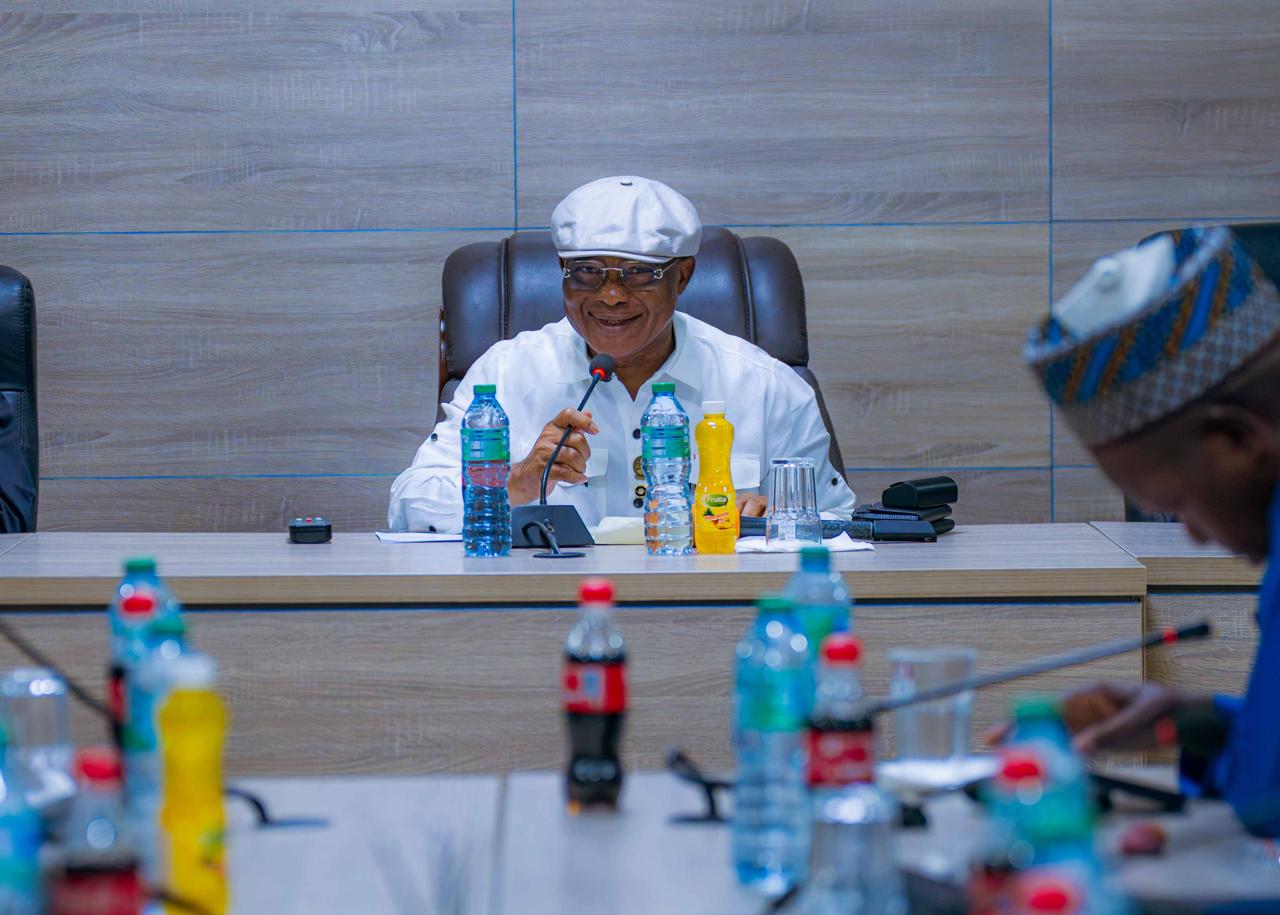
*Renewed Hope Ambassadors Step Into the Next Phase
Fresh from the successful APC 2026 National Convention, the Renewed Hope Ambassadors National, Zonal, and State leadership gathered in Abuja over the weekend, for its fourth strategic meeting, setting the tone for nationwide grassroots activation ahead of 2027.
Chaired by Governor Hope Uzodinma (Imo State) the Director General and National Coordinator of the Renewed Hope Ambassadors, alongside Deputy Director-General, Governor Uba Sani of Kaduna State, and Governor Inuwa Yahaya of Gombe State as Secretary, the session reinforced one clear direction: One Party. One Message. One Mobilization whilst also laying out a strategic roadmap for the activation of the network across all communities in Nigeria.
Backed by the strength of 31 APC-led states, the Renewed Hope Agenda is taking Bola Ahmed Tinubu’s message of progress and reform to every corner of Nigeria.
From bold economic restructuring to initiatives like NELFUND, the increase in the national minimum wage from ₦30,000 to ₦70,000, and strategic investments in critical sectors, including PNiCGI, the mission remains clear: helping Nigerians understand both the purpose and the progress of the Renewed Hope vision.
This is coordination at scale. This is grassroots engagement with purpose. This is the next phase of Renewed Hope with One Party, One Message, and One Mobilisation framework
#RenewedHopeAmbassadors #APC #WeAreAPC


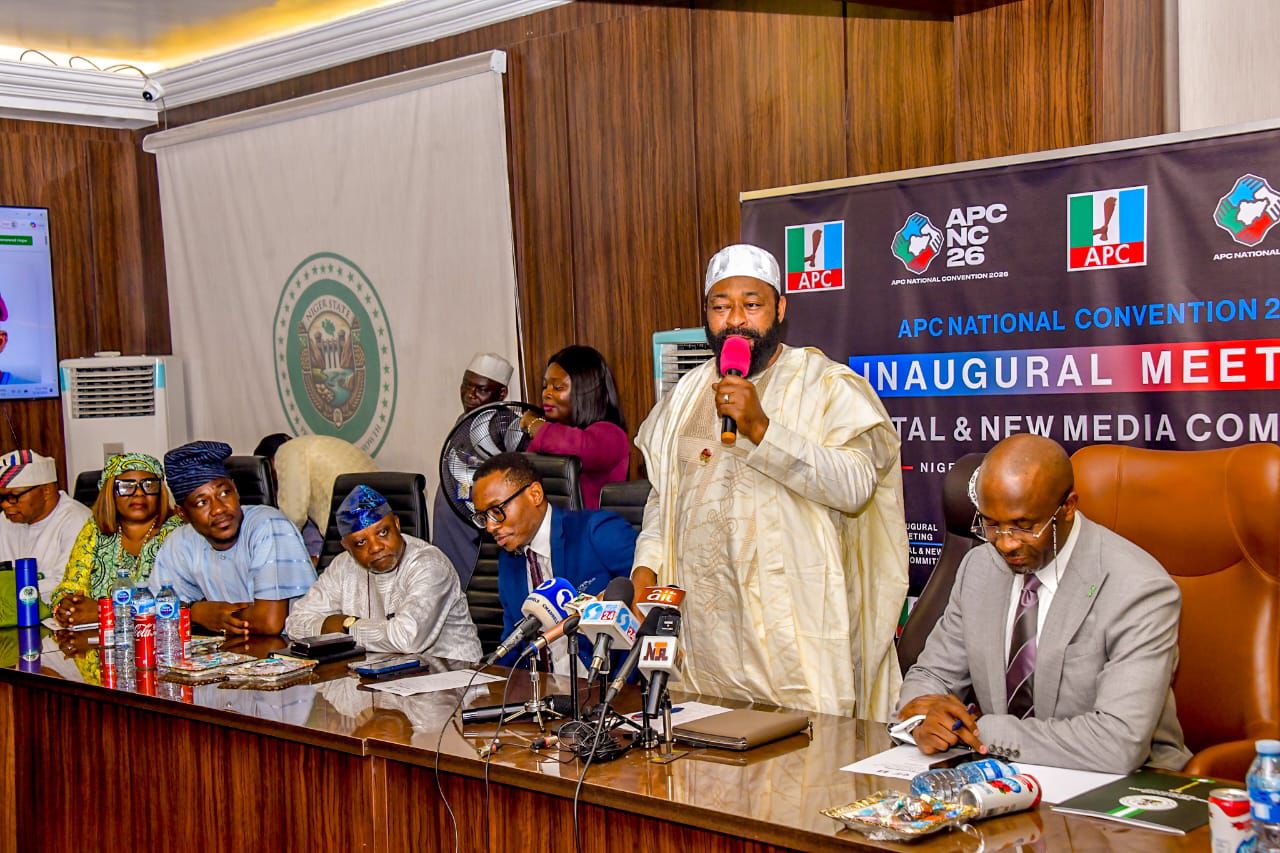
Governor Bago Inaugurates APC Digital Media Sub-Committee Ahead of National Convention.
Governor Umaru Bago has inaugurated the Digital Media Sub-Committee for the forthcoming National Convention of the All Progressives Congress (APC), scheduled to hold on March 27 and 28, 2026 in Abuja.
Chairing the sub-committee, Governor Bago tasked members with the responsibility of effectively communicating the party’s manifesto to the public.
He emphasized the need to leverage social media platforms to highlight the achievements and ongoing efforts of President Bola Ahmed Tinubu, noting that communication gaps have posed challenges that must now be decisively addressed.
The Co-Chair of the sub-committee, Hon. Benjamin Kalu, Deputy Speaker of the House of Representatives, echoed the Governor’s position, urging members to project the activities of both the party and the government to a broader audience.
He called for a deliberate and coordinated effort to showcase the party’s achievements and policy direction, stressing the importance of shaping a compelling and consistent narrative across all digital platforms.
Delivering a presentation to the committee, Otega Ogra, SSA to the President on New Media, who serves as Secretary of the sub-committee, outlined strategic focus areas to guide the team’s operations.
His presentation highlighted communication priorities and actionable steps to achieve the committee’s mandate and strengthen the party’s digital engagement.


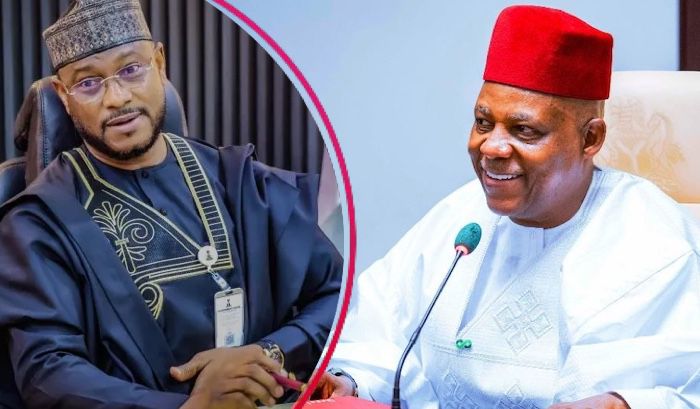
VP Shettima Set to Lead Delegation to Zamfara as Governor Dauda Lawal Formally Joins APC
The Zamfara State chapter of the All Progressives Congress (APC) has finalized plans to receive Vice President Kashim Shettima for the formal defection and reception of Governor Dauda Lawal into the ruling party, scheduled to take place on Tuesday.
State APC Chairman, Tukur Danfulani Maikatako, disclosed this during a high-level stakeholders’ meeting held in Gusau, the state capital. He noted that the Vice President would be joined by the party’s national leadership to mark what he described as a landmark political realignment in the state.
Maikatako expressed the party’s excitement over Governor Lawal’s return, recalling that Zamfara had historically been an APC stronghold and that the Governor was previously a bona fide member of the party before his earlier exit.
“We all know that Zamfara has long been one of the APC’s stronghold states, where the defected Governor was once a bona fide member. Now that he has decided to return home, having been satisfied that the APC remains his second choice after the one he left for obvious reasons,” Maikatako stated.
The Chairman called on all party faithful across the 147 wards in the state’s 14 local government areas to turn out en masse to honour the Vice President’s visit. He emphasized that the event was strategically positioned to bolster the party’s popularity and strengthen its structures ahead of the 2027 general elections.
In a strong appeal for unity, Maikatako urged members to set aside all factional tendencies, stressing that the APC remained one political family with shared goals, particularly the ambition to make Zamfara and Nigeria great again.
Echoing similar sentiments, a former state APC Chairman, Lawal M. Liman, appealed to members to cascade the message to their wards and local government areas. He reinforced the need for cohesion, noting that the party’s collective strength would be critical to achieving success in future elections.

All eyes are now on Gusau as the ruling party prepares for a high-profile political gathering expected to further consolidate its influence in Zamfara State.


-

 society6 months ago
Religion: Africa’s Oldest Weapon of Enslavement and the Forgotten Truth
-

 news4 months ago
WHO REALLY OWNS MONIEPOINT? The $290 Million Deal That Sold Nigeria’s Top Fintech to Foreign Interests
-

 society6 months ago
“You Are Never Without Help” – Pastor Gebhardt Berndt Inspires Hope Through Empower Church (Video)
-

 celebrity radar - gossips2 months ago
Dr. Chris Okafor Returns with Power and Fire of the Spirit -Mounts Grace Nation Altar with Fresh Anointing and Restoration Grace on February 1, 2026