
Business
OLATUNDE PASEDA : A POLITICAL TACTICIAN WITH A HEART OF GOLD

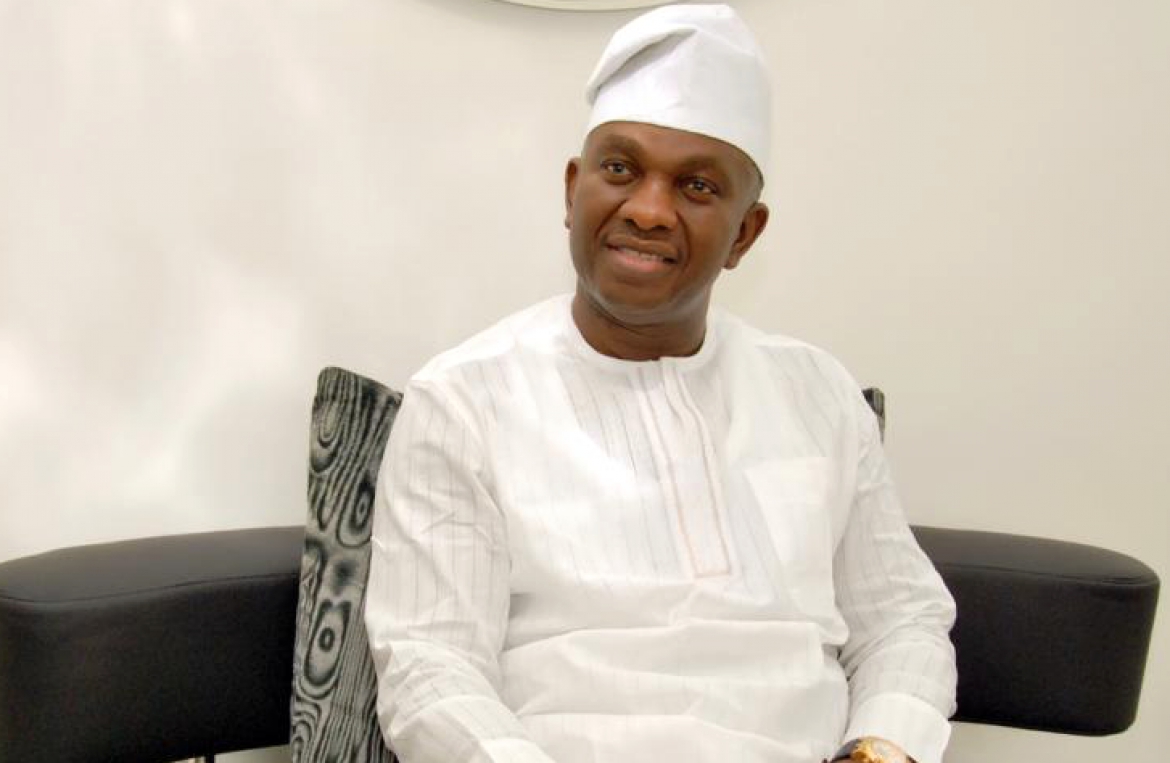

By Femi Salako(Triangle News Media)
So much value is attached to names in the Nigerian society because of the fact that whatever name we bear definitely has a defining role to play in our lives. Olatunde Rotimi Paseda is one individual who has continually enjoy the ample benefits of manifold presence of God. His name has also become a household name within and outside of Ogun state because of the major character traits that he shares with the late sage, Obafemi Awolowo.
Otunba Paseda as he fondly called by his supporters is clearly a blessing to Ogun state in view of his character traits that is firmly focused on providing for the needs of the vulnerable and giving back to the society that has produced him. His involvement in politics is premised on the quest to reenact the political ideals of Chief Obafemi Awolowo in the area of harnessing state resources to meet the critical needs of the masses. Otunba Paseda has proven his mettle in world of business outside the shores of Nigeria and has left no one in doubt that he can actually achieve the same success in politics if giving the opportunity.
He is the Elisha of our time that is on assignment to reignite the laudable achievements of Chief Obafemi Awolowo in Ogun state in particular and the South Western part of Nigeria at large.
Olatunde Paseda is a successful business man with entrenched interest in the United Kingdom where he has done very well for himself and family. The Omu man has successfully established engineering firms in the UK with business interests in the fabrication and building of heavy machinery; manufacturing of water tankers, fire engines, garbage/compacting trucks and the likes. Political interest of Paseda has largely been awakened by his conviction that he could conveniently leverage on his business successes in the United Kingdom to develop the people of Ogun state, the state itself and Nigeria as a nation.
Ogun state is very lucky to have a man like Olatunde Paseda who is conscious of the world of difference between a political leader and the followers; yet he has sufficiently bridged such gaps. The consciousness of this difference has always inform the image, actions, and communication mode of Otunba Paseda. The fabrication giant carries himself with an aura that never suggests that he is in anyway better than his followers; but will always elect to have an objective perspectives on wide range of issues bothering on his domain.
Rotimi Paseda sure has a gentle mien but posses a tough character traits. This has often than not helped him to take tough decisions whenever the need arises. He is never unmindful of the fact that difficult and timely decisions need be taken in certain situations if the the best interests of state and party are to be given premium consideration. Decisions of this nature are not always expected to go down well with everyone, but he had always effect them with the required firmness, authority, and finality. Olatunde Rotimi Paseda is never given to taking unilaterally decisions; rather he has made himself an advocate of collaborative decision making process that would bring about party cohesion and positive developments.
Paseda is also a model of empathy who always look out for solutions to the challenges being faced by his people. He takes it upon himself to look inward in providing pragmatic solutions to whatever problem that is encountered by any of his followers with a firm focus on forward movement.
Rotimi Paseda has proven himself as a leader who has earned the trust of his followers. He would always do a personal follow-up on all outstanding issues, pay personal visits to his supporters, and make it a point of duty to monitor the effectiveness of party policies and procedures. Paseda will never hesitate to commend party members that are worthy of commendations while reprimands would also not be spared for those that fall short of acceptable set standard of conduct for party members. Paseda is a distinct leader that would promptly identify any problem before it becomes an emergency and would not waste time to proffer effective solution.
Olatunde Paseda has established himself as a political leader who is confidence inspiring. He is also a fountain of good counsels who has helped in a great deal to shape and better the lives of so many of his supporters. He is a model of a resolute mind that will stand firm to fight for and champion all worthy causes for his followers.
Olatunde Rotimi Paseda radiates positive energy and communicates this through his thoughts and deeds. He is no doubt a man with an heart of gold and in whose veins kindness flows. This explains why he always feels genuinely concerned for other people’s welfare. Paseda is never short of practical solutions to issues and words of reassurances that edify the souls of his party members. He is a team player who abhors pessimistic thoughts that are capable of dampening the highly effective unity of purpose spirits of his supporters.
Olatunde Rotimi Paseda is one of the very few politicians around that cherishes ethical practices and believes that only diligence, reliability and honesty are the bedrock of a lasting success. He so much personifies these high moral values to a point of emulation that his integrity has never been in doubt. He would not hesitate to openly share information and avoid spin control.
ORP has no doubt proven himself as a leader that motivates followers to best performance through effective, clear and concise communication. He throws up subtle challenges to those around him by setting high and yet attainable standards for them. He would follow it up by providing the much needed support, exposure, training and latitude for the pursuance of visions, so as to attain the very height that one can possibly climb.
The 2015 gubernatorial candidate of the Unity Party of Nigeria has not giving up on his dreams and visions to effect a total turn around in the body polity of Ogun state.
He still remains a strong advocate of job creation for millions of Nigerians that need a means of survival. Paseda remains unpleased with the fact that the nation in general and Ogun state in particular are yet to unleash the potentials of the youthful generation in view of the available manpower.
Olatunde Paseda is still very much itching to effect a change that will usher in an era of innovative governance, people-oriented programmes and an all inclusive government that will be based on the tested principles of the old Unity Party of Nigeria founded by the late sage, Chief Obafemi Awolowo for a guaranteed future in Ogun state.
ORP still finds the prevailing incremental development in Ogun state very much unacceptable. He believes the only and best way to go for the state is to join the league of state like neighbouring Lagos state and take the full advantage of total development which is bound to usher prosperity into the state. In the words of Olatunde Paseda, “Yes, some can argue that there are pockets of developmental projects scattered here and there in Ogun state under the present administration, but most of these developments are obviously not people-oriented and did not benefit everyone”.
The grassroot mobilizer still take exception to the prevailing governance style in Ogun state that is deliberately crafted to favour few privileged ones at expense of the larger population. Paseda still remains convinced that free education from nursery to tertiary level for all Ogun State students is achievable under the Unity Party of Nigeria. He also has his sight on provision of free health services and facilitation of integrated rural and community development in Ogun State. The Omu political tactician once lamented the health and educational states of Ogun thus: “Our tertiary institutions remain grossly underfunded and tuition fee is out of reach for majority of Ogun State students”.
Olatunde Rotimi Paseda equally remains committed to the creation of full and sustainable employment opportunities for the people of Ogun state. He is of the opinion that free education and free healthcare are no rocket science as some detractors would want to believe. According to him, “I’ve said it on different fora that achieving this is as simple as intelligent budget manipulation”.





Fidelity Bank grows gross earnings by 38% to N434.95b in Q1
Fidelity Bank Plc recorded 37.9 per cent growth in gross earnings to N434.95 billion in first quarter 2026 as the international commercial bank continued to expand its core banking market share.
Interim report and accounts of Fidelity Bank for the three months ended March 31, 2026 released at the Nigerian Exchange (NGX) showed that gross earnings rose from N315.42 billion in first quarter 20025 to N434.95 billion in first quarter 2026, representing an increase of 37.9 per cent.
The top-line performance was driven by impressive growth in the bank’s core business operations with interest incomes rising by 22.8 per cent to N314.48 billion in first quarter 2026 as against N256.10 billion in first quarter 2025.
With net interest income at N180.97 billion, the bank closed the period with profit before tax of N92.48 billion. After taxes, net profit stood at N74.47 billion for the three-month period. Earnings per share remained high at N5.69, underlining the capacity of the bank to reward its shareholders.
The balance sheet of the bank also emerged stronger. Total assets crossed the N11 trillion mark to N11.35 trillion by March 2026 compared with N10.46 trillion recorded in December 2025. Customers’ deposits increased from N6.89 trillion to N7.38 trillion. Total equity rode on the back of earnings growth to a 27.5 per cent increase from N1.09 trillion in December 2025 to N1.39 trillion by March 2026.
The first quarter 2026 results further consolidated the strong earnings outlook of the bank, which had successfully completed its recapitalisation amidst impressive earnings performance in 2025.
Fidelity Bank had recorded double-digit growths in interest and non-interest incomes as well as key balance sheet items during the year ended December 31, 2025.
The audited report showed that gross earnings rose from N1.04 trillion in 2024 to N1.52 trillion in 2025, an increase of 45.6 per cent. Interest and similar incomes had grown by 38.7 per cent from N803.1 billion in 2024 to N1.11 trillion in 2025. Fees and commission incomes also rose by 44.7 per cent from N78.4 billion to N113.4 billion. The bank recorded net profit after tax of N242.4 billion in 2025.
The bank’s balance sheet emerged stronger with total assets rising by 18.6 per cent to N10.46 trillion in 2025 as against N8.82 trillion in 2024. Customer deposits increased by 16.1 per cent from N5.94 trillion to N6.89 trillion, reflecting continued franchise strength and an improved funding profile. Net loans and advances meanwhile declined by 2.4 per cent to N4.28 trillion in 2025 as against N4.39 trillion in 2024, attributable to customers paying down on their mature obligations.
The bank had in 2025 strengthened its capital position, with eligible capital rising to N561 billion, above the regulatory minimum of N500 billion for banks with international authorisation. In addition, capital adequacy had remained robust, with Capital Adequacy Ratio of 30.94 per cent by December 2025 as against 23.47 per cent by December 2024.
Managing Director, Fidelity Bank Plc, Dr. Nneka Onyeali-Ikpe, said the first quarter 2026 results reinforced the bank’s strong and resilient business model.
She noted that with the remarkable success of its recapitalisation programme and continuing expansion, Fidelity Bank has entered a new era of growth and impressive returns.
“We are on a stronger footing and confident that we will set new growth records that are reflective of our legacy and the future we are working on,” Onyeali-Ikpe said.
Business
Dangote Refinery Ends Nigeria’s Era of Fuel Import Dependence, Boosts GDP, FX Earnings — EIU
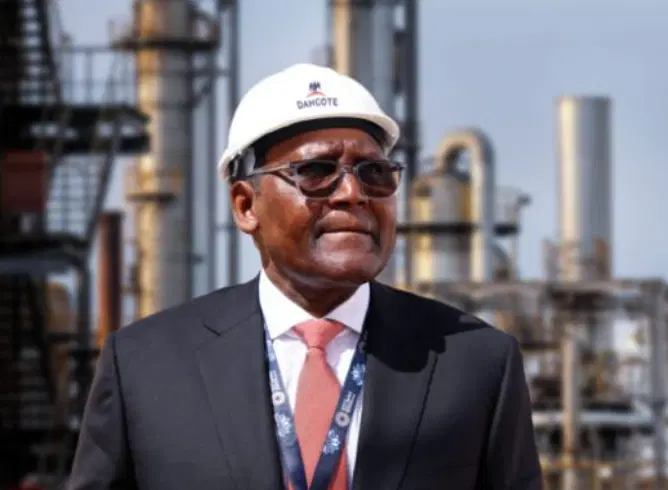
Dangote Refinery Ends Nigeria’s Era of Fuel Import Dependence, Boosts GDP, FX Earnings — EIU
The operational ramp up of the 650,000 barrels per day Dangote Petroleum Refinery & Petrochemicals is fundamentally reshaping Nigeria’s downstream oil sector, significantly reducing the country’s dependence on imported refined petroleum products and strengthening its external position, according to the Economist Intelligence Unit (EIU).
In its latest assessment on Nigeria’s fuel market and regulatory environment, the EIU said the refinery has already transformed a sector that was previously characterised by heavy reliance on imported fuel despite Nigeria being Africa’s largest crude oil producer. The report noted that the refinery met nearly 80 per cent of domestic petrol demand in April and produced enough volumes to satisfy local consumption requirements as operations approached full capacity.
The EIU described Nigeria’s downstream petroleum sector before the refinery as “long dysfunctional”, noting that the country had remained almost entirely dependent on costly imported fuel while producing nearly 1.5 million barrels of crude oil daily.
According to the report, the emergence of the refinery has reduced import dependence, improved domestic fuel availability and strengthened Nigeria’s balance of payments position through lower import demand and rising exports of refined petroleum products.
“The gradual ramp up of the 650,000 barrel/day Dangote refinery since May 2023 has transformed Nigeria’s long dysfunctional downstream sector,” the report stated. “The country’s main refineries, all state owned, had been inoperative for years and Nigeria was almost entirely reliant on costly imported fuel.”
The research and analysis division of The Economist Group, London added that the refinery’s attainment of full operational capacity and its planned expansion would further support Nigeria’s economic growth and foreign exchange earnings over the medium term.
“Meanwhile, the attainment of full capacity at, and an increase in exports from, the Dangote refinery will support real GDP growth and foreign exchange earnings in 2026 and 2027 and beyond, as a planned doubling of the plant’s output comes on stream around the end of the decade,” it added.
Industry analysts said the refinery is increasingly positioning Nigeria as an emerging refining and export hub, altering energy trade flows across Africa and reducing the vulnerability associated with fuel import dependence.
The EIU noted that the refinery’s expansion has coincided with major reforms in Nigeria’s downstream sector, including the removal of fuel subsidies and the introduction of market driven pricing mechanisms.
The report, however, said the transition from a state dominated fuel import structure to large scale domestic refining has triggered resistance from interests linked to the old import regime.
The latest tensions emerged following the decision by the Nigerian Midstream and Downstream Petroleum Regulatory Authority to relax restrictions on petrol imports despite the refinery’s growing capacity to meet domestic demand.
Dangote Industries subsequently initiated legal action, arguing that continued import approvals undermine domestic refining investments and conflict with the objectives of the Petroleum Industry Act, which seeks to encourage local refining capacity and reduce import dependence.
Analysts noted that the availability of large-scale domestic refining capacity has improved Nigeria’s energy security and reduced exposure to external supply shocks and foreign exchange volatility.
The Centre for the Promotion of Private Enterprise also cautioned against unrestrained importation of petroleum products, warning that such a policy could weaken Nigeria’s industrialisation drive and discourage investments in domestic refining.
Chief Executive Officer of CPPE, Muda Yusuf, said continued dependence on imported fuel had historically contributed to pressure on foreign reserves, exchange rate instability and fiscal leakages.
The refinery’s growing impact is also being reflected in Nigeria’s broader macroeconomic indicators. Earlier this month, S&P Global Ratings cited increased domestic refining capacity and rising hydrocarbon exports among the major factors supporting Nigeria’s sovereign credit rating upgrade – the first in 14 years.
Beyond Nigeria, analysts said the refinery is increasingly being viewed as a strategic industrial asset for Africa, where many countries remain heavily dependent on imported fuel despite rising demand for transportation, manufacturing, and power generation.
Business
BREAKING: Court Dismisses $19.6 Million Claim Against NNPCL — Rules Contract Scope Cannot Be Changed Orally
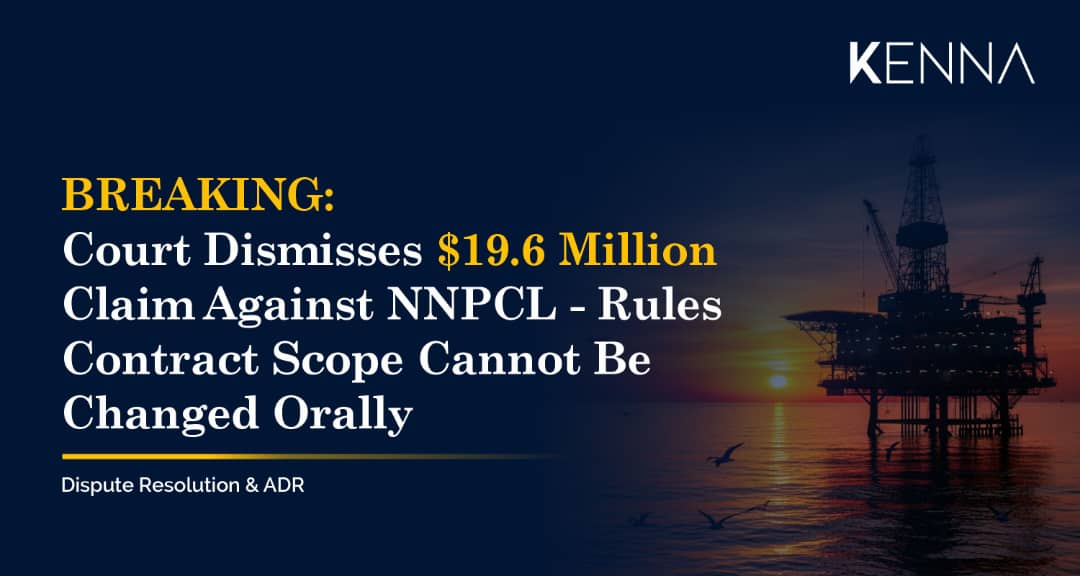
BREAKING: Court Dismisses $19.6 Million Claim Against NNPCL — Rules Contract Scope Cannot Be Changed Orally
In a landmark ruling on Friday, May 22, 2026, the Federal Capital Territory High Court in Abuja threw out a $19.6 million lawsuit filed by Alternate Dimensions Ventures Ltd against the Nigerian National Petroleum Company Limited (NNPCL), affirming a key legal principle: a written contract cannot be expanded through oral agreements or conduct.
Alternate Dimensions had sought $19,600,000 in professional fees, claiming the scope of its Direct Sale, Direct Purchase (DSDP e-pro) contract with NNPCL was orally expanded. Represented by counsel Patrick Peter, the firm argued it was entitled to the revised sum for services rendered under the alleged new terms.
But NNPCL, through its lawyer Ituah Imhanze of KENNA LP, pushed back sharply, arguing that parties are bound exclusively by the clear terms of their written agreement. Imhanze contended that without any written amendment, the claim was legally unsound, and the court agreed.
Delivering judgment, Justice Hamza Mu’azu upheld NNPCL’s defense, stating that the contract was unambiguous and that no evidence was adduced during the trial, which supported the alleged scope expansion. The court further found that NNPCL fully complied with all contractual terms and committed no breach.
Dismissing the suit as meritless, Justice Mu’azu reinforced the doctrine of sanctity of contract: any amendment to a written agreement must be express, unequivocal, and documented, not implied or verbal.
The ruling spares NNPCL from the S19.6 million claim and also a floodgate of similar potential liabilities.


- CANAL+ lists on the Johannesburg Stock Exchange (JSE), strengthening the Group’s dual-continental approach and reinforcing South Africa’s (SA) role as a gateway to global capital and African growth June 3, 2026
- African Mining Week (AMW) Country Focus to Spotlight Liberia’s Iron Ore, Gold and Critical Minerals Prospects June 3, 2026
- Venezuela to Host Its Largest-Ever International Energy Investment Summit June 3, 2026
- Canada–Africa Business Conference Preparations Advance Following Canadian Secretary of State’s High-Level Visit to Nigeria June 3, 2026
- Uganda: Parliament concludes vetting of ministers June 2, 2026
- Fund for Export Development in Africa (FEDA) Board Appoints Mr. Emmanuel Assiak as Chief Executive Officer June 2, 2026
- Ecobank Group Launches World First Nature Bond Mobilising Global Capital to Protect Africa’s Natural Ecosystems June 2, 2026
- Merck Foundation Chief Executive Officer (CEO) Dr. Rasha Kelej together with Kenya First Lady support the education of 47 Kenyan Schoolgirls by providing Annual Scholarships till they Graduate June 2, 2026
- Annual Meetings 2026: Governors Back the Bank’s Platform Solutions to Transform Aviation and Health Systems in Africa June 2, 2026
- ThinkMarkets launches ChelseaAI, bringing live CFD trading into Artificial Intelligence (AI) assistants June 2, 2026
- CANAL+ lists on the Johannesburg Stock Exchange (JSE), strengthening the Group’s dual-continental approach and reinforcing South Africa’s (SA) role as a gateway to global capital and African growth June 3, 2026
- African Mining Week (AMW) Country Focus to Spotlight Liberia’s Iron Ore, Gold and Critical Minerals Prospects June 3, 2026
- Venezuela to Host Its Largest-Ever International Energy Investment Summit June 3, 2026
- Canada–Africa Business Conference Preparations Advance Following Canadian Secretary of State’s High-Level Visit to Nigeria June 3, 2026
- Uganda: Parliament concludes vetting of ministers June 2, 2026
- Fund for Export Development in Africa (FEDA) Board Appoints Mr. Emmanuel Assiak as Chief Executive Officer June 2, 2026
- Ecobank Group Launches World First Nature Bond Mobilising Global Capital to Protect Africa’s Natural Ecosystems June 2, 2026
-

 news6 months ago
WHO REALLY OWNS MONIEPOINT? The $290 Million Deal That Sold Nigeria’s Top Fintech to Foreign Interests
-

 society1 month ago
SOCIAL MEDIA IS NOT A BATTLEFIELD COMMAND – WHY THE NIGERIAN ARMY’S ACTION AGAINST JUSTICE CRACK IS A NATIONAL SECURITY IMPERATIVE
-

 celebrity radar - gossips4 months ago
Dr. Chris Okafor Returns with Power and Fire of the Spirit -Mounts Grace Nation Altar with Fresh Anointing and Restoration Grace on February 1, 2026
-

 celebrity radar - gossips6 months ago
Prophet Kingsley Aitafo Releases 2026 Prophecy: ‘Nigeria Will Rise, but the World Must Prepare for Turbulence’
You must be logged in to post a comment Login
You must log in to post a comment.