
celebrity radar - gossips
Open Letter : How Laolu Akande, VP Osinbajo’s SA Duped Us”-Dele Momodu


My dear Pastor Laolu, let me start by saying I wonder what people eat or drink inside the Aso Rock Villa that makes some of those of your ilk, who we once admired, misbehave the way you did last night. I’ve known you for over two decades as a young, brilliant, respectful and likeable character and a dutiful, urbane journalist. And my affection for you and your good friends, including Adeolu Akande, Wale Adebanwi, Bode Opeseitan, and others, has never waned. When you travelled to America, your spirited journalistic work continued as you churned out good reports, especially in The Guardian newspaper of Nigeria. Anytime I was in the New York area or, indeed, any part of the United States, I kept in touch with you and your dear wife, as regularly as possible. We became a family.
About nine years ago, I called you from Maryland, USA, and told you I was attending the Nigerian Reunion Meet, an annual and biggest gathering of Nigerian youths in the US at any single event, at that time. You said you would like to meet me, and I was quite elated, as I have always been. When you came, we sat down over breakfast and you expressed the difficulties and vagaries of life you faced in America, and I said I understood perfectly well. I had faced similar experience in the United Kingdom during my exile years. So, we were partners-in-suffering. I told you that was why Ovation International was for me a matter of life and death.
On that visit, you expressed interest in becoming the North American Bureau Chief for Ovation International and I was glad to accept your proposal. I told our Editor to liaise with you and I moved on to deal with other issues. You got some events for coverage which we published in the magazine. At some point the Editor complained about the way you handled transactions and so on, but you and I never saw each other again after the day we met, till you got your appointment and returned to Nigeria as the Vice President, Prof Yemi Osinbajo’s spokesman. You never handed over to us at Ovation till this day. You simply abandoned a company that provided some modest income for you in America. But we never complained and made excuses for you that this was probably occasioned by the exigencies and circumstances of your appointment. On your return home, there was never the courtesy of “E ku ile…” I’m back home to any of us. Nevertheless, we were happy when your good news reached us.
We met for the first time, after your appointment, at the funeral service for Mama, Chief Mrs Hannah Idowu Dideolu Awolowo, and I told you how unfortunate it was for you to be greeting me for the first time since your return to Nigeria. How would you have felt if someone treated you the way you treated us? No worries, I forgave your shortcomings, since none his perfect
I have a policy of maintaining some distance from friends in power and accept whatever God has for me in other areas. I had volunteered and supported Major General Muhammadu Buhari in 2015, without being a member of APC. I campaigned to the best of my abilities without expecting anything in return but good governance. I am bemused whenever it is suggested that I have any ulterior motives in this regard. Let me tell you that if I set my heart on it, I would be offered government position of choice, but I prefer my independence and the opportunity to speak with candour even if what I say may be unpleasant to those I am addressing, at that moment.
Very early in the life of the government, I noticed and noted that many things were going wrong and that we were working against the promises we made prior to the elections. I promptly wrote a memo to the President and was pleasantly surprised when I got an invitation to meet President Muhammadu Buhari. It remains a singular honour and privilege for me as I have a high personal regard and esteem for the President, even if I no longer agree with some of his politics and policies. I was alone with the President for enough time and the camaraderie between us was palpable. Many people, including Ministers, still wonder and ask how I got the President to relax and smile so much. I didn’t go to him for personal reasons but simply took the opportunity to tell him what the people of Nigeria expected of his government, the mistakes the Jonathan government made, and the need to learn from lessons of the past. The President seemed happy that someone was saying it as it should be. I never made any personal request since that was not my mission.
However, things went from bad to worse. Many started lamenting and complaining, including the wife of the President, Mrs Aisha Buhari. What made matters worse was the ill-health of the President, but the Vice President, Prof Osinbajo worked assiduously, smartly and loyally, to ensure the government began to give prominence to those matters which had won victory for APC and the Presidential team, for which the Vice President was commended by so many people, including me.
Thereafter, when the President returned and things appeared to slide back to the inglorious state that they were before he left, I wrote several letters to the President offering my 10 kobo advice and still continued to report his activities “formally.” Even long after I gave up on his government ever changing its fumbling and wobbly style, I continued to fulfil all righteousness. I must note that my criticism of the Buhari administration never elicited insults directly from Femi Adesina and Garba Shehu, both of who are highly respected and admired professionals, except that some overzealous people who felt the job of journalists is to praise leaders and governments, endlessly did so on their behalf, but without their knowledge at times.
On February 3, 2019, I had sent you a message of congratulations on the miracle of the Vice President and his entire team surviving the helicopter crash and suggested all of you should please see Doctors and you thanked me. “May God continue to protect you and Oga and all as you travel around. That was really shocking…” I prayed. Nothing else was expected of reasonable human beings particularly as I consider the Vice President a dear brother that I will continue to respect.
I have gone through this long preamble to prepare the ground for the shock and shocker I got from you last night. The next time I heard from you was on March 13, 2019, when you said you needed a “right of reply” to the Pendulum column I wrote last week, which was an open letter to your boss, the Vice President, a gentleman that I will continue to hold in high esteem and admiration, no matter the provocation from people like you. I instantly agreed to release that page, as is not only my personal approach, but also the Thisday tradition. I even messaged you, “Pls let me know if you need the entire space…” and you responded “Bob Dee Baba, I told them you will never block a right of reply…even if you give out the whole page. Will revert.” I immediately alerted the Editor, Yemi Adebowale, that Laolu Akande has requested for my page this week, and we both agreed that it should be given to you to respond as you wished. It was obvious from your message that there were some hawks and hounds baying for my blood, but such is life.
Pastor Laolu, as a journalist, I knew you should know about deadlines and respect it. I told you to, please, let us have your rejoinder on Thursday, March 14, 2019, and you said yes, in writing, but you never did. So, I went ahead to write a tribute to our departed colleague, Professor Pius Adesanmi. But, suddenly, you resurfaced at 15:47pm on Friday, March 15, 2019, in one word, “sent,” no apologies, just like that. Still, I immediately checked my mail but did not find your rejoinder. I called and you then sent a WhatsApp version, which I read. I always send virtually everything I write and any rejoinders to my good friend and Lawyer, Prince Adedamola Aderemi, and the only sentence we both singled out, separately, and without any consultation, was where you said “For good measure, Bob Dee, maybe we should just remind our readers that not only are you an active member of opposition, you also retain with top notchers of the PDP significant business relationships.” For us, you were entitled to your opinion and views on all other matters, just as I had expressed my views in my column, but this allegation was patently false.
I couldn’t believe those words emanated from a man who knew me well and knows my disdain for money politics. For the avoidance of doubt, I am not a member of the PDP whether card-carrying or otherwise. I have never attended any of its meetings or those of its members, and I have never been paid by the Party for any kind of work. If, by opposition you mean generally, then of course, I will admit to being a member of the National Conscience Party (NCP). As much as anyone who is my friend, you should understand how opposition politics, including supporting APC, has robbed me of the fabulous “free monies” that often litter the landscape of Nigerian politics. If, that was attractive to me, there was no way I would have ignored PDP to support APC in 2015, and there is no way I would not have continued to support APC, now. I called you and explained to you that your accusation was false and that this sentence should be expunged, and you said yes, you will do so immediately and resend. Just to delete one sentence, Pastor Laolu, I waited from around 17:01 pm till about 20:18, nothing came from you. At 20:21, you fired a message and said “No, I want to make substantial additions sir…that is why it is taking time. Wanted to proof (sic) every claim I make.” And I told you to feel free.
I sent messages to you till 21:28 but got no response, whatsoever, to say whether you still wanted the space or not. The Editor gave me a 10:00 pm deadline and I quickly got the Pius Adesanmi tribute ready for its original space. Unknown to me, you and whoever was misleading you, and goading you on, were very busy cooking more vituperative and irresponsible attacks on my person. You eventually sauntered back at 23:18 pm, for God’s sake, and you expected everyone to wait for you. The Editor had taken the decision to run Adesanmi’s tribute and run your rejoinder fully next week. But you insisted yours would be late by then and you returned my call at 00:02 am and informed me that you had been in touch with the Editor who said it was up to me.
Thereafter, you told me, verbally, that whether we use your rejoinder today or not, you will release it to other media houses and platforms. I then pointed out to you, that your new rejoinder was even far worse than the one I had complained about earlier. Obviously, your fake adviser or informant had convinced you that I was Saraki’s agent and that was eating and heating you up. You screamed Saraki’s name so much that I wondered what had suddenly possessed you. You were dripping with venom and so convinced Saraki was my Lord and saviour. Your previous reasonable and personable mien and disposition had vanished like a mirage. It was like you were pliantly succumbing to some sort of exorcism conducted by a manipulative demon. I promised to respond to this new Rejoinder, and you raised your voice against me that you will continue to respond to me. You asked if I was threatening you and I responded that it was not a threat, but my right to tell you, unequivocally, that I supported Atiku, voluntarily, the same way I supported Buhari without ever being a member of APC. Your voice was so harsh and vociferous that I was alarmed and worried about your personal health and safety, all because of power. You were rude to your older Brother and former boss.
The saddest part of your uniformed, ill-thought and ill-judged piece was when you wrote, in your opening paragraph, that I had dumped Saraki for Atiku. I would have thought you were taught logic in school. If Saraki lost the primaries and I supported Atiku, how did I dump Saraki? If Saraki that you said I dumped was the Director General of the Atiku Presidential Campaign, how can you claim I dumped Saraki for Atiku. So that your paymaster knows, I have never worked in Saraki’s office or been mandated to act for him as a spokesperson or mouthpiece. I simply loved the passion he put into the Buhari campaign in 2015 and the way he prevented Nigeria from becoming a one-party state. My admiration for him has not diminished with time or circumstances since then. That is my view, to which I am entitled. I was the first to salute Saraki’s courage after he conceded defeat, like all democrats do. My advice to Atiku urging him to congratulate President Buhari, notwithstanding his perceived displeasure and disappointment about the conduct and outcome of the elections, was an act of statesmanship. How can you translate my innocent, peaceful advice to mean I dumped Atiku? After I said so, many eminent Nigerians have echoed my sentiments and advised Atiku in exactly the same way and words.
The truth, which you acknowledged in your rejoinder, is that I still complained about the conduct of the elections. It is up to you to support your treatise with any manner of facts and views. The public and I know the truth which may not be palatable for you to hear. My aim is not to demean the victory of APC, but to ensure that lessons are indeed learnt. The same lessons that should have been learnt from 1983!
I pray you get your mind back, like many before you, whenever you return from the gilded cage. By God’s grace, I will be here waiting to receive you with open arms




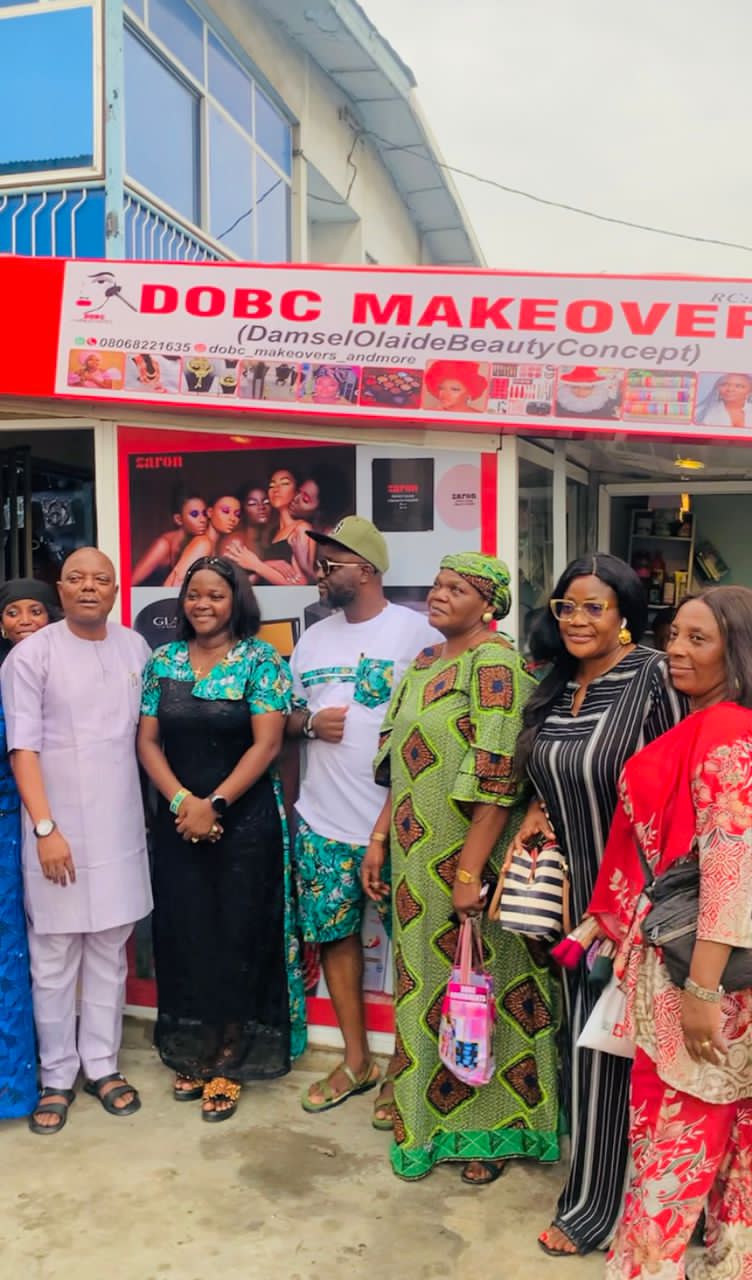
Beauty Meets Glamour as Olaide Ogunyemi Opens New Studio in Mushin
Popular Nollywood actress and professional makeup artiste, Olaide Ogunyemi Oluwayemisi aka Damilola, has expanded her footprint in the beauty industry with the grand opening of her new makeup studio in Lagos.
The talented thespian, who is also the Chief Executive Officer of @Dobc_makeovers_andmore, officially unveiled the ultra-modern beauty space last Thursday, April 2, 2026, in a colourful ceremony filled with glamour, fashion, and pageantry.
Strategically located at 101 Palm Avenue, right beside FitPlus and Sparklight Hospital in Mushin area of Lagos, the new studio is designed to offer top-notch beauty services, reflecting Ogunyemi’s commitment to excellence and professionalism in the ever-growing makeup industry.
The opening ceremony attracted friends, colleagues from the Nollywood industry, beauty enthusiasts, and well-wishers who came out in large numbers to celebrate the entrepreneur’s latest milestone. Guests were treated to a vibrant atmosphere that showcased creativity, style, and the evolving standards of the beauty business in Lagos.
Speaking at the event, Ogunyemi expressed her excitement and gratitude, noting that the new studio represents years of hard work, dedication, and passion for her craft. She reaffirmed her commitment to delivering premium beauty services while empowering aspiring makeup artistes.
The launch of the studio further cements her reputation as a dynamic force, successfully blending her career in Nollywood with a thriving beauty brand.
With this latest development, Olaide Damilola Ogunyemi continues to inspire many young entrepreneurs, proving that talent, consistency, and vision remain key drivers of success in Nigeria’s creative and business landscape.


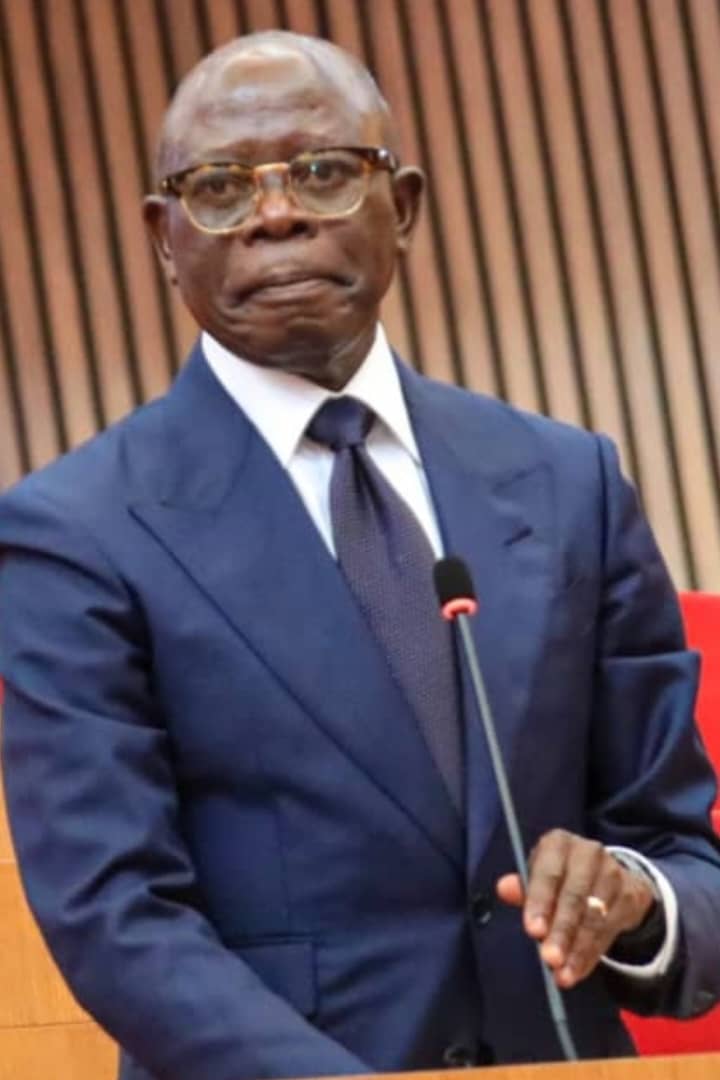
Daniel Eromosele Eulogize Adams Oshiomole as he turns 74 years
Today, I celebrate an exceptional leader, a fearless voice for the people, and a man whose life has remained a symbol of courage, sacrifice, and unwavering commitment to justice—Distinguished Comrade Senator Adams Aliu Oshiomhole.

Your journey has been nothing short of inspiring. From your days as a vibrant labour leader to your impactful tenure as the Executive Governor of Edo State, and now as a respected Senator of the Federal Republic, you have consistently demonstrated what it means to serve with integrity, strength, and purpose. Your contributions to the growth of our nation and the development of Edo State remain indelible and deeply appreciated.
You have not only built structures and institutions but have also built people. I am personally a beneficiary of your leadership, your guidance, and your belief in empowering others. Your influence in my life has been profound, and I remain grateful for the opportunities and inspiration you have given me.
On this special day, I celebrate not just your achievements, but the man you are—resilient, principled, and ever committed to the progress of Nigeria and her people.

May this new year bring you renewed strength, greater wisdom, good health, and more remarkable accomplishments. May your legacy continue to shine brighter with each passing year.
Happy Birthday, sir. Wishing you many more fruitful and impactful years ahead.
celebrity radar - gossips
Accolades to Empress Genevieve Wining as she Celebrate birthday in Grand style

Accolades to Empress Genevieve Wining as she Celebrate birthday in Grand style
Emmanuel Clement
Vilnius, Lithuania – The Grand Hotel Vilnius will host a grand birthday celebration in honor of Her Majesty The Empress Genevieve Wining of the United Kingdom of Atlantis (UKA) on April 4th, 2026.
The four-day event promises to be an extravagant affair, marking the special birthday of Empress Genevieve Wining. The celebration will take place at the prestigious Grand Hotel Vilnius, Lithuania, renowned for its luxurious ambiance and exceptional service.

According to the event flyer, the birthday celebration will be a spectacular occasion, fitting for an empress. Guests can expect an elegant setting adorned with golden accents, sparkling champagne, and festive decorations, creating a regal atmosphere befitting the occasion.
The Empress Genevieve Wining of UKA is expected to grace the event, which will include various festivities and celebrations in her honor. The occasion aims to bring together dignitaries, followers, and guests to commemorate the empress’s birthday with grandeur and joy.
For media inquiries, accreditation, or further information about the birthday celebration of The Empress Genevieve Wining of UKA, please contact the event organizers.
Courtesy of His Excellency Emperor Prof. Solomon Wining. UKA


-

 society7 months ago
Religion: Africa’s Oldest Weapon of Enslavement and the Forgotten Truth
-

 news4 months ago
WHO REALLY OWNS MONIEPOINT? The $290 Million Deal That Sold Nigeria’s Top Fintech to Foreign Interests
-

 society6 months ago
“You Are Never Without Help” – Pastor Gebhardt Berndt Inspires Hope Through Empower Church (Video)
-

 celebrity radar - gossips2 months ago
Dr. Chris Okafor Returns with Power and Fire of the Spirit -Mounts Grace Nation Altar with Fresh Anointing and Restoration Grace on February 1, 2026
You must be logged in to post a comment Login
You must log in to post a comment.