
Business
Open Letter To Ahmed Asiwaju Bola Tinubu By General Adeyinka Adebayo

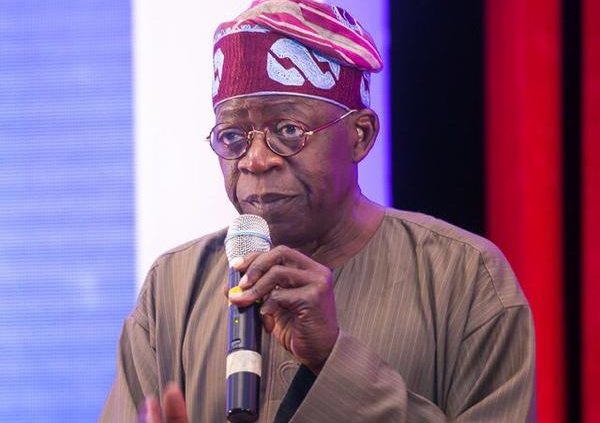

My dear Asiwaju,
I am compelled to write this open letter to you because of the state of affairs of the Yoruba nation. Firstly, I wish to acknowledge that fate has put you in a prime position to determine to a large extent the direction that the Yoruba people will go. The indisputable truth is that one may quarrel with your politics but your sagacity is never in doubt. Even those who don’t see eye to eye with you agree that you are imbued with unusual native intelligence, uncommon people skills and unrivaled foresight. You, more than any other person, has been the game changer since the advent of democracy in 1999. It is for these reasons that I have chosen to direct this letter to you.
My singular purpose is to tug at the strings of your heart. I am not writing to appeal to partisan considerations but to see, if per chance, I can pour out my heart to you in a manner of speaking. God has blessed you even beyond your wildest imagination. You have installed Senators and Governors. You have removed Governors and even a President. You have also installed a President. There is nothing you have wished for or desired that you didn’t get. Fortune has smiled on you. Goodwill follows you everywhere you go. You have done very well- more than most men ever will. However, there is one area that is begging for your urgent attention. This area may well define you and all you have ever achieved. This matter, in my opinion, is the only difference between you and the late sage, Chief Obafemi Awolowo. Let me restate for the purpose of emphasis that this is the area in which the late sage and Leader of the Yorubas stand head and shoulders above you. It is the reason his name has been a constant denominator in our regional and national politics. It is the reason politicians, friends and foes invoke his name for political advantage and personal glory. It is also the reason why we can’t stop talking about him almost thirty years after his death. What will anyone say about you thirty years after you have transited?
Asiwaju Sir, you may be wondering what I’m talking about? It is the issue of legacy. According to Peter Strople, ‘Legacy is not leaving something for people, it is leaving something in people’. Legacy is building something that outlives you. Legacy is greater than currency. In the words of Leonard Sweet, ‘ What you do is your history. What you set in motion is your legacy’. You can’t live forever, Sir. No one can. But you can create something that will. Enough of speaking in parables- I shall now speak plainly.
When destiny brought you on the scene, we were enamoured because you championed the case for true federalism. It was your belief then that the Yoruba nation will fare better under a restructured arrangement than under the type of unitary government we run while pretending by calling it a federal government. Everyone knows that there is nothing federal about our government at all. If truth must be told, the Yoruba nation has fared very badly since the advent of our new democracy. And this is not about holding power at the centre.
Let me bring this home: someone passed a comment recently that he would want Biafra to become a reality because he knows the Igbo nation will survive. That comment led me to deeper introspection as I wondered if the Yorubas can truly survive. Let me cite my first example. From Oyo to Osun, Ogun to Ondo, Ekiti to Kwara and Lagos, hardly will one see any serious industry or manufacturing concern owned by a Yoruba person. I am not talking about portfolio businesses or one-man business concerns. Most industries in Oyo State are owned by the Lebanese. The native business and industry gurus who dominated the landscape- Nathaniel Idowu, Amos Adegoke, Lekan Salami, Alao Arisekola, Adeola Odutola, Jimoh Odutola, Chief Theophilus Adediran Oni and others- are all gone with no credible replacements. I’m sure you remember the tyre factory of the Odutolas and how Jimoh Odutola was even asked by the Governments of Kenya and Ghana to set up a similar factory in their countries. Chief Theophilus Adediran Oni, popularly called T.A Oni & Sons started the first indigenous construction company in Nigeria. He willed his residence- Goodwill House, to the Oyo/Western state government, to be used as a Paediatric Hospital, which is now known as T.A Oni Memorial Children Hospital at Ring Road in Ibadan. This sprawling family Estate and residence was cited on a 15acre piece of land, 65 rooms, with modern conveniences, Olympic Swimming Pool and stable for Horses, etc.
People like Chief Bode Akindele started companies like Standard Breweries and Dr Pepper Soft drink factory at Alomaja in Ibadan. Broking House built by the late Femi Johnson, an insurance magnate, still stands glittering in the mid-day sun as an epitome to a rich history that Ibadan has. The most serious and only notable Yoruba entrepreneur we have now is Michael Adenuga. I say this quite consciously because most of the other names are oil and gas barons. Most of what stood as testaments of industry in Oyo State are gone- Exide Batteries, Leyland Autos and many others. In its place are shopping malls and road side markets but no nation develops through buying and selling alone- especially when you’re not actually producing what you’re selling. Hypermarkets and supermarkets have taken over because of the need to feed our insatiable consumer-appetite and foreign tastes. In one instance, an ancient landmark in the form of a hotel was demolished to pave way for a mall. That is how low we have sunk. If our past is better than our present- if we always look back with nostalgia frequently, then there is a problem.
The case of other states is not different. Osun’s case is pathetic. Ditto for Ondo and Ekiti. Ogun State can boast of some factories at Sango-Otta and Agbara axis but most of them are not owned by the Yorubas. There is no significant pharmaceutical company owned by any Yoruba except for Bond Chemicals in Awe, Oyo State- and its wallet share is very insignificant. For Lagos State, more than 70% of the manufacturing concerns and major industries in the State are owned by the Igbos. If the Igbos were to stop paying tax in Lagos State, the IGR of Lagos State will reduce by over 60%. In contrast, Sir, go to the South East and look at the manufacturing concerns in Onitsha, Aba and Nnewi. Please don’t forget those were areas ravaged by civil war a mere forty something years ago. The Igbos have certainly made tremendous progress but the Yoruba nation has regressed. I wish to state that this letter is not meant to whip up primordial considerations or ethnic sentiments but just to put things in proper perspective.
Asiwaju, I will like to also talk about the state of education in the Yoruba nation. Our education has gone to the dogs. We have a bunch of mis-educated and ill-educated young men and women roaming the streets. Ibadan, for instance, had the first University in Nigeria and the first set of research centres in Nigeria ( The Forestry Research Institute, the Cocoa Research Institute (CRIN), The Nigerian Cereal Research Institute Moor Plantation (NCRI), the NIHORT (Nigerian Institute of Horticultural Research), the NISER (Nigerian Institute of Social and Economic Research), IAR&T (Institute of Agriculture, Research and Training), amongst several others). Ibadan was the bastion of scholarship with people like Wole Soyinka, JP Clark, D.O Fagunwa and Amos Tutuola as residents. In the May/June 2015 West African Senior Secondary Certificate Examination, Abia came tops. Anambra came 2nd while Edo was 3rd. Lagos placed 6th while Osun and Oyo was 29th and 26th. Ekiti was 11th, Ondo State was 13th and Ogun State was 19th. In 2013 WASSCE, only Lagos and Ogun States were the Yoruba States above the national average. If we do an analysis of how Lagos placed 6th in 2015, you will discover that it was substantially because of other nationalities resident in Lagos. For proof, please look no further than the winners of the Spelling Bee competition which has produced One-Day Governors in Lagos State. Since inception in 2001, other nationalities have won the competition six times (Ebuka Anisiobi in 2001, Ovuwhore Etiti in 2002, Abundance Ikechukwu in 2006, Daniel Osunbor in 2008, Akpakpan Iniodu Jones in 2011 and Lilian Ogbuefi in 2012). Sir, there is something seriously wrong about our state of education. From the vintage times of Obafemi Awolowo who initiated ‘free education’, we have regressed into a most parlous state.
Let me talk about roads, housing and infrastructure . The first dualized road in Nigeria, the Queen Elizabeth road from Mokola to Agodi in Ibadan was formally commissioned by Queen Elizabeth in 1956. The first Housing Estate in Nigeria is Bodija Housing Estate (also in Ibadan) which was built in 1958. The state of roads in the Yoruba nation has become pathetic. Our hinterland are still largely rural. Even some state capitals like Osogbo and Ado-Ekiti are big villages when you compare them to towns in the South East. How many new estates have been built over the last decade? Even Ajoda New Town lies in ruins.
We have abandoned the farm settlement strategy of the Western Region and only pay lip service to agriculture. Instead of feeding others like we once did, others now feed us. We plant no tomatoes, no pepper and the basic food that we require. The Indians have bought the large expanse of water body that we have in Onigambari village. The water body in Oke Ogun of Oyo State can provide enough fish to feed the whole of the South West. From being a major cocoa exporter many years ago, one can point to just a few vestiges of factories that still deal with Cocoa in the Yoruba nation. 80% of Cocoa processing industries in the South West have been shut down. The Chinese have taken over the cashew belt at Ogbomoso in Oyo State. They have even edged out the indigenes as brokers. They now come to the cashew belt to buy from the local farmers, sell on the spot to other Chinese exporters who now process the cashew nuts and import them back into Nigeria at a premium. Sir, there are only 7 major cashew processing plants in Nigeria and you can check out the ownership. The glory has departed from the Yoruba nation.
Apart from Asejire, Ede, Ikere Gorge and Oyan dams built ages ago, where are the new dams to cater for increased population and water capacity for the Yoruba nation? How have we improved on what our heroes past left us? Maybe apart from certain areas in Lagos State, others can’t even supply their citizens with pipe-borne water.
Our youth which we used to take pride in are largely a mass of unemployed and unemployable people. Have you noticed the abundance of street urchins, area boys, touts and ‘agberos’ that we now have all across the Yoruba nation? Have you noticed the swell in the ranks of NURTW (I mean no disrespect to an otherwise noble union)? Have you noticed the increase in the number of Yoruba beggars? There was a time that it was taboo for a Yoruba man to beg- but no more. The spirit of apprenticeship is dead. There was a time that people who learn vocational skills celebrate what we referred to as ‘freedom’. While that is largely moribund now in the Yoruba nation, the Igbos still practice it with great success.
The only thing we can boldly say the Yoruba nation controls is the information machinery- the press. We own largely the newspapers- the Nation, Punch, Nigerian Tribune, TV Continental and a few others. It is because of our control of this information machinery that we have rewritten the narrative in the country with the misguided self-belief that things are normal and we are making progress. A look beyond the surface will prove that this is so untrue.
We are largely divided. For the first time in the history of the Yoruba nation, religion is about to divide us further- and it is starting from Osun State. You are married to a Christian. My own father-in-law is an Alhaji. That is how we have peacefully do-existed but the fabrics are about to be torn to shreds because of poor management of issues. Afenifere has been reduced to a shadow of itself. OPC that once defended Yoruba interests has gone into oblivion. Yoruba elders have been vilified in the name of politics and partisanship. It is no longer news to see teenagers throwing stones at their elders because of their political indoctrination. Even under the late sage, Chief Obafemi Awolowo, the Yorubas never belonged to just a single party- yet our unity was without blemish. Now, our values have gone down the drain.
Asiwaju, I believe I have said enough. The task is Herculean but I believe Providence has brought you here for such a time like this. It is time for the Yoruba nation to clean up its acts. What do we really want? How can we quickly right the wrongs? The Yoruba nation is in a state of arrested development. The Yoruba nation is gasping for breath and crying for help. Will you rise up to the occasion? I am aware you understand that all politics is local and charity begins at home. Our fathers gave us a proverb: ‘Bi o’ode o dun, bi igbe ni’gboro ri’. I know there are no quick fixes but I also know that if there is anyone who has the capacity to do something about our current situation, that person is you. This should be thy legacy you should think of. Your legacy is our future.
Yours Very Sincerely,
Adebayo




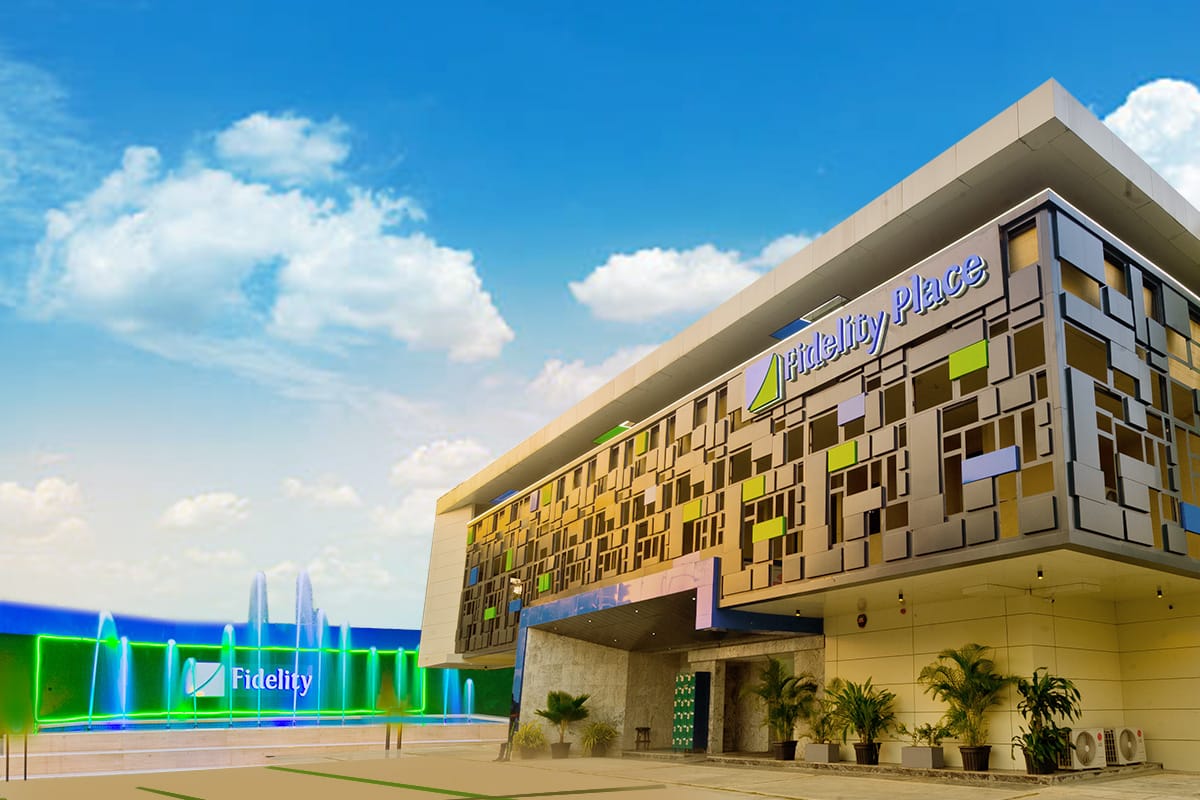
Fidelity Bank grows gross earnings by 38% to N434.95b in Q1
Fidelity Bank Plc recorded 37.9 per cent growth in gross earnings to N434.95 billion in first quarter 2026 as the international commercial bank continued to expand its core banking market share.
Interim report and accounts of Fidelity Bank for the three months ended March 31, 2026 released at the Nigerian Exchange (NGX) showed that gross earnings rose from N315.42 billion in first quarter 20025 to N434.95 billion in first quarter 2026, representing an increase of 37.9 per cent.
The top-line performance was driven by impressive growth in the bank’s core business operations with interest incomes rising by 22.8 per cent to N314.48 billion in first quarter 2026 as against N256.10 billion in first quarter 2025.
With net interest income at N180.97 billion, the bank closed the period with profit before tax of N92.48 billion. After taxes, net profit stood at N74.47 billion for the three-month period. Earnings per share remained high at N5.69, underlining the capacity of the bank to reward its shareholders.
The balance sheet of the bank also emerged stronger. Total assets crossed the N11 trillion mark to N11.35 trillion by March 2026 compared with N10.46 trillion recorded in December 2025. Customers’ deposits increased from N6.89 trillion to N7.38 trillion. Total equity rode on the back of earnings growth to a 27.5 per cent increase from N1.09 trillion in December 2025 to N1.39 trillion by March 2026.
The first quarter 2026 results further consolidated the strong earnings outlook of the bank, which had successfully completed its recapitalisation amidst impressive earnings performance in 2025.
Fidelity Bank had recorded double-digit growths in interest and non-interest incomes as well as key balance sheet items during the year ended December 31, 2025.
The audited report showed that gross earnings rose from N1.04 trillion in 2024 to N1.52 trillion in 2025, an increase of 45.6 per cent. Interest and similar incomes had grown by 38.7 per cent from N803.1 billion in 2024 to N1.11 trillion in 2025. Fees and commission incomes also rose by 44.7 per cent from N78.4 billion to N113.4 billion. The bank recorded net profit after tax of N242.4 billion in 2025.
The bank’s balance sheet emerged stronger with total assets rising by 18.6 per cent to N10.46 trillion in 2025 as against N8.82 trillion in 2024. Customer deposits increased by 16.1 per cent from N5.94 trillion to N6.89 trillion, reflecting continued franchise strength and an improved funding profile. Net loans and advances meanwhile declined by 2.4 per cent to N4.28 trillion in 2025 as against N4.39 trillion in 2024, attributable to customers paying down on their mature obligations.
The bank had in 2025 strengthened its capital position, with eligible capital rising to N561 billion, above the regulatory minimum of N500 billion for banks with international authorisation. In addition, capital adequacy had remained robust, with Capital Adequacy Ratio of 30.94 per cent by December 2025 as against 23.47 per cent by December 2024.
Managing Director, Fidelity Bank Plc, Dr. Nneka Onyeali-Ikpe, said the first quarter 2026 results reinforced the bank’s strong and resilient business model.
She noted that with the remarkable success of its recapitalisation programme and continuing expansion, Fidelity Bank has entered a new era of growth and impressive returns.
“We are on a stronger footing and confident that we will set new growth records that are reflective of our legacy and the future we are working on,” Onyeali-Ikpe said.
Business
Dangote Refinery Ends Nigeria’s Era of Fuel Import Dependence, Boosts GDP, FX Earnings — EIU
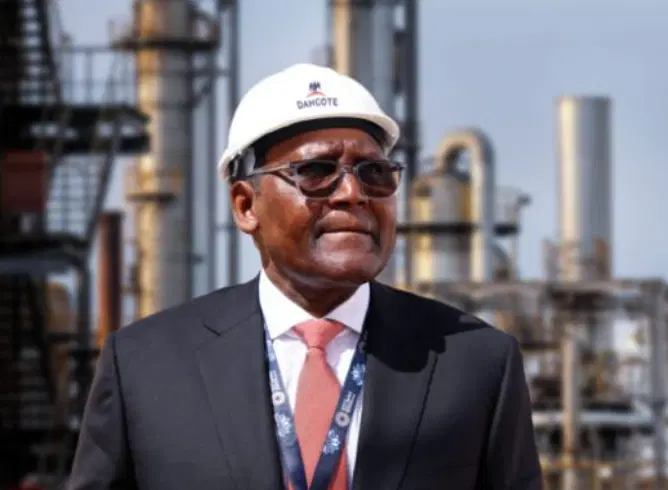
Dangote Refinery Ends Nigeria’s Era of Fuel Import Dependence, Boosts GDP, FX Earnings — EIU
The operational ramp up of the 650,000 barrels per day Dangote Petroleum Refinery & Petrochemicals is fundamentally reshaping Nigeria’s downstream oil sector, significantly reducing the country’s dependence on imported refined petroleum products and strengthening its external position, according to the Economist Intelligence Unit (EIU).
In its latest assessment on Nigeria’s fuel market and regulatory environment, the EIU said the refinery has already transformed a sector that was previously characterised by heavy reliance on imported fuel despite Nigeria being Africa’s largest crude oil producer. The report noted that the refinery met nearly 80 per cent of domestic petrol demand in April and produced enough volumes to satisfy local consumption requirements as operations approached full capacity.
The EIU described Nigeria’s downstream petroleum sector before the refinery as “long dysfunctional”, noting that the country had remained almost entirely dependent on costly imported fuel while producing nearly 1.5 million barrels of crude oil daily.
According to the report, the emergence of the refinery has reduced import dependence, improved domestic fuel availability and strengthened Nigeria’s balance of payments position through lower import demand and rising exports of refined petroleum products.
“The gradual ramp up of the 650,000 barrel/day Dangote refinery since May 2023 has transformed Nigeria’s long dysfunctional downstream sector,” the report stated. “The country’s main refineries, all state owned, had been inoperative for years and Nigeria was almost entirely reliant on costly imported fuel.”
The research and analysis division of The Economist Group, London added that the refinery’s attainment of full operational capacity and its planned expansion would further support Nigeria’s economic growth and foreign exchange earnings over the medium term.
“Meanwhile, the attainment of full capacity at, and an increase in exports from, the Dangote refinery will support real GDP growth and foreign exchange earnings in 2026 and 2027 and beyond, as a planned doubling of the plant’s output comes on stream around the end of the decade,” it added.
Industry analysts said the refinery is increasingly positioning Nigeria as an emerging refining and export hub, altering energy trade flows across Africa and reducing the vulnerability associated with fuel import dependence.
The EIU noted that the refinery’s expansion has coincided with major reforms in Nigeria’s downstream sector, including the removal of fuel subsidies and the introduction of market driven pricing mechanisms.
The report, however, said the transition from a state dominated fuel import structure to large scale domestic refining has triggered resistance from interests linked to the old import regime.
The latest tensions emerged following the decision by the Nigerian Midstream and Downstream Petroleum Regulatory Authority to relax restrictions on petrol imports despite the refinery’s growing capacity to meet domestic demand.
Dangote Industries subsequently initiated legal action, arguing that continued import approvals undermine domestic refining investments and conflict with the objectives of the Petroleum Industry Act, which seeks to encourage local refining capacity and reduce import dependence.
Analysts noted that the availability of large-scale domestic refining capacity has improved Nigeria’s energy security and reduced exposure to external supply shocks and foreign exchange volatility.
The Centre for the Promotion of Private Enterprise also cautioned against unrestrained importation of petroleum products, warning that such a policy could weaken Nigeria’s industrialisation drive and discourage investments in domestic refining.
Chief Executive Officer of CPPE, Muda Yusuf, said continued dependence on imported fuel had historically contributed to pressure on foreign reserves, exchange rate instability and fiscal leakages.
The refinery’s growing impact is also being reflected in Nigeria’s broader macroeconomic indicators. Earlier this month, S&P Global Ratings cited increased domestic refining capacity and rising hydrocarbon exports among the major factors supporting Nigeria’s sovereign credit rating upgrade – the first in 14 years.
Beyond Nigeria, analysts said the refinery is increasingly being viewed as a strategic industrial asset for Africa, where many countries remain heavily dependent on imported fuel despite rising demand for transportation, manufacturing, and power generation.
Business
BREAKING: Court Dismisses $19.6 Million Claim Against NNPCL — Rules Contract Scope Cannot Be Changed Orally
BREAKING: Court Dismisses $19.6 Million Claim Against NNPCL — Rules Contract Scope Cannot Be Changed Orally
In a landmark ruling on Friday, May 22, 2026, the Federal Capital Territory High Court in Abuja threw out a $19.6 million lawsuit filed by Alternate Dimensions Ventures Ltd against the Nigerian National Petroleum Company Limited (NNPCL), affirming a key legal principle: a written contract cannot be expanded through oral agreements or conduct.
Alternate Dimensions had sought $19,600,000 in professional fees, claiming the scope of its Direct Sale, Direct Purchase (DSDP e-pro) contract with NNPCL was orally expanded. Represented by counsel Patrick Peter, the firm argued it was entitled to the revised sum for services rendered under the alleged new terms.
But NNPCL, through its lawyer Ituah Imhanze of KENNA LP, pushed back sharply, arguing that parties are bound exclusively by the clear terms of their written agreement. Imhanze contended that without any written amendment, the claim was legally unsound, and the court agreed.
Delivering judgment, Justice Hamza Mu’azu upheld NNPCL’s defense, stating that the contract was unambiguous and that no evidence was adduced during the trial, which supported the alleged scope expansion. The court further found that NNPCL fully complied with all contractual terms and committed no breach.
Dismissing the suit as meritless, Justice Mu’azu reinforced the doctrine of sanctity of contract: any amendment to a written agreement must be express, unequivocal, and documented, not implied or verbal.
The ruling spares NNPCL from the S19.6 million claim and also a floodgate of similar potential liabilities.


- Qrent says delaying Information Technology (IT) refresh cycles may be increasing operational risk for businesses in Africa May 27, 2026
- Dentons’ Iyunola Adekanye Appointed to African Mining Week (AMW) Advisory Board May 27, 2026
- United Nations (UN) Women Liberia and Partners Convene for Spotlight Initiative 2.0 Women’s Economic Empowerment Inception Meeting May 27, 2026
- African Mining Week (AMW) to Host Central Bank Governors Roundtable as Monetary Authorities Deepen Role in Mining Sector Growth May 27, 2026
- Eritrea: Diaspora Nationals Celebrate Independence Day Anniversary May 27, 2026
- Africa Unveils Landmark Humanitarian Coordination Platform to Strengthen aligned Response to Humanitarian Crises May 27, 2026
- Seychelles: President Herminie Engages with Police and Fire Services on Praslin May 27, 2026
- Issue 3 of Mining Review Africa now available for free download May 27, 2026
- NOV Joins African Energy Week (AEW) 2026 as Gold Sponsor Amid Africa’s Offshore Expansion Push May 26, 2026
- African Union of Broadcasting (AUB) and United Nations University Institute for Water, Environment and Health (UNU-INWEH) Launch Landmark Webinar Series on Africa’s Water Crisis, Starting June 2, 2026 May 26, 2026
- Qrent says delaying Information Technology (IT) refresh cycles may be increasing operational risk for businesses in Africa May 27, 2026
- Dentons’ Iyunola Adekanye Appointed to African Mining Week (AMW) Advisory Board May 27, 2026
- United Nations (UN) Women Liberia and Partners Convene for Spotlight Initiative 2.0 Women’s Economic Empowerment Inception Meeting May 27, 2026
- African Mining Week (AMW) to Host Central Bank Governors Roundtable as Monetary Authorities Deepen Role in Mining Sector Growth May 27, 2026
- Eritrea: Diaspora Nationals Celebrate Independence Day Anniversary May 27, 2026
- Africa Unveils Landmark Humanitarian Coordination Platform to Strengthen aligned Response to Humanitarian Crises May 27, 2026
- Seychelles: President Herminie Engages with Police and Fire Services on Praslin May 27, 2026
-

 news5 months ago
WHO REALLY OWNS MONIEPOINT? The $290 Million Deal That Sold Nigeria’s Top Fintech to Foreign Interests
-

 society3 weeks ago
SOCIAL MEDIA IS NOT A BATTLEFIELD COMMAND – WHY THE NIGERIAN ARMY’S ACTION AGAINST JUSTICE CRACK IS A NATIONAL SECURITY IMPERATIVE
-

 celebrity radar - gossips4 months ago
Dr. Chris Okafor Returns with Power and Fire of the Spirit -Mounts Grace Nation Altar with Fresh Anointing and Restoration Grace on February 1, 2026
-

 celebrity radar - gossips6 months ago
Prophet Kingsley Aitafo Releases 2026 Prophecy: ‘Nigeria Will Rise, but the World Must Prepare for Turbulence’
You must be logged in to post a comment Login
You must log in to post a comment.