
Uncategorized
OPINION ARTICLE: CBN’s N75 Trillion Credit Milestone to Private Sector Falls Flat as Productivity Crisis Deepens

OPINION ARTICLE: CBN’s N75 Trillion Credit Milestone to Private Sector Falls Flat as Productivity Crisis Deepens
BY BLAISE UDUNZE
Nigeria’s financial system is flashing red, and not because of a scarcity of money. Ironically, the Central Bank of Nigeria (CBN) and the nation’s banking proudly tout a historic rise in private-sector credit, announcing figures hovering around N75 trillion throughout 2024-2025. On paper, this looks like a funding boom, a sign that businesses are borrowing, investing, expanding, and building. But on the ground, the country’s real sector tells a very different story.
Manufacturers that are the backbone of industrial output have withdrawn en masse from bank loans, their loan books collapsing by an alarming 20.3 percent within a single year. SMEs, which constitute over 90 percent of Nigeria’s businesses and nearly half of the national GDP, remain shut out of formal credit. Banks themselves are quietly battling rising non-performing loans (NPLs), with several institutions breaching the CBN’s 5 percent regulatory threshold. Meanwhile, the official “N75 trillion” credit figure hangs in the air like an illusion that appeared to be big, impressive, but dangerously misleading. This feature unpacks the contradiction. If credit is indeed booming, where did the money go? And why is the real economy shrinking away from bank financing at a time when it should be expanding?
The financial statements of Nigeria’s top manufacturers for the first nine months of 2025 show a coordinated withdrawal from bank credit. Their aggregate bank borrowings plunged from N2.526 trillion in 2024 to N2.014 trillion in 2025, a dramatic 20.3 percent drop. The details are striking:
– BUA Foods fell from N1.559 trillion to N1.105 trillion;
– Nestlé Nigeria from N653.7 billion to N521.01 billion;
– Nigerian Breweries from N204.17 billion to N162.17 billion.
– NASCON’s borrowings dropped 98percent, from N3.3 billion to N67 million.
– Others: Dangote Cement, Dangote Sugar, Guinness, and International Breweries took no new loans.
These are not marginal firms but some of the most capital-intensive, employment-generating entities in the country. Their exodus from bank borrowing is a referendum on Nigeria’s brutal credit environment, where the Monetary Policy Rate of 27-27.5 percent has pushed effective lending rates well above 30 percent, making loans unaffordable even for working capital.
The retreat has slashed their financing costs by 52.8 percent, from N1.4 trillion to N662 billion. This is not because interest rates fell; they didn’t. Businesses simply stopped borrowing.
Finance expert David Adonri describes it bluntly: “Borrowers shun bank credit… lending rates have not come down materially. Banks’ income may fall below expectations.”
But the bigger concern is not banks’ income, it is the economy’s ability to invest and grow.
This is the question that unsettles economists, industry players, and SMEs alike.
If manufacturers pull back, SMEs remain excluded, and retail borrowing is suppressed; who receives the N75 trillion? What did it finance?
The answer reveals that Nigeria’s credit allocation remains opaque; however, historical patterns and recent financial data point in three directions. Even more concerning are recent claims that the modest loan growth recorded in 2024-2025 is not commensurate with the explosive expansion of banks’ balance sheets.
This suggests that the system is growing with deposits rising, assets swelling, FX revaluation inflating balance sheets, but actual lending to the productive economy is barely moving.
The credit growth being celebrated is therefore not only concentrated but also superficial and disconnected from balance sheet realities.
1. Lending concentration in big corporate and government entities
For decades, banks have preferred lending to large corporations and government-linked entities like:
– Oil & Gas
– Conglomerates and trading groups
– Government contractors
– Financial market operators
– Large borrowers with FX exposure
Even CBN’s earlier research shows that only 5-6 percent of total bank credit historically reaches SMEs.
Given the lack of detailed public data, it is reasonable to infer that the bulk of the N75 trillion still flows to:
– Large corporations
– Treasury operations
– Prime customers
– Big-ticket borrowers with government-linked contracts.
Experts warn that this reflects a financial system drifting away from the real economy, a trend Muda Yusuf describes as “worrisome and dangerous.”
2. Banks are also parking funds in government securities.
Commercial banks prioritized lending to the government by investing in T-bills, FGN Bonds, and OMO instruments, where returns are high and risk-free. Over the past two years, Nigerian banks have channeled N20.4 trillion into treasury bills, bonds, and other fixed-income instruments, reaping risk-free returns rather than funding productive ventures. This “securities trap” is profitable for banks but disastrous for the economy.
A government-backed 19–22 percent yield is more attractive than lending to an SME at 27-35 percent with a high probability of default.
3. FX revaluation effects and rollovers
Portions of the N75 trillion may not be new lending in the real sense but the result of regulatory reclassifications, rollovers, FX revaluation on foreign-currency loans, and large concentrated credit exposures. This creates the illusion of expanded credit without tangible productivity gains.
However, SMEs, which contribute 46.3 percent of GDP and employ millions, remain locked out of the credit system due to punitive interest rates, high collateral demands, lack of financial documentation, bureaucratic processes, and weak credit-scoring systems. Despite accounting for 97 percent of businesses and nearly 90 percent of informal jobs, SMEs receive only 5 percent of commercial bank lending. This is a structural failure. SMEs remain almost entirely disconnected from Nigeria’s celebrated “N75 trillion credit boom.”
Manufacturers’ 2025 results show turnover up 37.9 percent and profit swinging from a N116 billion loss to N2.5 trillion gain. But experts like Muda Yusuf and Clifford Egbomeade warn that these improvements are driven primarily by:
– Inflationary pricing adjustments, not increased production.
– Gains are also supported by exchange-rate stability.
– Reduced debt burden, not operational efficiency.
Nigeria risks mistaking nominal growth for real productivity.
Meanwhile, rising non-performing loans fueled by high interest rates, inflation, weakened consumer demand, and FX volatility have pushed some banks above the CBN’s 5 percent NPL ceiling, further restricting their willingness to lend, especially to SMEs.
Even the private-sector credit trend contradicts the headline figure. Throughout 2025, credit levels have shown repeated declines:
– February’s N77.3 trillion dropped to N76.3 trillion,
– N75.9 trillion in March,
– Followed by a temporary rebound to N78.1 trillion in April,
– May-August declined to N75.8 trillion.
These repeated drops reflect weakened appetite for borrowing, tighter bank lending, liquidity pressures, and borrower distress. A true credit boom does not move in this direction.
The Human Cost of an Economy without Productivity
The consequences of weak productivity are not abstract. They show up in hunger, jobs, poverty, life expectancy, and living standards. Below is where Nigeria’s crisis becomes undeniable.
– It is Not Just Rising, it is deepening
– According to the World Bank, 139 million Nigerians now live in poverty. That is six in ten Nigerians. No country with this scale of poverty can claim real economic progress.
SBM Intelligence, in a scathing review of the government’s economic reforms, noted that this administration of government has failed to lift Nigerians’ living standards, despite the loud claims of macroeconomic stability.
Life Expectancy in Nigeria Is Now the Lowest in the World
The UN’s 2025 Global Health Report ranked Nigeria’s life expectancy at 54.9 years, the worst globally, far below the world average of 73.7 years. This decline is attributed to:
– Insecurity
– Poor healthcare access
– Rising poverty
– Nutritional deficiencies
– Weak social welfare
A productive economy increases life expectancy; a collapsing one shortens it.
Hunger Is the Real Inflation Index
While official inflation reports show “stabilisation,” the lived reality says otherwise.
In the kitchens of Lagos, in the cries of hungry children, and in the struggles of market women, a harsher truth is spoken daily: Empty pots do not lie, and hunger, not percentages, is Nigeria’s real inflation index.
Debt Explosion Is Eroding Nigeria’s Future
Since President Bola Ahmed Tinubu took office in 2023:
– Nigeria’s public debt surged from N33.3 trillion-N152.4 trillion. A staggering 348.6 percent increase in less than two years
Economies don’t collapse overnight; they deteriorate gradually. Nigeria is flashing every warning signal.
Unemployment Appears “Stable,” But Youth Joblessness Is Rising
The International Labour Organisation (ILO) reports that while Nigeria’s headline unemployment rate has fallen to 4.3 percent, youth unemployment has risen to 6.5 percent. A youthful population with no jobs is a time bomb for the economy.
Financial System Delinking from the Real Economy
Nigeria’s financial system appears to be delinking from the real economy. High interest rates make loans too expensive, manufacturers cut borrowing, SMEs are excluded, banks channel funds into T-bills, NPLs rise, banks tighten further, and private-sector growth slows. This feedback loop is dangerous.
Monetary authorities have prioritised stabilization, achieving a firmer naira, temporary FX calm, and reduced speculative pressure, but at the cost of choking credit, suppressing investment, weakening job creation, and widening the disconnect between banks and the productive economy. The recovery, as Egbomeade notes, is “fragile and easily reversible.”
To reverse the trend, Nigeria must rebuild the credit pipeline. To break the cycle, three urgent reforms are needed:
1. The CBN should publish transparent, disaggregated credit data.
This must show credit allocation by firm size, region, sector, and performance.
2. Expand targeted credit guarantees for SMEs and manufacturers.
Deposit money banks and the government must strengthen SME and manufacturing credit channels through expanded guarantees.
3. Reduced collateral barriers and adopted alternative credit scoring, stronger BOI pipelines.
4. Incentives for real-sector lending through tax breaks and prudential relief.
5. Most importantly, interest rates must gradually fall to levels that support investment and production while maintaining FX stability. Credit cannot revive with 30-35 lending rates.
Nigeria’s N75 trillion private-sector credit figures may look impressive, but manufacturers have withdrawn, SMEs have little access, banks are risk-averse, NPLs are rising, the real sector is struggling, debt is exploding, Life expectancy is collapsing, hunger is spreading, productivity remains weak, and credit levels are trending downward. The real question is no longer how large the number is but who actually received it, what it financed, and what it produced. Until credit flows to production, industry, SMEs, and innovation, Nigeria will continue celebrating large numbers while the real economy gasps for oxygen. It is time to stop counting the trillions and start counting the impact.
Blaise, a journalist and PR professional, writes from Lagos, can be reached via: [email protected]





FOPCHEN Calls for Dialogue as Court Fixes May 28 for Continuation
OTA, OGUN STATE — Proceedings in a widely followed legal case resumed on March 24, 2026, at the High Court of Ogun State, Ota Division, ending with a fresh adjournment as the court fixed May 28, 2026, for continuation.
During the session, legal representatives for all parties restated their positions and addressed preliminary matters, laying the groundwork for more substantive arguments at the next hearing. Observers noted that the case continues to attract significant public attention due to its perceived implications for law, culture, and societal values.
The Foundation for the Protection of Cultural Heritage in Nigeria (FOPCHEN) used the occasion to reiterate its call for constructive national dialogue. The group emphasized that while the judicial process must be respected, broader societal engagement remains essential.
According to the organization, issues relating to values, responsibility, and cultural identity should not be confined solely to courtroom deliberations but should involve active participation from various sectors of society.
Legal analysts present at the proceedings described the matter as one with far-reaching implications, noting that arguments advanced in court could shape future interpretations surrounding sensitive cultural and moral questions.
The presiding judge subsequently adjourned the case to May 28, granting all parties time to refine their submissions and respond to issues raised during the hearing.
As anticipation builds ahead of the next court date, Nigerians across different sectors continue to monitor developments closely, keen to see how the judiciary navigates the delicate balance between constitutional rights and cultural expectations.
Uncategorized
CRG: Politicians Must Stop Witch-Hunting, Focus on Nation Building — Says NYSC Cleared Deputy Speaker Since 2023
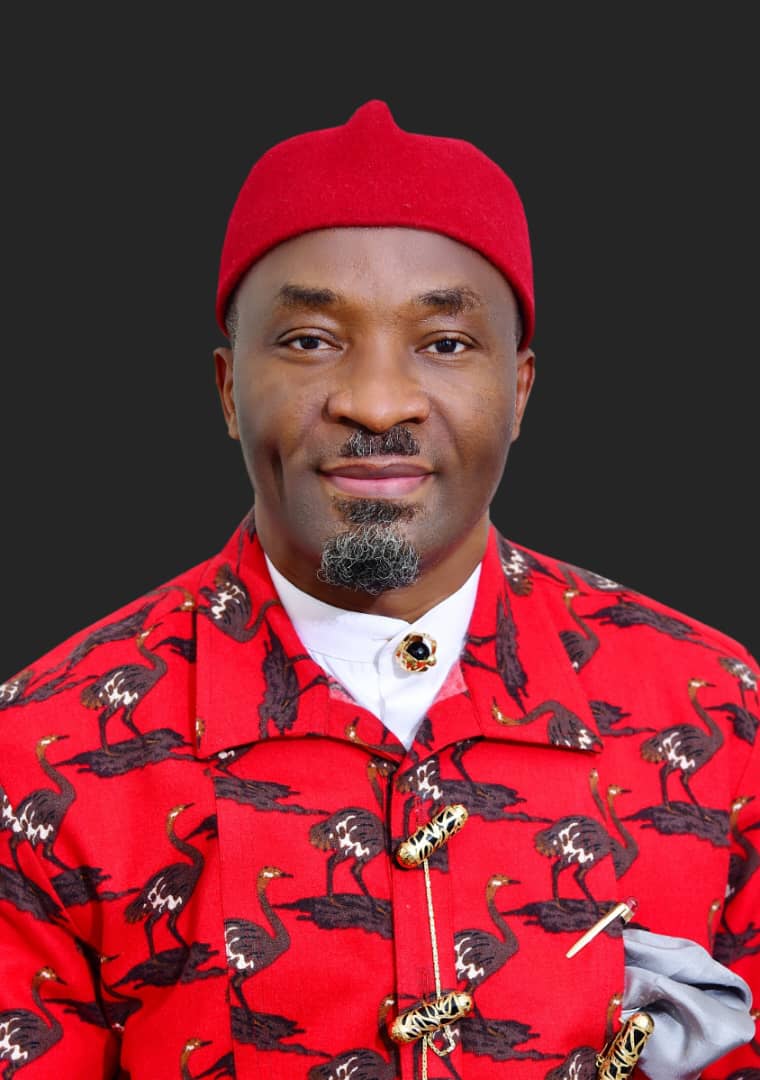
CRG: Politicians Must Stop Witch-Hunting, Focus on Nation Building — Says NYSC Cleared Deputy Speaker Since 2023
By: Boye Ola
The Centre for Responsible Governance (CRG) has called on political actors and interest groups to desist from what it described as needless witch-hunting of the Deputy Speaker of the House of Representatives, Benjamin Okezie Kalu, following renewed controversies surrounding his National Youth Service Corps records.
The organisation noted that the clarification by the National Youth Service Corps (NYSC) regarding the matter is not a recent development, as a formal verification letter had already been issued as far back as May 23, 2023.
The letter, referenced NYSC/CCD/VER/10/5.1/VOL1/02, had already addressed and cleared the questions surrounding the Deputy Speaker’s NYSC records.
Reacting to the renewed debate, the spokesman of the Centre,
Obande George, said it was troubling that issues which had already been clarified by a competent national institution were being resurrected for political purposes.
According to him, the time has come for political actors to move away from destructive engagements and concentrate on building the nation.
“It is important to note that the NYSC had already issued a verification letter dated May 23, 2023 addressing the matter.
Reopening issues that have already been clarified by a competent authority suggests that some individuals are more interested in political witch-hunting than in national progress,” George said.
The CRG stressed that democracy thrives when institutions are respected and their determinations are accepted in good faith rather than constantly questioned for political advantage.

George also commended the Deputy Speaker for demonstrating maturity and composure throughout the controversy, despite what he described as sustained provocations.
“Honourable Benjamin Kalu has shown remarkable calm and maturity in the face of intense public scrutiny and political provocation.
Instead of engaging in unnecessary public confrontation, he allowed institutions to speak through their records.”
The Centre warned that Nigeria’s political culture must evolve beyond constant character attacks and sensational allegations, which often distract public officials from their responsibilities.
According to the organisation, the country’s development requires constructive engagement among political actors rather than continuous attempts to discredit opponents.
“Nigeria cannot move forward if political energy is constantly spent on digging up allegations and amplifying rumours. Our leaders and political actors must redirect their focus to governance, policy and nation building.”
CRG therefore urged Nigerians to rely on verified information from credible institutions and avoid spreading speculative claims that could damage reputations or destabilise public discourse.
The organisation reiterated that respect for due process and institutional integrity remains essential for strengthening Nigeria’s democracy.

@The Centre for Responsible Governance, Email: [email protected], Instagram: crgngo6, Twitter: crgng06, Threads: crgngo6
Uncategorized
IWD 2026: Ajadi Celebrates Women, Urges Them To Seek More Elective Positions In Future Elections

IWD 2026: Ajadi Celebrates Women, Urges Them To Seek More Elective Positions In Future Elections
A Leading People’s Democratic Party, (PDP) Governorship Aspirant in Oyo State, Ambassador Olufemi Ajadi Oguntoyinbo has felicitates with women in the country on the occasion of this year’s International Women’s Day.
The international Women’s Day is celebrated on 8 March, commemorating women’s fight for equality and liberation along with the women right’s movement. It gives focus to issues such as gender equality and reproductive rights. International Women’s Day originated from labour movements in Europe and North America during the early 20th century.
In a statement issued on Sunday to commemorate this year’s edition of the International Women’s Day, Ajadi said the role of the women in nation building cannot be over emphasised.
He recalled the role played by prominent Nigerian women like Mrs Funmilayo Ransome- Kuti, Margaret Ekpo and Wuraola Esan towards the liberalization and the growth of the country and urges women to follow their footsteps by not only participate in the political process but seek more elective positions.
He urges the political leaders to encourage and give more chances to women for them to contest and occupy elective positions in the country.
Ajadi also called for more respect for women, saying they are definitely behind whatever success recorded by the menfolk.
He said domestic violence against women should be stopped, saying they deserves respect for their role in moulding the future leaders.
According to the statement, “I celebrate and congratulate our women on this year’s occasion of International Women’s Day. We cannot underestimate the role played by our women both at home, in the social circle and in politics. They deserve more respect.
“I equally called on them not only to be a passive participants in politics but to determine to seek more elected positions in future elections. They should aspire more from the position of dancing and singing at campaigns to seek more elective positions. The ratio of men to women in elective positions in the country is embarrassing. Women should stand up and fight for more elective positions.
“I also use the occasion of this year’s Women’s Day to appeal to Nigerians to stop domestic violence against the women. If we treat our women well, our country will witness unprecedented developments”.


-

 society6 months ago
Religion: Africa’s Oldest Weapon of Enslavement and the Forgotten Truth
-

 news4 months ago
WHO REALLY OWNS MONIEPOINT? The $290 Million Deal That Sold Nigeria’s Top Fintech to Foreign Interests
-

 society6 months ago
“You Are Never Without Help” – Pastor Gebhardt Berndt Inspires Hope Through Empower Church (Video)
-

 celebrity radar - gossips2 months ago
Dr. Chris Okafor Returns with Power and Fire of the Spirit -Mounts Grace Nation Altar with Fresh Anointing and Restoration Grace on February 1, 2026