
society
Opinion: Lt General Olufemi Oluyede ; A Quintessential Gentleman and a Soldier’s Soldier

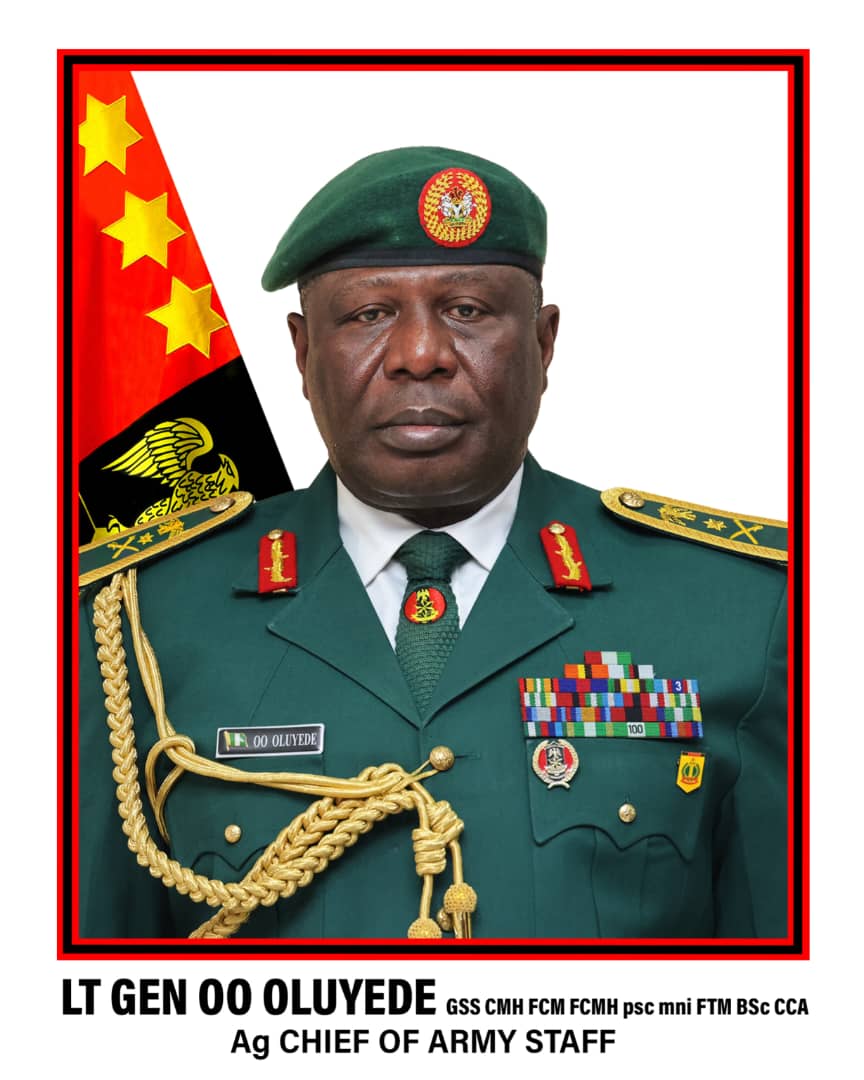
Opinion: Lt General Olufemi Oluyede ; A Quintessential Gentleman and a Soldier’s Soldier.
By Comrade Oladimeji Odeyemi.
” The most important thing I learned is that Soldiers watch what their leaders do. You can give them classes and lecture them forever, but it is your personal example they will follow ” – General Colin Powell.
Nearly all leaders can stand adversity, but if you want to test a man’s character, give him a battle. This very word fit into the compass mind under which the character of Lieutenant General Olufemi Oluyede has evolved. In the war against remnants of terror, banditry and other violent crimes in Nigeria, his leadership qualities stood out the most.
With this treatise, with this article, a reflection on the qualities of a Quintessential Gentleman and a Soldier’s Soldier begin…. His name, General Olufemi Oluyede, the Chief of Army Staff (COAS, Nigerian Army).
Many will agree with the General in the very manner of summing up his philosophy, a passion for excellence is contagious and uplifting. Passion cuts both ways. In creating passion in his own life and with those he cares for. General Olufemi Oluyede wants to feel, experience and live every emotion and passion of his work. And such that he had determined to suffer through the bad for the heights of the good. Here, is a story of a General and the Chief of Army Staff, starts as one of the very few who as the head, has witnessed war… Real war, and unlike many others, has triumphed.
The war, i am referring to, is not even just a war, not just a battle, but a war with a difference, the war on enablers of violent crimes and and their collaborators with as much of a political backing.
Such a country President Bola Ahmed Tinubu inherited, such is also the circumstances General Olufemi Oluyede inherited as the 24th Chief of Army Staff, Nigerian Army.
Violent crimes in Nigeria has many arms and appendages including but not limited to banditry, kidnapping etc. But the most dangerous reality about this violent crimes is perhaps it’s political arm, of which any army is not going to be so equipped to deal with by the book and neither by their training. It is not uncommon to see a scenario play out. That a decision be made at the very top of our security agencies and within minutes, such intricate policy decisions made in secrecy is already known to the criminals. Many times, this criminals will be waiting in ambush to intercept personnel carrying out a mission regarded as a maneuver and tactics. This leak were mostly done by some politically exposed individuals who are aiding and abetting this criminal elements.
This situation and many of such, the Army Chief has had to face since his appointment as the COAS, Nigerian Army.
To say the truth, General Olufemi Oluyede has succeeded where some others have failed in tackling the ever difficult challenge of tackling the political arm of this violent criminals. And we must say where we have a volatile mix of politics and religion, a very serious challenge ensures. But not insurmountable as the Nigerian Army under General Oluyede has succeeded in locating, arresting and decimating the support system of this criminal elements.
As the General himself has demonstrated, in the military, he has learned the essence of the people. He has learned to be impartial.
In General Olufemi Oluyede, we have seen so many examples of self sacrifice and moral courage, even taking the battle to every nooks and crany of the Country. Today the people of the Northeast, Northwest, Southeast and all other parts of the Country, sleep peacefully in their beds at night, only because noble men like General Olufemi Oluyede and his gallant soldiers stand ready to defend their liberties on their behalf.
There’s no doubt that, General Olufemi Oluyede’s core values that emanated from professionalism and responsiveness includes training, regimentation, welfare, operational exigencies, logistics, inter agencies cooperation and observation of human rights obligations.
On human rights obligations, the Nigerian Army under General Oluyede has continued to sustain relationships with human rights bodies, the Army engages them as partners rather than rivals in the internal security operations. The Nigerian Army leadership has been able to close the gap with the civil populace and the civil society organizations.
Also lauded by Nigerians are the Nigerian Army open dialogue with partners like the Nigerian Human Rights Commission (NHRC), The Nigerian Bar Association (NBA), the Red Cross Society and also the Human Rights Writers Association and others.
No doubt, General Olufemi Oluyede has decided to undertake the transformation of the service as a priority. The training in the Nigerian Army has been modified with the use of latest technologycal advancement.
Our Soldiers are now well motivated than ever, they are getting required support as at when due, General Olufemi Oluyede cuts the image of an uncommon Soldier, tough on battlefront but gentle as a dove on the home front. He has the pedigree of being a torn in the flesh of insurgents, insurrectionist and other enemies of Nigeria. He’s a, Soldier’s Soldier, gallant, resourceful, courageous and humane.
He has brought laughter to many faces, enhanced the development of many communities across Nigeria through the Nigerian Army Civil Military legacy projects.
For all it is, the Nigerian Army under General Olufemi Oluyede, though in the throes of few security challenges, has remained resolute and committed to maintaining the territorial integrity of our borders as well as keeping the nation and our democracy safe.
Perhaps, the highly celebrated journalist, ” Don Yeager” had the likes of General Olufemi Oluyede in mind when he said; ” Sometimes legends find themselves remembered more for what they have not done than for their accomplishments”.
Today, it is no longer in doubt that the Nigerian Army under General Olufemi Oluyede is more than ever be committed to its constitutional responsibilities. It is therefore, not out of place to state that General Oluyede has lived to expectation and Nigerians are proud of his leadership.
This article was written by Comrade Oladimeji Odeyemi.




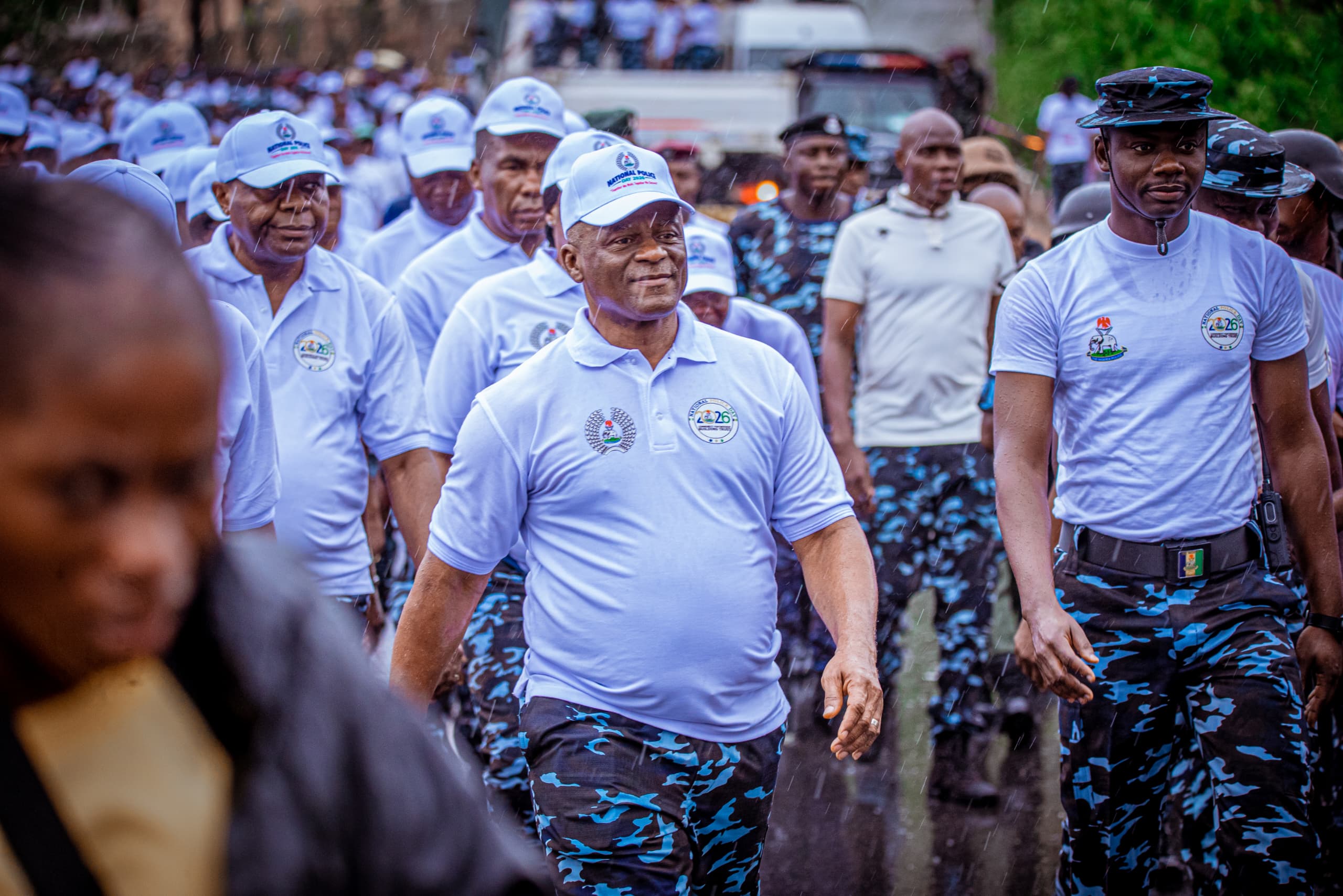
Police Day 2026: IGP Disu Leads Nationwide Walkathon To Strengthen Community Trust
The Inspector-General of Police, Olatunji Disu, on Tuesday led the management team, alongside officers and personnel of the Nigeria Police Force, in a nationwide walkathon to commemorate the 2026 National Police Day.
The event, held across state capitals and the Federal Capital Territory, formed part of activities marking Day Two of the annual celebration, themed “Community Partnership: Building Trust.”
The symbolic exercise, which drew participation from both police personnel and members of the public, was aimed at showcasing unity, discipline, and a renewed commitment to community policing and public safety.
According to the Force leadership, the walkathon underscores the Nigeria Police Force’s resolve to strengthen public trust, deepen engagement with citizens, and enhance collaboration in tackling security challenges across the country.
Participants described the initiative as a practical step toward bridging the gap between law enforcement and the communities they serve, while also promoting physical fitness and mental well-being among officers and civilians alike.
With the theme reflecting a shared responsibility for safety, the Police reiterated that sustainable security can only be achieved through active partnership with the public.
The event concluded with a renewed call for collective action under the banner: “Together We Walk, Together We Secure,” emphasizing unity of purpose in building a safer and more secure society for all Nigerians.


society
Dr. Chris Okafor invokes divine retribution upon individuals blackmailing the Grace Nation church

Dr. Chris Okafor invokes divine retribution upon individuals blackmailing the Grace Nation church
… Affirming God’s omnipotence to unveil malicious schemes.
To be frank, the ability of Doris Ogala and her associates to withstand the arduous challenges set by Senior Pastor Dr. Chris Okafor of Grace Nation Global at the culmination of the Harvest of Babies 2026 conference, the church’s flagship event, continues to elude me.
It’s advisable not to offend a powerful spiritual leader like Prophet Chris Okafor to avoid potential consequences, as seen in the situation with Doris Ogala, who was rebuked by the prophet; can she rectify the situation through confession?
Insiders close to the man of God claim that despite relentless online bullying and blackmailing, the Generational Prophet remains resolute, stating that God’s power has been evident throughout the commission’s existence. The reason for this wonderful statement is found in the scriptures, “Upon this rock I shall build my Church, and the gates of hell shall not prevail.” The more falsehoods are spread about the church and its leader, the more God elevates the church and propels him to greater heights, he asserted. He emphasized that blessings and fruitfulness are antidotes to curses, noting that God continues to bestow blessings upon the church, including miracles and the gift of children, which is one reason for the grand finale of the annual family liberation program, The Harvest of Babies.
However, the man of God issued a curse on each person speaking ill of the church, blackmailing, and uttering all sorts of falsehoods against the church, declaring that if they refused to repent within a few days, the earth would swallow them and their family members, stating that they would be of no use to themselves, their families, or society at large.
The spiritual leader cautions his followers to beware of such individuals including Doris Ogala who may taint their faith, and urges them to treat these persons as emissaries of the devil, avoiding them altogether.
Recall that the 2026 harvest of babies concluded with a remarkable birth of a miracle baby boy to a woman on the third day of the conference, accompanied by the dedication of several other miracle babies, all to the glory of God.
Christopher Sunday David writes from
Austria
“Together We Walk, Together We Secure”: Police Launch 2026 Walkathon In Abuja
The Nigeria Police Force has announced plans to host a walkathon in commemoration of the 2026 National Police Day, aimed at promoting unity, peace, and stronger community partnership.
The event is scheduled to take place on Tuesday, March 31, 2026, with participants expected to converge at the Force Headquarters Abuja by 6:00 a.m., where the walk will commence.
According to the organisers, the walkathon is designed to bring together members of the public, stakeholders, and security personnel in a show of solidarity and shared commitment to national security.
With the theme, “Together we walk, together we secure,” the initiative underscores the importance of collaboration between the police and citizens in maintaining peace and safety across the country.
Members of the public have been encouraged to participate in the exercise, which forms part of activities lined up to mark this year’s National Police Day celebration.
It is believed that the walkathon would not only foster closer ties between the police and the communities but also serve as a platform to promote awareness on collective responsibility in ensuring a safer society.


-

 society6 months ago
Religion: Africa’s Oldest Weapon of Enslavement and the Forgotten Truth
-

 news4 months ago
WHO REALLY OWNS MONIEPOINT? The $290 Million Deal That Sold Nigeria’s Top Fintech to Foreign Interests
-

 society6 months ago
“You Are Never Without Help” – Pastor Gebhardt Berndt Inspires Hope Through Empower Church (Video)
-

 celebrity radar - gossips2 months ago
Dr. Chris Okafor Returns with Power and Fire of the Spirit -Mounts Grace Nation Altar with Fresh Anointing and Restoration Grace on February 1, 2026