
Business
OPPO Reno 7: OPPO’s End-to-End Quality Assurance Promise


OPPO Reno 7: OPPO’s End-to-End Quality Assurance Promise
Many factors influence a consumer’s decision to purchase a smartphone: the number of smart high-tech features, the phone’s stylish design, or its compact size.
However, if there is one element that can completely turn someone into a loyal fan of a brand, it has to be product quality. With tens of millions of users around the world, OPPO has built its reputation on strict end-to-end quality controls, covering everything from design and manufacturing to quality inspection and after-sales services. These processes are based on a relentless pursuit of attaining the high quality in both product and service, ultimately giving users comprehensive assurance when purchasing a product.

Excellent quality begins with excellent manufacturing
Selecting the world’s top suppliers to guarantee quality from the ground up
OPPO has been actively working with suppliers throughout the industry to create a wide ecosystem of partners. To supply the components that make up the smartphones, OPPO works with many leaders in their respective fields. Take the screen module for example: OPPO partners with Samsung Electronics, Japan Display Inc (JDI), BOE, Tianma Microelectronics, and other manufacturers known for producing top-quality displays and components. OPPO has been working closely with renowned glass suppliers such as Corning and SCHOTT to produce protective screen glass. By partnering with the top suppliers, OPPO is able to manufacture the precisely customized, high-quality components needed to ensure the quality of its end products from the most fundamental level.
Dedicated production lines/factories guarantee the highest standards
To further guarantee the quality of products that come off the production line, OPPO works with its partners to establish dedicated support teams, specialized production lines, and even specialized factories exclusively for OPPO. All components destined for use in OPPO products must be produced in these facilities, which are maintained to the highest standards in the industry. Every worker must undergo OPPO’s extensive pre-work training, including familiarization with OPPO technical documents, and having OPPO technical requirements embedded into the facility’s internal manufacturing processes. Design specifications and quality control procedures are taught to staff, and all production lines are operated by OPPO’s high standard.
Strict production environments also demonstrate OPPO’s precise control over the production line: OPPO requires its suppliers to construct highly intelligent production lines capable of standardized production. Each production line must be strictly certified and monitored, and every item is given a unique ID number to ensure that each tiny procedure can be traced back through the entire production process. When manufacturing smartphone displays for example, all displays are assembled in a Class 1000 dust-free cleanroom that meets more than 270 specifications to ensure standardized production. The production of each component is strictly controlled within fixed specifications to guarantee that every mobile phone provides the same flawless quality.
Rigorous process controls
Even if a smartphone is manufactured according to rigorous production methods, the device needs to be tested before it reaches the market. All OPPO products are required to pass quality and reliability verification on their components, production lines and complete devices. Further to this, independent quality controls are carried out across the entire manufacturing process, including pre- and post-assembly, installation, and completed device stages. If a potential quality risk is detected at any point, OPPO will reject the device, send it back to the manufacturing stage, and solve the underlying issue. Aside from checks performed during manufacturing, engineers and technical experts also conduct five rounds of comprehensive quality assessments and reviews. These include evaluations during products planning, design, development, and verification. If a smartphone fails during any round, it is not allowed onto the market.
Innovation based on assured quality
As a famous saying at OPPO goes “product quality comes from good design”. Part of the role of OPPO’s R&D personnel involves taking specific user needs and transforming them into higher quality user experiences through tailored product design. Good product design is more than just appearances – it requires guaranteeing that every feature and every aspect of the device delivers on its promise to users.
Dedicated designs make every promise a reality
Production feasibility needs to be taken into account from the very outset if design innovations are to perform as intended. OPPO product designers therefore need to create clear and detailed product blueprints with enough information for factory workers to understand and follow accurately. This requires product designers to think ahead during the product planning stage to consider problems that might be encountered during production and manufacturing, and then come up with detailed solutions before the designs are put into production.
Practical and durable process innovation
Not every imaginative design idea makes its way onto the smartphones. OPPO takes a very cautious approach to commercializing new designs. A novel design requires hundreds, or even thousands of trials, including material selection, testing of the manufacturing process, quality verification, or months of technical testing before it is brought to consumers on a finished smartphone.
Take the new Reno7 Sunset Orange for example. In order to give the back cover of the phone an expressive textured effect that also feels smooth in the user’s hand, OPPO designers examined thousands of different textures. Eventually, the team of designers narrowed down thousands of potential materials to just six options. Further market research on these six textures finally led to the selection of a lychee grain leather texture, chosen for its suitable thickness and natural, skin-friendly touch.
The designers then came across another new challenge when attempting to bring the exact textural effect to the back cover of the smartphone. To solve this, OPPO devised its own innovative Fiberglass-Leather made up of a synthetic leather material and a plate combined into one integrated piece designed to perfectly fit the shape of the phone. Compared with traditional leather covering processes, the Fiberglass-Leather design introduces a “frameless battery cover”, meaning that no plastic mid-frame support is required. This new leather and fiberglass construction results in a lighter, thinner, and more integrated back cover without compromising on practicality and durability.
Such innovations in design require further exploration in new applications of technologies and materials. To bring the appearance of high-quality leather to the Reno7 series, OPPO tested and modified ten different polyurethane materials and six bridging layers, and made five modifications to the glass fiber epoxy resin. To ensure the material could withstand up to 100°C heat and 1.5mPa of pressure for 4 hours during the manufacturing process, OPPO engineers strengthened the temperature resistance of the leather polyurethane material to 190°C and increase its tensile strength to 20mPa, ensuring that the material’s appearance did not warp during production. Together, these steps make it possible for the leather back cover to be mass produced at the desired level of quality.
Stringent testing of every detail
After the design and manufacture stages, more testing is required to fully guarantee that the finished product meets OPPO’s high standards before it arrives on the market.
Global test centers provide professional quality assessment
OPPO has established quality testing centers in China, India, and Indonesia, a professional quality team made up of hundreds of engineers and technical experts. OPPO’s quality laboratory has even been accredited by authorities such as the China National Accreditation Service for Conformity Assessment. In these quality testing centers, products need to pass more than 130 ultra-rigorous reliability tests, 320 experimental tests, and 6 major tests before they are ready for the next stage.
Comprehensive general testing goes beyond industry standards
OPPO products are only deemed fit for consumers if they have successfully passed a series of rigorous quality tests. These cover all day-to-day usage scenarios that the phone is likely to come across, including waterproofing tests, temperature and humidity tests, drop tests, RF tests, audio tests, radiation tests, battery tests, button pressing tests, plugging tests, twisting tests, light aging tests, cosmetics tests, extreme environment tests, clothing tests, and many more. To guarantee the same high quality for users around the world, some of these tests have much higher requirements than the industry average. For example, the drop test, which simulates a typical free-fall scenario from various heights, was set at a height of 1 meter for OPPO phones against an industry average of 0.8 meters. These comprehensive, demanding tests ensure OPPO devices can be used as expected in both regular and extreme environments.
Specific tests for special quality control
Apart from tests designed to ensure regular performance and functionality, OPPO also conducts specific tests to ensure the durability and practicality of innovative features or design elements. For instance, the Fiberglass-Leather on Reno7 Sunset Orange has been subjected to extreme lab tests involving rubbing the material with an alcohol-soaked pad, a rubber eraser, and a denim swatch over 5,000, 10,000, and 200,000 times respectively. By simulating daily wear and tear in this way, OPPO ensure that its innovative designs are durable and resistant enough to meet its high standards.
This same insistence on excellence can also be found in the high level of quality control around design details. The Orbit Light, which surrounds or embedded in the camera module on certain smartphone models, OPPO conducted over twenty uniform light scheme adjustments, thousands of uniform light detection tests, and other special tests. In the standard test environment (25°C, 60% humidity, 10mAh), the lifespan of the Orbit Light was shown to reach over 50,000 hours. Through these special quality control tests, OPPO can ensure that even the smallest of innovations deliver a reliable, fault-free experience.
Quality assurance from start to finish
To deal with issues caused by minor accidents during daily use, OPPO has established professional and friendly after-sales teams worldwide to provide services to every OPPO user, making up the final link in OPPO’s end-to-end quality assurance.
Following the opening of the first service center in Lagos Nigeria, OPPO began to rapidly rollout more centers nationwide. As of 2021, OPPO has established more than after-sales centers in Nigeria and regions such as Lagos, Abuja, Porthacourt, Ibadan, together, more than 100 customer service representatives work in these service centers.
Through these after-sales service centers, OPPO has built up a high-quality service model based on its Care & Reach philosophy. Through Care & Reach, OPPO brings customers industry-leading after-sales services based on three core values: Friendly Service, Professional Service, and Inspiring Service. For example, OPPO has introduced “1 Hour Flash Fix”and “Send-in Repair services”, making it possible for users to have their smartphones repaired quickly and efficiently. At the same time, these user-friendly services enable OPPO technical engineers to improve their troubleshooting skills and efficiency, helping them to provide faster, more convenient, and more professional services at all times.
Product quality can be very difficult to prove when it comes to complex devices such as smartphones. It is not until something goes wrong that an individual starts to question its quality. Therefore, OPPO bases its quality standard not on the results of factory testing but on direct feedback from the market. This includes things such as the maintenance rate for a certain device, and the product withdrawal rate.
Thanks to OPPO’s high quality requirements and rigorous quality control, failure rates for OPPO products available on the market are far below those of the industry average. For example, the failure rate from water damage is far lower than the industry average; products are also less likely to result in severe damage after being dropped and are more reliable when used in very humid climates or other extreme environments. Building upon this success, OPPO will continue to make quality a cornerstone of its commitment to consumers, bringing users reliable products and high-quality services through its end-to-end quality assurance program.





Fidelity Bank grows gross earnings by 38% to N434.95b in Q1
Fidelity Bank Plc recorded 37.9 per cent growth in gross earnings to N434.95 billion in first quarter 2026 as the international commercial bank continued to expand its core banking market share.
Interim report and accounts of Fidelity Bank for the three months ended March 31, 2026 released at the Nigerian Exchange (NGX) showed that gross earnings rose from N315.42 billion in first quarter 20025 to N434.95 billion in first quarter 2026, representing an increase of 37.9 per cent.
The top-line performance was driven by impressive growth in the bank’s core business operations with interest incomes rising by 22.8 per cent to N314.48 billion in first quarter 2026 as against N256.10 billion in first quarter 2025.
With net interest income at N180.97 billion, the bank closed the period with profit before tax of N92.48 billion. After taxes, net profit stood at N74.47 billion for the three-month period. Earnings per share remained high at N5.69, underlining the capacity of the bank to reward its shareholders.
The balance sheet of the bank also emerged stronger. Total assets crossed the N11 trillion mark to N11.35 trillion by March 2026 compared with N10.46 trillion recorded in December 2025. Customers’ deposits increased from N6.89 trillion to N7.38 trillion. Total equity rode on the back of earnings growth to a 27.5 per cent increase from N1.09 trillion in December 2025 to N1.39 trillion by March 2026.
The first quarter 2026 results further consolidated the strong earnings outlook of the bank, which had successfully completed its recapitalisation amidst impressive earnings performance in 2025.
Fidelity Bank had recorded double-digit growths in interest and non-interest incomes as well as key balance sheet items during the year ended December 31, 2025.
The audited report showed that gross earnings rose from N1.04 trillion in 2024 to N1.52 trillion in 2025, an increase of 45.6 per cent. Interest and similar incomes had grown by 38.7 per cent from N803.1 billion in 2024 to N1.11 trillion in 2025. Fees and commission incomes also rose by 44.7 per cent from N78.4 billion to N113.4 billion. The bank recorded net profit after tax of N242.4 billion in 2025.
The bank’s balance sheet emerged stronger with total assets rising by 18.6 per cent to N10.46 trillion in 2025 as against N8.82 trillion in 2024. Customer deposits increased by 16.1 per cent from N5.94 trillion to N6.89 trillion, reflecting continued franchise strength and an improved funding profile. Net loans and advances meanwhile declined by 2.4 per cent to N4.28 trillion in 2025 as against N4.39 trillion in 2024, attributable to customers paying down on their mature obligations.
The bank had in 2025 strengthened its capital position, with eligible capital rising to N561 billion, above the regulatory minimum of N500 billion for banks with international authorisation. In addition, capital adequacy had remained robust, with Capital Adequacy Ratio of 30.94 per cent by December 2025 as against 23.47 per cent by December 2024.
Managing Director, Fidelity Bank Plc, Dr. Nneka Onyeali-Ikpe, said the first quarter 2026 results reinforced the bank’s strong and resilient business model.
She noted that with the remarkable success of its recapitalisation programme and continuing expansion, Fidelity Bank has entered a new era of growth and impressive returns.
“We are on a stronger footing and confident that we will set new growth records that are reflective of our legacy and the future we are working on,” Onyeali-Ikpe said.
Business
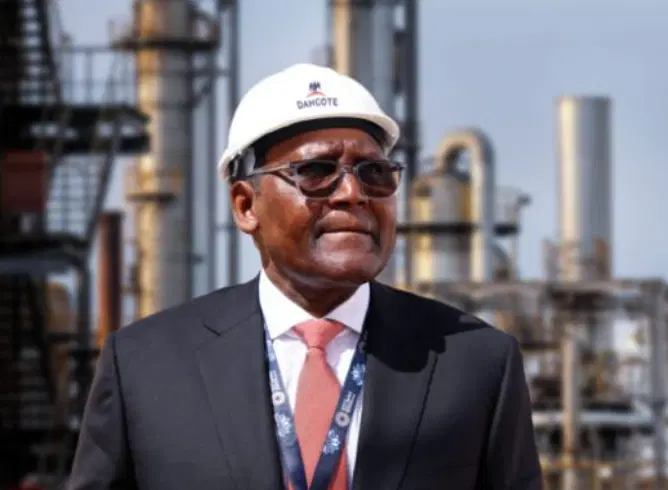
Dangote Refinery Ends Nigeria’s Era of Fuel Import Dependence, Boosts GDP, FX Earnings — EIU
Dangote Refinery Ends Nigeria’s Era of Fuel Import Dependence, Boosts GDP, FX Earnings — EIU
The operational ramp up of the 650,000 barrels per day Dangote Petroleum Refinery & Petrochemicals is fundamentally reshaping Nigeria’s downstream oil sector, significantly reducing the country’s dependence on imported refined petroleum products and strengthening its external position, according to the Economist Intelligence Unit (EIU).
In its latest assessment on Nigeria’s fuel market and regulatory environment, the EIU said the refinery has already transformed a sector that was previously characterised by heavy reliance on imported fuel despite Nigeria being Africa’s largest crude oil producer. The report noted that the refinery met nearly 80 per cent of domestic petrol demand in April and produced enough volumes to satisfy local consumption requirements as operations approached full capacity.
The EIU described Nigeria’s downstream petroleum sector before the refinery as “long dysfunctional”, noting that the country had remained almost entirely dependent on costly imported fuel while producing nearly 1.5 million barrels of crude oil daily.
According to the report, the emergence of the refinery has reduced import dependence, improved domestic fuel availability and strengthened Nigeria’s balance of payments position through lower import demand and rising exports of refined petroleum products.
“The gradual ramp up of the 650,000 barrel/day Dangote refinery since May 2023 has transformed Nigeria’s long dysfunctional downstream sector,” the report stated. “The country’s main refineries, all state owned, had been inoperative for years and Nigeria was almost entirely reliant on costly imported fuel.”
The research and analysis division of The Economist Group, London added that the refinery’s attainment of full operational capacity and its planned expansion would further support Nigeria’s economic growth and foreign exchange earnings over the medium term.
“Meanwhile, the attainment of full capacity at, and an increase in exports from, the Dangote refinery will support real GDP growth and foreign exchange earnings in 2026 and 2027 and beyond, as a planned doubling of the plant’s output comes on stream around the end of the decade,” it added.
Industry analysts said the refinery is increasingly positioning Nigeria as an emerging refining and export hub, altering energy trade flows across Africa and reducing the vulnerability associated with fuel import dependence.
The EIU noted that the refinery’s expansion has coincided with major reforms in Nigeria’s downstream sector, including the removal of fuel subsidies and the introduction of market driven pricing mechanisms.
The report, however, said the transition from a state dominated fuel import structure to large scale domestic refining has triggered resistance from interests linked to the old import regime.
The latest tensions emerged following the decision by the Nigerian Midstream and Downstream Petroleum Regulatory Authority to relax restrictions on petrol imports despite the refinery’s growing capacity to meet domestic demand.
Dangote Industries subsequently initiated legal action, arguing that continued import approvals undermine domestic refining investments and conflict with the objectives of the Petroleum Industry Act, which seeks to encourage local refining capacity and reduce import dependence.
Analysts noted that the availability of large-scale domestic refining capacity has improved Nigeria’s energy security and reduced exposure to external supply shocks and foreign exchange volatility.
The Centre for the Promotion of Private Enterprise also cautioned against unrestrained importation of petroleum products, warning that such a policy could weaken Nigeria’s industrialisation drive and discourage investments in domestic refining.
Chief Executive Officer of CPPE, Muda Yusuf, said continued dependence on imported fuel had historically contributed to pressure on foreign reserves, exchange rate instability and fiscal leakages.
The refinery’s growing impact is also being reflected in Nigeria’s broader macroeconomic indicators. Earlier this month, S&P Global Ratings cited increased domestic refining capacity and rising hydrocarbon exports among the major factors supporting Nigeria’s sovereign credit rating upgrade – the first in 14 years.
Beyond Nigeria, analysts said the refinery is increasingly being viewed as a strategic industrial asset for Africa, where many countries remain heavily dependent on imported fuel despite rising demand for transportation, manufacturing, and power generation.
Business
BREAKING: Court Dismisses $19.6 Million Claim Against NNPCL — Rules Contract Scope Cannot Be Changed Orally

BREAKING: Court Dismisses $19.6 Million Claim Against NNPCL — Rules Contract Scope Cannot Be Changed Orally
In a landmark ruling on Friday, May 22, 2026, the Federal Capital Territory High Court in Abuja threw out a $19.6 million lawsuit filed by Alternate Dimensions Ventures Ltd against the Nigerian National Petroleum Company Limited (NNPCL), affirming a key legal principle: a written contract cannot be expanded through oral agreements or conduct.
Alternate Dimensions had sought $19,600,000 in professional fees, claiming the scope of its Direct Sale, Direct Purchase (DSDP e-pro) contract with NNPCL was orally expanded. Represented by counsel Patrick Peter, the firm argued it was entitled to the revised sum for services rendered under the alleged new terms.
But NNPCL, through its lawyer Ituah Imhanze of KENNA LP, pushed back sharply, arguing that parties are bound exclusively by the clear terms of their written agreement. Imhanze contended that without any written amendment, the claim was legally unsound, and the court agreed.
Delivering judgment, Justice Hamza Mu’azu upheld NNPCL’s defense, stating that the contract was unambiguous and that no evidence was adduced during the trial, which supported the alleged scope expansion. The court further found that NNPCL fully complied with all contractual terms and committed no breach.
Dismissing the suit as meritless, Justice Mu’azu reinforced the doctrine of sanctity of contract: any amendment to a written agreement must be express, unequivocal, and documented, not implied or verbal.
The ruling spares NNPCL from the S19.6 million claim and also a floodgate of similar potential liabilities.


- Economic Community of West African States (ECOWAS) has Deployed a Technical Mission to Observe the Legislative and Local Elections of May 31, 2026 in Guinea May 31, 2026
- President Herminie Attends Seychelles Football Federation (SFF) Cup Final and Presents Trophy to Bazar Brothers FC May 31, 2026
- ‘You are not alone’: World Health Organization (WHO) chief vows to stand with Democratic Republic of the Congo (DR Congo) through Ebola outbreak May 31, 2026
- United Arab Emirates (UAE) Expresses Solidarity with Kenya and Conveys Condolences over Victims of Girls’ School Dormitory Fire May 31, 2026
- Pitcher Awards Announces 2026 Winners, Marking a Landmark Year for Pan‑African Creativity May 30, 2026
- Ghana Commemorates 78th International Day of United Nations Peacekeepers May 30, 2026
- South Africa: President Ramaphosa receives second interim report of Madlanga Commission May 30, 2026
- Asmara Marathon 2026 to be held May 30, 2026
- Powerful call for dialogue and compromise to secure peace in South Sudan issued on International Peacekeepers Day May 30, 2026
- Over 1,000 Participants Join Rwenzori Marathon Activation Run in Mombasa May 30, 2026
- Economic Community of West African States (ECOWAS) has Deployed a Technical Mission to Observe the Legislative and Local Elections of May 31, 2026 in Guinea May 31, 2026
- President Herminie Attends Seychelles Football Federation (SFF) Cup Final and Presents Trophy to Bazar Brothers FC May 31, 2026
- ‘You are not alone’: World Health Organization (WHO) chief vows to stand with Democratic Republic of the Congo (DR Congo) through Ebola outbreak May 31, 2026
- United Arab Emirates (UAE) Expresses Solidarity with Kenya and Conveys Condolences over Victims of Girls’ School Dormitory Fire May 31, 2026
- Pitcher Awards Announces 2026 Winners, Marking a Landmark Year for Pan‑African Creativity May 30, 2026
- Ghana Commemorates 78th International Day of United Nations Peacekeepers May 30, 2026
- South Africa: President Ramaphosa receives second interim report of Madlanga Commission May 30, 2026
-

 news6 months ago
WHO REALLY OWNS MONIEPOINT? The $290 Million Deal That Sold Nigeria’s Top Fintech to Foreign Interests
-

 society4 weeks ago
SOCIAL MEDIA IS NOT A BATTLEFIELD COMMAND – WHY THE NIGERIAN ARMY’S ACTION AGAINST JUSTICE CRACK IS A NATIONAL SECURITY IMPERATIVE
-

 celebrity radar - gossips4 months ago
Dr. Chris Okafor Returns with Power and Fire of the Spirit -Mounts Grace Nation Altar with Fresh Anointing and Restoration Grace on February 1, 2026
-

 celebrity radar - gossips6 months ago
Prophet Kingsley Aitafo Releases 2026 Prophecy: ‘Nigeria Will Rise, but the World Must Prepare for Turbulence’