
news
Osun Polls : PDP leads APC, SDP in ongoing election

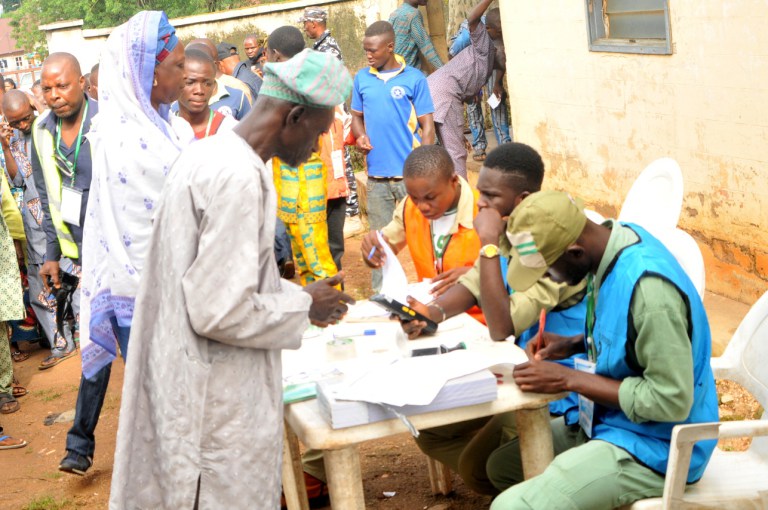


As voting ends in many polling units across Osun State, results from such polling units have started coming in.
With the deployment of about 180 observers across the 30 local governments in the state, the Premium Times Centre for Investigative journalism in partnership with the Centre for Democracy and Development brings you the official results as announced by INEC officials at the various polling units.
From the polling units, the results will next be collated at ward collation centres, and then at local government collation centres. The final, official result will be declared at the INEC secretariat in Osogbo, the Osun State capital.
Follow live updates of the polling units results below.
At exactly 2:37 pm at PU003,WARD10 NUD primary school,iree BORIPE LGA
Results are as follows:
APC-25
PDP – 47
SDP – 343
ADP – 4
VOID – 14
2:33 p.m.: Ward 03, PU 005, Boluwaduro Local Government.
Total of 64 votes cast, with ADP=12 votes.
APC = 17 votes.
APP = 1 vote.
NEPP = 1 vote.
PDP = 17 votes.
SDP = 16 votes.
Three rejected ballot papers.
Ifon Orolu Local Government, Olufon Orolu D (Ward 4), Bolorunduro II (Polling Unit 6) as at 2:50PM
197 Voters
PDP – 73
APC – 82
SDP – 26
Void – 7
PPC – 1
FJP – 1
APA – 1
PRP – 1
SME – 1
ADC – 1
PPP – 1
ADP – 2
PU 002 (VP B), Ward 10 Okin ni/Olorunsogo/Ofatedo, Egbedore LGA
RESULTS
*A* = 1 vote
*APC* = 46 VOTES
*SDP* = 79 VOTES
*PDP* = 39 VOTES
*ADC* = 4 VOTES
*ACD* = 1 VOTE
PU 002 (VP B), Ward 10 Okin ni/Olorunsogo/Ofatedo, Egbedore LGA
RESULTS:
A = 1 vote
APC = 46 VOTES
SDP = 79 VOTES
PDP = 39 VOTES
ADC = 4 VOTES
ACD = 1 VOTE
ADP = 6 VOTES
APP = 3 VOTES
Results from Aare ward 4 PU 4 Ifedayo, Ife South.
1. PDP: 32
2. SDP: 57
3. APC: 98
4. NPP: 1
5. ACP: 2
6. PDC: 1
7. APA: 2
8. LP: 0
9: SMP: 1
10. PPA: 1
11. ADC: 2
12. ADP: 2
Rejected: 19
Total number of votes cast: 218.
Number of accredited voters: 406.
Counting ended by 2:35pm.
Polling Unit 8, Ward 1, Odo Otin Local Government
Results.
PDP – 75
APC – 41
SDP – 14
AD -1
GPN -1
ADC -33
Void 4
At Polling Unit 13, Ila Local Govt.
PDP- 38
APC- 41
SDP- 9
ADC- 0
Rejected vote- 6
Void Vote -1
Total vote- 98
PU 006 , DTC School Ikirun, Ifelodun local government voting point 2,
The voting Point election Results
PDP : 67
APC : 47
SDP : 18
PPA : 2
ANRP : 1
PPC : 1
UPN : 1
ADP : 19
ADC : 2
NNPP : 1
APP : 1
ADP : 19
YDP: 1
VOIDS : 26
PU 7 VP 3 ward 3 ife east local government has finished counting votes
APC 44
PDP 36
SDP 153
ADC 2
ADP 6
PU 007, Ward 2, Baale, in front of Agboluaje House, Okuku, Odo Otin Local Government Area
ACPN – 1
AD – 1
ADC – 23
ADP – 1
APC – 85
DPC – 1
PDP – 93
SDP – 33
SPN – 1
Void – 3
Unit 8 Ward 1, Odo Otin local government
PDP – 75
APC – 41
SDP – 14
AD -1
GPN -1
ADC -33
Void 4
Polling Unit 002 (Voting Booth B), Ward 10 Okinni/Olorunsogo/Ofatedo, Egbedore LGA
RESULTS:
APC = 46 Votes
SDP = 79 Votes
PDP = 39 Votes
ADC = 4 Votes
ACD = 1 Votes
ADP = 6 Votes
At 2:50PM: Olufon Orolu D (Ward 4), Bolorunduro II (Polling Unit 6). Ifon Orolu Local Government,
RESULT
PDP – 73
APC – 82
SDP – 26
Void – 7
PPC – 1
FJP – 1
APA – 1
PRP – 1
SME – 1
ADC – 1
PPP – 1
ADP – 2
Total Voters 197
At 2:49 p.m. In Ward 5, PU 3, Ife North Local Govt.
Voting ongoing.
****************************************************************
PU 7 Voting Point 3 Ward 3, Ife East Local Government
RESULTs
APC 44 Votes
PDP 36 Votes
SDP 153 Votes
ADC 2 Votes
ADP 6 Votes
Waiting for other voting points in the PU
**************************************************************************
At 03:04 pm. PU 001, Ward 006, Ipetumodu Town Hall, Ipetumodu, Ife North Local Govt.,
The Polling Official openly shows ballot papers to party agents while sorting continues
PU 2, Ward 1, LA Primary School, Popo Iragbiji, Boripe Local Govt.
PU 2 (B)
Registered Votes 181
Successful – 154
Failed – 27
Issued Voters paper – 177
Verified 4
RESULT
ADC – 1
ADP – 7
APC – 100 (Winner)
PDP – 46
SDP – 1
Void – 18
2:55pm: Aare Ward 4, PU 3 lIfedayo, Ife South Local Govt.
RESULTS
1. PDP: 51 Votes
2. SDP: 70 Votes
3. APC: 59 Votes
Rejected: 7 Votes
Total number of votes cast: 297
At 3:29 p.m PU 001, Ward 02, Ipetu Ile, Methodist Primary School 2, Obokun Local Govt.
RESULTS
APC – 72
PDP – 134
SDP – 10
ADC – 1
PPA – 3
PPN – 2
ADP – 2
PDC – 1
UPN – 1
Total Registered Voters – 500
At 2 :52 p.m, Ward 1, Unit 5B, AUD Elementary School, Isokan Local Government
RESULTS
ADP : 4 votes,
APA : 0 vote,
APC : 62 Votes,
PDP :78 Votes,
PPA : 1 Vote,
SDP : 21 Votes,
UPN : 1 Vote
Ward 5 polling unit 2 in Iwo local government:
RESULT
ADC :4
ADP :73
APC :49
PDP :16
SDP: 27
Void:23
3:22pm at Ward 8, Unit 4, Ola-Oluwa Local government.
APC – 56
PDP – 30
ADP – 22
SDP – 19
ADC – 4
Ikire E, ward 5, unit 9, Irewole Local Govt
RESULTS
PDP :100
KOWA : 01
ADP :08
AGA :01
SDP : 07
PPA :02
APC :99
DPC :01
DPP : 02
3:33PM Iwo Oke Town II. Ward 09. Unit 003 at Ola-Oluwa Local Government
Accredited 174
RESULTS
ACD 2
PPC 1
ANRP 2
NPCC 1
PDC 1
ADC 3
SDP 25
PDP 44
ADP 31
APC 55
Invalid 9.
At 3:29 p.m.: PU 001, Ward 02 Ipetu Ile, Methodist Primary School 2, Obokun Local Govt.
RESULTS
APC – 72
PDP – 134
SDP – 10
ADC – 1
PPA – 3
PPN – 2
ADP – 2
PDC – 1
UPN – 1
RA 009, PU 001, Ilesa West
RESULTS
ADP 22,
APC 57,
APP 2,
PDP 63,
PPA 1,
PPC 3,
SDP 28.
At 2:49pm. Ward 5, PU 3, Ife North L.G.A. voting still ongoing.
Aare Ward 4, PU 3, lIfedayo, Ife South Local Govt.
RESULTS
PDP 512.
SDP 703.
APC: 59
Rejected Votes 7
Total votes cast: 297.
At 3;19 p.m, Ward 01, Unit 006. Voters still on a long queue at
PU 7 Voting Point 2, Ward 3, Ife East Local Government.
RESULT
ADC 2
ADP 5
APC 27
PDP 38
SDP 143
At 3:35pm: PU 03 St Matthew Primary School, Ward 03 Ijebu Ijesha Oriade Local Govt
Voting still ongoing
Aare Ward 4, PU 5, lIfedayo, Ife South Local Govt.
RESULTS
1. PDP: 43
2. SDP: 60
3. APC: 75
Ayesan Ward 1, PU 2 lIfetedo, Ife South Local Govt.
1. PDP: 53
2. SDP: 48
3. APC: 70
Ikija 1 ward 1, PU 6, lIfetedo, Ife South Local Govt.
RESULTS
1. PDP: 36
2. SDP: 36
3. APC: 79
Ikija 2 ward 3 PU 9, lIfetedo, Ife South Local Govt.
RESULTS
1. PDP: 21
2. SDP: 66
3. APC: 56
Ikija 1 Ward 2, PU 1, lIfetedo, Ife South Local Govt.
RESULTS
1. PDP: 25
2. SDP: 42
3. APC: 79
At PU 001, Ward 3, Atakunmosa West Local Govt,
RESULTS
SDP-54
PDP-79
DPC-1
APA-3
APC-65
AD-1
ADC-6
ADP-5
NPC-1
4:06pm
PU 008, Ward 002, Ipetu-Ile, Surajudeen Primary School , Obokun Local Govt.
RESULTS
SDP- 16
PDP – 175
APC – 130
ADP – 04
PPC – 02
UPN – 01
APA – 01
ACD – 01
FJP – 01
APP – 01
Invalid vote – 04
Total Vote Counted – 340
Total Registered Voters – 677
Unit 8 Ward 1, Odo Otin Local Government
RESULTS
PDP – 75
APC – 41
SDP – 14
AD -1
GPN -1
ADC -33
Void 4
3:21P.M: PU 2, Ward 1, LA Primary School, Popo Iragbiji, Boripe Local Govt.
Registered Votes 181
Issued Voters paper – 177
Verified 4
RESULTS
At 3:39 p.m, PU 006 , DTC School, Ikirun, Ifelodun Local Govt.
PDP : 67
APC : 71
SDP : 17
PPA : 1
ANRP :
UPN : 2
ADP : 28
ACD : 1
ADC :2
ACPN 1
PANDEL 1
Voids 19
At 3:42pm: PU2, Ward 1, LA Primary School, Popo Iragbiji, Boripe LG
PU2 (A)
RESULTs
ADC – 1
ADP – 9
APC – 128
PDP – 45
SDP – 3
Void – 13
At 2:37p.m PU003, Ward10, NUD Primary School, iree Boripe Local Govt.
RSULTS
APC-25
PDP-47
SDP-34
ADP-4
VOID-14*
PU 08 Ward 4 Osogbo
RESULTS
APC 81
ADP 8
ADC 1
PDP 53
SDP 79
Ward 5, Polling Unit 4, Iwo Local Government
RESULT
PDP 22 votes
APC 45 votes
SDP 28 votes
ADP 127 votes
ADC 16 votes
Invalid votes 30
Valid votes 252
Total votes 282
Unused ballot papers 204
Total Registered Voters 486





More than ₦3 billion was targeted, but about ₦677 million reached the culprits, with recovery and prosecutions underway, reflecting how banks are responding to more sophisticated fraud risks.
Nigeria’s expanding digital banking sector is facing increasingly sophisticated fraud attempts, as financial institutions adapt to faster transactions and broader online services.
A recent case involving First City Monument Bank (FCMB), linked to fraudulent activity detected in December 2025, has drawn attention to how banks are responding to such incidents, with a focus on limiting exposure, recovering funds and working with law enforcement.
According to findings referenced in proceedings before the Lagos State Special Offences Court, the incident involved unauthorised transactions tied to a digital product. Early reports erroneously suggested more than ₦3 billion was lost. Subsequent clarification shows that over ₦3 billion was targeted, ₦2.4 billion was blocked and recovered, while ₦677 million got into the possession of the culprits. This outcome reflects the bank’s cyber security and monitoring capabilities, as well as improved collaboration among regulated financial institutions and with law enforcement agencies. Several suspects and beneficiaries have been apprehended, while recovery and prosecution efforts are ongoing, led by the Economic and Financial Crimes Commission (EFCC).
Proceedings at the Lagos State Special Offences Court have resulted in convictions, including that of a repeat offender, with restitution orders issued. Related matters are also being handled at the Federal High Court in Lagos, where additional suspects are being tried in connection with the scheme. This process is aimed at ensuring that bad actors are identified and permanently blacklisted from the financial system.
Authorities say recovery efforts are continuing as additional funds are traced.
Analysts note that the pace of legal action reflects closer coordination between financial institutions and enforcement agencies in addressing cyber-related financial crime.
The case comes as banks contend with more complex fraud methods, including social engineering and automated exploitation of system processes.
As digital products and platforms expand, so too does the risk associated with cyber-crime and related fraud.
“The scale of digital banking means risks are evolving alongside the systems,” said a Lagos-based financial analyst. “Institutions are now judged by how they manage these events.”
Observers say the sector is moving toward a stronger focus on response and recovery, rather than prevention alone.
This includes improving monitoring capabilities, strengthening transaction controls and enhancing collaboration with regulators and law enforcement. The FCMB case, with limited exposure relative to the amount targeted and ongoing recovery, reflects that shift.
For customers, the primary concern is the safety of their funds. In this case, there has been no indication of losses affecting customer deposits. Maintaining that level of protection remains central to sustaining trust in the financial system.
Nigeria’s financial sector continues to grow, supported by digital innovation and expanding access to banking services.
However, analysts say fraud attempts are likely to persist as systems become more complex and interconnected.
They say institutions will increasingly be judged not only on their ability to prevent incidents, but on how effectively they respond and recover when they occur.
news
Ex-APC Deputy Guber flag bearer, Joshua MacIver backs Tinubu, express fears over implosion in Bayelsa APC

….congratulates new State Party Chairman, Warman Ogoriba
APC Deputy Governorship Candidate in the 2023 general elections in Bayelsa State, Great Joshua MacIver has declared his total commitment to the re-election of President Bola Tinubu come 2027, declaring that the Tinubu re-election project is non-negotiable.
Great Joshua MacIver, in his statement titled ” BAYELSA APC CONGRESSES: GOING FORWARD, A CALL TO LOOK INWARDS” and made available to newsmen in Yenagoa, warned APC leaders in the state to look Inward and take note of certain factors which may hinder or cut short our victory.
According to Great Joshua MacIver, such noticeable pitfalls include the imbalance in the united front being put up by the State Governor,Senator Douye Diri among various political blocs in the state.
In the statement issued at the weekend. Great Joshua MacIver stated that “First, before His Excellency, Senator Douye Diri, joined the APC in the state, there were clearly two political blocs that made up the party, with the approximate population ratios of the blocs standing at 95% to 5%.”
“After the entrance of His Excellency, Senator Douye Diri, ONLY THE SMALLER BLOC IS BEING CARRIED ALONG IN THE AFFAIRS OF THE PARTY, leaving the greater percentage to their fate, and this situation has the potential to build anger and dissatisfaction in our dear party.”
” The consequence of this has been the high level defection we have witnessed in the party recently and we believe more may likely follow, if we do not put our house in order.”
” If we do not pull together as a party, we may witness a situation where we will lose key stakeholders, especially after the State and National Assembly Primaries as well the Gubernatorial Primaries.”
“Finally, while it is very clear that we are the party to beat in the 2027 elections and that our loyalty to Mr. President IS NON-NEGOTIABLE, we must make haste to say that we cannot afford to create situations or loopholes in our unity which will be exploited by other political interests in the state. We cannot afford to under-rate anyone.”
“Our core interest remains the re-election of Mr. President, a project to which we have committed our all. We also pledge our total loyalty to the party as we have no alternative to the APC. However, our concern is that we must, as a party, look inwards and ensure that we do not create loopholes that can impede our common goal.”
Great Joshua MacIver, however congratulated the newly elected State Executives of the APC in Bayelsà State led by Hon. Warman Ogoriba, saying their emergence is welcomed at this critical time in our national history.

At least 23 people were killed in a series of suspected suicide bombings, police in Nigeria’s northeastern city of Maiduguri said on Tuesday.

https://www.stanbicibtcbank.com/nigeriabank/personal/products-and-services/all-loans/stanbic-ibtc-mreif-home-loans
More than 100 other people were injured in the blasts that took place on Monday evening in the capital of Nigeria’s restive Borno state.
No group has claimed responsibility for the suspected attacks.
The deadly blasts come after a military post was attacked overnight Sunday to Monday, which authorities blamed on suspected Islamist militants.
This sad incident is coming barely two weeks after Primate Elijah Ayodele, the Leader of INRI Evangelical Spiritual Church specifically warned against attacks in some states. He mentioned these states while calling on security operatives to pay close attention to them.
These were his words:
“Another attack is coming up in these following states where the military must watch carefully and intelligently; Kano, Kaduna, Zamfara, Kebbi, Niger, Borno, Kwara and Kogi state. They want to do a deadly attack, it’s preventable but it depends on how they will handle it. I have told you about the danger coming up.”
@primateayodele
Unfortunately, some of our military agencies don’t believe spiritual intelligence can save the country from so much danger hence, their neglect of this prophetic warning but now, it has been fulfilled with the miliary losing credibility by the day while Primate Ayodele continues to gain momentum.
Likewise, At least 26 passengers and crew sustained varying degrees of injuries on Monday following an accident involving the Kaduna–Abuja train, according to the Nigerian Railway Corporation (NRC).
Opeifa explained that the train departed Rigasa in Kaduna at 7:15 a.m. and was approaching Asham station around 9:16 a.m. when a loud bang was heard after the power car and trailing locomotive collided with one of the passenger coaches.
In July 2025, Primate Ayodele asked nigerians to pray not to see train mishap on the Kaduna-Abuja route.
@primateayodele #nigeriantiktok🇳🇬 #fulfillment #train #abuja #primateayodele
“Let’s pray not to see train mishap in Abuja-Kaduna, Kaduna-Abuja route.”
This has also been fulfilled.


-

 society7 months ago
Religion: Africa’s Oldest Weapon of Enslavement and the Forgotten Truth
-

 news4 months ago
WHO REALLY OWNS MONIEPOINT? The $290 Million Deal That Sold Nigeria’s Top Fintech to Foreign Interests
-

 society6 months ago
“You Are Never Without Help” – Pastor Gebhardt Berndt Inspires Hope Through Empower Church (Video)
-

 celebrity radar - gossips2 months ago
Dr. Chris Okafor Returns with Power and Fire of the Spirit -Mounts Grace Nation Altar with Fresh Anointing and Restoration Grace on February 1, 2026
You must be logged in to post a comment Login
You must log in to post a comment.