
celebrity radar - gossips
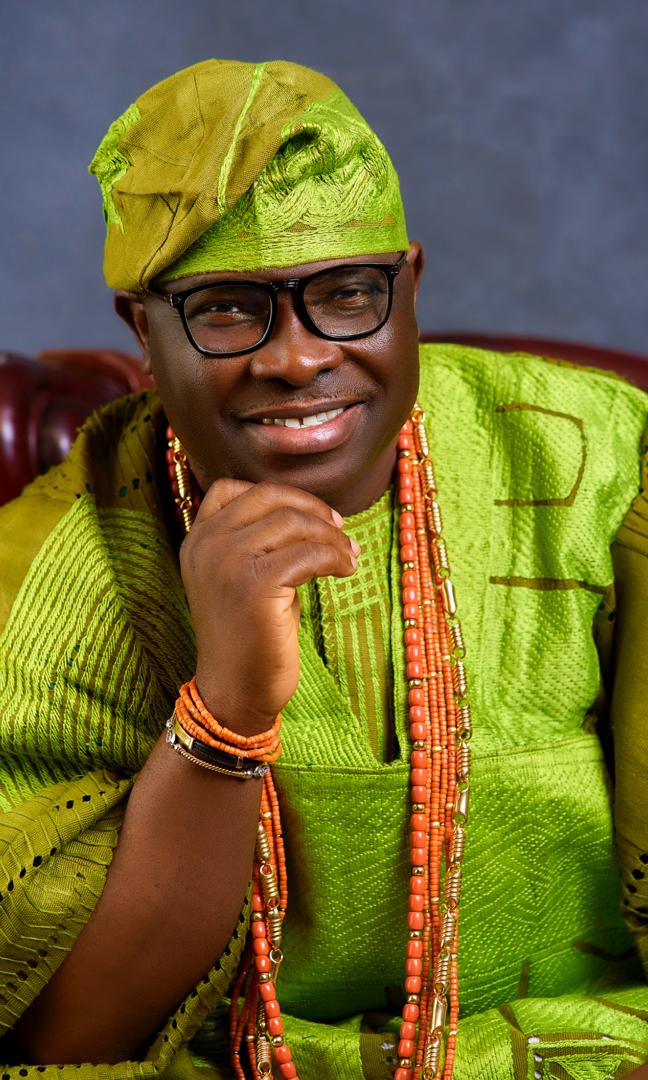
OTUNBA ADEMORIN ALIU KUYE: A SCION OF ROYAL LINEAGE, TESTED SERVICE, AND ENDURING NATIONAL SIGNIFICANCE

OTUNBA ADEMORIN ALIU KUYE: A SCION OF ROYAL LINEAGE, TESTED SERVICE, AND ENDURING NATIONAL SIGNIFICANCE
In the evolving discourse surrounding leadership, tradition, and service in Ijebuland, Hon. Otunba Ademorin Aliu Kuye stands out as a figure whose life reflects a rare convergence of royal heritage, professional excellence, and sustained national service.
A Prince of the Fusengbuwa Ruling House of Ijebu-Ode, Otunba Kuye is rooted in a lineage deeply woven into the historical and cultural fabric of Ijebuland. He is the son of the late Alhaji Ishola Ganiyu Kuye of the historic Gbelegbuwa Compound, Gboguja, Ijebu-Ode, and the late Princess Adetutu Idowu Kuye of the Erelu Okutuwo/Sabe of Jadiara lineage, a recognised branch of the Fusengbuwa royal family.
Born in the early 1960s on Lagos Island, Kuye’s formative years were shaped by a strong educational foundation. He attended Christ Church Cathedral School, Lagos, completed his secondary education in Lagos, and proceeded to Ibadan Grammar School for his Advanced Level studies. His academic journey culminated at the University of Ife (now Obafemi Awolowo University), where he earned a Bachelor’s degree in Law. He was called to the Nigerian Bar over three decades ago and later obtained a Master’s degree in Law, reinforcing a lifelong commitment to justice and public order.
A Career Defined by Service
Otunba Kuye’s professional and public service career spans more than three decades and cuts across law, governance, legislation, and administration. He served as Company Secretary of Vigilant Insurance Co. Ltd. and as Principal Partner at Adekanola, Kuye & Co., Legal Practitioners, before venturing fully into public service.
At the grassroots level, he served as Executive Secretary of Somolu Local Government (2003–2004) and later as Executive Chairman of Somolu Local Government (2004–2008), where he gained practical experience in governance and community administration.
His elevation to the Lagos State Executive Council as Honourable Commissioner for Local Government and Chieftaincy Affairs (2011–2015) marked a defining phase of his public career. During this period, he played a notable role in the institutional reform of the Lagos State Council of Obas and Chiefs, modernising its operations while preserving the dignity, hierarchy, and authority of traditional institutions.
He was also part of the Lagos State leadership involved in the historic dispute over the withholding of statutory allocations following the creation of Local Council Development Areas (LCDAs) in 2004. The ensuing legal and political battle culminated in a landmark Supreme Court judgment in favour of Lagos State, affirming constitutional clarity and fiscal justice, an outcome widely regarded as a significant moment in Nigeria’s federal evolution.
He further served as Senior Special Adviser to the Honourable Minister of Labour on Arbitration (2016–2019), contributing to dispute resolution and industrial harmony at the federal level.
National Legislative Impact
At the national level, Otunba Kuye has served two terms in the House of Representatives (2019–2023; 2023–present). He distinguished himself as a disciplined parliamentarian and institutional stabiliser, serving as Deputy Chairman of the House Committee on Rules and Business.
Notably, he was appointed Chairman of the House Committee on Federal Government Abandoned Property, a sensitive and strategic assignment reserved for lawmakers of proven integrity, discretion, and national confidence. His legislative work has been marked by quiet effectiveness, procedural rigour, and consensus-building. Owing to his outstanding performance, a new committee, the House Committee on Public Assets was established in 2023, and he was privileged to serve as its inaugural Chairman.
Traditional Titles and Cultural Accolades
Beyond politics and national service, Otunba Kuye’s standing within Ijebuland’s traditional order is well established. In 2018, he was appointed Baba Egbe Obayori Okunrin (Asiwaju), Akile Ijebu. In August of the same year, he led the Ijebu age grade to the Awujale’s Palace to receive royal blessings and recognition from His Royal Majesty, Oba (Dr.) Sikiru Kayode Adetona, CFR, GCON, Ogbagba II, the Awujale and Paramount Ruler of Ijebuland.
As a Prince of the Fusengbuwa Ruling House, he was later installed as the Otunba Ajana of Ijebu-Ode, a title conferred by the late Awujale himself. This honour is widely regarded as recognition earned through loyalty, service, and consistent engagement with traditional institutions.
A National Outlook Rooted in Custom
Otunba Kuye stands as a bridge between tradition and modern governance, a Prince of national outlook, yet deeply grounded in custom. His exposure across law, executive governance, legislative practice, and traditional administration has positioned him as a unifier, capable of navigating complexity with restraint and dignity.
As conversations continue around leadership, heritage, and continuity in Ijebuland, Hon. Otunba Ademorin Aliu Kuye remains defined by lineage, competence, experience, character, and historical legitimacy; a profile shaped not by noise, but by consequence.




celebrity radar - gossips
Adron Homes Elevates Cultural Pride as Dignitaries Grace 39th Lisabi Festival in Abeokuta
Adron Homes Elevates Cultural Pride as Dignitaries Grace 39th Lisabi Festival in Abeokuta
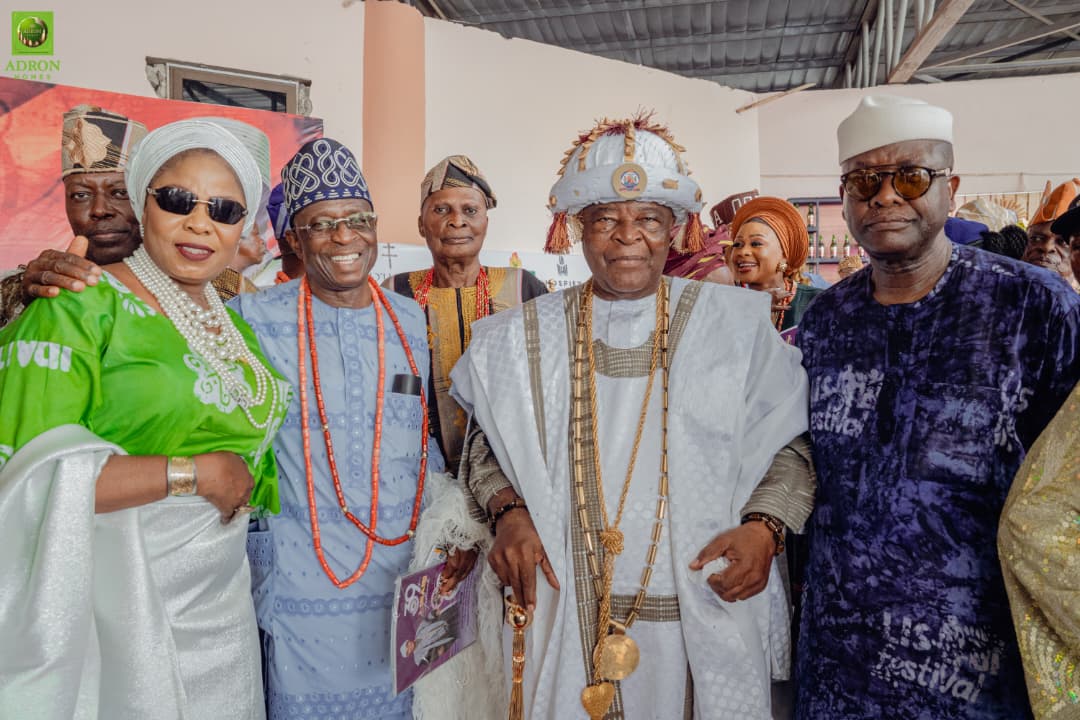
The ancient city of Abeokuta came alive in a grand display of culture, history, and unity as dignitaries from across Nigeria converged at the iconic Ake Palace Ground for the 39th edition of the Lisabi Festival, an annual celebration deeply rooted in the Egba people’s heritage.
The event, proudly supported by Adron Homes and Properties Limited, witnessed an impressive parade of distinguished personalities, traditional rulers, government officials, business leaders, and cultural enthusiasts, all captured in vibrant pictures that tell the story of a people united by history and pride.
From richly adorned monarchs in regal attire to elegantly dressed guests reflecting the depth of Yoruba tradition, the images from the festival encapsulate moments of honour, reverence, and celebration. Each photograph portrays not just faces, but influence, leaders, and stakeholders who continue to shape cultural preservation and community development.
At the heart of the celebration was the revered Oba Adedotun Aremu Gbadebo, whose presence underscored the festival’s significance as a symbol of Egba resilience and identity. Surrounding him were eminent dignitaries whose attendance further amplified the prestige of the event.
Adron Homes and Properties Limited stood out prominently, not only as a sponsor but as a key driver of cultural sustainability. Through its strategic support, the company reinforced its commitment to preserving indigenous heritage while fostering community engagement. The brand’s visibility across the venue and within the pictorial highlights reflects a deliberate alignment with culture, tradition, and people-centered development.
Beyond real estate, Adron Homes has continued to position itself as a cultural partner, investing in platforms that celebrate history and strengthen communal bonds. Its involvement in the Lisabi Festival is a testament to its broader vision of building not just homes, but legacies rooted in identity and pride.
The 39th Lisabi Festival, as captured through the lens of dignitaries in attendance, is more than an event, it is a narrative of continuity. And through its unwavering support, Adron Homes has once again set the pace, demonstrating that corporate institutions can play a vital role in sustaining the cultural heartbeat of a people.
As the echoes of drums fade and the colours of the festival linger in memory, one thing remains clear: the story told through these images is one of unity, heritage, and the enduring partnership between tradition and progress.


celebrity radar - gossips
Obasa Felicitates President Tinubu @ 74, says Renewed Hope Agenda is steering Nigeria toward stability and prosperity
Obasa Felicitates President Tinubu @ 74, says Renewed Hope Agenda is steering Nigeria toward stability and prosperity
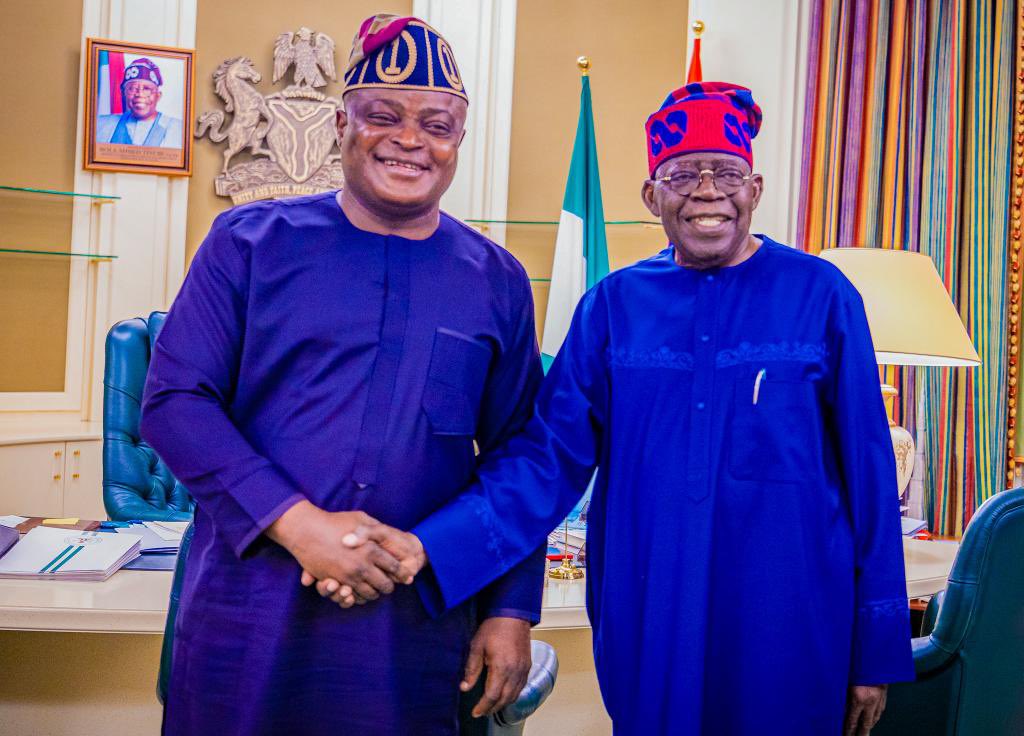
The Speaker of the Lagos State House of Assembly, Rt. Hon. (Dr.) Mudashiru Obasa has congratulated President Bola Ahmed Tinubu on his 74th birthday, commending him for fulfilling his Renewed Hope Agenda promises to Nigerians.
Speaker Obasa’s birthday message is contained in a statement signed by Adeshina Oyetayo, his Special Adviser on Research, Media, and Documentation.
Speaker Obasa described the President as a purposeful and pragmatic leader whose commitment to enthroning a peaceful and prosperous Nigeria should be appreciated by all
“Mr. President, today should be a national day of celebration honouring your selfless and visionary leadership.
“I commend your courage and conviction to initiate and implement necessary economic reforms that have pulled Nigeria out of the doldrums, stabilized the nation, and set it on the path of prosperity.”
Speaker Obasa said that those otherwise painful reforms are now being hailed as ingenious and effective worldwide, citing a January 2026 article in the influential The Economist magazine titled “Nigeria’s economy may be back from the brink.”
The article acknowledged that President Tinubu’s reforms are beginning to yield bountiful returns as evidenced in the easing of headline inflation for the 11th consecutive month, unification of the foreign exchange market, and foreign reserves rising to $46billion.
Notably, the article also referenced the International Monetary Fund (IMF)’s upgraded 4.4% GDP growth forecast for 2026 despite global headwinds, while stating unequivocally that Nigeria’s golden years will return under President Tinubu.
Speaker Obasa said that this submission by an international journal signifies that Nigeria is in safe hands under President Tinubu. He, therefore, urged Nigerians to rally round him and support his re-election bid, promising that the gains of the Renewed Hope agenda will reach every household.
“Our prayer is that the Almighty will grant our dear President long life in robust health and the strength and wisdom to help him achieve the Nigeria of our collective dreams,” Speaker Obasa concluded.
“Political Titan Zailani: The Driving Force Behind Kaduna’s Victory”
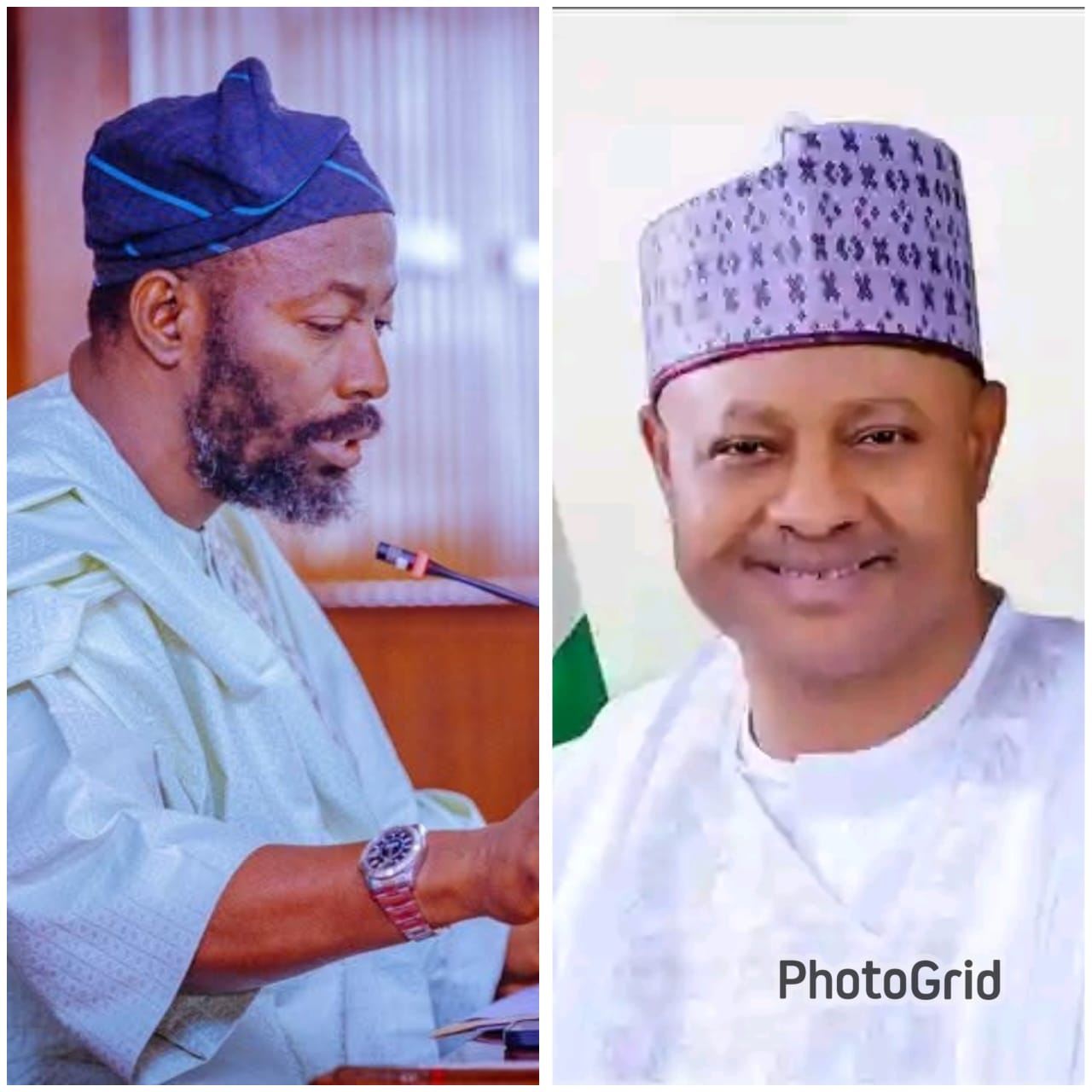
In the dynamic and often tumultuous landscape of Nigerian politics, the influence of steadfast leaders is a crucial determinant of electoral success. One prominent figure whose unwavering support and strategic foresight have consistently shaped the political narrative in Kaduna State is Rt. Hon. Yusuf Ibrahim Zailani of Igabi Local Government Area.
This insight emerged from a recent press conference organized by the Zailani Absolute Care Foundation, articulated by Comrade Tasiu Musa, Chairman of the Foundation, and supported by the signature of Ibrahim Dahiru Danfulani Sadaukin Garkuwan Keffi/Betara Biu.
Zailani’s political journey, marked by steadfast loyalty to the progressive bloc, has been a significant factor in the political discourse since the days of the All Nigeria Peoples Party (ANPP), through the Congress for Progressive Change (CPC), and continuing into the ruling All Progressives Congress (APC). His consistent support during a politically charged period from 2007 to 2015, dominated at times by the rival Peoples Democratic Party (PDP), showcased his resilience and deep connection with constituents, cementing his position as a political stalwart.
The latest escalation of Zailani’s impactful legacy culminated in his crucial role during the recent gubernatorial election in 2023. Political analysts underscore the instrumental position of Igabi Local Government Area in this transition, where the groundwork for His Excellency, Senator Uba Sani, played out with remarkable intensity.
Governor Sani’s visionary leadership indeed inspired the electorate, but translating this enthusiasm into votes required an exceptional grassroots mobilization effort. Zailani, alongside dedicated allies such as Hon. Muhammad Abubakar Mamadi and Hon. Salisu D. Bala, exemplified a masterclass in political engagement. They left no stone unturned, actively connecting with constituents to ensure their voices were heard at the polls. This approach starkly contrasted with actions of other political figures Hon. Hussaini Jalo, Hon. Bashir Idris Aliyu Zangon Aya, and Hon. Bello Maaji who were reportedly involved in attempts to undermine the APC’s quest for victory.
Following the elections, the differentiation between consistent performers and less committed party members became evident. Figures like Hajiya Rabi Salisu and Hon. Aliyu Saidu faced scrutiny regarding their tangible contributions to the electoral triumph, prompting inquiries about their electoral participation and loyalty to the party’s objectives.
Moreover, recent events have raised alarms regarding discipline and loyalty within party ranks. A recent incorrect recommendation for party executives, revealing that approximately 30 percent of nominees were not registered party members, has been met with widespread condemnation as a serious breach of party integrity.
As Kaduna State strides forward under Governor Uba Sani’s dynamic leadership, the lessons learned from Igabi are unmistakable: enduring political success is built on a foundation of loyal, competent, and strategically astute support. The narrative of Kaduna’s political history is incomplete without acknowledging the formidable influence and unwavering commitment of Rt. Hon. Yusuf Ibrahim Zailani, who has consistently transformed his constituency into a stronghold of progressive victory.


-

 society6 months ago
Religion: Africa’s Oldest Weapon of Enslavement and the Forgotten Truth
-

 news4 months ago
WHO REALLY OWNS MONIEPOINT? The $290 Million Deal That Sold Nigeria’s Top Fintech to Foreign Interests
-

 society6 months ago
“You Are Never Without Help” – Pastor Gebhardt Berndt Inspires Hope Through Empower Church (Video)
-

 celebrity radar - gossips2 months ago
Dr. Chris Okafor Returns with Power and Fire of the Spirit -Mounts Grace Nation Altar with Fresh Anointing and Restoration Grace on February 1, 2026