
celebrity radar - gossips
> Our party made Saraki, he cannot disobey us —Bisi Akande


Former interim National Chairman of the All Progressives Congress (APC) and former governor of Osun State, Chief Bisi Akande, reiterates his position on the crisis of confidence rocking his party as regards the leadership of the National Assembly in this interview with KATE ANI. Excerpts:
Why did you say that through the crisis in the National Assembly, the North is attacking Yorubaland?
I didn’t say so; I said some Yoruba people are saying so. Go and read the statement I wrote.
How did you know they were saying so?
They called and told me.
By not supporting Senator Bukola Saraki, are you saying he is not a Yoruba man?
I support Saraki absolutely but I don’t support rebellion.
Why do you think he is being rebellious?
The party took a position. They did a primary and somebody won. Anybody who goes against the democratic position of the party is rebellious. Don’t you see it as a rebellion? I know that Nigerians don’t know discipline anymore; everybody does things they way they like. You didn’t get there by yourself but by the grace of your party. That is why you can go to the party to say that I want to be this and they would say oh, they are many of you who want to too, come and do election. And somebody won and somebody stood by that person. Once you go against that party, you are committing rebellion. It is an act of indiscipline. I support all of them, they are my colleagues, but I don’t support indiscipline. Maybe you don’t understand what discipline is. In your place of work, if they ask you to do something and you did it the other way, it is indiscipline. They would sack you. You join a party because you want to abide by its rules and regulations. You cant say that you are going to be bound by another man’s regulation outside. I am talking about rebellion; you are talking about who are funding them. If you commit a coup d’etat, you are to be punished by death, but then you say oh, it is not an American that gave you money to do it. Is it important who gave you money to do rebellion? Rebellion is a criminal act. Indiscipline killed PDP [Peoples Democratic Party] and we don’t want rebellion to kill our party. Rebellion is the height of indiscipline.
Nigerians were taken aback by the statement you issued…
(cuts…) It is because I don’t like indiscipline. They are all my colleagues. I want them to become president or anything they want to become, but I don’t want them to get there through indiscipline or by being rebellious. That is all I am saying for everybody to understand but in Nigeria, everybody claps for all arguments, no matter how invalid. My argument is simple: get into whatever position by discipline. Indiscipline was the reason Nigerians rejected PDP, and we don’t want it in our party. The cardinal thing I emphasised in that statement was discipline, obedience to your party. It is our party that made Saraki. He cannot disobey our party.
What is the way forward now, what do you think your party must do to restore normalcy?
They should be disciplined. They should obey the party. That is all. I don’t know about APC, but I won’t cringe under indiscipline. If the party likes, they can cringe under indiscipline, but Bisi Akande will never cringe under indiscipline.
Do you see Saraki and Yakubu Dogara as traitors?
Saraki and Dogara are from the old PDP. They defected to our party and they are the leaders of this rebellion. It is indiscipline that killed their old party. Can they deny that? Are they not from the old PDP? We had formed and registered our party many months before they came. It doesn’t mean that they should do what they did in PDP to us. We will reject it. The way forward is for them to be disciplined.
If you see Saraki and Dogara tomorrow, what would you tell them?
I would call them undisciplined members of my party. That is what I would tell them to their faces.
How do you think they can be disciplined?
Discipline is an act of the mind. I am a disciplined man and I have led that party before. It was through discipline that we brought that party up, not with money. We brought the party together out of difficult situations. Nobody had money then. We did it and the whole country accepted it. If anybody wants to bring indiscipline into it, those of us who are disciplined will say no. Indiscipline will kill Nigerians if we are not careful. That is why we were elected. On the threshold of a government of change, somebody started a rebellion. It is to make change impossible.
Are you satisfied with the way President Muhammadu Buhari has handled the matter so far?
I don’t know the way he has been handling it, but he is a disciplined man. That is why I support him. He submitted himself to a primary, which was done to the happiness of everybody in this country and that was why we took him as our candidate. He is a disciplined person, whichever way he handles it, I won’t query him because I know him to be disciplined.
But the president said he could work with anyone, why is the APC still insisting that they don’t want Saraki and Dogara?
He didn’t say that. He said anybody who gets anywhere could have done it the way the party wanted. That is what he said. Go and read it again. He said constitutionally, they might have won, but it would have been better for them to have won the way the party said; that it would be better they won it as disciplined people. That is what Buhari was saying. You cut off that part of it, and only hold on to him saying he can work with anybody. Are you trying to say that he can work with madmen if possible? What Saraki and Dogara committed against APC is a rebellion. We had founded APC before they came to our party. You won’t see any ACN, CPC or ANPP member of the APC committing a rebellion, but PDP was known for indiscipline and it is only anybody who has the blood of the PDP in him in our party that can commit an act of indiscipline. They committed a rebellion against the party that put them in the National Assembly. So, their primary duty and loyalty should be to the APC that put them in office, not to now begin to argue that they entered the position constitutionally. There is what we call spirit of the constitution. These people never believed in change. That is the essence of what I wrote in my statement. The only reason I put some flesh to it doesn’t change my attitude; that I don’t want people who are undisciplined to be in my political party.
Nigerians voted for change but what is being witnessed in the National Assembly is almost a replica of what was seen during PDP’s years in government. As one of the founding leaders of the APC, are you disappointed?
I am very disappointed and embarrassed about it all. There will be more of that action if they remain undisciplined. Any member of APC is expected to be disciplined. Some people have called for the removal of the national chairman, John Odigie-Oyegun, because those people you described as rebels seem more powerful than him.
Do you think Odigie-Oyegun is doing enough to bring the situation under control?
I will not clamour for anybody to be removed. Oyegun is having a rebellion on his hands. He is mature enough to handle it. The party will give him time to handle it. But if he allows it to protract, he may have a crisis on his hands. As a matter of fact, he already has a crisis on his hands. Oyegun is not the cause of the rebellion, I think – unless he is part of it. I don’t know. He is my friend. I was one of the people who fought for Oyegun to become the national chairman to succeed me. When people are confused, they will ask for anything. People are calling for his head because he has a crisis on his hands.
What advice would you give northern leaders to give their representatives at the National Assembly, who are the arrowheads in the crisis in the National Assembly?
If they want change, they must reject undisciplined members. They must recall their undisciplined members.
The APC governors are coming on to be as powerful as the PDP governors in their party. Would they not constitute a problem for the party in future, now that they are forming a cabal of governors?
Give me an example of an APC governor who is more powerful than the party so that I can answer your question. They are all obedient to the party. I don’t know what you see outside, but inside, all APC governors are disciplined. None of them is rebellious yet.
You are a father to all in Yorubaland, where do you want to see the Yoruba race in the next 20 years?
I am a father to all in Nigeria. In 20 years, I want Nigeria to be like Europe, America, all developed places in Asia and all over the world.
>
Everyone seems to be heaping blame on Senator Bola Tinubu, saying that he is trying to impose leaders on the National Assembly, why?
You know that in Nigeria, all agents of change are in trouble. Many people don’t think in this country. Tinubu is a classical thinker. When he introduced change, everyone didn’t understand him and they made a lot of noise. To answer your question, I don’t know why they are blaming him. It is from his brain that the idea of merging came. He is a strong agent of change. He worked for it, funded it and did everything to see change come. It is envy, nothing else. All brilliant people are hated, particularly in a developing society like Nigeria, where the only thing that everybody knows is corruption. If you hear them scream Tinubu, ask them about the fault of this man. They won’t tell you a reason. They might say that he is becoming too powerful but if you are becoming too big in your work, what can anybody do about that? They can only hate and envy you. Tinubu is hated by lazy minds.
>
Does President Buhari’s delay in appointing ministers have to do with the level of his comfort at present with the National Assembly?
Oh, no. How can that be? Jonathan succeeded himself as president in 2008. He was president for about two years before he contested election in 2011. When he became president again, he succeeded himself. In six weeks, he never appointed a minister. Why are Nigerians impatient? Because the majority of Nigerians are corrupt, they want ministers they would run to, to steal money. Why are they impatient? What has Buhari done wrong? He came in just a month ago. He succeeded a rotten government. Jonathan who succeeded himself never appointed ministers for the first six weeks of coming to office. He succeeded himself. But Buhari succeeded a rotten government. Nigeria is in decay. Look at the issue of NNPC. They realised eight point something trillion naira within a period but they paid into the treasury, only four point something trillion naira. The remaining, they never accounted for. Is that not a rot that can delay appointment of ministers? What makes
> appointment of ministers more important than looking into what happened in that sector? If Jonathan, who succeeded himself, was unable to appoint ministers within the first six weeks of coming into office, what is wrong if President Buhari waits for six months to appoint his men in a rotten and decadent arrangement? He needs time and I support that he take his time.
>
> The PDP released a statement that Nigerians should pray for President Buhari as he seems overwhelmed by all things at hand?
> I don’t want to comment on whatever PDP says because that party is in trouble and they can’t say anything sensible anymore. They threw Nigeria into this mess and it is this mess that is holding the hands of President Buhari from appointing ministers.
>
> Nigerians are saying they are yet to see the change President Buhari promised, what is going on?
> Nigerians don’t have a magician as president. They have a human in Buhari as president. Since Buhari became president, he has been working on security. He has been going to all places, including neighbouring countries, to solicit for their support. He went to South Africa and rallied all African leaders to support our cause. He is going to America, and he has got the promise of England, all within one month. He has moved the operation of the military to another place. He is not a magician. He is still trying to clear the rot that the PDP’s administration left behind. In the area of economy, you must make the money before thinking of how to spend it. He has set up a committee to look into the operation of NNPC and it will take some time before you can make enough money to start doing other jobs. There are orders in what you expect a president to do but because numerous people in the country do not understand these orders, it is your duty in the press
> to help us teach them that there are orders and you have to do one before you can solve the other.
>
> What have been the responses from your party men, especially Senator Tinubu, since you issued that statement?
> I have not seen Tinubu but friends have been calling me and were happy that they saw someone who can come out to confront the truth. Some may be afraid of voicing their opinions because they see those people as rich and powerful, but Bisi Akande will talk. I will talk. At my age, I shouldn’t be afraid to die. I must be ready to talk. But the only thing I don’t tolerate is indiscipline. I want everybody to go high in life. Where I can’t reach, I want all of them to reach, but I don’t want them to do it by rebellion. I want them to do it with decorum and discipline. It is fraudulent to use the platform of a party to become a senator and thereafter say that the party is unimportant; that there is a regulation in the Senate or House of Representatives, which commands what you should do. That is fraudulent and I don’t like fraud in any form. Tell them.
>
> What do you think Saraki and Dogara should do, apologise?
> I don’t know. He (Saraki) should learn to be disciplined. He is old enough to know what discipline means. It is an act of the mind. Saraki knows very well that I am much disciplined and he should learn how to be disciplined. He should not short-change his association.
>
> Dogara’s deputy is your boy in Osun State…
> An undisciplined person is not my boy. I know [Yusuf Sulaimon] Lasun but now that he has become undisciplined, he is on his own. Any of my children that is not disciplined, I disown them. I thank God that I don’t have many and they are all disciplined.
>
> What about Ike Ekweremadu, a PDP man being Saraki’s deputy?
> Imagine! How can you want a position and you sell one? Okay, there are two of them, take one to assist my people, and so they did.
>
> What is the implication of that?
> There is no secret in our party anymore because anything we want the National Assembly to do for us would pass through him. He will preside over it and it makes our majority useless. It is an attempt to destroy the party but we will resist that.
>
> What is your take on Osun State governor, Rauf Aregbesola’s inability to pay civil servants their salaries?
> Well, it is unfortunate that Osun State – don’t say Aregbesola; Aregbesola owes nobody any money – owes workers salaries. This happened because the source of income dried up. In a bank, the workers make the money with which they are paid. In the newspaper industry, the workers make the money with which they get paid. In government, because government functions as a social liability, it is very difficult to make the workers make the money with which they will be paid. In Nigeria, most states are not viable. Osun is one of the states that are not viable in the country. I have been a governor there before, so, I know that the state is not viable. So, because Osun State is not viable, it has to wait for federal allocation before it can do anything. If there is no federal allocation from tomorrow, the whole place would close down; there won’t be workers, a governor, commissioners or anything. Osun exists at the mercy of federal funding and the moment
> money refuses to come from the federation, the state would be in trouble. It is not Osun alone; some states owe 11 months, three months and so on. It varies from state to state. There is nothing the governor can do about it. Unless there is money, there won’t be payment.
>
> But workers are dying. There have been reported cases of workers turning into corporate beggars or even starving to death?
> Dying? If you are a farmer – you employ yourself – and due to lack of rain, you can’t produce in a year, and you can’t tolerate it and you don’t have support from anywhere, you will die? The employer won’t kill himself. What can the employer do? Osun State is the employer, not Aregbesola. He is merely symbolic because he is the governor. Aregbesola came at a wrong time when the state was soaking in debt. He was trying to rearrange the debt because he inherited a big debt and it is a debt from the bank. You know, if you borrow N100 from the bank and you have to pay 20 per cent, it means, in five years, it becomes N200. I think he inherited a debt of about N18 billion, if I can remember. I heard it was money intended to build a stadium and he rearranged it with the bank. The rearrangement means saying, ‘okay, don’t let me pay immediately, help me push it forward a bit and when the day comes, they would start taking their money.’ He
> inherited the debt and there is nothing he can do about it. He won’t run into the bush. When I was governor, people asked me to come and borrow N300 million to repair a water project. I said no; that I couldn’t borrow such money. I repaired the water project with less than a million naira and water was flowing.
>
> Senator Ben Murray Bruce donated his wardrobe allowance to some Osun workers to alleviate their suffering but Governor Aregbesola was not happy with it…
> Ben [Murray] Bruce was being mischievous. He was at the centre of the PDP which collapsed in debt. He was inside the rot of PDP that collapsed in a mess. How much is his wardrobe allowance that he is donating? To whom did he give it to.




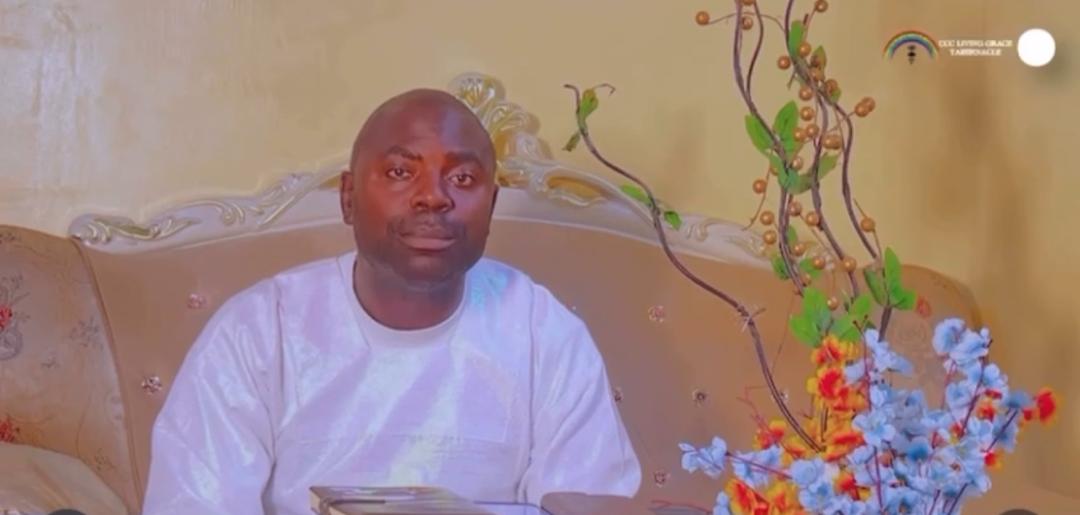
PROPHET KINGSLEY AITAFO MARKS BIRTHDAY WITH MESSAGE OF FAITH, SERVICE
LAGOS, NIGERIA — Renowned cleric, Prophet Kingsley Aitafo, is being celebrated today by followers, associates, and members of the Christian community as he marks his birthday, with tributes pouring in to honor his spiritual impact and years of dedicated service.
The birthday of the respected prophet has become more than a personal milestone, as admirers describe it as a moment to reflect on a life devoted to faith, leadership, and humanitarian outreach.
Known for his passionate teachings and prophetic ministry, Aitafo has built a reputation as a voice of hope to many within and beyond Nigeria.
Close associates say the cleric’s journey has been defined by unwavering commitment to spiritual growth and the upliftment of lives. Through his ministry, he has continued to emphasize prayer, discipline, and a deep connection with God as pathways to personal transformation.
In commemoration of the occasion, special prayers and goodwill messages have been organized by followers across different platforms, many of whom credit his teachings for inspiring positive change in their lives.
“His life is a testimony of grace and dedication,” one associate noted. “He has remained steadfast in his calling, impacting countless lives with messages of faith and encouragement.”
Observers also highlight his role in mentoring young believers and providing spiritual guidance in challenging times, describing him as a leader whose influence extends beyond the pulpit.
As he celebrates another year, well-wishers have continued to pray for greater strength, wisdom, and expansion of his ministry, expressing confidence that his influence will continue to grow in the years ahead.
Today’s celebration stands not only as a birthday tribute, but as a recognition of a life many say has been committed to service, faith, and the advancement of the gospel.
celebrity radar - gossips
BURATAI HAILED AS ‘FRONTLINE GENERAL’ AS PRAISE TRAILS MILITARY, DIPLOMATIC SERVICE
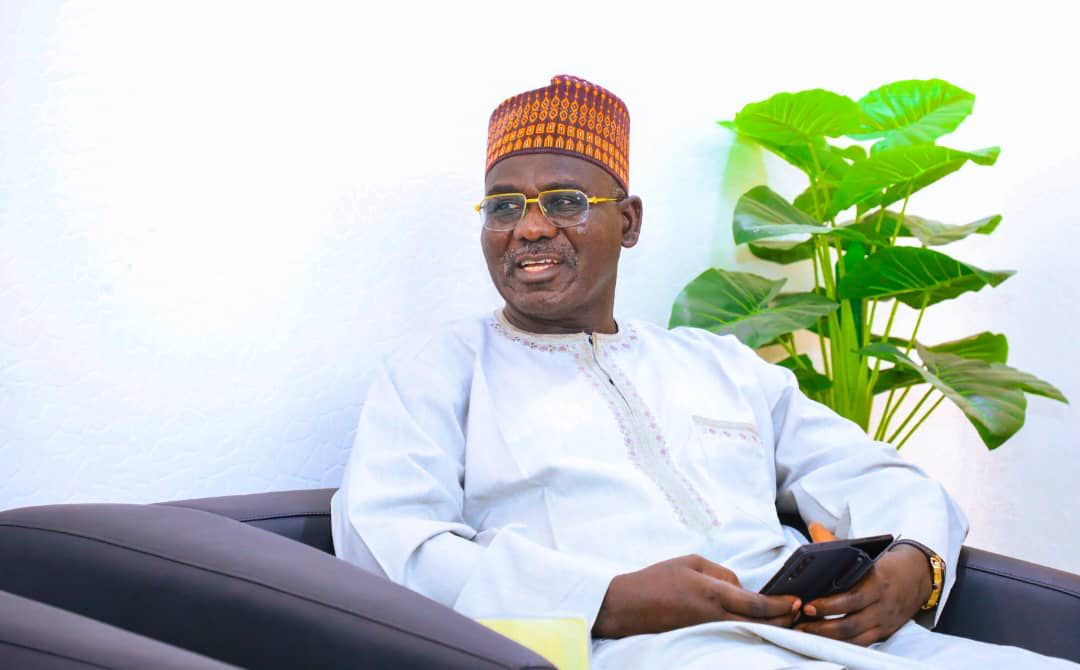
BURATAI HAILED AS ‘FRONTLINE GENERAL’ AS PRAISE TRAILS MILITARY, DIPLOMATIC SERVICE
ABUJA — Former Chief of Army Staff, Tukur Buratai (Rtd), has been described as a “frontline general” whose leadership redefined military command during Nigeria’s prolonged battle against insurgency.
The commendation, contained in a statement by KPUGHUR Sunday Christopher, highlighted Buratai’s direct involvement in combat theatres, noting that his decision to lead from the front distinguished him from many of his contemporaries.
According to the statement, the retired army chief’s presence in conflict zones at critical moments of the war effort underscored his commitment to national security and territorial integrity.
“He was not a distant commander. He was present where it mattered most,” the statement said.
The tribute also emphasized Buratai’s reputation as a detribalized leader, stressing his consistent advocacy for unity and peaceful coexistence across Nigeria’s diverse population.
Observers note that his tenure coincided with some of the country’s most challenging security periods, during which the military recorded significant operational strides against insurgent groups.
Beyond his military career, Buratai’s subsequent diplomatic engagement was also cited as evidence of his versatility in national service.
The statement concluded that his continued involvement in national discourse after retirement reflects a sustained commitment to Nigeria’s progress, describing him as “a statesman whose service transcends uniform.”
celebrity radar - gossips
Prophet Kingsley Aitafo to Mark Birthday with Global Prayer Session, Honours Spiritual Fathers
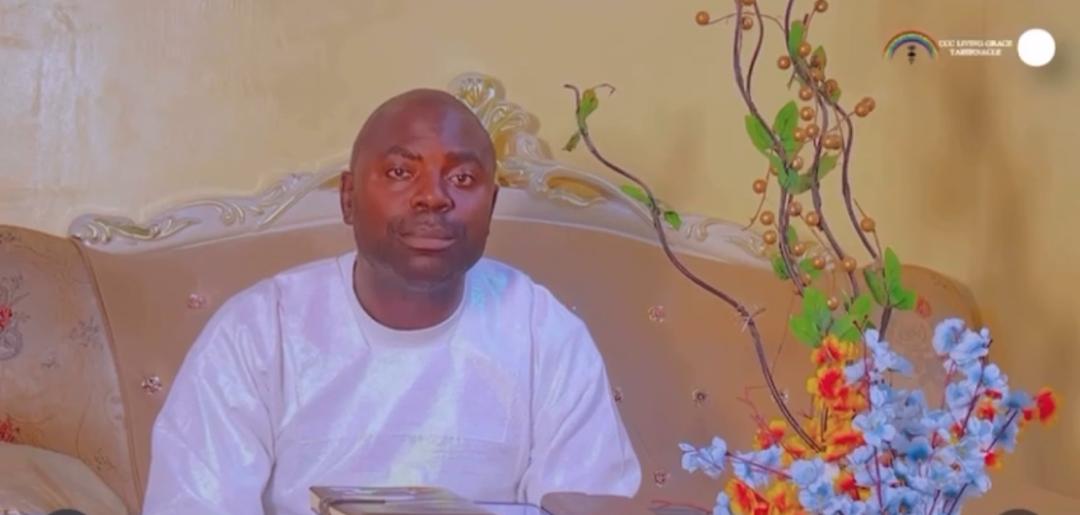
Prophet Kingsley Aitafo to Mark Birthday with Global Prayer Session, Honours Spiritual Fathers
Renowned cleric, Prophet Kingsley Aitafo, is set to mark his birthday on March 23 with a global prayer session, offering what he described as a “spiritual gift” to followers across the world.
In a departure from conventional birthday celebrations, the prophet announced a Special Live Prayer Session scheduled to hold from 10:00 a.m. to 11:00 a.m. (Nigeria time). The one-hour intercession is expected to draw participants from various countries, focusing on thanksgiving and collective prayers.

According to him, the initiative is aimed at fostering spiritual reflection and unity among believers, rather than personal festivities.
Ahead of the event, Prophet Aitafo paid tribute to his spiritual mentors, acknowledging the profound influence of Prophet and Founder of Celestial church of Christ, Prophet Samuel Bilehou Joseph Oshoffa and Bishop David Olaniyi Oyedepo on his ministerial journey.
He noted that the legacies and “exploits in ministry” of the revered clerics have continually inspired him to pursue greater depth, purpose, and impact in his calling.
The upcoming prayer session is expected to be streamed live across his ministry’s platforms, with followers encouraged to join in the global moment of intercession.


-

 society6 months ago
Religion: Africa’s Oldest Weapon of Enslavement and the Forgotten Truth
-

 news3 months ago
WHO REALLY OWNS MONIEPOINT? The $290 Million Deal That Sold Nigeria’s Top Fintech to Foreign Interests
-

 society6 months ago
“You Are Never Without Help” – Pastor Gebhardt Berndt Inspires Hope Through Empower Church (Video)
-

 celebrity radar - gossips2 months ago
Dr. Chris Okafor Returns with Power and Fire of the Spirit -Mounts Grace Nation Altar with Fresh Anointing and Restoration Grace on February 1, 2026
You must be logged in to post a comment Login
You must log in to post a comment.